Dong Quai Slices: What Buyers Should Specify Beyond the Herb Name
Dong quai is more than a herb name. Learn which identity, sulfur, cut-size, moisture and COA details to put in a specification before you request a quote.
Ordering “dong quai slices” sounds precise, but the phrase covers a wide range of materials. It can mean Angelica sinensis root from different growing areas, different root portions, sulfur-fumigated or non-fumigated stock, thin or thick cuts, and lots with very different moisture and fines. Two quotes under the same herb name can describe products that behave differently in a tea bag, an extraction line or a decoction pack. This guide sets out which details a procurement or QA team should write into a dong quai specification, why each one changes the result, and what a supplier should be able to prove before a purchase order is placed.
Dong Quai, Dang Gui and Angelica sinensis: One Plant, Several Names
Memorial Sloan Kettering’s dong quai herb monograph gives the scientific name as Angelica sinensis and lists Chinese angelica and dang gui among the common names. Supplier catalogues use the same pairing, usually listing the Latin name, the pinyin name and the common name side by side.
For a specification, the Latin binomial is the controlling term. Write Angelica sinensis (Oliv.) Diels, root, and treat “dong quai”, “dang gui” and “Chinese angelica” as aliases only.
The reason is adulteration risk. A 2025 study in Foods, Adulteration Identification of Angelica Sinensis Radix Based on Molecular Matrix Characteristics, reports that the authors’ market research found at least a quarter of A. sinensis material on the market adulterated to varying degrees with Levisticum officinale, Angelica acutiloba or Angelica gigas. The paper describes these roots as having similar macroscopic and microscopic features. That figure comes from one research group’s market sample, so it should not be read as a universal rate. It does show why “it looks like dang gui” is not an acceptable identity test.
In practice, ask for the identity method on every COA, keep a retained sample of each lot, and consider independent identity testing on first orders. Also separate identity from strength. A marker assay such as ferulic acid tells you about content; it should not be the only evidence that the botanical is correct.
The Specification Fields That Change What You Receive
The table below lists the fields that most often separate one “dong quai slices” quote from another. The examples are working language to adapt, not pharmacopoeial requirements.
Field
What to write
Why it changes the result
What to verify
Botanical identity
Angelica sinensis (Oliv.) Diels, root; no other Angelica or Levisticum material
Look-alike roots are a documented adulteration issue
Identity method on the COA; retained sample
Root portion and grade
Whole root, or head/body/tail proportions; how the grade is defined
Affects appearance, aroma, price and lot-to-lot consistency
Photos of whole roots before slicing; written grade criteria
Processing
Raw or a named processed form; sulfur-free or not; drying method
Sulfur treatment changes colour and can leave residues
SO₂ result on the COA; drying and cooling records
Cut form and thickness
Thickness window, tolerance, maximum fines
Drives extraction behaviour, tea-bag filling and dust
Sieve or fines test; thickness check method
Moisture
Numeric limit, test method, arrival retest rule
Main variable in long-transit mould and clumping claims
Same method used at origin and destination
Contaminants and microbiology
Panel and limits for the target market
Different markets apply different frameworks
Lab name, method, acceptance criteria
Marker (if required)
Ferulic acid, dry basis
Gauges consistency, not identity
Method and basis of calculation
Packaging
Inner liner, desiccant, pallet clearance
Controls moisture pickup in transit
Packing photos; loading instructions
Documents
COA per lot; lot code matching carton and inner bag
Mismatched paperwork triggers quarantine
Sample COA reviewed before the first order
Root Portion and Grade: Where Price Differences Often Start
Dang gui is graded by root, not only by slice. Our guide on how to identify high-quality Angelica sinensis slices explains that whole roots with a full head, thick body and intact tail are usually graded higher, and that heads are sometimes cut off to disguise a lower grade. The same guide notes that origin and harvest conditions affect root size and oil content, and that grade should match the product position. These are trade observations rather than independent measurements, but they match how the material is commonly quoted.
Two practical points follow:
Define the grade in writing. “Premium” or “Grade A” means nothing without criteria. Ask for root diameter ranges, the head/body/tail mix and the origin province, and ask for photos of whole roots before they are cut.
Do not assume the top grade is the right grade. A simple soup mix or entry-level tea blend may be served well by a standard commodity grade with tight cleanliness and fines controls. A premium supplement or functional beverage usually justifies a higher root grade and stricter origin records. Paying for premium roots and then accepting loose cleanliness limits wastes budget in both directions.
Sulfur fumigation is the most common processing question for dang gui buyers. Our identification guide says very white or bright lemon-yellow slices often point to heavy sulfur fumigation, and that sulfur treatment can leave sulfur dioxide or sulfite residues and a thin, slightly sour aroma. Colour is only a screening signal. Confirm with a laboratory SO₂ result and write the limit into the specification.
Do not copy a limit from another product. The right number depends on the destination market and product category. Our overview of quality standards for Chinese herbal slices in international markets notes, for example, that US food and supplement routes carry a sulfite labelling trigger at 10 ppm as SO₂. Your regulatory adviser should confirm how that applies to your finished product.
Two further items belong in the spec:
Processing form. State whether you want raw slices or a processed variant. Wine-processed dang gui is one traditional example; name it explicitly rather than assuming the supplier will infer it.
Drying and cooling. Our long-transit guidance warns against bagging hot slices because they sweat inside the bag. Ask how the lot is cooled and equalised before sealing.
Cut Form and Thickness: Match the Slice to the Process
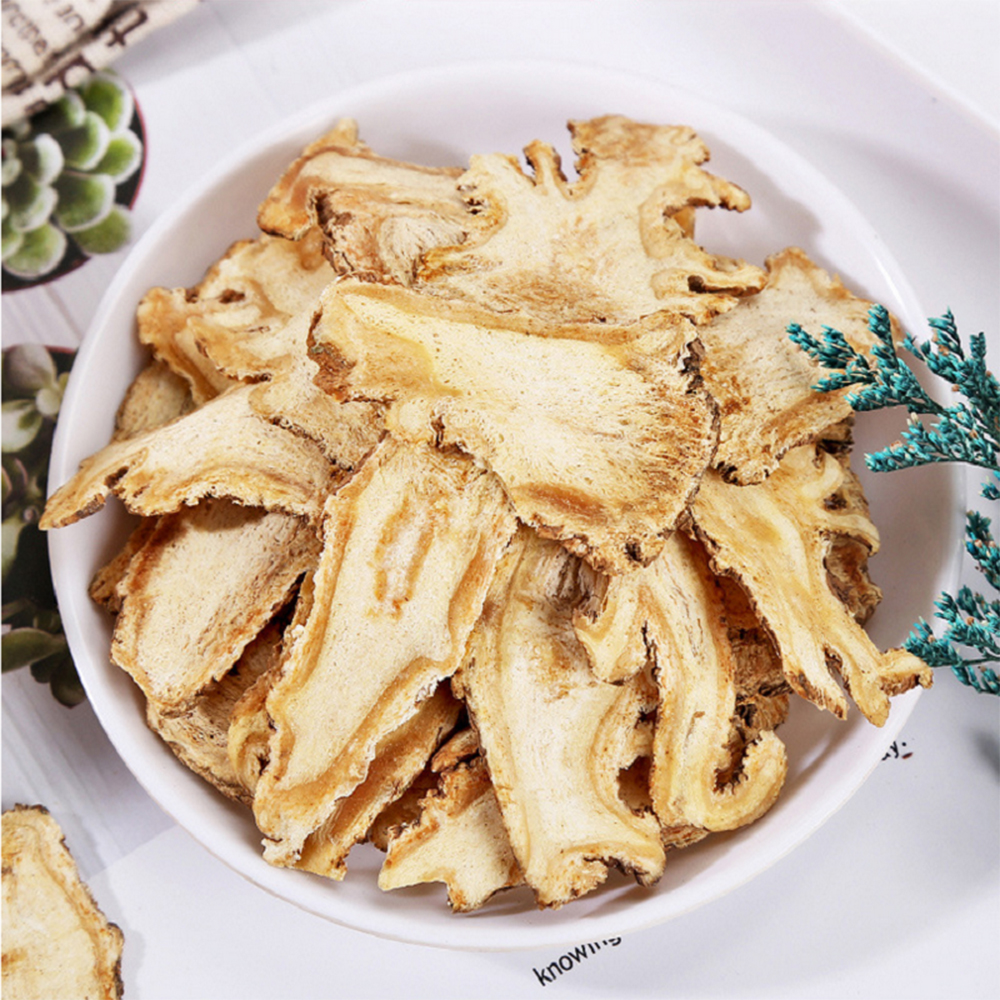
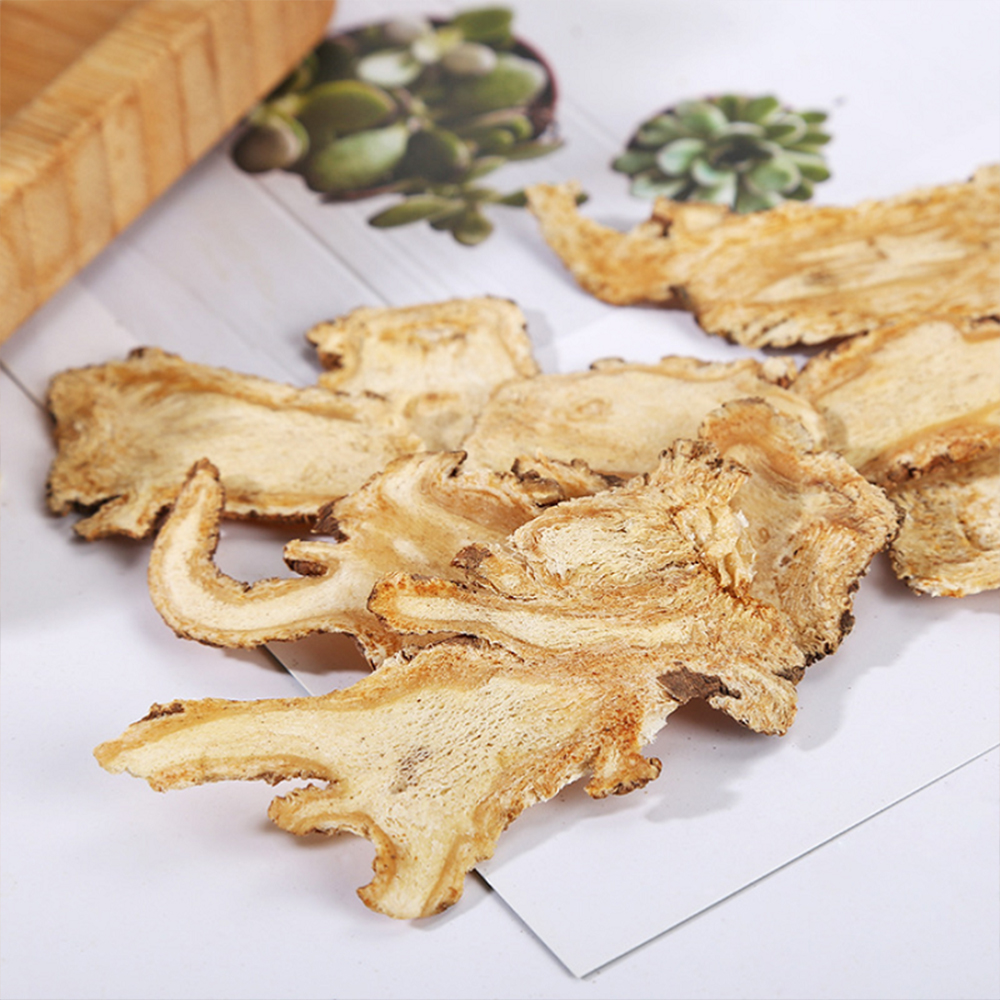
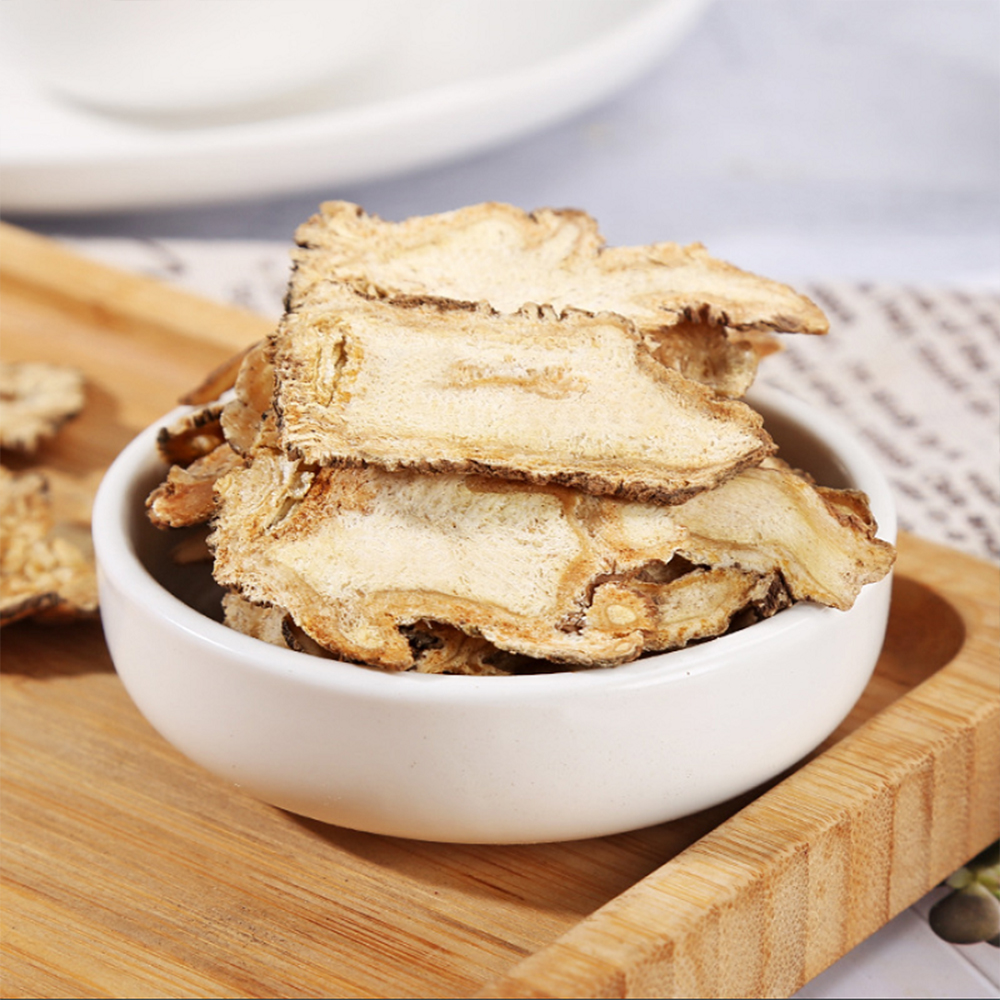
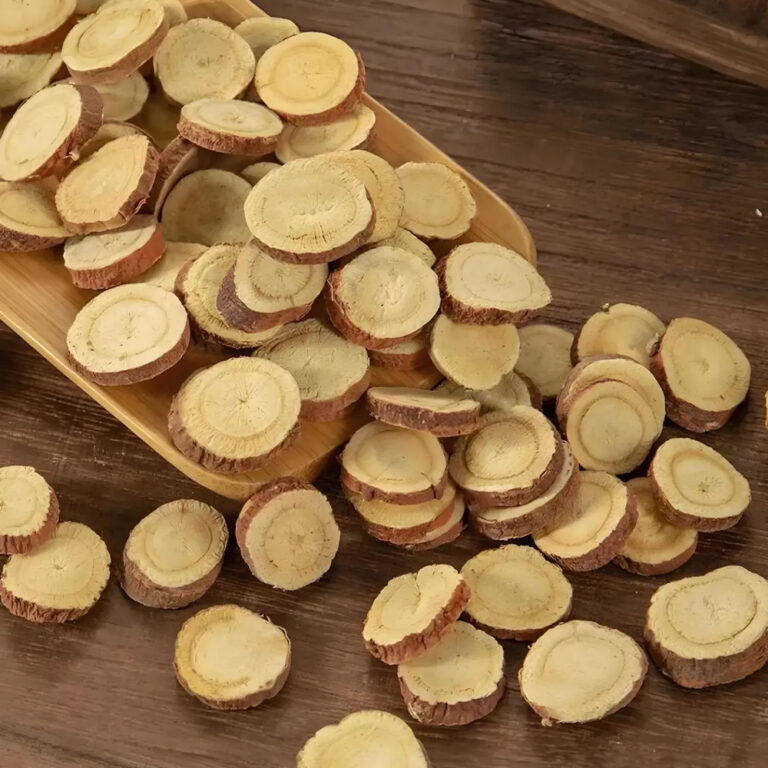
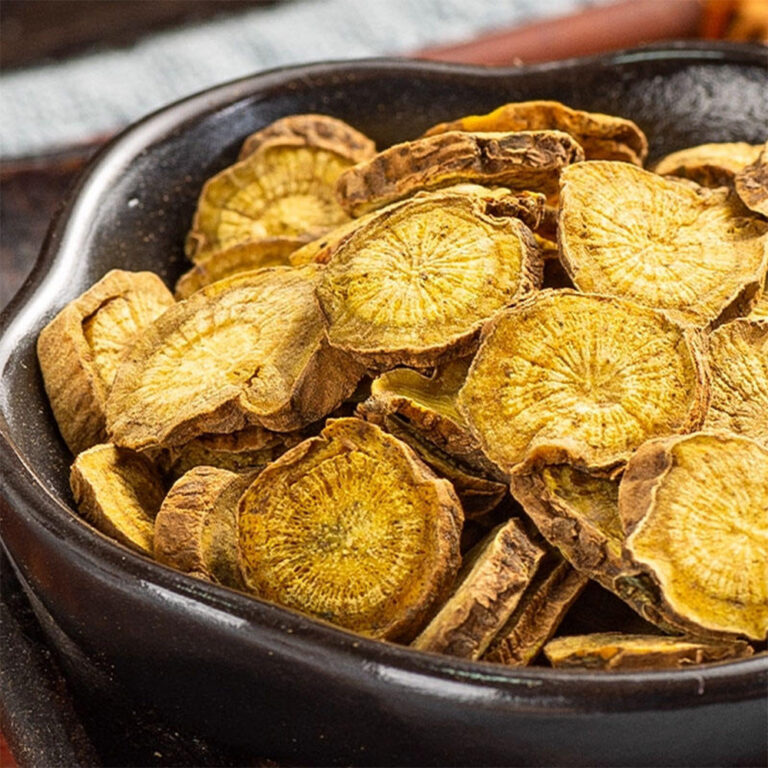
Suppliers use “slices”, “flakes”, “decoction pieces” and “segments” loosely. Define the cut by dimension, tolerance and fines limit, not by the word. The guide to choosing the right decoction piece cut size uses working bands of 1–2 mm for thin slices and 2–4 mm for thick slices, and lists dang gui among the herbs usually cut thin at about 1–2 mm. Treat those as working bands, not a standard, and check them against the pharmacopoeia or customer standard that applies to your market.
The same guide cautions that neither thin nor thick is always best. Thin slices expose more surface for faster wetting but produce more fines and need tighter sieve control. Thick slices hold their shape under longer boiling but need longer decoction. That matches the trade-off buyers see in practice.
Intended use
What goes wrong with a vague cut spec
What to specify
Decoction packs
Mixed thickness makes decoction and extraction hard to control
Thickness window and tolerance; outlier policy
Tea bags
Excess powder causes dusting, weight drift and sealing problems
Maximum fines; sieve window; fill-weight tolerance
Extraction
Slice size shifts extraction time and yield trend
Thickness band validated on a pilot run
Blending and milling
Uneven geometry can segregate in the hopper
Cut geometry or mesh window; retained % per screen
The tea-bag, extraction and blending rows reflect failure modes described in our specification sheet guidance for Chinese herbal slices, written for pharma and supplement factories. The decoction row reflects the identification guide’s warning about mixed thickness. Whichever use applies to you, validate the cut on a small run before committing to volume.
Moisture and Packaging: Specify What Happens After Loading
Our guide to a buyer spec that survives long transit argues that most transit failures are a combination of moisture and time, either from breathable packaging or from container condensation. It suggests spec language covering a moisture limit with an arrival retest using the same method as the COA, a sealed food-grade inner liner, desiccant, pallet clearance from container walls and a hold-and-retest rule.
Our own guides give different moisture figures: an example limit of 10.0% in the transit guide and “under about 12%” in the identification guide. That gap is a useful reminder that no single number is universal. The right limit depends on cut thickness, packaging, route length, season and the standard your market applies. Agree the number with the supplier using recent COA history, then write the test method and retest rule beside it.
Documents: Making the COA Enforceable
A COA that reads “pass” does not help a QA team. According to our specification sheet guidance, a useful COA lists each test item, the method, the result, the acceptance criteria and a lot code that matches both the outer carton and the inner bag. Add that lot-matching rule to the spec; mismatched lot codes are a common reason for incoming quarantine.
Test panels also vary by destination. Our standards overview describes an EU route built around Ph. Eur. methods and a US dietary supplement route built around USP chapters. The same dong quai slices may need different pesticide, heavy-metal and microbiology documentation depending on where and how they will be sold. Tell the supplier the destination and product category in the RFQ so the COA is built for your release process.
Ferulic acid is the marker most trade guides cite for dang gui. Both of our guides above give 0.05% on a dry basis as a commonly used minimum. Confirm that against the monograph or customer standard you actually follow, and state the calculation basis.
A short illustrative scenario (hypothetical, not a customer case): a buyer orders thin dong quai slices for tea bags with a spec covering botanical name, ferulic acid and moisture. The lot passes all three, but it contains a high proportion of fines. The filling line dusts and fill weights drift. Because the spec never limited fines or defined a sieve method, the buyer has no contractual basis for a claim. The fix is a one-line addition, not a more expensive grade.
Why the Lowest Price per Kilogram Can Cost More
A lower quote is often lower for a reason that is not stated in the quote. Common differences include:
A different root portion or grade basis.
Sulfur-fumigated stock instead of sulfur-free stock. The identification guide says sulfur-free material costs a little more in storage and warehouse control but avoids testing problems later.
Looser cleanliness, so more sorting or rejection on your side.
A higher fines fraction, which reduces usable yield for tea bags and blends.
Basic packing without a sealed liner or desiccant, raising moisture-claim risk on long routes.
A narrower test panel, leaving you to pay for extra testing.
Compare quotes on cost per kilogram of usable, released material, including retest, rework and the risk of a quality hold. This reasoning applies most strongly to long routes and regulated destinations. For a short route and a simple internal blend, a cheaper lot with a clear fines limit and moisture rule can be the right choice.
Labelling and Claims Sit Outside the Spec Sheet
If your product reaches consumers, review safety statements with your regulatory adviser. Memorial Sloan Kettering’s monograph advises people taking blood thinners such as warfarin to talk to a healthcare provider and advises avoiding dong quai during pregnancy and breastfeeding. It also lists photosensitivity among reported side effects. Your supplier can provide raw-material documents, but responsibility for finished-product claims and warnings remains with the brand.
What Should Buyers Specify Before Requesting a Quote?
Send the following in the first RFQ. It shortens quotation cycles and makes quotes comparable:
Botanical name and plant part: Angelica sinensis (Oliv.) Diels, root.
Root portion or grade basis, and preferred origin if you have one.
Raw or named processed form; sulfur-free requirement and SO₂ limit.
Cut form, thickness window, tolerance and maximum fines, with the test method.
Intended use: decoction pack, tea bag, extraction, blending or milling.
Moisture limit, test method and arrival retest rule.
Target market and product category, so the contaminant and microbiology panel can be scoped.
COA requirements: per lot, methods listed, lot code matching carton and inner bag.
Order quantity, delivery window, shipping route and sample requirements.
Buyers who want to see how the material is catalogued can start with our Dang Gui (dong quai) flakes product page. The page lists a 1 kg minimum order, free samples and COA reports. Treat those as starting points and confirm them for your cut, sulfur-free requirement and destination. Ask that the pre-shipment sample come from the same lot as the shipment, and keep a retained portion for any later dispute.
Frequently Asked Questions
What is the difference between dong quai and dang gui?
They usually refer to the same plant, Angelica sinensis. Dang gui is the pinyin name used in traditional Chinese medicine, and dong quai is the common Western name. In a specification, use the Latin name and plant part, and list the others as aliases.
Are dong quai slices the same as dong quai flakes?
Not necessarily. Suppliers use “slices”, “flakes” and “decoction pieces” loosely. Define the material by thickness range, tolerance and maximum fines, and confirm with a retained sample, so both parties are describing the same cut.
What thickness should dong quai slices be?
Trade guides, including ours, commonly cite about 1–2 mm for thin dang gui slices. The right figure depends on your process and the standard for your market. Specify a window and tolerance, then validate it on a pilot run before volume orders.
How can a buyer confirm the slices are genuine Angelica sinensis?
Require a COA that states the identity method, keep retained samples and consider independent testing on first orders. Published research documents adulteration with Levisticum officinale, Angelica acutiloba and Angelica gigas, so appearance and a marker assay alone are not enough.
Should I require sulfur-free dong quai slices?
For teas, beverages and supplements, buyers often do, because sulfur treatment can leave sulfite residues. State “sulfur-free” with a laboratory SO₂ limit suited to your market. Colour is only a screening signal and does not replace a test result.
What moisture limit should a dong quai spec use?
There is no universal figure. Our guides give examples such as 10.0% and “under about 12%”. Set the limit with your supplier using cut size, packaging, route and market standard, and add an arrival retest rule using the same method.
Our low MOQ of 1 kg (2.2 lb) makes it easy to order Chinese herbal slices or wholesale Chinese medicine herbs. Private-label and bilingual labeling are also available.
Delivery Cycle & Support
We have a fast 7-day lead time. We provide free samples, COA reports, and technical support to help you bring high-quality bulk Chinese herbs to market.
Quality & Certifications
Our products are manufactured in a GMP-certified facility and meet ISO22000 standards. All Chinese herbs are third-party tested for heavy metals, pesticides, and microorganisms.