Cinnamon Bark: Whole Pieces vs Cut Material for Different Buyers
Whole pieces or cut material? Compare cassia (Rou Gui) cinnamon bark forms by aroma retention, fines, and verification risk, with a quote-ready specification checklist.
Cinnamon bark reaches buyers as rolled or broken pieces, cut-and-sifted granules, or powder. The choice is often settled by price or by how the sample looks. It should be settled by process. Form determines how easily you can verify identity, how fast flavor releases, how quickly aroma fades, and how much dust your line produces. In short, choose whole pieces when visual verification, storage life, or in-house grinding matter most. Choose cut material when your process needs fast, uniform release and easy dosing. Choose powder only when you can verify identity analytically. This article compares whole and cut cassia bark (Cinnamomum cassia, Rou Gui) for tea brands, food manufacturers, TCM suppliers, extract makers, and distributors. It also lists what to specify so the form you buy is the form you receive.
What Do “Whole” and “Cut” Mean in the Cinnamon Bark Trade?
There is no single trade definition of either term, which is the first source of purchasing disputes. In practice, buyers meet four formats:
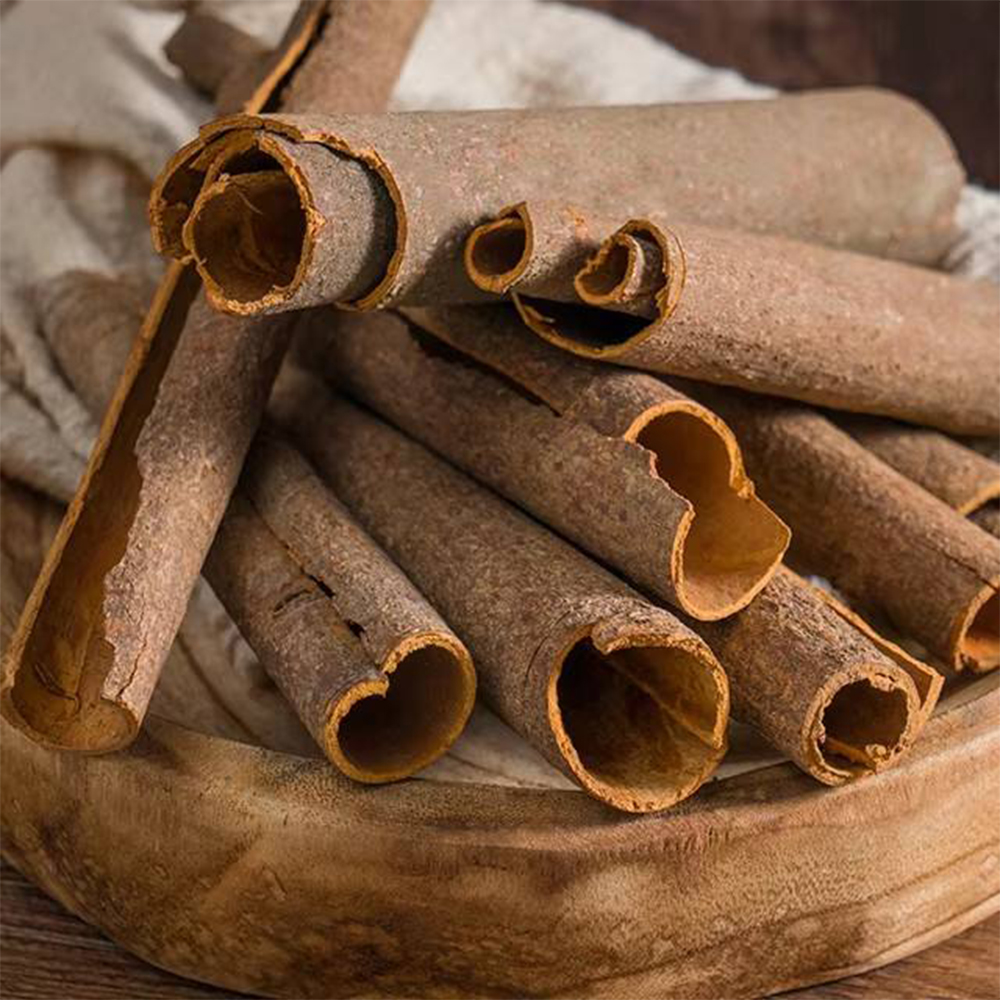
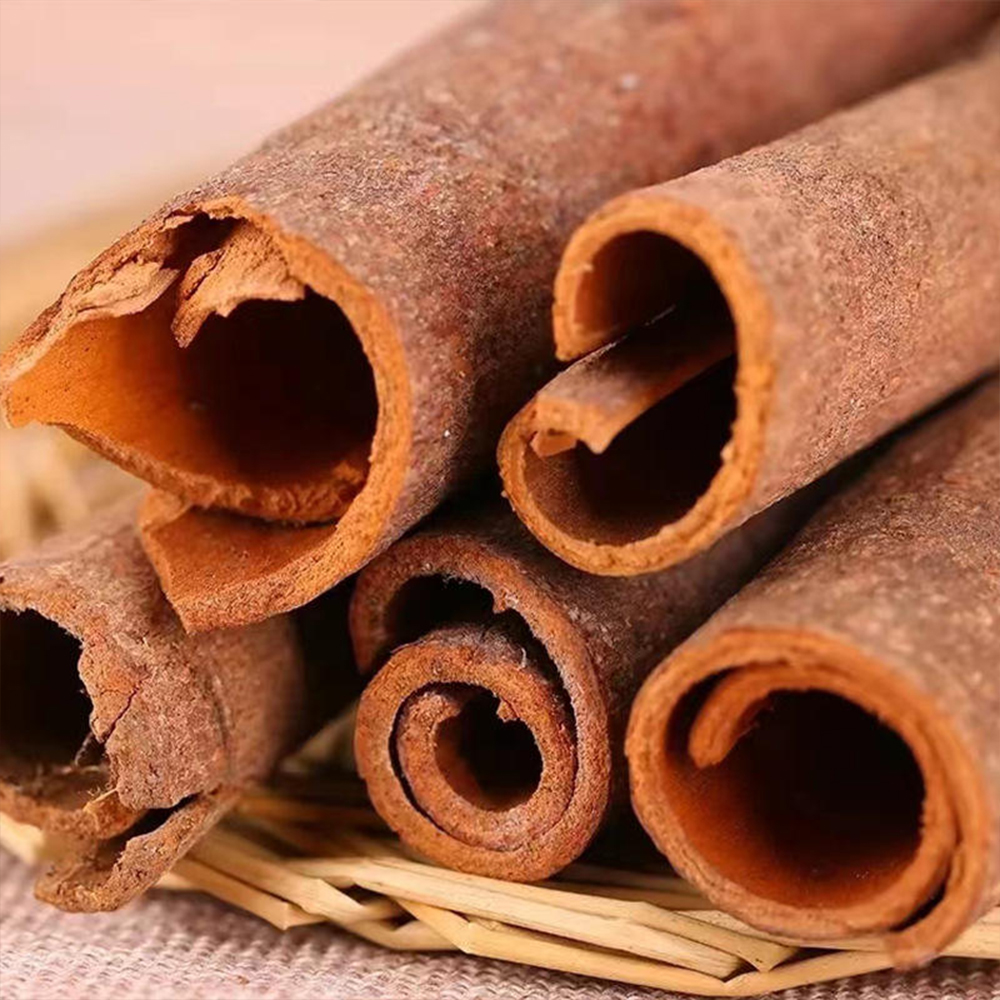
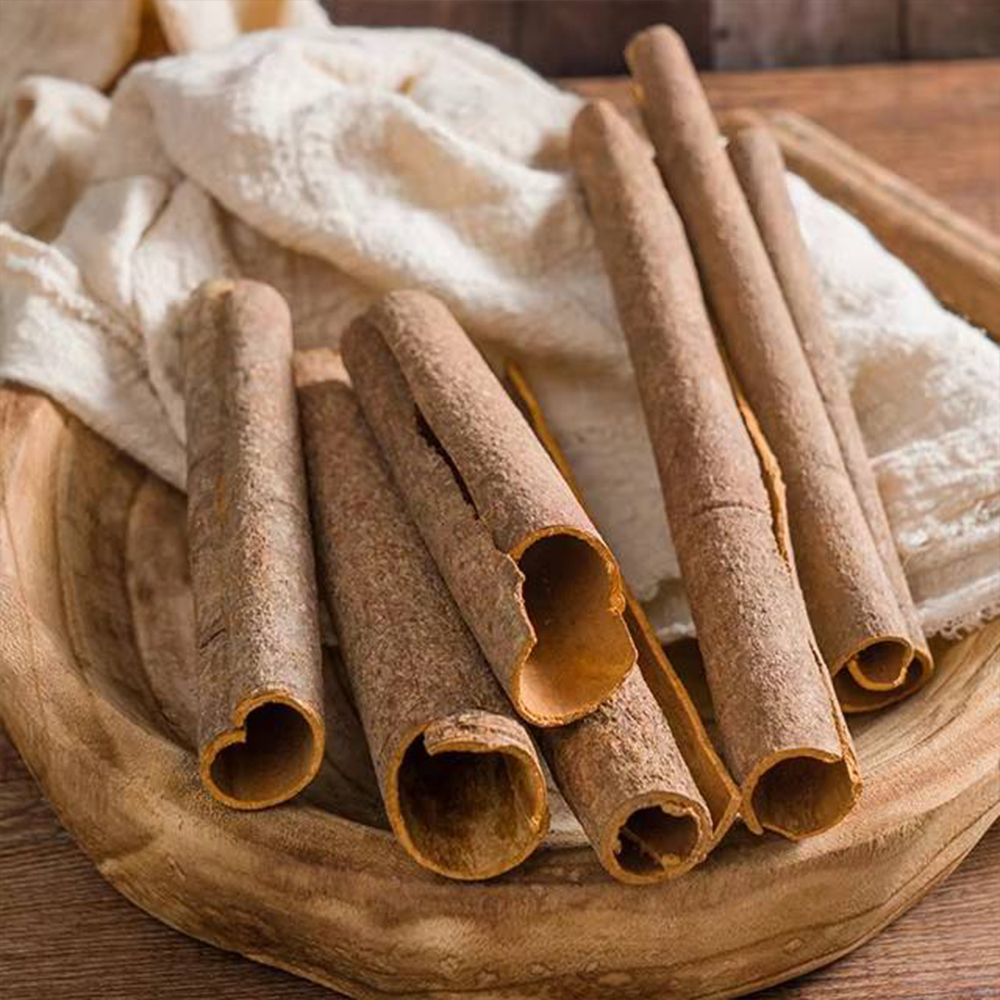
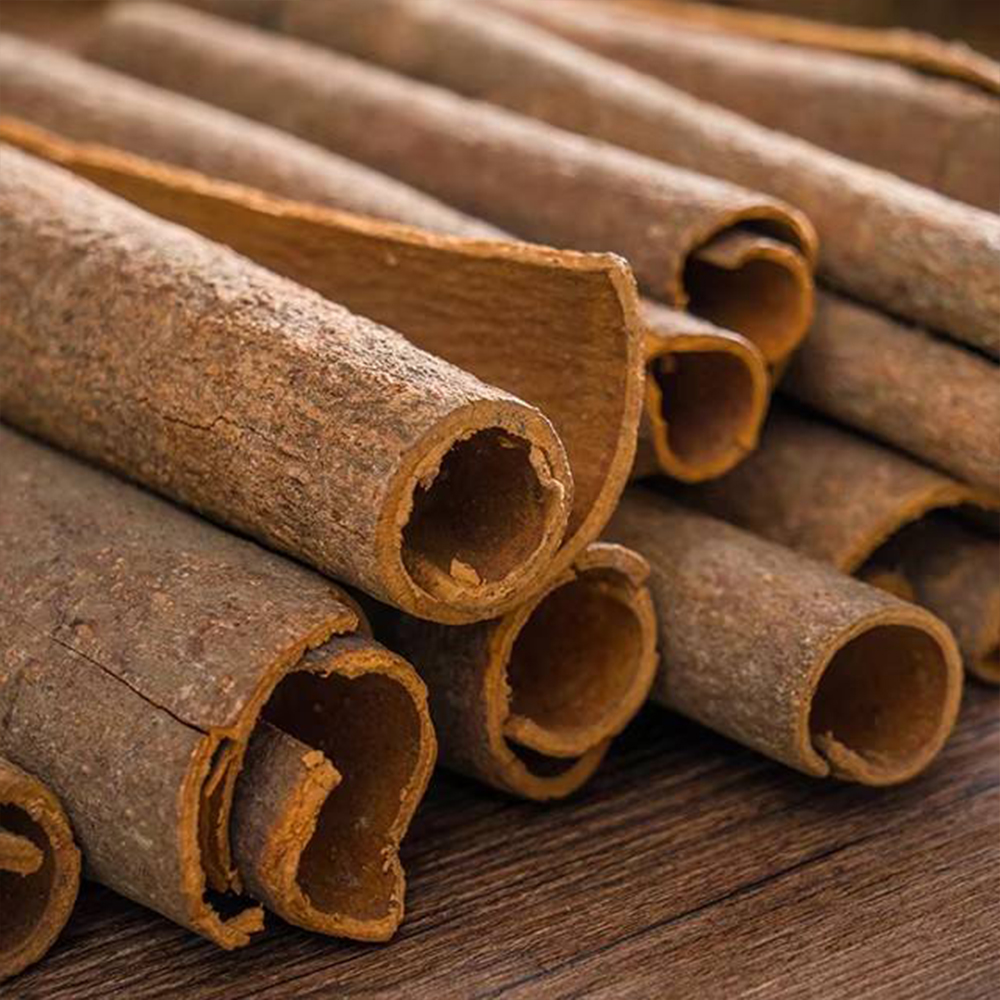
Whole pieces: rolled quills, strips, or large bark pieces that keep the bark’s natural shape.
Broken or chipped bark: irregular fragments produced by breakage or trimming, usually without a screened size window.
Cut and sifted (tea-cut): bark cut to a target size and screened, typically for tea bags and blends.
Powder: milled material, where the original bark structure can no longer be inspected.
Species is a separate variable. This article covers cassia, sold in Traditional Chinese Medicine as Rou Gui. Ceylon cinnamon (Cinnamomum verum) is a different raw material with its own standards and price level. The supplier’s dried Rou Gui cinnamon bark for bulk wholesale page lists Cinnamomum cassia and describes the material as dark brown bark rolled into quills or strips.
One point matters before any comparison. “Whole” describes shape. It does not tell you the grade, bark thickness, plant part, age of stock, or moisture. Two suppliers can both ship “whole” bark and deliver very different goods.
How Does Form Change Flavor Release, Dust, and Shelf Life?
Smaller pieces release flavor faster and lose it faster. Cutting or milling exposes more bark surface to hot water, solvent, and air. That helps extraction speed and dosing accuracy. It also gives volatile aroma compounds more opportunity to escape or oxidize during storage and shipping.
The supplier’s slice, tea-cut, and powder buying guide describes the same trade-off. Finer material extracts faster but stores worse, while larger pieces hold aroma longer but need more time and heat. Treat that as sound physical reasoning rather than a measured shelf-life figure. Real results depend on:
Piece thickness. Thick cassia bark releases more slowly than thin bark at the same cut length.
Time since cutting or milling. Aroma loss starts when the surface is exposed, not when the order is placed.
Packaging barrier. Oxygen and moisture ingress matter more for fine material.
Storage and transit temperature. Heat events during shipping affect all forms.
Brewing or extraction conditions. Water temperature, contact time, and filter or bag material change what “weak” means.
Aroma complaints also rarely have a single cause. The supplier’s article on Rou Gui oil and aroma grading and preventing flat-flavor claims frames them as a mix of grading, storage and shipping, and sampling issues. It also lists lot-to-lot mismatch against a reference sample as one failure type. Whatever form you buy, ask for the cutting or milling date, the packaging type, and a lot-matched reference sample.
Which Form Fits Which Buyer?
The right form depends on what happens to the bark next. The profiles below reflect typical use patterns. Confirm the details against your own process.
Tea and Herbal Blend Brands
Cut-and-sifted bark usually fits tea bags, because uniform pieces dose consistently and flow well on filling lines. The main risks are fines, which cloud the cup and can pass through bag material, and an undefined size window. Whole pieces or large strips suit premium loose-leaf and jar presentations where customers see the ingredient. Length and curl vary, though, which complicates packing and dosing. The guide to bark herbs in slices, strips, or chunks covers the same decision across bark materials. It helps when choosing between a visual format and a functional one.
Spice and Food Manufacturers
Food manufacturers that mill in-house often prefer whole or coarse pieces. They can inspect what goes into the grinder and control the milling date. Those buying pre-cut or ground material rely more heavily on the certificate of analysis (COA) and supplier records. If one lot may serve both food and herbal channels, write one specification covering both rather than relying on “food grade” wording. The guide to writing a dual-use cinnamon bark specification explains how to separate release decisions by application. Coumarin deserves attention in food use. Form by itself does not change the bark’s coumarin content, but it does change how much visual evidence you have about what you are buying.
TCM Dispensaries and Decoction Suppliers
Practitioners and pharmacy buyers generally expect recognizable bark. That means whole pieces, or slices and broken pieces that still show bark structure. Recognizability supports incoming inspection against the pharmacopoeial description. Very fine cuts remove that visual cue and add little for slow decoction.
Extract and Supplement Manufacturers
Extractors care more about identity, marker content, and lot traceability than appearance. Whole or coarse material is easier to verify and clean before milling. Cut material is acceptable if the supplier documents the source bark and cutting process. For powder, expect to require analytical identity evidence (see the evidence section below). A 2026 paper reports that the Chinese Pharmacopoeia designates volatile oil (above 1.2%) and cinnamaldehyde (above 1.5% on a dry-weight basis) as quality markers for Rou Gui. Confirm the current edition and test method before copying those figures into a contract.
Distributors and Repackers
Whole pieces give distributors flexibility to cut to order and tend to survive storage better. They tie up working capital and need cutting capacity. Pre-cut stock moves faster for tea and blending customers but generates fines during repacking. If 100 kg of bark loses even a few kilograms to dust during handling, that loss comes straight out of margin. Define fines tolerance before the order.
Whole Pieces vs Cut Material: Decision Comparison
The table below is a qualitative comparison, not measured data. Actual performance varies by lot, supplier, and processing.
Factor
Whole pieces
Broken or chipped
Cut and sifted (tea-cut)
Powder
Visual identity check
Strongest; bark structure visible
Good if pieces are large enough
Limited; depends on cut size
None; needs lab methods
Flavor release speed
Slowest
Moderate, uneven
Fast and fairly uniform
Fastest
Aroma retention in storage
Generally best
Moderate
Moderate
Generally shortest
Dust and fines risk
Low to moderate
Moderate to high
Moderate; set a limit
Not applicable
Dosing and line flow
Poor for small bags
Variable
Good
Good, but can dust
Main buyer risk
Undefined grade or thickness; hidden moisture
Mixed sources, no size window
Fines, undefined sieve profile
Identity and contamination unverifiable by eye
Best fit
TCM supply, in-house grinding, premium loose tea, long storage
No. “Whole is better” is a useful rule only under certain conditions. Treating it as universal leads to avoidable cost and mismatch.
Whole pieces are easier to inspect, so they reduce one kind of risk. They do not guarantee species, freshness, or cleanliness, and they add handling costs if you need small, uniform pieces. A tea brand that buys whole bark and then has it cut elsewhere takes on another processing step, another contamination point, and another lot-linkage problem. A supplier that cuts and sifts on a controlled line, with a documented sieve profile, can deliver a more consistent product for tea bags than irregular whole pieces.
The reverse risk is just as real. “Cut” can mean carefully sized bark from a declared grade, or it can mean trimmings and broken material of unknown origin. The label alone cannot tell you which. Ask what the cut material was made from, and compare it against a lot-matched reference sample.
Whole pieces are the better choice when you can inspect them, grind them yourself, or need longer storage. Cut material is the better choice when your process runs on uniformity and the supplier documents the cut. The wrong choice is buying either one without a written size window.
What Does the Evidence Say About Verification Risk by Form?
Evidence specific to Chinese cassia wholesale bark is limited, so treat the following as directional rather than conclusive.
A 2025 study led by the European Commission’s Joint Research Centre, summarized in its JRC publication record, analyzed 104 cinnamon samples bought at retail, mainly in Europe. It found that 66.3% failed international quality criteria, breached food safety legislation, were suspected of fraud, or had coumarin levels potentially hazardous for children. The full paper in npj Science of Food reports that all test materials with unusually high levels of aluminium, silicon, titanium, chromium, iron, zirconium, and lead were sold ground. Scope matters here. These were retail samples, not wholesale Chinese bark, and the study does not prove that powder is always worse. It does support the practical point that powder removes your ability to inspect the product and shifts verification to the laboratory.
The same paper describes ISO 6538 as limiting total ash for Chinese-type cassia to 4%. It also notes that Regulation (EU) 2023/915 sets a lead maximum of 2.0 mg/kg for bark species. Total ash is one measurable check on dirt, grit, and non-bark material. The paper adds that Regulation (EC) No 1334/2008 sets coumarin limits in certain finished foods, from 5 mg/kg in desserts to 50 mg/kg in traditional or seasonal bakery products labelled as containing cinnamon. It sets no limit for coumarin in cinnamon itself. Verify current regulatory text for your destination market before setting contract limits.
Which Specification Items Matter More Than “Whole” or “Cut”?
Cut Size and Sieve Distribution
State the size window, not the word “cut.” For whole pieces, define length, width, and thickness ranges. For cut material, define the target range, the percentage that must fall inside it, and maximum fines and oversize. Ask for photos beside a ruler and a sieve breakdown from the actual lot.
Fines and Dust
Fines are the hidden cost in cut material, and in whole pieces that break in transit. Set a maximum fines percentage and specify how it will be measured. Agree when it is measured: before shipping, on arrival, or both. This matters most if you repack or fill small bags.
Moisture and Aroma
Moisture predicts storage stability, and thick whole pieces can look dry on the outside while holding moisture inside. Request moisture data by batch. For aroma, agree on a reference sample and a sensory description. Ask whether volatile oil or cinnamaldehyde will be reported, by which method, and on what basis.
Identity and Plant Part
Write the Latin name, accepted synonyms, plant part (dried bark, not twig), origin, and how identity will be verified. For whole or broken bark, verification can include morphology and comparison with an authenticated reference. For powder, require analytical support.
Contaminants, Microbiology, and Sampling
“Tested” is not a specification. Name the analytes (lead, cadmium, arsenic, mercury, pesticide residues, microbiology), the method, the reporting limit, and your acceptance limits based on the destination market. Define how the lot is sampled, since a single scoop from the top of a sack proves little. The supplier’s bulk sourcing guide for bark Chinese medicinal materials covers retained samples, source verification, and reject standards in more detail.
What Should Buyers Specify Before Requesting a Quote?
A complete request lets the supplier quote the right form the first time. Include:
Intended use: tea bag, loose tea, food seasoning, decoction, extraction, or capsule. This decides the form.
Species and plant part:Cinnamomum cassia, dried bark only, with origin if relevant.
Form and size window: whole, broken, or tea-cut, with numeric ranges and a fines limit.
Aroma reference: request a lot-matched sample, and say how you will judge it.
Documents and tests: batch-level COA, identity method, contaminants, microbiology, moisture, and coumarin if used in food.
Destination market and claims: food, supplement, or herbal channel, since requirements and labeling differ.
Packaging: inner liner, outer carton or bag, net weight, batch label, and any barrier requirement for cut material.
Order quantity and schedule: trial and repeat volumes, and delivery timing.
The supplier’s product page states a 1 kg minimum order quantity, a 7-day lead time, free samples, COA reports, and GMP and ISO 22000 certification. These are company statements on its own page. Confirm the figures, the certificate scope, and the lot-specific documents for your chosen form before you rely on them. Request a sample in the form you intend to buy, test it against your written specification, and approve a reference sample before the first production order.
Frequently Asked Questions
Is whole or cut cinnamon bark better for tea products?
Cut-and-sifted bark usually suits tea bags because it doses evenly and brews faster. Whole pieces or strips suit premium loose tea where appearance matters. Either way, specify a size window and a maximum fines percentage to avoid cloudy infusions and bag leakage.
Does cutting cinnamon bark reduce aroma?
Cutting exposes more surface, so volatile aroma compounds can escape or oxidize faster during storage. The effect depends on piece size, packaging barrier, temperature, and time since cutting. Ask for the cutting date and packaging details, and compare each lot with an approved reference sample.
Is cinnamon powder riskier to buy than whole bark?
Powder is harder to verify because you cannot inspect bark structure, thickness, or foreign plant parts by eye. Identity and cleanliness then rely on laboratory methods, lot-linked records, and supplier qualification. In a European retail study, all samples with unusually high levels of certain elements were ground products.
What is the difference between Rou Gui and Ceylon cinnamon?
Rou Gui is cassia bark, Cinnamomum cassia, used in TCM and as a spice. Ceylon cinnamon is Cinnamomum verum, a different species with separate ISO standards and a milder profile. They are not interchangeable in a specification.
What size should cut cinnamon bark be?
There is no universal size. The right window depends on your bag material, brewing or extraction time, and equipment. State a numeric range, the percentage that must fall within it, and maximum fines and oversize, then confirm them with a lot sample.
Which tests should I request for cinnamon bark in bulk?
Request botanical identity, moisture, heavy metals, pesticide residues, microbiology, and foreign matter on a batch-specific COA. Add volatile oil or cinnamaldehyde and coumarin where your application needs them. Define the method, reporting limit, and acceptance limit for each.
How do I prevent “flat flavor” complaints from cinnamon bark?
Agree a lot-matched reference sample, specify moisture and packaging, record cutting or milling dates, and rotate stock first-in, first-out. Define how aroma will be assessed on arrival so disputes can be settled against evidence, not memory.
Our low MOQ of 1 kg (2.2 lb) makes it easy to order Chinese herbal slices or wholesale Chinese medicine herbs. Private-label and bilingual labeling are also available.
Delivery Cycle & Support
We have a fast 7-day lead time. We provide free samples, COA reports, and technical support to help you bring high-quality bulk Chinese herbs to market.
Quality & Certifications
Our products are manufactured in a GMP-certified facility and meet ISO22000 standards. All Chinese herbs are third-party tested for heavy metals, pesticides, and microorganisms.