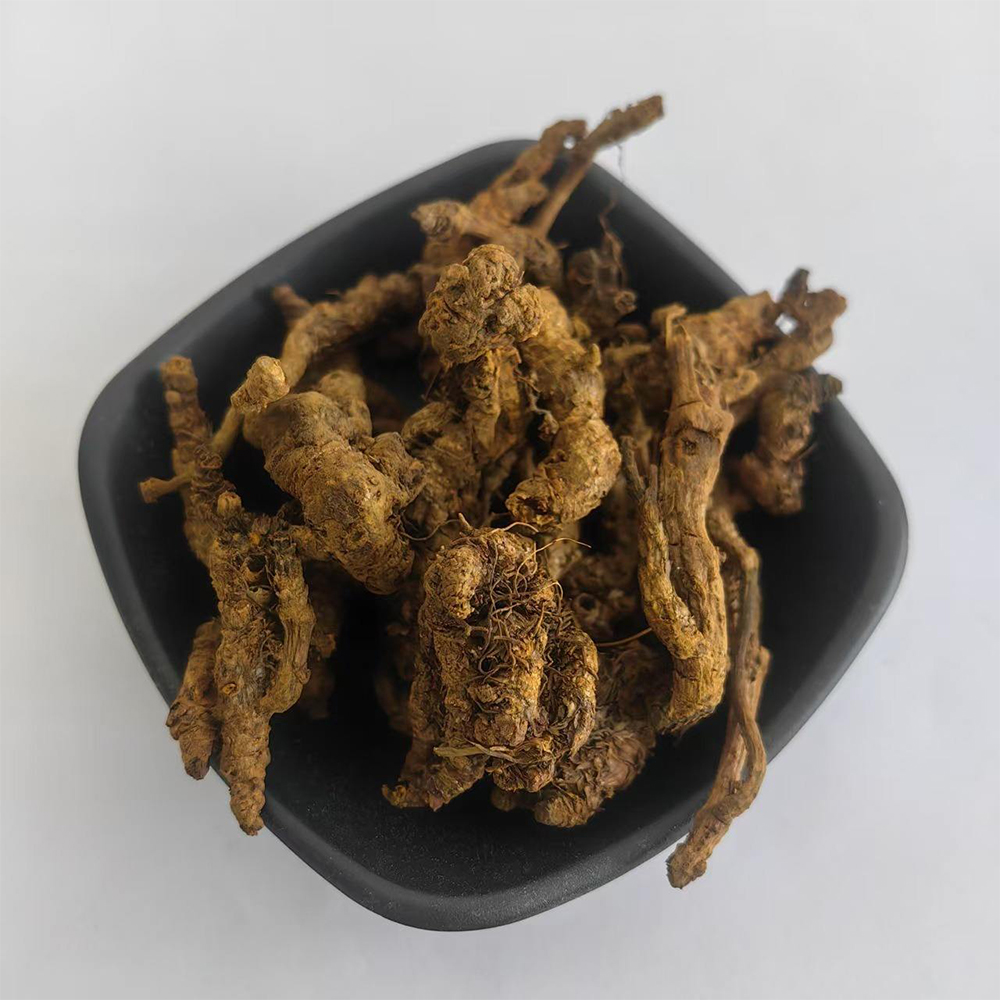
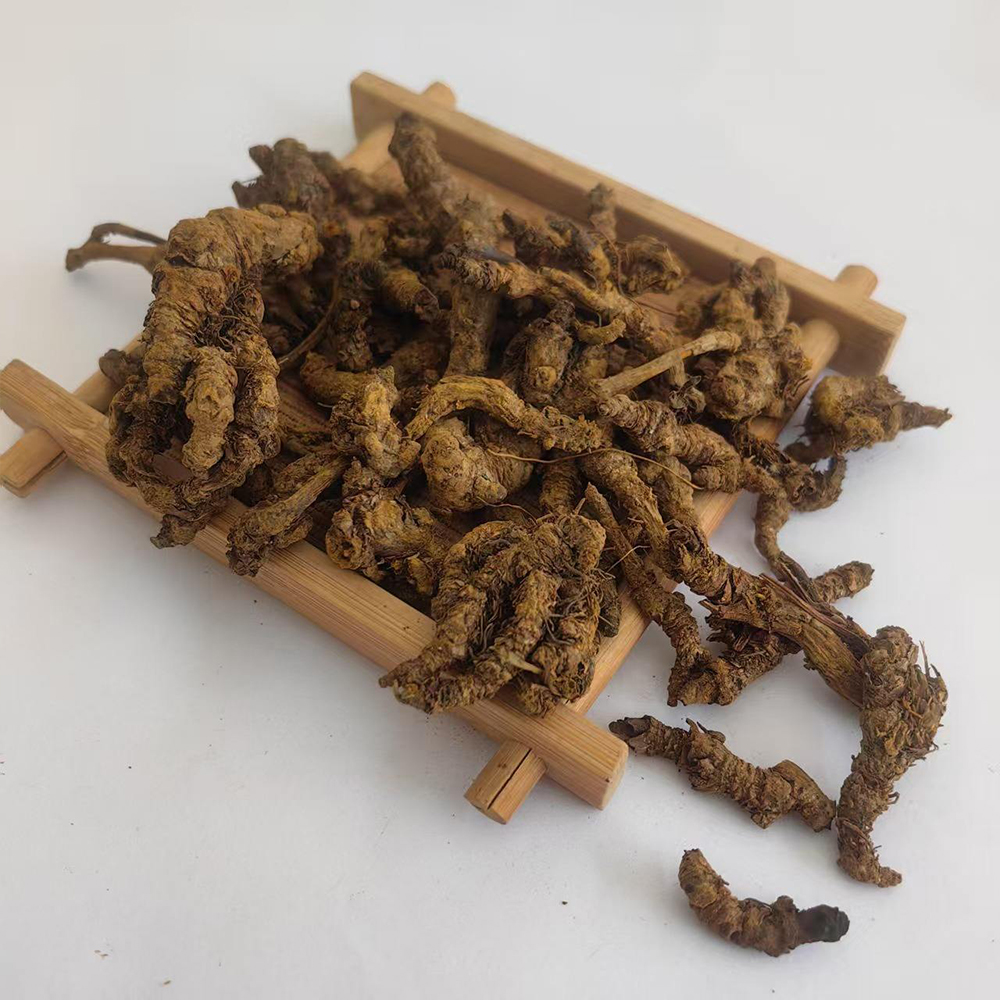
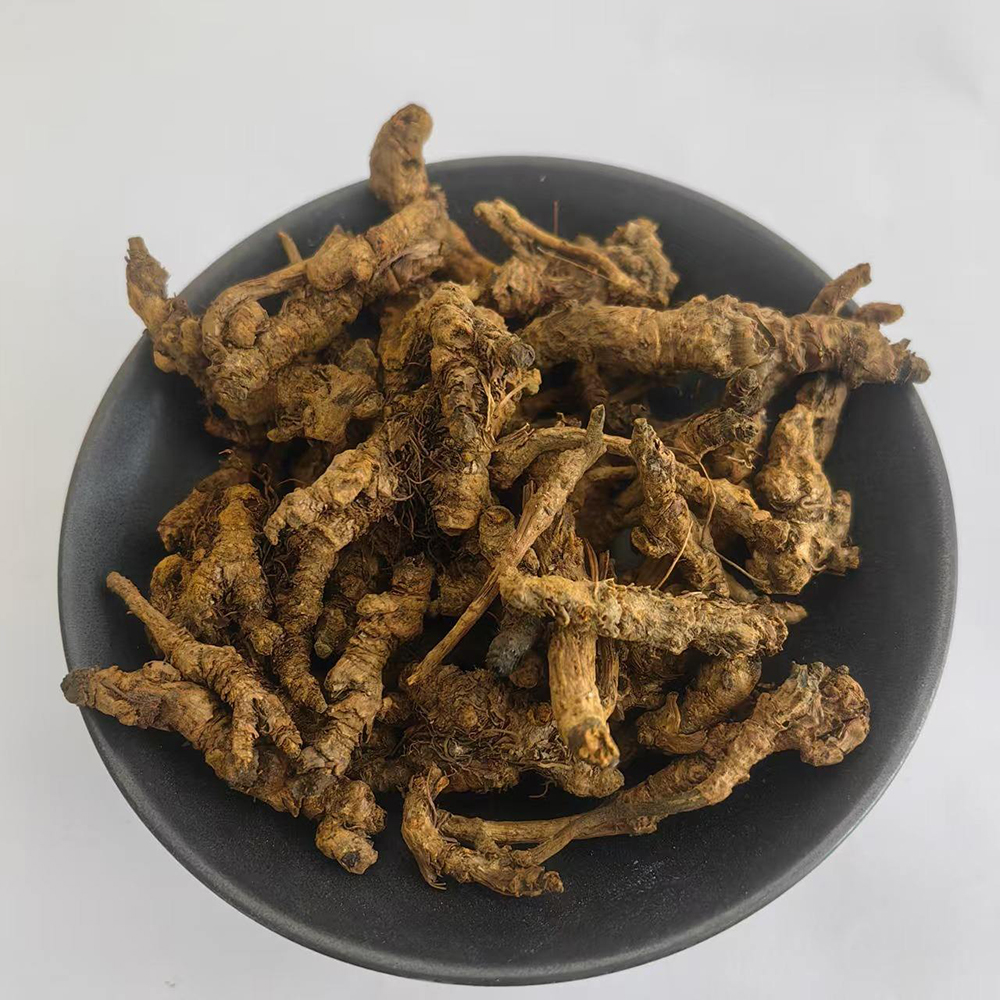
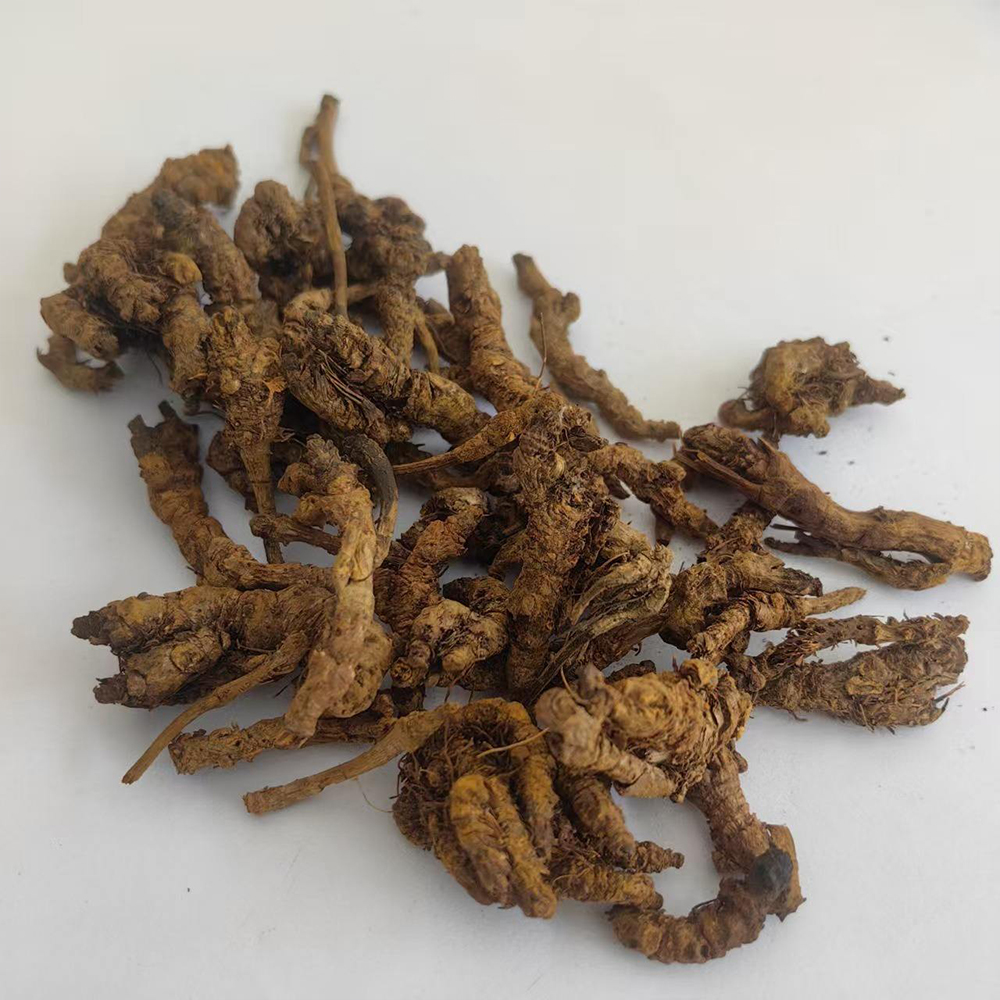
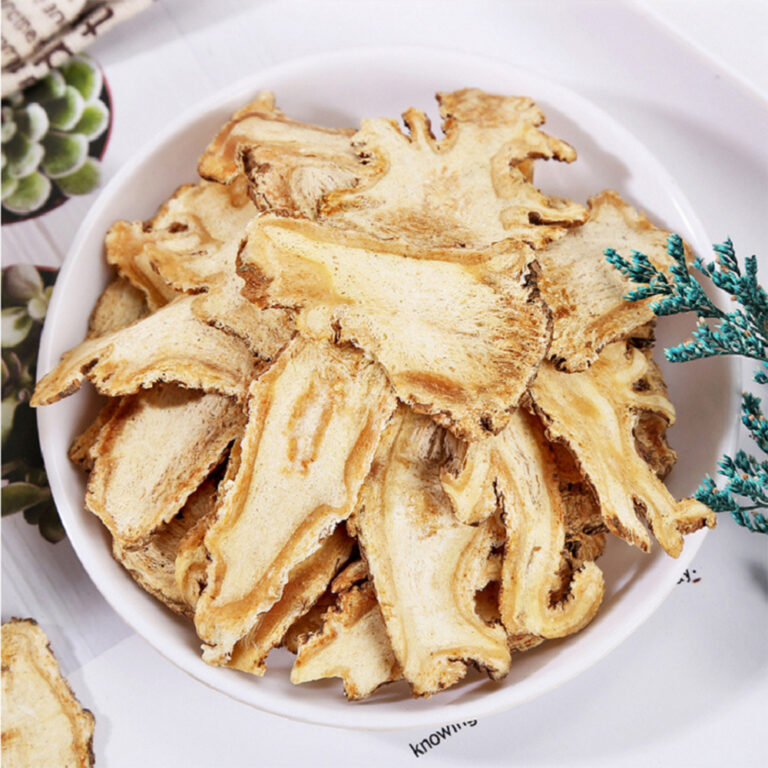
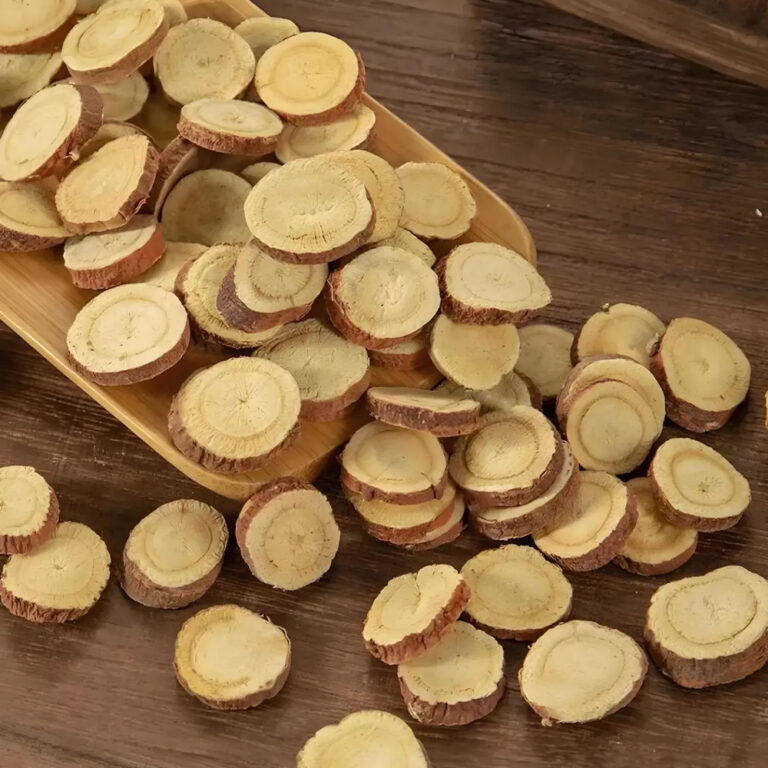
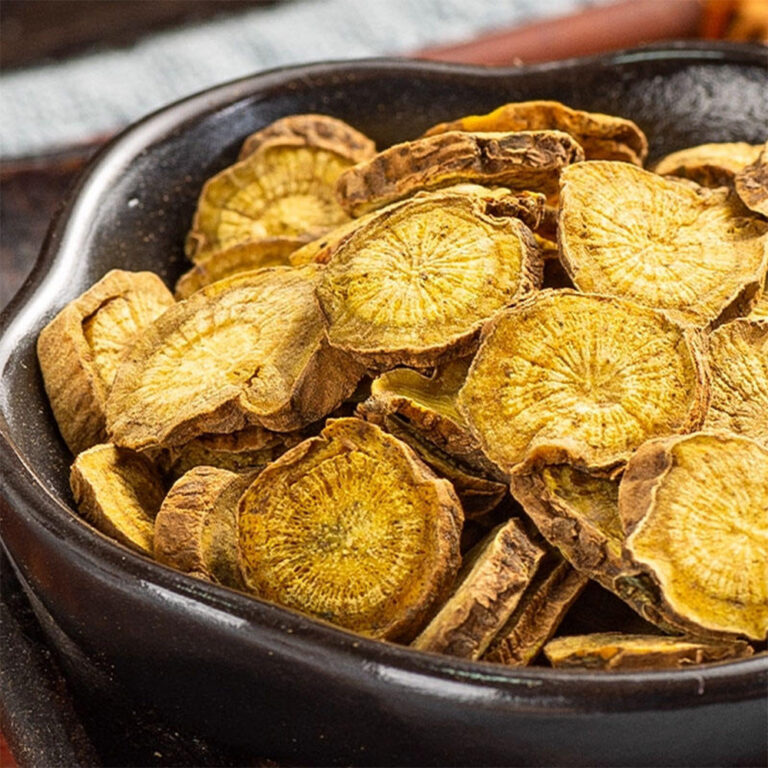
“Coptis root” is a shorthand that hides two problems. The part traded is the dried rhizome, not a true root, and the name “Huang Lian” can point to more than one botanical source. A purchase order that only says “coptis root, sliced” leaves the species, the quality standard and the cut open to interpretation. That is how two lots with the same label end up with different alkaloid profiles, different yields on the line and different documentation.
This guide is for procurement, quality and product-development teams that buy Coptidis Rhizoma for decoction pieces, herbal tea cuts, powders or beverage extracts. It explains how to pin down identity first, then choose a cut form, then write an RFQ that a supplier can answer without guessing.
What Does “Coptis Root” Actually Mean on a Purchase Order?
On a purchase order, “coptis root” should mean Coptidis Rhizoma: the dried rhizome of a Coptis species used as Huang Lian in Traditional Chinese Medicine. The root-versus-rhizome wording matters because specifications and pharmacopoeial monographs refer to the rhizome.
Naming is the first failure point. Pinyin alone is risky because several unrelated herbs share the “Huang” prefix. Buyers who browse a supplier’s root and rhizome category will see Huang Lian (Coptis), Huang Qin (Scutellaria), Huang Qi (Astragalus) and Huang Jing (Polygonatum) listed side by side. Yellow, bitter Huang Bai (Phellodendron bark) is a further neighbour in sourcing conversations, although it is a bark rather than a rhizome.
Name on the order
Botanical source
Plant part
Typical confusion
Huang Lian / Coptidis Rhizoma
Coptis species
Rhizome
The subject of this guide
Huang Qin
Scutellaria
Root
Similar pinyin, different herb and chemistry
Huang Qi
Astragalus
Root
Similar pinyin; a sweet tonic root, not a bitter alkaloid herb
Huang Jing
Polygonatum
Rhizome
Another “Huang” rhizome with a different use
Huang Bai
Phellodendron
Bark
Also yellow and bitter; different plant part
Always state the Latin binomial, the plant part and the pinyin on the RFQ, in that order of priority. The supplier’s Coptis rhizome slices (Huang Lian) listing follows this pattern, giving the Latin name Coptidis Rhizoma, the pinyin and Coptis chinensis as the species. It does not state a slice thickness or a berberine minimum, so those still need to be agreed in writing.
Which Coptis Species Count as Huang Lian?
Three species count as Huang Lian under the Chinese Pharmacopoeia. According to the Chinese Pharmacopoeia 2020 entry reproduced in the Shennong database, Coptis rhizome is the dried rhizome of Coptis chinensis, Coptis deltoidea or Coptis teeta, traded as Weilian, Yalian and Yunlian respectively. The same entry gives each type its own description and its own minimum berberine content.
Trade name
Species
Description in the monograph
Minimum berberine (dried basis)
Weilian
C. chinensis
Clustered, often curved, chicken-claw shape; single branches 3–6 cm long, 0.3–0.8 cm across; pith sometimes hollow
5.5% (plus minimums for other alkaloids)
Yalian
C. deltoidea
Mostly single-branched, slightly curved, 4–8 cm long, 0.5–1 cm across; longer smooth “bridge” internodes
4.5%
Yunlian
C. teeta
Curved and hooked, mostly single-branched, relatively small
7.0%
Three practical points follow from this table.
The species label is part of the specification. “Coptis chinensis” on a quote tells you the likely type is Weilian. If a buyer needs Yalian or Yunlian, for a formula, a customer requirement or a market file, the RFQ must say so. The three types are also separated under the microscope. In the monograph’s description, stone cells are present in the pith of Yalian but absent from the cortex, medullary sheath and pith of Yunlian.
Species differ chemically, not just botanically. A comparative study of Rhizoma Coptidis from different Coptis species reported berberine across the sampled drugs ranging from about 48 to 79 mg/g. It also identified trace compounds that help discriminate sources: groenlandicine and magnoflorine for C. deltoidea, and berberrubine and demethyleneberberine for C. teeta. That study is a research dataset, not a trade specification, but it shows why “same herb, same chemistry” is not a safe assumption.
Supply of C. teeta carries conservation context. A 2026 Frontiers in Plant Science assessment of Coptis teeta conservation describes the species as a Class II nationally protected plant in China and as Critically Endangered on the IUCN Red List. This article does not give legal advice. If you buy Yunlian, ask the supplier to document whether the material is cultivated and what source paperwork exists, and check your destination market’s rules.
Western “Goldthread” and Goldenseal Are Not Substitutes
Buyers who also source for Western herbal markets sometimes meet Coptis trifolia (American goldthread) or goldenseal under similar common names. A study comparing Coptis chinensis with its related American species found that, among the species compared, goldenseal (Hydrastis canadensis) had the most berberine, while Coptis trifolia had the most coptisine. It also found that neither American herb contains all the alkaloids present in Coptis chinensis used in Chinese medicine. A product that is high in berberine is therefore not automatically Huang Lian.
Why a High Berberine Result Does Not Prove Identity
A lot with a strong berberine number is not necessarily the right lot, and a lot just under a headline figure is not necessarily the wrong one. Berberine is the main marker in Coptidis Rhizoma specifications, but it is one marker among several.
The reasons are practical:
Berberine occurs in other plants. The goldenseal result above shows that a berberine-rich material can come from a different genus. A COA that reports berberine alone cannot separate Coptis from other berberine-containing botanicals.
The monograph asks for more than one alkaloid. For Weilian, the database text lists minimums for several companion alkaloids as well as berberine. A pharmacopoeia-style specification checks the pattern, not a single peak.
Minimums differ by type. Yunlian’s 7.0% floor and Yalian’s 4.5% floor are not interchangeable. Comparing a Yalian lot to a 7.0% target would reject legitimate material, and applying a 4.5% target to Yunlian would accept material below its own standard.
The test must match the cut form. The database’s entry for prepared slices gives different limits from the crude drug: moisture not more than 12.0% and total ash not more than 3.5% for slices, against 14.0% and 5.0% for the unprocessed rhizome. It also shows a 5.0% berberine minimum for slices. Ask which standard the COA was measured against and on which form.
For a hypothetical illustration, imagine a buyer who orders “Huang Lian slices” and receives a COA showing one berberine figure and nothing else. The lot may be fine, but the buyer cannot tell whether it is Weilian, a lower-grade lot or a different berberine source. An identity test against a reference drug, such as TLC or HPLC fingerprinting, answers that question, and a single assay line does not.
Treat the database page as a convenient reading of the monograph rather than the legal text. Confirm limits against the official Chinese Pharmacopoeia edition your customer or regulator recognises.
Which Cut Form Should You Buy: Slice, Tea-Cut or Powder?
The right cut depends on the final product and its filter, not on habit. Coptidis Rhizoma is a small, knobby, fibrous rhizome, so its slices look different from those of a broad root such as astragalus. The monograph’s processing step soaks the rhizome until it is thoroughly moistened, cuts thin slices and dries them, and it describes the finished slice as irregular and thin. Expect irregular outlines. A uniform, perfectly round slice is not a marker of authenticity for this herb.
Form
Best fit
Main advantages
Main risks to specify against
Thin slice
Decoction pieces, pharmacy dispensing, visual QC
Fits the monograph’s prepared-slice form; easy to inspect colour and cross-section
Fines and broken fragments; moisture; thickness variation
Tea-cut (cut and sifted)
Teabags, co-packing, short steeps
Faster release; flows on filling lines
Sieve profile and percentage of fines; filter-media fit
Powder
Capsules, sachets, extraction feedstock
Fast extraction; dose control
Faster oxidation and moisture pick-up; barrier packaging; milling must not mask poor raw material
Processed slice (ginger or wine)
Formulas that call for a processed Huang Lian
Matches the traditional preparation
Different material from raw slices; must be named on the order
The supplier’s guide to slice, tea-cut and powder forms explains the extraction-speed and shelf-life trade-offs between these formats, and its decoction-piece cut size guide lists general bands such as 1–2 mm for thin slices. Treat those as general starting points, not Coptis-specific tolerances. Agree a thickness window and a sieve profile for this herb in your own specification.
Raw, Ginger-Processed and Wine-Processed Huang Lian
The monograph treats raw slices and processed slices as separate articles. Ginger-processed Huang Lian is stir-baked with ginger juice, using 12.5 kg of ginger per 100 kg of Coptidis Rhizoma. The wine-processed version uses 12.5 kg of yellow rice wine per 100 kg. The result looks similar to the raw slice but is darker, with a ginger or wine note.
For buyers, the point is control of the order. “Huang Lian” without a qualifier means raw. A formula calling for processed material needs the processing method and the ratio stated, and an allergen or declaration check where ginger or wine is involved in the destination market.
Bitterness and Process Load in Beverages
Coptis is an intensely bitter material, and the monograph describes its taste as extremely bitter. Beverage developers who use it face filtration load, fines and aftertaste management. The supplier’s article on bitter rhizome herbs like Coptis in functional drinks covers format choices such as shots versus larger bottles. Regulatory positioning for any functional claim should be reviewed for the target market before formulation.
What Quality Checks Should Accompany a Coptis Slice Lot?
A lot-specific COA is the minimum, and it should show what was tested against what standard. For Coptidis Rhizoma slices, a useful document set includes:
Species or type (Weilian, Yalian or Yunlian) and the Latin binomial.
Identification method, for example TLC against a reference drug, with the reference named.
Berberine content and, where the standard requires it, the companion alkaloids, on a dried basis.
Moisture and total ash, reported against the limits for the cut form supplied.
Heavy metals, pesticide residues and microbial counts from an identified laboratory, for the market you ship to.
Batch or lot code that matches the label and the shipping documents.
Visual checks at receiving add a second layer. The monograph describes a fresh yellow or reddish-yellow cut surface with radial texture for slices. Compare each delivery against a retained reference sample for colour, fibre, residual rootlets and stem remnants, and fines. Residual rootlets and stems are a spec item worth negotiating, because the monograph describes harvest as removing rootlets and soil and knocking off remaining rootlets.
Documentation claims on a website are a starting point, not proof. The supplier’s 25-question Chinese herbal slices supplier checklist is a useful way to test whether certificates, COAs and traceability can be verified for the specific lot you intend to buy. The supplier’s own product page states a GMP-certified facility, ISO 22000 standards, third-party testing for heavy metals, pesticides and microorganisms, a 1 kg MOQ and free samples. Those are the supplier’s statements, so request the current certificates and a pre-shipment sample COA before committing volume.
What Drives Cost and Lead Time for Coptis Slices?
Cost differences between quotes usually trace back to a few variables rather than a single price list:
Species and type. A quote for one type is not comparable with another. Yunlian also carries the conservation context described above.
Specification tightness. A higher berberine floor, a fuller alkaloid profile, or a tight thickness window narrows the pool of acceptable raw material.
Cut yield. Thin slicing of a small, knobby rhizome can produce fines and fragments. If fines are rejected, the effective price per usable kilogram rises.
Processing step. Ginger or wine processing adds a step and a different article number.
Testing and documentation. Lot-level third-party testing for contaminants and identity adds cost and time, but it is the part of the price that protects the importer.
Packaging and storage. Powder and fine cuts need better barrier protection than slices.
The lowest unit price does not always give the lowest total cost. A cheaper quote that omits species, identity testing or a sieve spec can shift the cost to rework, rejected lots or a failed customs or customer audit. That does not mean the highest quote is safe. It means two quotes are only comparable when they cover the same species, cut and test package.
What Should Buyers Specify Before Requesting a Quote?
A complete RFQ lets the supplier quote the same article every other bidder quotes. Include:
Identity: Latin binomial, plant part (rhizome), pinyin, and the required type (Weilian, Yalian or Yunlian) if it matters.
Standard: the pharmacopoeia and edition you want the material tested against, and whether limits apply to the raw rhizome or to the cut slice.
Form and cut: thin slice, tea-cut or powder, with a thickness window or sieve profile, and a maximum for fines if you have a limit.
Processing: raw, ginger-processed or wine-processed, with the ratio if relevant.
Analytical package: berberine and companion alkaloids, identification method, moisture, ash, heavy metals, pesticides and microbiology.
Documents: lot-specific COA, origin and batch traceability, certificates with scope and expiry dates.
Commercial terms: order quantity, trial versus repeat volume, label language, private-label requirements, shipping method and destination country.
Samples: a pre-shipment sample from the same lot, retained as the reference for incoming inspection.
Send the completed specification with the quote request, and ask the supplier to confirm each line in writing before a sample is approved.
Frequently Asked Questions
Is coptis root the same as Huang Lian?
Yes. Coptis root usually refers to Huang Lian, the dried rhizome called Coptidis Rhizoma. Under the Chinese Pharmacopoeia, three Coptis species qualify (Weilian, Yalian and Yunlian), so state the Latin name and type on the RFQ.
What is the difference between Weilian, Yalian and Yunlian?
They come from Coptis chinensis, C. deltoidea and C. teeta. The monograph describes different shapes and sets different minimum berberine values: 5.5%, 4.5% and 7.0% respectively. Yunlian’s source species is nationally protected in China.
Does a high berberine content prove the herb is genuine Coptis?
No. Other plants, including goldenseal, contain berberine, and one study comparing three species found goldenseal had the most. Identity needs a reference-drug comparison, such as TLC or HPLC fingerprinting, plus the species-specific alkaloid profile.
Which cut is best for Coptis: slice, tea-cut or powder?
Choose by end use. Thin slices suit decoction pieces and visual QC, tea-cut suits teabags and co-packing, and powder suits capsules and extraction. Agree a thickness window or sieve profile in writing, because fines affect yield and filtration.
Are the limits for slices the same as for the raw rhizome?
Not according to the Chinese Pharmacopoeia entry in the Shennong database. Slices show moisture up to 12.0%, ash up to 3.5% and berberine of 5.0% or more, against 14.0%, 5.0% and 5.5% for the Weilian crude drug. Confirm in the official text.
Is ginger-processed Huang Lian the same as raw Huang Lian?
No. It is a separate processed article, stir-baked with ginger juice at 12.5 kg of ginger per 100 kg of rhizome. It looks similar but is darker and carries a ginger note. Name the processing method on the order.
What documents should accompany a bulk Coptis order?
Request a lot-specific COA with species, identification method, berberine and companion alkaloids, moisture, ash, heavy metals, pesticides and microbiology. Add the batch code, origin traceability and current facility certificates with scope and expiry dates.
Our low MOQ of 1 kg (2.2 lb) makes it easy to order Chinese herbal slices or wholesale Chinese medicine herbs. Private-label and bilingual labeling are also available.
Delivery Cycle & Support
We have a fast 7-day lead time. We provide free samples, COA reports, and technical support to help you bring high-quality bulk Chinese herbs to market.
Quality & Certifications
Our products are manufactured in a GMP-certified facility and meet ISO22000 standards. All Chinese herbs are third-party tested for heavy metals, pesticides, and microorganisms.