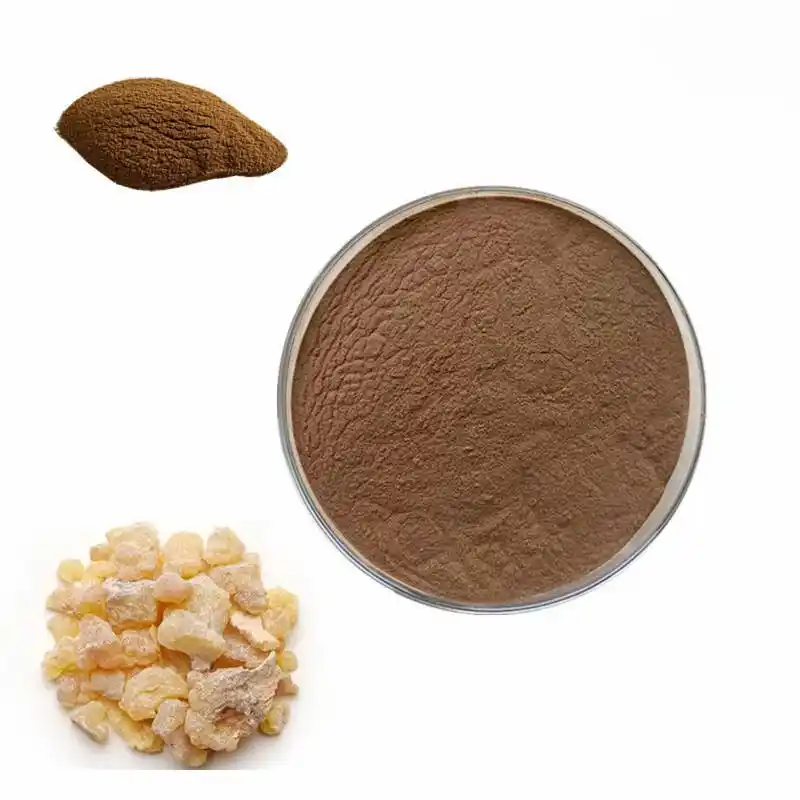
Frankincense (Ru Xiang) doesn’t “mysteriously” arrive glued to the carton—heat, time, and the wrong liner do that. This is the packaging playbook I’d use if I had to defend a disputed container in front of a hard-nosed buyer.
Resin turns tacky. When Boswellia gum resin sits in a hot logistics chain—warm warehouse staging, sun-baked container yards, longer ocean routes, sloppy carton liners—it doesn’t “melt” like chocolate, it softens, creeps, and smears, then your buyer opens the carton and thinks you shipped glue on purpose. So why do people still treat lining as an afterthought?
I’m going to say the quiet part out loud: most “packaging specs” for Ru Xiang (乳香) are written by people who never had to pay a claim. They copy-paste food-grade buzzwords, slap in “wax paper,” and act surprised when a 25 kg inner bag becomes one fused amber brick.
And yes, I’m biased toward boring, testable decisions. If you can’t measure it, you’re just hoping.
Table of Contents
What’s really happening inside the box
Frankincense resin (olibanum) is not one uniform thing. Different origins, different fractions, different volatile profiles. Even within “same supplier, same grade,” resin has a spread of softer components that start behaving badly under heat and pressure.
Here’s the part exporters keep learning the expensive way: containers get hot enough to make your liner choice the dominant variable. A 2024 peer-reviewed paper notes temperature measurements inside shipping containers on ships can exceed 60°C—that’s not a rounding error, that’s “your resin is now a pressure-sensitive adhesive” territory. Container temperature study citing >60°C
Now layer in macro reality. 2023 was officially the hottest year on record, with global average temperature around 14.98°C in ERA5 reporting—meaning the baseline heat load on the whole supply chain is higher than the old “normal.” Copernicus 2023 climate highlights
And if you shipped anything Asia→EU in 2024, you felt the Red Sea mess: diversions around Africa, longer voyage times, rate spikes, knock-on port congestion. More days in a metal box, more time for tackification and carton bonding. Reuters on Red Sea diversions expanding disruption
That’s your “melt risk” in three citations: hotter baseline + hotter containers + longer transits.
The hard truth: most liners fail because people choose for cost, not physics
Wax paper is the classic trap. Sometimes it works in cool months. Then July hits. Wax can transfer, pick up aroma, and under pressure it can wrinkle and bite into resin. Buyers don’t forgive “seasonal packaging.”
Poly-coated kraft is the other common default. It’s tougher and cleaner, but if you cheap out on coating weight, seams, or fold design, you just created a friction surface that resin will weld to at the corners—exactly where the carton compresses.
Glassine and silicone release liners? That’s where exporters get nervous because it “feels industrial.” Good. It is. Ru Xiang is industrial when it’s 500 kg on a pallet and a claim email is already drafted.
Storage temperature: stop pretending “room temp” is a spec
For frankincense resin storage temperature, “cool and dry” isn’t enough. Write numbers.
If you’re building an acceptance spec, steal the discipline from shelf-life engineering: humidity control, water activity logic, and actual warehouse zoning. This is why posts like Maximizing Shelf Life: drying and preservation techniques matter even for resins—because moisture + heat amplifies stickiness and carton stain.
My baseline buyer-proof language (adjust to your resin grade):
Storage target: ≤ 25°C, RH controlled, no direct sun exposure on cartons
Mitigation: release liner + bag-in-box + pallet shading + “do not store outdoors” carton marks
Is 25°C always achievable? No. But a spec that admits the risk is stronger than one that hides it.
Carton lining choices that actually map to failure modes
Below is the comparison exporters keep in their heads but rarely write down.
Liner / structure
Release vs tacky resin
Heat tolerance in practice
Odor / volatile interaction
Buyer dispute risk
Best use case
Silicone release liner (paper + silicone coating)
Excellent
High (release stays reliable under heat/pressure)
Low interaction
Lowest
High-value Ru Xiang, summer lanes, long ocean transit
Glassine release paper
Good–Very good
Medium–High
Low
Low
Mid/high grades, carton-internal wrap layer
Poly-coated kraft (PE-coated)
Medium (depends on coating + folds)
Medium
Low–Medium
Medium
Bag-in-box where resin never touches paper edges
Wax paper
Unreliable
Low–Medium
Medium–High (wax can pick up aroma)
High
Short domestic lanes, cool season only
PE inner bag + liner as secondary
Good (if resin never touches carton)
Medium
Low
Medium–Low
Bulk frankincense resin shipping at scale, when sealing is tight
Foil laminate (AL/PE) inner + release layer
Excellent
High
Excellent barrier
Low
Premium aroma retention + extreme heat routes
If you only change one thing: stop letting resin touch raw fiber. Paper fibers + softened resin = bonding.
Implementation: what I’d write into the purchase order (so nobody argues later)
Define contact surfaces: “No direct resin-to-carton contact. Resin must be in sealed PE (–CH₂–CH₂–)ₙ inner, plus release liner barrier at all carton contact faces.”
Define liner grade: If you use silicone release liners, name it (coating type), and specify the placement (all faces, not “some wrap”). Silicone release chemistry is typically PDMS (–Si(CH₃)₂–O–)ₙ; the point isn’t the polymer trivia, it’s that release is engineered, not hoped for.
Define heat exposure handling: “No outdoor storage of packed cartons; shade required during port staging.”
Audit storage zones and lead times: tackiness events spike when goods sit. If a supplier can’t show controlled storage and recent on-time history, your “liner spec” becomes a band-aid. Use questions like the ones in inventory capacity and lead-time reliability evaluation.
Want custom pack builds (bag, liner, carton, pallet pattern) that match your lane and season? Don’t bury that in an email thread. Put it into a formal request like their custom Chinese herbal & spice solutions workflow.
FAQ
Why does frankincense (Ru Xiang) become sticky during shipping? Frankincense resin becomes sticky during shipping because its softer fractions plasticize under sustained heat and compression, causing surface tack, creep, and smear; when container interiors spike and cartons compress, the resin behaves like a pressure-sensitive adhesive and bonds to paper fibers, seams, and dusty surfaces.
Then the fix is mechanical: reduce heat exposure time, reduce compression points, and add a true release interface (not “nice paper”). If your lane includes long yard dwell or summer transits, assume the worst and spec for it.
What is the best storage temperature for frankincense resin? The best storage temperature for frankincense resin is a controlled “cool zone” target (commonly written as ≤25°C) that minimizes softening and volatile drift while keeping cartons dry; the goal is stability, not perfection, so the spec must also ban direct sun, outdoor staging, and prolonged hot warehouse dwell.
If you can’t guarantee ≤25°C, you can still guarantee behavior: insulation, shade, faster dispatch, and liner upgrades. Buyers accept risk controls; they don’t accept surprises.
Which carton liner works best for sticky Boswellia gum resin? The best carton liner for sticky Boswellia gum resin is a true release material—typically silicone release liner or high-grade glassine—because it provides engineered low-adhesion contact even when the resin softens; wax paper and cheap coated kraft often fail at folds, seams, and pressure points under heat.
If you’re cost-constrained, do bag-in-box properly: sealed PE inner bag plus glassine/silicone barrier on carton faces where compression happens.
How do I prevent frankincense resin from sticking to packaging? Preventing frankincense resin from sticking to packaging means eliminating resin-to-fiber contact, controlling heat exposure, and designing the pack so softened resin can’t reach carton surfaces; in practice that’s a sealed inner bag, a release liner barrier on carton faces, clean handling to avoid dust, and strict “no sun/no yard dwell” rules.
Do one quick reality test: compress a packed sample at warm conditions and check corners and folds first—those are the failure zones.
Is wax paper acceptable as a liner for olibanum in bulk? Wax paper is only marginally acceptable for olibanum in bulk because wax layers can soften, transfer, wrinkle, and increase adhesion under heat and compression, which raises carton-stain and bonding risk; it may pass in cool seasons or short lanes but becomes unreliable when container and yard temperatures rise.
If you can’t control the lane, don’t gamble. A claim costs more than the liner upgrade.
completion
If you’re shipping frankincense resin / Ru Xiang (Rǔ xiāng) in bulk and you want a packaging spec that survives summer lanes and longer ocean routes, start with the product reference for bulk Ru Xiang resin blocks and then request a pack plan through custom packaging and export support. I’d rather see you spend a little more on release control now than pay for a fused-carton dispute later.
Our low MOQ of 1 kg (2.2 lb) makes it easy to order Chinese herbal slices or wholesale Chinese medicine herbs. Private-label and bilingual labeling are also available.
Delivery Cycle & Support
We have a fast 7-day lead time. We provide free samples, COA reports, and technical support to help you bring high-quality bulk Chinese herbs to market.
Quality & Certifications
Our products are manufactured in a GMP-certified facility and meet ISO22000 standards. All Chinese herbs are third-party tested for heavy metals, pesticides, and microorganisms.