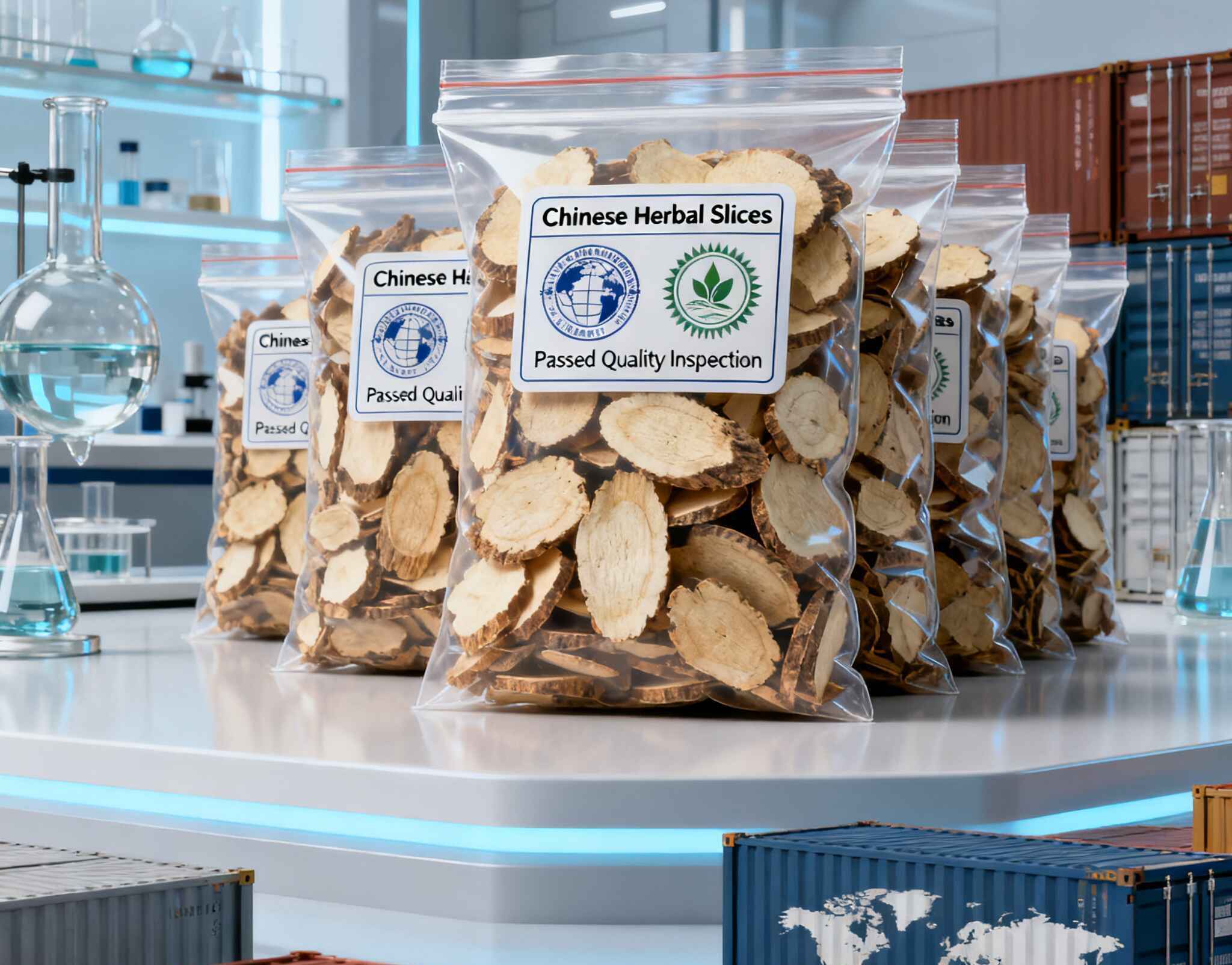
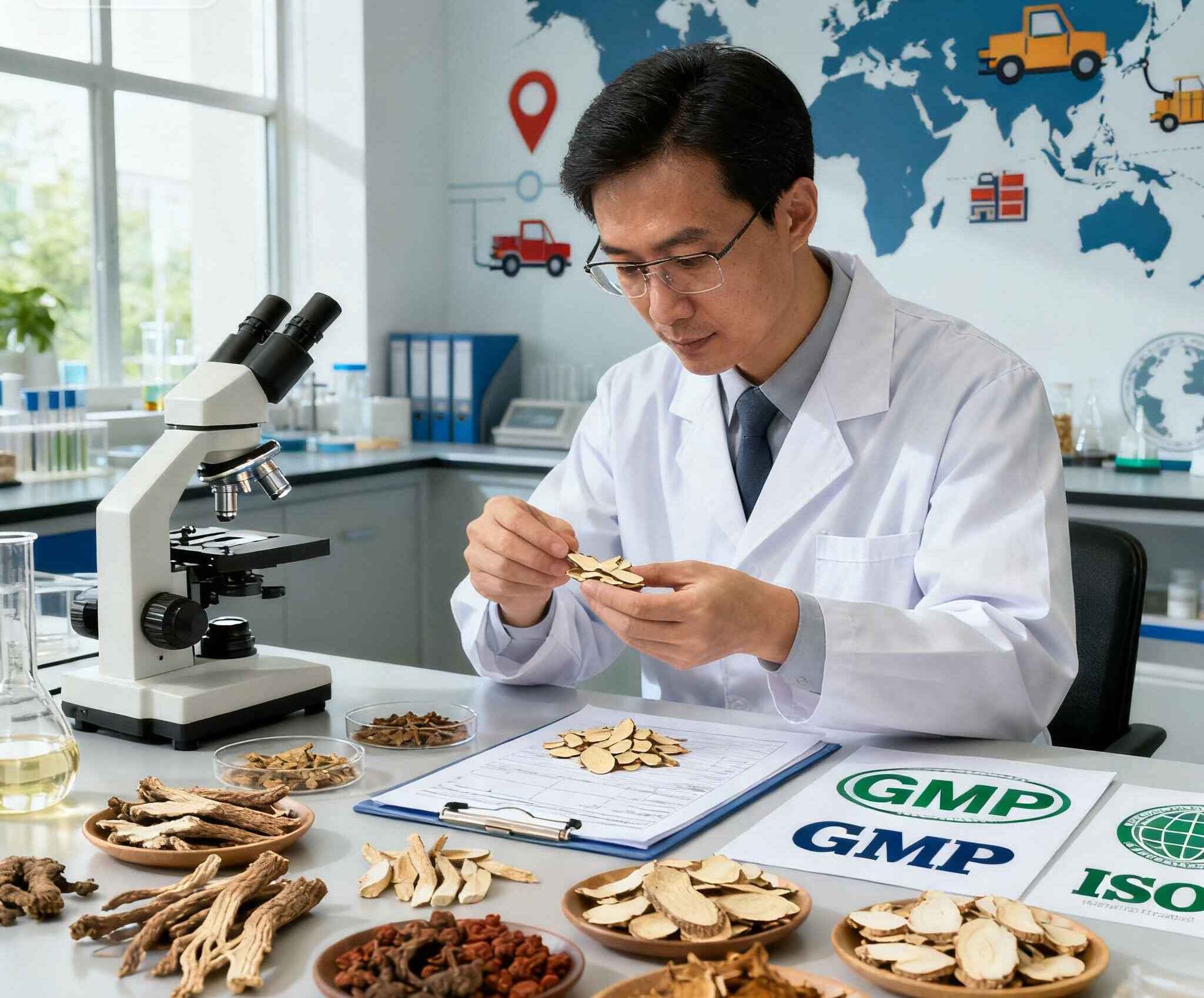
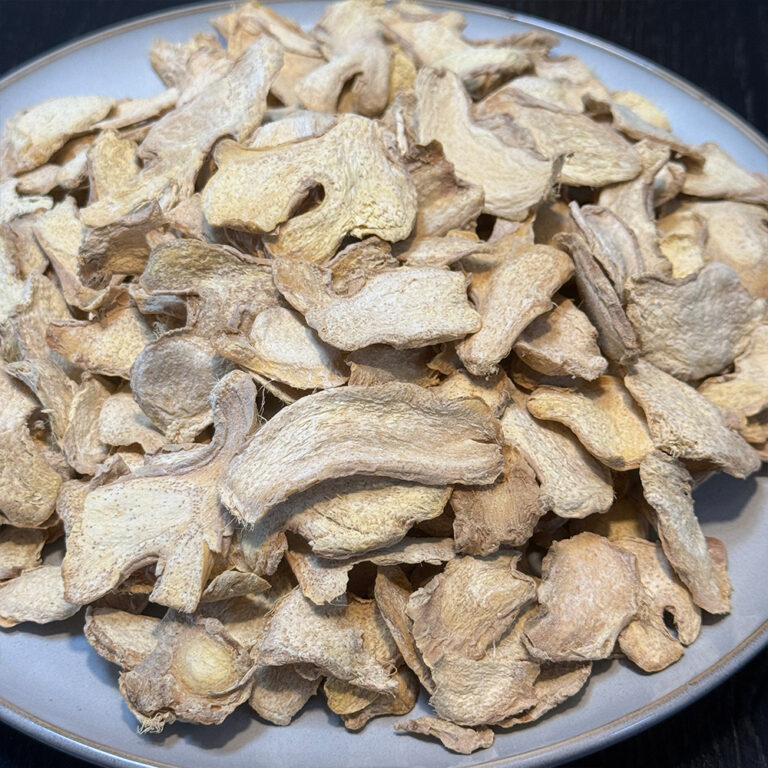
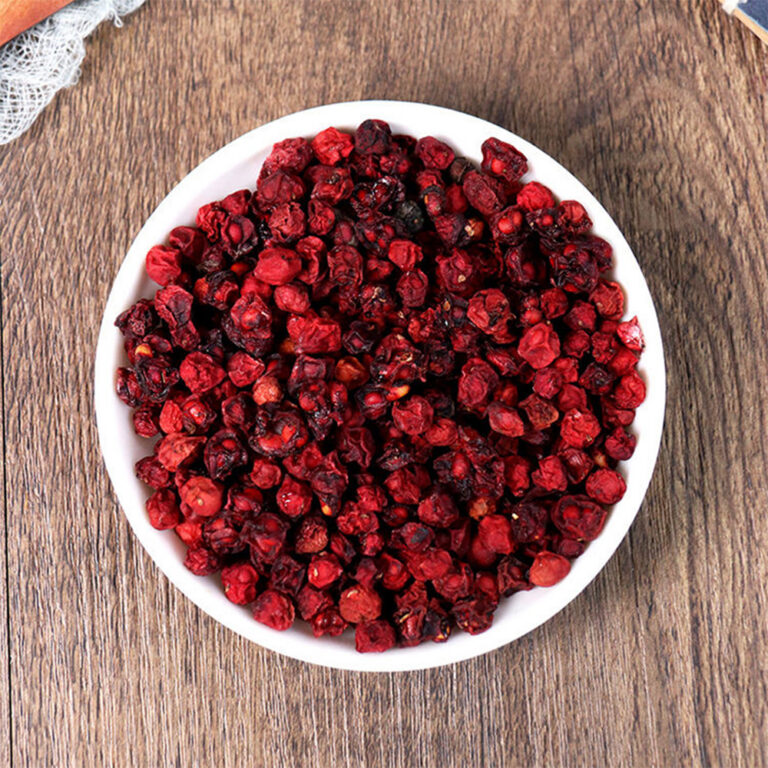
You don’t win overseas with pretty slices. You win with named standards—the exact chapters and rules buyers look up when they audit your lot. Miss one spec and the shipment stalls. Hit them, and life gets easier. Below is the no-drama playbook we actually use at GuoCao (GMP herbal-slice lines, ISO 22000 food-safety system, ambient/cool/MA warehouses, third-party COA, OEM/ODM live, annual capacity around a few thousand tons; global shipping to 30+ regions). We keep it simple, but not simplistic.
EU path in one line: if your product is sold as a traditional herbal medicinal product, it rides under Directive 2004/24/EC (THMPD) and the EMA/HMPC quality guideline. That means your quality file must align with European Pharmacopoeia (Ph. Eur.) methods and limits.
What it really asks for
Clear specs per slice: identification, contaminants, moisture, microbiology, impurities.
GACP upstream records (field, harvest, drying); traceability all the way to the pack.
A risk-based justification for pesticides, mycotoxins, fumigants, and metals—method + frequency, not just a checkbox.
Buyer takeaway: If your COA cites the chapter names buyers know, half the back-and-forth disappears.
GACP is the “don’t let problems happen” layer. WHO’s GACP (for medicinal plants) sets the base; the EMA’s GACP revision adds modern items (indoor cultivation, record-keeping, pest control hygiene). In practice we log:
origin + GPS block (when available),
harvest window and drying regime,
storage conditions and moisture curves,
any fumigants or post-harvest treatments (ideally none).
Why it matters: fewer pesticide spikes, lower aflatoxin risk, and cleaner audits. Think CAPA-lite because you prevent deviations before they exist.
Ph. Eur. 2.8.13 (Pesticide Residues)
This chapter is the EU’s common language for pesticide testing in herbal drugs. Set a GC-MS/LC-MS/MS panel that fits your species list and matrix; show validation or verification so data stand up in inspections. Keep grower change logs synced to your testing plan—late-season sprays mean you test more. No hand-wavy.
Ph. Eur. 5.1.8 (Microbiological Quality of Herbal Products for Oral Use)
Buyers expect microbiological acceptance criteria by category: total counts (TAMC/TYMC) plus absence of Salmonella and E. coli. Keep your sampling plan realistic: higher moisture herbs? Test at a tighter cadence. If your slice is headed into a heat-processed downstream, note the kill step; still, don’t rely on someone else’s HACCP to clean your load.
ISO 18664:2015 (Heavy Metals for TCM Materials)
This ISO standard covers Pb, Cd, As, Hg determination for TCM materials/decoction pieces. Use ICP-MS (or qualified instruments) and report units consistently. If your partner sells as a dietary supplement in the U.S., align the results to a PDE-style interpretation (see USP section below). Different route, different lens; same math discipline.
ISO 22217:2020 (Storage Requirements for Raw Materials & Decoction Pieces)
Storage is not a footnote. ISO 22217 asks for controlled temperature/RH, light protection, pest control, and container design that avoids cross-contamination. We operate ambient/cool/modified-atmosphere (MA) zones, label status boards, and track moisture drifts so mold don’t party. Simple, works.
If your customer markets slices as dietary supplements in the U.S., they live under USP <2232> for elemental contaminants and USP <2021>/<2022> for counts and specified pathogens. It pairs with 21 CFR Part 111 (DS cGMP). Translation: do the metals math by daily exposure (PDE thinking), keep micro within category limits, and keep your batch records readable by a 3rd-party auditor having a bad day.
21 CFR 101.100 (Sulfites at ≥10 ppm—Labeling Trigger)
For food/supplement routes in the U.S., sulfites at or above 10 ppm (as SO₂) require labeling. If the herb was sulfur-fumigated upstream, disclose or avoid—don’t gamble at port. Our default is no sulfur-fumigation; if a forced quarantine happened, we test, document, and tell the truth. Clean and clear.
TGA (Australia) ARTG: Listed vs Registered
Australia splits complementary medicines into AUST L (listed) and AUST R (registered). Both expect ingredient quality aligned with pharmacopeial texts and proper evidence files. Your COA package and method write-ups become part of the sponsor’s dossier. Help them win, you win more orders.
Best fix is no sulfur; otherwise: test + transparent label
Stability (per ISO 22217 logic)
Keep actives & moisture in spec
MA storage for sensitive lots; pull retain samples by lot
Real scenarios (no fake names)
EU sampling flagged a pesticide Root cause: grower switched pest control late. Move: expand 2.8.13 panel pre-shipment; lock GACP logs with farm sign-off. CAPA issued, supplier retrained. Shipment cleared next time.
U.S. buyer keeps asking about sulfites Answer once, correctly: test SO₂ and declare. If ≥10 ppm for food/supplement route, label; better yet, source non-fumigated lots. Put it in the supply agreement so nobody argues later.
DNA “no match,” but slice is legit Processing heat and time shear DNA. Use macro-micro + HPTLC for the primary ID; keep DNA for raw botanicals. Write this in your spec so QC and regulatory read the same playbook.
How GuoCao maps to the standards (so buyers don’t have to guess)
Facility & QMS: GMP herbal-slice lines; ISO 22000 food safety; ambient/cool/modified-atmosphere warehouses; third-party COA on request.
Testing stack: ICP-MS for ISO 18664 metals; Ph. Eur. 2.8.13 pesticides; Ph. Eur. 5.1.8 / USP micro; sulfites aligned with U.S. rule.
Capacity & service: OEM/ODM, white-label, custom cut sizes and moisture windows, export docs for 30+ regions. Fast proofing, clean labeling. Not expensive, not messy.
Explore our product families and services (internal links only):
Our low MOQ of 1 kg (2.2 lb) makes it easy to order Chinese herbal slices or wholesale Chinese medicine herbs. Private-label and bilingual labeling are also available.
Delivery Cycle & Support
We have a fast 7-day lead time. We provide free samples, COA reports, and technical support to help you bring high-quality bulk Chinese herbs to market.
Quality & Certifications
Our products are manufactured in a GMP-certified facility and meet ISO22000 standards. All Chinese herbs are third-party tested for heavy metals, pesticides, and microorganisms.