Scutellaria Root Slices: A Receiving Inspection Checklist
A practical receiving checklist for Scutellaria baicalensis (Huang Qin) slices: documents, packaging, appearance, moisture, test holds and release decisions for B2B herbal ingredient buyers.
A certificate of analysis tells you what a supplier says it found in one sample, on one date. It cannot tell you whether the pallets in front of you were rewetted in a container, repacked under the wrong lot code, or mixed with something that was never in the sample. For Scutellaria baicalensis (Huang Qin, Scutellariae Radix), where species substitution, sulfur treatment and moisture rebound are all plausible risks, the dock is the last cheap place to catch a problem. This checklist covers what receiving teams should verify before the lot is released: documents, packaging, slice appearance, moisture, and which results must be in hand before the material reaches production.
Why Receiving Inspection Is a Separate Control From the COA
Receiving inspection confirms that the physical lot matches the paperwork and the approved specification. It does not replace supplier qualification or laboratory testing.
The two controls answer different questions. Supplier qualification asks whether the supplier can produce conforming material. Receiving inspection asks whether this shipment is that material, in the condition you expect. The Scutellaria root sourcing guide covers the upstream work: writing the specification, qualifying the supplier and approving a reference sample. This article starts when the truck arrives.
One viewpoint is worth stating plainly. A lot that arrives with a clean COA has not been verified. It has been documented. If the document is the only thing you check, you are trusting the weakest link in the chain: sampling, transport and repacking all happen after the COA is issued.
That does not mean every lot needs a full laboratory panel on arrival. It means every lot needs a defined set of dock checks, and a rule for which results must be received before release.
Step 1: Reconcile Documents and Lot Identity Before Opening a Bag
Start with paper, because a mismatch here is the cheapest problem to find. Compare the purchase order, packing list, bag labels and COA, and confirm they agree on:
Botanical identity:Scutellaria baicalensis Georgi, root, traded as Huang Qin or Scutellariae Radix. “Skullcap” alone is not acceptable.
Physical form: sliced or cut root, matching the approved description.
Lot or batch number: identical on labels, COA and shipping documents.
Quantity and pack count: actual cartons or bags against the packing list.
Dates: production or pack date, COA test date and sampling date.
Origin and supplier details: matching your approved-supplier record.
Test scope: the COA lists methods, limits and numerical results, not just “pass.”
For U.S. dietary supplement manufacturers, 21 CFR 111.75 is the reference point. Before use, you must conduct at least one appropriate test or examination to verify the identity of a dietary ingredient, unless FDA grants an exemption. For other specifications, you may rely on a supplier COA only if you first qualify the supplier by confirming its results. The COA must also state the methods, limits and actual results, and you must re-confirm it periodically. Other markets have their own rules, so check the one that applies to you.
Identity deserves the extra attention. A DNA barcoding study reported that dried roots of S. amoena, S. rehderiana and S. viscidula have been used to adulterate S. baicalensis. The authors proposed psbA-trnH as a barcode for authenticating commercial Radix Scutellariae. Sliced root loses many field characteristics, so a receiving team’s visual check alone is a screening step. Whether it satisfies your identity-test obligation is a decision for QA, documented with a rationale.
Step 2: Inspect the Shipment and Packaging
Before sampling, record how the shipment arrived. This is where transit damage and rewetting first show up, and it is where disputes with carriers and suppliers are decided.
Photograph the container or truck seal, the seal number against the bill of lading, and the load as first seen.
Note any wet cartons, stained bags, crushed pallets, rodent or insect evidence, or strong odors in the load.
Check each sampled pack for an intact inner liner, a sound seal and no condensation inside the bag.
Confirm that outer labels show product name, botanical name, lot, net weight, pack date and storage instructions.
Record the arrival date and condition for the retained-sample file.
The site’s guide to roots and rhizomes bulk specs also recommends AQL-style incoming sampling and recording container temperature on arrival. It adds that photographing seals pays off in disputes. Treat its numeric “typical targets” as a starting point only. The governing pharmacopoeia, local law or your own specification takes precedence.
Step 3: Visual and Sensory Inspection of the Slices
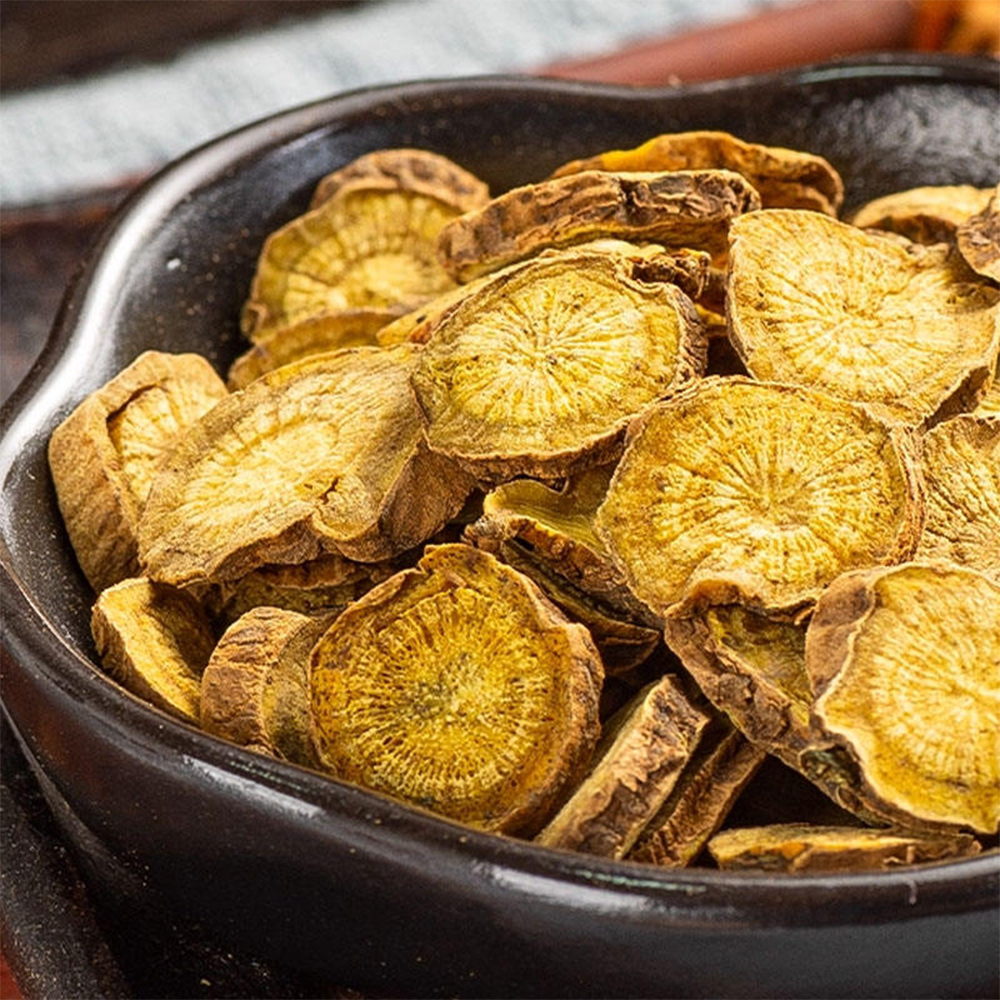
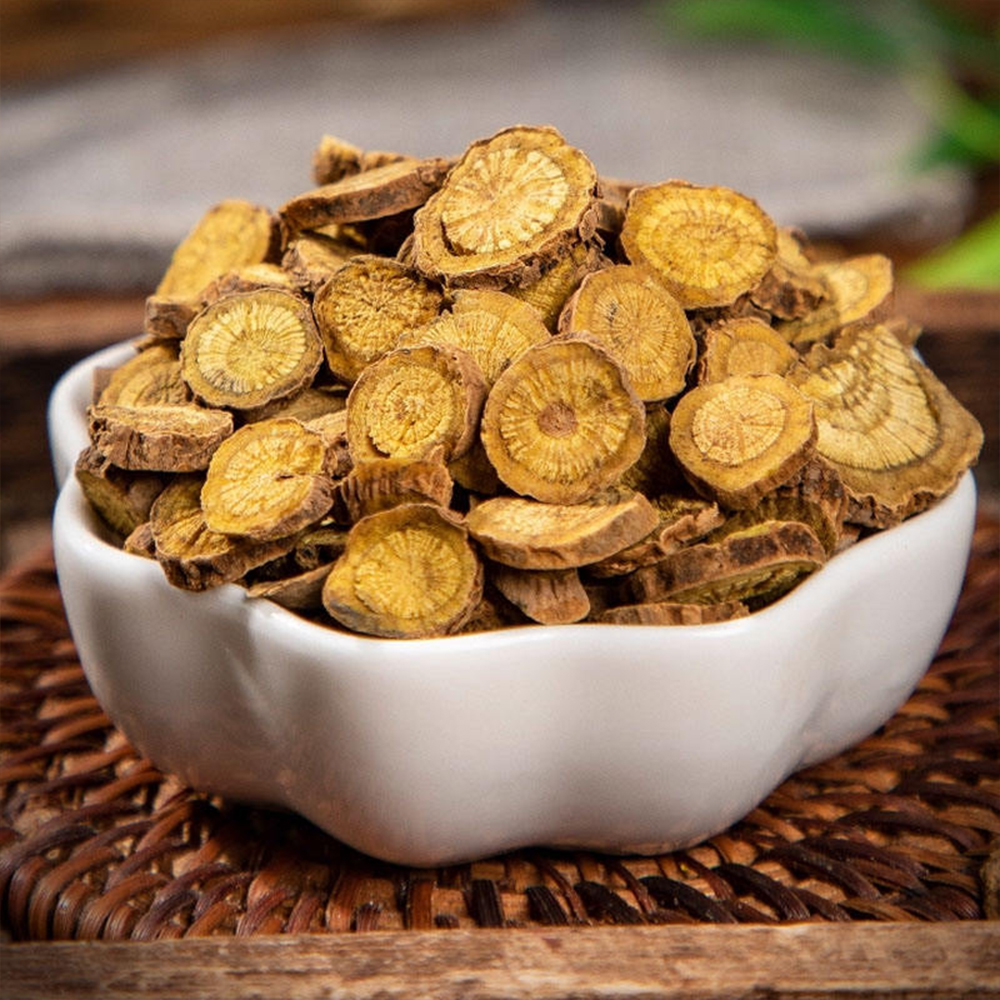
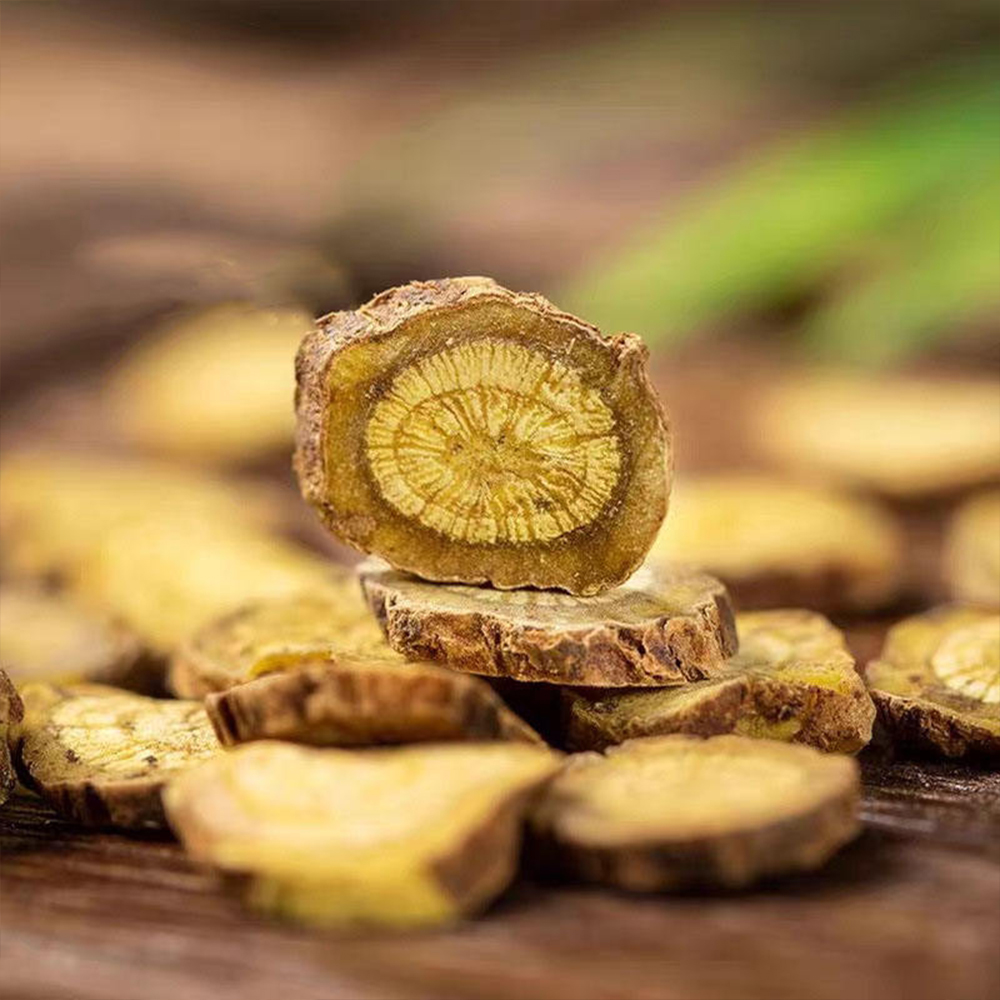
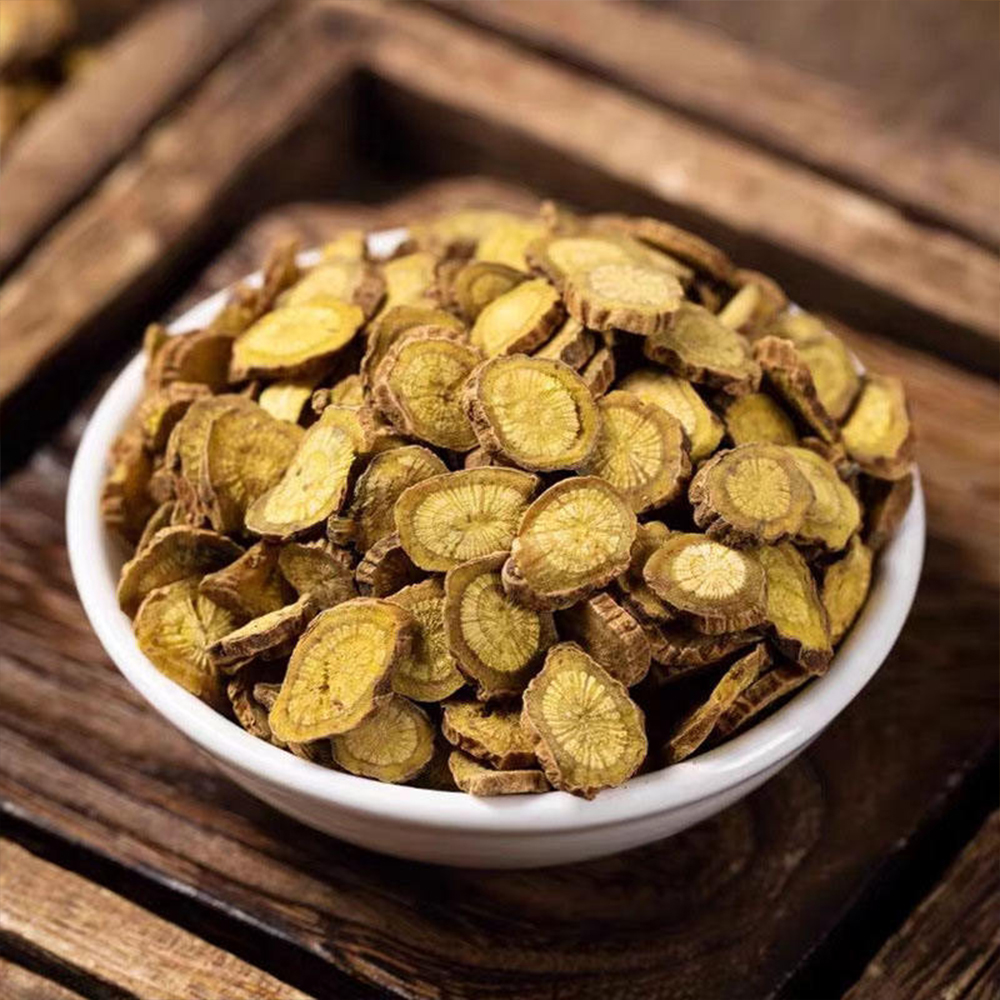
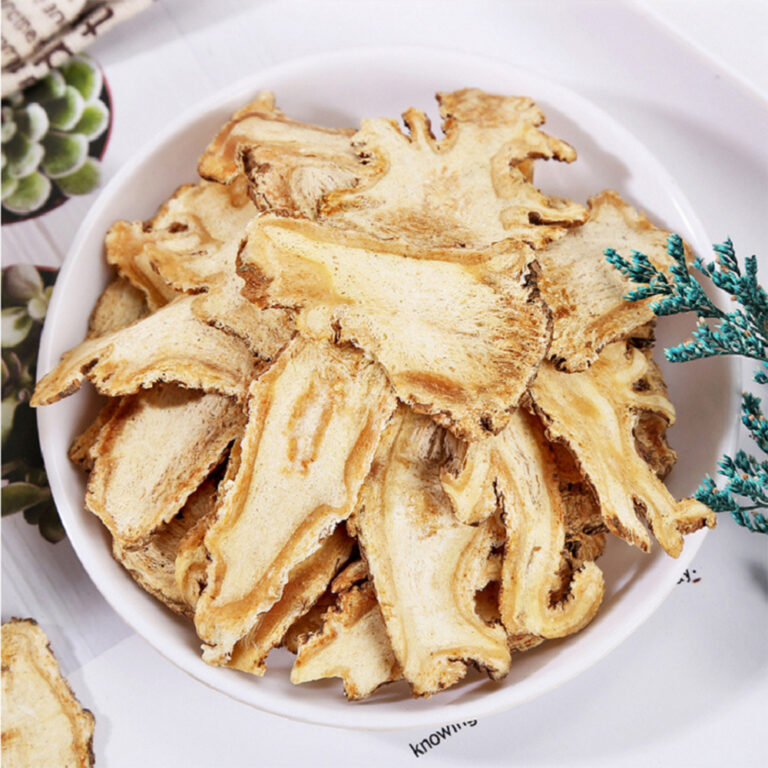
Open sampled bags and compare the material against your approved reference sample, not against memory. The table below turns that comparison into a repeatable check.
Check
What to look for
Likely concern
Suggested action
Slice form and cut
Cut shape and thickness consistent with the approved sample; a limited share of fines
Wrong cut, excess breakage, rough handling
Compare against spec; record deviation; escalate if outside tolerance
Color
Close match to the reference sample; no unexplained bleaching, dark patches or greenish areas
Sulfur treatment, moisture exposure, mold, age
Photograph; hold for further testing
Odor
Characteristic root aroma; no musty, sour, fermented or sulfur smell
Mold or spoilage, sulfur treatment
Hold; request SO₂ and microbiological results
Texture
Dry and brittle-firm; no soft, tacky or caked pieces
Moisture rebound
Run a moisture test before accepting
Core and fiber
Proportion of hollow, dark or fibrous pieces consistent with the spec
Older root, poor grading
Check against the spec and reference sample
Foreign matter
No stones, soil, hair, metal, insects, plastic or other plant parts
Poor cleaning or sorting, contamination
Sort a sample, record weight percentage, apply the spec limit
Mold and insects
No visible mold, webbing, frass or live insects
Storage or transit failure
Quarantine the lot; escalate immediately
Uniformity across containers
Bags from different pallets look and smell alike
Blended or consolidated lots
Sample more widely; query the supplier
Why a “better-looking” lot is not always better
Buyers often reward the brightest, most uniform material. For Huang Qin, that preference can mislead. A study of sulfur fumigation in Scutellariae Radix evaluated 180 batches of decoction pieces and 26 batches of herbs for sulfur dioxide residue. It reported that baicalin decreased sharply after fumigation and that the decoction pieces were seriously fumigated during processing. The paper also notes that sulfur fumigation is no longer recommended by the government for processing and storage.
The practical lesson is not “pale equals sulfured.” Color varies with age, drying and cutting. The lesson is that appearance is a screening tool. An unusually bright or pale lot, or any sulfur odor, should trigger a sulfur dioxide result request rather than an accept or reject decision based on eyes and nose alone. Your reference sample sets the visual standard, so tight color expectations in the spec help receiving staff make consistent calls.
Step 4: Check Moisture on Arrival
Moisture is the most common reason a good lot becomes a bad one between factory and warehouse. A pre-shipment result does not show whether the lot picked up water in transit, so test again on arrival.
For orientation, a 2025–2026 study of Scutellariae Radix samples states that the Chinese Pharmacopoeia (2020 edition) sets a moisture upper limit of 12.0%. It also notes that the pharmacopoeia primarily relies on a single marker, baicalin, for quality control. Treat 12.0% as a reference for material governed by that standard, not as a universal contract limit. Many buyers set tighter internal targets for long storage or humid destinations. Confirm the number against your own specification and edition.
Practical arrival moisture checks:
Sample from several packs and locations, not only the top layer of the most accessible pallet.
Use the method named in your specification, typically loss on drying, and record the instrument, sample weight and result.
Compare the arrival result with the COA result and the pack date. Decide in advance who owns a difference and how large a difference triggers a hold.
Check for water activity on lots with any sign of dampness, if your quality system uses it.
Re-seal opened bags promptly and return them to controlled storage.
The moisture control guide for Chinese herbal slices explains why moisture percentage and water activity measure different things. It also covers how packaging, container conditions and storage practices change the risk after drying.
Illustrative example (hypothetical, not a customer case): A COA reports moisture within specification at pack-out. The shipment is held at a port for several days in humid weather. On arrival, the liners are intact but the cartons feel slightly cool and the odor is faintly musty. A dock moisture test reads higher than the COA. The receiving team places the lot on hold, and QA decides whether to run microbiological and mycotoxin tests before release. The point is not the specific numbers. The arrival result, not the COA, determines the next step.
Step 5: Decide What Must Be Tested Before Release
Most dock teams cannot run pesticide, elemental contaminant, microbiological or marker assays on site. The receiving decision is therefore about status: released, quarantined pending results, or rejected.
Test category
Typical timing
If result is missing
Identity (macroscopic, microscopic, TLC/HPTLC, DNA where justified)
Before release
Keep in quarantine
Marker assay (e.g., baicalin)
Per spec; often lot-based
Hold if the spec requires it
Moisture
On arrival
Hold
Foreign matter and ash
Per spec
Hold or accept conditionally per QA
Pesticide residues
Per risk assessment and market
Hold unless the COA is qualified
Lead, cadmium, arsenic, mercury
Per risk assessment and market
Hold unless the COA is qualified
Microbiology and mycotoxins
Per risk assessment, higher priority after wet transit or visible mold
Hold
Sulfur dioxide
When sulfur treatment is possible or restricted
Hold if appearance or odor is suspicious
This table is a framework. It is not a regulatory requirement list. The right set depends on the product, market and your risk assessment. For contaminant testing, the site’s pesticide and heavy metal testing guide covers the methods and compliance workflow, including USP general chapters and ICP-MS. Whatever the testing scope, ask for numerical results with units and limits, not “pass” statements. If you rely on supplier results, apply the confirmation and re-confirmation logic described under 21 CFR 111.75 above, or the equivalent rules in your market.
Sampling and Disposition: Accept, Hold or Reject
Define the decision rules before the shipment arrives, and write them into your SOP and quality agreement.
Sampling. Use a documented, risk-based plan: how many containers to open, where to draw, how to combine, and how much to retain. Increase sampling for new suppliers, after specification changes, after wet or delayed transit, and when anything looks unusual.
Disposition.
Accept and release: documents reconcile, packaging is intact, sensory checks match the reference sample, moisture is within limits, and all required test results are in hand.
Hold (quarantine): a document mismatch, a borderline sensory finding, moisture near or over the limit, or missing required results. Label and segregate the lot, and record the reason and who can release it.
Reject: wrong species or plant part, evidence of mold, live infestation, serious foreign matter, a lot-code conflict that cannot be resolved, or confirmed out-of-specification results.
Retained samples. Keep a sealed, labelled sample from each received lot for investigation and later comparison.
Common receiving mistakes
Checking only the top pallet layer.
Accepting “complies” on a COA with no method, limit or result.
Comparing color to memory instead of a controlled reference sample.
Releasing material before the required test results are in.
Opening bags in a humid receiving area and leaving them unsealed.
Skipping the arrival photographs that support a claim against the carrier or supplier.
What to Record for Every Lot
Receiving records protect you in audits and in supplier disputes. At minimum, capture:
Purchase order number, supplier, lot number and quantity received
Arrival date, container or truck seal numbers, and transport condition notes
Photographs of the load, labels, seals and any damage
Sample locations and number of packs opened
Appearance and odor findings against the reference sample
Moisture result and method
Test results received, with the date and source
Disposition decision, the name of the approver and the release date
Retained sample location
Link the record to your approved-supplier file. Over several lots, these records show whether a supplier’s quality is stable.
What Should You Verify Before Reordering or Changing Suppliers?
If a lot passes receiving inspection, that supports reordering from the same supplier. If it fails, look at the pattern before you decide whether the cause was transit, storage or the supplier’s process. Three repeat findings (moisture rebound, unexplained color shifts, or documents that do not reconcile) are grounds for a supplier review.
If you are specifying a new lot, send your full requirement with the RFQ: botanical name, plant part, cut size, moisture target, test panel, packaging and the documents you expect to receive. Buyers comparing commercial options can review the Scutellaria root (Huang Qin) flakes wholesale listing and then request a sample and COA to check against this checklist.
Frequently Asked Questions
What should a receiving inspection for Scutellaria root slices include?
Document reconciliation (PO, label, lot, COA), packaging and seal condition, sensory checks against a reference sample, foreign matter, moisture, and a decision on which test results must be in hand before release. Sampling and disposition rules should be written in advance.
Is a COA enough to accept a lot of Huang Qin slices?
No. A COA covers a sample tested on a specific date. Receiving inspection confirms that the shipped lot matches the documents and arrived in good condition. Dietary supplement manufacturers must also meet their own identity-testing and supplier-COA qualification obligations.
What moisture limit applies to Scutellaria root slices?
A 2020-edition Chinese Pharmacopoeia limit of 12.0% is cited in published research, but your limit depends on the governing standard, destination market and contract. Confirm it against your specification and set tighter internal targets where storage or humidity demands it.
How can I tell if Scutellaria root was sulfur-treated?
Appearance and odor can raise suspicion, such as unusually pale color or a sulfur smell, but cannot confirm treatment. Request or run a sulfur dioxide residue test, and compare the lot with your approved reference sample.
How do I confirm the species is Scutellaria baicalensis?
Use a combination of a reference-controlled macroscopic check and a laboratory identity method such as TLC/HPTLC or DNA analysis where substitution is plausible. A published study identified S. amoena, S. rehderiana and S. viscidula as adulterants.
What should I do if a lot arrives damp or smells musty?
Quarantine it, photograph the condition, run a moisture test, and decide whether microbiological and mycotoxin testing is needed before any release. Notify the supplier and carrier promptly, and follow your quality agreement’s rejection and replacement terms.
Our low MOQ of 1 kg (2.2 lb) makes it easy to order Chinese herbal slices or wholesale Chinese medicine herbs. Private-label and bilingual labeling are also available.
Delivery Cycle & Support
We have a fast 7-day lead time. We provide free samples, COA reports, and technical support to help you bring high-quality bulk Chinese herbs to market.
Quality & Certifications
Our products are manufactured in a GMP-certified facility and meet ISO22000 standards. All Chinese herbs are third-party tested for heavy metals, pesticides, and microorganisms.