Raw vs Roasted Cassia Seed for Herbal Tea Manufacturing
A buyer's guide to raw vs roasted cassia seed (Jue Ming Zi) for tea bags: what roasting changes, how to set roast and cut specs, and what to include in an RFQ.
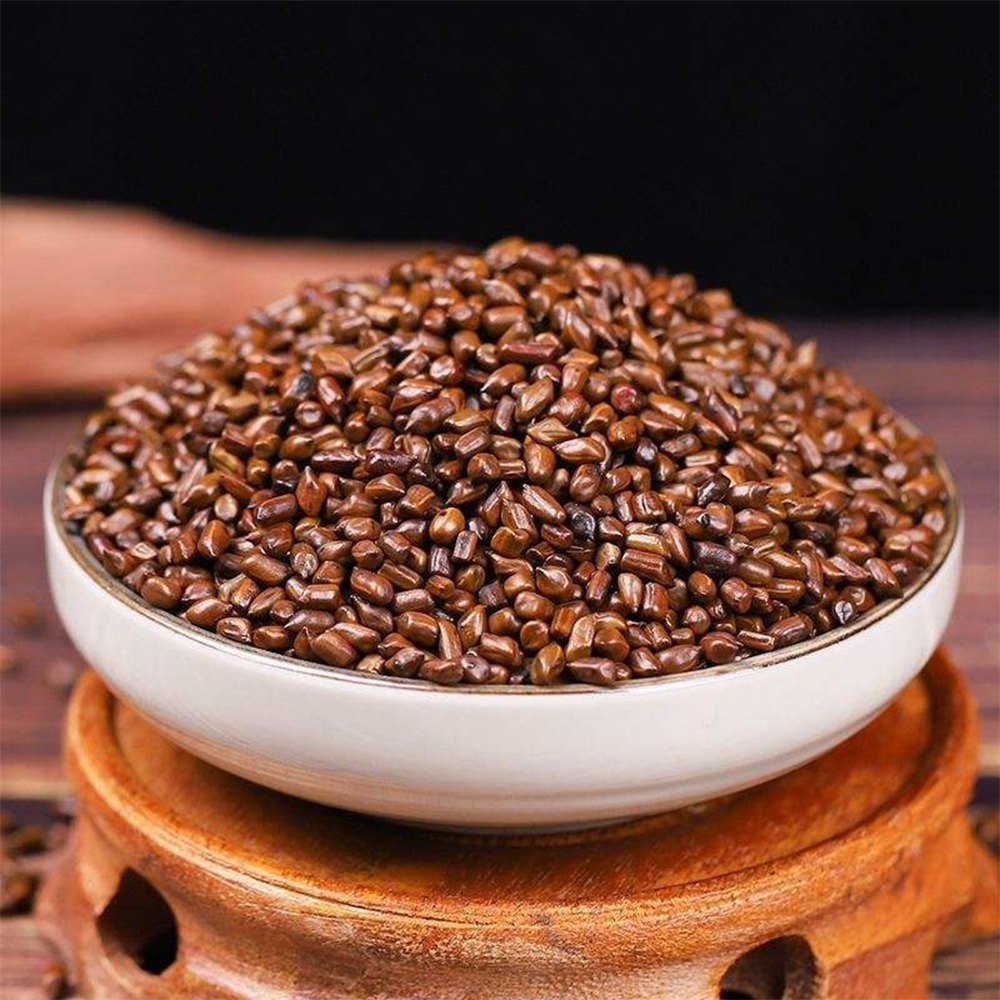
Roasted cassia seed is the more common choice for finished herbal tea bags and ready-to-brew blends. Raw cassia seed makes sense mainly when the manufacturer controls roasting, cutting, or extraction in-house. That short answer leaves out the decisions that determine whether a project succeeds. These include how dark the roast should be, who owns roast consistency, how the seed behaves on a filling line, and how the destination market classifies the finished tea. This guide compares raw and roasted cassia seed (Jue Ming Zi, Cassiae Semen) from a tea manufacturer’s point of view. It ends with the specification fields to put into an RFQ.
Raw vs Roasted Cassia Seed: The Short Answer for Tea Manufacturers
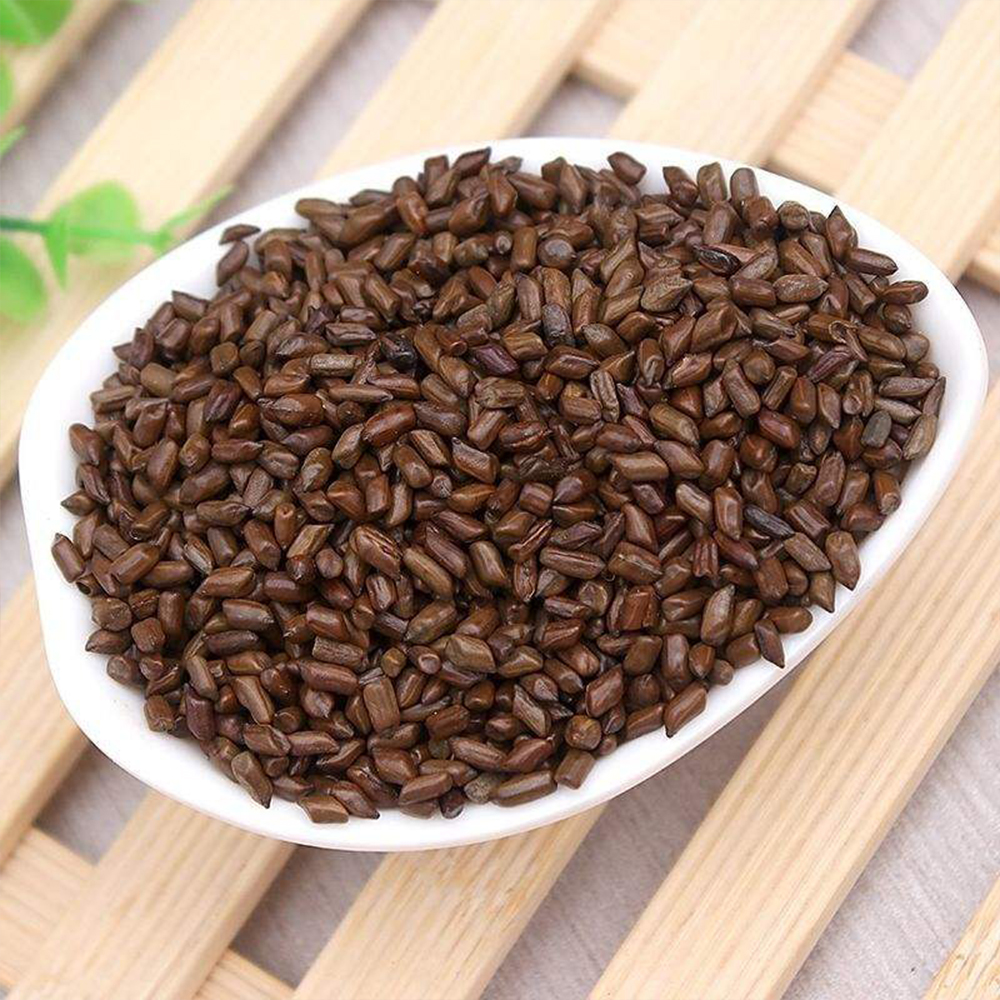
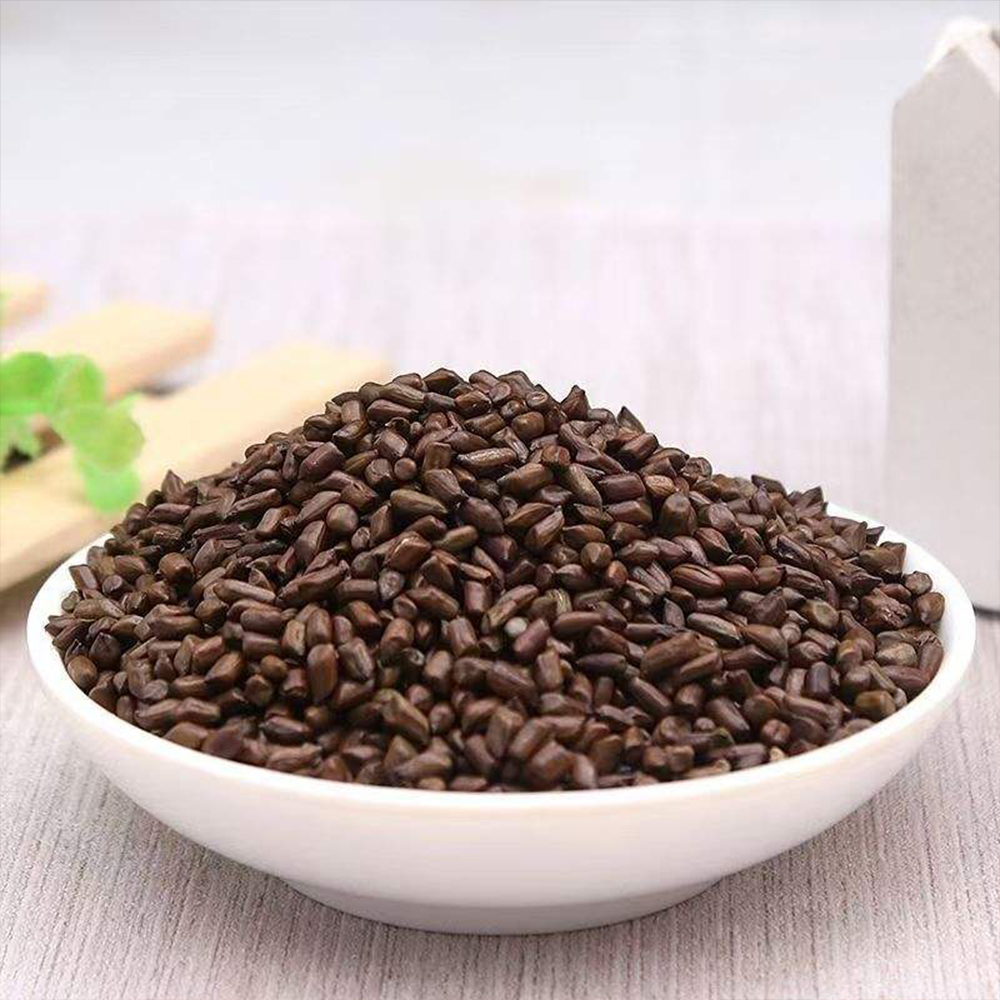
Choose roasted cassia seed when you are producing single-herb tea bags, fruit-and-seed blends, or retail-ready tea where aroma, cup colour, and drinkability matter. Choose raw cassia seed when you plan to roast to your own profile, mill the seed, or run extraction, and you have the equipment and QC to control those steps.
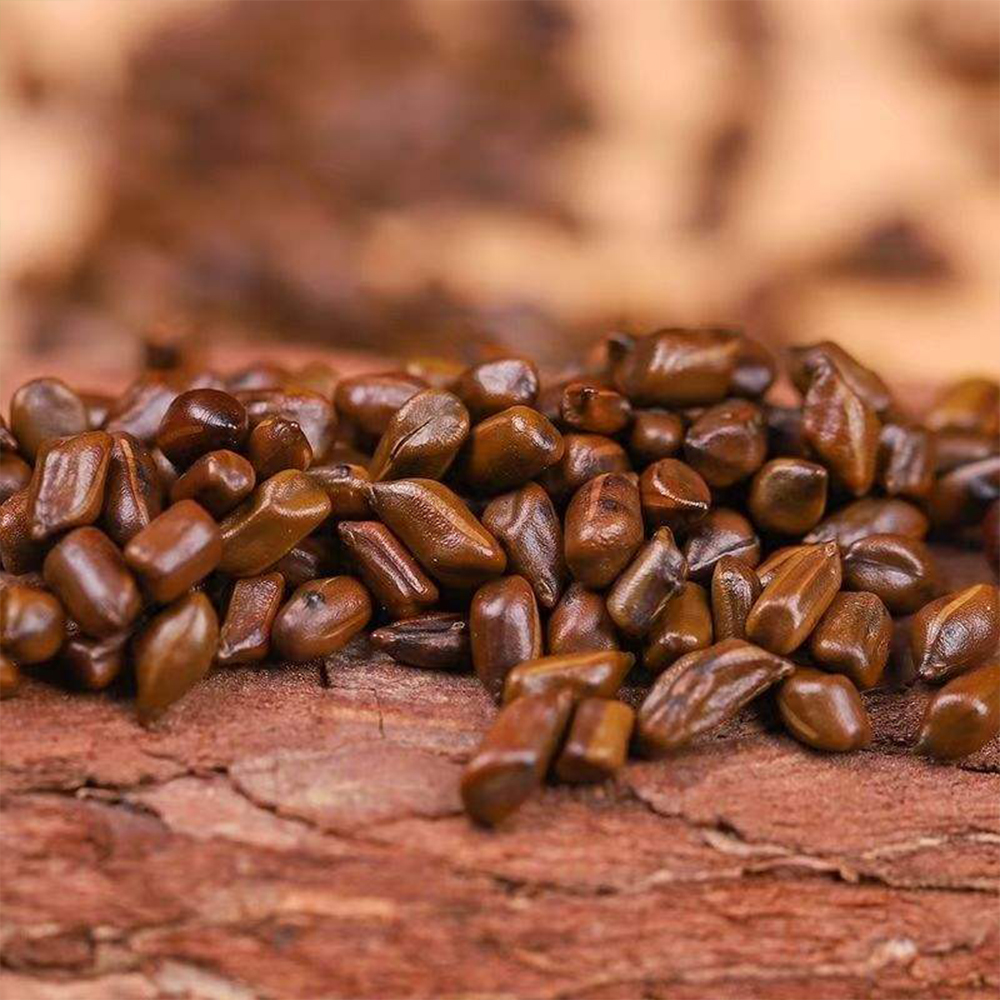
In traditional Chinese medicine processing, the prepared form is made by stir-frying raw seed. A PubMed-indexed study of raw and prepared Semen Cassiae describes the target as seed that turns dark brown, shows slight puffing, and gives off aroma. A pharmacokinetic study of crude and processed Semen Cassiae notes that both raw and parched forms are recorded in the Chinese Pharmacopoeia, and identifies the source plant as Cassia obtusifolia L. Commercial offers may also name Cassia tora L., so the species declaration belongs in the specification, not just the product name.
For a tea buyer, the useful point is that “roasted” is a process outcome, not a single product. A light roast and a dark roast can differ in colour, bitterness, aroma, and line behaviour. A supplier that cannot say which one it is shipping has not given you a specification.
What Roasting Changes in Cassia Seed
Chemical composition
Roasting shifts the chemical profile of the seed. In the raw versus prepared Semen Cassiae comparison, researchers identified 53 compounds in raw seed and 43 in prepared seed. Of the compounds that differed significantly, 19 peaks were higher in the prepared seed and 20 compounds were lower. Most of the lower ones were naphthopyrone glycosides and anthraquinone glycosides.
Two limits apply to that finding. It comes from laboratory analysis of a specific preparation method, so it does not give a universal “percentage reduction” for any commercial roast. And it describes a change, not an elimination: the prepared seed still contains a broad set of compounds. Roast time and temperature drive the outcome, which is why a roast profile or a retained reference sample matters more than the word “roasted.”
Sensory and physical behaviour
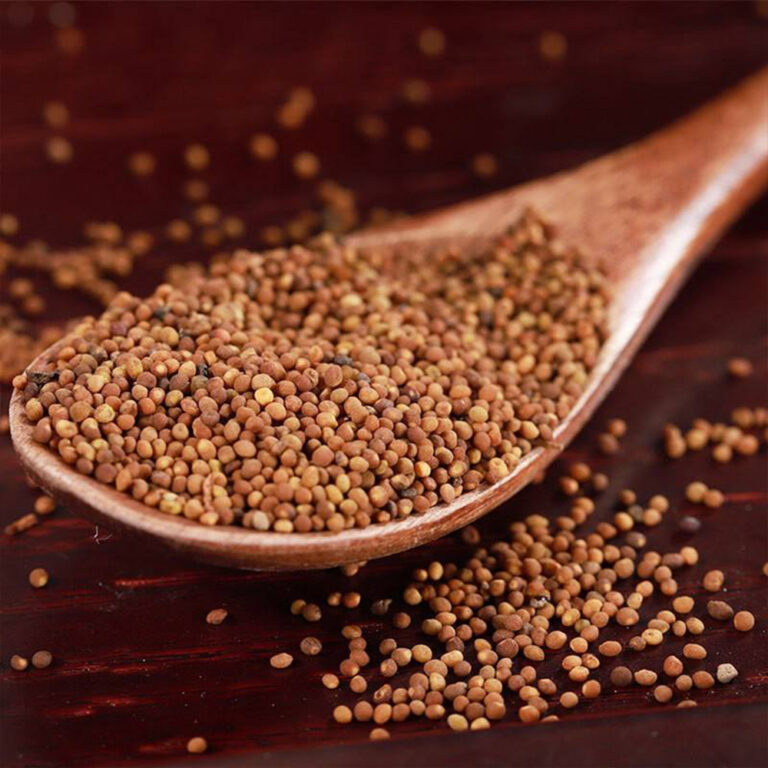
Roasting is the step that gives cassia seed its toasted, tea-like character, and it changes cup colour. Darker roasting increases roasted notes and bitterness risk, and it can hide surface defects. That last point matters in procurement: a deep roast can make a mediocre lot look uniform.
Seed hardness also affects tea manufacturing. Whole cassia seeds are hard and small, so raw seed usually needs cracking, cutting, or milling to extract at a useful speed. Roasted seed is generally easier to break, though that depends on roast degree and moisture. Treat this as a trial item rather than a given. Run cut-yield and fines measurements on your own equipment before committing to either form.
What roasting does not do
Roasting does not replace microbiological, residue, or heavy-metal controls. A heat step during roasting may reduce microbial load, but unless the process is validated as a kill step, it should not be treated as one. Roasted seed also remains a botanical with regulatory sensitivities in some markets, covered below.
Raw, Light-Roast, and Dark-Roast Cassia Seed Compared
The table below is qualitative guidance for specification planning. It is not measured data, and the right values for your product must come from sample trials and lab testing.
Factor
Raw cassia seed
Light to medium roast
Dark roast
Typical use
Custom roasting, milling, extraction, or buyers with in-house thermal processing
Deep colour, stronger roast, higher bitterness risk
Who controls roast consistency
The buyer
The supplier (verify with reference sample)
The supplier (verify with reference sample)
Line-handling check
Hardness, cut yield, dust after cutting
Cut yield, fines, flow
Brittleness, fines, colour transfer
Defect visibility
Defects easier to see
Moderate
Defects can be masked
QC burden for the buyer
Highest, because roasting is added to your process
Moderate
Moderate to high
Main risk
Roast variability between your own batches
Under-documented roast parameters
Over-roasting and flavour masking
Five Factors That Decide Raw vs Roasted
1. Product format and cup target
A single-herb tea bag has nowhere to hide: the roast level is the flavour. In a blend, cassia seed often acts as a base note, and the roast needs to fit the other ingredients. GuoCao’s guide to fruit and seed herbs suitable for tea and snack products describes cassia seed as a base note that pairs with hawthorn, and flags roast spec and particle control as the two things to get right.
A defensible view here is that the darkest roast is not the best one. The lowest roast that delivers the target aroma, colour, and extraction usually gives you more room to adjust the blend and less risk of masking defects. The exception is a product concept built on a deliberately dark, coffee-like profile. In that case, the specification should say so and the roast should be locked to a reference sample.
2. Who owns the roast
Buying raw seed moves roasting into your factory. That gives you control over profile and freshness. It also adds roasting equipment, odour management, lot segregation, and a new set of process records to your quality system. Buying roasted seed shifts that work to the supplier, so your protection becomes the reference sample, roast-date records, and a lot-to-lot sensory check.
Roast level can change how the seed breaks, so cut size and roast level should be specified together. A cut-size target set for raw seed may produce more fines when applied to a brittle roasted seed. Fines cause dusty seals and fill-weight drift on tea-bag lines.
For the line-side controls, including fines limits, foreign-matter categories, and documentation, see the article on cassia seed cleaning standards that protect a tea-bag line. That article gives one working tea-cut example and labels it a buyer-side starting point, not a fixed standard. Treat any particle window the same way until it passes a trial on your own filler.
4. Moisture, storage, and shelf life
Raw and roasted seed behave differently in storage. Roasted seed carries the aroma you are paying for, so aroma retention should be part of stability checks. Raw and roasted lots must also be physically and administratively separated so that they cannot be mixed up.
GuoCao’s manufacturing process breakdown from herbal slices to tea bags describes a moisture range of roughly 2–5% for many tea-bag materials, varying by material type. Use that as orientation only. Set the cassia-specific moisture window with your supplier and lab, and ask for the measured value on every lot.
5. Regulatory classification and claims
Cassia seed contains anthraquinone-type compounds, and some jurisdictions pay attention to botanicals with hydroxyanthracene derivatives. In the EU, Commission Regulation (EU) 2021/468 amended Annex III to Regulation (EC) No 1925/2006 for botanicals containing these compounds, and its recitals refer to Rheum, Cassia, and Rhamnus preparations. The Part C entries in the retrieved text name Cassia senna L., not Cassia obtusifolia. The EU General Court has also annulled some entries of that regulation in a case brought by Ortis.
This is not legal advice, and it does not establish how any specific market classifies cassia seed tea. It does mean two things for a buyer. First, do not assume that roasted seed is exempt from classification review because the process lowers some constituents. Second, confirm the status of cassia seed with a regulatory specialist in each destination market before you finalise the formula and the label. Keep claims food-appropriate, since wording about bowel function, for example, changes the risk profile of the product.
Where Raw vs Roasted Decisions Go Wrong
These failure modes are inferred from the technical logic above and from supplier-side procurement guidance. They are not drawn from measured industry statistics.
“Roasted” with no parameters. The PO says roasted, the supplier ships a different roast level, and no one can prove it. Fix: approve a retained reference sample, with colour and aroma notes.
Approving the sample, receiving a different bulk lot. Fix: require the bulk lot to match the retained sample, and compare them before release.
Setting cut size for the wrong form. A raw-seed particle spec applied to roasted seed can raise dust. Fix: trial the cut on the roasted form.
Using dark roast to hide appearance problems. Fix: inspect the lot before roasting, or ask for pre-roast cleanliness records.
Treating the roast as a safety step. Fix: if a kill step is required, validate it and document it separately.
A hypothetical illustration: a brand wants a 2 g pyramid-bag single-herb cassia tea. Raw seed offers flexibility, but the manufacturer has no roaster and no sensory panel. Roasted light-to-medium seed with a retained reference is the lower-risk path, because the roast variable is controlled and documented before the seed reaches the line. The decision rests on total process cost and consistency, not seed price alone.
What to Specify When Requesting a Quote for Cassia Seed
A precise RFQ reduces rework in sampling and avoids price comparisons between non-equivalent offers. Include the following:
Botanical identity: species name (Cassia obtusifolia L. or Cassia tora L.) and the common names Jue Ming Zi and Cassiae Semen. This prevents substitution.
Form and roast level: raw, light, medium, or dark, tied to a retained reference sample and roast-date record.
Particle specification: whole, cracked, or cut, with a fines limit and test method, validated on your filler.
Moisture window: a target range and the test method.
Test panel and destination market: heavy metals, pesticide residues for the target market, and microbiology, with a lot-linked COA that shows actual values.
Packaging and storage: bag type, net weight, labelling by lot, and recommended storage.
Quantity, sample, and schedule: trial quantity, first-order volume, and delivery window.
Regulatory notes: the countries of sale and the intended category (for example, food or tea).
Treat supplier website statements about MOQ, lead time, and certifications as claims to be confirmed in writing for your specific order.
How to Choose the Right Option for Your Tea Project
Use these rules as a starting point, then confirm them in trials:
If you sell a finished tea bag and lack roasting equipment, buy roasted seed against a reference sample.
If you control a roasting step and want a signature profile, buy raw seed and validate your roast.
If you mill or extract downstream, raw seed may fit, but confirm the regulatory and sensory targets first.
If the formula is a blend, test light-to-medium roast first, because it leaves more room to balance other herbs.
A practical trial plan: request raw, light-roast, and medium-roast samples from the same lot, cut each to your intended particle range, run brew tests at your target steep time, and run a short filler trial on each. Record fines, fill-weight variation, cup colour, and a sensory score. Select the form that passes all four, then lock the specification around it.
Frequently Asked Questions
Is raw or roasted cassia seed better for herbal tea?
Roasted cassia seed is usually better for finished tea bags because it provides a toasted aroma, a tea-like cup, and often easier breaking. Raw seed suits manufacturers who roast, mill, or extract in-house and can control those steps.
How does roasting change cassia seed?
Roasting changes colour, aroma, and chemical composition. A study of raw and prepared Semen Cassiae found that some compounds increased and others, mostly glycosides, decreased. The size of the change depends on roast time and temperature, so specify and verify the roast.
What roast level should I specify for cassia seed tea?
Start with light to medium roast for most tea-bag products, then adjust by sensory trial. Dark roast suits a deliberately strong roasted profile but can mask defects. Whatever you choose, tie it to a retained reference sample.
Does roasted cassia seed need a different particle size than raw seed?
Often, yes. Roasting changes how the seed fractures, so a cut-size target for raw seed may generate different fines in roasted seed. Set the particle window and fines limit on the roasted form and verify them on your tea-bag filler.
Can I skip testing if the cassia seed is roasted?
No. Roasting does not replace heavy-metal, pesticide-residue, or microbiological testing, and it is not a validated kill step unless it has been validated as one. Request a lot-linked COA with actual values for your destination market.
What documents should a cassia seed supplier provide?
Ask for botanical identification, lot number, roast level and date, a COA with measured results, test methods, moisture data, packaging details, and export documents. The lot number on the paperwork must match the lot you receive.
Are there regulatory limits for cassia seed in tea?
It depends on the market. Some regulators scrutinise botanicals containing hydroxyanthracene derivatives, and the EU has acted on several species. Confirm the status of cassia seed tea in each destination market, and keep claims food-appropriate.
Our low MOQ of 1 kg (2.2 lb) makes it easy to order Chinese herbal slices or wholesale Chinese medicine herbs. Private-label and bilingual labeling are also available.
Delivery Cycle & Support
We have a fast 7-day lead time. We provide free samples, COA reports, and technical support to help you bring high-quality bulk Chinese herbs to market.
Quality & Certifications
Our products are manufactured in a GMP-certified facility and meet ISO22000 standards. All Chinese herbs are third-party tested for heavy metals, pesticides, and microorganisms.