When you buy Angelica sinensis (Dang Gui) slices, you’re not just picking a random root. You’re choosing how your formula tastes, how it tests in the lab, and how your brand looks in front of customers and regulators.
If the slices are poor, you feel it later: bad extraction yield, micro fails, off-flavor, or even a stuck shipment at customs. So let’s walk through how to judge Dang Gui decoction pieces in a simple, hands-on way and why it makes business sense to work with a factory like GuoCao.
Angelica sinensis (Dang Gui) Root Uses in Real Business Scenes
Dang Gui is one of the core roots in TCM. People use it for blood-nourishing, women’s health formulas, circulation, recovery soups, and more. In modern industry you’ll see it in at least these scenes:
Hospital and clinic prescriptions as decoction pieces
Dietary supplements and capsules
Herbal tea bags and instant granules
Functional beverages and enzyme drinks
Beauty and cosmetic raw material for skin-care lines
Many buyers source Dang Gui as part of a full herb portfolio. GuoCao works as a one-stop supplier of roots, seeds, flowers, barks, animal and mineral items on the site Wholesale Chinese medicinal herbs and spices, so the same supply chain can feed several product lines at once.
Visual Quality Markers for Angelica sinensis Slices
First filter is always your eyes. Before you read a COA, you should check the decoction pieces in your hand.
Color and Cross-Section of Dang Gui Decoction Pieces
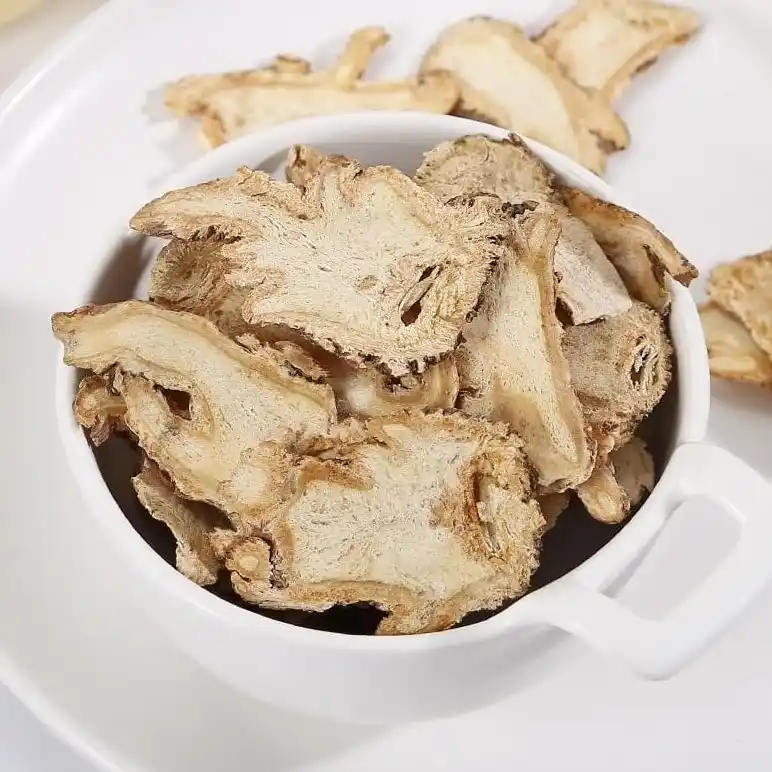
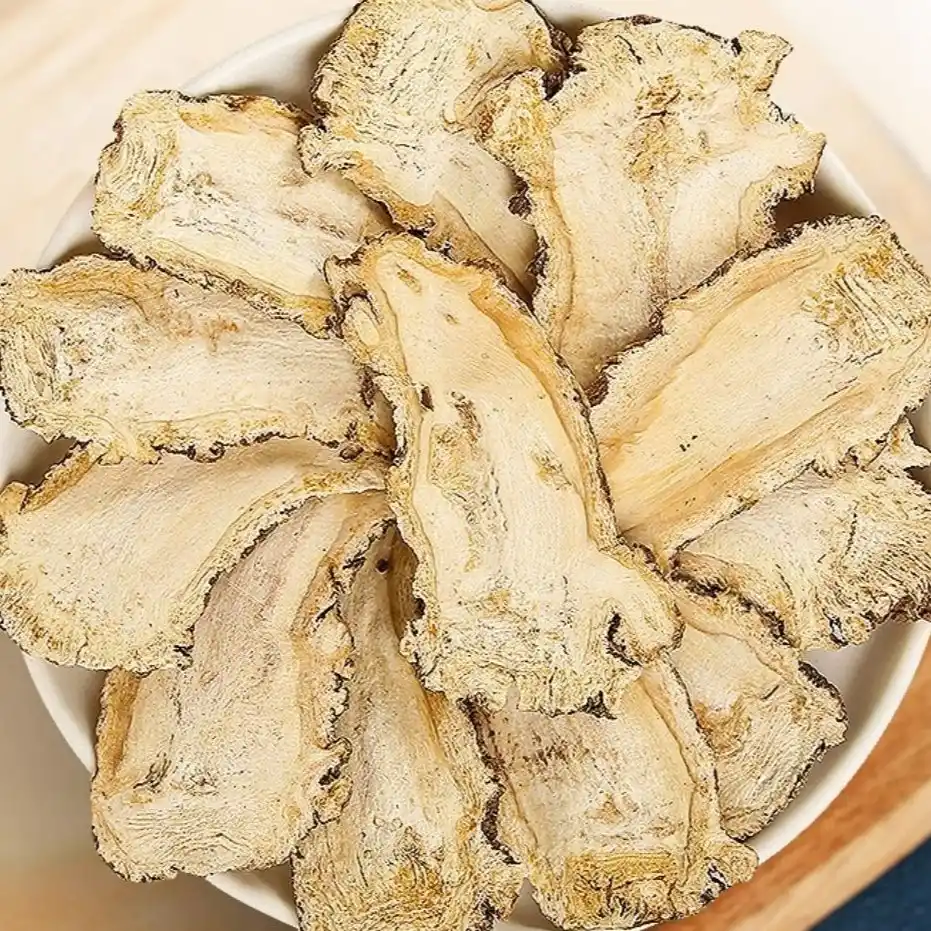
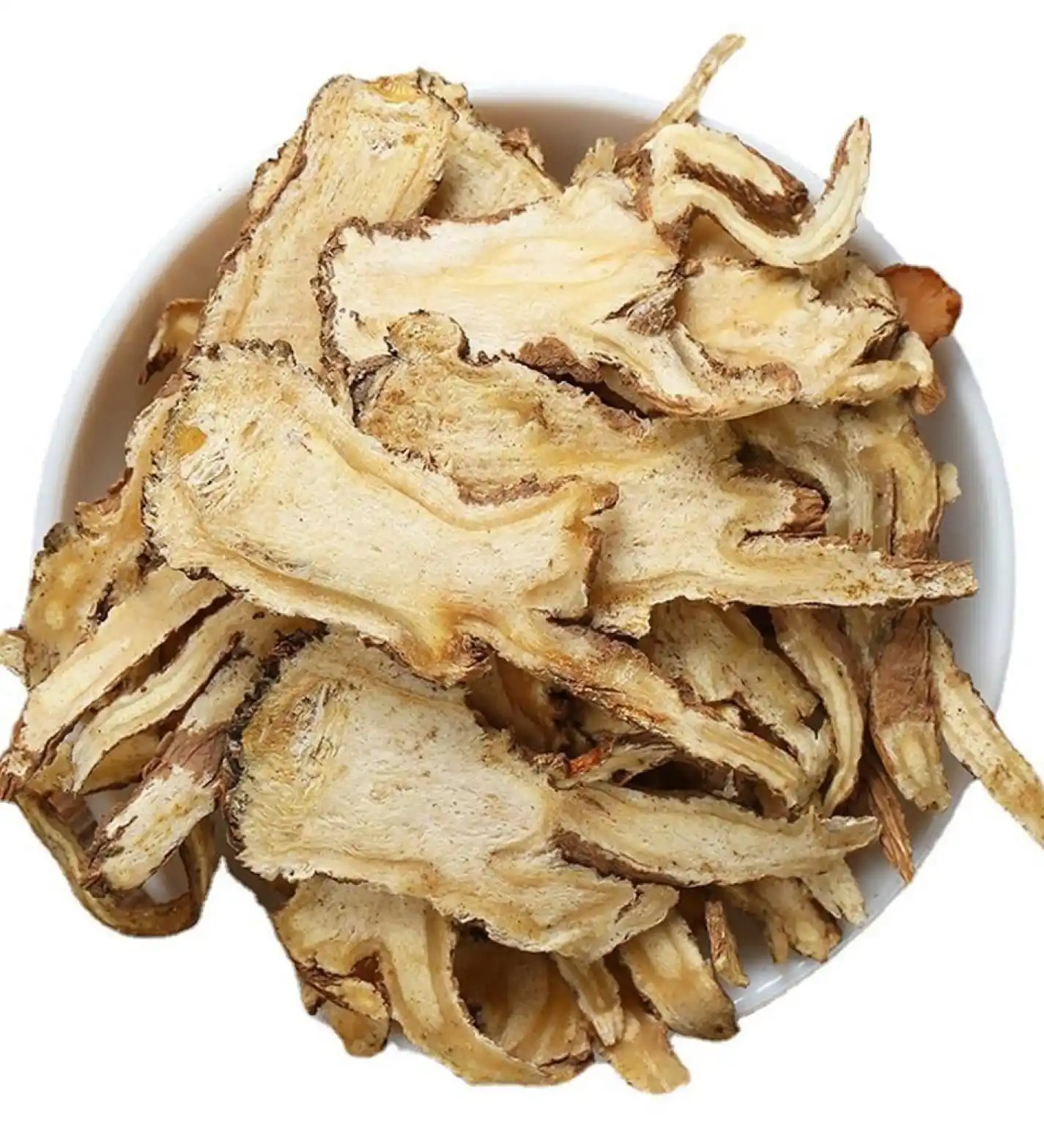
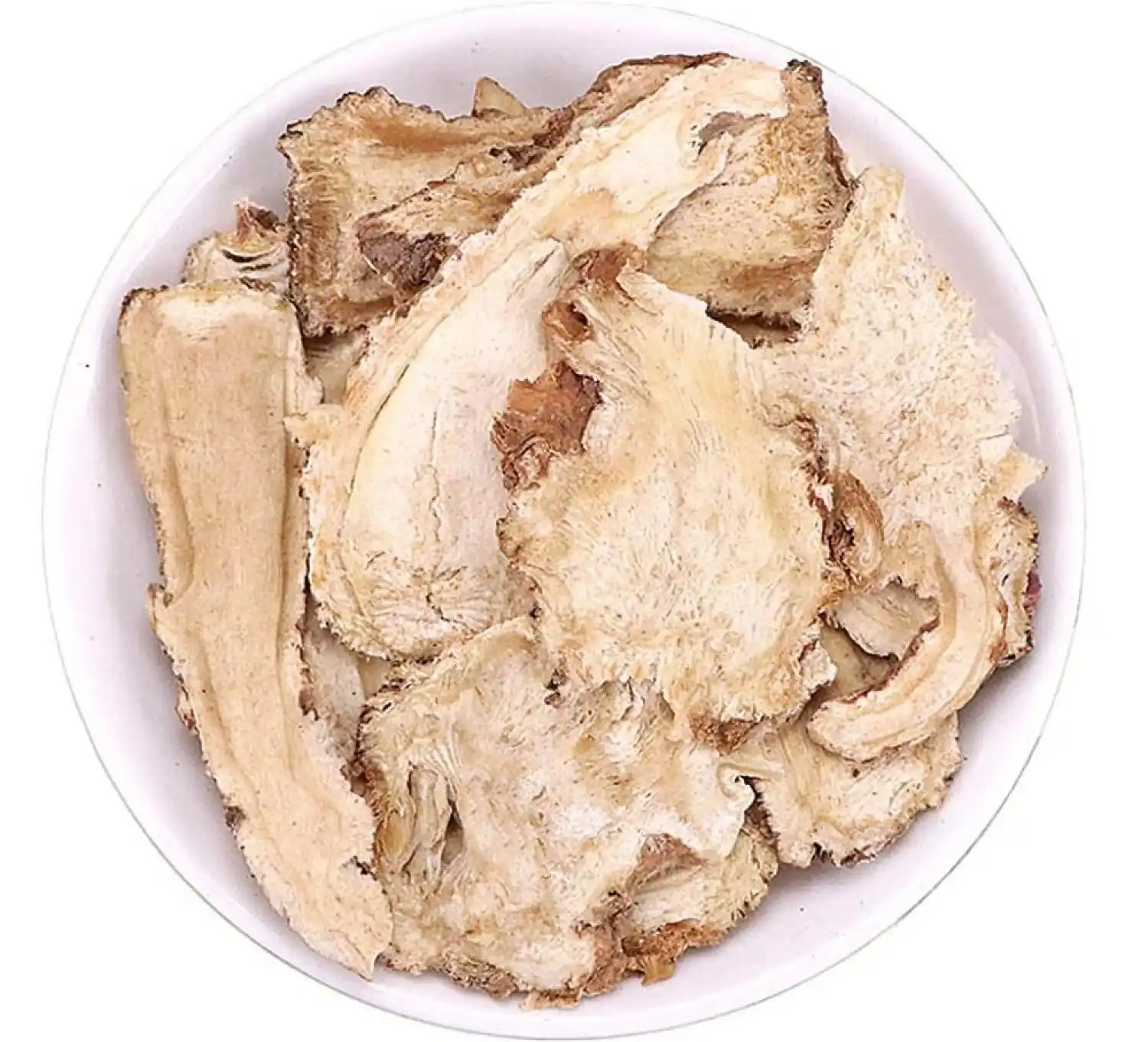
High-quality Angelica sinensis slices usually come from roots with:
Outer skin in yellow-brown to brown tone
Cross-section in pale yellow to light brown
Clear growth rings and tiny oil dots
Fairly even slice thickness, normally around 1–2 mm
If the slices are very white or bright lemon-yellow, that often means heavy sulfur-fumigation. If the cross-section is dark, grey or shows spots, you may be looking at old stock or storage problems.
Table: Visual Indicators for Dang Gui Slice Quality
Indicator
What good Dang Gui slices look like
What you should worry about
Slice thickness
Roughly 1–2 mm, similar thickness in one lot, edges not destroyed.
Mixed thickness, a lot of powder and crumbs, hard to control decoction and extraction.
Outer color
Natural yellow-brown or brown, even, not too shiny.
Too white, too “golden”, or dull grey; color doesn’t look natural.
Cross-section
Pale yellow to light brown, clear rings, visible oil dots, a bit of shine.
Chalky white or very dark; no oil dots; looks dead and dry.
Head / body / tail
Whole roots have full head, thick body, and tail still there before slicing.
Only thin roots, many broken tails, heads cut off to hide grade.
Cleanliness
Very little soil, fiber or other herbs; foreign matter almost none.
Stones, soil, plastic fibers, mixed leaves or stems – ash will go crazy.
Eyes are only the start. After that comes touch and smell.
Texture
Good Dang Gui slices feel firm but not like rock.
When you bend one, it may break with a little resistance.
The cross-section looks slightly oily, not dusty.
If the slices are super hard and snap like glass, they may be over-dried or very old. If they’re soft and sticky, the moisture window is off and micro risk goes up.
Aroma and taste
Open a bag and smell from a short distance.
Quality slices smell warm, sweet and a bit spicy, with an earthy root note.
If you chew a tiny piece, you should get a mild sweetness with a light bitter-spicy tail.
A weak smell often means lost volatile oil. A sharp, sour, or irritating nose feel can hint at sulfur-fumigation or bad storage. Your QC nose is still a valid test tool.
Sulfur-Fumigation and Other Common Risks
In many traditional supply chains, sulfur-fumigation was used to keep herbs bright and mold-free. It works on color, but it also can:
Damage key compounds like ferulic acid and part of the essential oil fraction
Leave sulfur dioxide or sulfite residues
Make the aroma thin and slightly sour
For health products, enzyme drinks, or cosmetic base, buyers now push hard for sulfur-free Dang Gui slices. The cost is a bit higher on storage and warehouse control, but you avoid a lot of testing headache later.
Other risks you should keep in mind:
High moisture → higher plate count and aflatoxin risk
Dirty raw roots → high ash and acid-insoluble ash
Unknown origin → unstable COA values and unstable price
Random mixed grades → batch to batch smell and color change, your brand looks inconsistent
That’s why serious buyers dont just ask “what’s the price”, they start with “what’s your spec, what’s your process”.
Laboratory Indicators: Ferulic Acid, Essential Oil and Moisture
For big volume users – pharma companies, supplement factories, functional drink brands – sensory check isn’t enough. You need lab numbers. Three key technical markers show up again and again in pharmacopeia and industry spec sheets:
Ferulic acid – core phenolic acid in Angelica sinensis
Essential oil content – mainly ligustilide and related phthalides
Moisture and micro – basic safety and shelf-life
You’ll often see a minimum ferulic acid level around 0.05% in dried roots and a volatile oil content around 0.4% or above. Moisture is normally kept under about 12% to balance safety and texture. Exact numbers depend on your target market and internal SOP, but these bands are very common.
Table: Typical COA Items for Angelica sinensis (Dang Gui) Slices
COA item
What to look for
Why it matters for you
Botanical identity
Angelica sinensis (Oliv.) Diels, root, no mix with other Angelica species.
Wrong identity means clinical risk and customs problems.
Ferulic acid
Not lower than your spec (often ≥ 0.05% of dried root).
Links directly to quality perception and pharmacopeia demands.
Essential oil / volatile oil
A stable minimum, often around 0.4% or higher.
Drives aroma, taste and part of the active profile.
Moisture (loss on drying)
Safe range, usually under 12% for slices.
Too wet: mold and aflatoxin; too dry: brittle and low aroma.
Total ash & acid-insoluble ash
Within pharmacopeia limits.
Tells you how clean the herb was before slicing.
Heavy metals
Below your internal limits.
Needed for exports and long-term safety.
Micro limits
TAMC/TYMC in range; key pathogens not detected.
Essential for tea bags, ready-to-drink formulas, and hospital scenes.
Aflatoxin
Within strict limit or not detected.
Roots plus bad enviroment equals aflatoxin trouble if nobody watch it.
A serious supplier will show you how they test, not only what they test. GuoCao runs ISO 22000 food-safety system, uses third-party COA testing, and keeps retention samples so each batch of Dang Gui slices can be traced back to a real report and a real batch record.
Origin, Root Size and Commodity Grade in the Angelica sinensis Supply Chain
Another hidden variable is origin and grade. Even when all roots carry the name “Angelica sinensis”, the background can be very different:
Some regions grow small, thin roots with low oil.
Some high-altitude zones give bigger, oily roots with stronger smell.
Age at harvest and field management also change the profile.
In practice, traders and factories use commodity grades to group roots by size and quality. Larger roots with thick body and clear head are usually graded higher. They cost more, but they also give a stronger aroma and more stable lab results.
When you plan a product, think backward:
For simple soup mixes and entry-level blends, a normal commodity grade might be enough.
For premium enzyme drinks or high-end supplement formulas, you probably want a higher root grade and stricter origin mapping, even if the raw cost goes up a little.
GuoCao works with multi-origin sourcing and can match Angelica sinensis roots to different spec levels for different projects, instead of pushing one random batch to all clients.
How GuoCao Controls Dang Gui Slice Quality
GuoCao isn’t a trading company that just flips bags. It’s a GMP Chinese herbal manufacturer with:
GMP herbal-slice production lines for roots, rhizomes, flowers, fruits, seeds, animal and mineral items
Normal temperature, cool and modified-atmosphere warehouses to hold herbs at the right moisture and temperature
ISO 22000 food-safety system and full traceability from raw root to final bag
In-house plus third-party COA testing for key items
The Spices section for aromatic materials used together with Dang Gui in broths or blends
For brands that want deeper value, GuoCao also support OEM/ODM:
Pre-mixed herbal bases
Tea-bag ready cuts
Herbal enzyme drink base
Customized decoction piece specs by thickness and grade
You can follow the detailed steps in OEM/ODM process for Chinese herbal slices. This is where the “industry black words” like in-process QC, moisture window, micro hold time, and COA release become part of a standard workflow, not an after-thought.
For global buyers, GuoCao have export cases into more than 30 countries and regions. Many of them start with a single herb like Dang Gui, then extend to full formulas after they see stable lab results.
If you’re working as a distributor or sourcing manager, you can reach out via the wholesale page and build a spec around your local rules and scenes.
Practical Buying Checklist for High-Quality Angelica sinensis (Dang Gui) Slices
Let’s pull the arguments together. When you judge Angelica sinensis slices, you’re basically answering one question: “Do these decoction pieces support my product, or will they create risk and rework?”
Here’s a short checklist you can run on every new supplier:
Look
Color natural, not extreme.
Cross-section pale yellow to light brown with oil dots.
Slice thickness around 1–2 mm, not random.
Touch and smell
Texture firm but not stone-hard.
Aroma warm and sweet-spicy, no harsh sulfur note.
Ask about sulfur-free processing
Especially important for teas, drinks, beauty and hospital use.
Review the COA
Ferulic acid and volatile oil not lower than your internal spec.
Moisture, ash, micro limits and aflatoxin in range.
Identity and origin clearly stated.
Check the factory, not only the trader
GMP or similar system in place.
ISO-level food-safety for products entering the food or beverage chain.
Batch records and retention samples kept.
Plan grade vs product position
Don’t expect premium performance from bottom commodity grade.
For high-end products, match a higher root grade and origin mapping.
If you want to talk details – slice thickness, moisture window, private label projects – you can contact GuoCao directly through the contact page or the wholesale inquiry form.
Once you know how to read the color, the smell and the COA, Dang Gui slices stop being a random root in a sack. They become a predictable, traceable ingredient that supports your formula, your lab results, and your business in the long run.
Our low MOQ of 1 kg (2.2 lb) makes it easy to order Chinese herbal slices or wholesale Chinese medicine herbs. Private-label and bilingual labeling are also available.
Delivery Cycle & Support
We have a fast 7-day lead time. We provide free samples, COA reports, and technical support to help you bring high-quality bulk Chinese herbs to market.
Quality & Certifications
Our products are manufactured in a GMP-certified facility and meet ISO22000 standards. All Chinese herbs are third-party tested for heavy metals, pesticides, and microorganisms.