Steam Sterilization vs Dry Heat for Spices: What Buyers Should Ask
Steam usually delivers faster microbial reduction, while dry heat avoids adding moisture. Neither method is automatically safe, gentle, or suitable for every spice. Buyers must examine validated process parameters, lot-level records, sensory data, and post-treatment controls before approving a supplier.
Because dried spices combine low water activity, uneven particle geometry, volatile aroma compounds, natural microbial contamination, and widely different bulk densities, a treatment that performs well on whole black pepper may fail—or damage the product—when applied unchanged to paprika, ground cinnamon, bay leaves, cumin, or white pepper.
So why do buyers still accept a certificate that says only “steam sterilized”?
I do not.
The phrase sounds reassuring, but it tells us almost nothing about the actual spice sterilization process. It does not identify the target microorganism, treatment temperature, exposure time, product-core temperature, pressure, initial water activity, drying conditions, achieved log reduction, sensory damage, or risk of contamination after treatment.
The hard truth is blunt: the method name is not the control. The validated operating window is.
“Sterilized Spice” Is Often a Marketing Term
In commercial spice processing, “sterilization” frequently means microbial reduction or pasteurization rather than the complete destruction of every viable microorganism and bacterial spore.
That distinction matters.
A supplier may use steam sterilization for spices to reduce Salmonella enterica, aerobic plate count, coliforms, yeast, mold, or Enterobacteriaceae. Yet the finished spice may still contain surviving organisms, particularly heat-resistant spores from species such as Bacillus cereus or Clostridium.
A 5-log reduction sounds impressive because it represents a 99.999% decrease in the target population. But it does not mean zero organisms remain.
Consider a theoretical lot containing 1,000,000 colony-forming units per gram, written as 10⁶ CFU/g. A validated 5-log reduction would reduce that level to approximately 10 CFU/g. Whether that result is acceptable depends on the organism, analytical method, intended application, serving size, destination market, and whether another lethality step occurs later.
Words are cheap.
When reviewing a wholesale offer, I would replace “Is the spice sterilized?” with five sharper questions:
Which hazard was the process designed to control?
What minimum log reduction was validated?
Which process parameters produce that reduction?
Was the validation conducted on this spice and product form?
How is the treated product protected afterward?
That final question catches weak suppliers. A successfully treated spice can be contaminated again by untreated dust, conveyors, mills, workers, cooling air, reusable containers, or shared packing equipment.
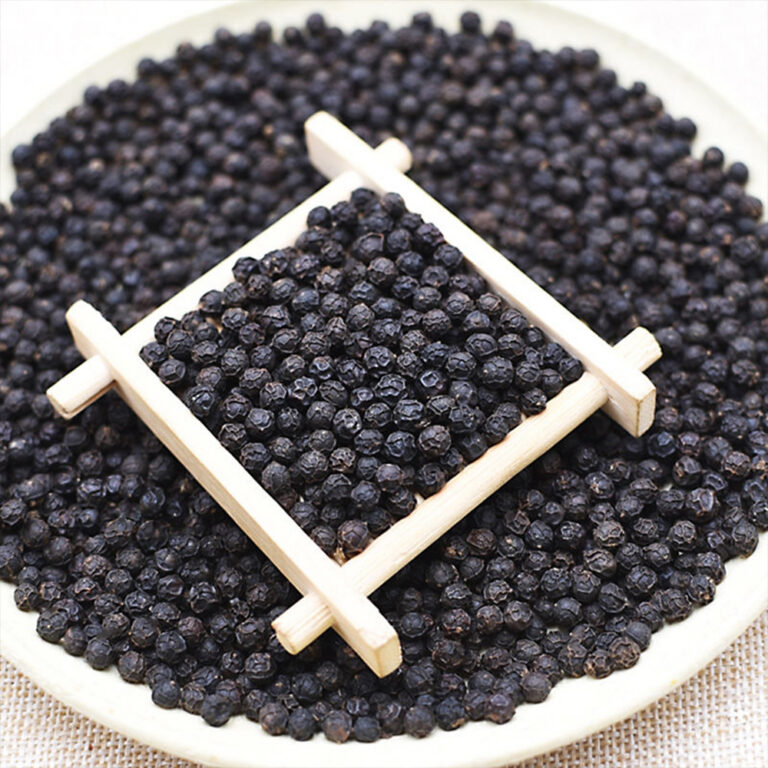
For a product-specific example, the site’s black pepper microbial-risk guide explains why treatment status must be evaluated alongside density, aroma, grinding history, lot identity, and post-process handling.
Steam vs Dry Heat Sterilization: The Buyer’s Comparison
Steam transfers heat through moisture. Dry heat relies mainly on heated air, conduction, and prolonged exposure.
That sounds simple. It is not.
The FDA’s spice risk profile found that the reviewed steam treatments generally produced greater reductions in native spice microflora than the reviewed dry-heat treatments, although FDA also warned that the studies involved different spices, equipment, organisms, temperatures, pressures, and exposure conditions. The available data therefore did not justify treating one set of numbers as a universal process schedule. (U.S. Food and Drug Administration)
Procurement factor
Steam sterilization for spices
Dry heat sterilization for spices
What the buyer must verify
Heat-transfer mechanism
Moist heat, condensation, saturated steam, superheated steam, or vacuum-assisted steam
Heated air or another low-moisture thermal medium
Actual system type, not merely “heat treated”
Typical microbial efficiency
Often faster and more effective at comparable product temperatures
Often slower because microorganisms in dry matrices can be more heat resistant
Validated log reduction for the target pathogen
Moisture effect
Can temporarily increase surface or internal moisture
Adds little or no water
Initial and final moisture plus water activity, or a_w
Post-treatment step
Drying and cooling are often required
Cooling may be required; drying may not be
Drying time, cooling air quality, final a_w
Product risks
Clumping, swelling, color change, volatile loss, cooked notes
Oxidation, prolonged thermal damage, fading, toasted or scorched notes
Sensory and chemical acceptance limits
Process uniformity
Depends on steam penetration, condensation, bed depth, pressure, and movement
Depends on airflow, layer depth, particle size, loading, and equipment geometry
Cold-spot study and load configuration
Suitable product forms
Frequently used for whole and some ground spices
May suit heat-stable materials where added moisture is undesirable
Validation for whole, cracked, flaked, or ground form
Documentation
Cycle record, pressure, temperature, time, drying, deviation log
Air and product temperature, time, airflow, load depth, deviation log
Lot-linked records from the actual treatment facility
Main purchasing trap
Assuming all steam systems perform alike
Assuming “no added moisture” means less product damage
Comparing method names instead of validated outcomes
Why steam often kills faster
Moisture changes lethality.
When steam condenses on a cooler spice surface, it transfers substantial thermal energy and can improve heat penetration into exposed particles. Moist heat also tends to damage microbial proteins and cellular structures more efficiently than dry air at the same nominal temperature.
But nominal temperature is not product temperature.
A chamber display reading 100°C does not prove that the coldest point in a commercial bed of dense peppercorns reached the validated temperature for the required time. Air pockets, overloading, poor mixing, variable particle size, and inadequate steam distribution can produce untreated zones.
Pressure complicates the comparison further. FDA’s historical review reported steam-process reductions ranging from below 1 log to almost 8 logs, depending on the system and conditions. The strongest reported reductions involved saturated steam under pressure, while less intensive atmospheric systems delivered much smaller results. The agency also noted that the underlying studies largely measured native microflora rather than inoculated Salmonella, which limits direct interpretation. (U.S. Food and Drug Administration)
This is why a supplier cannot simply borrow a published temperature from another spice.
Why dry heat may require more punishment
Dry heat sterilization for spices avoids the obvious problem of adding water, but it introduces another: microorganisms in low-moisture foods can become unusually heat resistant.
A dry peppercorn is not a laboratory broth.
As water activity falls, heat transfer changes and bacterial cells may survive thermal conditions that would kill them rapidly in a wetter environment. A dry-heat process may therefore require a higher temperature, a longer exposure period, or both.
That creates a commercial trade-off. Extended heating can reduce volatile compounds, shift color, oxidize fats, weaken fresh top notes, or create toasted aromas before the required microbial reduction is achieved.
Dry heat is not automatically gentler.
The FDA review included dry-heat results of roughly 1.3 to above 3.9 decimal reductions under the reported study conditions, compared with a much wider 0.8-to-7.9-log range for steam. Those figures are not buying specifications; they are evidence that equipment design and process conditions matter more than the treatment label. (U.S. Food and Drug Administration)
Why the Spice Matrix Controls the Result
There is no single best sterilization method for spices because “spices” are not one processing matrix.
Whole peppercorns, ground pepper, paprika powder, cinnamon bark, nutmeg, mace, bay leaves, and fennel seeds behave differently under heat. Their surface structure, oil content, porosity, particle size, water activity, density, and heat sensitivity all affect microbial lethality and product damage.
Whole spices versus ground spices
Whole spices may retain aroma better because less internal surface area is exposed. Yet their shape can create shielding, air gaps, and uneven heat penetration.
Ground spices heat differently. Small particles may expose microorganisms more directly, but powders can compact, form channels, absorb condensation, cake, and create dense sections inside the processing chamber.
Grinding after treatment introduces another risk.
A whole spice may leave the treatment chamber with an acceptable microbiological result, then pass through a contaminated mill and fail in the final package. Buyers should therefore establish whether treatment occurs before or after grinding and whether the mill is located inside a controlled post-lethality zone.
For white pepper, the treatment decision must also account for retting, washing, drying, odor development, and surface cleanliness. Those controls are examined in the white pepper sourcing and processing guide.
Water activity is not moisture percentage
Buyers routinely confuse moisture content with water activity.
Moisture percentage measures the amount of water in the product. Water activity, written as a_w, estimates how available that water is for chemical reactions and microbial activity on a scale from 0 to 1.00.
Two spice lots can report the same moisture percentage but have different water activities because their sugars, salts, fibers, oils, particle structures, and chemical compositions bind water differently.
This affects treatment resistance.
A supplier should record both the starting and finished condition when those variables form part of the validated process. Testing only the final moisture percentage may miss an unsafe process deviation or a stability problem created by condensation.
Aroma chemistry cannot be judged from a COA checkbox
Steam and dry heat can both alter volatile compounds.
Black pepper aroma involves compounds such as limonene, α-pinene, β-pinene, sabinene, δ-3-carene, and β-caryophyllene. Bay leaves may contain 1,8-cineole, α-terpinyl acetate, sabinene, and related volatiles. Nutmeg and mace have different oil profiles even though they come from the same fruit.
Heat does not treat those compounds equally.
Some evaporate quickly. Some oxidize. Some survive while the brighter top notes disappear, leaving a product that still tastes pungent but smells flat.
This is why sensory approval must be product-specific. A treatment acceptable for industrial curry powder may be unacceptable for retail grinder pepper, visible whole bay leaves, or a high-aroma seasoning applied after cooking.
For fragile leaf products, the bay leaf quality and aroma-retention guide shows why color, breakage, storage, and volatile retention should be evaluated together rather than reduced to one microbial number.
And buyers should never assume closely related botanicals react identically. The site’s mace versus nutmeg specification guide explains why separate raw-material and processing standards are needed.
The Numbers Behind the Risk
Dry does not mean safe.
The FDA’s spice-safety analysis described pathogens and filth in spices as a systemic problem rather than an issue confined to one country. Among shipments from 79 countries examined for Salmonella, contaminated shipments were found from 37 countries. During fiscal years 2007–2009, imported spice shipments had an estimated Salmonella prevalence of approximately 6.6%, about twice the average for other imported FDA-regulated foods. (U.S. Food and Drug Administration)
FDA also collected 7,249 retail samples covering basil, black pepper, oregano, paprika, capsicum, coriander, cumin, curry powder, garlic, sesame seed, and white pepper. For nine of the 11 spice types, retail Salmonella prevalence was significantly lower than the estimated prevalence at import, a result consistent with industry reports that pathogen-reduction treatments were often applied before retail distribution. (U.S. Food and Drug Administration)
Treatment clearly matters.
Yet treatment paperwork can still fail.
Case study: a nationwide black pepper recall
On June 3, 2024, UBC Food Distributors announced a recall of Baraka-brand ground black pepper in 7-ounce containers after a routine surveillance sample tested positive for Salmonella. The product had been distributed nationwide in U.S. retail stores, and production was suspended during the investigation.
The FDA-posted Baraka black pepper recall reported no illnesses at the time of the announcement. That does not weaken the procurement lesson. A product can pass through sourcing, processing, packing, national distribution, and retail placement before routine surveillance reveals the problem. (U.S. Food and Drug Administration)
A familiar package is not a control.
Case study: repeated shipment refusals
A Reuters analysis of U.S. regulatory data reported in May 2024 that MDH had averaged a 14.5% U.S. shipment-rejection rate since 2021 because of bacterial findings. Between October 2023 and May 3, 2024, 13 of 65 shipments—approximately 20%—were rejected after failing checks involving Salmonella. MDH stated that its products were safe. (Reuters)
The point is not to condemn an origin or brand.
The point is that reputation does not replace lot-level evidence. A famous supplier can have a rejected shipment. A small supplier can produce a compliant lot. Buyers need systems and shipment-specific proof.
Case study: the treatment certificate that did not answer enough
Paper proves little.
In a July 8, 2024 FDA warning letter, the agency described a ready-to-eat herb and spice operation whose preventive-control documentation referred to a validated lethality kill step and treatment certificate.
FDA’s objection was precise: the supply-chain program did not verify that the parameters selected and applied by third-party treatment providers were adequate to control vegetative pathogens such as Salmonella. (U.S. Food and Drug Administration)
Read that carefully.
A certificate existed. A stated kill step existed. FDA still questioned whether the applied parameters were adequate.
That is the difference between possessing a document and controlling a hazard.
The Validation File Buyers Should Demand
Validation demonstrates that a defined process can consistently achieve the required microbial reduction under stated conditions.
Verification confirms that the process was followed.
Monitoring records what happened during the run.
These terms are often blurred in supplier discussions, sometimes innocently and sometimes because vague language makes weak systems harder to challenge.
Validation should identify the actual product
A credible validation package should state:
Spice species and botanical identity
Whole, cracked, flaked, or ground form
Particle-size or mesh range
Bulk density or bed depth
Initial moisture and water activity
Target organism or approved surrogate
Initial inoculation or challenge level
Required log reduction
Treatment equipment and model
Minimum product temperature
Exposure or holding time
Steam pressure, humidity, or airflow where applicable
Maximum commercial load
Defined cold spot
Drying and cooling conditions
Number of validation runs
Statistical treatment of results
Deviation and corrective-action limits
A validation conducted on whole cumin cannot automatically validate ground cumin.
Nor should buyers accept data from a small laboratory tray as proof that a five-ton commercial chamber performs uniformly. Scale changes bed depth, residence time, airflow, steam penetration, condensation, and cold-spot location.
Ask for D-values and z-values when appropriate
A D-value is the time required at a specified temperature to reduce a target microorganism by 1 log, or 90%, under defined conditions.
A z-value is the temperature change required to alter the D-value by a factor of ten.
These are powerful numbers. They are also easy to misuse.
A D-value belongs to a particular organism, strain, spice matrix, moisture condition, temperature, and test method. Copying a value from another product into a commercial validation report can produce false confidence.
Ask who generated the data.
Was the laboratory accredited to ISO/IEC 17025 for the relevant method? Was the challenge organism appropriate? Did the study use a recognized surrogate instead of releasing Salmonella into a production facility? Were replicate runs conducted at the maximum load and worst-case operating limits?
Demand the commercial cycle record
The validation report tells you what should work. The cycle record tells you what happened to your lot.
For steam treatment, request:
Chamber identification
Treatment date and batch number
Pre-treatment lot number
Post-treatment lot number
Load weight and configuration
Steam type
Chamber pressure
Product and chamber temperature
Come-up time
Minimum holding time
Condensation or moisture-control data
Drying temperature and time
Final moisture and a_w
Cooling conditions
Alarm and deviation record
Operator and reviewer approval
For dry heat, request:
Oven or system identification
Load depth and weight
Air set point
Actual product temperature
Air velocity or circulation settings
Cold-spot sensor position
Come-up and holding times
Cooling method
Deviation record
Lot identity and release signature
A screenshot showing one temperature is not a cycle record.
Microbial Testing Is Necessary but Incomplete
Testing is partial.
A lot-specific certificate of analysis may include Salmonella, aerobic plate count, yeast and mold, coliforms, Enterobacteriaceae, and sometimes Bacillus cereus. Those results help verify the finished lot, but they do not replace process validation.
Sampling examines only a fraction of a shipment.
A negative result means the target organism was not detected in the tested analytical units under the stated method. It does not prove that every kilogram in a container is free from contamination.
Buyers should define:
Sampling plan
Number and location of incremental samples
Composite-sample procedure
Analytical-unit size
Test method
Detection limit
Laboratory accreditation
Lot-release criteria
Retest policy
Action after a positive result
Whether treated lots may be reworked
I strongly oppose automatic retesting until a lot passes. Repeated testing can become a statistical fishing exercise unless the buyer has a written investigation, resampling, and disposition procedure.
A failed lot needs an explanation.
The Spice Sterilization Questions Suppliers Should Answer
These are the spice sterilization questions for suppliers that I would put into an RFQ, supplier audit, or technical questionnaire.
Process ownership
Is treatment performed in-house or by a subcontractor?
What is the legal name and address of the treatment facility?
Can the buyer audit that facility?
Does the treatment certificate identify the actual commercial lot?
How are lots protected from substitution or mixing?
Validation
What target organism was used?
What minimum log reduction was validated?
Was the validation performed on the same spice and physical form?
What was the initial water activity?
What was the maximum commercial load?
Where was the cold spot?
How many replicate runs were completed?
Who reviewed and approved the validation?
When was it last reassessed?
Steam-process controls
Is the process atmospheric, saturated-steam, superheated-steam, controlled-condensation, or vacuum-assisted?
What minimum product temperature must be reached?
How long must every part of the load remain above that temperature?
How is steam distributed?
How are condensate and excess moisture removed?
What final a_w limit must be reached before release?
Dry-heat controls
What temperature is measured in the air, and what temperature is measured in the product?
What is the maximum layer depth?
How is airflow uniformity demonstrated?
How long is the come-up period?
What prevents surface overheating before the cold spot reaches the target?
What sensory changes were observed during validation?
Post-treatment hygiene
Are treated and untreated areas physically separated?
Is air pressure controlled between zones?
Are workers, utensils, forklifts, and containers segregated?
Is treated material ground on dedicated or validated-clean equipment?
How is environmental monitoring performed?
What happens after a positive environmental result?
Is packaging completed inside the controlled zone?
Quality preservation
What color difference, expressed as ΔE where available, is permitted?
Are volatile oils measured before and after treatment?
Is aroma evaluated through a trained sensory panel?
Are HPLC, GC-FID, or GC-MS tests used for heat-sensitive compounds?
What moisture, flowability, caking, and bulk-density changes occur?
Can the supplier provide treated and untreated comparison samples?
A supplier that answers these questions clearly may still have problems. A supplier that refuses to answer them already has one.
How to Select the Best Sterilization Method for Spices
The best sterilization method for spices is the process that achieves the required pathogen reduction throughout the worst-case commercial load while preserving agreed sensory, chemical, physical, and legal specifications.
That is not always steam.
And it is not always dry heat.
Steam may be the stronger option when:
A fast microbial reduction is needed
The spice tolerates temporary moisture exposure
The system provides uniform steam contact
Effective drying is available
Aroma and color remain inside agreed limits
The process has been validated for the product form
Dry heat may deserve consideration when:
Added moisture creates severe caking or structural damage
The spice is relatively heat stable
The supplier can maintain uniform product temperature
The required lethality is achievable without excessive exposure
Volatile, color, and oxidation limits are validated
Commercial load depth is tightly controlled
Neither should be approved when:
The supplier provides only a generic certificate
Validation belongs to another spice
The process record is not linked to the lot
Product temperature is not monitored
Cold spots have not been studied
Treated and untreated materials share uncontrolled space
No deviation procedure exists
Sensory damage has not been measured
Positive lots are simply retested until they pass
Buyers comparing product forms, origins, and applications can review the available wholesale dried spices catalog before preparing a specification. But a catalog selection is only the starting point; treatment requirements must follow the actual product and final use.
FAQs
What is spice sterilization?
Spice sterilization is a controlled treatment intended to reduce pathogenic and spoilage microorganisms in whole or ground spices to a defined, validated level while keeping color, aroma, moisture, texture, and chemical composition within agreed limits; in commercial practice, the term usually describes pathogen reduction rather than complete microbiological sterility.
The process may use steam, dry heat, irradiation, ethylene oxide where legally permitted, or another validated technology. Buyers should specify the target organism, required log reduction, product form, test method, destination-market rules, and post-treatment handling controls.
Is steam sterilization better than dry heat for spices?
Steam sterilization is generally more efficient than dry heat at transferring energy and reducing microbial populations, but it is only the better method when the commercial system achieves uniform exposure, completes controlled drying, prevents recontamination, and keeps aroma, color, flowability, moisture, and water activity inside the buyer’s written limits.
Steam may damage delicate products through condensation or volatile loss. Dry heat avoids added water but may require longer or hotter exposure because microorganisms in low-moisture foods can resist heat. The buyer must compare validated outcomes, not process names.
How are spices sterilized commercially?
Commercial spices are sterilized or pasteurized by exposing a controlled load to a validated microbial-reduction process—often steam, dry heat, irradiation, or legally permitted fumigation—then cooling, drying where necessary, testing, and packing the treated material under hygienic conditions that prevent contact with untreated dust, equipment, air, containers, or personnel.
The exact sequence depends on whether the product is whole or ground, its water activity, heat sensitivity, target pathogen, final application, and destination-market requirements. Grinding and packing after treatment require special attention because they can reintroduce contamination.
What documents should a spice buyer request?
A spice buyer should request a product-specific validation report, lot-linked treatment certificate, complete commercial cycle record, pre- and post-treatment lot identity, lot-specific COA, accredited laboratory reports, moisture and water-activity results, deviation records, corrective-action procedures, traceability documents, sensory comparisons, and evidence that treated material is segregated from untreated product.
Generic ISO, HACCP, GMP, or food-safety certificates may support supplier qualification, but they do not prove that a particular lot received an adequate pathogen reduction treatment. The shipment record must connect the approved process to the actual goods.
Does a negative Salmonella result prove the spice is safe?
A negative Salmonella result means the organism was not detected in the tested analytical portions under the stated sampling plan and laboratory method; it does not prove that every unit in a large spice lot is free from contamination, nor does it demonstrate that the treatment process was properly validated or consistently operated.
Testing should verify a broader control system. Buyers still need supplier qualification, treatment validation, cycle monitoring, lot traceability, hygienic zoning, environmental controls, and a written response plan for positive or questionable results.
Build the Specification Before You Buy
Do not ask a supplier for “the best sterilized spice.”
Then demand a representative treated sample from the same process route proposed for commercial production.
For a specification-based quotation, contact the bulk herb and spice team with your product, form, quantity, target market, microbial limits, treatment preference, packaging format, and required documentation.
Buy the evidence. Audit the process. Approve the lot.
Our low MOQ of 1 kg (2.2 lb) makes it easy to order Chinese herbal slices or wholesale Chinese medicine herbs. Private-label and bilingual labeling are also available.
Delivery Cycle & Support
We have a fast 7-day lead time. We provide free samples, COA reports, and technical support to help you bring high-quality bulk Chinese herbs to market.
Quality & Certifications
Our products are manufactured in a GMP-certified facility and meet ISO22000 standards. All Chinese herbs are third-party tested for heavy metals, pesticides, and microorganisms.