Fox Nut Sourcing Guide for Functional Food and Herbal Buyers
Buying fox nuts is more complicated than comparing price per kilogram. This guide explains how functional food and herbal buyers should evaluate Euryale ferox identity, makhana format, origin, processing, testing, supplier documentation, and commercial consistency before placing a bulk order.
If your RFQ says only “fox nuts,” one supplier may quote popped makhana intended for snack production while another quotes dried seed kernels used as Qian Shi in herbal channels, and both may believe they have answered the same request.
How do you compare those offers?
You cannot. Not properly.
My rule is simple: do not discuss price until botanical identity, commercial form, processing state, intended use, and destination market appear on the same specification sheet.
That sounds overly cautious until a shipment arrives in the wrong format.
Fox nuts, makhana, gorgon nuts, Qian Shi, Euryales Semen, and the casually used term “lotus seeds” are often mixed together in supplier listings. For professional sourcing, that naming mess is where mistakes begin.
And one point deserves its own warning: genuine lotus seed normally refers to Nelumbo nucifera, a different plant in the Nelumbonaceae family. Kew treats the two as separate botanical species and even separate families. Kew: Nelumbo nucifera Gaertn.
For buyers, that is not botanical trivia.
It is label control.
It is COA control.
It is import control.
Fox Nuts, Makhana, and Qian Shi Are Not Always the Same Commercial Product
The plant is Euryale ferox. The product can be very different.
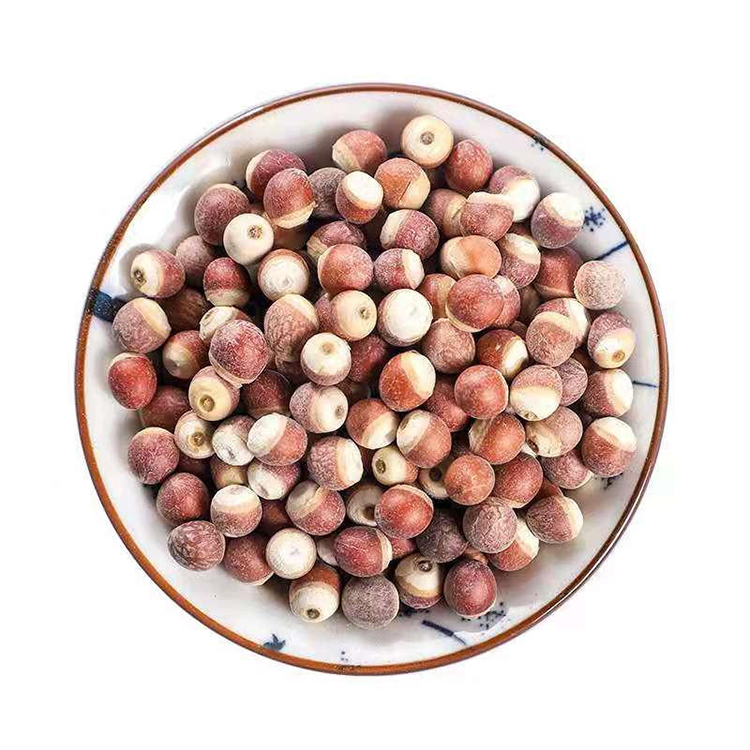
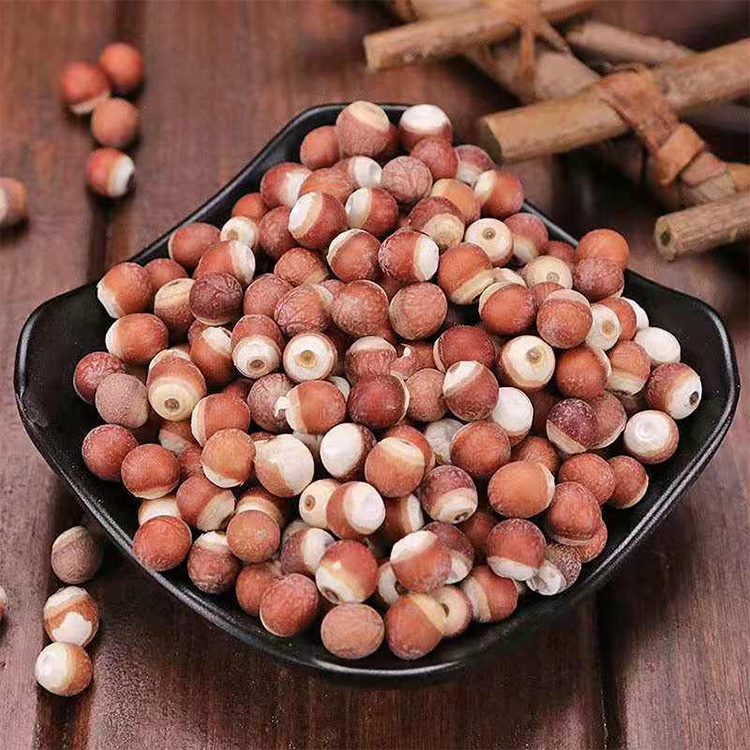
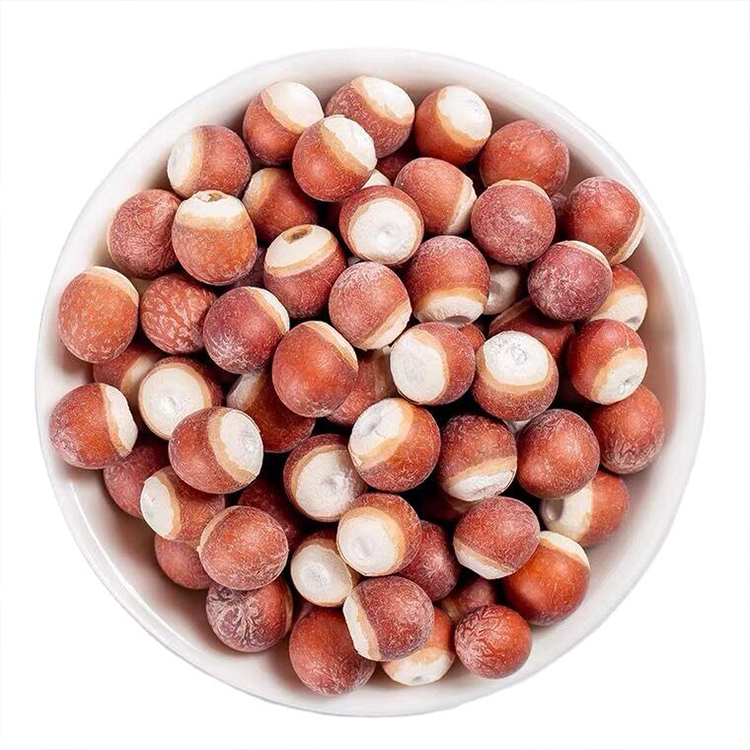
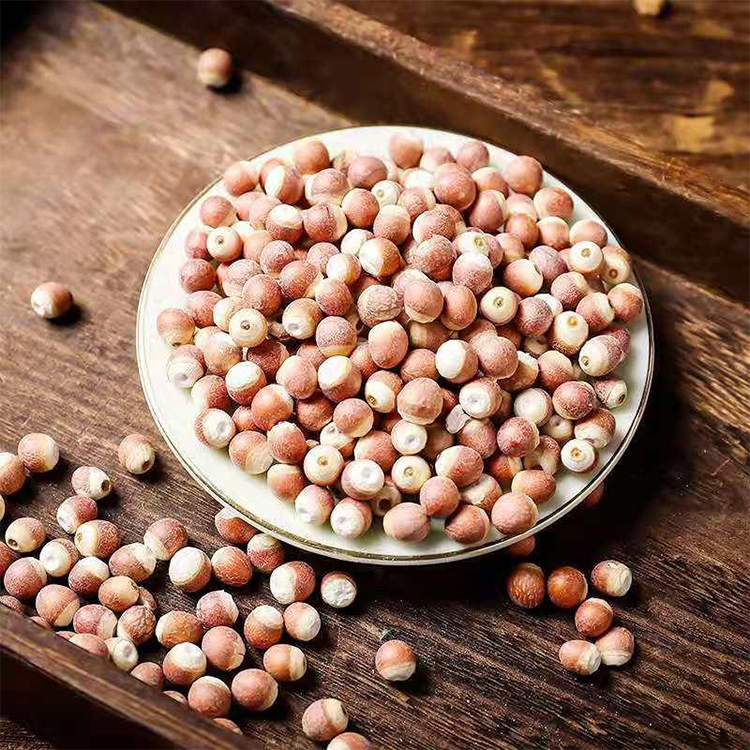
In India, makhana commonly means the expanded white kernel produced after processing and popping the seed. In Chinese herbal trade, Qian Shi, also called Euryales Semen, generally refers to the mature seed kernel used as a food-herb ingredient rather than the airy popped snack format.
A functional snack company and a botanical formulation company can therefore search the same keyword — fox nuts — while requiring materially different ingredients.
Before approaching a fox nut supplier, define which of these you actually need:
Buyer Requirement
Typical Commercial Form
What Matters Most
Premium snack
Popped makhana
Pop size, crispness, breakage, color, moisture, scorched pieces
One housekeeping point is worth correcting anywhere it appears in supplier documentation: the botanical name should be Euryale ferox Salisb., not variations such as “Euryale Foxi.” The latter does not match the accepted species name used by Kew, NCBI taxonomy, or ICAR.
A buyer who ignores that discrepancy at RFQ stage may inherit it on the specification sheet, COA, artwork, import record, and finished-product technical file.
That is an expensive typo.
The 2026 Makhana Market Is Becoming a Real Export Supply Chain
The fox nut trade has moved well beyond small ethnic-food channels.
Official Indian figures make that obvious.
In August 2026, India’s Ministry of Agriculture reported that Bihar produced approximately 60,000 metric tonnes of makhana in 2025–26, with average productivity of 2.00 MT per hectare. The National Makhana Board, established on September 14, 2025, is backed by a ₹476.03 crore Central Sector Scheme intended to support production, processing, value addition, marketing, and exports. Government of India: National Makhana Board data
That concentration matters.
Bihar is not merely one sourcing option among dozens. Another August 2026 government release put Bihar’s share at roughly 85% of India’s makhana production. India exported more than 7,000 MT of makhana and value-added makhana products during FY 2025–26 to more than 20 international destinations. A separate HS code for makhana also came into effect in July 2025. APEDA-facilitated makhana export announcement
The concentration creates efficiency.
It also creates risk.
If your annual program depends heavily on one crop zone, weather, harvest quality, processor capacity, local pricing, and storage conditions can all hit the same supply chain at once.
So I would never evaluate makhana sourcing solely through the cheapest FOB offer.
Cheap compared with what?
A 2026 Snapshot Buyers Should Keep in Their Sourcing File
Market Indicator
Reported Data
Procurement Meaning
Bihar makhana production, 2025–26
60,000 MT
Production is highly geographically concentrated
Bihar share of Indian production
~85%
Origin diversification deserves attention
India exports, FY 2025–26
7,000+ MT
Export infrastructure is becoming more established
Export destinations
20+
International demand is no longer experimental
National Makhana Board scheme
₹476.03 crore
Processing and value addition are receiving state support
Commercial sea shipment to Australia, Aug. 2026
18 MT
Larger-volume sea logistics are becoming viable
Reported farmer return improvement on that shipment
~18%
Traceable export channels can alter raw-material economics
Mithila Makhana GI certificate date
Aug. 16, 2022
Geographic claims can be verified rather than taken on trust
The August 2026 Australia shipment is particularly interesting. APEDA facilitated an 18 MT sea consignment of GI-tagged Mithila Makhana sourced from Darbhanga growers, with the government reporting returns around 18% above prevailing market prices.
That tells buyers something uncomfortable: as organized exports improve, do not assume yesterday’s local commodity pricing will remain available forever.
GI-Tagged Mithila Makhana Is a Claim, Not a Decorative Phrase
“Mithila Makhana” has legal meaning.
India’s Geographical Indications registry records Mithila Makhana, application number 696, as registered, with certificate number 421, issued on August 16, 2022 and currently listed as valid through August 13, 2030. Intellectual Property India: Mithila Makhana GI registration
So if a supplier charges a premium for GI-tagged makhana, ask for evidence supporting the claim.
Do not buy the adjective.
Buy the chain of proof.
That means checking the producer or approved supply relationship, lot origin, documentation, and whether the actual goods covered by your shipment can legitimately use the GI designation.
And remember: Bihar origin and GI-tagged Mithila Makhana are not automatically interchangeable phrases.
That distinction matters even more if the geographic story appears on your retail packaging.
How to Source Fox Nuts Without Buying the Wrong Grade
Many first-time buyers begin with size.
I would begin earlier.
Step 1: Lock the Botanical Identity
Your specification should state at minimum:
Botanical name:Euryale ferox Salisb. Family: Nymphaeaceae Plant part: Mature seed kernel Commercial name: Fox nut / makhana / Euryales Semen / Qian Shi, depending on format Origin: Country, state/province, and preferably producing area Processing form: Raw kernel, dried kernel, split kernel, popped makhana, roasted makhana, powder, flour, or extract input
Kew identifies Euryale ferox as the accepted species, while ICAR likewise describes makhana as Euryale ferox Salisb.
This is where I would reject vague supplier paperwork.
“Fox Nut — Premium Quality” is not a technical description.
Step 2: Define Processing Before Grade
Raw and popped material are not interchangeable.
Thermal processing changes the physicochemical behavior of Euryale ferox seeds and flour. Research indexed by PubMed found that different thermal treatments changed seed characteristics relevant to food applications. PubMed: thermal treatment of Euryale ferox seeds
That becomes important when fox nuts are used in:
extruded functional foods;
instant powders;
bakery systems;
cereal formulations;
starch-rich blends;
beverages requiring suspension;
herbal powders;
extraction projects.
For snack buyers, meanwhile, the expanded kernel itself is the product.
Specs diverge fast.
Step 3: Convert Local Grades Into Measurable Specifications
You will frequently encounter commercial descriptions such as 4 Suta, 5 Suta, 6 Suta, premium, jumbo, handpicked, export quality, Grade A, and Grade A+.
I dislike buying from those words alone.
Two sellers can use the same grade name and mean different size distributions.
Ask for:
actual diameter range in millimeters;
sieve method;
percentage within declared size range;
broken percentage;
unpopped kernel percentage;
scorched or black-spot tolerance;
foreign matter;
moisture;
color reference or sealed reference sample;
sample retained from approved production lot.
Specs beat adjectives.
A sealed physical reference sample is especially useful for popped makhana because appearance, expansion, crispness, surface defects, and breakage are difficult to reduce to one number.
What a Serious Bulk Fox Nut Specification Should Contain
A workable RFQ is not long because purchasing teams enjoy paperwork.
It is long because vague specifications create disputes.
I would build the technical sheet like this:
Specification Field
What the Buyer Should Define
Species
Euryale ferox Salisb.
Plant part
Mature seed kernel
Product form
Raw/dried, popped, roasted, broken, flour or powder
Origin
Country + production region
Crop/production date
Declared lot-specific information
Size
Millimeter range plus method, not only trade grade
A COA from six months ago, from another lot, tested under a different specification, tells you very little about the container being loaded next week.
For bulk fox nuts, I would want the report tied to:
supplier lot number;
production or packing date;
sample date;
test date;
laboratory identity;
test methods;
specification limits;
actual numeric results;
disposition or release status.
“PASS” alone is weak.
Numbers are better.
For pesticide testing, multi-residue methods using techniques such as GC-MS/MS and LC-MS/MS are far more useful than a vague declaration that the ingredient is “pesticide free.”
And if you are building a broader botanical purchasing program, the existing Chinese herb supplier audit process is a useful companion to the fox nut specification.
Microbiological Risk Should Not Be Dismissed Because the Product Looks Dry
Dry botanicals can fool purchasing teams.
They look safe.
They feel stable.
But low-moisture products can still carry microorganisms, and international regulators do act on contaminated botanical materials.
A recent FDA example had nothing specifically to do with fox nuts, which is exactly why it is useful. In November 2025, FDA Import Alert 99-43 included organic moringa powder associated with Salmonella, covering herbals and botanicals among the listed product categories. FDA Import Alert 99-43
The lesson is not “moringa is dangerous.”
The lesson is that “natural,” “dry,” and even “organic” are not microbiological test methods.
For popped makhana, post-process contamination also deserves attention. Popping may involve substantial heat, but handling, sorting, cooling, conveying, flavoring, and packing happen afterward.
So ask where the kill step ends.
Then inspect everything after it.
U.S. Buyers Need to Think Beyond the Supplier’s Certificate Folder
For food entering the United States, an importer may be subject to the FDA’s Foreign Supplier Verification Programs, or FSVP, under 21 CFR Part 1, Subpart L.
FDA states that covered importers must use risk-based activities to verify foreign suppliers and evaluate known or reasonably foreseeable hazards, supplier performance, verification activities, corrective actions, and associated records. FDA Foreign Supplier Verification Programs rule
That changes the supplier conversation.
“Do you have a COA?” is too shallow.
Better questions include:
Who controls the hazard?
Where is the product processed?
Who performs pathogen testing?
Who approves the raw-material source?
What happens after a failed result?
Can the supplier trace one finished lot back through processing?
Can supporting records be retrieved quickly?
Have methods or limits changed since the last shipment?
For dietary supplement applications, the regulatory path may differ from ordinary food because dietary supplement components can fall under additional FDA requirements and modified FSVP provisions depending on the arrangement. Buyers should classify the finished use before finalizing the import compliance plan.
Do this before shipping.
Not at port.
EU Fox Nut Wholesale Buyers Need a Market-Specific Pesticide Panel
“EU compliant” is another phrase I would never accept without supporting detail.
The European Commission defines a Maximum Residue Level, or MRL, as the highest pesticide residue legally tolerated in or on food or feed when plant-protection products are used according to good agricultural practice. European Commission pesticide MRL guidance
EU pesticide controls operate under Regulation (EC) No 396/2005, with product- and pesticide-specific limits that continue to be amended. The Commission notes that where a pesticide is not specifically covered, a general default MRL of 0.01 mg/kg may apply, subject to the regulatory framework and commodity classification. European Commission legislation on pesticide MRLs
That is why “300 pesticide screen” or “500 pesticide screen” is not automatically impressive.
The question is whether the panel covers the compounds relevant to your origin, crop practices, and legal destination.
More tests do not automatically mean better control.
The right tests do.
Fox Nuts for Functional Foods Need Different Questions From Herbal Buyers
This distinction is frequently missed.
Functional Food Buyers
If fox nuts are going into a food formulation, ask about processing performance as aggressively as you ask about contaminants.
Useful questions include:
Is the material raw, popped, roasted, pregelatinized, or milled?
What is the particle-size distribution?
Does the supplier control roast or popping conditions?
Does flavor change between lots?
How does the powder hydrate?
What happens during extrusion, baking, retort, or beverage processing?
Can the supplier reproduce the same processing profile six months later?
Euryale ferox is a starch-rich ingredient. Published research has examined its use in food systems precisely because processing influences gelatinization, structure, and functional behavior. A 2026 food-science study, for example, reported significant changes in Euryale ferox starch systems when different proteins were added at 5%–15%, including changes to viscosity and gelatinization behavior.
Food developers should care about that.
Purchasing should too.
Herbal Buyers
Herbal buyers should place more weight on:
species identity;
correct plant part;
origin;
raw versus processed kernel;
macro/microscopic identification where appropriate;
contamination history;
botanical documentation;
pharmacopoeial or customer specification;
lot traceability;
processing aids;
storage.
The scientific literature commonly identifies Qianshi or Euryales Semen as the seed kernel of Euryale ferox.
Again, format matters.
A white popped snack kernel and a dried herbal raw material may share a species, but they should not share the same purchasing specification.
Origin Can Change More Than the Marketing Story
ICAR’s work on Indian makhana provides a useful reminder that variety and cultivation systems are evolving.
Its Swarna Vaidehi variety, released in 2013, was reported with farmer-field production potential of approximately 2.8–3.0 t/ha, roughly twice the productivity of traditional cultivars cited by ICAR at the time. ICAR: Swarna Vaidehi makhana variety
Fast-forward to 2026 and the Indian government is funding wider production, processing, farmer organization, and market development.
Supply is industrializing.
That is good for buyers, but industrialization also means more differentiation between farms, processors, varieties, popping methods, machine-sorted grades, traditional processing, and export-oriented lots.
“Origin: India” is becoming less useful as a complete specification.
Ask which region.
Then ask which processor.
Fox Nut Supplier Audits Should Follow the Product, Not the Reception Room
Fancy certificates are comforting.
Systems are better.
If I were qualifying a fox nut supplier for repeat orders, I would follow one physical lot from incoming material to dispatch.
I would check:
Receiving: How is raw material identified and quarantined?
Traceability: Can the incoming lot be linked to origin and supplier?
Cleaning: How are stones, shell pieces and foreign matter removed?
Processing: How are drying, popping, roasting or milling parameters controlled?
Sorting: Manual, sieve, optical sorter, or combination?
Metal control: What detection or separation system is used?
Micro control: What is the sampling and release logic?
Storage: How are humidity, insects and stock rotation controlled?
Packing: Is packaging food-contact compliant and suitable for the product’s moisture sensitivity?
Release: Who signs off the finished lot?
Change control: What happens when crop source or processing changes?
Complaints: Can the supplier investigate a defect down to batch level?
Ask for a traceability exercise.
Pick the lot yourself.
A good supplier should not need three days to discover where yesterday’s shipment came from.
How to Compare Fox Nut Wholesale Quotations Properly
Price comparisons fail when the specifications are different.
Supplier A quotes a large, well-expanded, hand-sorted popped grade.
Supplier B quotes mixed-size commercial material with higher breakage.
Supplier C quotes dried kernel rather than popped makhana.
The spreadsheet says all three sell “fox nuts.”
Congratulations. You have compared nothing.
A commercial comparison should normalize:
botanical identity;
format;
origin;
size distribution;
defect allowance;
moisture;
testing;
packaging;
order volume;
Incoterm;
freight basis;
destination;
certificates;
GI status where relevant;
private label or processing work;
payment terms;
replacement policy.
For manufacturers needing grinding, blending, or format changes, sourcing the raw ingredient and processing separately may also create unnecessary variation. Consolidating those steps with a capable supplier can simplify lot control; see the available bulk herb blending, milling, and custom processing services for relevant options.
Red Flags I Would Not Ignore During Makhana Sourcing
Some supplier behavior deserves an immediate second look.
“All Our Fox Nuts Are the Same Grade”
Unlikely.
Agricultural materials vary. Serious suppliers grade them because they vary.
“Our Product Is 100% Pesticide Free”
Ask for the analyte list, method, LOQ, laboratory, and lot number.
Marketing language is not analytical chemistry.
“This Is Lotus Seed”
Ask for the Latin name.
If the answer is Nelumbo nucifera, it is lotus seed. If the answer is Euryale ferox, it is fox nut/gorgon nut/makhana. Those are not the same species.
“GI Makhana From India”
Ask which GI, registration basis, and supporting traceability.
“Mithila Makhana” is the registered geographical indication.
“Export Quality”
Meaningless without measurable acceptance criteria.
“The COA Is Standard”
A lot-specific COA should describe the actual lot.
“Price First, Specification Later”
Walk carefully.
Once price becomes the anchor, technical compromises start looking surprisingly reasonable.
FAQs
What are fox nuts?
Fox nuts are the edible seed kernels of Euryale ferox Salisb., an aquatic plant in the Nymphaeaceae family, sold commercially in several forms including dried Euryales Semen or Qian Shi, popped makhana for snacks, and milled material for functional food, botanical, bakery, or formulation applications.
They are also called makhana and gorgon nuts. Buyers should avoid treating “fox nut” and “lotus seed” as botanical synonyms because true lotus seed is normally associated with Nelumbo nucifera, which belongs to a different plant family.
How do you source fox nuts for commercial production?
Commercial fox nut sourcing starts by defining Euryale ferox identity, plant part, origin, raw or popped format, measurable size, defect tolerance, moisture, contaminant limits, microbiological requirements, packaging, testing methods, COA requirements, destination-market regulations, lot traceability, and an approved physical sample before comparing supplier prices.
After those parameters are fixed, qualify the processor rather than only the sales company. Review actual batch documents, laboratory results, traceability records, processing controls and storage.
For ongoing programs, repeatability matters more than receiving one impressive sample.
What should I ask a bulk fox nut supplier before ordering?
A bulk fox nut supplier should be able to document the botanical identity Euryale ferox, precise product form, origin, processing method, measurable grade, moisture and defect limits, lot-specific COA, pesticide and microbiological testing, traceability, food-safety controls, packaging, shelf life, production capacity, export experience, and change-control procedures.
I would also request a representative sample from the same processing standard intended for commercial production.
Do not approve a supplier solely from website photos.
Are makhana and lotus seeds the same?
Makhana and lotus seeds are not botanically the same product: makhana or fox nut comes from Euryale ferox Salisb. in the Nymphaeaceae family, while true lotus seed comes from Nelumbo nucifera Gaertn. in the Nelumbonaceae family, although informal food marketing sometimes uses “lotus seed” loosely for makhana.
Professional specifications should therefore use the scientific name.
That one line prevents a surprising number of misunderstandings.
What tests should bulk fox nuts have?
Bulk fox nut testing should be built around intended use and destination market, normally covering botanical identity, moisture, microbiological quality, relevant pathogens, pesticide residues, heavy metals such as Pb, Cd, As and Hg, and risk-based parameters such as mycotoxins, SO₂, allergens or other contaminants when the process or market requires them.
The panel should not be copied blindly from another herb.
U.S. importers need to consider supplier-verification obligations, while EU buyers should map the pesticide panel to applicable MRL requirements.
What is the best fox nut grade for functional food production?
The best fox nut grade for functional food production is the grade that matches the manufacturing process: premium whole popped kernels suit visible snack products, while smaller, broken or milled grades may be economically better for flour, bakery, cereal, beverage, extraction, or blended formulations where visual kernel size provides little commercial value.
Paying for jumbo appearance and then grinding the material is usually poor procurement.
For processed products, particle size, thermal history, microbiological quality and functional performance may matter more than pop diameter.
Your Next Step: Source Fox Nuts Against a Specification, Not a Sales Description
Fox nut sourcing is getting more professional.
Buyers should too.
With Bihar producing around 60,000 MT in 2025–26, India exporting more than 7,000 MT of makhana and value-added products in FY 2025–26, and a ₹476.03 crore development program now supporting the sector, fox nuts are moving deeper into international food and ingredient supply chains.
That growth creates opportunity.
It also rewards disciplined purchasing.
So before asking, “What is your fox nut price per kilogram?”, send the supplier something harder:
A useful RFQ should include the product form, required quantity, target market, testing standard, packaging format, desired processing, and whether you need a trial sample or recurring supply program.
Our low MOQ of 1 kg (2.2 lb) makes it easy to order Chinese herbal slices or wholesale Chinese medicine herbs. Private-label and bilingual labeling are also available.
Delivery Cycle & Support
We have a fast 7-day lead time. We provide free samples, COA reports, and technical support to help you bring high-quality bulk Chinese herbs to market.
Quality & Certifications
Our products are manufactured in a GMP-certified facility and meet ISO22000 standards. All Chinese herbs are third-party tested for heavy metals, pesticides, and microorganisms.