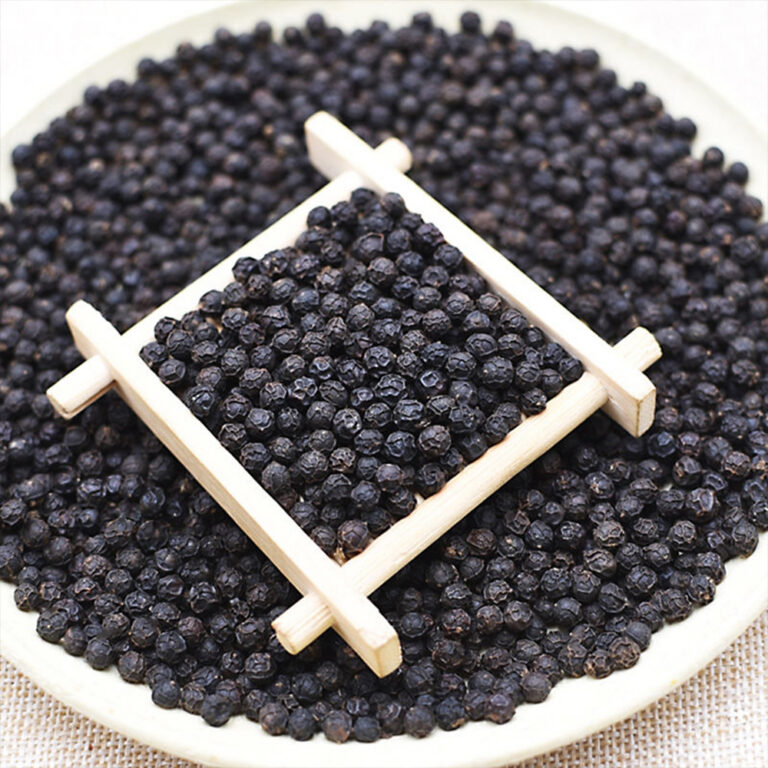
Black Pepper Wholesale Guide: Density, Aroma, and Microbial Risk
Black pepper is not a commodity you can approve by appearance and price alone. This guide explains how professional buyers should evaluate density, aroma chemistry, microbial controls, treatment validation, and lot-specific documentation before signing a wholesale contract.
When a black pepper wholesale quotation arrives with polished photographs, a familiar origin, an attractive price, and a certificate carrying several official-looking stamps, buyers often assume the difficult work has already been done, although none of those items proves how the lot will grind, smell, flow, or test microbiologically.
So why do buyers still approve pepper by color and price alone?
I do not trust a specification that says only “premium black pepper.” Premium is not a measurement. It does not tell me whether the pepper is 500 g/L or 580 g/L, whether its volatile oil was tested immediately after grinding, whether the microbial reduction process was validated, or whether the COA belongs to the shipment being offered.
The hard truth is simple: density, aroma, and microbial safety are separate control systems. A dense pepper can smell flat. An aromatic pepper can contain Salmonella. And a steam-treated lot can be recontaminated after treatment.
Professional buyers need all three answers.
The Wholesale Illusion: One Product, Three Different Risks
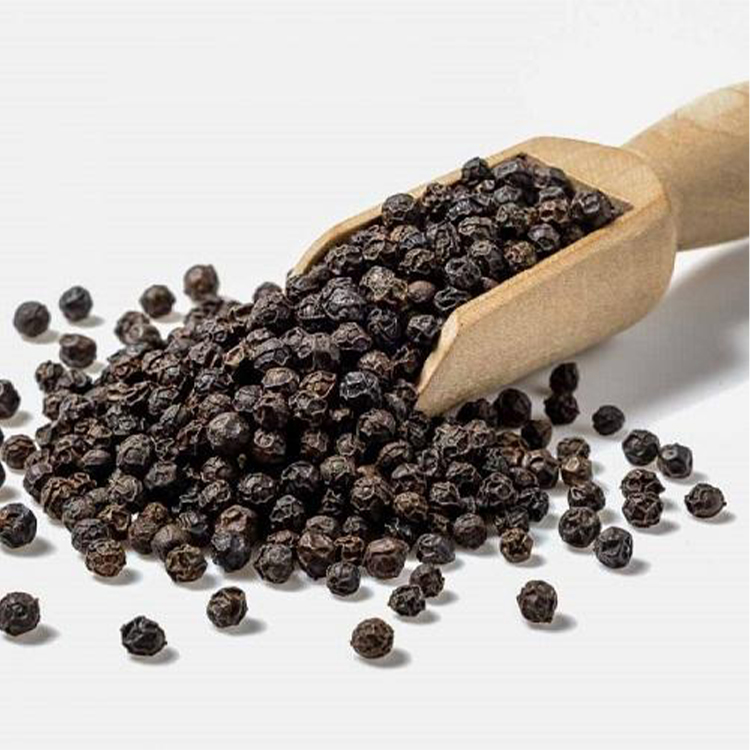
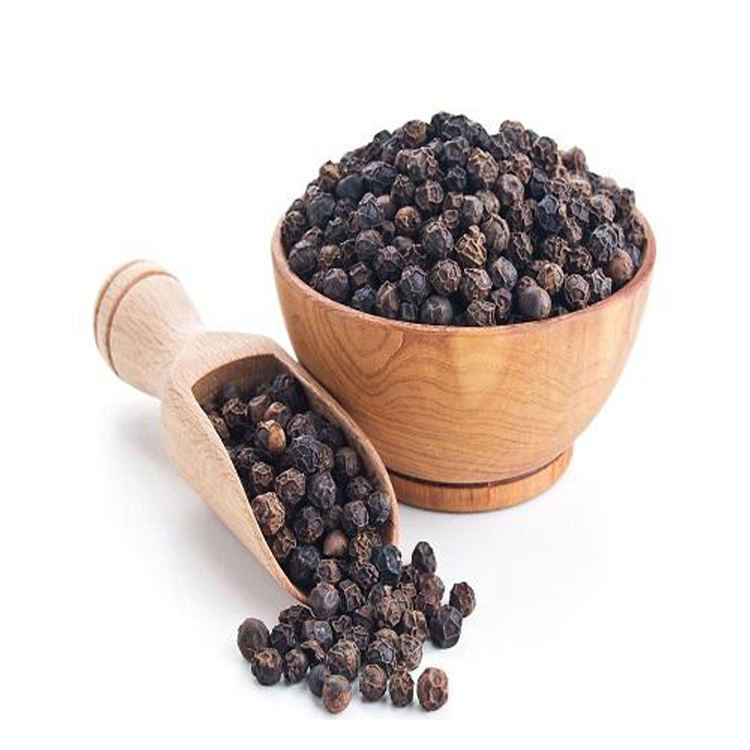
Black pepper, Piper nigrum L., looks deceptively simple. It is a dried berry sold whole, cracked, coarse-ground, fine-ground, or blended into seasonings. But the commercial risks change every time its physical form changes.
Whole peppercorns preserve volatile compounds better and expose less internal surface area. Ground pepper releases aroma quickly, yet that same increased surface area accelerates oxidation, moisture exchange, and flavor loss. Grinding also creates more contact points across mills, screens, conveyors, hoppers, and packaging equipment.
Sensory and chemical performance: volatile oil, piperine, aroma profile, storage history, and grinding date.
Food-safety performance: Salmonella, aerobic plate count, yeast and mold, treatment validation, post-treatment controls, and traceability.
One certificate rarely answers all three adequately.
And that is where cheap lots become expensive.
Density Is a Production Number, Not a Quality Halo
Bulk density is the mass of peppercorns occupying a defined volume, normally expressed in grams per liter, or g/L. Commercial black pepper offers frequently use descriptions such as 500 g/L, 550 g/L, and 580 g/L.
Density is blunt.
A one-liter hopper filled with 550 g/L pepper contains 10% more pepper by mass than the same hopper filled with 500 g/L pepper. That difference affects volumetric dosing, bag filling, mill loading, collected output, and cost calculations before the grinder even starts.
Higher-density lots often contain a greater proportion of mature, well-filled berries and fewer hollow or lightweight peppercorns. This can support more predictable milling and a narrower particle-size distribution.
But density is not purity.
A 580 g/L lot does not automatically have superior volatile oil. It does not prove low pesticide residues. It says nothing about Salmonella. It cannot confirm whether a sterilization process was performed correctly.
I have a strong opinion here: buyers should stop treating density as a master quality score. It is a useful physical indicator, not a moral judgment on the pepper.
Why density specifications fail in contracts
The phrase “550 grade” is not enough. A usable purchase specification should identify:
Whether the result is apparent or tapped bulk density
The test method
The sample-conditioning procedure
The allowable tolerance
Whether the value applies before or after cleaning
Whether moisture is tested on the same sample
The maximum percentage of light berries
The newly published ISO 959-1:2026 is the current ISO specification for whole or ground black pepper, so contracts written in 2026 should identify the edition instead of vaguely referring to “the ISO pepper standard.” :contentReference[oaicite:0]{index=0}
Why leave the method open to interpretation when the shipment may be worth tens of thousands of dollars?
The Numbers That Belong in a Black Pepper Specification
The table below separates useful measurements from the assumptions buyers commonly attach to them.
Control point
Practical contract language
Useful benchmark
What it does not prove
Bulk density
Whole pepper, BD ≥ agreed g/L, stated method
Commercial bands often include 500, 550, and 580 g/L
Aroma, piperine, or microbial safety
Moisture
Maximum percentage, stated method
Codex allows up to 12% for Class I and II whole black pepper and 13% for Class III
Pathogen absence
Volatile oil
Minimum ml/100 g on dry basis
Codex whole black pepper: 2.0, 1.5, and 1.0 for Classes I, II, and III
Exact aroma character
Piperine
Minimum percentage on dry basis, HPLC or agreed method
Codex whole black pepper: 3.5%, 3.0%, and 2.0% by class
Freshness or top-note intensity
Ground-pepper volatile oil
Minimum result and test timing
Codex minimum: 1.0 ml/100 g on dry basis
How much aroma was lost after testing
Ground-pepper piperine
Minimum percentage
Codex minimum: 3.5% on dry basis
Microbial control
Salmonella
Not detected in the agreed analytical unit and method
Buyer and destination-market requirement
Prevention of later recontamination
Mesh or sieve curve
Percentage retained or passing each screen
Application-specific
Flavor chemistry
Treatment status
Method, facility, date, validation and lot identity
Supplier-specific
Post-treatment hygiene
The Codex Standard CXS 326-2017 also states that volatile oil should be determined immediately after grinding. That short note is commercially important because a result obtained from freshly milled laboratory material may not represent pepper that was ground, stored, shipped, reopened, and repacked weeks earlier. :contentReference[oaicite:1]{index=1}
A passing number can age badly.
Aroma Is Chemistry, and Heat Is Not Aroma
Black pepper aroma is created by a mixture of volatile compounds rather than one single “pepper molecule.” Frequently identified components include limonene, β-pinene, α-pinene, δ-3-carene, sabinene, and β-caryophyllene.
Published analyses show how widely those proportions can move. Research reviewing Malaysian pepper oils reported limonene at approximately 23.9%–29.7%, β-pinene at 15.6%–19.0%, β-caryophyllene at 10.3%–14.0%, δ-3-carene at 8.7%–10.6%, and α-pinene at 6.6%–7.3% in peppercorn oils produced under the studied conditions. Ground-pepper oils showed a markedly different balance. :contentReference[oaicite:2]{index=2}
That variation explains an industry complaint I hear in almost every form: “The COA passes, but this lot smells different.”
Of course it does.
Volatile oil versus aroma profile
Total volatile oil tells you how much volatile material can be recovered under the specified method. It does not tell you the complete sensory balance.
Two samples can both report 2.0 ml/100 g and still smell different because:
Piperine, commonly measured by HPLC, drives much of black pepper’s persistent pungency. It should not be confused with volatile oil.
A pepper can retain adequate piperine while losing bright aromatic notes. That lot may still taste hot, but it will smell tired.
This distinction matters for different applications:
Snack seasoning: immediate top-note aroma matters
Sauces and soups: sustained pungency and deeper notes may matter more
Retail grinders: whole-berry stability, appearance, and fracture behavior matter
Fine powders: mesh, dust, oxidation, and filling performance become more important
Extracts and supplements: piperine assay may dominate, but contaminants still matter
The best black pepper for wholesale buyers is therefore not one universal grade. It is the lot whose physical, chemical, sensory, and safety specifications match the final application.
Microbial Risk: The Part Buyers Learn After the Recall
Dry spices feel safe because they do not look perishable. That assumption has caused expensive mistakes.
Salmonella does not need to multiply inside a bag of pepper to create a problem. Survival is enough. Low-moisture conditions can allow pathogens to persist, while later use in ready-to-eat products may provide no validated cooking step.
The FDA’s 2017 spice risk profile examined 7,250 retail spice samples. For imported black pepper sampled at U.S. entry during fiscal years 2012–2015, 15 of 223 samples were positive for Salmonella, an estimated prevalence of 6.7%, with a reported 95% confidence interval of 3.8%–11%. :contentReference[oaicite:3]{index=3}
That is not a theoretical laboratory curiosity.
Case study: the 2024 Baraka black pepper recall
On June 3, 2024, UBC Food Distributors recalled seven-ounce containers of Baraka ground black pepper after a routine surveillance sample tested positive for Salmonella. The pepper had been distributed to retail stores nationwide in the United States, and production was suspended while the company and FDA investigated. :contentReference[oaicite:4]{index=4}
The lesson is uncomfortable: a familiar retail package, a future best-before date, and nationwide distribution did not prevent a positive finding.
Case study: repeated spice shipment rejections
A 2024 Reuters investigation into Indian spice exports reported that 13 of 65 MDH shipments to the United States—about 20%—were rejected between October 2023 and May 3, 2024, with Salmonella cited across multiple rejections. Reuters also reported a rejection rate of about 15% across 119 MDH shipments during fiscal year 2022–2023. :contentReference[oaicite:5]{index=5}
This does not mean every shipment from a country, region, or brand is unsafe. It means brand recognition cannot replace lot-level verification.
Case study: a treatment certificate was not enough
In a 2024 warning letter to High Quality Organics, FDA stated that the company’s supply-chain program did not verify whether treatment-provider parameters were adequate to control vegetative pathogens such as Salmonella, even though the company identified a validated kill step and treatment certificate as controls. :contentReference[oaicite:6]{index=6}
Read that again.
A treatment certificate existed. FDA still questioned whether the applied parameters were adequate.
That is the difference between paperwork and validation.
Steam-Sterilized Black Pepper: Useful, Not Magical
Steam treatment uses heat and moisture to reduce microbial populations. Properly designed systems can lower Salmonella and other vegetative pathogens without relying on chemical fumigants.
But “steam sterilized” is one of the most abused phrases in wholesale spice sales.
What temperature was reached inside the product? For how long? At what initial water activity? Was the process atmospheric, vacuum-assisted, or controlled-condensation steam? How quickly was the pepper dried? Where was it cooled? Was treated material physically separated from untreated material?
Without those answers, “steam treated” is a marketing sentence.
The safety-versus-aroma trade-off
Steam processing can affect moisture, color, flavor, and volatile composition. A scientific review of pathogen-inactivation processes found perceptible odor differences in steam-processed black peppercorns and reported changes in volatile composition, including the loss of sesquiterpenes under the studied conditions. :contentReference[oaicite:7]{index=7}
An earlier study comparing steamed and irradiated ground black pepper found that processing method and storage conditions affected microbiological and physicochemical properties; storage at 4°C helped minimize piperine loss in the tested samples. :contentReference[oaicite:8]{index=8}
So the buyer’s question should not be, “Was it steam sterilized?”
The better question is, “Was the validated process strong enough to control the hazard while staying inside our agreed sensory limits?”
Documents to request for treated pepper
Ask the wholesale black pepper supplier for:
Treatment method and treatment facility
Lot number before and after treatment
Process date
Validated operating window
Critical time and temperature parameters
Initial and final moisture or water activity
Microbial results before and after treatment
Drying and cooling controls
Post-treatment handling flow
Packaging date and packaging environment
Evidence that untreated and treated material are segregated
Corrective-action procedure for process deviations
I would reject a vague certificate that says only “steam sterilized—passed.”
Passed what?
A Black Pepper Purchase Specification That Survives a Dispute
A strong purchase order should be boring, numerical, and difficult to misunderstand.
Use language such as:
Product: Black pepper, Piper nigrum L. Form: Whole peppercorns Bulk Density: Minimum 550 g/L, agreed method Moisture: Maximum 12.0%, agreed method Volatile Oil: Minimum 2.0 ml/100 g, dry basis Piperine: Minimum 3.5% or buyer-agreed target, dry basis Light Berries: Maximum buyer-agreed percentage Foreign Matter: Maximum buyer-agreed percentage Microbiology: Salmonella not detected in agreed analytical unit; aerobic count and yeast/mold within destination-market and buyer limits Treatment: Validated steam process or other approved pathogen-reduction treatment, lot-linked certificate required Residues: Pesticides, aflatoxins, ochratoxin A, and heavy metals to meet destination-market requirements Packaging: Food-grade lined bags or drums, sealed against moisture and odor transfer Documentation: Lot-specific COA, treatment record, origin, production date, packing date, and traceability record Approval: Pre-shipment sample must match shipped lot
That last line matters more than it appears.
Samples can become theatre. A beautiful hand-selected sample means little unless the supplier documents that the shipment came from the same lot or approved production run.
How to Evaluate a Wholesale Black Pepper Supplier
Supplier qualification should test whether the company can control variation, not whether its sales representative answers quickly.
Can you provide three recent lot-specific COAs for the same grade?
Which values are tested internally, and which are tested by an independent laboratory?
Is the laboratory accredited to ISO/IEC 17025 for the stated methods?
Does the COA identify the actual shipment lot?
Who performs the pathogen-reduction treatment?
How was that process validated for black pepper?
What happens when a critical parameter falls outside its limit?
Can you trace the lot back to processor and origin?
How are treated and untreated pepper separated?
How long passes between grinding, testing, and packing?
Can the pre-shipment sample be sealed and jointly retained?
A supplier who becomes irritated by these questions is answering them indirectly.
Do not outsource your legal responsibility
For U.S. importers, FDA’s Foreign Supplier Verification Programs rule requires risk-based verification that imported food is produced using processes that provide the required level of public-health protection and is not adulterated. A supplier’s certificate does not automatically discharge the importer’s obligations. :contentReference[oaicite:9]{index=9}
Verification activities may include document review, supplier-performance evaluation, sampling, testing, and facility audits, depending on the food, hazard, supplier, and control arrangement.
Your broker is not your food-safety plan.
Approve the system, then approve the lot
I use a two-stage decision model:
Supplier approval asks whether the organization has reliable sourcing, processing, validation, traceability, testing, deviation handling, and communication systems.
Lot approval asks whether the specific shipment meets the agreed physical, chemical, sensory, microbial, residue, and packaging requirements.
A good supplier can produce a bad lot. A weak supplier can occasionally produce a good sample. That is why both stages are necessary.
What is a good bulk density for wholesale black pepper?
Good black pepper bulk density is the contract-agreed mass of whole peppercorns per liter, commonly expressed as g/L, that delivers stable filling and milling performance; commercial offers often use 500, 550, or 580 g/L bands, but the correct minimum depends on product use, origin, and buyer specification.
For many commercial applications, 550 g/L is a practical starting point rather than a universal definition of premium quality. Buyers using volumetric filling or milling equipment should specify the test method, moisture condition, light-berry limit, and acceptance tolerance.
Does higher black pepper density mean better aroma?
Higher density does not automatically mean stronger aroma; density describes mass per volume and berry fill, while aroma depends on volatile-oil content, compound balance such as limonene and β-caryophyllene, harvest maturity, drying, storage, grinding date, oxygen exposure, and any pathogen-reduction treatment applied before shipment.
Use density to manage physical consistency. Use volatile oil, sensory evaluation, storage records, and, where justified, GC-MS profiling to manage aroma. Never substitute one measurement for the other.
Is steam-sterilized black pepper safer?
Steam-sterilized black pepper is pepper treated with controlled heat and moisture to reduce microbial hazards, especially vegetative pathogens such as Salmonella, but “steam treated” is not a safety guarantee unless the process is validated, lot-linked, followed by hygienic drying, and protected against post-treatment contamination.
Request the treatment method, facility, process date, validated operating limits, deviation records, and post-treatment microbial results. Also evaluate sensory effects because excessive thermal exposure can alter aroma, color, and moisture.
What microbial tests should black pepper buyers request?
A black pepper microbial specification is a written set of lot-release limits and methods covering Salmonella, total aerobic count, yeast and mold, coliforms or Enterobacteriaceae where relevant, and sometimes Bacillus cereus, with sample size, method, laboratory accreditation, and acceptance criteria defined before purchase rather than after a dispute.
The exact panel should reflect the pepper’s form, intended use, destination market, treatment status, and whether the final product receives another validated kill step. Salmonella testing should never be replaced by total plate count alone.
How do I choose a wholesale black pepper supplier?
A reliable wholesale black pepper supplier is one that can connect each shipment to a stable product specification, representative pre-shipment sample, lot-specific COA, traceable origin, validated microbial control, packaging record, and corrective-action process, while explaining test methods and process limits without hiding behind generic certificates or marketing claims.
Compare several lots, not one perfect sample. Review treatment validation, laboratory competence, traceability, deviation management, storage, packaging, and shipment records before approving routine orders.
Build a Lot-Ready Black Pepper Specification
Do not send a supplier the message, “Please quote your best black pepper.”
Send a real requirement.
State whether you need whole, cracked, or ground pepper; your minimum density; volatile-oil and piperine targets; microbial limits; treatment preference; residue standard; mesh; packaging; order volume; destination country; and required documentation.
Then request a lot-linked sample and COA.
To begin a specification-based inquiry, request a black pepper wholesale quotation with your target density, application, testing requirements, packaging format, quantity, and destination market.
Our low MOQ of 1 kg (2.2 lb) makes it easy to order Chinese herbal slices or wholesale Chinese medicine herbs. Private-label and bilingual labeling are also available.
Delivery Cycle & Support
We have a fast 7-day lead time. We provide free samples, COA reports, and technical support to help you bring high-quality bulk Chinese herbs to market.
Quality & Certifications
Our products are manufactured in a GMP-certified facility and meet ISO22000 standards. All Chinese herbs are third-party tested for heavy metals, pesticides, and microorganisms.