Kudzu Root (Ge Gen): when to choose blocks vs granules for OEM projects
Most OEM teams ask the wrong question about Ge Gen. The real issue is not tradition versus convenience. It is where you want extraction risk, identity risk, and process variation to live: upstream with the supplier, or downstream inside your own plant.
I’ve sat through enough OEM calls to know the pattern: purchasing wants a lower quote, R&D wants faster dissolution, QA wants cleaner paperwork, and nobody says out loud that these demands often point to two different raw-material strategies that should never be treated as interchangeable in the first place.
So what are you really buying?
My blunt view is this: kudzu root blocks are a control play, while kudzu root granules are a speed play. If your project lives or dies on botanical identity, in-house extraction flexibility, and a visible “whole-herb” story, blocks usually win. If your project needs standardized dosing, quick wetting, better line efficiency, and easier finished-format conversion, granules usually win. The chemistry matters here too: a 2024 review on puerarin extraction methods and a 2023 comprehensive review of kudzu root components both make clear that Pueraria lobata is not just “one herb,” but a process-sensitive matrix whose extraction route changes what you preserve, what you standardize, and what you lose.
Table of Contents
Most OEM buyers start with the wrong metric
Price lies.
A cheaper raw input can become the more expensive project once you add extraction losses, wet granulation headaches, rejected labels, rework after caking, and the ugly truth that brown botanical powders often become visually indistinguishable the moment you mill, extract, or agglomerate them.
Why pretend that “form” is just packaging?
The real first question is not “blocks or granules?” It is this: where do you want the manufacturing burden to sit? With blocks, you keep more of the burden in your own system—cleaning, extraction, yield optimization, concentration, and batch harmonization. With granules, you move much of that burden upstream to the supplier or contract processor, which is exactly why granules can be brilliant for fast-moving OEM programs and exactly why they can be dangerous when the supplier’s identity controls are soft. The site already has useful supporting paths for that decision tree, especially the bulk Kudzu Root (Ge Gen) blocks page and the broader Common Forms (Slice/Tea-Cut/Powder) Buying Guide.
Blocks vs granules on the factory floor
Here’s the hard truth.
Most procurement teams talk about Ge Gen as if “blocks” and “granules” were just two visual presentations of the same thing, but in OEM work they create different failure modes, different documentation burdens, and different arguments between QA and production.
Why keep calling that a minor detail?
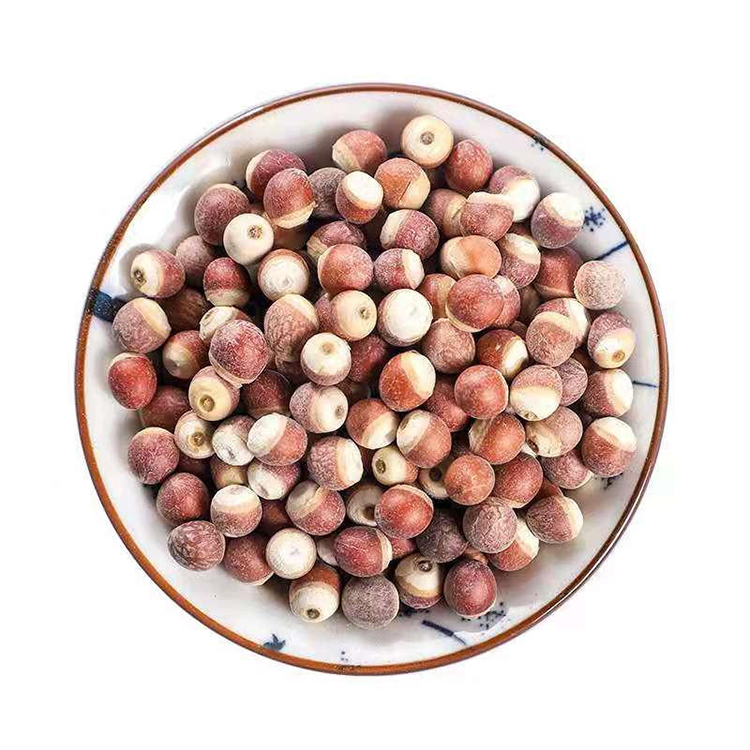
When kudzu root blocks are the better OEM choice
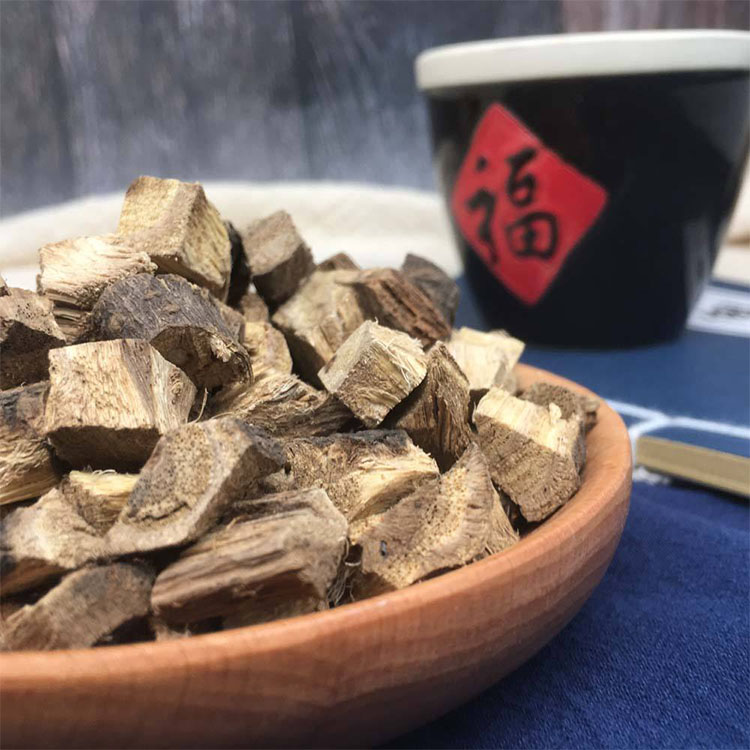
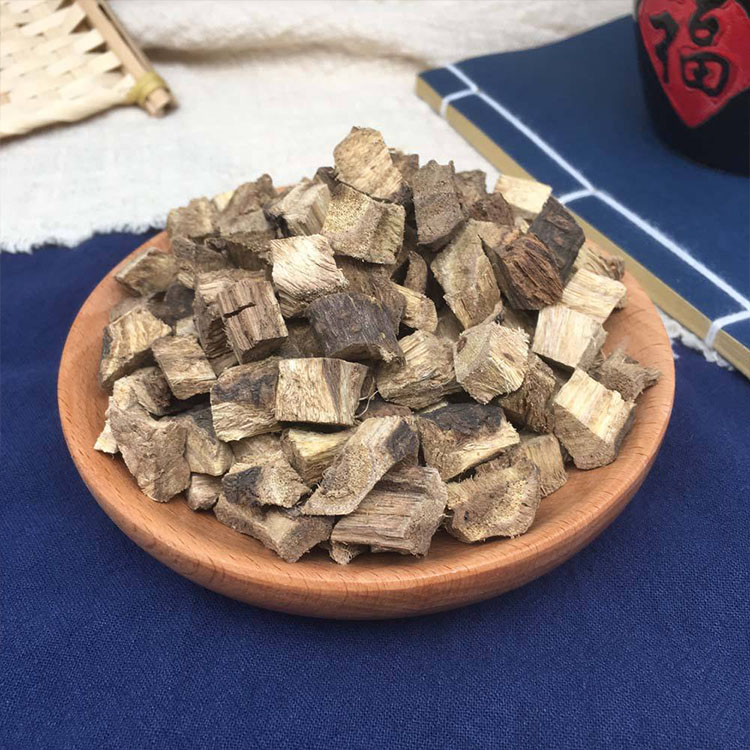
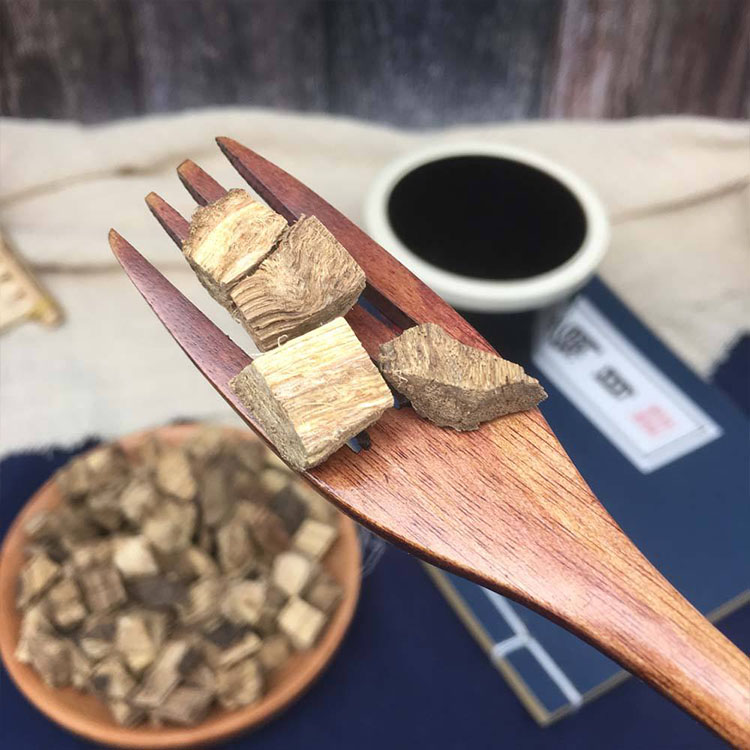
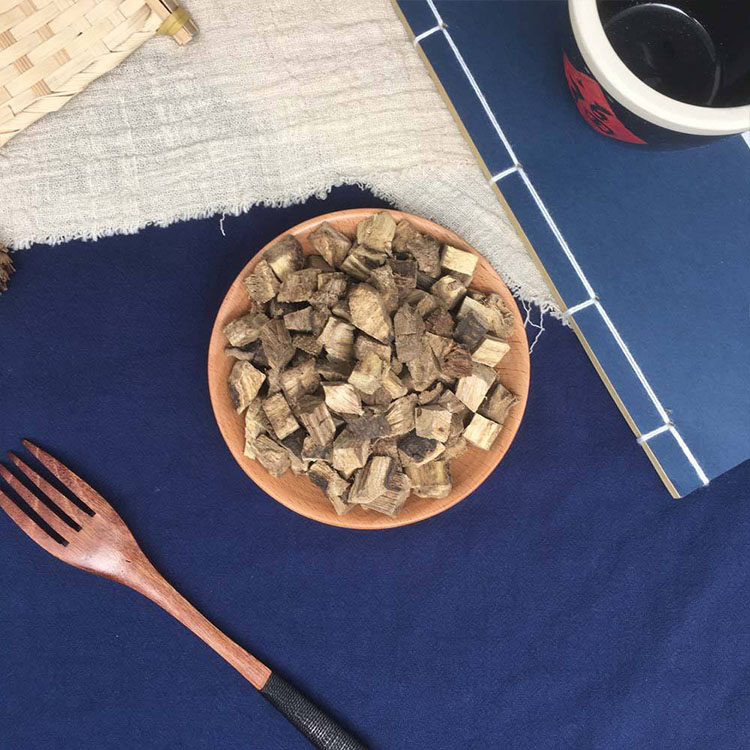
Blocks make sense when you want raw-material visibility, in-house extraction freedom, and less dependence on supplier-side standardization claims. I prefer blocks for classical decoction-piece channels, hospital-adjacent projects, export programs that still sell on visible botanical identity, and any OEM brief where the buyer wants the option to alter extraction solvents, concentration ratios, or downstream carriers later without being trapped by a pre-made granule spec. And yes, the visual check is not enough by itself, but it still helps; once you turn Ge Gen into a fine extract granule, visual identity stops being a serious control point and lab identity becomes non-negotiable.
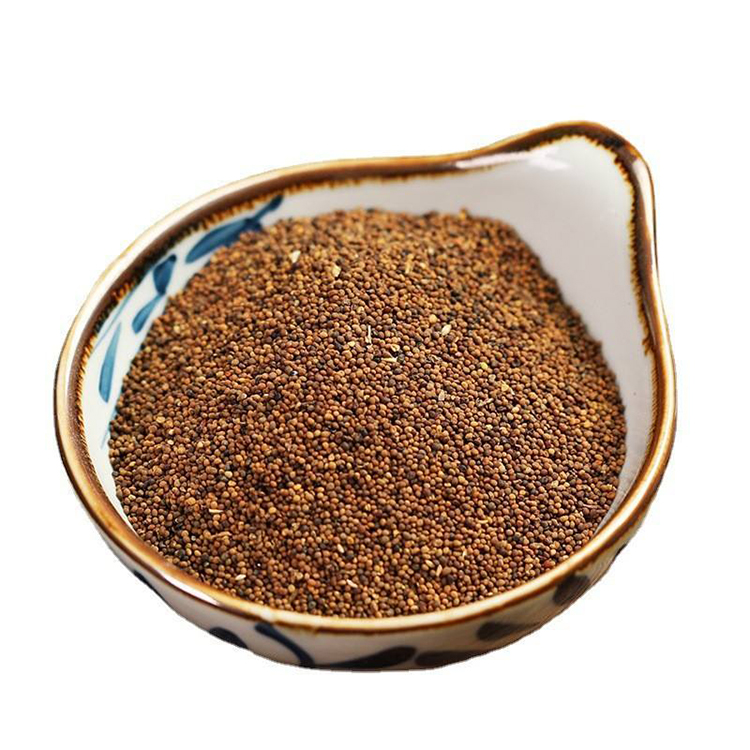
When kudzu root granules are the better OEM choice
Granules make sense when the finished product needs fast dispersion, repeatable fill behavior, higher throughput, or tight standardized-use instructions. For stick packs, sachets, instant beverages, capsules, tablets, and multi-SKU launches, granules often save time because they reduce the number of in-plant steps between raw material and sellable SKU. That advantage grows when the particle engineering is done well. On this same site, the post on OEM powder flow and caking makes the point in shop-floor language: tiny powders under 100 µm cling and pack tight, while agglomeration that lifts D50 to around 200 µm or more can improve flow, wettability, and stick-pack dosing. That is not theory. That is overtime avoidance.
The comparison that actually matters
Decision Factor
Kudzu Root Blocks
Kudzu Root Granules
Identity at receiving
Stronger visual botanical check; lab confirmation still needed
Visual identity is weak; analytical identity is the main control
Extraction responsibility
Mostly inside your plant or your downstream contractor
Mostly upstream with supplier or specialized processor
Variable extraction yield if your process discipline is weak
Supplier overclaiming identity, assay, or lab reliability
I would not over-romanticize blocks, and I would not over-sell granules. Blocks are slower but more forgiving when you want optionality. Granules are faster but far less forgiving when the spec is vague. That is the trade.
The compliance trap that wrecks margins
This part hurts.
The moment you move from a visible botanical piece to a processed brown granule, you are asking QA to prove identity through paperwork, validated methods, and trustworthy labs, not through eyeballs and folklore.
And how often does that go wrong?
Quite often, actually. A 2024 Natural Product Reports review looked at 78 publications and found 818 of 2,995 samples were adulterated or mislabeled; it also found that licensed or registered herbal medicines had lower adulteration risk than products sold as dietary or food supplements. That is a brutal number, and I think too many OEM buyers still treat it like somebody else’s problem.
FDA enforcement in 2024 said the quiet part out loud. In the August 13, 2024 warning letter to Restorative Botanicals, FDA objected to identity controls that leaned on color, smell, and taste for similar-looking extracts; the agency also flagged missing toxic-element specifications and stressed that scientifically valid methods must verify established specs. If your Ge Gen granule arrives as a brown free-flowing powder and your acceptance logic is basically “looks right,” you are already late.
The November 5, 2024 FDA warning letter to Top Health Manufacturing is even uglier from an OEM standpoint: missing component identity specs, missing purity and strength specs, missing finished-batch specs, weak master manufacturing records, and even plant-part labeling failures under 21 CFR 101.4(h)(1). That last point matters more than many buyers admit, because with botanicals the difference between root, leaf, bark, and flower is not a copywriting detail. It is the ingredient.
And no, I would not blindly worship third-party reports either. On September 11, 2024, Reuters reported that FDA had issued warning letters to two Chinese third-party testing firms over oversight failures and animal-care violations, raising concern about the integrity of data coming from those labs. My rule is simple: a COA is evidence, not salvation.
What the chemistry says about Ge Gen form choice
Chemistry decides.
Kudzu root is not valuable because the name sounds traditional. It is valuable because its major isoflavone profile—especially puerarin (C21H20O9), along with daidzein and daidzin—creates a measurable target for extraction and quality control, and that target behaves differently depending on whether you buy raw blocks or processed granules.
So what is your real endpoint?
The 2023 kudzu-root review notes that puerarin accounts for roughly 60% of total isoflavones in kudzu root, while the 2024 puerarin review lays out the standard extraction routes—solvent, ultrasound-assisted, enzyme-assisted, and microwave-assisted extraction. To me, that creates a very practical dividing line. If your OEM brief is built around standardized isoflavone delivery, quick dissolution, and tighter batch-to-batch assay targets, granules or extract-based formats are usually the cleaner business decision. If your OEM brief is built around classical herbal identity, in-house process ownership, and future flexibility in extraction parameters, blocks are still the smarter starting material.
The internal-link path I would use on this site
This matters.
A good article should not trap the reader on one product page and hope they magically infer the rest of the sourcing logic, because serious B2B buyers do not browse like retail shoppers; they move from ingredient fit, to process fit, to compliance fit, to quotation fit.
If you need botanical transparency, extraction freedom, and a longer strategic runway, choose blocks first and standardize later. If you need speed, SKU scalability, and operational repeatability, choose granules first and make the supplier prove the spec harder than they want to.
Isn’t that the honest version?
I would rather pay a little more for a well-defined Ge Gen granule with real assay logic, carrier disclosure, particle-size behavior, and audit-ready data than save money on a vague brown powder that only works until the first customer complaint. But I would also rather buy blocks than buy a fake “standardized” granule whose only real credential is a polished PDF. That is the whole argument in one sentence.
FAQs
What is the difference between kudzu root blocks and kudzu root granules for OEM projects?
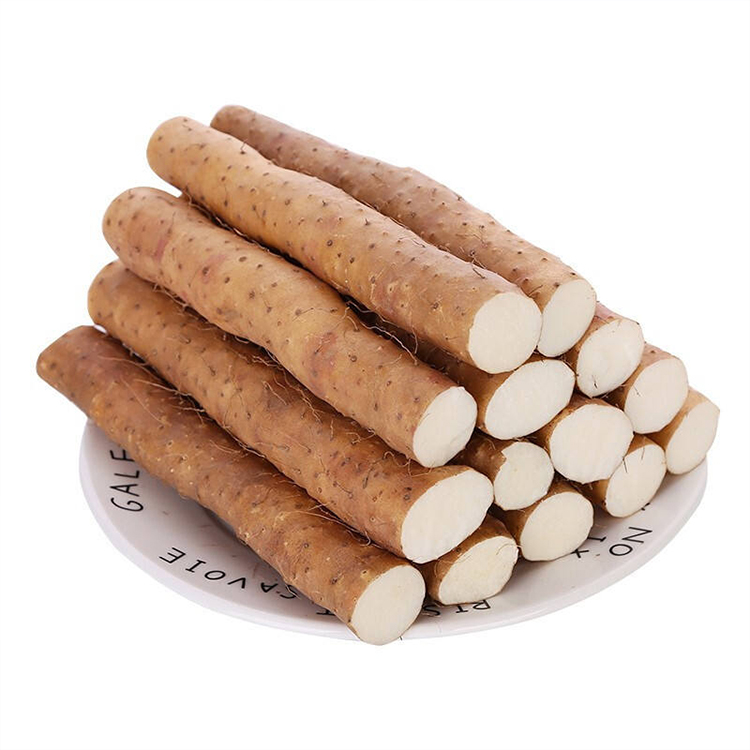
Kudzu root blocks are physically cut pieces of Pueraria lobata used when the buyer wants visible botanical identity, flexible in-house extraction, and lower upstream processing, while kudzu root granules are processed particles—often extract-based or agglomerated—used when the buyer needs faster dissolution, standardized dosing, and cleaner line efficiency for scaled manufacturing.
After that definition, the commercial difference is simple: blocks keep more technical work inside your factory, granules move more of that work upstream to the supplier. I do not think one is “better” in the abstract. I think one is better for the process map you are actually running.
When should an OEM buyer choose Ge Gen extract granules instead of blocks?
Ge Gen extract granules are the better choice when the finished product requires rapid dispersion, tighter assay control, easier capsule or stick-pack filling, and a shorter path from raw material to finished SKU, especially in projects where production speed and batch repeatability matter more than visible whole-herb identity.
I would add one warning. The more you rely on granules, the less you can rely on appearance. That means your incoming-spec logic has to cover identity, contaminants, carrier system, assay method, and flow behavior in a way that blocks sometimes let buyers get lazy about.
Do kudzu root blocks reduce regulatory risk?
Kudzu root blocks reduce one slice of regulatory risk by preserving visible botanical structure, but they do not remove the need for identity testing, contamination limits, traceability, correct plant-part labeling, or finished-product documentation; they simply shift some of the risk from hidden processing claims back toward observable raw-material control.
That is why I never sell blocks as a compliance shortcut. They are a visibility advantage, not a free pass. FDA’s 2024 warning letters make that painfully clear: weak specs, weak labels, and weak records fail whether the ingredient started as a root piece or a powder.
How should buyers write a spec for kudzu root granules in OEM manufacturing?
A usable kudzu root granules spec should define the botanical source, plant part, extract or granulation route, target marker or assay logic such as puerarin, carrier system, particle-size or D50 behavior, moisture or water-activity limits, contaminant panel, release documents, and the analytical methods used to verify each claim before batch release.
That is the sentence I would put on the wall. Then I would build the commercial document around it. If a supplier cannot discuss PSD, assay method, carrier content, and lot-level identity without getting slippery, I would slow the project down immediately.
Your Next Step
Don’t overcomplicate it.
If your OEM project is still in concept stage, start with blocks when you want flexibility and start with granules when you want speed. Then force the project brief to answer five things before anybody asks for a quote: target format, target assay, line behavior, documentation package, and who owns extraction risk.
Our low MOQ of 1 kg (2.2 lb) makes it easy to order Chinese herbal slices or wholesale Chinese medicine herbs. Private-label and bilingual labeling are also available.
Delivery Cycle & Support
We have a fast 7-day lead time. We provide free samples, COA reports, and technical support to help you bring high-quality bulk Chinese herbs to market.
Quality & Certifications
Our products are manufactured in a GMP-certified facility and meet ISO22000 standards. All Chinese herbs are third-party tested for heavy metals, pesticides, and microorganisms.