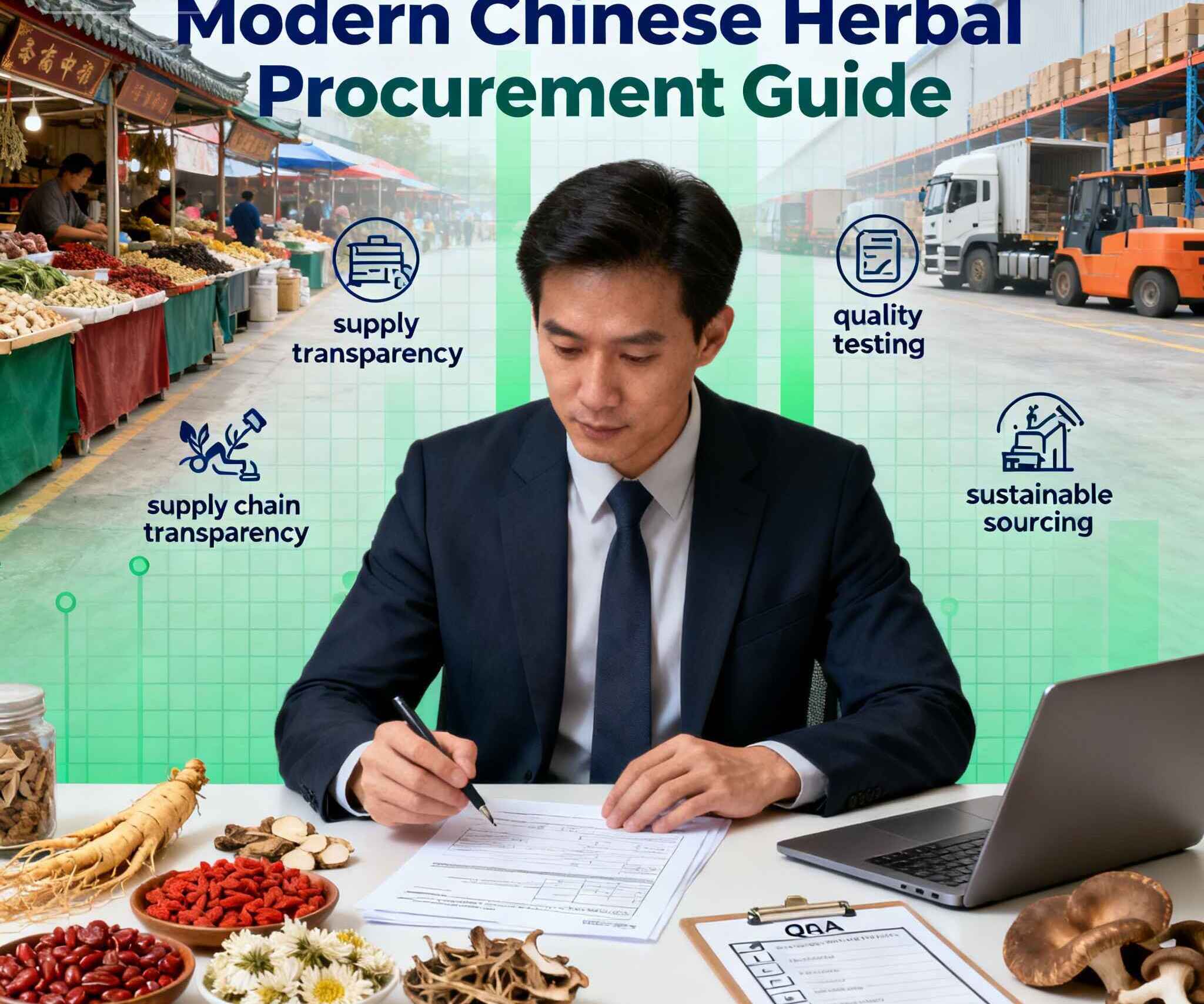
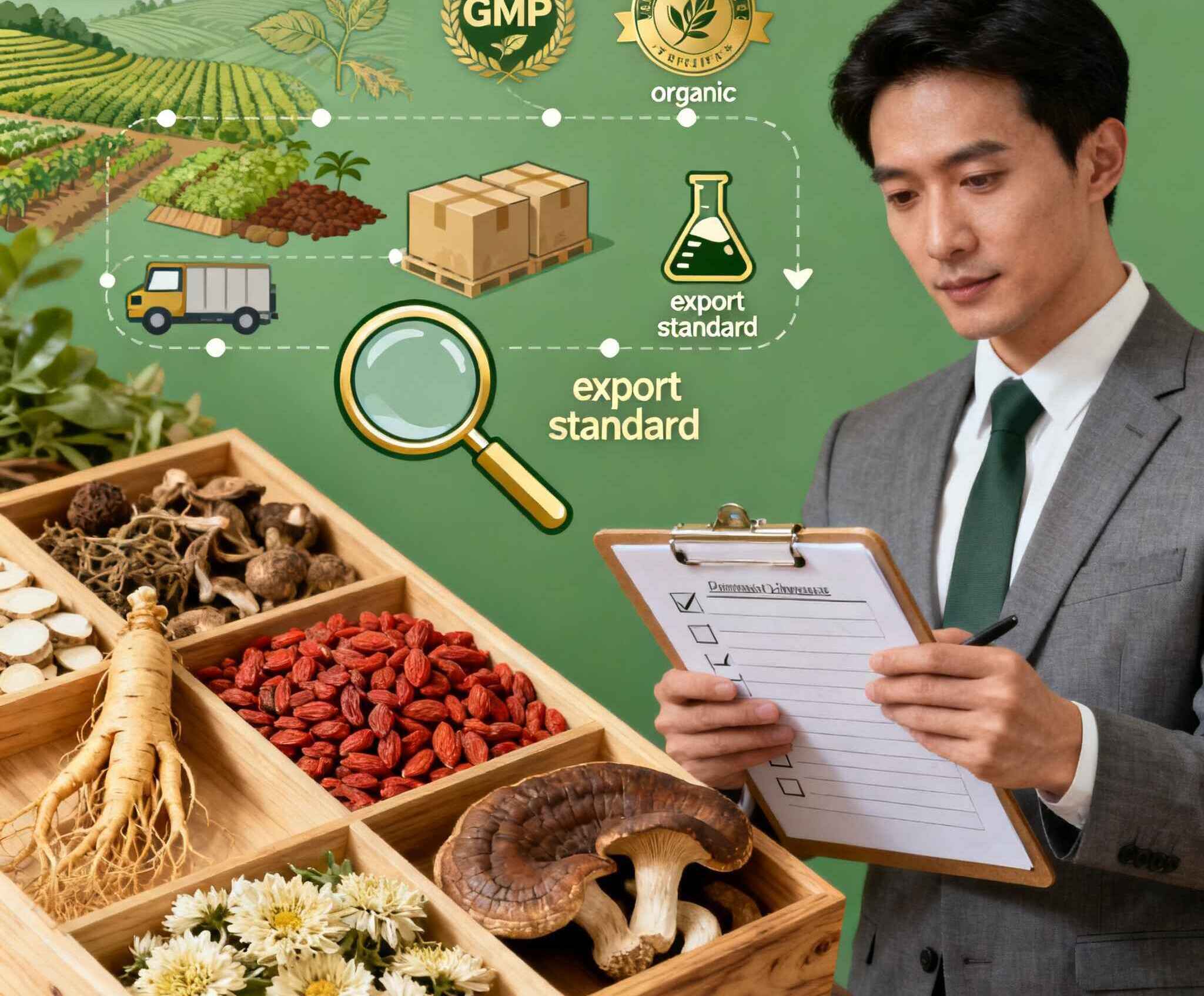
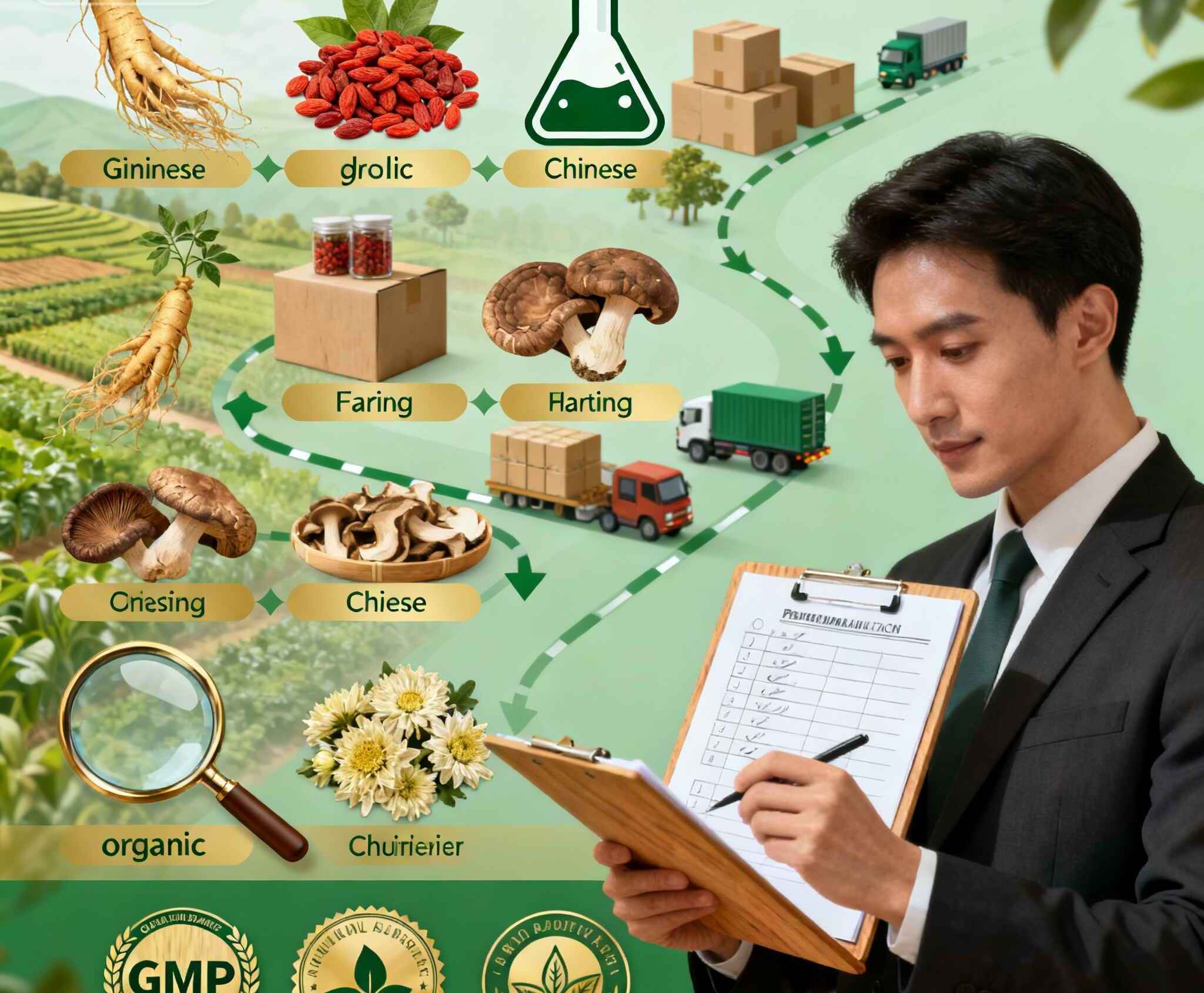
You want clean herbs, steady supply, and paperwork that clears first try. You also want plain talk, not fluff. Let’s walk through what actually works—farm to warehouse to label—and where GuoCao saves you time.
GACP for Chinese Herbal Raw Materials (Good Agricultural & Collection Practice)
Start upstream. If fields and wild-collection don’t follow GACP, you’ll fight batch drift forever. Ask for field logs, picking windows, drying curves, and storage SOPs. You need lot genealogy—which plot, which pick, which pre-process lot. No traceability? No trust, simple as that.
Buyer move: make GACP evidence a gate at vendor onboarding. Tie acceptance to origin documents and pre-harvest declarations. Don’t wait till a lab screams.
GuoCao fit: upstream control plus curated wild sources, then quick handoff into certified processing. Short hops = cleaner traceability.
GMP & ISO 22000 for Chinese Herbal Processing
Processing is where risk either gets trapped or spreads. You want GMP for herbal slicing/frying and ISO 22000 for the food-safety backbone. Check validated cleaning, calibrated dryers, and kill-step logic (when the form needs it). Paper trails matter: MBR (master batch record), CCP records, deviation logs, CAPA closed out—not left hanging.
Why it saves you rework: consistent cuts and moisture hit the same decoction behavior every time, so your downstream extraction or tea perf stays stable. Nothing fancy, just discipline.
GuoCao angle: GMP herbal-slice lines under ISO 22000, third-party COA per lot, plus ambient/cool/MAP (modified-atmosphere) storage. Boring? a bit. Effective? very.
FSVP (U.S.) + 21 CFR 111 / 21 CFR 101 Compliance
If you sell in the U.S. as supplements or herbal products, set up the FSVP binder and align to 21 CFR 111 (dietary supplement cGMP) and 21 CFR 101 (labeling). Build a simple stack: hazard analysis → supplier evaluation → verification plan → lot release criteria → label proofs. Run a mock recall—just a half hour drill—to make sure lot trace works both directions. Document who called whom and when. Not hard, just do it.
Contract trick: any change in origin, slicing thickness, frying profile, or packaging headspace triggers change control. Re-evaluate before release. You’ll thank yourself later.
Identity Testing: DNA Barcoding, HPTLC, and Fingerprinting
Adulteration happens. Beat it with multi-tech identity:
Macro/Micro ID for fast screens.
HPTLC plates to compare chemical fingerprints batch to batch.
DNA barcoding for high-risk botanicals (roots/rhizomes that look alike).
Write it into incoming QC: if identity fails, block the lot. Keep the raw photos, plates, and chromatograms with the COA. If you can’t see the data, you’re buying vibes, not herbs.
Contaminant Control: Pesticide Residues, Heavy Metals, Microbiology
Set one internal spec that covers your toughest market. Then stick to it. Typical matrix:
Pesticides: multi-residue (LC-MS/MS + GC-MS/MS); align the scope to your SKUs.
Heavy metals: Pb/Cd/As/Hg via ICP-MS; trend by origin.
Mycotoxins & Micro: aflatoxins where relevant; TAMC/TYMC/pathogens per form (whole, cut, powder, extract).
GuoCao practice: third-party COA per lot; testing aligned to global buyers’ expectations. You get the full report set with every shipment—easy to file, easier to pass audits.
SO₂ Fumigation (Sulfur) Policy and Testing
Let’s call it: sulfur fumigation alters profiles and leaves sulfites that wreck sensitive labels and taste. Put “No sulfur fumigation” in the spec. Add SO₂ to receiving tests for high-risk items (flowers, some roots). If detected above your internal line, raise a NCR and quarantine. The cleanest solution is prevention at source, not downstream patching.
China Pharmacopoeia Baselines + Internal Standards
Use China Pharmacopoeia monographs as your starting point for identity, purity, and limits. Then set your internal spec tighter where your brand promise needs it—moisture windows for shelf-life, fingerprint similarity for consistency, particle size for powders. Keep version control so labels, COAs, and QA release stay aligned.
CITES, FairWild, and Sustainable Sourcing for Chinese Herbal Materials
Some wild plants and animal derivatives sit under extra rules. Keep a live red list in your ERP. For wildcrafted botanicals, require legal take paperwork, origin proofs, and harvest calendars. If it’s fuzzy on paper, it’s risky in court. Easy rule.
Supplier Verification: COA, Audits, OTIF, and Change Control
Verification is a loop, not an annual field trip. Run a vendor scorecard quarterly:
OTIF (on time, in full)
COA completeness and first-pass hit rate
CAPA closure speed
Complaint rate per million units
Audit findings and re-audit cadence
Grade vendors Core / Approved / Watch. First three lots from any new partner? 100% full panel. After that, move to risk-based sampling with AQL-style pulls. Don’t skip trend charts; they catch slow drift.
GuoCao reality: stable global shipping, full document packs (COA, origin, phytosanitary, allergen, etc.). It shortens distributor onboarding and keeps your FSVP binder tidy.
Category Mapping: Sourcing Scenarios & Use-Cases (No Fiction, just shop-floor truth)
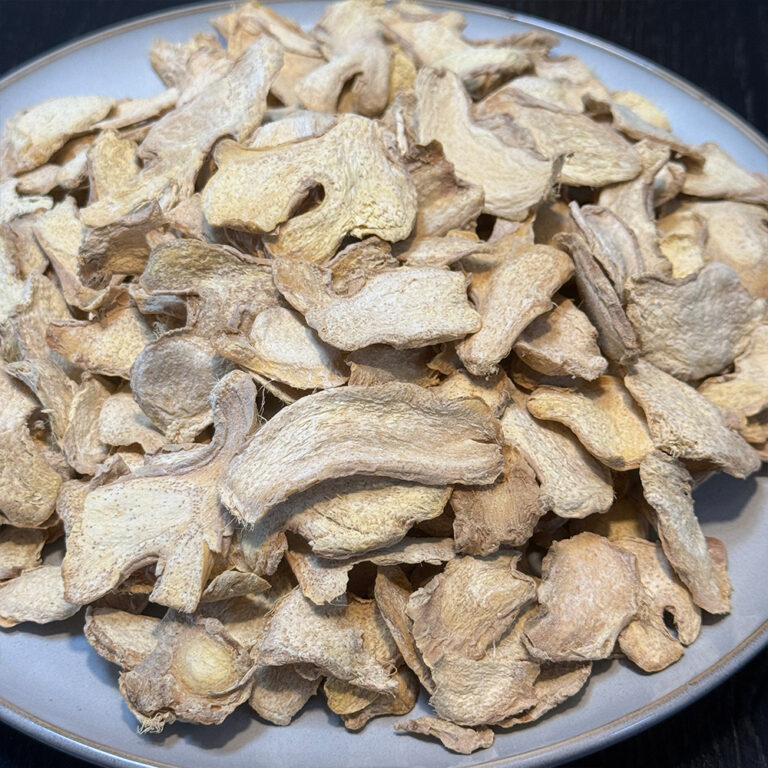
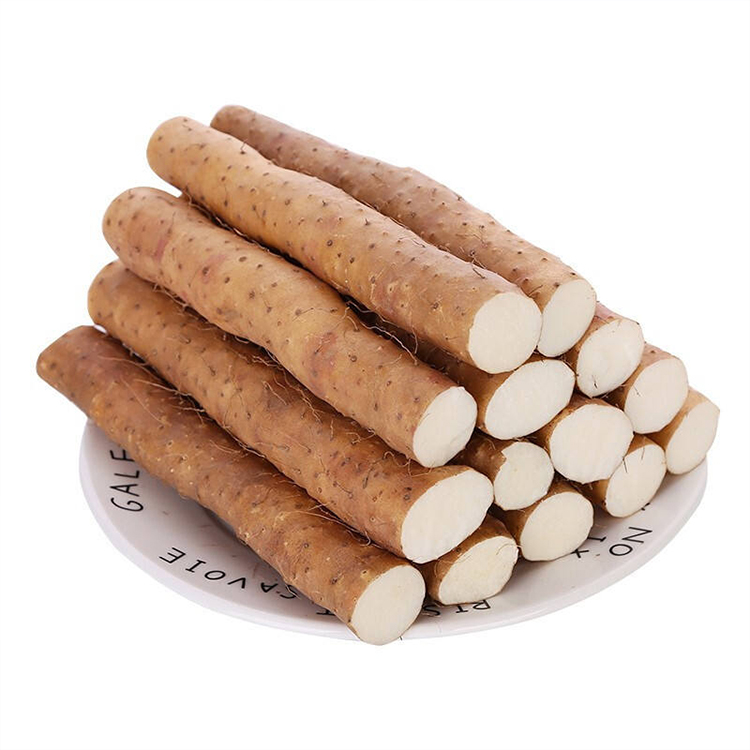
Roots & Rhizomes – tonics, digestion, immune blends. Lock the slicing profile (e.g., 1–3 mm vs 3–5 mm) so decoction time behaves. For powders, spec particle-size (D90) for extraction repeatability. Browse: Roots & Rhizome Chinese Medicines.
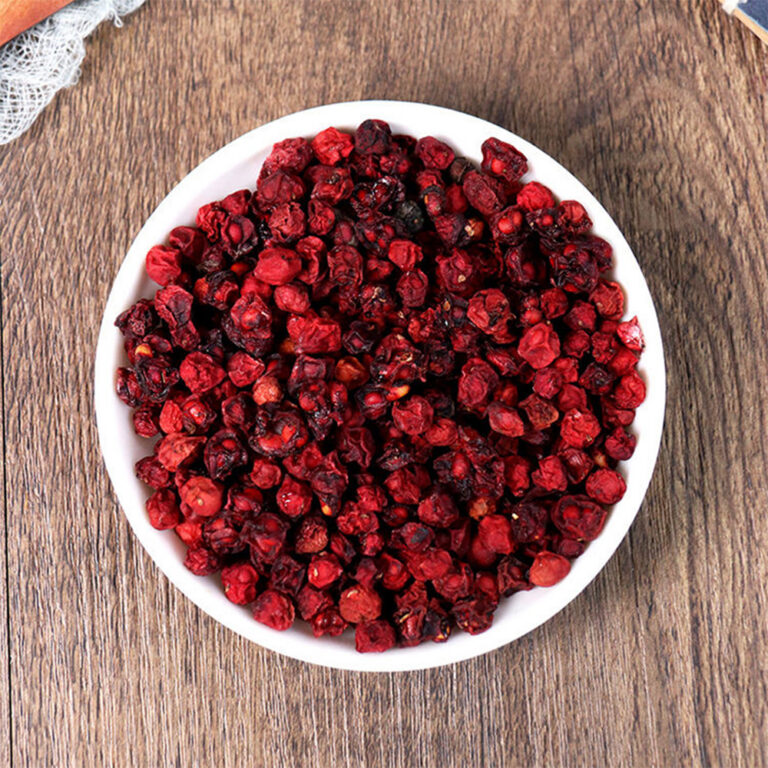
Fruits & Seeds – teas, gummies, capsules. Prioritize multi-residue pesticide scope; oil-rich seeds need rancidity watch and oxygen-barrier pouches. See: Fruits & Seeds Chinese Medicines.
Flowers & Whole Herbs – infusions and aroma-forward formats. These hate sulfur; stick to gentle drying and a tighter microbial plan. Explore: Flowers & Whole Herbs.
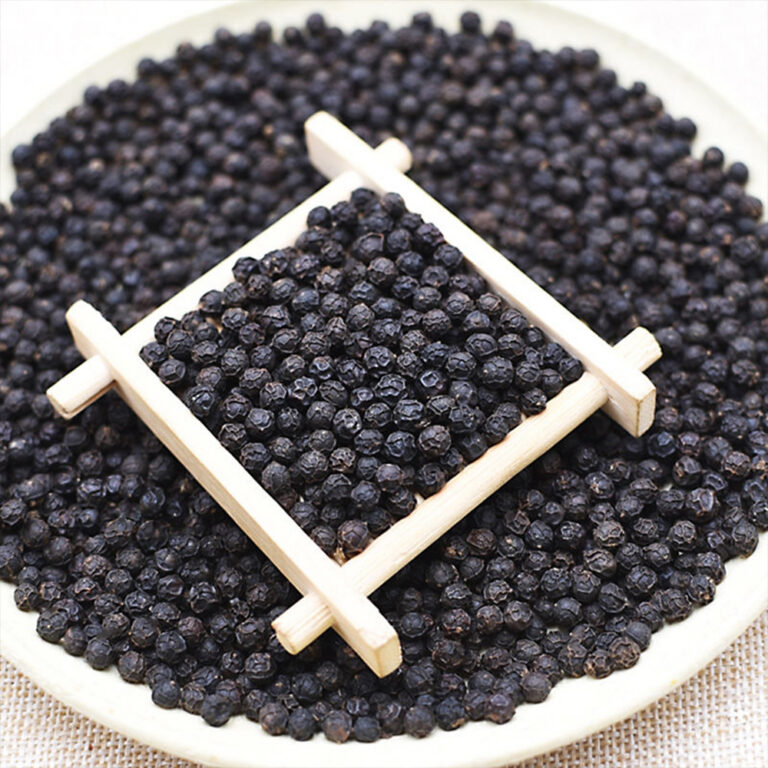
Spices – crossover with culinary. Still QC: volatile retention, micro screen, ASTA-style sensory if you use it. Options: Spices.
Full catalog – building a private-label tree or distributor lineup? Start here: All Herbs & Spices.
OEM/ODM Scenarios with GuoCao (Private Label, Blends, Function Drinks)
You’ve got three quick paths:
Private-Label Herbs (whole, slices, powders) Choose the cut, sieve grade, and label language. Good for pharmacies, hospitals, distributors who need speed without R&D overhead. Details: OEM / ODM Custom Solutions.
Custom Blends (teas, wellness SKUs, function beverages) Co-develop the formula, run pilot with full QC (micro/metals/pesticides), then scale. Keep AQL sampling and retain samples for every lot. GuoCao handles samples and global export docs so you don’t babysit five suppliers.
Spice Extensions If you sell herbs already, bolt on aromatics to grow basket size. Use separate allergen statements. Tie storage to FEFO (first-expire, first-out). Nice and clean.
Side note: MOQ’s friendly, lead time is quick. Kinda obvious benefit: you test the market fast without sitting on slow movers. (Yeah, a tiny grammar slip—real folks talk like this.)
Spec & Release Matrix (copy-paste ready)
Checkpoint
Why it matters
How to verify
Release rule
Identity (macro/micro + HPTLC + DNA for risk items)
Stops adulteration and look-alikes
Keep raw photos, plates, and sequences with the COA
All align; any mismatch = block
Pesticides (multi-residue)
Protects labels and export
Accredited lab COA; method summary on file
Meets your internal limit
Heavy Metals (ICP-MS)
Safety + regional rules
COA per lot; periodic method review
Within your spec
Micro (TAMC/TYMC/pathogens)
Shelf life + ready-to-drink risk
In-house screen + third-party confirm on high risk
Meets form-specific limits
SO₂ (where relevant)
Blocks sulfur-treated stock
Add SO₂ to flowers/selected roots
“Not detected” or ≤ internal
Moisture & aW
Mold & caking control
Oven method / aW meter
In spec per SKU
Packaging (MAP/oxygen barrier)
Aroma & oxidation control
Visual + seal test + material COA
Correct film + seal passes
Docs pack
FSVP / import files
COA, origin, phytosanitary, allergen; lot codes match
Complete & consistent
(GuoCao provides third-party COA per lot; MAP/cool/ambient storage; and export paperwork. You drop it into your binder, done.)
Risk-Based Sampling Plan (starter you can tweak)
Risk tier
Typical cases
Incoming test scope
Pull size
High
New vendor, high-value roots, sulfur-prone flowers
Full panel: ID (incl. DNA), pesticides, metals, micro, SO₂
AQL tightened (larger pull)
Medium
Approved vendor, stable origin
ID + pesticides + metals
AQL standard
Low
Core vendor with clean history
ID + rotating checks (pesticides/metals/micro)
AQL reduced + trend review
Pin this near your receiving desk. When it gets busy (it will), people stick to the plan.
Category-Specific Pointers (fast wins)
Roots & Rhizomes: pre-spec the slicing profile so decoction time behaves; add particle size (D90) for powders.
Flowers & Whole: keep gentle drying; add SO₂ to the COA checklist by default.
Barks: control active swings with fingerprinting.
Animal & Mineral: paperwork first, then form factor.
Spices: if you co-pack, split allergen and spice lines; quick ATP swabs between runs prove cleaning.
Commercial Value: Why GuoCao Works In Real Life
One-stop catalog across roots, fruits, flowers, barks, animal/mineral, and spices—so you place one PO and get one full doc pack. Browse: All Herbs & Spices.
OEM/ODM lets you launch private label and blends without herding multiple factories. Sampling is fast and doc sets are clean: OEM / ODM Custom Solutions.
Warehousing in ambient/cool/MAP and disciplined QA keeps quality flat over time. Your distributor doesn’t like surprises; neither do we.
Global shipping with complete papers (COA, origin, phytosanitary, allergen). Regions covered include North America, Europe, Australia, East Asia, and more. That’s one less headache for your ops team.
Our low MOQ of 1 kg (2.2 lb) makes it easy to order Chinese herbal slices or wholesale Chinese medicine herbs. Private-label and bilingual labeling are also available.
Delivery Cycle & Support
We have a fast 7-day lead time. We provide free samples, COA reports, and technical support to help you bring high-quality bulk Chinese herbs to market.
Quality & Certifications
Our products are manufactured in a GMP-certified facility and meet ISO22000 standards. All Chinese herbs are third-party tested for heavy metals, pesticides, and microorganisms.