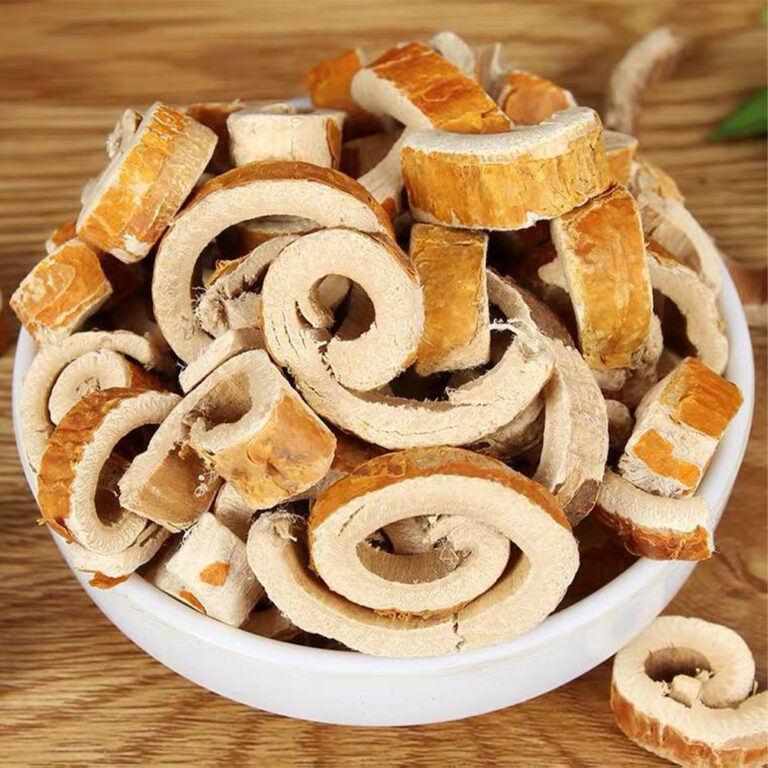
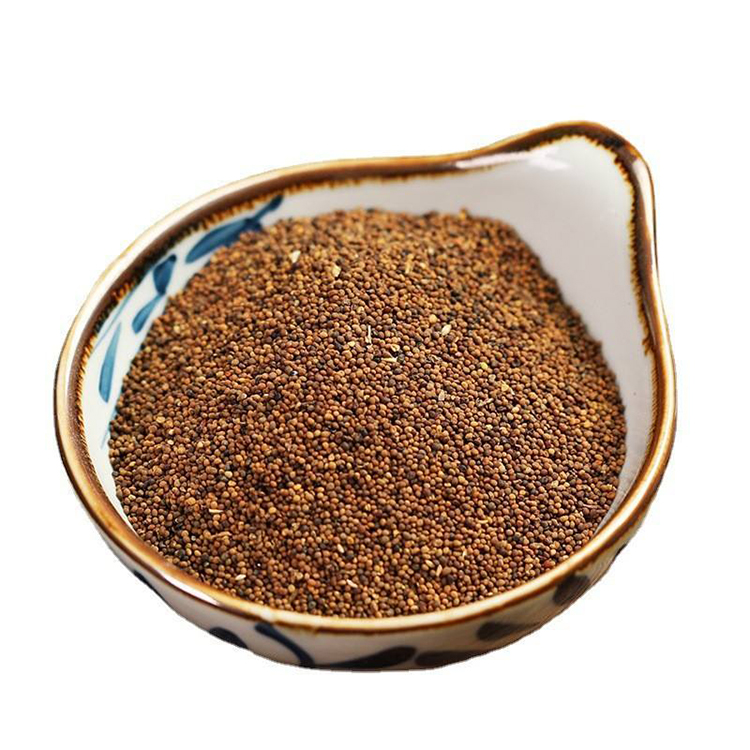
Moisture Control in Chinese Herbal Slices: Storage, Shipping, and Shelf Life
Chinese herbal slices do not fail only because of bad sourcing. They fail because moisture was ignored after drying, during warehousing, or inside a shipping container. This guide explains how serious buyers should control moisture, mold risk, packaging, transit, and shelf life before a batch becomes expensive waste.
The Dirty Secret: Most Herbal Quality Failures Start After Drying
Moisture tells everything.
And in Chinese herbal slices, moisture does not just mean “a little damp” or “a little dry”; it decides whether your Angelica sinensis, Astragalus membranaceus, Poria, Coix seed, citrus peel, apricot kernel, or chrysanthemum arrives stable, fragrant, compliant, and sellable—or arrives as a warm, sweet-smelling microbial liability that nobody wants to sign off.
So why do so many buyers still treat moisture as a warehouse detail?
I’ll say the unpopular part first: many suppliers can make a beautiful sample, but fewer can protect that same herb through pallet stacking, sea freight humidity, seasonal rain, customs delays, and buyer-side storage. That is where Chinese herbal slices moisture control separates serious manufacturers from quote-chasing traders.
A sliced root is not a plastic part. A dried seed is not a bolt. A flower herb is not a ceramic mug. These materials breathe, absorb odor, exchange moisture with surrounding air, and shift with temperature. The buyer who ignores that reality pays twice: once for the shipment, then again for rejection, sorting, re-testing, disposal, or angry downstream customers.
For buyers sourcing from a broad wholesale Chinese medicinal herbs and spices supplier, moisture control should be written into the specification before the purchase order is signed. Not after the container lands.
Moisture Content Is Not the Same as Water Activity
Here is the hard truth: “moisture percentage” alone is too blunt.
Water content tells you how much H2O is present. Water activity, often written as aw, tells you how much of that water is available for microbial growth and chemical reaction. The difference matters. According to the FDA’s technical guidance on water activity in foods, water activity can be expressed through equilibrium relative humidity, where aw = ERH / 100. The same FDA page notes that many foods above aw 0.95 can support bacteria, yeasts, and mold, while reducing available water can inhibit organism growth.
This is where lazy herbal sourcing gets exposed.
A batch may test “acceptable” on loss on drying and still behave badly if packed hot, stored in high relative humidity, or shipped through a wet lane. Conversely, a brittle-looking herb may pass moisture but fail sensory quality because over-drying damaged volatile compounds, color, texture, or decoction performance.
The European Medicines Agency’s herbal quality Q&A is blunt about risk-based testing: plant parts such as seeds, fruits, roots, and rhizomes deserve special attention for mycotoxin risk, and fast drying plus homogeneous loss on drying below 12% is cited as a practical risk-reduction example in herbal substances. See the EMA document on quality of herbal medicinal products and aflatoxin control.
My rule: if the herb has oil, sugar, starch, mucilage, or dense tissue, treat moisture as a live risk—not a static number.
Table of Contents
The Numbers Buyers Should Actually Watch
Do not ask only for “dry goods.” Ask for data.
A responsible supplier should be able to provide loss on drying, water activity where relevant, microbial limits, aflatoxin testing for risk botanicals, packaging type, desiccant logic, storage condition, and retained sample comparison. This is especially important for Chinese herbal decoction pieces storage, because slices expose more surface area than whole roots or whole fruits.
The FDA explains that certain molds and fungi can produce mycotoxins, including aflatoxins, and that environmental factors such as temperature and humidity affect whether mold grows during crop production, harvest, and storage. Read the FDA’s mycotoxins overview and you will understand why “it looked fine at origin” is not a defense.
Control Point
What I Want to See
Why It Matters
Red Flag
Loss on drying
Herb-specific target, often verified by pharmacopoeial method
Confirms total moisture level
“Usually dry enough”
Water activity, aw
Risk-based use, especially for powders, seeds, fruits, and high-risk lots
Predicts microbial growth potential better than moisture alone
Now the uncomfortable detail: not every herb needs the same target.
Scientific Reports published a TCM aflatoxin-method paper showing moisture contents in tested traditional Chinese medicine samples by matrix type, including 7.52–8.92% for volatile-oil samples, 7.49–10.44% for protein samples, 7.16–10.54% for polysaccharide samples, and 5.37–7.13% for fatty-oil samples, all meeting the Chinese Pharmacopoeia 2015 requirements in that study. The paper also found matrix-dependent aflatoxin behavior, with fatty oil content positively correlated with AFB1 and total AF contamination. See the study on aflatoxin analysis in traditional Chinese medicines.
That finding should change how buyers think. A starchy rhizome, an oily seed, and a delicate flower should not be managed with the same blind warehouse rule.
Storage Discipline: Where Good Lots Quietly Go Bad
The warehouse lies.
It looks calm, quiet, and controlled, but if relative humidity creeps up for three weeks, if cartons sit against a sweating wall, if pallets touch the floor, or if a door is left open during rainy season unloading, the herb changes before anyone smells the problem.
The Hong Kong Chinese Medicine Regulatory Office warns industry to strictly control temperature and humidity for herbal medicines susceptible to mold infestation, apply shading and sealing measures, follow first-in-first-out dispatch, and increase inspection frequency during humid days or abnormal weather. Its public advice on herbal medicines and aflatoxins is basic, but basic is where many warehouses fail.
For TCM herbal storage conditions, I would separate materials into risk groups:
High-Moisture-Rebound Risk
Flowers, whole herbs, citrus peel, goji berry, apricot kernel, Coix seed, and other porous or oil-bearing materials can pick up moisture fast. For these, use high-barrier packaging, shorter FEFO cycles, more frequent sensory checks, and humidity-sensitive storage.
If your formula depends on fruits and seeds, browse the relevant Fruit and Seed Chinese Medicines category before you write the storage spec, because seed and fruit materials do not behave like bark or mineral medicinals.
Dense Root and Rhizome Risk
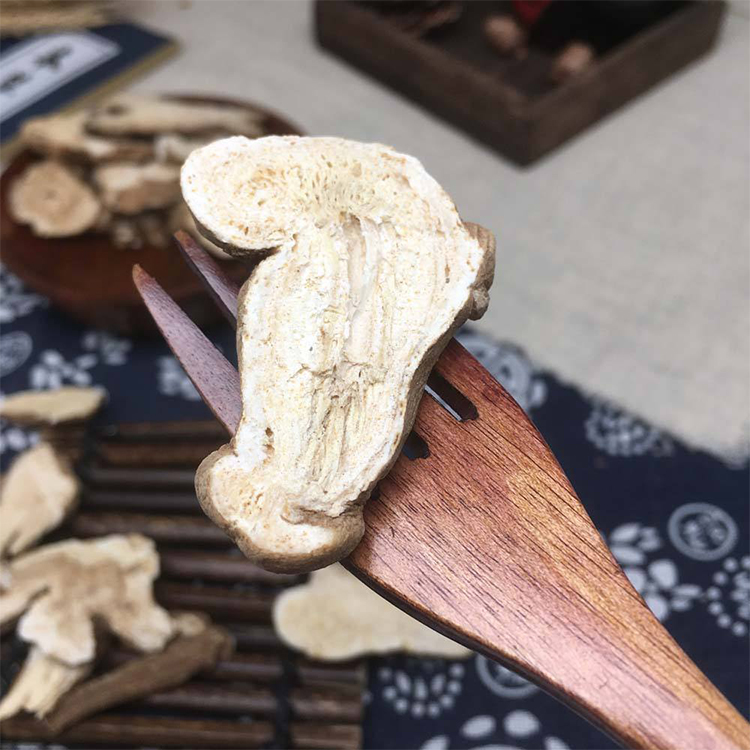
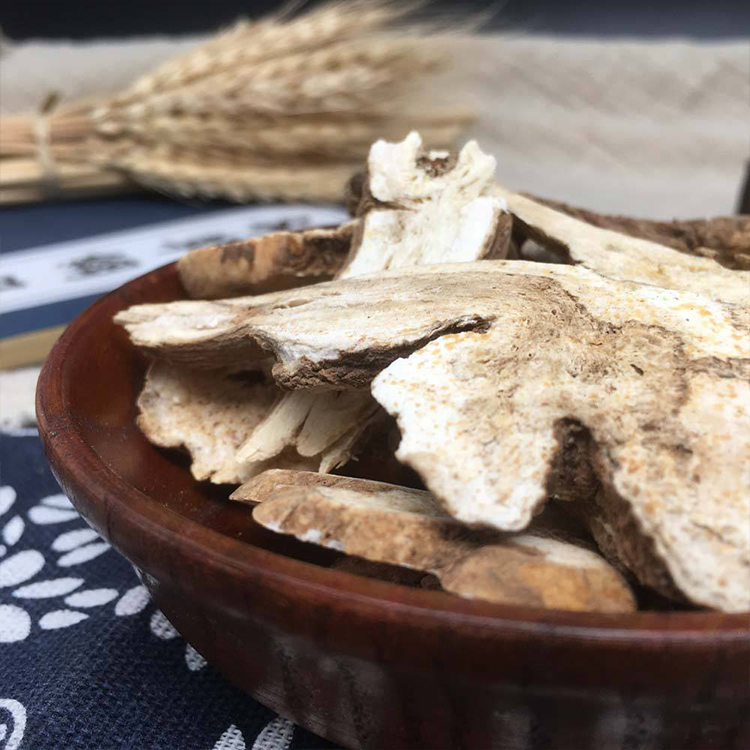
Roots and rhizomes look tough, but thick slices dry unevenly. A slice can appear dry on the surface and still carry internal moisture. For bulk root materials such as Dang Gui, Huang Qi, Cang Zhu, Bai Shao, and Poria, I want controlled slicing thickness, staged drying, retained samples, and clear moisture limits.
The site’s Root and Rhizome Chinese Medicines page is the logical internal reference for buyers building root-heavy formulas, especially when the same material may be used for decoction, tea, extract, or functional beverage development.
Delicate Aroma and Color Risk
Flowers and aerial parts punish rough handling. Chrysanthemum, honeysuckle, mint-like aerial herbs, and other delicate botanicals can lose aroma, fade, clump, or absorb warehouse odor. Moisture control here is also sensory control.
For these SKUs, the Flower and Whole Herbs category deserves separate specifications for color, odor, broken rate, foreign matter, and packaging barrier.
Shipping Is a Moisture Stress Test, Not a Logistics Afterthought
A container is not neutral.
It is a moving humidity chamber with metal walls, temperature cycling, sweat risk, odor exposure, port delays, and rough handling. If you ship dried herbal slices across 20–45 days of ocean freight, the real question is not “Was the herb dry when packed?” The real question is: what happens when the container moves from a warm loading site to a cold night, then back to heat, then sits at port?
This is why herbal medicine packaging for shipping needs more than a nice outer carton.
I like the boring setup: inner PE bag or foil-laminate bag, sealed liner, oxygen absorber only when appropriate, desiccant calculated by headspace and lane risk, humidity indicator card, odor isolation, carton strength test, pallet wrap, and container inspection before loading. Boring saves money.
The WHO’s good herbal processing practices for herbal medicines ties herbal quality to post-harvest processing, documentation, and processing controls rather than romantic sourcing language. That is exactly the mindset buyers need. If the supplier cannot document what happened from drying to packing to shipment, the story is incomplete.
I would also read the site’s guide on importing herbal slices from China before negotiating Incoterms, because import problems are rarely just customs problems. They are usually specification problems that became logistics problems.
Mold, Aflatoxins, and the Expensive Fantasy of “Just Re-Dry It”
Do not re-dry a mold-risk lot and pretend it is clean.
That is not quality management. That is gambling with a lab report you do not have yet.
Aflatoxins are not just “mold smell.” The Hong Kong CMCHK set limits for aflatoxins in 17 Chinese herbal medicines and their decoction pieces with reference to the Pharmacopoeia of the People’s Republic of China 2020 edition, using not more than 5 μg/kg for aflatoxin B1 and not more than 10 μg/kg for the sum of B1, B2, G1, and G2 for listed items. From 31 December 2022, Hong Kong’s Department of Health incorporated aflatoxins into market surveillance for Chinese herbal medicines.
Europe can be stricter. The EMA Q&A states that the European Pharmacopoeia sets aflatoxin B1 at not more than 2 μg/kg for herbal drugs unless otherwise indicated, and competent authorities may require not more than 4 μg/kg for the sum of aflatoxins B1, B2, G1, and G2.
That gap matters. A batch that looks “acceptable” in one market may not survive another market’s documentation review.
A 2022 Frontiers in Nutrition review on aflatoxin tests in herbal products summarized contamination reports from multiple countries. The numbers are ugly: 69% of sampled herbal products in one Kenya study exceeded fungal limits, 54.9% of medicinal plants in a Brazil study exceeded USP fungal acceptable limits, 18% of sampled Thai herbal medicinal products had detectable aflatoxin, and 59% of herbal green tea samples in a Morocco study showed aflatoxin contamination.
That is not a theory. That is the market talking.
Shelf Life Is Earned, Not Printed
Shelf life is not a date you invent for the label.
It is the result of drying, packaging, storage, microbiology, chemistry, sensory drift, shipping route, and retained-sample behavior. If you want Chinese herbal slices shelf life to mean something, you need an evidence trail.
For bulk buyers, I would ask for:
Origin and batch number
Cut specification and slice thickness
Drying method and final moisture range
Water activity, where justified
Microbial test: TAMC, TYMC, Escherichia coli, Salmonella where applicable
Heavy metals and pesticide residues
Aflatoxin B1 and total AFs for risk herbs
Packaging description and desiccant use
Recommended storage temperature and RH
Retained sample comparison after 3, 6, 9, and 12 months
No drama. Just proof.
GuoCao’s factory-sourcing page says buyers vet COA per lot, GMP and ISO systems, lab evidence, supply security, cut/mesh control, moisture, ash, and packaging. That is the right direction, and it fits the buyer logic behind a serious wholesale herbal material supplier for factories.
Here is my controversial opinion: a supplier with fewer herbs but tighter retained-sample data is often safer than a supplier with a giant catalog and vague storage claims. Catalog size does not protect your shipment. Process discipline does.
Best Storage Practices for Chinese Herbal Slices
If I were writing a buyer SOP, I would keep it brutally practical.
At Supplier Side
Set herb-specific moisture limits. Require pre-shipment photos. Demand COA lot matching. Confirm packaging before deposit. For high-risk herbs, request aflatoxin data before the balance payment. If the seller says “we can test after shipment,” walk away or accept that you are financing uncertainty.
During Transit
Use moisture-resistant inner packaging. Avoid mixed loading with odor-heavy goods, chemicals, wet cargo, or high-humidity commodities. Add humidity indicator cards for sensitive shipments. Record container number, loading date, seal number, and destination arrival condition.
At Buyer Warehouse
Quarantine on arrival. Open and smell. Check carton integrity. Check moisture-sensitive SKUs first. Compare arrival sample with retained origin sample. Store off-floor, off-wall, away from sunlight, away from solvents, and away from strong odors. Increase inspection frequency during humid seasons.
Before Production
Do not release solely on paperwork. Confirm sensory condition, moisture behavior, clumping, color drift, insect activity, mildew, oil leakage, and abnormal odor. If the material enters extracts, teas, capsules, beverages, or private-label packs, run fit-for-use checks before scaling.
For buyers ready to specify packaging, moisture limits, storage expectations, and test items before sourcing, the practical next step is to use a structured Chinese herbal slices quote request instead of sending a vague “best price” inquiry.
FAQs
What is moisture control in Chinese herbal slices?
Moisture control in Chinese herbal slices is the managed process of drying, packaging, storing, shipping, and testing decoction pieces so that water content, water activity, humidity exposure, mold risk, sensory quality, and shelf life remain within a defined buyer specification from factory release to final use.
In practice, it means setting herb-specific moisture limits, using barrier packaging, monitoring warehouse RH, testing high-risk materials for aflatoxins, and checking arrival condition against retained origin samples.
What moisture level should Chinese herbal slices have?
The correct moisture level for Chinese herbal slices depends on the herb species, plant part, slice thickness, matrix type, pharmacopoeial requirement, and intended use, but serious buyers usually require a defined loss-on-drying range plus risk-based water activity or mycotoxin testing for vulnerable roots, rhizomes, fruits, and seeds.
Do not use one universal number for all herbs. Angelica root, Coix seed, citrus peel, chrysanthemum, and Poria behave differently under humidity stress.
How do you prevent mold in Chinese herbal decoction pieces during shipping?
To prevent mold in Chinese herbal decoction pieces during shipping, control residual moisture before packing, use sealed high-barrier inner packaging, add suitable desiccants, avoid wet or odor-heavy cargo, inspect container condition, track humidity-sensitive routes, and quarantine the goods for sensory and lab review immediately after arrival.
The worst mistake is assuming origin dryness survives ocean freight automatically. It does not.
Does low moisture guarantee safe shelf life?
Low moisture does not guarantee safe shelf life because microorganisms may persist in dry materials, aflatoxins may already exist before drying, and herbs can regain moisture during storage or transit if exposed to high relative humidity, condensation, poor packaging, or slow warehouse rotation.
Shelf life needs evidence: COA, packaging validation, storage discipline, retained samples, arrival checks, and periodic re-testing.
What packaging is best for herbal medicine shipping?
The best packaging for herbal medicine shipping is a material-specific barrier system that may include sealed PE liners, foil-laminate bags, drums, cartons, desiccants, humidity indicator cards, pallet protection, and odor isolation, chosen according to herb sensitivity, shipping lane, storage duration, and buyer market requirements.
For oily seeds, aromatic flowers, and moisture-sensitive roots, cheap woven sacks are often false economy.
Final Thoughts: Make Moisture a Purchase Order Requirement
Here is the move: stop treating moisture control as a supplier promise and start treating it as a written commercial term.
Before your next order, specify the herb name, cut size, moisture range, water activity need, microbial limits, aflatoxin requirements, packaging format, storage condition, shipping lane risk, retained-sample rule, and arrival inspection procedure. Ask for proof before payment. Ask again before shipment.
If you are buying Chinese herbal slices for wholesale, extraction, tea bags, capsules, functional foods, or OEM/ODM projects, send a specification-led inquiry—not a price-only message. Use the quote form, name your target herbs, state your destination country, and request moisture, packaging, COA, and shelf-life support before the lot is packed.
Our low MOQ of 1 kg (2.2 lb) makes it easy to order Chinese herbal slices or wholesale Chinese medicine herbs. Private-label and bilingual labeling are also available.
Delivery Cycle & Support
We have a fast 7-day lead time. We provide free samples, COA reports, and technical support to help you bring high-quality bulk Chinese herbs to market.
Quality & Certifications
Our products are manufactured in a GMP-certified facility and meet ISO22000 standards. All Chinese herbs are third-party tested for heavy metals, pesticides, and microorganisms.