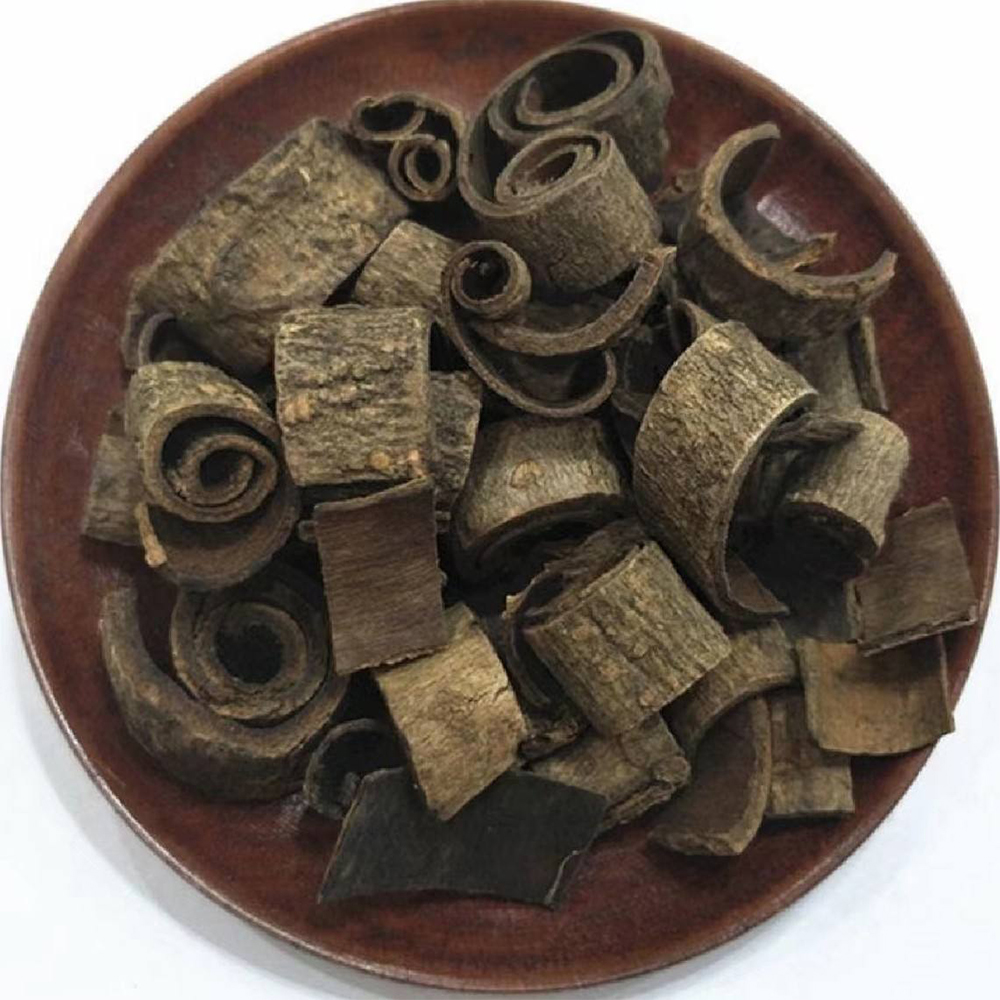
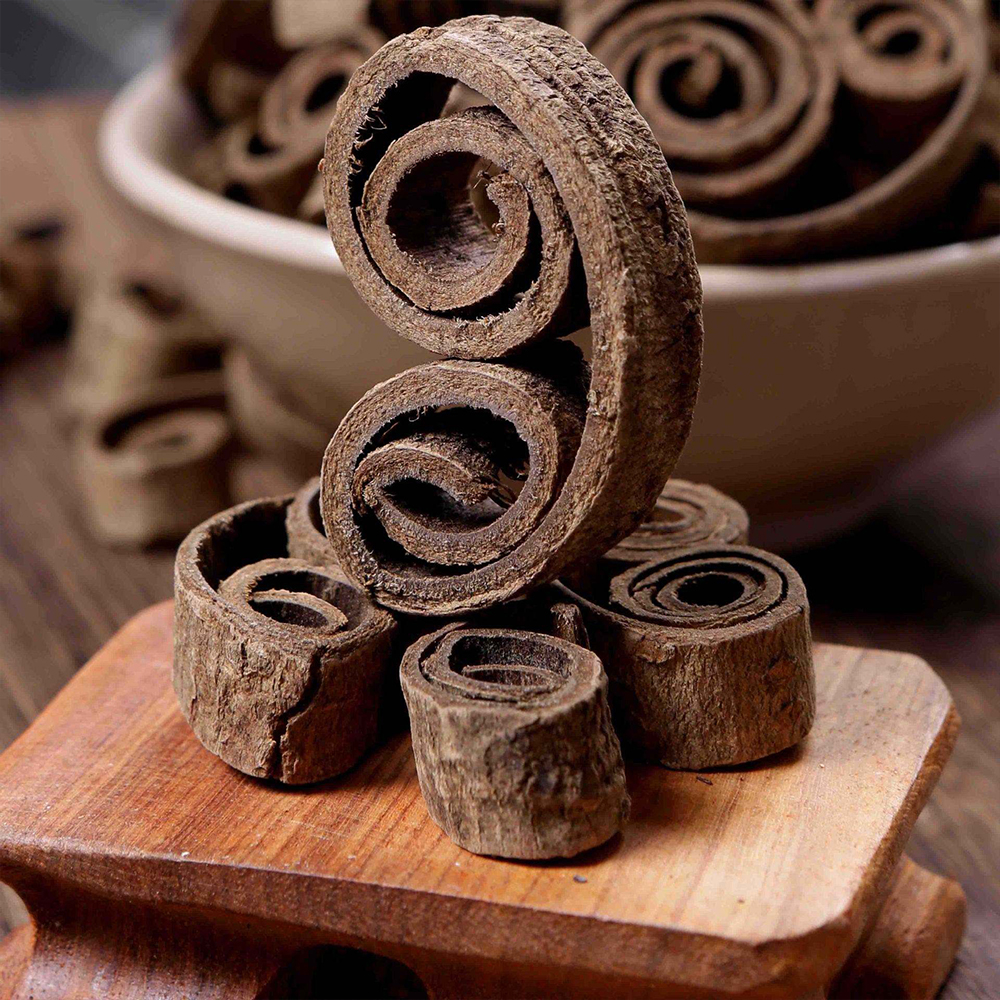
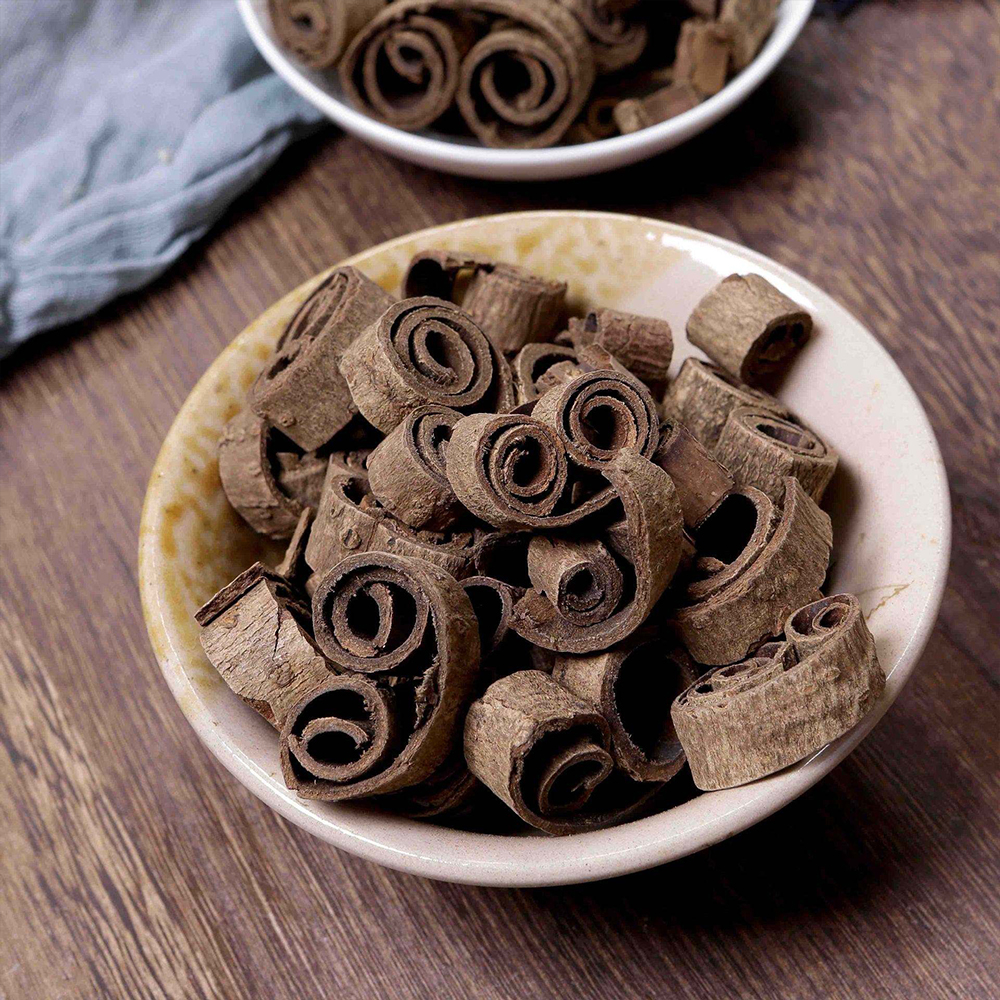
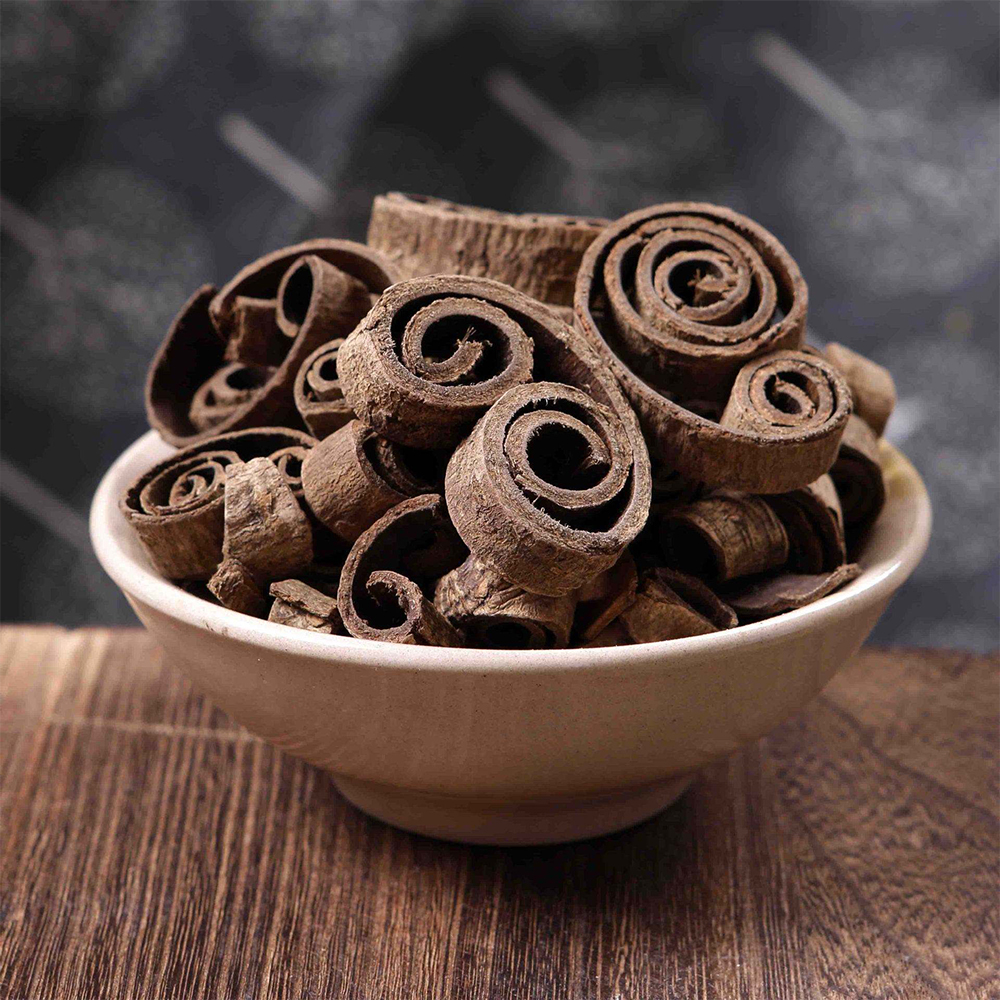
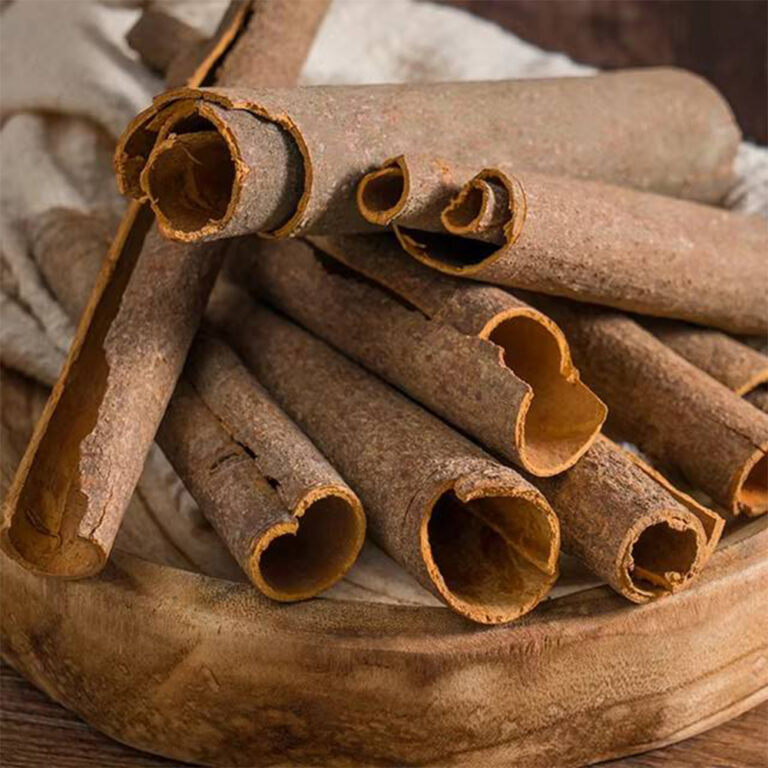
Magnolia bark (Hou Po, Magnoliae Officinalis Cortex) reaches buyers in more physical forms than most bulk herbs, and the words on a quotation, such as “slices,” “shreds,” “pieces,” or “chunks,” rarely mean the same thing to buyer and supplier. Thickness adds a second layer of ambiguity, because it can describe the wall of the original bark or the thickness of the finished cut. For procurement teams, tea-blend developers, and extract manufacturers, that gap decides extraction behavior, fines, carton stability, resin tack, and whether a lot passes incoming inspection. This article compares the main cut styles, explains how to write a thickness specification that two labs can measure the same way, and lists what to confirm before requesting a quote.
Thickness and Cut Style Are Two Different Specifications
Magnolia bark thickness can mean two things: the wall thickness of the raw bark as harvested, or the thickness of each piece after cutting. The first is a source-quality indicator. The second is a processing choice. Mixing them up is one of the most common reasons a quotation looks clear but ships something different.
Raw bark comes from the trunk, branches, or roots, and each part looks different. One TCM educational reference on Hou Po describes rolled trunk bark (“cylinder bark”) at roughly 2–5 mm thick and 15–45 cm long, lists thinner rolled forms at about 1–3 mm, and names shapes such as boot bark, ear bark, and branch bark. The same source describes filamentous decoction pieces, meaning thread-like shreds of about 3–5 cm in length and around 2.5 mm thick, and notes that ginger-prepared Hou Po is generally made into this shape. These are descriptive figures from a secondary educational source, not a purchasing standard, so treat them as orientation rather than as limits to copy into a purchase order.
Traditional quality judgment favors thick, heavy, oily bark with a deep purple-brown inner surface. A Hou Po herb database entry lists thin bark, pale inner color, and weak aroma among signs of inferior material. That is a statement about the raw bark, not about how thin you should slice it. A buyer can want thick, dense source bark and still specify a thin cut for fast extraction, and the two requests do not conflict.
Magnolia Bark Cut Styles Compared
The table below summarizes how common cut styles behave in procurement. It is a qualitative comparison based on the physical characteristics of bark and on the supplier-side guidance in GuoCao’s bark sourcing articles, not a set of measured specifications. Size ranges for each style must be agreed per application.
Cut style
Physical description
Main strengths
Main risks
Fields to write into the spec
Shreds / filamentous slices
Thread-like or narrow slices, often slightly curved
Familiar to practitioners; balanced surface area; the usual form for ginger-processed Hou Po
Breakage and fines if cut too thin; curl makes thickness hard to measure
Length range, thickness range and method, maximum fines
Transverse discs or coil slices
Rolled bark cut across into small round or disc-like pieces
Distinctive look; shows the rolled structure
Size and curl vary; diameter and thickness need clear definitions
Mesh or particle range, fines percentage, identity test
Powder
Fine milled material
Fastest to formulate
Highest identity and contamination risk
Particle size, identity, heavy metals, microbiology
For a broader look at how the same logic applies across the cortex category, the guide on choosing between bark slices, strips, or chunks covers testing documents and format decisions that apply to Hou Po as well.
What Thickness Should Magnolia Bark Slices Be?
No single thickness suits every application. GuoCao’s bark sourcing guides use 1–3 mm as a sensible starting range for bark slices, depending on bark hardness and formula use, and the traditional shred description above sits inside that band. Treat 1–3 mm as a starting point for sample approval, not as a verified industry standard for Hou Po.
Four variables should shape the range you choose:
Downstream process. Decoction time, extraction solvent and temperature, or a tea-bag filling line each tolerate different piece sizes.
Surface area. Thinner pieces expose more surface and release compounds faster, but they also break more easily and generate more fines.
Bark condition. Moisture level and cork layer change how a piece compresses, which changes both how it cuts and how it measures.
Packing and transit. Fines migrate to the bottom of cartons, and a lot that looks uniform at the top can contain dust and broken pieces below.
Thickness also interacts with resin tack. GuoCao’s article on controlling bitterness and resin stickiness in bulk cartons attributes stickiness mainly to oil-rich bark surfaces, incomplete moisture equilibration, and carton compression. Thin pieces have more surface in contact with neighboring pieces and liners, so it is reasonable to expect more tack risk from very thin cuts under the same pressure. That is an inference from the mechanism, not a measured result, which is why sample cartons should be held under realistic pressure before approval.
How to Measure Thickness Without Disputes
A thickness number means little without a method. Bark curls, has uneven faces, and compresses slightly, so different gauges, pressures, and operators produce different readings. The barks thickness buyer guide recommends borrowing the logic of paper and film thickness standards: state the device type, foot size, applied force, and dwell time. Decide whether you need spot thickness (the thickest point, which matters for cutter or filling-line fit) or average thickness (which matters more for extraction consistency), and define how many pieces are measured.
Sampling matters as much as the gauge. The same guide suggests opening √N + 1 cartons from a lot rather than the cleanest two, then pulling pieces across those cartons. Pair that with an acceptance rule, such as the share of pieces that must fall inside the range and the hard limits no piece may exceed.
Why the Thinnest Cut Is Not Automatically the Best Cut
The common assumption is that a thinner cut means a better, more extractable product. That holds only when extraction speed is the single constraint. For other uses, thin cuts can lose value through breakage, dust, weighing error during repacking, and stronger tack in cartons.
Consider an illustrative example, not a real customer case. An extraction plant that grinds or macerates material may accept a coarse cut and put its effort into controlling moisture and identity. A tea brand using transparent pouches may prefer longer shreds or strips for appearance, accepting slower infusion. A decoction-piece distributor may want uniform shreds that weigh consistently into formula kits. Three buyers, three different “best” cuts, and none of them is wrong.
A related assumption is that buyers should chase the mildest, least bitter lot. GuoCao’s carton-control article argues that bitterness and tack are expected with lignan-rich Magnolia officinalis bark, and that lot-to-lot swings are the real defect, since a stable moderate profile is easier to reproduce in teas, extracts, and OEM blends. A cut style that gives repeatable results is more valuable than one that looks refined in a photo.
How Processing Changes What You Are Buying
Cut style often travels with a processing step, so confirm whether the quoted material is raw or ginger-processed. A 2023 process-optimization study of ginger-juice processed Hou Po tested ginger juice dosage, moistening time, temperature, and time. It reported optimal parameters of 8% dosage, 120 minutes of moistening, and processing at 100 °C for 7 minutes, and found honokiol and magnolol content followed the order ginger-processed > raw > water-processed in that study. These figures come from one laboratory optimization, so they show that process details change composition. They are not production parameters to impose on every supplier.
Earlier steps matter too. A 2010 chromatographic study of primary processing of Magnolia officinalis bark found that honokiol and magnolol rose in processed samples, while β-eudesmol and magnoloside A fell. Taken together, the studies support a practical rule: a supplier who cannot describe the process behind a cut cannot give you a repeatable lot.
Matching Cut Style to Application
Application
Cut direction to evaluate
Reasoning
What to verify before approval
Decoction pieces for practitioners
Uniform shreds or slices
Recognizable form; predictable weighing
Thickness method, broken-piece share, raw or ginger-processed status
Tea bags and loose blends
Fine shreds or short strips
Infusion speed and fill consistency
Fines, length range, bag-line compatibility
Visible retail jars or pouches
Strips or well-sorted shreds
Visual identity
Ruler photos, color consistency, carton compression results
Extraction feedstock
Coarse pieces or chunks
Lower dust and easier handling
Moisture, identity assay, particle range
Long-term warehouse stock
Chunks or thicker cuts
Fewer fines and less breakage
Internal dryness, storage conditions
Grinding into powder
Chunks or coarse pieces
Appearance matters little
Botanical identity and contaminant testing
Identity, Testing, and Compliance Beyond the Cut
A well-cut piece of the wrong bark is still the wrong material. Quality control for Hou Po is currently based on assaying honokiol and magnolol by TLC or HPLC, and the same study notes that the Chinese Pharmacopoeia recognizes two botanical sources, Magnolia officinalis and Magnolia officinalis var. biloba, which could be distinguished by NMR profiling. One herb database summarizing pharmacopoeial requirements cites a minimum combined magnolol and honokiol content of 2%. Check that figure against the current edition of the pharmacopoeia or customer specification you are buying to, since requirements differ by market and edition.
Request lot-specific documents: botanical identity with the Latin name, moisture, heavy metals, pesticide residues, microbiology, and a COA that carries the lot number. For supplement supply chains bound for the United States, 21 CFR Part 111 sets current good manufacturing practice requirements for manufacturing, packaging, labeling, and holding dietary supplements, so the supplier’s records need to support your own specification and release process. The bulk sourcing guide for bark Chinese medicinal materials lists the documents and contract wording that usually prevent disputes later.
What Drives Price Differences Between Cut Grades
Quoted prices for different cuts usually differ for reasons that can be asked about directly:
Source bark and sorting. Thicker, denser bark of a given part may cost more than thinner or mixed material, and a tighter sort can raise price. Ask how the supplier grades it.
Cutting yield. Thin cuts generate more fines and offcuts, which are lost or sold as lower-grade material.
Processing step. Ginger-processed material adds moistening, heating, and drying stages.
Quality documentation. Lot-level testing and cross-carton inspection add cost but reduce rejection risk.
Packing. Liner type, carton compression, and equilibration time before pack-out affect both freight efficiency and tack.
A lower unit price on a cut with high fines can raise the effective cost per usable kilogram, especially if you repack or weigh formula kits.
What Should Buyers Specify Before Requesting a Quote?
A complete request lets a supplier quote the correct item the first time. Include:
Botanical identity and plant part. Latin name, intended source (trunk, branch, or root bark if it matters), and the pharmacopoeia or standard you follow.
Raw or ginger-processed status. If processed, ask for the process parameters rather than a generic label.
Cut style and dimensions. Style, thickness range with measurement method, length or diameter range, and maximum fines or broken pieces.
Intended use. Decoction, tea, extraction, or grinding, and the filling or extraction equipment involved.
Moisture limit and testing. Moisture ceiling, identity assay, heavy metals, pesticides, and microbiology.
Packaging. Liner, carton type, net weight, and any limit on compression.
Destination market. Regulatory framework, labeling needs, and documentation required for customs.
Sample plan. Pre-shipment photos next to a ruler, retained samples, and the carton sampling rule.
The wholesale Magnolia Bark (Hou Po) product page lists a 1 kg MOQ, free samples, and COA reports, and also states OEM and private-label options. Confirm current terms for your specific cut grade, since MOQ and lead time can vary with processing. If you are comparing Hou Po with other cortex materials for a formula, the Barks Chinese Medicines category groups the related bark products in one place.
Frequently Asked Questions
What thickness should magnolia bark slices be?
There is no universal figure. Bark slices are commonly specified around 1–3 mm, and traditional shreds are described near 2.5 mm, but the right range depends on your extraction or filling process. Approve a sample, then write the range and measurement method into the contract.
Is thicker magnolia bark higher quality?
Thick, dense raw bark with a dark inner surface and strong aroma is traditionally preferred. That describes the source bark. The cut thickness is a processing choice and should follow your application, because very thin cuts can raise breakage, fines, and tack.
Are shreds or chunks better for extraction?
Chunks and coarse pieces produce less dust and handle well in bulk, while shreds expose more surface and extract faster. Choose according to your extraction method, then confirm moisture, particle range, and identity, since hidden internal moisture is a risk in thick pieces.
What is the difference between raw and ginger-processed Hou Po cuts?
Ginger-processed Hou Po is treated with ginger juice and heat, and is generally supplied as shreds. Studies show processing changes the chemical profile, so request process parameters and a lot-specific COA instead of accepting a generic “processed” label.
How do I prevent thickness disputes with a Hou Po supplier?
Specify the gauge type, foot size, applied force, dwell time, and whether you measure spot or average thickness. Add a sampling rule such as opening √N + 1 cartons, and agree acceptance limits and the action for out-of-range pieces before shipment.
Which documents should accompany a bulk magnolia bark lot?
Request a lot-specific COA covering botanical identity, moisture, heavy metals, pesticide residues, and microbiology, plus batch photos, process records if ginger-processed, and packing details. For U.S. supplement use, make sure the records support your CGMP release procedures.
Our low MOQ of 1 kg (2.2 lb) makes it easy to order Chinese herbal slices or wholesale Chinese medicine herbs. Private-label and bilingual labeling are also available.
Delivery Cycle & Support
We have a fast 7-day lead time. We provide free samples, COA reports, and technical support to help you bring high-quality bulk Chinese herbs to market.
Quality & Certifications
Our products are manufactured in a GMP-certified facility and meet ISO22000 standards. All Chinese herbs are third-party tested for heavy metals, pesticides, and microorganisms.