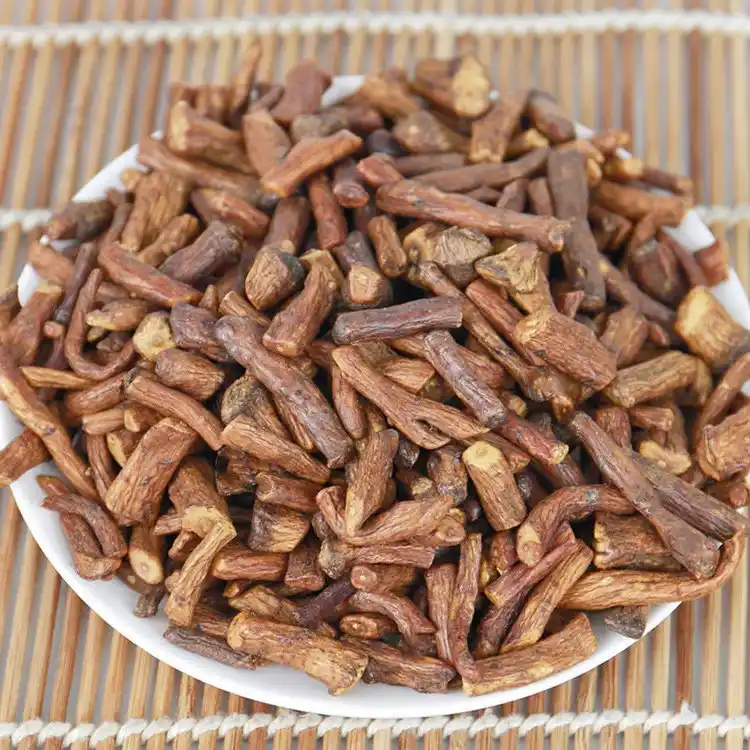
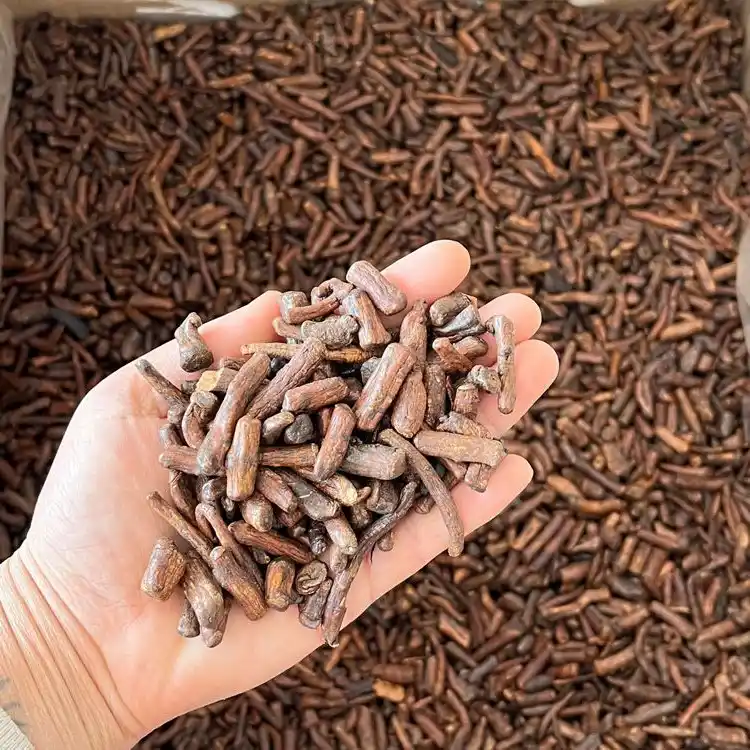
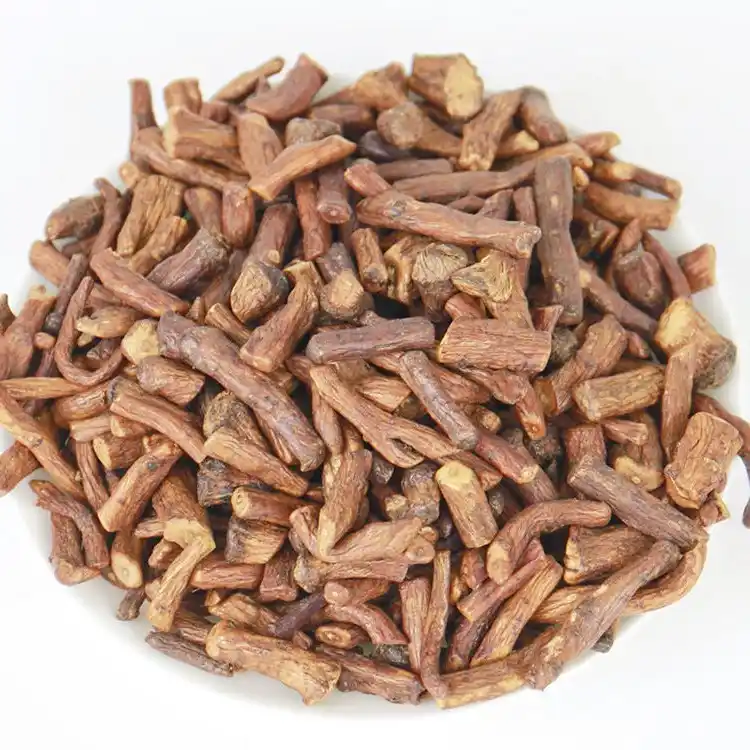
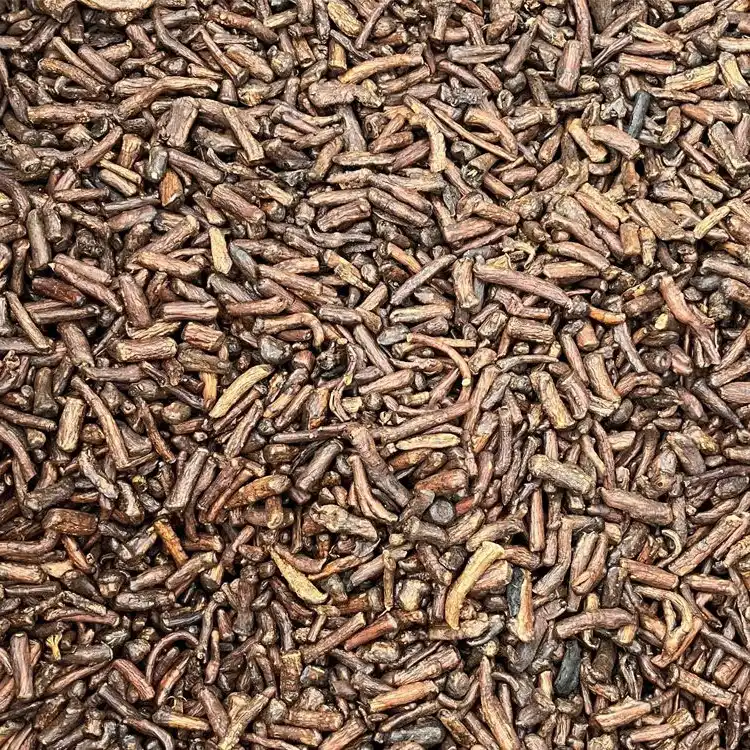
If you buy bark herbs in bulk, you already know the pain. One side says “too thick.” The other side says “it’s normal bark.” Then your IQC holds the lot, your line pauses, and everybody starts emailing photos like that will solve it.
Here’s the simple truth: you’re not arguing about thickness. You’re arguing about the measurement method. Standards in paper, film, and textiles learned this the hard way. They don’t say “thickness is X.” They say “thickness is X under these exact conditions.”
And yeah, this matters even more for bark materials, because bark isn’t a uniform part. It’s plant tissue with natural drift, plus processing drift.
If you source from a wholesale supplier like GuoCao (see: Wholesale Chinese Medicinal Herbs and Spices Supplier), you can also lock the spec into the OEM flow: slicing thickness, grind levels, packaging, lot coding, COA pack. That’s where disputes die.
Thickness is a measurement result, not a label
ISO 534 (paper/board) literally defines thickness as the distance between two faces measured under an applied static load. Then it pins down the load, the contact area, and the micrometer performance.
That mindset fixes bark disputes fast, because bark has:
ISO 534 forces everyone to measure with the same pressure and contact geometry:
Pressure: (100 ± 10) kPa
Face diameter: (16.0 ± 0.5) mm
Contact area: ~200 mm²
That’s why two labs can actually match results. Same pressure, same footprint, same expectation.
Takeaway for barks: you don’t need to copy ISO 534 exactly. But you do need to copy the logic: write down pressure/force + contact area + device type + dwell time.
Table: what “thickness” standards force you to define (and why bark buyers should steal it)
Standard
What it “locks”
The point (in plain English)
ISO 534:2011
Pressure (100 ± 10 kPa), face diameter (16.0 ± 0.5 mm), area (~200 mm²)
If you change pressure, thickness changes. Period.
ISO 4593:1993
Not for embossed; face diameter 2.5–10 mm; force 0.5–1.0 N; parallelism 5 μm
Surface texture matters. Rough surfaces need a plan.
ASTM F2251
Foot sizes 4.8–15.9 mm; no acceptability criteria in the method
Test method ≠ pass/fail rule. You must set limits.
ISO 5084:1996
Thickness under pressure ≤ 1 kPa; recommended foot area ~2000 mm² (Ø ~50.5 mm); read after 30 ± 5 s
Soft stuff compresses. Time and pressure change readings.
ISO 9073-2:1995
“Bulky” = compresses ≥20% when pressure shifts 0.1 → 0.5 kPa; presser-foot area ~2500 mm²
If material squishes, your spec must say how you press it.
ISO 4593:1993 “not suitable for embossed” is basically a bark warning label
ISO 4593 says the method is not suitable for embossed film or sheeting. Why? Because peaks and valleys mess up contact readings.
Bark slices have the same problem:
curled cortex pieces
ridges
uneven inner/outer surfaces
sometimes a “split” thickness across one piece
So you need to decide what you actually mean:
Do you want “spot thickness” (thickest point)? Good for “will it jam my cutter / fill my tea bag line.”
Or do you want “average thickness” (overall cut grade)? Better for extraction consistency and batch-to-batch density.
ISO 4593 even points you toward gravimetric average thickness methods when mechanical accuracy isn’t enough.
ASTM F2251 says it out loud: acceptability criteria is on you
ASTM F2251 straight up says the test method does not address acceptability criteria. Buyer and producer must set that together.
This is the part many teams skip, then they wonder why disputes never end.
So for bark herbs, don’t just say “2–3 mm.” Add:
Target range
allowed drift
how many units you measure
what happens if a few pieces are out-of-spec (rework? screen? blend-back? reject?)
It’s boring. It also saves your season.
ISO 5084:1996 and ISO 9073-2:1995 explain why soft materials start fights
ISO 5084 defines textile thickness under pressure of 1 kPa or less, and it even tells you to record the reading after 30 ± 5 seconds.
ISO 9073-2 calls a nonwoven “bulky” if it compresses 20% or more when pressure changes from 0.1 kPa to 0.5 kPa.
Bark slices aren’t textiles, sure. But they do compress a bit, especially when moisture is higher, or when pieces have more cork layer. That’s why two people can measure the “same” piece and get different numbers.
So pick a rule and write it down. If you don’t, the rule becomes “whoever shouts louder wins.” Not ideal, lol.
Incoming inspection (IQC) carton coverage √N+1 matters for thickness too
Even with a perfect thickness method, you can still get burned if you sample like a rookie.
GuoCao’s bark IQC guide calls it out: barks have moisture gradients, fines migration, cut size drift, and mixed specs. So you need carton spread, not “open two cartons and pray.”
They suggest a simple carton rule: √N + 1 cartons to open.
Table: √N+1 cartons to open (from bark incoming inspection practice)
Total cartons in lot (N)
√N + 1
Suggested cartons to open (ceil)
9
4.0
4
16
5.0
5
40
7.3
8
100
11.0
11
400
21.0
21
Now apply that to thickness checks: measure pieces across those cartons. Don’t let the warehouse pick “the pretty ones.”
Buyer spec checklist for barks thickness in Chinese herbal slices
Below is a template that stops 80% of thickness debates. Use it for cortex materials from a Barks Chinese Medicines supplier, or any bark SKU you run in teas, decoction slices, spices, extracts.
Table: bark thickness spec fields (write this, stop the ping-pong)
Spec field
What to write
Why buyers care
Definition
“Thickness measured with contact gauge under defined force/pressure, defined foot size, and defined dwell time.” (yes, literally)
Stops “your caliper vs mine” drama.
Method choice
Spot thickness / average thickness / thickness distribution
Spot = line fit. Average = extraction + density consistency.
Device
Contact micrometer / thickness gauge with controlled load
Soft / uneven pieces settle. Time changes reading.
Sampling
“√N+1 cartons opened + units pulled across cartons”
Prevents carton bias and hidden mixed cuts.
Acceptance rule
“X% of units must fall within range; Y units may drift but not exceed hard limits”
ASTM-style: you must define pass/fail with supplier.
A quick real-world note (no fake stories): if your finished product shows more sediment, unstable taste, darker brew, returns, it often ties back to cut profile drift and fines migration in bark materials. That’s not “bad luck.” That’s spec gap.
How GuoCao makes thickness control less painful (and more sellable)
If you’re building a brand or supplying hospitals and factories, thickness control isn’t just QA. It’s commercial. On the shelf, consistency = fewer complaints and smoother reorders. Simple.
GuoCao positions OEM/ODM as “you set the spec; we make it real,” and they call out the infrastructure that supports that:
GMP herbal-slice lines
ISO 22000 system
third-party COA per lot
ambient / cool / MAP warehousing
annual capacity around 2,500 tons
fermented enzyme beverage production
global reach (30+ countries/regions)
On the service side, they even list “custom blends, slicing thickness, and grind levels” as part of OEM/ODM customization.
So if you want thickness disputes to stop, don’t treat thickness as a single number. Treat it as a spec package that fits your channel:
bulk decoction slices
tea bag cut grades
extract feedstock
or even upstream for fermented drinks in Herbal Enzymes projects
Our low MOQ of 1 kg (2.2 lb) makes it easy to order Chinese herbal slices or wholesale Chinese medicine herbs. Private-label and bilingual labeling are also available.
Delivery Cycle & Support
We have a fast 7-day lead time. We provide free samples, COA reports, and technical support to help you bring high-quality bulk Chinese herbs to market.
Quality & Certifications
Our products are manufactured in a GMP-certified facility and meet ISO22000 standards. All Chinese herbs are third-party tested for heavy metals, pesticides, and microorganisms.