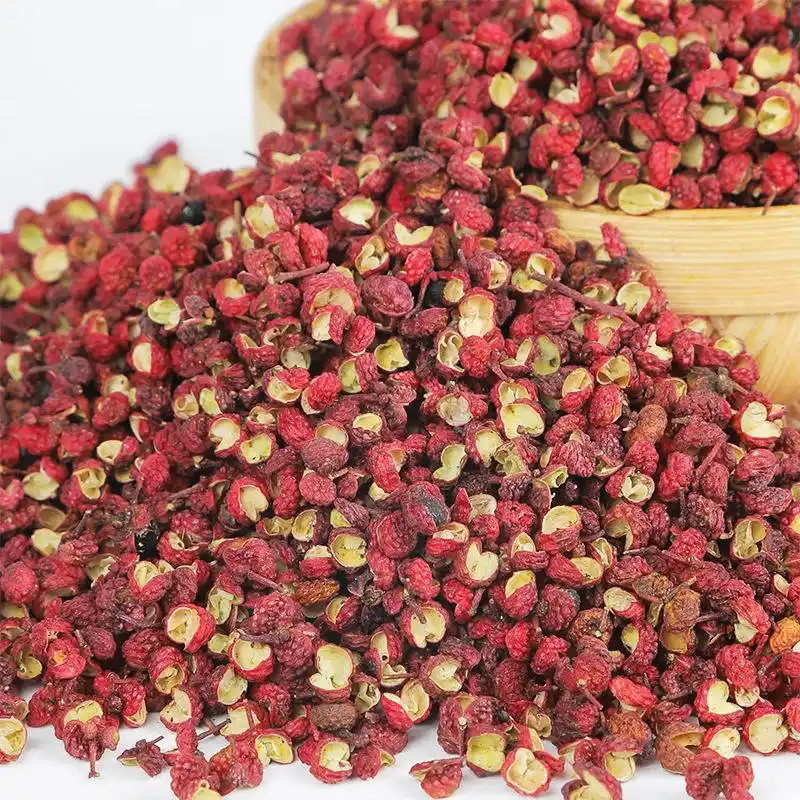
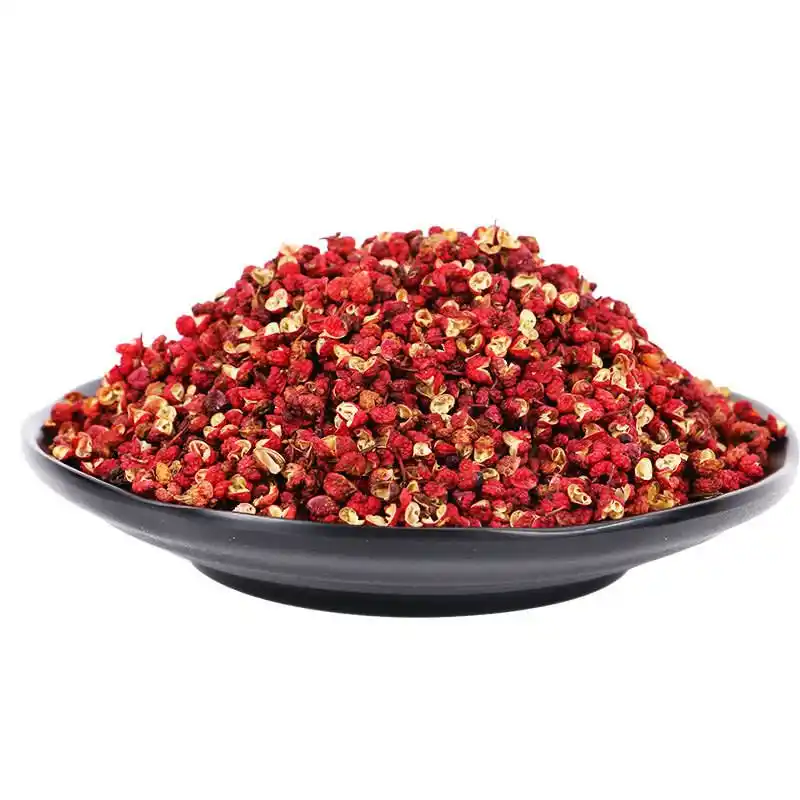
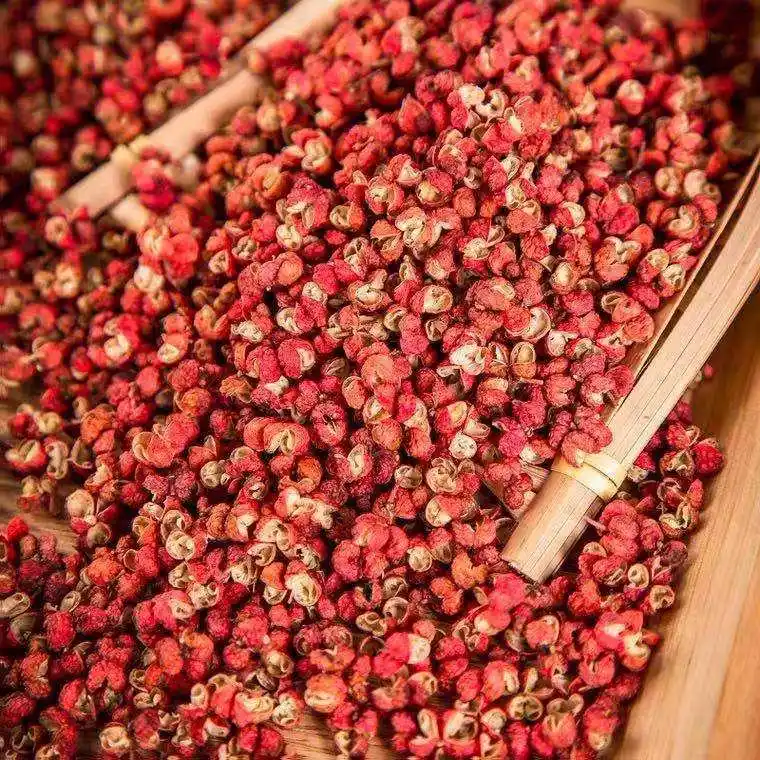
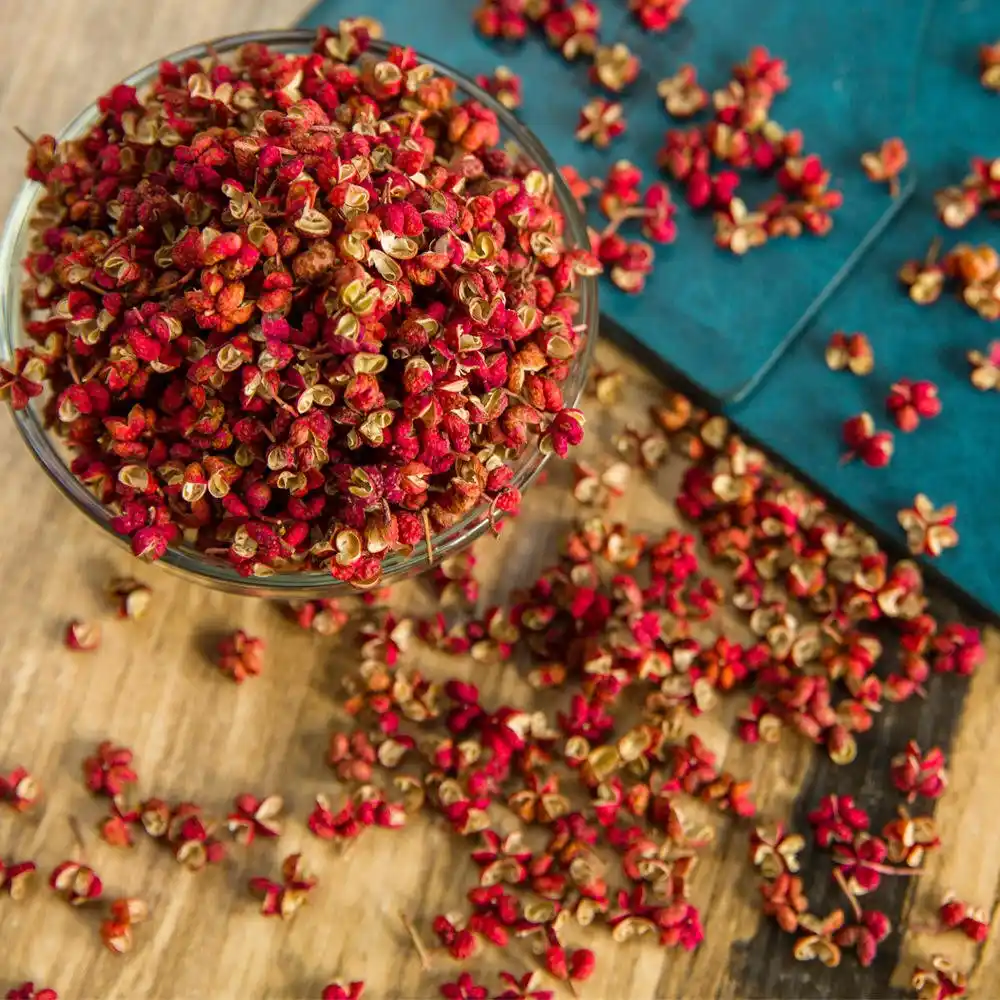
If you buy Hua Jiao in bulk, you’ve probably seen this movie: the first lot smells bright and citrusy, the “numb hit” comes fast, and your product team is happy. Then the next lot lands… and it feels flatter. Same label, same mesh size, but the aroma top notes faded and the tingling feels weaker.
That isn’t “bad luck.” It’s physics + chemistry. If you want numb aroma retention, you have to control a few boring variables from milling to shipping. Do that, and you’ll stop arguing about “quality” and start talking in specs.
Quick take: milling creates loss, oxygen and light accelerate loss, temperature decides how fast you lose, and packaging decides how much you lose. Research says this pretty clearly.
Hydroxy-α-sanshool and linalool
Sichuan pepper’s signature tingling links strongly to hydroxy-α-sanshool. Your “numb” usually rides on that family of alkylamides. Your aroma, meanwhile, leans hard on terpenes and oxygenated terpenes like linalool, limonene, myrcene. In one green huajiao study, those three had the highest odor activity values (OAVs), over 10,000, which is basically “this is what your nose notices first.”
So when you say “keep the numb aroma,” you’re really saying:
keep sanshool from degrading or isomerizing
keep volatile aroma compounds from evaporating or oxidizing
That’s the whole job.
Milling temperature control
Milling is where a lot of buyers accidentally burn money (not on cost, on quality). You take intact husks, then you smash them into huge surface area. That speeds up aroma loss and oxidation. Also, grinders generate heat. Heat pushes volatiles out and speeds reactions.
Research on Zanthoxylum storage shows temperature is a major driver of quality decline, and light also matters. So don’t treat milling as “just a step.” Treat it as a quality event.
Here’s how ops teams usually explain it:
Whole husk = aroma locked in
Powder = aroma leaks fast
Warm milling = leaks faster
Particle size distribution (sieve curve)
A single “mesh size” spec isn’t enough. Two powders can both be “40 mesh,” but one has more fines. Fines bleed aroma faster, and they can spike oxidation. If you’ve seen “strong smell when you open the bag, then dead in 2 weeks,” fines often sit behind that.
What to spec (real-world, not fancy):
target mesh + max fines %
regrind limit (how many passes)
temperature limit at discharge (basic but effective)
Air exposure during milling
Open-air grinding is like leaving perfume uncapped. You don’t need a lab to get that.
Better practice looks like:
short milling runs (less heat soak)
quick bagging after milling (don’t let it sit)
optional inert gas flush for premium profiles (if your channel needs it)
Vacuum packaging and glass bottle packaging
Packaging isn’t “marketing.” It’s your oxygen and aroma gate.
A long-term storage paper on dried Zanthoxylum bungeanum compared polyethylene (PE), vacuum packaging (VP), and glass bottle packaging (GP). It found:
vacuum packaging best maintained color + bioactive compounds at room temperature
glass bottle preserved volatile oil with only ~7% loss after 18 months
shelf-life guidance (by multiple analyses): PE ≤ 9 months, GP ≤ 12 months, VP ≤ 15 months, and PE at 4 °C (PEC) ≤ 15 months
That lines up with what buyers feel: glass protects aroma, and vacuum slows overall drift.
Practical packaging notes buyers actually care about:
barrier film spec (not just “vacuum bag”)
seal integrity (leaks kill you quietly)
headspace control (less oxygen = less oxidation)
pack size strategy (big bag opened 50 times = aroma death)
Storage temperature 4 °C and −18 °C
Cold storage is boring, and it works.
A storage study on dried Zanthoxylum armatum showed that at −18 °C, after 7 months, key markers stayed in strong ranges:
hydroxy-α-sanshool 21.24–23.64 mg/g
linalool 64.53–67.29 μL/mg
Same paper also says temperature drives quality change the most, and light hurts too.
So if your customer wants premium numb aroma retention, you can’t store Hua Jiao like dried beans.
This is where warehousing matters. GuoCao lists ambient/cool/MAP warehouses (modified atmosphere packaging / storage) as part of its operating stack, which is exactly the kind of setup you want for aroma-sensitive spices. (If you’re new to GuoCao, start here: Wholesale Chinese Medicinal Herbs and Spices Supplier – GuoCao.)
Light exposure and UV
Light isn’t “just light.” It can wreck chemistry.
One recent Food Chemistry paper reports that after 48 hours of UV exposure, hydroxy-α-sanshool showed an ~85.49% loss.
That’s extreme conditions, sure. But it tells you the direction: light can crush numbness.
So the boring fix is smart:
opaque packaging for storage
avoid transparent outer bags for long transit
don’t park pallets under strong warehouse lighting for months
Acid environment and pH
If your Hua Jiao goes into acidic foods (pickles, vinegar sauces, sour soup bases), don’t ignore pH. A study on sanshools under acid conditions reported that with 14% hydrochloric acid, hydroxy-α-sanshool and hydroxy-β-sanshool dropped by 80% in 0.5 hours.
Your real food isn’t 14% HCl, obviously. Still, the message is simple: acid speeds transformation. If your product sits in a low-pH matrix, your numb “snap” can soften faster than you expect.
What buyers do about it (no fantasy, just common tactics):
add Hua Jiao late in processing (less time in acid + heat)
keep it in oil phase where possible (aroma carries better)
use stronger incoming marker spec so the finished product still lands on target
Shipping humidity and oxygen ingress
Shipping is where good Hua Jiao goes to die, if you treat it like “dry goods = safe.”
Two big pain points:
container heat swings (hot day, cold night) push aroma out of product and into headspace
humidity can raise water activity locally and cause smell drift, plus clumping in powders
That’s why serious buyers ask about:
moisture window at release
desiccant plan (when needed)
pallet wrap strategy
FEFO (First Expired, First Out) so old lots don’t sneak into new orders
GuoCao’s own OEM guide leans into this “ops reality” language—GMP docs, ISO 22000 controls, COA per lot, and warehousing options like cool and MAP.
Research-backed numbers you can actually use
What you’re trying to protect
What the research measured
Condition that helped
The number
Numb marker
hydroxy-α-sanshool
−18 °C storage
21.24–23.64 mg/g at month 7
Aroma marker
linalool
−18 °C storage
64.53–67.29 μL/mg at month 7
Volatile oil retention
volatile oil loss
glass bottle packaging
~7% loss at 18 months
Shelf-life planning
shelf-life recommendations
VP / GP / PE / 4 °C
PE≤9, GP≤12, VP≤15, 4 °C(PE)≤15 months
“Top note” drivers
OAV (odor activity value)
green huajiao aroma
myrcene/limonene/linalool OAV > 10,000
Acid sensitivity
sanshool loss speed
strong acid model
80% drop in 0.5 h (14% HCl)
Light sensitivity
hydroxy-α-sanshool loss
UV exposure
~85.49% loss after 48 h
Use this table like a buyer, not like a scientist: it tells you what to spec and where the risk lives.
GMP, ISO 22000, COA, modified atmosphere packaging
If you sell into pharma, nutraceutical, functional beverage, or hospital channels, you already know: “it smells good” isn’t a release standard.
You need:
GMP execution (process control + documentation)
ISO 22000 food safety system for spice and food channels
third-party COA per lot (heavy metals, pesticide residues, micro, and your special markers if required)
storage modes that match the chemistry, including cool and MAP options
That’s basically GuoCao’s positioning in plain terms: GMP herbal-slice lines, ISO 22000 system, third-party COA, and multiple warehouse modes for long transit. And yes, they list Hua Jiao as a bulk product already, so you’re not forcing a new category onto a supplier.
If you want to explore the supply side fast, these internal pages help:
Our low MOQ of 1 kg (2.2 lb) makes it easy to order Chinese herbal slices or wholesale Chinese medicine herbs. Private-label and bilingual labeling are also available.
Delivery Cycle & Support
We have a fast 7-day lead time. We provide free samples, COA reports, and technical support to help you bring high-quality bulk Chinese herbs to market.
Quality & Certifications
Our products are manufactured in a GMP-certified facility and meet ISO22000 standards. All Chinese herbs are third-party tested for heavy metals, pesticides, and microorganisms.