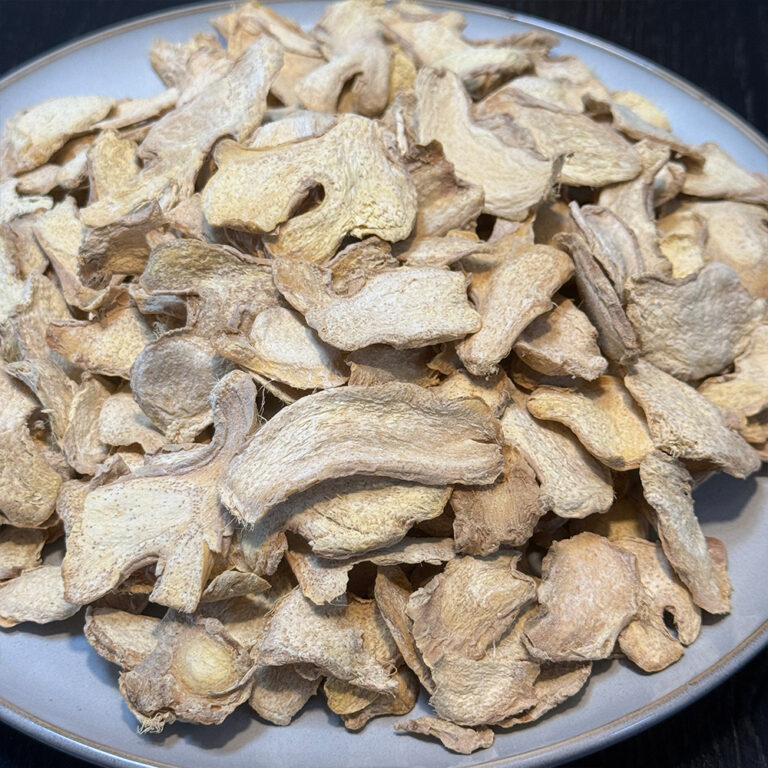
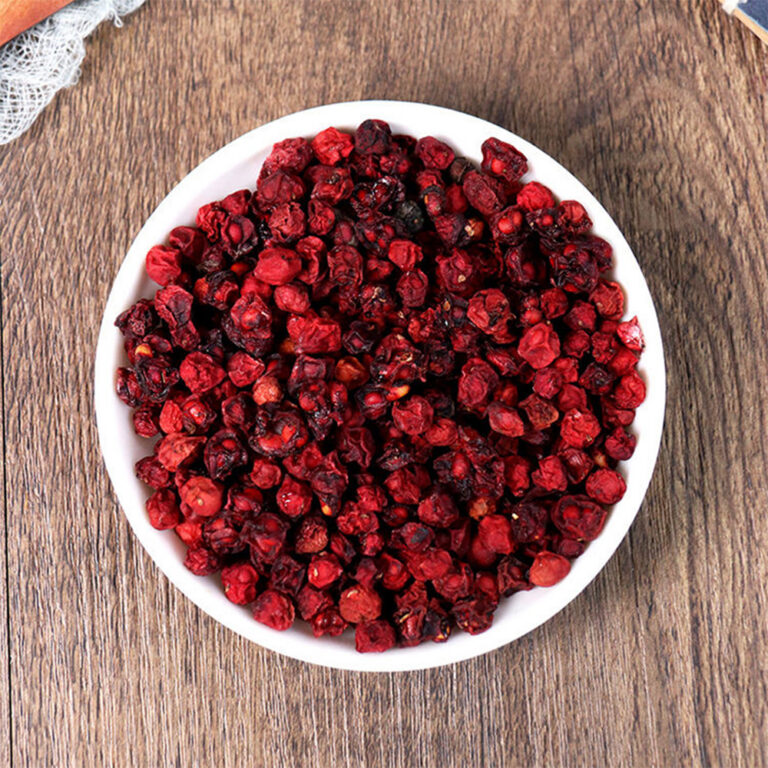
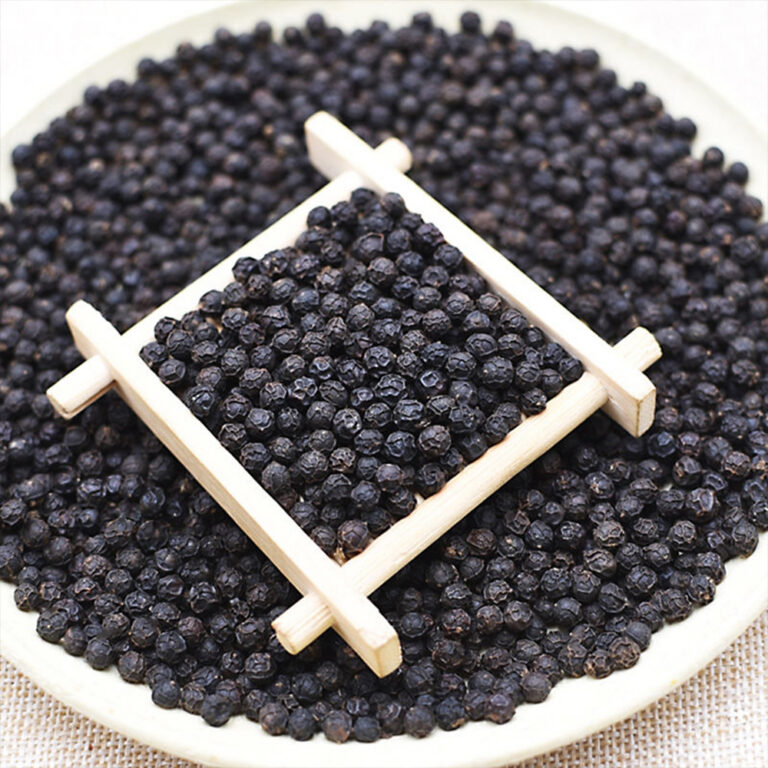
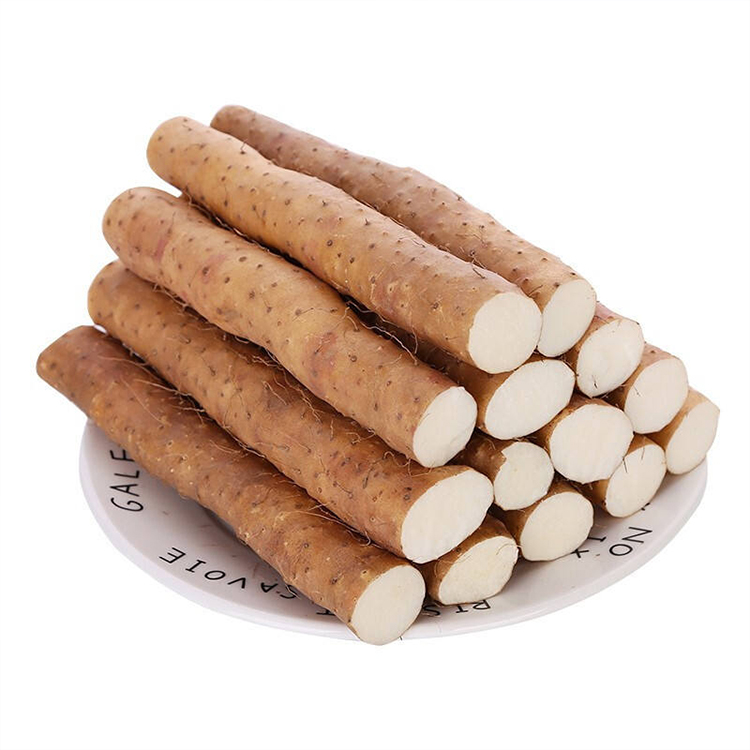
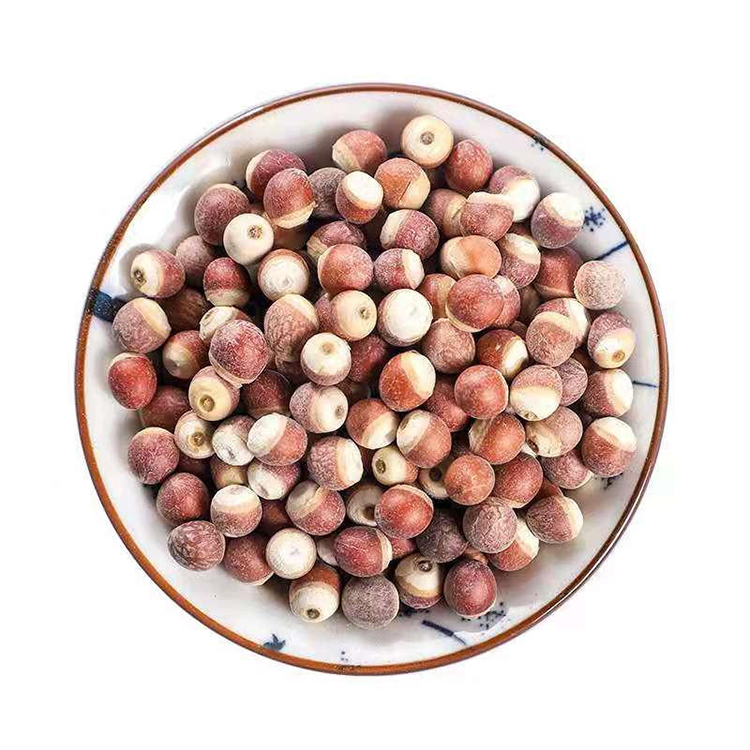
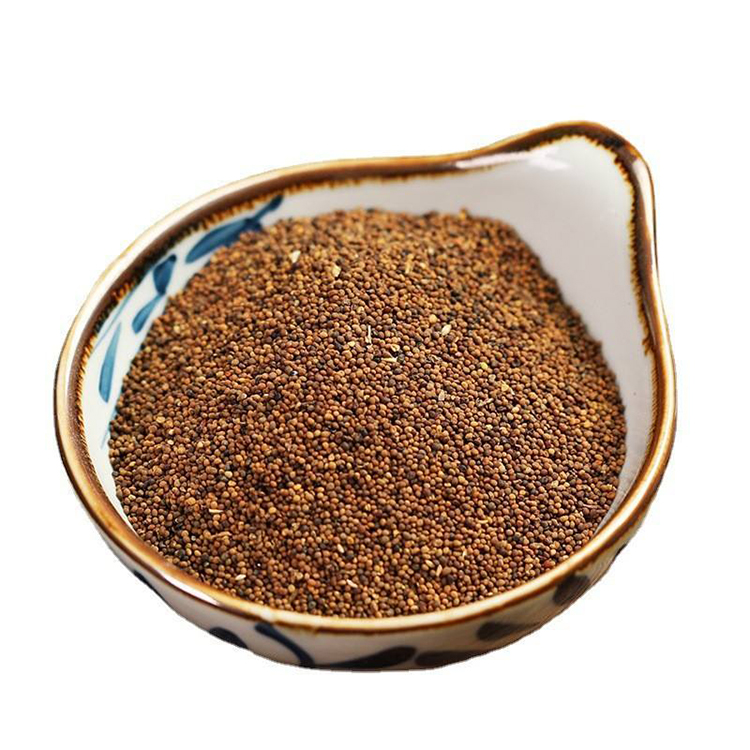
If your tea-bag cup looks clean, that’s not luck. You earned it with particle control.
If your cup looks like a snow globe, or the liquor turns hazy, or the co-packer starts yelling about dirty seals and hopper jams… that’s also not luck. It’s usually one thing: your cut size drifted, and your fines tail got out of hand. GuoCao calls this “fixing the line” mode, and it’s exactly what you want to avoid.
This piece is for brands and buyers who work with flowers & whole herbs and want fast brew + clear liquor + stable runs. I’ll keep it shop-floor, not textbook.
If you need the product base pages while you read, here are the relevant GuoCao sections:
Slice (Decoction Pieces), Tea-Cut / Cut & Sifted (C/S), Powder — which one to buy?
Most clarity fights start here. People pick the wrong form, then try to “filter harder” later.
GuoCao’s own buying guide says it plain: Tea-Cut / Cut & Sifted (C/S) is the sweet spot when you need speed and clarity for daily brews and teabags. Powder goes faster, but it comes with oxidation risk and more handling drama. Slices look beautiful and stay stable, but they brew slow.
Here’s the argument: If you want a clear tea-bag cup, start with the right cut family, then lock the size window. Don’t try to rescue a powdery blend with “hope and extra paper.”
Particle Size (Mesh) & Extraction Speed
This is the physics nobody wants to hear: smaller particles brew faster, because they have more surface area.
But clarity has enemies:
Ultra-fines that slip through the bag and show up as dust or haze.
Filter blinding (your bag or downstream filter clogs). In RTD this shows up as ΔP spikes and short runs.
Channeling in the tea bed (water finds one path, leaves half the bag under-extracted). Your cup tastes flat even when it looks strong.
So we don’t chase “fine.” We chase a controlled distribution.
GuoCao’s shop-floor rule is simple: target windows, not vibes.
Flower and Whole Herbs
Flowers and leafy whole herbs are the easiest materials to mess up in a teabag. Not because they’re “hard,” but because they’re fragile and fluffy.
On a line, that shows up as:
Bridging / rat-holing in hoppers when fines creep up.
Segregation in blending (fines sink, petals float). Your fill weights drift.
Dusty seals on packing machines. Then you get leakers and a messy day.
GuoCao calls out the same pain point in its tea-bag OEM timeline: too many fines can cause hopper jams and dirty seals.
If your main ingredients live in Flowers & Whole Herbs, you want to control the dust tail like your life depends on it. Because your customer’s first judgment is visual. They don’t sip first. They look first.
Tea Bag Cut (TBC) particle size and extraction speed
This is the core of the whole debate.
GuoCao’s grind guidance lays out a working band that covers most infusion projects:
Working band
What it’s good for
Clarity risk
2–5 mm cut
“Show leaf” blends, pyramid bags, slower steep
Usually clean, unless you add too much dust
1–2 mm TBC
Workhorse for sachets, quick take-off
Stable when fines are capped
~0.15–0.45 mm
Industrial extraction / RTD
Filter load climbs fast
<0.15 mm
Instant territory
Dusty, can go astringent and hazy
Those ranges above come straight from GuoCao’s OEM grind-size guidance.
Now the trick that saves a lot of projects:
Need speed without harsh? GuoCao suggests blending 80–90% of 1–2 mm with 10–20% fines as a starter. That little fines fraction jump-starts extraction while keeping the cup clean.
This is the part buyers often miss. They either go “all coarse” (weak at 3 minutes) or “all fine” (muddy cup and dusty line). A controlled blend sits in the middle.
Also, don’t ask a supplier “small or medium.” Ask for target cut range, plus fines control method (sieve curve / mesh distribution). GuoCao literally tells buyers to ask that way.
Pyramid tea bag mesh size (micron) and dust control
A clean cup isn’t only about the herb. It’s also about the bag.
Mesh opening decides how much powder sneaks out. GuoCao gives a practical range: ~90–200 μm for most pyramid nets, plus rules of thumb tied to cut size.
Cut size
Typical bag choice
Mesh / filter guidance
What goes wrong if you ignore it
2–5 mm
Pyramid bag
≥120 μm mesh
Slow brew if you over-tighten mesh
1–2 mm TBC
Flat sachet or pyramid
90–150 μm mesh
Dust leaks if mesh too open
<0.5 mm
Paper sachet / very tight mesh
Tight media
“Snow” in cup, cloudy pour
The numbers above are GuoCao’s own rule-of-thumb mapping.
This is also where flowers bite you. Petals shear. Leaves crumble. If your mesh is too open, you don’t get “rustic.” You get floating grit.
ISO 11286 sieve analysis for tea grades
If you want fewer arguments and fewer returns, write specs that can be measured.
GuoCao’s guidance is blunt: talk sieve cuts, not feelings. Here’s their example spec language: “>1.40 mm 70% min; 0.50–1.40 mm 25%±; pan <5%.”
That’s not fancy. It’s just a sieve stack and a COA line item. But it fixes three problems at once:
It caps fines (clarity + less dust).
It stabilizes extraction (taste stays steady).
It keeps the line calm (less jamming, less seal dirt).
When you lock the sieve profile into the COA, you stop debating “it looks different.” You point to data, and you move on. GuoCao says they do this by default because it saves back-and-forth.
Dust control and ATEX risk in herbal milling
Let’s say the quiet part out loud: super-fine herb dust plus dry air can be a safety risk. Not fun.
Even if you’re not running a full ATEX environment, dust still hurts you commercially:
It leaks into seals.
It makes bags look dirty.
It causes “snowy cup” complaints, even when the formula is good.
If your project needs a faster hit, you don’t automatically go smaller. Sometimes you go slightly coarser and fix the brew with:
a starter fines fraction (controlled),
higher temp,
a small steep-time tweak,
better agitation early, then gentle hold.
GuoCao lists these kinds of real fixes under its extraction section (D50 up a little, staged filtration, keep ΔP honest).
OEM QC: GMP, ISO 22000, COA, and lot traceability
Particle size control only works if your factory can repeat it.
GuoCao positions its OEM setup around GMP production lines, ISO 22000 food safety, and third-party COA testing. They also highlight ambient/cool/MAP warehousing, plus scale (2,500-ton capacity) and global shipping workflows (30+ regions).
For tea bags and functional drinks, this matters because flowers and whole herbs can drift lot-to-lot:
aroma oils vary,
brittleness changes,
fines generation changes during transport,
moisture swings make “same cut” behave different on a packing line.
So yeah, you want the herb. But you also want the process stack that keeps the herb behaving the same in January and July.
Where GuoCao fits your value chain
If you’re selling into pharma, supplement factories, beverage brands, hospitals, or distributors, your pain points look boring and repetitive:
stable lots,
clean paperwork,
a cut spec that stays put,
COAs that match,
and OEM/ODM that doesn’t turn into chaos.
GuoCao frames itself as a one-stop wholesale supplier and manufacturer across categories, with herbs “meticulously cut and sifted” for consistency. They also run a structured OEM/ODM flow (inquiry, prototype, pilot QC, full-scale).
Here’s the commercial bottom line, said in plain English: When your particle spec is clear, your brand looks cleaner. Your cup looks clearer. Your support inbox gets quieter. And your co-packer stops blaming the machine.
Our low MOQ of 1 kg (2.2 lb) makes it easy to order Chinese herbal slices or wholesale Chinese medicine herbs. Private-label and bilingual labeling are also available.
Delivery Cycle & Support
We have a fast 7-day lead time. We provide free samples, COA reports, and technical support to help you bring high-quality bulk Chinese herbs to market.
Quality & Certifications
Our products are manufactured in a GMP-certified facility and meet ISO22000 standards. All Chinese herbs are third-party tested for heavy metals, pesticides, and microorganisms.