Management of Price Fluctuations in Chinese Herbal Medicines
Most companies blame the market when Chinese herbal medicine prices jump. I do not. I blame weak specifications, lazy procurement habits, and a refusal to separate real supply risk from self-inflicted margin damage. Here is the hard-nosed framework that works.
Chinese herbal medicine prices do not move like a polite consumer category, because Huang Qi, Dang Shen, Bai Zhu, Dang Gui, Wu Wei Zi, and hundreds of other materials sit inside a messy chain of weather, grading, policy, freight, documentation, and buyer behavior, so the number on your purchase order usually changes long before the number on the retail shelf does.
And who pays for that delay?
I have watched too many buyers chase a 3% discount on paper and then lose 12% to 18% in the real world when moisture drifts, sulfur history is unclear, the batch record is thin, or the substitute lot arrives with a “close enough” grade that blows up QA after the vessel has already sailed. That is not volatility. That is management malpractice.
Retail calm can hide wholesale pain
Looks stable. Isn’t stable.
In June 2025, China’s National Bureau of Statistics showed the retail CPI category for traditional Chinese medicines at -0.1% year over year; by November 2025, that same category was -1.1% year over year, even while health-care services were rising, which tells me something procurement teams hate admitting: downstream pricing can look calm while upstream suppliers, traders, and importers are absorbing raw-material shocks that never fully pass through to end consumers. According to the June 2025 CPI release and the November 2025 CPI release, retail TCM pricing was soft, not explosive.
So what does that mean in plain English?
It means a buyer who thinks “the market is fine” because retail numbers look mild is probably staring at the wrong screen, because landed cost, replacement cost, rejected-batch cost, and delayed-shipment cost can all rise while shelf pricing stays muted for months, especially in channels where contracts or reimbursement systems slow price resets.
Table of Contents
Three cases that expose the real pricing mechanism
Case one: policy can compress volatility, but only if standards are tight
Policy matters. A lot.
According to the National Healthcare Security Administration’s January 2025 briefing, China’s nationwide alliance procurement for Chinese decoction pieces expanded from a 2023 Shandong-led model to a national program covering 45 commonly used varieties, including Astragalus (Huang Qi) and Codonopsis (Dang Shen), with combined demand from nearly 32,000 medical institutions totaling more than 97 million kilograms. I do not read that as a bureaucratic footnote. I read it as proof that when the state wants to flatten pricing chaos, it starts by standardizing grades, aligning demand, and forcing a common language around quality.
But here is the part nobody likes.
Centralized procurement can steady expectations only when the grade definitions are real, the quality tiers are defensible, and the supplier can hold batch consistency across regions; otherwise, “stable price” becomes a cosmetic number hiding unstable material, which is worse than open volatility because it destroys trust slowly and expensively. The NHSA itself said regional differences in quality grades and processing norms had to be addressed to make the model workable.
Case two: the Chinese medicinal materials price index only matters if it reaches the batch
Indexes help. Alone, they fail.
When the Ministry of Agriculture publicized the China·Anguo Chinese Medicinal Materials Index, it described not just a price index but six sub-indices covering price, quality, planting, market prosperity, industry development, and influence, which is the right instinct because herbal pricing is never only about price; it is about whether the batch can be trusted, replaced, graded, and audited without a fight.
And then the idea got more interesting.
A 2026 National Bureau of Statistics feature on Anguo described buyers scanning QR codes to view origin, sulfur dioxide residue, and pesticide residue information, and said Anguo added 102 fresh-cut processing enterprises in 2025, including 59 pharmaceutical manufacturers, which is the kind of boring infrastructure I actually trust because it ties price discovery to traceability instead of rumor. That, to me, is what a serious Chinese medicinal materials price index should feed: procurement triggers, not conference speeches.
Case three: tariffs and climate do not stay “someone else’s problem”
Trade bites. Weather bites harder.
Reuters reported in April 2025 that prices for imported goods from China, including traditional Chinese medicine, were already rising in U.S. Chinatowns as tariff pressure intensified, while Reuters also reported that natural disasters across China in the first half of 2025 caused 54.11 billion yuan in direct economic losses and damaged 2.19 million hectares of crops. No, those reports are not herb-specific price sheets. Yes, they are still the kind of upstream shock data smart herbal buyers ignore at their own risk.
Need it even more specific?
An industry supply-chain update from Mayway Herbs in March 2025 warned that premium Chinese herbs were likely to face higher prices and possible sourcing pressure in the U.S., explicitly naming Astragalus (Huang Qi), Codonopsis (Dang Shen), and Atractylodes (Bai Zhu) as examples. I would not use that source alone. I would use it exactly as it should be used: as ground-level commercial confirmation that policy, tariffs, and supply strain were already hitting actual buying decisions.
What actually moves Chinese herbal medicine prices
Here is the mechanism.
Driver
What the data shows
What buyers usually get wrong
What smart management does
Procurement policy
National alliance buying reached 45 varieties and 97+ million kg of demand across ~32,000 institutions in China.
They assume policy stabilizes everything. It does not. It stabilizes only what has standardized grades.
Write grade-linked contracts and define acceptable substitutes before tender pressure hits.
Retail pass-through
Retail traditional Chinese medicines were -0.1% YoY in June 2025 and -1.1% YoY in November 2025.
They think soft retail pricing means raw-material volatility is over.
Track wholesale replacement cost and rejection cost separately from retail reference pricing.
Climate and logistics
China reported 54.11 billion yuan in H1 2025 disaster losses and 2.19 million hectares of crop damage.
They treat weather shocks as abstract macro news.
Add crop-region monitoring, buffer stock, and route-specific lead-time assumptions to sourcing plans.
Export friction
Reuters reported rising U.S. prices for imported Chinese goods including TCM during the 2025 tariff push.
They negotiate ex-factory price and ignore tariff pass-through.
Model landed cost, duty exposure, and shelf-life loss together before approving a purchase.
Indexes and traceability
Anguo’s index framework tracks price, quality, planting, prosperity, industry development, and influence, while local digitization exposed origin and SO₂ / pesticide residue via QR-linked data.
They use indexes as commentary instead of operating tools.
Tie internal purchase triggers to batch data, not just market headlines.
Most price volatility starts in the spec sheet, not the field
This is the fight.
Most companies do not have a price problem first; they have a specification problem wearing a price costume, because once the lot lacks hard language on moisture, cut size, grade, sulfur treatment, pesticide panel, micro limits, Pb/Cd/As/Hg reporting, or replacement rules, the supplier has room to “solve” cost pressure with a different batch that looks acceptable until it is not. And once that happens, the buyer has already lost leverage. For readers who need the compliance side laid out clearly, the site’s quality standards for Chinese herbal slices in international markets is one of the right internal pages to reference, because it maps the real buyer vocabulary around WHO/EMA GACP, Ph. Eur. pesticide expectations, metals, storage, and sulfite disclosure.
So where would I send a serious procurement reader next?
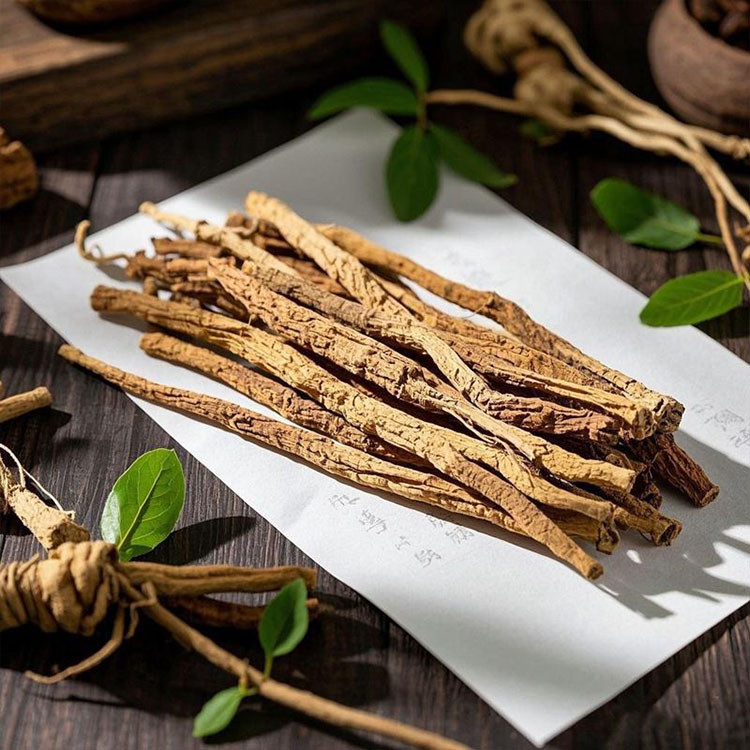
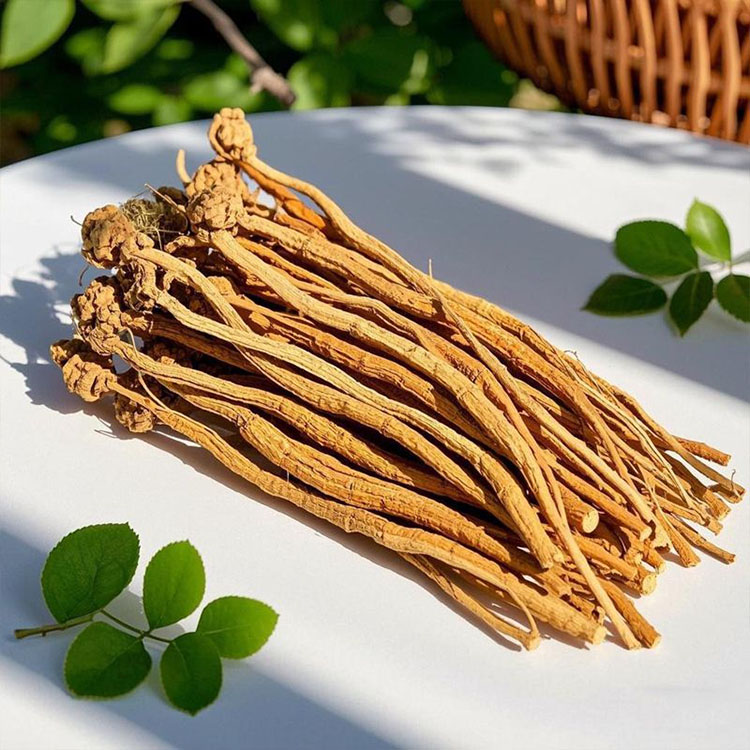
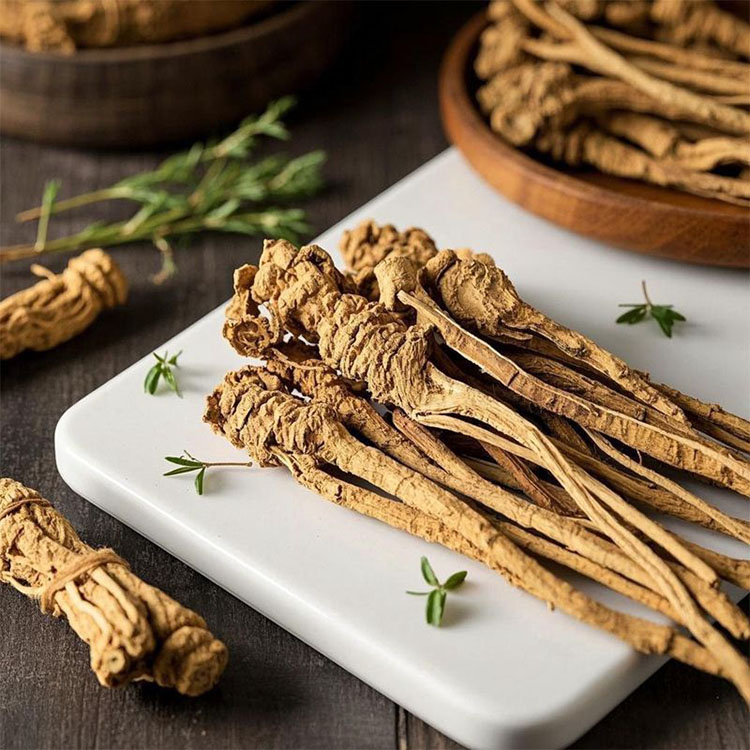
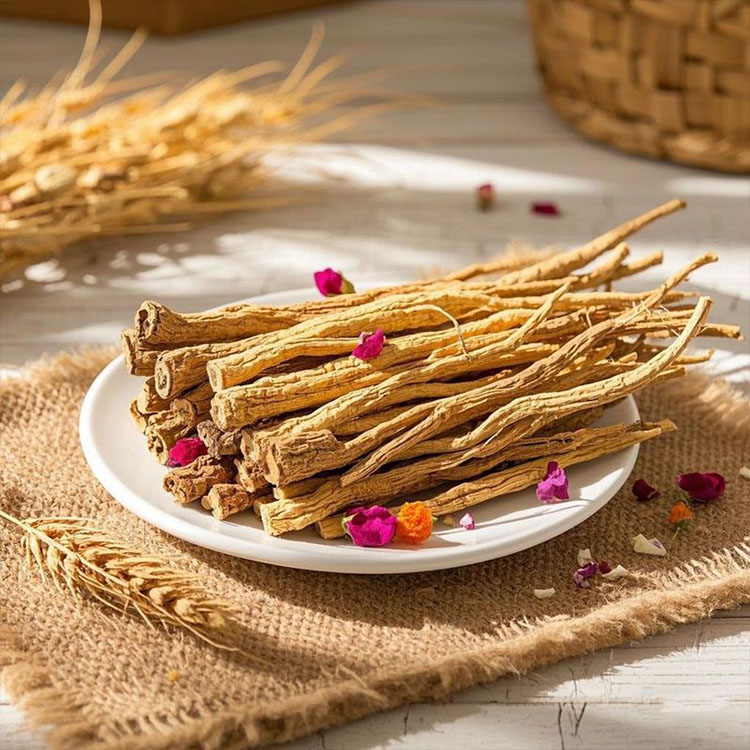
I would send root-heavy buyers toward the site’s root and rhizome Chinese medicines section, because that is where high-impact staples such as Astragalus Root (Huang Qi), Angelica Root (Dang Gui), Atractylodes, and Bupleurum Root (Chai Hu) show up, and those are exactly the kinds of items that can wreck a budget when the buyer confuses “same herb name” with “same commercial grade.”
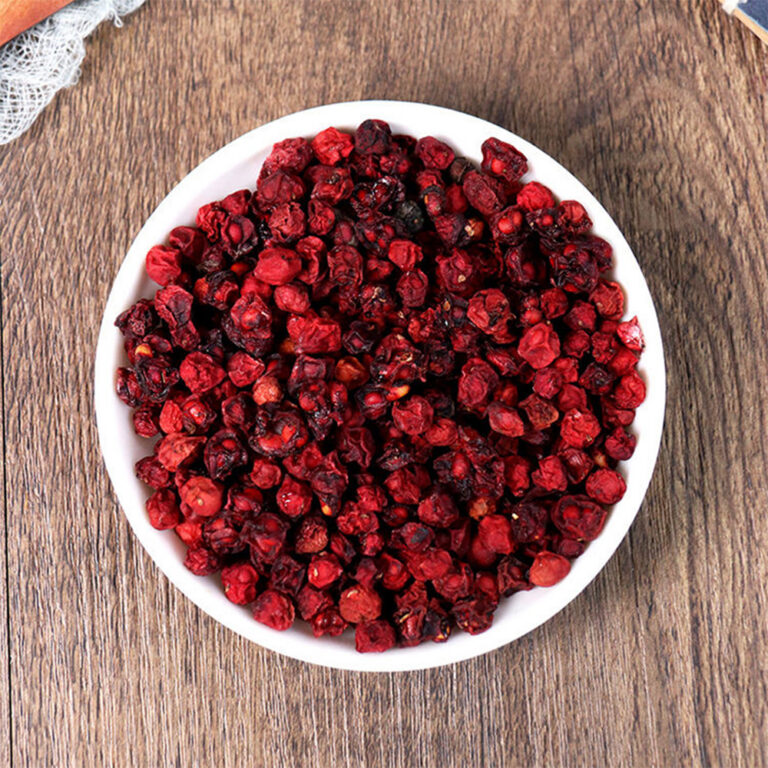
And I would send seasonal or consumer-facing product teams to fruit and seed Chinese medicines, because that bucket includes Goji Berry, Cassia Seed, Monk Fruit, and Schisandra, and the page explicitly ties supply management to year-round availability, origin-farm coordination, and storage control instead of pretending every harvest behaves the same way.
The management model I trust when Chinese herbal medicine prices swing
Start with category risk, not supplier loyalty
Suppliers matter. Categories matter more.
Roots and rhizomes, fruit-and-seed materials, fresh-cut lots, and export-sensitive premium grades do not deserve the same replenishment logic, because each class carries different exposure to storage drift, harvest timing, policy buying, and audit burden, so a single “approved vendor list” is usually a lazy proxy for real risk management. That is why I segment top-spend herbs first by botanical and commercial behavior, then by supplier.
Put a price collar around a measurable specification
Write it down.
A good contract does not say “premium quality.” A good contract says moisture band, cut format, origin, sulfur status, contaminant limits, testing method, reinspection rights, substitute-grade rules, and what happens when a batch misses one parameter but passes the rest. The site’s bulk Chinese medicinal contract writing guide is relevant here because it frames the commercial side in the same sentence as lead time, testing, and documentation, which is exactly how grown-up buyers should work.
Build your own Chinese medicinal materials price index
Do not outsource judgment.
The public Anguo Chinese medicinal materials index is useful, but I would still build an internal index with four live components: raw quote, freight, rejection rate, and replacement lead time, because the official price number does not tell you what it costs when the first lot fails micro, when the second lot arrives two weeks late, or when the only clean substitute is one grade higher.
Carry strategic stock only where the math works
Inventory lies too.
I am not arguing for blanket stockpiling, because that is how old herbs become new write-offs, but I am arguing for selective buffer stock in clinically common, contract-sensitive items where requalification is fast and the cost of stockout is higher than the cost of carry, especially when policy procurement or freight shocks hit at the same time. The NHSA’s emphasis on common-use varieties should have been a warning to every exporter and private buyer who still relies on just-in-time optimism.
FAQs
What causes price fluctuations in Chinese herbal medicines?
Price fluctuations in Chinese herbal medicines are the repeated rises and falls in raw-material and decoction-piece costs caused by harvest timing, weather damage, grade differences, procurement policy, export friction, and weak batch discipline, all of which change supply confidence, replacement cost, and the final landed cost of each lot. In practice, the biggest mistake is blaming “the market” when the real issue is a loose spec sheet and poor batch traceability.
What is a Chinese medicinal materials price index?
A Chinese medicinal materials price index is a structured market indicator that tracks the movement of herbal-material pricing and related commercial signals, often alongside quality and production variables, so buyers can monitor market direction instead of guessing from anecdotal trader quotes and scattered batch offers. The Anguo model is useful because it was designed with multiple sub-indices rather than a single headline number, which is a smarter way to read herbal volatility.
How do you manage price fluctuations in Chinese herbal medicines without cutting quality?
Managing price fluctuations in Chinese herbal medicines without cutting quality means fixing the measurable variables first—origin, grade, moisture, SO₂ status, contaminant limits, acceptable substitutions, lead time, and reinspection rights—so procurement decisions are driven by controlled specifications rather than panic discounts or vague promises. That is the difference between buying a batch and buying an argument. And yes, most companies still buy the argument.
Why can Chinese herbal medicine prices feel volatile when retail numbers look quiet?
Chinese herbal medicine prices can feel volatile while retail numbers look quiet because consumer pricing adjusts slowly, while wholesale quotes, freight, rejected lots, tariffs, and replacement batches move faster, which creates a lag where importers and manufacturers absorb pain before the shelf price reflects it. That lag is exactly what the 2025 CPI-versus-supply-chain picture exposed.
Our low MOQ of 1 kg (2.2 lb) makes it easy to order Chinese herbal slices or wholesale Chinese medicine herbs. Private-label and bilingual labeling are also available.
Delivery Cycle & Support
We have a fast 7-day lead time. We provide free samples, COA reports, and technical support to help you bring high-quality bulk Chinese herbs to market.
Quality & Certifications
Our products are manufactured in a GMP-certified facility and meet ISO22000 standards. All Chinese herbs are third-party tested for heavy metals, pesticides, and microorganisms.