Bupleurum Root Sourcing: How Buyers Compare Origins and Specifications
Bupleurum root buyers are often sold an origin story when they actually need a controlled specification. This procurement guide compares Bupleurum chinense and Bupleurum scorzonerifolium, explains meaningful test data, and shows how to qualify suppliers without trusting a generic COA.
Not every time, obviously, but often enough that I refuse to treat “premium Gansu Chai Hu,” “wild northern Bupleurum,” or “pharmacopoeial quality” as useful procurement information until a supplier connects those words to a botanical identity, a traceable lot, an analytical method, and actual numerical results.
That sounds severe. It is.
Bupleurum root sourcing is not a contest to find the province with the best reputation. It is the process of deciding which species, origin, physical form, chemical profile, contaminant limits, processing history, and documentation package fit the buyer’s market.
And the uncomfortable question is simple: are you buying Bupleuri Radix, or are you buying a persuasive story printed beside a photograph of brown roots?
The Origin Label Is Not a Specification
“Origin” can mean at least five different things in the Bupleurum trade:
The province where the plant was cultivated
The location where wild material was collected
The warehouse where several lots were consolidated
The factory where the roots were sliced
The port or trading company shown on the export documents
Those are not interchangeable.
A shipment described as Gansu origin may contain material cultivated in one county, purchased through two collectors, dried at several sites, combined by an intermediary, and cut in another province. The commercial invoice can still look immaculate. The roots may still look convincing.
Paper behaves beautifully.
For a serious Bupleurum root origin claim, I want the supplier to state the Latin binomial, medicinal plant part, cultivation or collection status, province, county where available, harvest year, drying site, processing facility, supplier lot number, and whether the lot was blended with material from another farm or production area.
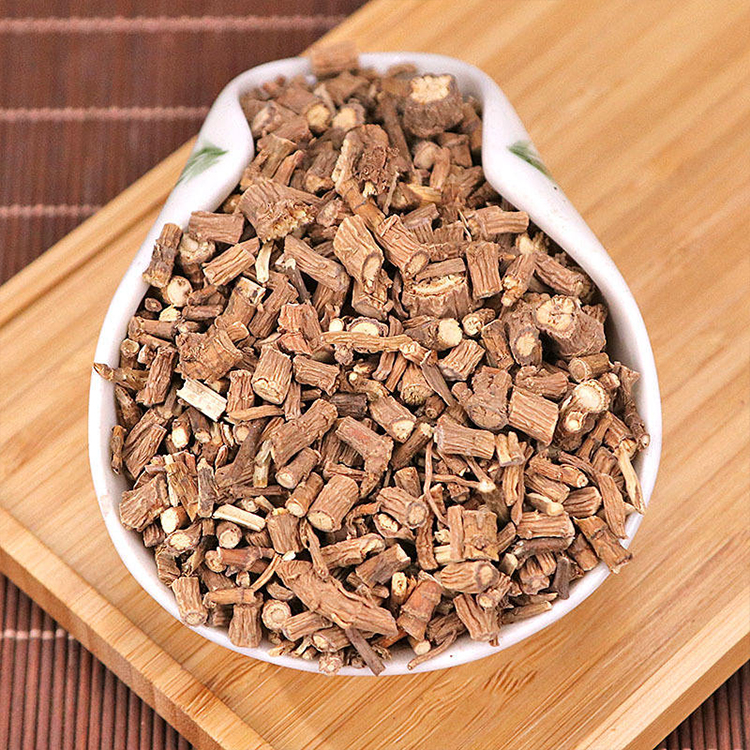
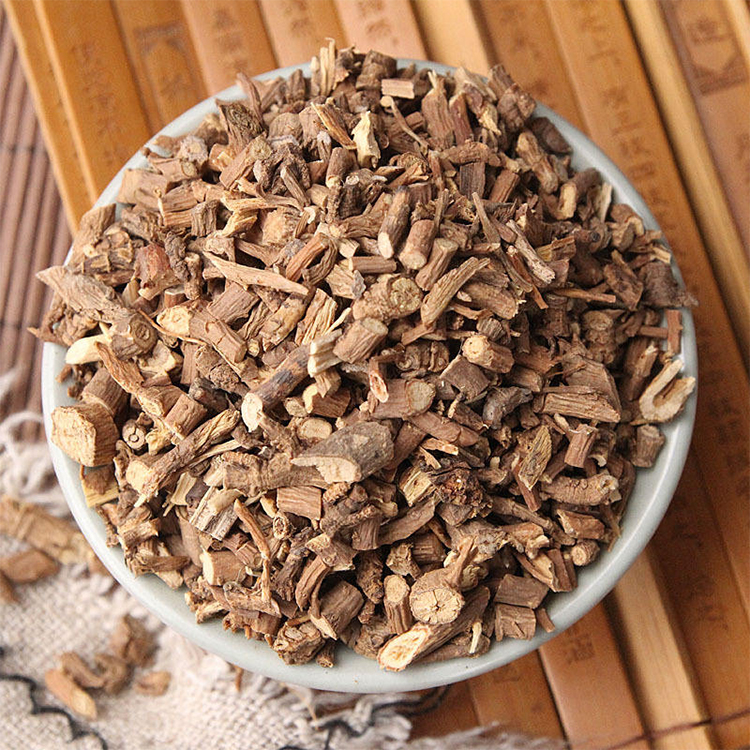
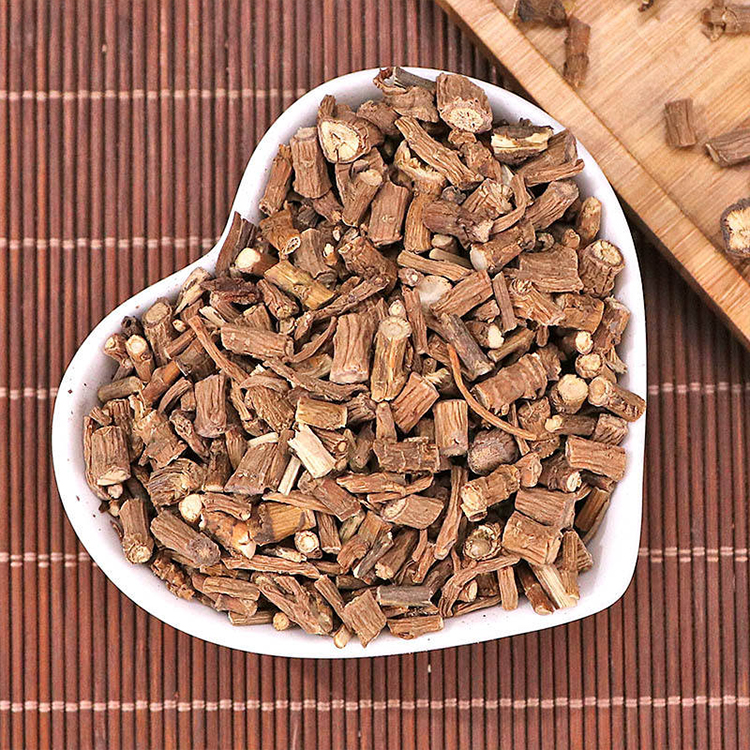
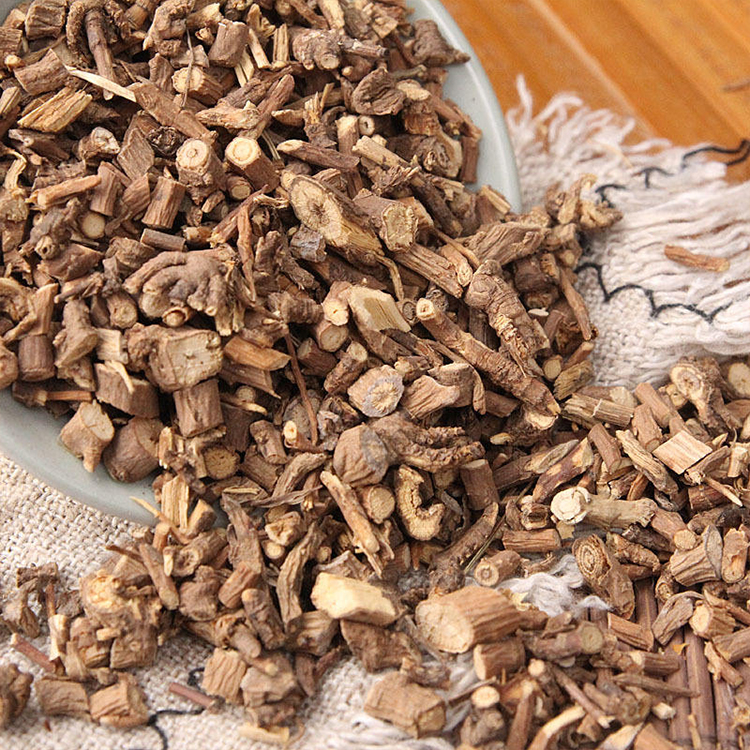
The product should also match the commercial description. A buyer considering bulk Bupleurum Root, Chai Hu blocks should confirm whether the quoted material is whole root, blocks, longitudinal slices, transverse slices, granules, or powder. Processing form affects identity testing, moisture behavior, extraction performance, foreign-matter detection, and the usefulness of DNA analysis.
Tiny detail? No.
A 2–4 mm slice, a 5–10 mm block, and a fine powder are technically the same botanical only when identity has already been secured. From the buyer’s side, they are three different inspection problems.
What an origin declaration should contain
At minimum, I would require:
Full botanical name with author citation
Declared species and accepted pharmacopoeial source
Plant part: dried root, not vague “Bupleurum material”
Country, province, and production county where available
Cultivated or wild-collected status
Harvest month or season and harvest year
Initial drying method and drying temperature range
Any sulfur fumigation or post-harvest treatment
Consolidation and lot-blending history
Processing-facility name and batch code
Traceability from finished lot back to source records
Buyers can use the site’s broader root and rhizome medicinal category to compare how Bupleurum sits beside other soil-contact materials. That classification matters because roots commonly require focused controls for soil, stones, elemental contaminants, pesticide residues, moisture, mold, and microbial load.
Origin is evidence only when it is traceable.
Table of Contents
Bupleurum chinense vs. Bupleurum scorzonerifolium: The Difference Is Commercial
The 2020 Chinese Pharmacopoeia recognizes the dried roots of Bupleurum chinense DC. and Bupleurum scorzonerifolium Willd. as sources of Bupleuri Radix. Traders commonly associate them with Bei Chai Hu and Nan Chai Hu, respectively.
That does not make them identical.
A 2022 metabolomics study published in Frontiers in Plant Science detected 1,818 metabolites across 25 classes in roots, stems, leaves, and flowers of the two species. The researchers reported higher triterpenoid saponin content in the B. chinense root group than in the B. scorzonerifolium root group.
Then the numbers became harder to ignore.
A separate 2022 Scientific Reports study found that saikosaponin a and saikosaponin d were 3.51-fold and 2.74-fold higher, respectively, in one tested B. chinense cultivar than in the studied B. scorzonerifolium material. The same research found 163 differential metabolites between two B. chinense cultivars.
Read that again.
Variation existed not only between species but also within the same species. So a buyer who specifies “Bupleurum chinense” and stops there has completed botanical naming, not quality qualification.
The researchers grew the compared germplasm under common conditions to reduce environmental noise. Their findings should not be converted into a universal claim that every B. chinense lot contains exactly 3.51 times more saikosaponin a than every B. scorzonerifolium lot. That would be bad science and worse purchasing.
The correct conclusion is narrower: species and cultivar can materially change the chemical profile, so commercial lots require batch-specific testing.
Buyer comparison point
Bupleurum chinense DC.
Bupleurum scorzonerifolium Willd.
Common trade distinction
Often sold as Bei Chai Hu
Often sold as Nan Chai Hu
Chinese Pharmacopoeia 2020 status
Recognized source of Bupleuri Radix
Recognized source of Bupleuri Radix
Production areas discussed in published research
Commonly associated with Shanxi, Gansu, Hebei, and Henan
Commercial cultivation discussed particularly in Heilongjiang
Saikosaponin finding in the cited controlled study
Higher SSa and SSd in the tested cultivar comparison
Lower SSa and SSd in that specific comparison
Other metabolite pattern
Lower abundance of several compared flavonoids
Higher abundance of several compared flavonoids
Main sourcing danger
Treating every cultivar and province as chemically equivalent
Buying under a generic Chai Hu name without confirming species
Best purchasing approach
Confirm identity, origin, cultivar records where possible, and assay data
Confirm identity separately and agree on a species-specific reference sample
Can the two be substituted automatically?
No
No
There is no universally “best” Bupleurum root origin
Here is my unpopular view: the phrase “best Bupleurum root origin” is usually SEO language before it is procurement language.
Shanxi may have a respected history. Gansu may have a strong supply base. Hebei, Henan, Heilongjiang, and other producing areas may offer commercially suitable material. None of those names overrides the batch data.
A famous county can ship a weak lot.
A less celebrated production area can ship excellent, correctly identified material with controlled moisture, clean residues, consistent slices, and a defensible assay. Buyers who automatically pay for the famous name are sometimes paying an origin premium without receiving an analytical premium.
Ask for both.
The Bupleurum Root Specifications I Would Put in the Contract
A specification is not a product brochure. It is a release agreement.
It tells the supplier what must be true before the buyer accepts the lot, identifies how each requirement will be measured, and prevents arguments after the container arrives. The site’s guide to international quality standards for Chinese herbal slices is a useful starting point because it distinguishes identity, contaminants, microbiology, storage, and market-specific compliance.
But generic standards still need to become SKU-level limits.
1. Botanical identity
Write the species in full. Do not accept “Chai Hu,” “Bupleurum,” or “Bupleuri Radix” without the underlying binomial.
An identity package can combine:
Macroscopic examination
Microscopic examination
Thin-layer chromatography or HPTLC
HPLC or UPLC fingerprinting
Reference-standard comparison
DNA barcoding where suitable genetic material remains
For a sliced root, orthogonal testing is stronger than one isolated method. Macro and microscopy examine anatomical characters. Chromatography evaluates chemical identity. DNA can support species confirmation, especially earlier in the supply chain.
One result should challenge another.
2. Saikosaponin profile
Saikosaponins are oleanane-type triterpenoid saponins used as important chemical markers in Bupleurum research and quality evaluation. Saikosaponin a has the molecular formula C₄₂H₆₈O₁₃.
Do not accept a COA line that says only “saikosaponins: conforms.”
Require the document to identify:
Which compounds were measured
Whether the result covers saikosaponin a, saikosaponin d, or their combined content
Extraction procedure
HPLC or UPLC method reference
Reference-standard source and purity
Result in percentage, mg/g, or another defined unit
Specification limit
Chromatogram availability
Test laboratory and test date
And do not confuse a marker assay with total quality. A high saikosaponin result does not erase pesticide residues, excess cadmium, poor identity, mold, sulfur treatment, or unstable moisture.
Chemistry is one gate.
3. Moisture and drying history
Moisture is not cosmetic. It affects net weight, microbial stability, storage behavior, odor, texture, and extraction consistency.
The purchase specification should state an actual limit, such as “not more than X%,” selected according to the applicable monograph, buyer process, packaging, and destination market. Do not copy a number from another root merely because both materials are brown and dry.
Require the supplier to state:
Test method
Sampling date
Drying method
Storage relative humidity where controlled
Whether testing occurred before or after slicing
Actual result, not “pass”
A lot measured at 9.2% moisture before sitting for six weeks in a humid warehouse is not automatically a 9.2% lot at loading.
Test close to shipment.
4. Foreign matter and physical grade
Define the physical form in measurable terms:
Whole root, blocks, slices, or powder
Slice thickness or particle-size range
Maximum percentage outside the agreed size
Maximum foreign matter
Maximum soil, stone, stem, or non-root material
Color and odor reference
Insect-damage tolerance
Mold: absent
Live insects: absent
I would also approve a retained “golden sample” before the first commercial order. Photographs are not enough; lighting can turn mediocre roots into cinema.
The sample should be sealed, dated, signed by both parties, and linked to the written specification.
5. Elemental contaminants
At a minimum, buyers commonly examine lead (Pb), cadmium (Cd), arsenic (As), and mercury (Hg), using a method such as ICP-MS where appropriate.
The warning is real. On November 2, 2021, the FDA posted a recall of Angelicae Sinensis because of elevated lead and cadmium. That recall concerned another root, not Bupleurum, but the procurement lesson transfers cleanly: soil-contact botanicals do not become safe because a supplier writes “natural” on the bag.
Specify limits by destination and intended daily exposure. A limit copied from a raw-food standard may not fit a concentrated extract, capsule, decoction piece, or medicinal product.
6. Pesticide residues
A useful pesticide specification states:
Regulatory reference
Analytical panel
LC-MS/MS and GC-MS/MS scope
Reporting limits
Actual detected values
Pass/fail limit for every detected analyte
Laboratory accreditation status
Sampling plan
“Pesticides: negative” tells me almost nothing.
Negative against which panel? At what limit of quantification? Using what method? Was the sample drawn from the shipment, a pre-shipment composite, or an unrelated production lot?
Ask until the answer becomes inconveniently specific.
7. Sulfur dioxide and fumigation history
Bupleurum root can look brighter and store differently after sulfur treatment. Buyers should demand a written declaration covering sulfur fumigation and other post-harvest treatments, supported by an SO₂ result where relevant.
The contract should not rely on “sulfur-free” as a marketing phrase. It should define the method, reporting unit, specification, and action if the result exceeds the agreed limit.
No ambiguity.
8. Microbiology and mycotoxins
Depending on the market and intended use, the specification may cover:
Total aerobic microbial count
Total yeast and mold count
Escherichia coli
Salmonella
Other specified organisms
Aflatoxin B₁
Total aflatoxins B₁, B₂, G₁, and G₂
The test plan should reflect the finished use. Material entering a validated heat process presents a different downstream risk from slices packed directly for consumer decoction, but upstream negligence is not excused by somebody else’s kill step.
A buyer-ready specification matrix
Specification field
Weak supplier wording
Buyer-ready requirement
Identity
Chai Hu, conforms
Full Latin binomial, dried root, macro/micro plus chromatographic identity
Origin
China or Gansu
Province, county where available, farm or collector record, harvest year
Assay
Saikosaponins passed
Named analytes, method, unit, limit, actual numerical result
COAs, DNA Testing, and the Evidence Buyers Misread
A COA can be technically genuine and commercially useless.
It may belong to another lot. It may show only specification limits without actual results. It may omit analytical methods. It may have been generated by the supplier rather than an independent laboratory. It may test raw root even though the buyer receives processed slices.
So I compare five identifiers before reading the chemistry:
Product name
Latin binomial
Supplier lot number
Sample or laboratory number
Manufacturing and test dates
If those identifiers do not connect, the rest of the document is decoration.
U.S. buyers cannot outsource identity responsibility to a PDF
Under 21 CFR 111.75, a dietary supplement manufacturer must conduct at least one appropriate test or examination to verify the identity of a component that is a dietary ingredient, unless a specific exemption applies.
That matters because many buyers talk as though the supplier’s COA transfers responsibility. It does not.
The FDA made this painfully concrete in an April 7, 2023 warning letter to Sun Ten Laboratories. The agency cited failures involving specifications for identity, purity, strength, and composition, along with the requirement to verify dietary-ingredient identity before use.
This was not a theoretical conference presentation. It was an enforcement document involving a company handling Chinese herbal formulas.
DNA is useful, but DNA absolutism is sloppy
The herbal industry has already watched this argument explode in public.
A 2016 New York Attorney General agreement documented the investigation that followed DNA barcoding of herbal supplements sold by major retailers. The agreement also noted that FDA does not mandate DNA-based authentication and permits scientifically valid approaches, including chemical profiling.
That distinction matters for Bupleurum.
DNA can be valuable for raw roots and early-stage botanical materials. But drying, slicing, heating, irradiation, extraction, and prolonged storage can reduce recoverable DNA. A DNA “no match” in processed material does not automatically prove substitution, while a DNA match does not establish saikosaponin content, contaminant compliance, moisture, or commercial grade.
Use multiple methods.
I would rather see a coherent package of morphology, microscopy, HPTLC, an HPLC fingerprint, assay data, and traceability than one glamorous DNA certificate attached to an otherwise anonymous bag.
Supplier Qualification Is More Important Than Supplier Promises
Most Bupleurum root suppliers can produce a sample.
The better question is whether they can reproduce it.
I would not qualify a new Bupleurum root supplier from one sample.
I would request two independently produced lots, preferably harvested or processed at different times, and compare:
Species identity
Slice distribution
Odor and color
Moisture
Foreign matter
Saikosaponin results
Chromatographic fingerprints
Metals
Pesticides
Microbiology
Document structure
Response to deviations
The second lot is where the supplier’s system appears.
A beautiful first sample may have been hand-selected by management. A routine second lot reveals normal operations.
FSVP changes the conversation for U.S. importers
The FDA’s Foreign Supplier Verification Programs rule requires covered importers to evaluate foreseeable hazards, supplier performance, testing history, audits, compliance records, warning letters, and import alerts.
The FDA also states that the food and foreign supplier generally must be reevaluated at least every three years, or sooner when new hazard or supplier-performance information emerges.
In other words, approval is not permanent.
Supplier qualification should include:
Legal manufacturer identity
Facility address
Business and export licenses
Quality-system scope
Recent audit evidence
Laboratory capabilities
Subcontracted processing disclosure
Recall and complaint procedure
Change-notification agreement
Deviation and CAPA records
Traceability exercise
Retain-sample policy
Ask who physically touched the root.
A trading company may be commercially competent, but buyers should know whether cultivation, drying, slicing, testing, packing, and export documentation occur under one controlled system or six loosely connected businesses.
Price Per Kilogram Is the Wrong Number
Cheap root gets expensive quickly.
Consider a hypothetical 5,000 kg order. A supplier offering an $0.80-per-kilogram discount appears to save $4,000. That saving disappears if the buyer pays for repeat testing, relabeling, warehouse holds, sorting, re-export, destruction, customer credits, or an emergency replacement shipment.
The honest purchasing equation is:
Qualified landed cost per released kilogram = purchase price + freight + testing + inspection + delay cost + rework + rejected material + claims, divided by released kilograms
This is why I care more about repeatability than a heroic first quotation.
A supplier charging more for segregated species, batch-specific HPLC data, controlled drying, third-party contaminant testing, and change notification may be the lower-cost supplier after risk is included.
But buyers should verify every premium.
Do not pay extra merely because the quotation contains the words “wild,” “geo-authentic,” “organic,” “premium,” or “pharmacopoeial.” Ask what measurable requirement the premium buys.
How I Would Approve a Bupleurum Root Lot
My release sequence would be blunt:
Step 1: Freeze the intended use
Define whether the material is for decoction pieces, tea, extraction, capsules, granulation, clinical dispensing, food, or another regulated route.
Step 2: Freeze the species
State Bupleurum chinense, Bupleurum scorzonerifolium, or another legally accepted species for the destination market. Never leave the botanical source open.
Keep a representative sample and compare results across future shipments. One result releases a lot; trend data qualifies a supply relationship.
That is the difference.
FAQs
What is Bupleurum root sourcing?
Bupleurum root sourcing is the process of qualifying the botanical species, growing origin, harvest lot, processing history, chemical profile, contaminant status, and supplier documentation before purchasing Bupleuri Radix for manufacturing, wholesale, clinical dispensing, or export, rather than choosing material by price, color, or a generic certificate of analysis alone.
Professional sourcing normally includes supplier qualification, sample comparison, botanical authentication, specification approval, contaminant testing, contract controls, shipment inspection, and retain-sample review. The objective is not simply to receive roots. It is to receive the same approved material repeatedly.
What is the best Bupleurum root origin?
The best Bupleurum root origin is the one that consistently delivers the declared pharmacopoeial species, target saikosaponin profile, acceptable contaminant results, stable physical specifications, and complete traceability for the buyer’s destination market; no province or regional name is automatically superior without batch-level evidence.
Shanxi, Gansu, Hebei, Henan, Heilongjiang, and other production areas can differ in species availability, cultivation, climate, drying, processing, and commercial reputation. Buyers should evaluate the lot rather than treating the province as a substitute for testing.
What is the difference between Bupleurum chinense and Bupleurum scorzonerifolium?
Bupleurum chinense and Bupleurum scorzonerifolium are two pharmacopoeial sources of Bupleuri Radix in the 2020 Chinese Pharmacopoeia, but they are not commercially interchangeable by default because published metabolomics studies show meaningful differences in saikosaponins, flavonoids, volatile constituents, and even variation between cultivars of the same species.
The purchase contract should name the required species. Buyers should then verify it using suitable botanical and chemical methods, because the trade name Chai Hu alone does not communicate the species or expected chemical profile.
What should a Bupleurum root COA include?
A Bupleurum root COA should report the batch identity, Latin binomial, plant part, origin, test date, methods, actual numerical results, specification limits, laboratory name, and approval status for identity, moisture, foreign matter, saikosaponins, pesticide residues, elemental contaminants, sulfur dioxide, aflatoxins, and microbiological quality.
A useful COA must correspond to the shipped batch. “Conforms” should not replace numerical results where quantitative testing is performed, and the buyer should request chromatograms, raw laboratory reports, or method references for higher-risk or higher-value orders.
Is DNA testing enough to authenticate Bupleurum root?
DNA testing is a supporting botanical identity tool that can distinguish species when usable genetic material remains, but it should not stand alone for processed Bupleurum root because drying, slicing, heating, extraction, and irradiation can degrade DNA; serious buyers combine it with macroscopic, microscopic, chromatographic, and chemical methods.
DNA also does not measure saikosaponins, heavy metals, pesticides, sulfur dioxide, moisture, microbes, or physical grade. Authentication should answer both “What species is this?” and “Does this commercial lot meet the agreed quality and safety specification?”
Your Next Step: Qualify the Lot Before You Negotiate the Price
Do not begin your next Bupleurum root inquiry with “What is your best price?”
Send a written specification.
Ask the supplier to identify the exact species, production county, harvest year, processing form, lot number, saikosaponin method, contaminant panel, sulfur history, traceability records, and sample availability. Request two representative lots rather than one showroom sample.
Then compare the evidence.
For a commercial quote, begin with the Bupleurum Root wholesale product page and attach your target specification to the inquiry. Make the supplier respond to measurable requirements before price negotiations begin.
Our low MOQ of 1 kg (2.2 lb) makes it easy to order Chinese herbal slices or wholesale Chinese medicine herbs. Private-label and bilingual labeling are also available.
Delivery Cycle & Support
We have a fast 7-day lead time. We provide free samples, COA reports, and technical support to help you bring high-quality bulk Chinese herbs to market.
Quality & Certifications
Our products are manufactured in a GMP-certified facility and meet ISO22000 standards. All Chinese herbs are third-party tested for heavy metals, pesticides, and microorganisms.