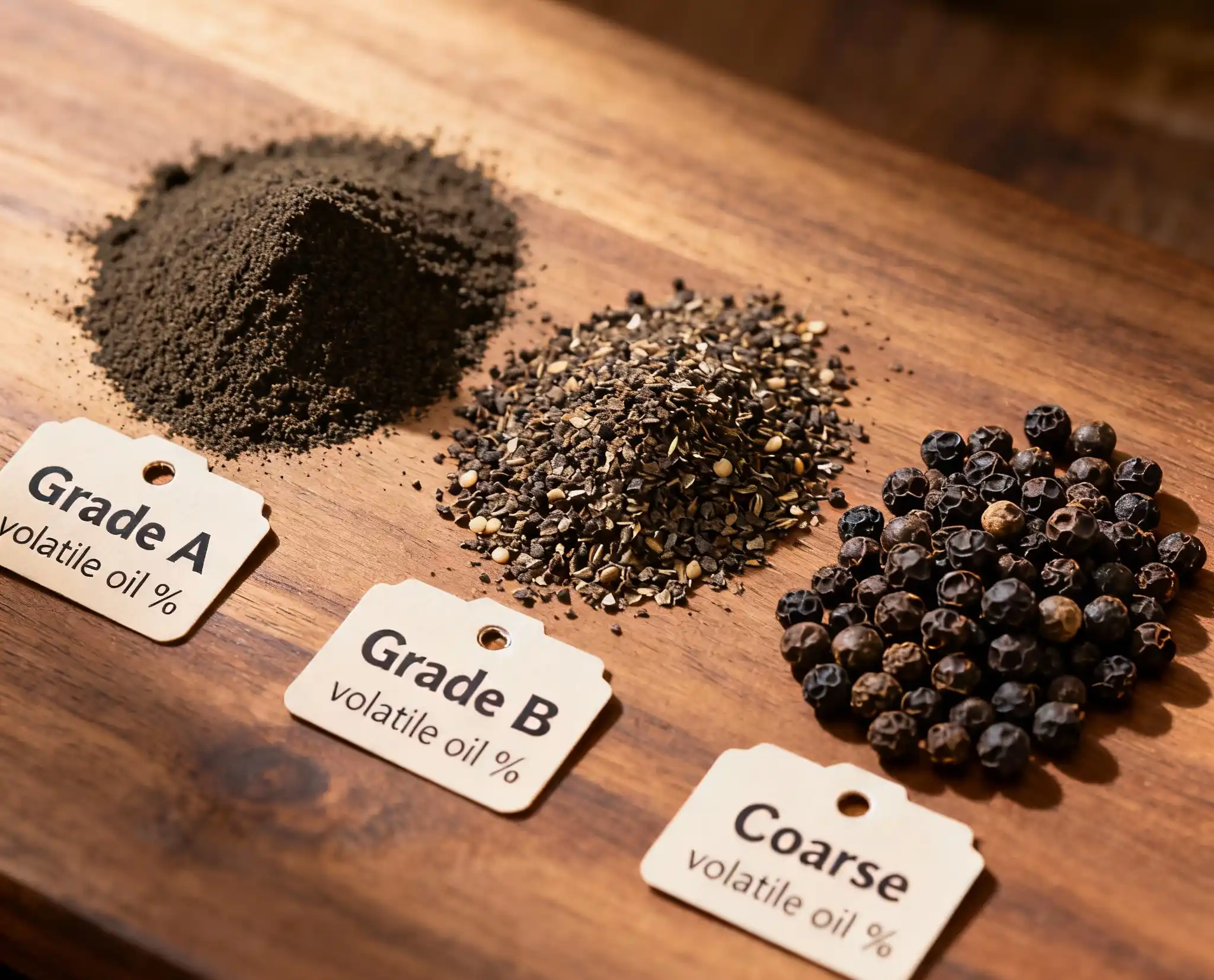
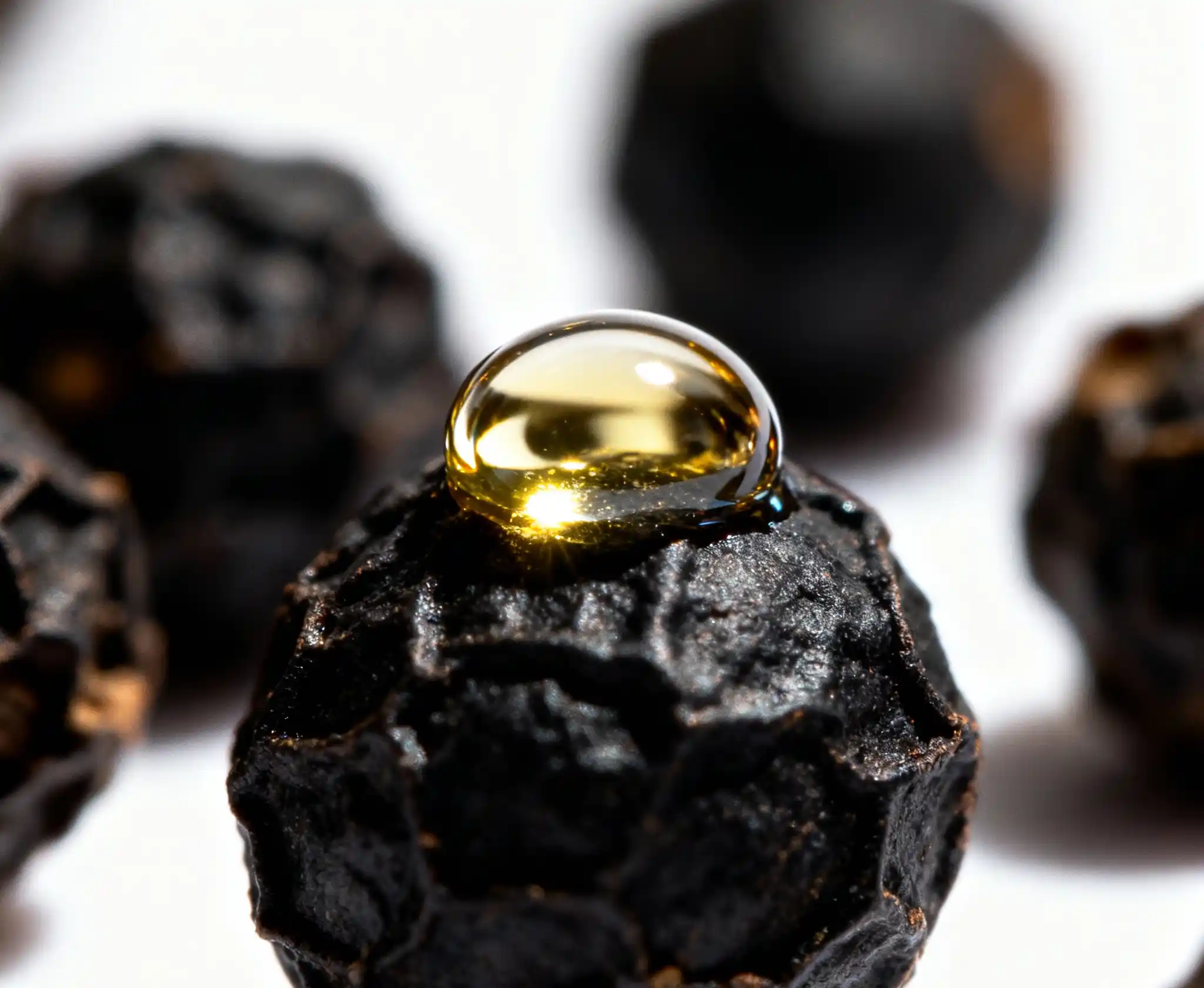
Short, straight, and hands-on. We’ll talk grades, volatile oil (VO), how it shapes aroma, what buyers actually check in QC, and how GuoCao fits into real production flows. No fake stories, just patterns you see on the floor.
ISO 959-1 Black Pepper — Volatile Oil & Piperine
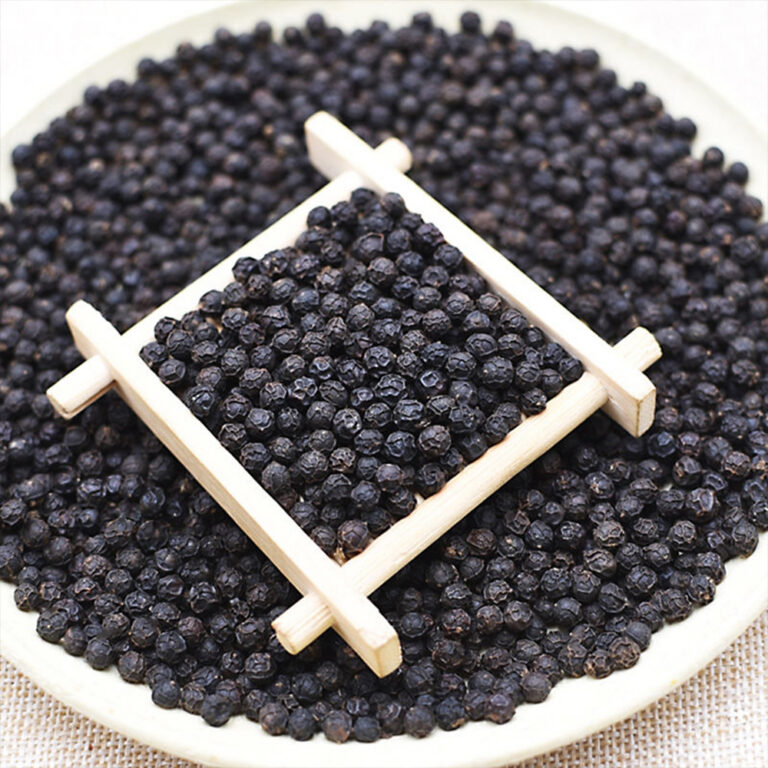
If you trade black pepper, you live with ISO 959-1. It defines the base chemistry and physical gates that contracts mirror.
Volatile oil (ml/100 g, dry basis): ≥ 2.0 for whole pepper; ≥ 1.0 for ground pepper.
Piperine: the punch behind the heat; high-grade lots usually target ≥ 4.0%.
Test timing: ISO says test VO right after grinding. Terpenes run away fast.
Why you care: VO = nose. Fall under the threshold and your pepper smells thin even if color and size look perfect. Put these numbers into your PO so there’s no debate later.
IPC Standard Grades (Grade I–III) — Whole & Ground
International Pepper Community (IPC) makes the grade grid easy for buying:
Whole black pepper across Grade I–III: VO ≥ 2.0 ml/100 g.
Piperine steps down by grade (think 4.0 → 3.5 → 3.0).
Bulk density (BD), light berries, moldy berries, insect damage, and extraneous matter also gate the grade.
Use simple contract language: “IPC Grade I, VO ≥ 2.0, Piperine ≥ 4.0, BD ≥ 550 g/L, cleanliness per ASTA.” Clear, fast, no ambiguity.
ASTA Cleanliness — Defects, Filth, Hygiene
ASTA is your safety shield. It sets strict limits for insect fragments, mammalian contamination, mold counts, and other filth metrics, plus sampling rules. It won’t make the aroma louder; it keeps the lot safe and import-ready. Pair ASTA with ISO/IPC so your paperwork covers aroma + safety in one place.
EU Buyer Guidance — Practical Expectations
In the EU, buyer playbooks often expect VO ~1.5%+ on delivered ground pepper for an acceptable nose, with ash and acid-insoluble ash (AIA) checked against market guides. It’s not statute; it’s expectation. If VO dips, you’ll hear about it during approval. No drama, just how the market talks.
Essential Oil Composition of Piper nigrum — Aroma Map
VO is a terpene blend, not one molecule. Common heavy hitters:
Constituent (typical)
Role in aroma
What you perceive
β-Caryophyllene
Warm body, long tail
woody-spicy, lingering
Limonene
Bright top-note
citrus, clean snap
δ-3-Carene / Sabinene
Piney lift
resin, sharp bite
α/β-Pinene
Fresh green
pine, herbaceous
Why one lot pops and another feels dull though both hit VO ≥ 2.0? Composition. Origin, cultivar, harvest, drying, and storage swing the ratios. If your seasoning line needs a citrus-bright first sniff, you’ll bias monoterpenes (limonene, α/β-pinene). If you want a deeper aftertaste in sauces, a caryophyllene-rich profile holds better.
Storage & Grinding Effects — Keep the Nose
House rules that save aroma:
Grind late: surface explodes on milling; terpenes evaporate. Test VO post-mill and log the timestamp.
Headspace control: air is the enemy. Use N₂ flush or MAP (modified-atmosphere packaging). Tight drum seals, inner liners.
Cool, dark storage: heat and light eat top-notes. Keep it cool; don’t park on the dock.
Mesh size: finer grind = faster loss. Balance sensory vs shelf life.
FIFO + retains: first-in/first-out and keep a retain sample for any dispute.
This sounds basic, sure, but it’s what separates consistent lots from “why is the panel saying flat today.” Ain’t fancy; it just works.
Standards & VO Thresholds
Standard / Guide
Form
Volatile oil (ml/100 g, d.b.)
Other key gates
What to use it for
ISO 959-1
Whole
≥ 2.0
piperine, ash/AIA, moisture, method refs
contract floor
ISO 959-1
Ground
≥ 1.0
timing note: test after grind
ground SKUs
IPC Grades I–III
Whole
≥ 2.0
piperine steps; BD; defect caps
grade naming
ASTA Cleanliness
All
—
filth, insect, mold limits; sampling
safety compliance
EU buyer guides
Ground
~≥ 1.5
ash/AIA expectations
market approval
Always align to your destination rules and your contract. Numbers aren’t suggestions; they’re the pass/fail line.
QC Checklist You Can Run Tomorrow
Item
Typical spec
Method / tool
Floor notes
Volatile oil (VO)
≥ 2.0 (whole), ≥ 1.0 (ground)
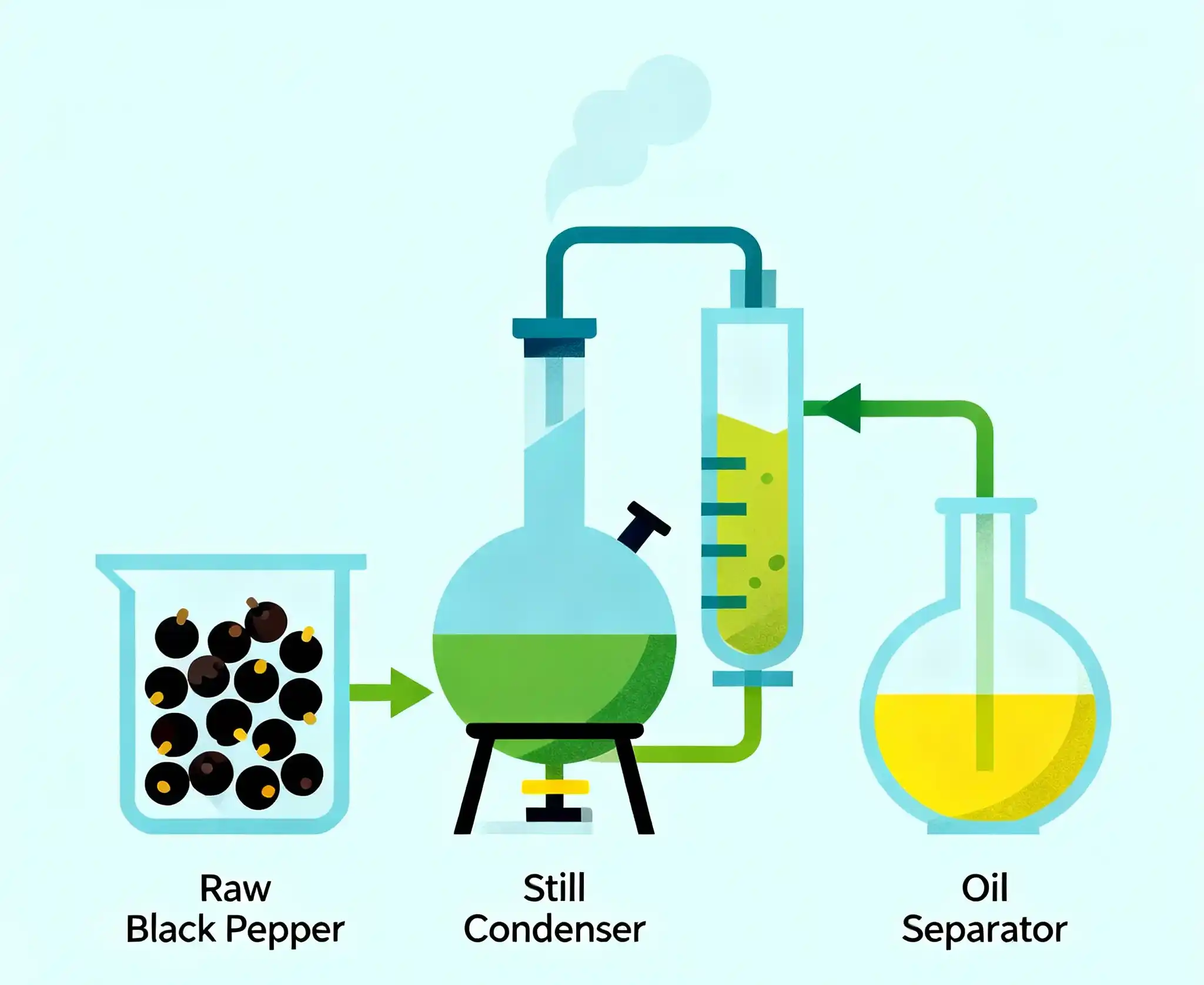
ISO steam distillation
record post-mill test time
Piperine
≥ 4.0% for top grades
HPLC
potency anchor
Bulk density
e.g., ≥ 550 g/L (Grade I)
tapped BD
grade proxy
Moisture
≤ 12% (example)
oven / halogen
shelf-life control
Cleanliness
pass ASTA
lab count
import safety
Aflatoxin/Ochratoxin
meet region
HPLC/ELISA
always check
Micro
TPC, yeast/mold
plate counts
ready-to-eat blends
Mesh size
e.g., 20–40
sieve analysis
flavor release
Sensory
top-note + tail
panel / trained nose
line reality
Log COA and retain per lot. There’s two ways to lose time: rework a shipment, or argue without data. Pick neither.
Use Scenarios
Snack dusting: teams want a bright first sniff. Target higher limonene/pinene and keep mesh consistent for even spray.
Soups & gravies: formulations prefer tail hold. A bit more β-caryophyllene helps the body stay.
Capsules / nutraceutical: piperine is the headline; VO affects capsule smell acceptance. Whole berries store better; mill right before fill.
TCM & teas: warm nature in classic formulas; whole berries are more stable in warehouse.
Cosmetics & rubs: VO composition matters with base oils. Run stability on the final matrix, not just raw.
Product: Black Pepper, whole (or ground), Piper nigrum Standard & Grade: ISO 959-1; IPC Grade I (or II) Volatile Oil: ≥ 2.0 ml/100 g (whole) or ≥ 1.0 ml/100 g (ground); ISO method Piperine: ≥ 4.0% (HPLC) for Grade I Bulk Density (BD): ≥ 550 g/L (whole) Cleanliness: pass ASTA; extraneous matter within spec Micro & Toxins: meet destination requirements; COA provided Mesh: declare (e.g., 20–40); record sieve curve Packaging: N₂-flush/MAP, lined drums; label lot, mill date Sampling: per ISO/ASTA; retain sample for 12 months
No clutter. No surprises. Everyone sleeps better.
Why GuoCao Helps With VO Stability & Consistency
GuoCao isn’t just a warehouse. It’s a GMP plant with ISO 22000 food-safety, normal/cool/MAP warehousing, and third-party COA capability. Capacity around 2,500 tons/year means scale won’t choke your plan. OEM/ODM is already running—custom grind, mesh control, blend build-outs, and private label. We ship to 30+ countries, serving pharma, nutraceutical, beverage, cosmetic raw-material buyers, hospitals, distributors, and retailers.
What this means for VO:
Grind control: mill right before pack to reduce terpene loss.
Headspace discipline: N₂/MAP lines and liners that actually seal.
Traceability: lot-level COA and retains, so audits move faster.
Cross-category sourcing: herbs, spices, barks, seeds from one roof cut lead-time chaos (not talking money, just ops).
If you need a custom SKU, start at Custom Herbal & Spice Solutions and stitch your pepper with companion botanicals from the categories above.
Case-Style Tips From the Floor
“Great grade, weak nose.” IPC looks fine, but the sniff panel says thin. Usual culprit: grind-to-ship lag or warm storage. Fix with late-grind, cool staging, and VO timestamp in COA.
“Strong nose, dirty file.” Aroma sings, but ASTA fails. Don’t blend around it. Reclean or recondition, then re-test.
“I need citrus pop in snacks.” Choose origins/cultivars richer in limonene/monoterpenes, or run a small top-note add-back if your market allows (label it).
“COA ok, line still meh.” Do headspace GC sniff on the retain. Check drum gasket and liner. A tiny leak killed it, not your imagination.
“Mesh mismatch.” The customer’s grinder changed screen; your VO still passes, but dust fraction climbs and smell feels different on the line. Re-match to 20–40 (or agreed curve) and repeat the PSS (pre-shipment sample).
Some tiny grammar maybe off here and there—real teams write fast on a line sheet. That’s fine.
Our low MOQ of 1 kg (2.2 lb) makes it easy to order Chinese herbal slices or wholesale Chinese medicine herbs. Private-label and bilingual labeling are also available.
Delivery Cycle & Support
We have a fast 7-day lead time. We provide free samples, COA reports, and technical support to help you bring high-quality bulk Chinese herbs to market.
Quality & Certifications
Our products are manufactured in a GMP-certified facility and meet ISO22000 standards. All Chinese herbs are third-party tested for heavy metals, pesticides, and microorganisms.