Coix Seed Bulk Supply: Food-Grade and Herbal-Grade Differences
Food-grade and herbal-grade coix seed may come from the same crop, but they are not purchased, tested, released, or documented in the same way. This guide explains how serious buyers should compare identity, sensory quality, contaminants,
A bag described as “premium food grade” and another sold as “pharmacopoeial herbal grade” may contain kernels from the same species and growing region, yet the commercial value of those lots changes dramatically once intended use, processing, contaminant limits, analytical methods, documentation, and destination-market law are written into the contract.
So what are you actually paying for?
My blunt answer is this: food grade and herbal grade are not universally harmonized Coix Seed grades. Unless the supplier connects the label to a named specification, test method, regulatory market, and batch-specific Certificate of Analysis, those words remain sales language.
A serious Coix Seed bulk supplier should identify the material as Coix Seed, Yi Yi Ren, Job’s Tears, or Coicis Semen and then go further: botanical species, plant part, processing form, origin, lot number, intended application, testing scope, and acceptance limits must all match.
That is where the real grade begins.
The Grade Labels Hide More Than They Explain
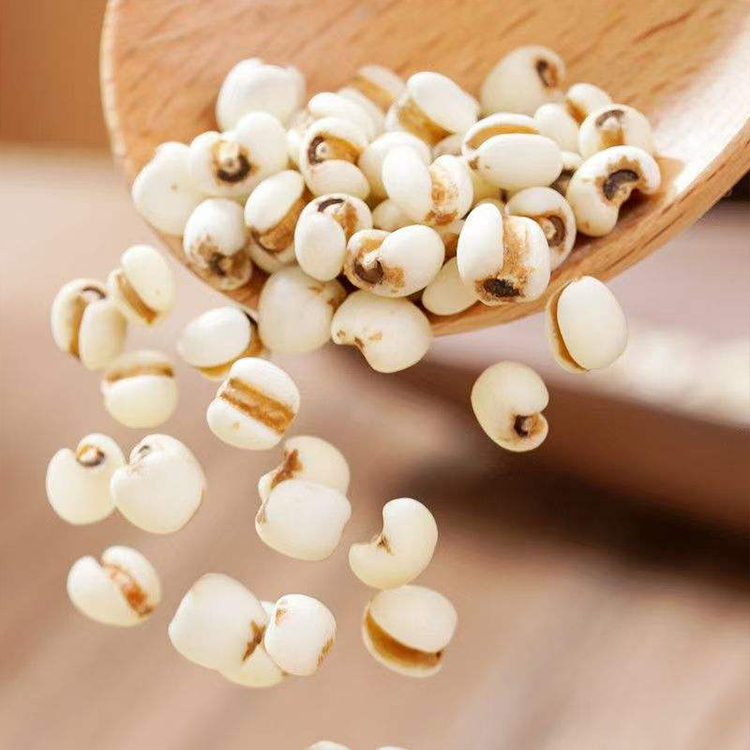
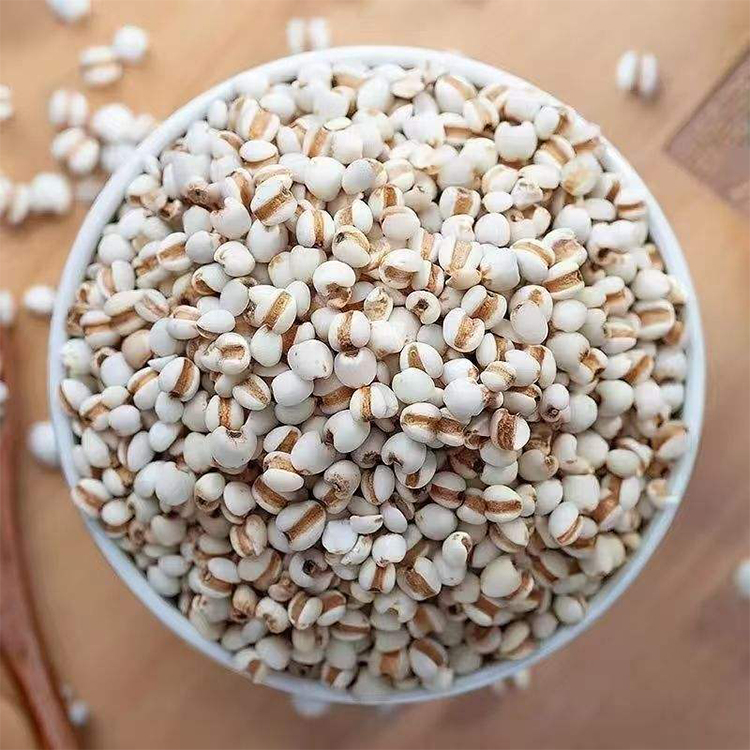
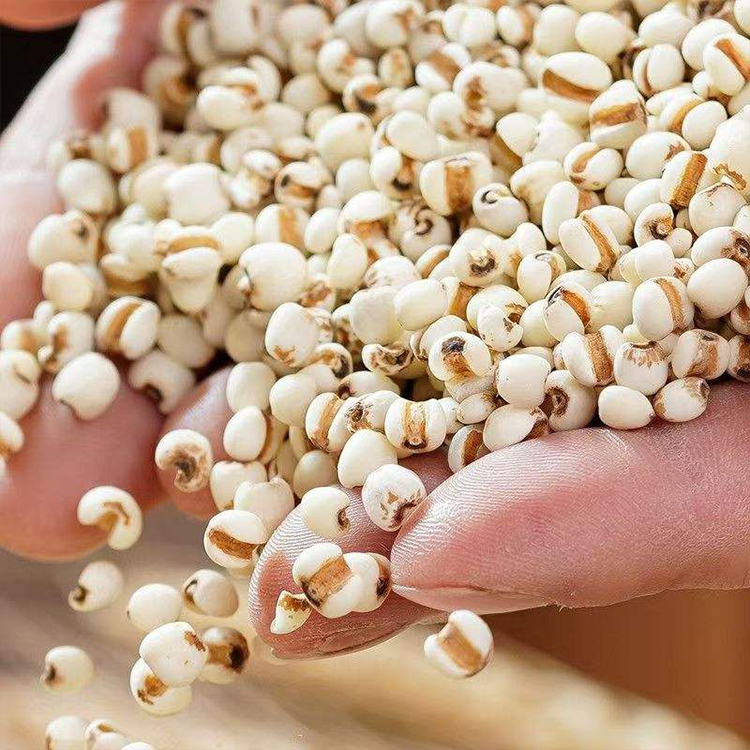
Coix Seed is a dual-use agricultural material. It can be sold as a cereal ingredient for porridge, soup, beverages, bakery products, meal replacements, and functional foods. It can also enter traditional herbal formulas, decoction packs, powders, extracts, dietary supplements, and clinic supply chains.
The physical material may look similar.
The release logic is not.
Food buyers usually care heavily about:
Cooking time and hydration
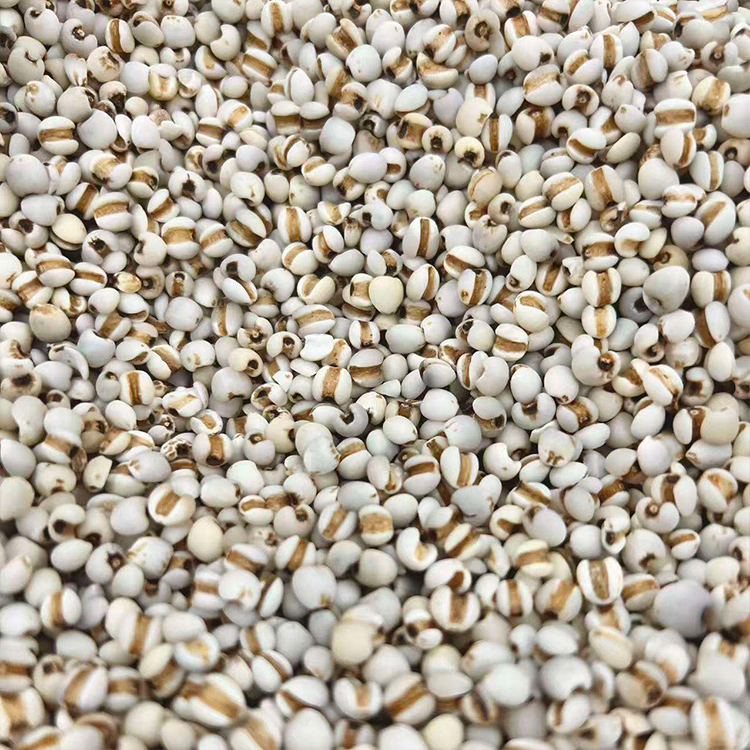
Kernel size and color
Polish level
Broken-kernel percentage
Flavor and odor
Foreign matter
Microbiological status
Pesticide and mycotoxin compliance
Food-label and importer requirements
Herbal buyers usually add another layer:
Exact botanical identity
Correct medicinal plant part
Raw versus processed status
Macroscopic or microscopic identification
Pharmacopoeial conformity
Extractive values or marker testing where required
Decoction or extraction behavior
Herbal GMP documentation
Formula and dosage-form suitability
Neither list is automatically stricter.
A bright, clean, mild-tasting food lot may fail a medicinal identity or pharmacopoeial test. A correctly authenticated Coicis Semen lot may still be unsuitable for a cereal brand because of color variation, cooking inconsistency, stale notes, elevated mold counts, or destination-market pesticide limits.
I reject the phrase “higher grade” unless the seller can finish the sentence: higher according to which specification?
The table is not a legal standard. It is a procurement map.
Your destination market still decides the enforceable requirements.
Food-Grade Coix Seed Is a Food-Safety and Performance Contract
Food-grade Coix Seed should be safe to eat and predictable in the buyer’s manufacturing process. That sounds obvious. It is not.
Many suppliers stop at visual inspection and a generic microbiological report. Professional food manufacturers cannot.
Polish Level Changes the Product
Whiter kernels often look cleaner to retail consumers, but aggressive polishing can alter bran content, lipid retention, mouthfeel, aroma, oxidation behavior, cooking loss, and perceived freshness.
The commercial consequences are real. A beverage producer may want a pale kernel with low dust and a neutral flavor. A whole-food brand may accept a cream or beige appearance to retain more outer-layer material. A traditional soup distributor may care more about hydration and texture than whiteness.
A food-grade purchase specification should state the approved sample’s:
Kernel color range
Polish level
Size distribution
Broken-kernel limit
Foreign-matter limit
Odor and flavor profile
Cooking or hydration performance
Packaging system
Shelf-life basis
“White and clean” is not a specification.
Food Importers Still Own the Risk
For sales into the United States, the FDA Foreign Supplier Verification Programs rule requires covered importers to evaluate known or reasonably foreseeable biological, chemical, and physical hazards associated with imported foods.
That includes pesticide residues, natural toxins, food decomposition, disease-causing microorganisms, and physical contaminants.
FDA also states that supplier verification can involve onsite audits, sampling and testing, and review of food-safety records. The food and foreign supplier must generally be reevaluated at least every three years, or sooner when new hazard or performance information emerges.
The hard truth? A supplier’s ISO 22000 certificate does not replace the importer’s hazard analysis.
And a generic COA does not prove that the shipped lot was tested.
Herbal-Grade Coix Seed Is an Identity and Intended-Use Contract
Herbal-grade material begins with identity.
For medicinal procurement, the buyer should specify the accepted botanical name, plant part, Latin drug name, processing status, reference monograph, and destination-market framework. Coix Seed used medicinally is commonly identified as Coicis Semen, derived from the dried mature kernel of Coix lacryma-jobi L. var. ma-yuen.
Names matter because “Job’s Tears” can be used loosely in agricultural and ornamental trade. A professional herbal specification must remove that ambiguity.
The wider fruit and seed Chinese medicinal materials category illustrates why category-level purchasing is not enough. Cassia Seed, Jujube Seed, Cuscuta Seed, Bitter Apricot Seed, and Coix Seed may all sit under “seeds,” yet their identity risks, chemical hazards, processing methods, and documentation requirements are very different.
A Pharmacopoeial Claim Must Name the Pharmacopoeia
The existence of a monograph or reference standard does not prove a supplier’s lot complies with it. The COA must identify the test, method, result, limit, edition or reference, and batch number.
I would reject a “USP grade” claim supported only by a company logo and the word “Pass.”
Herbal Grade Does Not Mean Contaminant-Free
Medicinal identity testing and contaminant testing answer different questions.
Identity asks: Is this the correct material?
Contaminant testing asks: Is this lot acceptable for the intended market and exposure pattern?
Both matter.
For U.S. dietary supplements, 21 CFR Part 111 defines quality around established specifications for identity, purity, strength, composition, and contaminant limits. That is a more disciplined approach than simply calling a raw material “traditional” or “natural.”
Buyers should also review a supplier’s approach to heavy metal testing for Chinese herbal materials, especially whether Pb, Cd, As, and Hg are reported as actual numerical results rather than a vague “complies” statement.
Natural is not a test result.
The Data Says Coix Seed Needs More Testing, Not Better Marketing
Coix Seed is a cereal crop rich in starch and lipids. It is exposed to agricultural pesticides, soil-derived elements, insects, humidity, fungal growth, oxidation, and storage damage.
The risk profile is not theoretical.
A 123-Sample Study Found Pesticide and Metal Failures
Four samples exceeded the maximum residue limits referenced by the researchers under GB 2763-2021:
Phoxim: 0.051 mg/kg
Chlorpyrifos: 1.47 mg/kg
Trichlorfon: 0.1255 mg/kg
Difenoconazole: 0.41 mg/kg
The same study reported that mercury was not detected in the 123 samples, but chromium in three samples exceeded the contaminant limits applied in the study. Heavy-metal concentrations also varied sharply between production regions, with reported coefficients of variation from 89.94% to 291.46% for Cd, As, Cr, and Pb.
This does not mean every Guizhou lot is unsafe. It means origin alone cannot release a shipment.
The batch still needs testing.
A 2025 Study Detected Mycotoxins in 94% of 50 Batches
The stronger warning comes from a 2025 Coix Seed mycotoxin co-exposure study. Researchers collected 50 batches from five major production regions and tested eight mycotoxins using UPLC-MS/MS.
Their findings were uncomfortable:
Mycotoxins were detected in 94% of samples.
Zearalenone, or ZEN, appeared in 82%.
ZEN concentrations ranged from 52.16 to 1,804.43 μg/kg.
Two or more mycotoxins occurred together in 74% of samples.
Aflatoxin B1 appeared in 14% of raw samples.
Six mycotoxins transferred into decoctions at rates ranging from 0.70% to 19.73%.
The researchers also distinguished dietary consumption from medicinal decoction exposure. That distinction matters because preparation method, daily quantity, and duration alter exposure.
But do not misuse the study. Fifty batches do not establish a worldwide contamination rate, and the authors’ proposed intake-duration calculations are research findings, not automatic commercial specifications for every market.
The procurement lesson is simpler: a single aflatoxin result is not a complete mycotoxin program.
Risk-based panels may need to consider AFB1, AFB2, ZEN, DON, ochratoxin A, sterigmatocystin, T-2, and HT-2, depending on origin, storage conditions, intended use, market limits, and customer requirements.
That is exactly why the example matters. The failure was not caused by one uniquely dangerous botanical. It demonstrates what happens when a botanical supply chain reaches consumers without adequate contaminant control.
A recall does not care how attractive the supplier’s brochure looked.
How I Would Write a Bulk Coix Seed Specification
Before asking for a price, I would issue a written specification containing at least the following fields.
1. Product Identity
State all applicable names:
Coix Seed
Yi Yi Ren
Job’s Tears
Coicis Semen
Accepted botanical species and authority
Plant part
Raw, polished, roasted, powder, granule, or extract form
2. Intended Use
Name the real application:
Retail cereal
Soup ingredient
Herbal tea
Beverage base
Decoction pack
Dietary supplement
Powder blend
Extraction material
The intended use decides which tests matter.
3. Reference Standard
Specify the controlling hierarchy:
Destination-market law
Pharmacopoeial monograph, where applicable
Customer specification
Retailer or brand requirements
Approved golden sample
Never leave this hierarchy unresolved.
4. Origin and Traceability
Request:
Country and province
Growing or collection area
Crop year
Harvest period
Supplier and processor identities
Batch code
Processing date
Packing date
“Origin: China” is too broad for professional risk assessment.
5. Physical and Sensory Criteria
Define:
Color
Kernel size
Polish level
Broken-kernel percentage
Foreign matter
Insect damage
Mold damage
Odor
Taste
Cooking or decoction behavior
Approve a retained golden sample before mass production.
6. Moisture and Storage Control
Use a contract-defined moisture or loss-on-drying limit supported by the intended shelf life, packaging, climate, and test method.
Also request:
Storage temperature range
Relative-humidity control
Warehouse pest management
Packaging barrier specification
Desiccant policy
Container-loading inspection
A dry result on production day does not guarantee a dry shipment after ocean transit.
7. Chemical Contaminants
Require destination-appropriate testing for:
Pesticide residues
Pb
Cd
As
Hg
Relevant mycotoxins
Sulfur dioxide where processing risk exists
Other market-specific contaminants
The report should show the method, result, unit, reporting limit, acceptance limit, and pass/fail decision.
8. Microbiological Criteria
Depending on intended use and processing, define:
Total aerobic count
Yeast and mold
Coliforms or Enterobacteriaceae
Escherichia coli
Salmonella
Other organisms required by the customer or market
Do not accept “microbiology passed” without values.
9. Batch-Specific Documents
At minimum, request:
Batch-specific COA
Traceability record
Product specification
Process flow
Allergen statement
Non-GMO statement if commercially required
Certificate of origin where needed
Phytosanitary documentation where applicable
Packing list and lot linkage
Third-party laboratory report for higher-risk orders
Write down what happens when arrival testing fails:
Which sample controls?
Is the retained sample sealed?
Which laboratory performs confirmation testing?
Who pays for retesting?
What constitutes confirmed nonconformity?
Is the remedy replacement, refund, credit, or reprocessing?
Who pays freight, destruction, or return charges?
This clause often tells me more about a supplier than the certificate wall.
Supplier Claims I Would Challenge Immediately
Supplier statement
My immediate response
“It is food grade.”
Which country’s requirements and which written specification?
“It is herbal grade.”
Which botanical identity, plant part, processing form, and intended use?
“It meets pharmacopoeia.”
Which pharmacopoeia, edition, monograph, tests, and batch results?
“COA available.”
Is it tied to the lot being shipped, with methods and numerical limits?
“GMP factory.”
What is the certificate scope, site name, issuing body, and expiry date?
“No pesticides.”
Which multi-residue panel, laboratory, LOQs, and destination-market MRLs?
“No aflatoxin.”
Was only AFB1 tested, or was a wider risk-based mycotoxin panel used?
“Same as the sample.”
Is there a signed golden-sample procedure and measurable acceptance range?
Fast answers are easy.
Evidence is harder.
Can One Lot Serve Both Food and Herbal Markets?
Yes, but only through deliberate dual qualification.
A single Coix Seed lot can serve food and herbal customers when it meets the stricter applicable requirements across both use cases. That may include food-market pesticide and microbiological limits, authenticated Coicis Semen identity, compendial tests, sensory criteria, processing records, mycotoxin controls, and separate labeling documentation.
The supplier should not simply change the label on the same warehouse stock.
The release record must show that the exact batch was evaluated against both specifications. Packaging and claims may still differ by market, even when the kernels are physically identical.
For brands developing cereal drinks, herbal teas, powders, extracts, or private-label products, this is where documented custom herbal and spice OEM/ODM processing becomes commercially useful. Pilot-batch approval, specification freezing, laboratory testing, and retained samples should happen before scale-up.
Not after the cartons are printed.
FAQs
What is the difference between food-grade and herbal-grade Coix Seed?
Food-grade coix seed is specified primarily for safe consumption, cooking performance, sensory consistency, and food-law compliance, while herbal-grade coix seed is specified for authenticated botanical identity, the correct medicinal plant part, pharmacopoeial or buyer-defined quality tests, controlled processing, and documented suitability for decoctions, extracts, supplements, or traditional herbal formulations.
The same crop may supply both markets, but each lot must be tested and documented against its intended use.
Is herbal-grade Coix Seed higher quality than food-grade Coix Seed?
Herbal-grade coix seed is not automatically better or safer than food-grade material; it is simply qualified against a different intended use, and a medicinally identified lot can still fail food-market requirements for pesticide residues, mycotoxins, microorganisms, labeling, sensory quality, or importer verification if those controls were not included in the purchase specification.
Quality is specification-specific. A buyer should compare test scope, limits, methods, and documentation rather than relying on the grade name.
What tests should a Coix Seed bulk supplier provide?
A professional coix seed testing plan should verify botanical identity, moisture or loss on drying, foreign matter, appearance, odor, microorganisms, pesticide residues, heavy metals such as Pb, Cd, As, and Hg, and risk-based mycotoxins including AFB1, AFB2, zearalenone, DON, ochratoxin A, and sterigmatocystin where relevant.
The exact panel should be based on origin, processing, intended use, destination law, customer limits, and current hazard information.
Can the same Coix Seed batch be sold as both food grade and herbal grade?
One coix seed lot can qualify for both food and herbal applications only when the supplier tests and releases that exact batch against both sets of requirements, including destination-market food limits, botanical and plant-part identity, applicable compendial tests, microbiological criteria, contaminant limits, processing records, packaging rules, and intended-use labeling.
Changing the product description without dual qualification is not enough.
How do I choose a reliable Coix Seed bulk supplier?
A reliable coix seed bulk supplier is a manufacturer or documented supply partner that can connect the quoted material to a defined species, origin, harvest or production lot, processing method, batch-specific COA, destination-market limits, retained sample, traceability records, and a written remedy if independent arrival testing finds a confirmed nonconformity.
Request a representative sample, live certification documents, a recent anonymized COA, test methods, and written failure terms before paying a bulk-order deposit.
Build the Specification Before You Request the Price
Do not send a supplier a message that says, “Please quote your best Coix Seed.”
Send the application, destination country, annual volume, packaging format, botanical identity, polish level, physical specification, required standards, contaminant panel, microbiological limits, document list, and sample-approval procedure.
Then compare quotations.
For food applications, ask for cooking and sensory samples. For herbal applications, ask for identity and compendial evidence. For dual-use programs, require one batch-release package covering both specifications.
The lowest price per kilogram is rarely the lowest landed risk.
Review the available bulk Coix Seed and Yi Yi Ren supply format, submit your intended use and target market, and request a batch-specific sample, specification sheet, COA, contaminant panel, packaging proposal, and traceability record before approving commercial production.
Our low MOQ of 1 kg (2.2 lb) makes it easy to order Chinese herbal slices or wholesale Chinese medicine herbs. Private-label and bilingual labeling are also available.
Delivery Cycle & Support
We have a fast 7-day lead time. We provide free samples, COA reports, and technical support to help you bring high-quality bulk Chinese herbs to market.
Quality & Certifications
Our products are manufactured in a GMP-certified facility and meet ISO22000 standards. All Chinese herbs are third-party tested for heavy metals, pesticides, and microorganisms.