Honeysuckle: Buds vs Open Flowers in Bulk Specifications
How to define bud and open-flower content in a bulk Jin Yin Hua specification, match limits to your application, and avoid disputes over grade, color and moisture.
A honeysuckle flower lot can be labeled Jin Yin Hua, pass a moisture test, and still behave very differently from the sample you approved. One common reason is the mix of unopened buds and opened flowers inside the carton. Open flowers break more easily, tend to look duller, and can change fill weight and extraction behavior from lot to lot. Yet “all buds” is not automatically the right specification either. The Chinese Pharmacopoeia definition itself allows some opening, and chemistry does not always follow appearance. This article explains how buyers should define bud and open-flower content in a bulk specification, which application needs which level of control, and what to write into an RFQ so the number can be measured and enforced.
What Counts as a Bud and What Counts as an Open Flower?
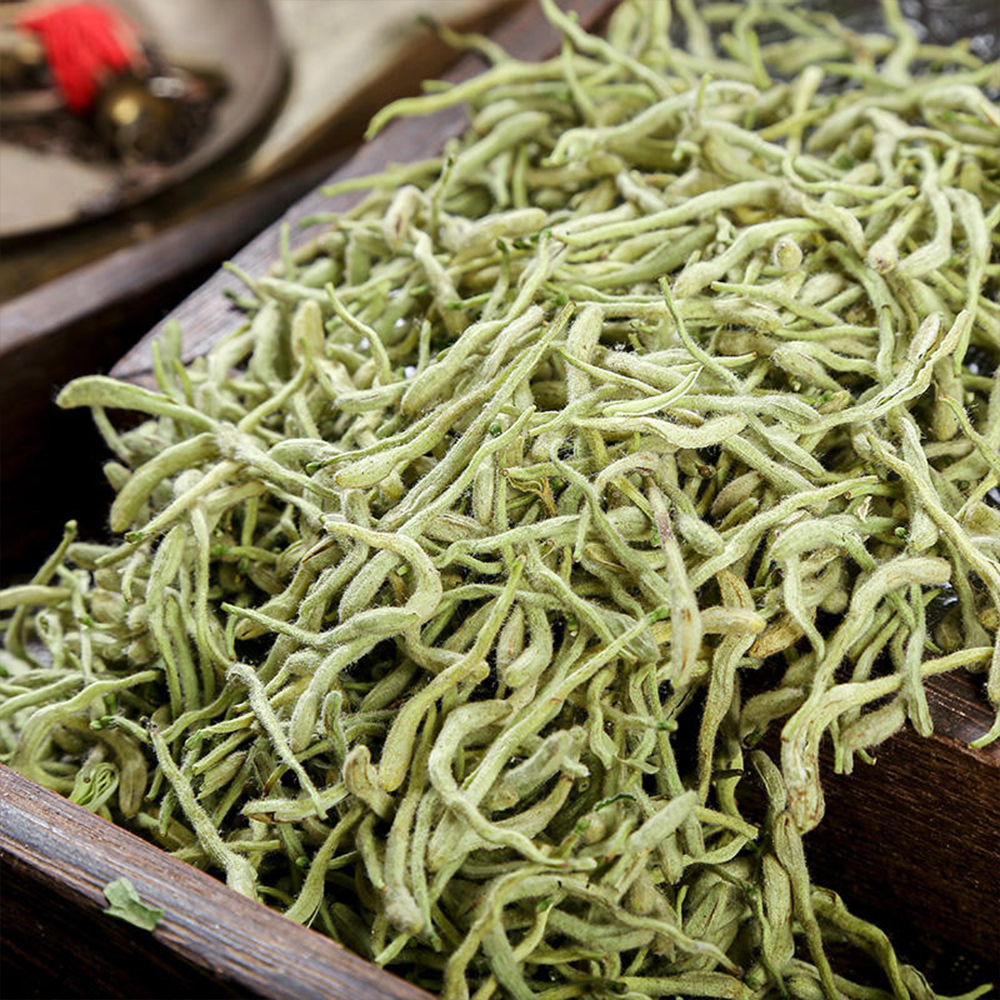
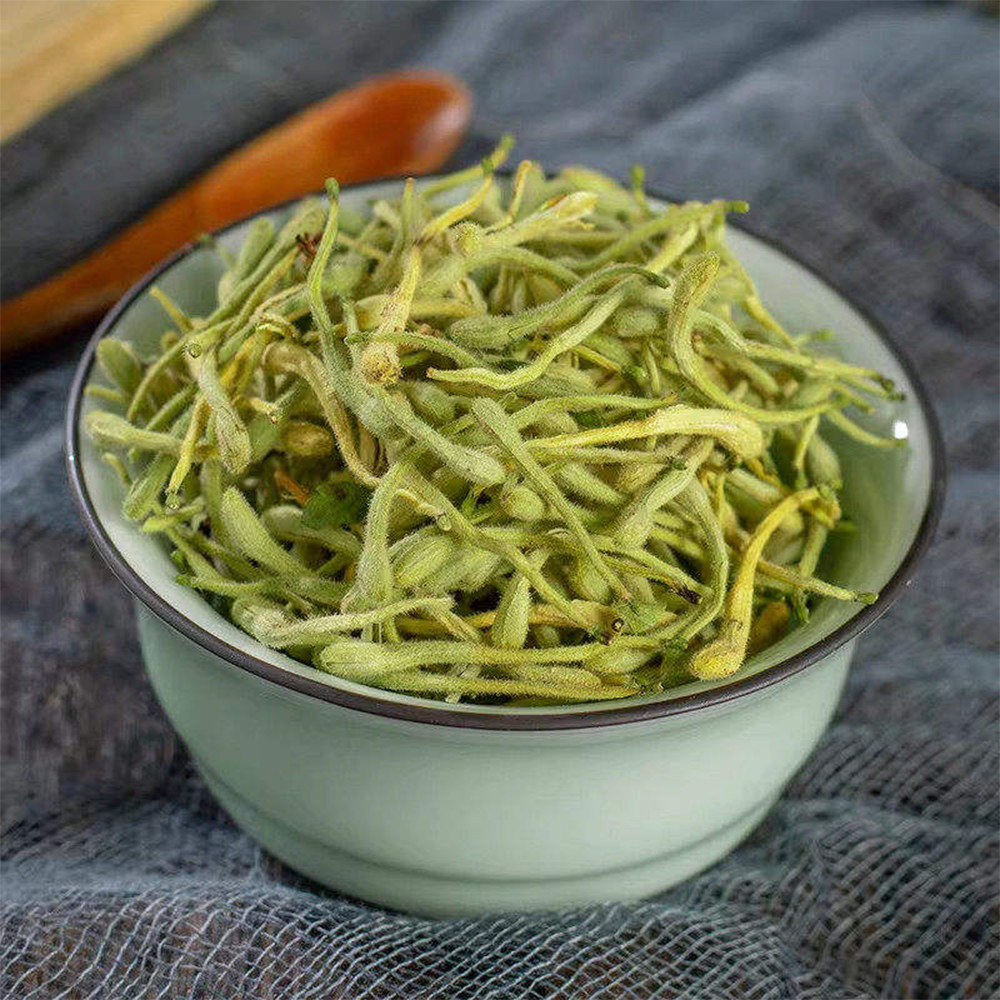
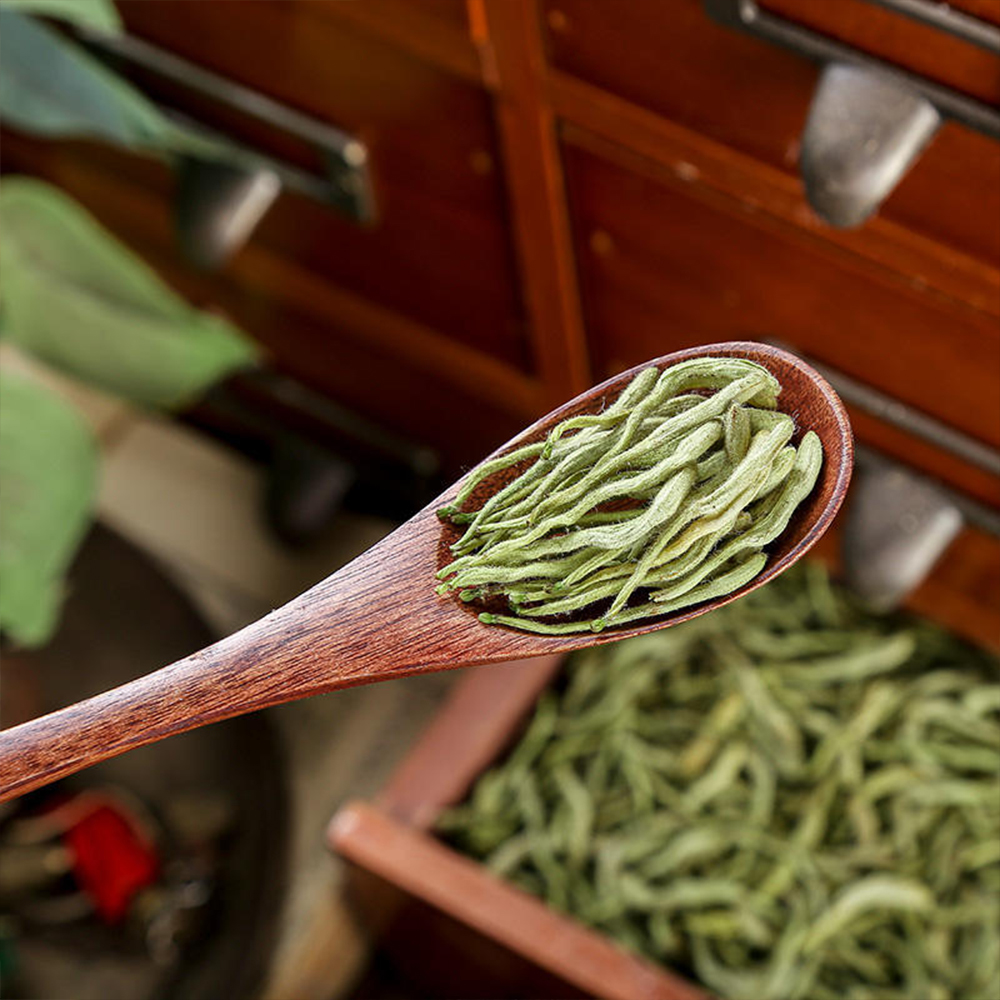
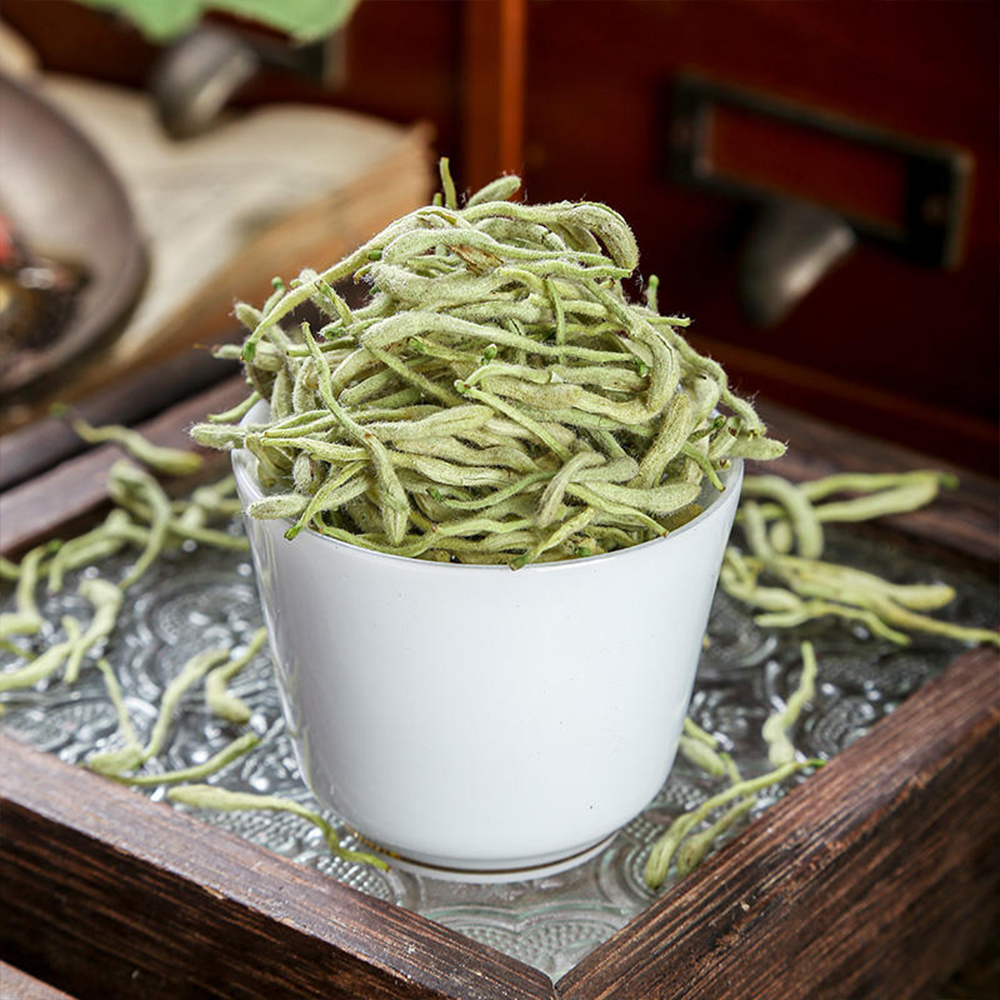
In the pharmacopoeial definition, Jin Yin Hua (Lonicerae Japonicae Flos) is not strictly “buds only.” The Shennong Alpha knowledge portal’s entry for Lonicera japonica flower-bud summarizes the Chinese Pharmacopoeia description as the dried flower bud or opening flower of Lonicera japonica Thunb., harvested before blooming in early summer and then dried. The wording matters. A compliant lot may contain buds with some initial opening. A purchase specification that only says “honeysuckle flower” or “pure buds” therefore leaves too much to interpretation.
Trade language is looser than the pharmacopoeia. Published phytochemistry work describes a progression from buds to silver flowers (opened, white) to golden flowers (aged, yellowing). Buyers often use those stage names informally. The open flower rate is the more useful commercial metric. In the bud ratio, color and moisture grading guide, it is expressed as open flowers divided by total flowers. The guide pairs it with separate limits for branches and leaves, discolored buds, and powder.
How Bud Ratio Changes Appearance, Breakage, and Batch Consistency
Bud-dominant lots and lots with a higher open-flower share differ in ways that show up at receiving, on the packing line, and in the cup. The table below is a qualitative comparison. It draws on the grading logic in the guide above and on general handling behavior of dried flowers. It is not a measured performance dataset.
Dimension
Bud-dominant lot
Lot with a higher open-flower share
Visual uniformity
Tubular, closed buds; consistent shape
Mixed shapes; more irregular pieces
Breakage and dust
Lower expected sieve loss
Open flowers are more fragile; more fines and dust expected
Color behavior
Greenish to pale yellow-white, depending on drying
Often looks older or duller, especially with storage
Fill-weight consistency (tea bags)
Easier to keep stable
Greater lot-to-lot drift in bulk density and fill
Aroma retention
Typically presented as fresher
Guide notes faster oxidation and a flatter smell
Price position
Usually higher because sorting or harvest timing is tighter (inference)
Lower, but may cost more in rework and complaints
Best-fit use
Retail jars, window tea bags, gift packs
Blends, extraction, non-visual channels (if assay and identity pass)
The grading guide’s open-flower limits show how tight the trade can get. For both oven-dried and sun-dried goods it lists a top grade at 0% open flowers, a second grade at no more than 1%, and a standard lot at no more than 2%. A zero-open-flower grade makes sense on paper. Whether a supplier can hold it lot after lot, with a counting method you can reproduce, is a separate question. Confirm which standard or internal specification those limits derive from before copying them into a contract.
Color needs its own line in the specification because it is easy to confuse with bud ratio. The same guide describes sun-dried goods trending yellow-white to light yellow and oven-dried goods trending greenish to green-white. It defines “yellow bars” as buds picked close to opening that turn yellow after oven drying. It also notes oven drying of roughly 30–58°C, with a caution against exceeding 60°C because overheating darkens buds. A lot can therefore have a low open-flower rate and still carry heat damage or near-open buds. Count those as defects separately instead of folding them into “bud ratio.”
Does Bud Ratio Predict Active Compounds? The Evidence Is Mixed
A common assumption is that more buds means higher chlorogenic acid, so open flowers are a chemical downgrade. The published evidence does not support a single universal rule.
A review of Lonicera japonica ethnopharmacology and phytochemistry summarizes earlier harvest-time work. It reports the highest chlorogenic acid at the second white and complete white flowering stages, while the silver flowering stage was best for essential oil. That points to different optimum stages for different target compounds, not a simple “buds win” result.
A more recent two-cultivar study of Lonicera japonica flower development reported chlorogenic acid above the pharmacopoeial 1.5% threshold at every developmental stage sampled. Both cultivars were highest at the study’s first stage (S1). One cultivar dipped to its lowest value at S4, while the other stayed relatively high throughout.
Read together, these sources show that stage, cultivar and study design all affect results. For a buyer, the practical conclusions are:
Do not assume a high bud ratio guarantees a passing assay, or that a higher open-flower share causes a failing one.
Specify marker compounds on the COA where performance matters, using the method named in your specification.
If aroma or volatile content drives your product, ask the supplier about stage at harvest and drying conditions. Do not rely on a chlorogenic acid number alone.
Which Specification Fits Your Application?
Here is the position I would defend with most buyers: the strictest bud specification is not automatically the best purchase. Paying for a 0–1% open-flower limit makes sense when your customer sees the flower. It makes less sense when the flower is ground, extracted or blended, provided identity, assay, contaminants and moisture are controlled. The exception is a downstream process that is sensitive to bulk density, dust or fill weight even though the end consumer never sees the material.
Open-flower limit plus cut or sieve profile; defined bulk density if available
Weight drift and dust in filter paper
Extracts and supplements
Identity and marker content
Species identity; markers (chlorogenic acid, luteoloside); contaminants; moderate open-flower limit
Paying for appearance the process does not use
Hospital, clinic and decoction supply
Pharmacopoeial compliance, traceability
Pharmacopoeia-based identity and limits; lot-level COA; defined defect limits
Documentation gaps at audit
Multi-herb blends
Cost and consistency
Defined grade; moisture ceiling; sieve profile
Spec drift across suppliers
Grading logic also differs across flowers. In the chrysanthemum flower wholesale grading guide, quality leans on whole-bloom ratio, bloom uniformity and low breakage, because Ju Hua is sold as an opened flower. Honeysuckle grading runs closer to the opposite direction and rewards unopened buds. A buyer who reuses one “flower grade” template across both products will write the wrong specification for one of them.
How to Write an Open-Flower Limit That Can Be Enforced
A limit only protects you if both sides can measure it the same way. Specify these items rather than “mostly buds”:
Measurement basis. State whether open flower rate is counted by pieces or measured by weight. The two can give different numbers, so choose one and name it. The grading guide defines the metric as open flowers divided by total flowers, which implies a count-based approach.
Sampling plan. Define how many cartons are opened, from which pallet positions, and how the composite sample is built. A hand-picked top-layer sample can hide a stratified lot.
Separate defect categories. Keep open flowers, discolored buds (black heads, black bars, yellow bars), branches and leaves, and powder as individual line items. Do not combine them into one figure.
Drying method. Name sun-dried or oven-dried, since the expected color differs between them.
Reference sample and dispute rule. Agree on a sealed reference sample, who tests in a dispute, and how disagreement between laboratories is resolved.
Document match. The lot number, botanical name and spec version should match across the PO, COA and carton labels.
Moisture and Storage Matter More Than Flower Stage Alone
A bud-heavy lot can still fail on moisture. The grading guide cites the Chinese Pharmacopoeia water limit for honeysuckle flower as not more than 12.0%. Moisture can rebound after packing through humid warehousing, container condensation, long port holds and weak liners. The moisture control guide for Chinese herbal slices explains why loss-on-drying percentage and water activity measure different things. It also explains why packaging barrier and transit evidence belong in the specification alongside the number.
Timing also affects what you receive. The site’s buying seasons and shelf-life guide for flowers and whole herbs recommends buying near harvest for the best color and aroma. It also advises tightening specifications when you purchase off-season and rotating stock on a first-expired-first-out basis. Treat its shelf-life ranges as planning estimates and confirm them with retained-sample checks.
What Drives Cost When You Tighten the Bud Specification
Tighter open-flower limits usually cost more, but not through a single line item. Ask suppliers about these factors:
Harvest timing and selection. Picking near the pre-bloom stage and rejecting opened flowers takes more labor and discipline. This is a reasoned inference, so ask your supplier how they achieve it.
Sorting loss. Removing open flowers, stems and discolored pieces reduces saleable yield, and that cost is passed on.
Drying control. Greener, lighter-colored lots depend on gentler drying. A hot, fast process produces black heads.
Rework and complaints. A lower price per kilogram can cost more per accepted kilogram if rejected material, retesting and downstream complaints rise.
Testing scope. Added markers, contaminant panels and identity testing add fixed cost per lot, which matters most on small orders.
What Should Buyers Specify Before Requesting a Honeysuckle Quote?
Prepare these fields so quotations are comparable:
Botanical name (Lonicera japonica Thunb.), pharmacopoeial name and plant part
Open-flower limit, measurement basis and defect limits
Drying method and expected color range
Moisture ceiling, test method and packaging barrier
Marker compounds and acceptance range, if performance matters
Contaminant testing panels required for your destination market
Order quantity, delivery window and shipping method
Sample requirements, reference sample retention and dispute process
Intended use: retail tea, filter bags, extraction or decoction
Buyers can compare these requirements against the Honeysuckle Flower (Jin Yin Hua) bulk supply page. It identifies the material as Lonicerae Japonicae Flos from Lonicera japonica and describes pale yellow to white tubular flowers. The page does not state a bud ratio or grade. Confirm the open-flower limit, MOQ and lead time directly in your RFQ instead of assuming them. For reference on the ISO side, ISO 21317:2019 for Lonicera japonica flower specifies minimum requirements and test methods for the flower sold and used as traditional Chinese medicine. At the time of checking, ISO listed it as expected to be replaced by a new edition.
Frequently Asked Questions
Is honeysuckle flower sold as buds only?
Not necessarily. The pharmacopoeial description covers the dried flower bud or opening flower, so lots may contain buds with initial opening. Commercial grades set an open-flower limit, which buyers should define in the specification instead of relying on “pure buds.”
What is open flower rate?
Open flower rate is the proportion of opened flowers in a lot, expressed as open flowers divided by total flowers. Buyers should state whether it is counted by pieces or measured by weight, and how the sample is drawn, so results are comparable.
Do open flowers have less chlorogenic acid than buds?
Not consistently. Published studies report different optimum stages depending on the compound, cultivar and study design. Specify chlorogenic acid and luteoloside on the COA with a named method instead of inferring chemistry from flower stage.
Which open-flower limit should I choose?
It depends on the application. Retail and window-pack products justify tight limits and low defect counts. Extraction or blending may accept more open flowers if identity, markers, moisture and contaminants are controlled. Discuss achievable limits with the supplier.
Are yellow or black buds the same as open flowers?
No. Yellow bars, black bars and black heads are defects tied to harvest timing, drying or storage. A lot can have few open flowers yet many discolored buds. Specify them as separate limits.
Does a low open-flower rate guarantee the right species?
No. Bud ratio describes physical form, not botanical identity. Related Lonicera flowers can look similar, so buyers need species identification, lot traceability and a COA tied to the shipped lot.
What moisture limit applies to honeysuckle flower?
GuoCao’s grading guide cites a Chinese Pharmacopoeia water limit of not more than 12.0%. Buyers should confirm the limit required by their destination market and specify the test method and packaging controls.
Our low MOQ of 1 kg (2.2 lb) makes it easy to order Chinese herbal slices or wholesale Chinese medicine herbs. Private-label and bilingual labeling are also available.
Delivery Cycle & Support
We have a fast 7-day lead time. We provide free samples, COA reports, and technical support to help you bring high-quality bulk Chinese herbs to market.
Quality & Certifications
Our products are manufactured in a GMP-certified facility and meet ISO22000 standards. All Chinese herbs are third-party tested for heavy metals, pesticides, and microorganisms.