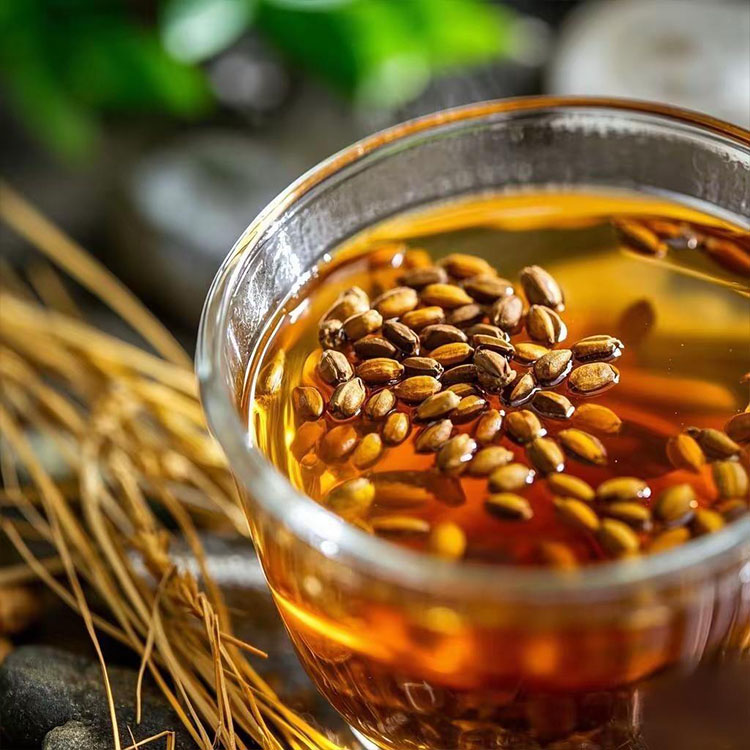
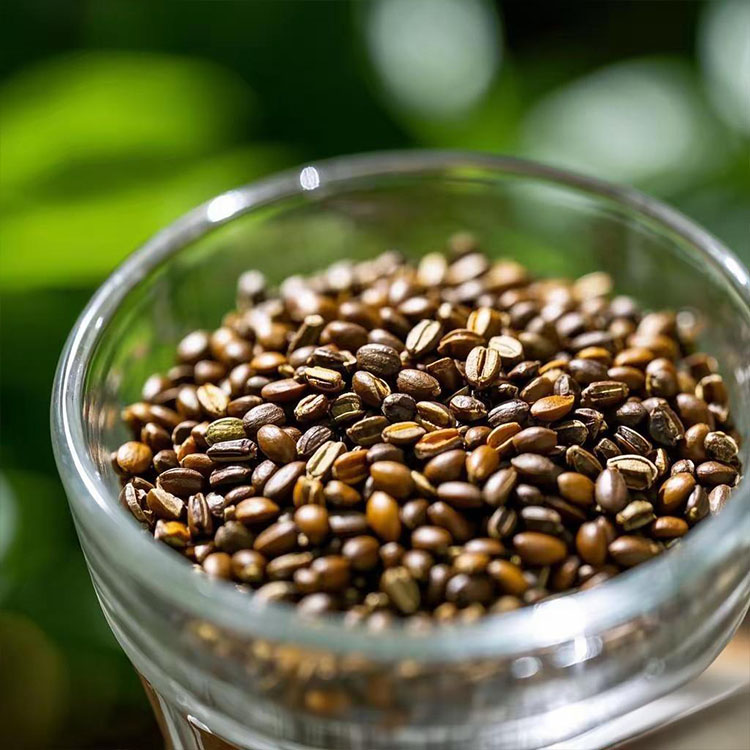
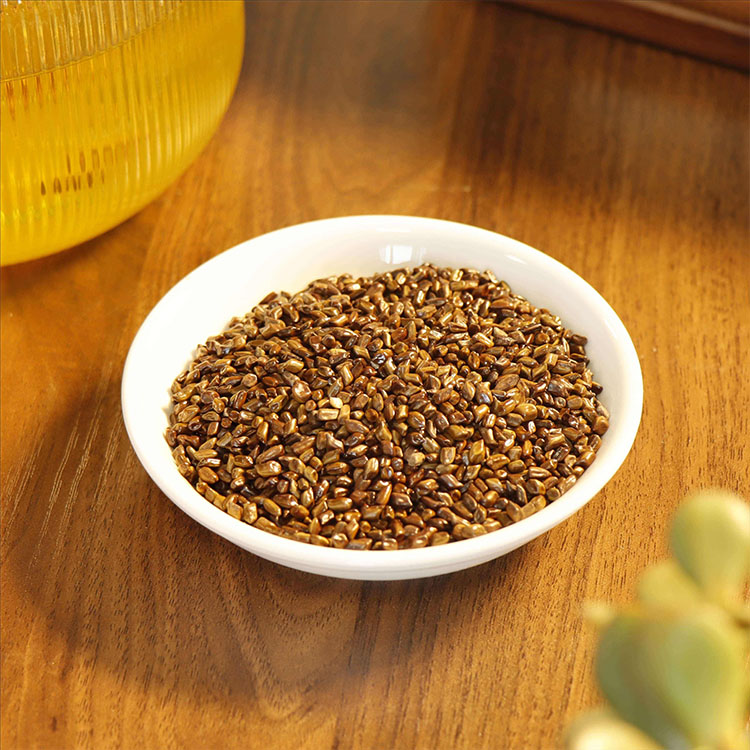
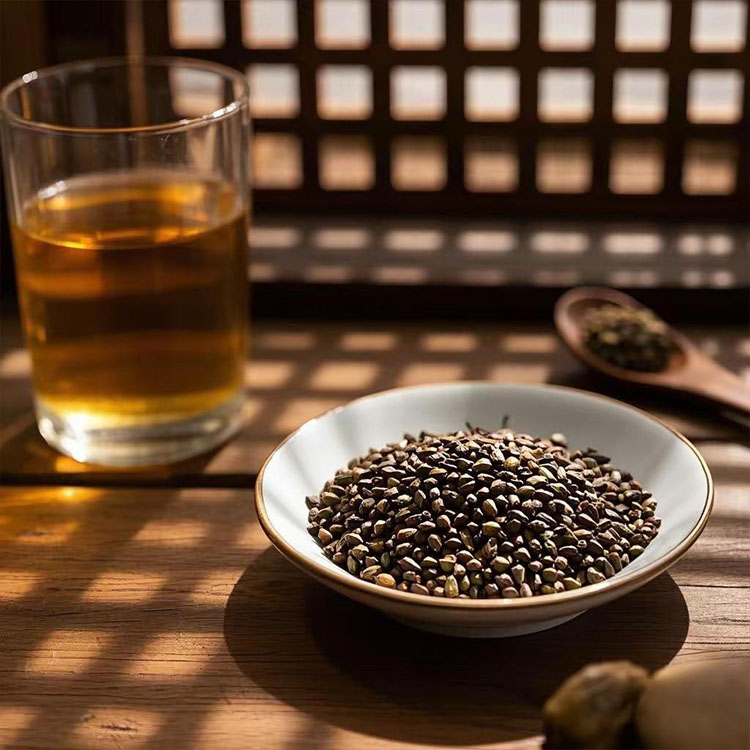
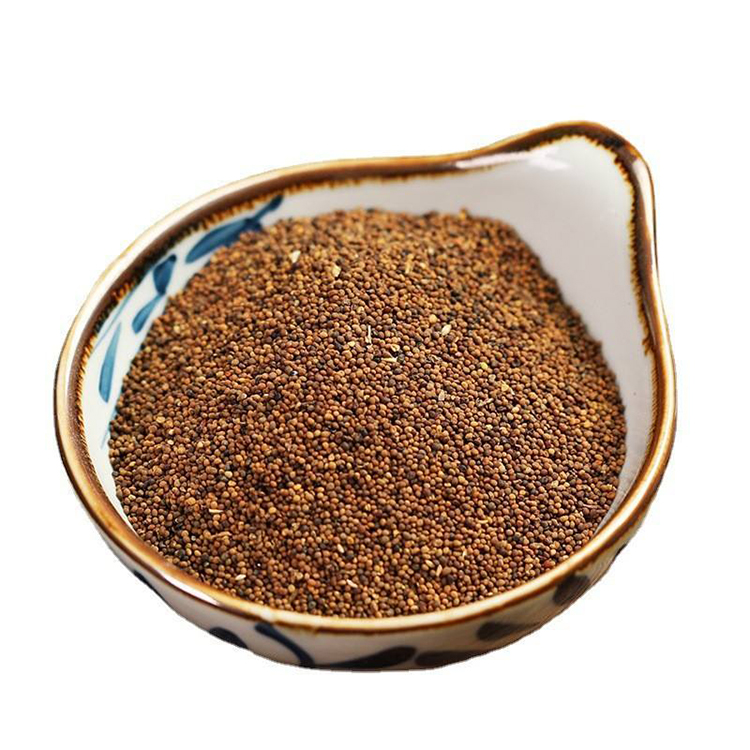
Cassia Seed (Jue Ming Zi): cleaning standards that protect your tea-bag line
Cassia seed (Jue Ming Zi) is an easy ingredient to buy and a hard ingredient to run. This is the cleaning and QC playbook that keeps tea-bag lines from choking on dust, stones, residues, and paperwork.
Dust kills margins. If you treat Cassia seed like “just another botanical,” you’ll pay twice—first in downtime (clogged weighers, leaking sachets, dusty cartons), then in commercial damage (holds, re-tests, rejected lots) when your buyer asks for hard evidence that your cleaning and kill-step actually worked. Want to gamble your next PO on “trust me”?
I’m going to say the quiet part out loud: most “cleaned” Jue Ming Zi is cleaned for looks, not for performance. It’s optimized to impress a sourcing manager on a video call, not to protect a high-speed tea-bag line that hates fines, hates variability, and hates surprises.
Table of Contents
What “cleaning standards” really mean in tea-bag terms
“Cleaning” is not one action. It’s a spec stack.
You need three layers, minimum:
Physical cleanliness: dust, stones, stalks, insect fragments, hair, plastic—anything that turns into complaints or machine stoppage.
Safety cleanliness: microbes and chemicals—because your customer’s compliance team doesn’t care that it tastes fine.
Documentation cleanliness: lot genealogy, COAs, validation records—because modern procurement runs on audit trails, not vibes.
And yes, regulators are watching the same categories you should be watching. The European Commission’s 2023 Alert & Cooperation Network report notes an 8% rise in RASFF notifications (4,695 total) and says pesticide residues were the most reported issue, with pathogenic microorganisms close behind. That’s not “tea industry drama.” That’s the risk environment your cassia seed is walking into. Commission report summary.
The baseline process flow that actually protects a tea-bag line
Here’s the workflow I’d demand from any “best Semen Cassiae (Cassia tora) supplier for tea bags”—not because I’m picky, but because your machinery is.
Step 1: Incoming controls (before you “clean” anything)
Lock the spec first, then process to it.
Moisture / aw: target a stable window (common buyer ranges: moisture ~8–12%, aw <0.60 for shelf stability—validate per your product).
Cut size window: decide your tea-cut (example: 0.6–2.0 mm), then cap fines (example: <5% passing 0.25 mm).
Foreign matter: define what “zero tolerance” means (metal, glass, hard plastic) and what “limited tolerance” means (stems, hulls), with measurement method.
If you want a practical reference for why particle control matters for cassia seed in blends, the site’s own notes on roast spec + tea-cut discipline are worth reading: cassia seed for tea roast and particle control.
Step 2: Mechanical cleaning (where most suppliers stop too early)
The boring chain wins:
Pre-screen (oversize trash out)
Aspiration (light dust/husk out)
Gravity de-stoner (stones/minerals out)
Sieve stack (tighten to your cut size; manage fines)
Hard truth: owning a metal detector isn’t the standard. Proving it works—challenge pieces, frequency, logs—is the standard.
Step 3: Kill-step decisions (steam/autoclave vs. alternatives)
Your secondary keyword says it: cassia seed sterilization (steam/autoclave). Here’s the reality:
Steam is common because it’s documentable. But it can shift aroma and color if you overcook it.
Autoclave (121°C/15 min type thinking) is a lab mindset; for bulk botanicals, you’re more likely validating time/temperature/humidity profiles in continuous or batch steam systems than running classic medical-style cycles.
Irradiation is effective and can be gentle on sensory, but it’s market- and label-sensitive.
Microbial testing limits for herbal tea ingredients
Most tea-bag buyers want something like:
Salmonella: absent in 25 g
E. coli: “not detected” or <10 CFU/g
Total plate count: often ≤1×10^5 CFU/g
Yeast & mold: often ≤1×10^3–10^4 CFU/g
But. Specs are market-dependent, and your kill-step validation matters more than one lab report. Don’t just hit a limit once—trend it.
Pesticide residue testing for cassia seed
This is where people get smug and then get rejected.
Run multi-residue panels (QuEChERS + LC-MS/MS / GC-MS/MS is standard practice in the industry).
Set LOQs that match your selling region (EU MRL pressure is different than U.S. tolerances).
Name the “problem children” in your spec sheet (buyers recognize them): chlorpyrifos (C₉H₁₁Cl₃NO₃PS), imidacloprid (C₉H₁₀ClN₅O₂), acetamiprid (C₁₀H₁₁ClN₄).
Three real-world signals you should take personally (2024)
1 Pesticide residues aren’t hypothetical—brands recall over them
Yogi’s own recall page says that during routine audits in early 2024, it found unexpected traces of pesticides in Echinacea Immune Support Tea, notified the FDA, and resumed production with a new supplier in May 2024. That’s a mainstream tea brand getting clipped by supply-chain reality.
You sell cassia seed into tea bags? Great. Now act like you’re one drift incident away from the same headline.
2 Regulators are publishing the playbook: residues + pathogens dominate alerts
The EU’s 2023 alert reporting (published Sept 2024) calls out pesticide residues as the top issue again. If your QC program treats residues as “optional depending on customer,” you’re behind the market.
3 Heavy metals can become legal exposure, not just a spec miss
A California Proposition 65 settlement document (dated 3/14/2024) tied to fermented tea products sets an explicit trigger point: a Daily Lead Exposure Level above 0.5 micrograms of lead per day can force warning/reformulation outcomes, depending on how the product is sold. That number (and that paperwork) is why “Pb, Cd, As, Hg” belongs in your release discipline.
How to clean cassia seed for tea bags without wrecking extraction?
Cassia seed cleaning for tea bags is a controlled sequence—screening, aspiration, de-stoning, sieving, magnets, and metal detection—designed to hit a defined tea-cut size while minimizing fines, because fines spike dust, clog fill systems, and over-extract into bitter cups when steeped. After that, you validate with sieve results, foreign-matter checks, and line performance (dust rates, seal integrity, weight stability).
What does “cassia seed cleaning standards” mean in audits?
Cassia seed cleaning standards are the written, measurable specifications and records that prove your Jue Ming Zi was processed to remove foreign matter, manage particle size, and control safety hazards (microbes, pesticides, metals) consistently by lot, not “most of the time,” using documented equipment settings and verification logs. If you can’t show the logs, you don’t have a standard—you have a story.
What microbial testing limits are typical for herbal tea ingredients?
Microbial limits for herbal tea ingredients are buyer-defined thresholds—commonly Salmonella absent in 25 g, very low or non-detect E. coli, and capped total plate count plus yeast/mold—used to confirm that the ingredient, post-processing, is safe and stable for dry storage and consumer steeping. Validate against your market and your kill-step; don’t copy-paste numbers without proof.
How is pesticide residue testing done for cassia seed (Jue Ming Zi)?
Pesticide residue testing for cassia seed is laboratory screening (often QuEChERS extraction with LC-MS/MS and GC-MS/MS) against a region-specific panel and LOQs that match the strictest target market, because “we tested pesticides” is meaningless if the panel misses the actives your buyer’s regulator flags. This is exactly how brands end up recalling “organic” tea anyway.
What foreign matter controls best protect tea-bag lines?
Foreign matter control for tea-bag lines is a layered system—screens, aspiration, gravity separation, magnets, and metal detection—built to remove stones and dense contaminants early, then catch metal at the end as a critical gate, because high-speed sachet equipment amplifies tiny contaminants into big failures. If your supplier can’t describe their verification cadence, assume it doesn’t happen.
Conclusion
If you’re sourcing cassia seed and you want fewer holds, fewer complaints, and fewer “can you re-test this lot?” emails, stop shopping on photos and start shopping on controls. Use the site’s category map to benchmark what “export-ready” looks like for fruits and seeds: fruit and seed herb sourcing catalog. Then ask for a batch-release pack and process proof—before you place volume.
When you’re ready to spec a tea-cut, set micro/residue limits, and build an audit-ready release checklist for your tea-bag line, start here: Contact GuoCao for OEM/QA support.
Our low MOQ of 1 kg (2.2 lb) makes it easy to order Chinese herbal slices or wholesale Chinese medicine herbs. Private-label and bilingual labeling are also available.
Delivery Cycle & Support
We have a fast 7-day lead time. We provide free samples, COA reports, and technical support to help you bring high-quality bulk Chinese herbs to market.
Quality & Certifications
Our products are manufactured in a GMP-certified facility and meet ISO22000 standards. All Chinese herbs are third-party tested for heavy metals, pesticides, and microorganisms.