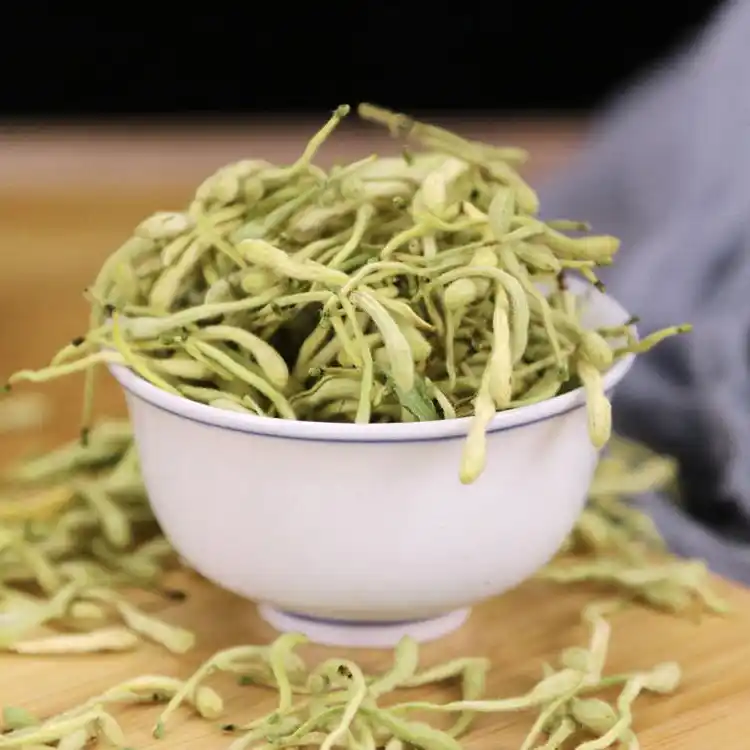
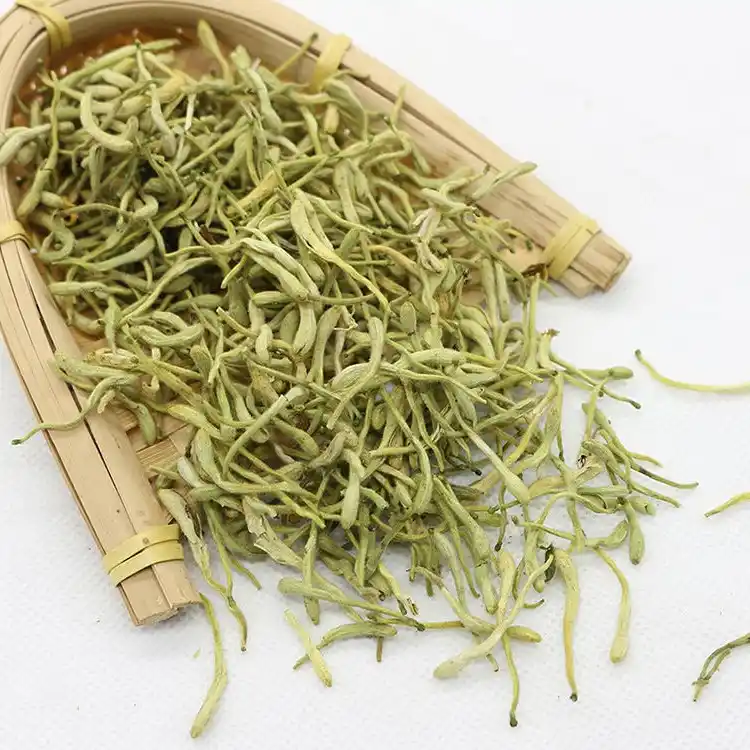
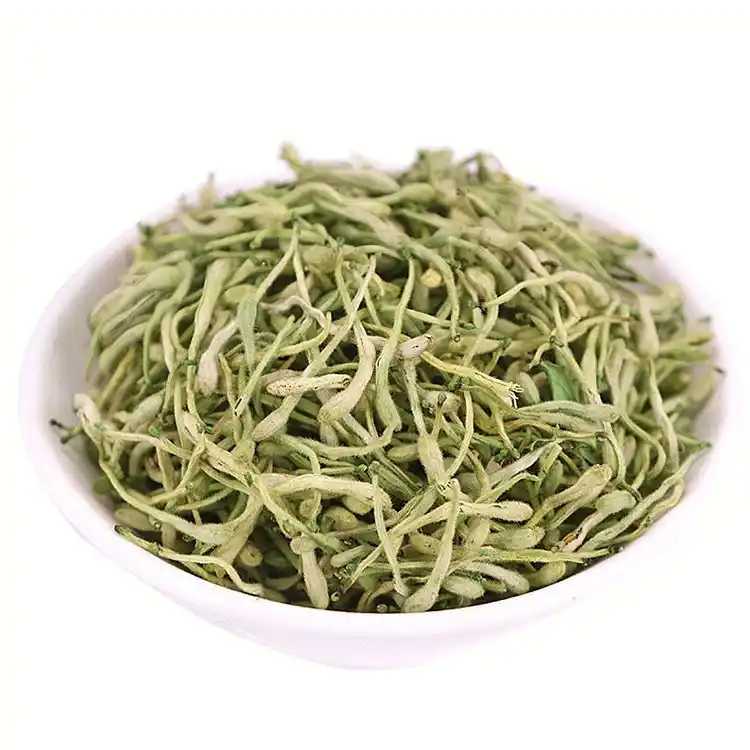
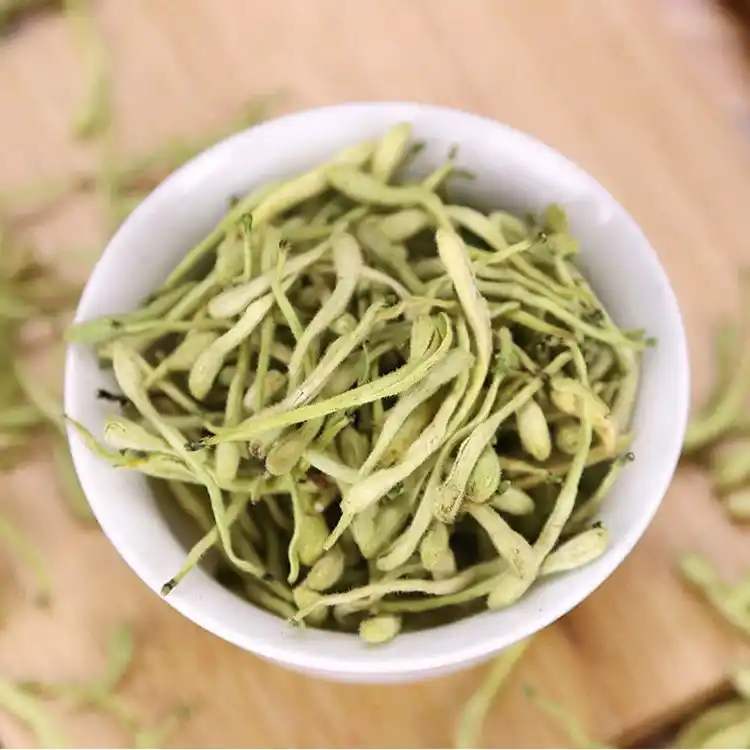
If you buy Jin Yin Hua in bulk, you already know the pain. One lot looks “okay” on photos. Then it lands, you open the cartons, and… bloom is too open, color is dull, the bags feel a bit soft, and your QC team starts saying words like “re-wet,” “black heads,” and “sieve loss.”
So let’s make this simple. For real-world buying, three grading signals decide if your lot runs smooth or turns into drama:
Bud ratio (in standards, this shows up as open flower rate)
Color (sun-dried vs oven-dried, plus defects like yellow bars / black heads)
Moisture (the “12% line” that separates stable goods from mold-risk)
And if you’re supplying hospitals, supplement factories, functional beverage brands, or distributors, you also need marker compounds + COA discipline, not just pretty appearance. GuoCao builds the whole thing around that workflow—GMP production lines, ISO 22000, third-party COA, and storage that protects color and volatiles.
Quick links if you want to cross-check our supply + capabilities while reading:
Most buyers say “bud ratio,” because you want mostly buds, not open blooms. The grading language in Chinese slice trade uses open flower rate: open flowers ÷ total flowers.
Why you should care:
Open blooms break easier. You get dust load, higher sieve loss, and uglier retail look.
Open blooms oxidize faster. Color slides, smell gets flat, and the lot feels “old” faster.
Open blooms mess with consistency. Your tea bag fill weight and extraction yield starts drifting lot-to-lot.
Open flower rate limits (grade table)
This is a clean, usable reference pulled from the published grading tables. It splits oven-dried and sun-dried goods, then grades them by open flower rate plus a few “trade reality” defect ratios.
Processing type
Grade
Color keyword
Open flower rate (%)
Branches/leaves (%)
Yellow bars + black bars + black heads (%)
Powder/foreign matter (%)
Oven-dried
Grade 1
greenish
0
0
0
0
Oven-dried
Grade 2
green-white
≤1
≤1
≤1
≤1
Oven-dried
Standard lot
mixed
≤2
≤1.5
≤1.5
≤2
Sun-dried
Grade 1
yellow-white
0
0
0
0
Sun-dried
Grade 2
light yellow
≤1
≤1
≤1
≤1
Sun-dried
Standard lot
mixed
≤2
≤1.5
≤1.5
≤2
Source basis: the grading tables and notes in the published standard draft (open flower rate, color, branches/leaves, and defect ratios).
Color grading (sun-dried vs oven-dried)
Color isn’t “just looks.” In this market, color is a shortcut for process control.
Sun-dried Jin Yin Hua trends yellow-white / light yellow.
Oven-dried Jin Yin Hua trends greenish / green-white.
You’ll hear buyers say: “too yellow, too old” or “too green, maybe over-baked.” Both can be true depending on the lot. That’s why you tie color back to the other two signals: open flower rate + moisture.
Oven drying temperature (why “too hot = black” is real)
The published notes call out a practical range: oven drying around 30–58°C, and don’t exceed 60°C, because high heat makes buds darken and quality drops. This is exactly where you see black heads spike. Buyers hate that look, and retail customers don’t trust it.
Yellow bars, black bars, black heads (trade slang you’ll hear)
These aren’t internet words. They’re defined as real defect types:
Black bars: the whole bud turns black.
Black heads: part of the bud turns black.
Yellow bars: buds picked near opening, then oven-dried and they turn yellow.
If your supplier can’t talk about these defects in plain terms, you’re probably buying blind.
Moisture content (water) limit 12.0%
Moisture is the silent killer. A lot can look fine and still fail after ocean freight. You get container sweat, then mold bloom, then your team starts doing emergency re-dry or outright rejection.
The Chinese Pharmacopoeia reference for honeysuckle flower lists Water: not more than 12.0%.
Here’s the argument: If you don’t lock a moisture ceiling, you don’t really have a spec. You got a wish.
What “too wet” looks like in operations
No fake stories here, just common field signs buyers report again and again:
Bags feel soft or “not crisp.”
Clumping at carton corners.
Sour-ish smell under the floral note.
Color dulls fast after opening the master bag.
Micro risk climbs. That’s when shipments get “held for review” and nobody happy.
And yes, sometimes the lot pass quick handheld check, then fails lab method. That’s why COA method alignment matters.
Chlorogenic acid and luteoloside markers
If you sell into pharma, supplements, or hospital channels, you can’t stop at looks. You need marker compounds. Many references point to chlorogenic acid and luteoloside as key quality markers used in Pharmacopoeia-based control. One published study summarizes the thresholds as: chlorogenic acid > 1.5% and luteoloside > 0.050% for dried products.
So your grading stack becomes:
Open flower rate (bud ratio discipline)
Color + defect ratios (process discipline)
Moisture ≤12.0% (stability discipline)
Markers on COA (performance discipline)
That’s how you stop the “looks good, works bad” problem.
COA, GMP, ISO 22000
Buyers say they want “clean label.” Ops teams want something else: numbers, methods, and release rules.
GuoCao runs GMP herbal slice production and ISO 22000 food safety controls, with third-party COA capability and ambient/cool/MAP warehouses to protect stability. That matters because Jin Yin Hua is not forgiving. Color and aroma drift when storage is sloppy, and moisture creeps when packaging is weak.
COA-first release (how to avoid “spec creep”)
A tight flow looks like this:
Set the spec (open flower rate target, defect ratios, moisture ceiling, marker method if needed)
Sample per lot
Issue COA
Release only after results match spec
GuoCao’s content leans hard into this “COA per lot” thinking, because it prevents arguments later.
Warehousing controls (ambient / cool / MAP)
MAP storage helps with volatiles and color stability. If you’re selling tea, functional drinks, or cosmetic raw material, aroma loss is money loss. GuoCao explicitly positions ambient/cool/MAP warehouses as part of keeping quality stable.
Small note: even great product can get ruined by bad storage. It happens more than people admit.
Buyer pain points (industry black talk)
Here’s a quick glossary you can use with suppliers. If they don’t understand these terms, you’ll spend lot of time later.
Term buyers use
What it usually means
Why you should care
bloom too open
open flower rate too high
dust load, ugly appearance, faster oxidation
black heads
partial bud blackening
overheating, age, or storage stress
black bars
whole bud black
serious downgrade, retail reject
yellow bars
near-open buds turning yellow after drying
wrong harvest window / process mismatch
bag sweat
moisture migration inside bag
mold risk, odor shift, COA disputes
stemmy
too much branches/leaves
pay for waste, bad mouthfeel in tea
spec drift
lot-to-lot inconsistency
you can’t scale SKUs, QA burns time
Purchasing checklist (bud ratio, color, moisture)
Use this when you’re sourcing wholesale. Short, practical.
For tea bag factories
Ask for open flower rate target (don’t accept “mostly buds”).
Confirm branches/leaves limit. Stemmy lots kill your fill consistency.
Lock moisture ≤12.0%. Don’t “flex” on this.
Request COA + micro + pesticide/heavy metals as needed for your market. GuoCao supports that third-party COA workflow.
For supplement and functional beverage brands
Add marker compounds (chlorogenic acid, luteoloside) when you need performance consistency.
Make sure packaging and warehouse system protect aroma and color (MAP helps).
If you plan OEM/ODM, align spec early so your formula doesn’t “taste different” every batch. GuoCao supports OEM/ODM flow under GMP and ISO 22000.
For hospitals, clinics, and distributors
Use the grade table as a shared language with suppliers.
Reject lots with visible defect load (black heads / black bars) even if price looks good. You’ll pay it back in complaints.
Choose partners who can ship with full docs and consistent release rules. GuoCao’s model is built around that.
Where GuoCao fits (and why it helps you sell)
GuoCao isn’t a trading desk. It’s a manufacturer + wholesale supplier with GMP production lines, ISO 22000 controls, third-party COA ability, and storage options designed to keep herbs stable. That setup matters when you’re supplying multiple markets and you can’t afford rework. Also, we support OEM/ODM customization, so you can move from raw Jin Yin Hua to finished SKUs without juggling too many vendors.
If you want Jin Yin Hua that ships clean and holds spec, start with the product page, then tell us your target grade and use case:
Our low MOQ of 1 kg (2.2 lb) makes it easy to order Chinese herbal slices or wholesale Chinese medicine herbs. Private-label and bilingual labeling are also available.
Delivery Cycle & Support
We have a fast 7-day lead time. We provide free samples, COA reports, and technical support to help you bring high-quality bulk Chinese herbs to market.
Quality & Certifications
Our products are manufactured in a GMP-certified facility and meet ISO22000 standards. All Chinese herbs are third-party tested for heavy metals, pesticides, and microorganisms.