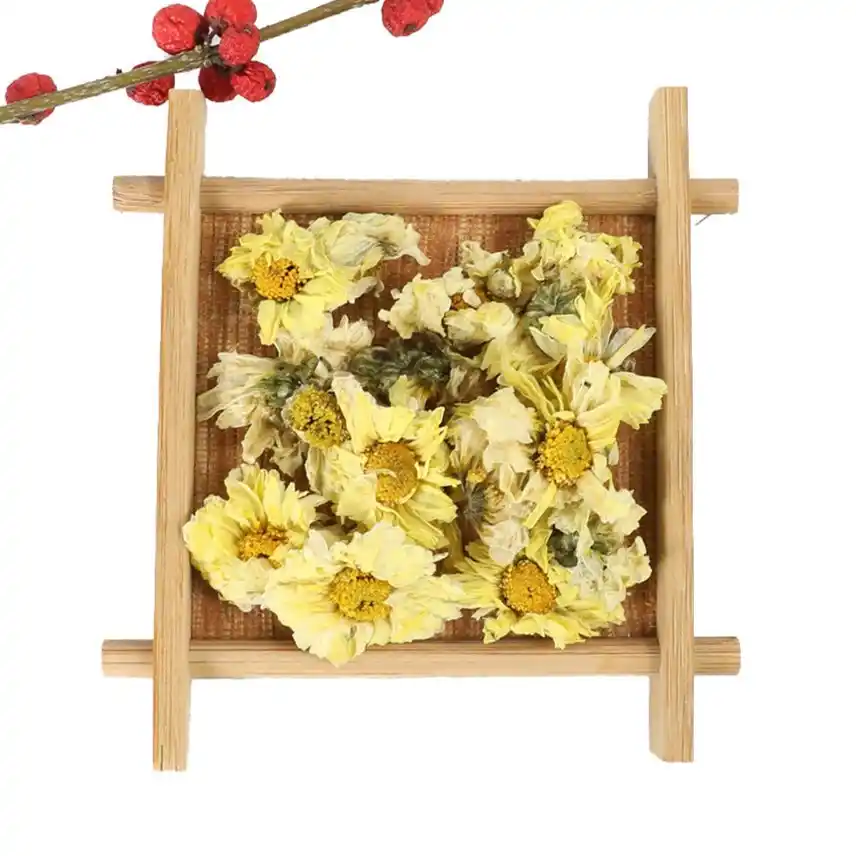
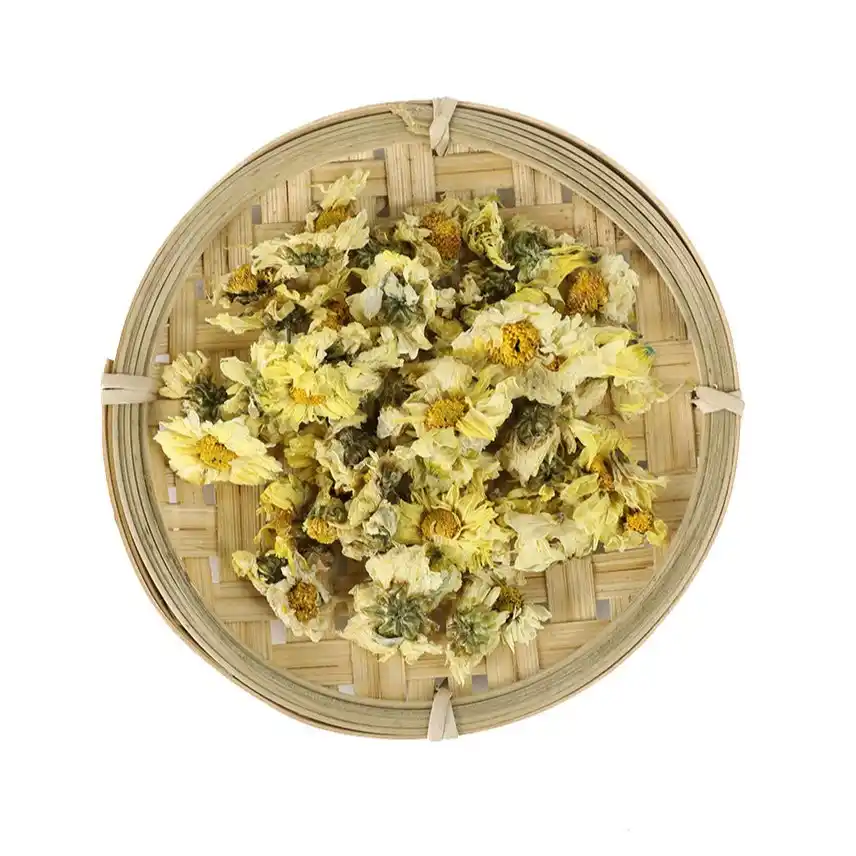
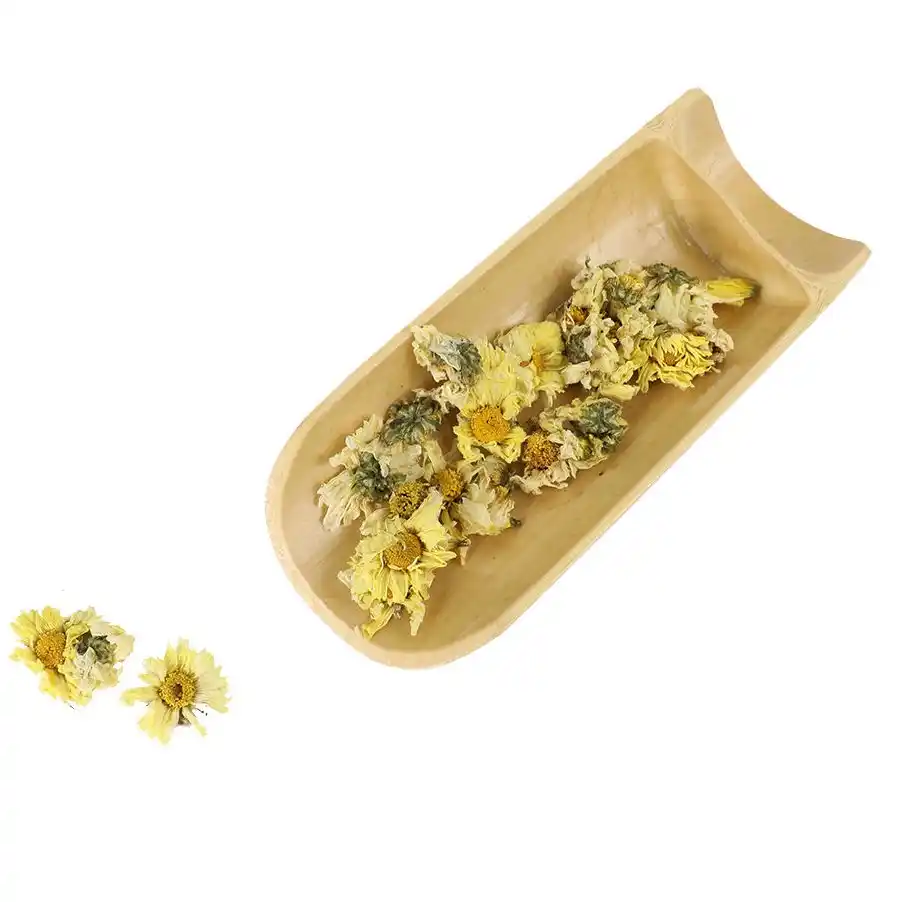
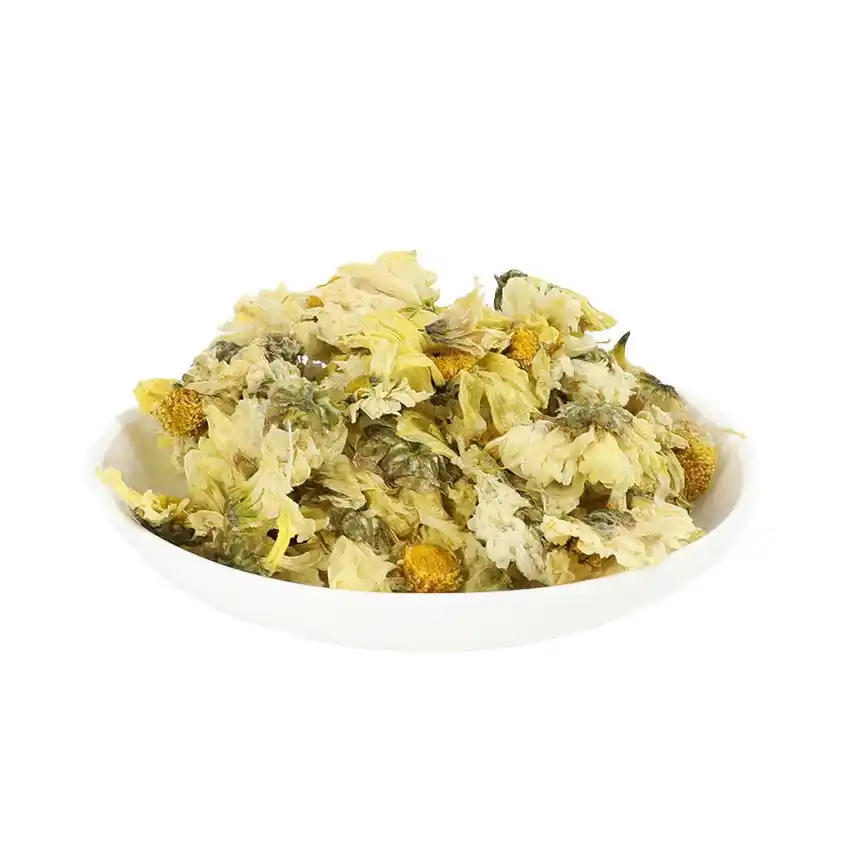
If you buy Chrysanthemum Flower (Ju Hua) at wholesale scale, you don’t need another “pretty flower” intro. You need a grading logic that survives real life: long transit, mixed cartons, rushed receiving, and picky downstream channels like hospitals, supplement plants, tea bag lines, and distributors.
Here’s my argument: your Ju Hua grade should start with three hard pillars—bloom, color, moisture—then get locked by COA + lot traceability. Do that, and you cut the two biggest buyer pains: batch roulette and downgrade drama.
If you’re sourcing Ju Hua as an herb slice / flower raw material, you can also cross-check product basics on GuoCao’s listing here: Chrysanthemum Flower (Ju Hua) Bulk Wholesale.
Ju Hua moisture specification: ≤12.0% as a baseline, and why rebound kills you
Moisture is the quiet killer. It makes a “nice” lot turn into a “problem” lot.
A common baseline in industry specs for flower tea-style materials is moisture ≤ 12.0%, usually tested by a standard moisture method (many factories reference GB 5009.3 for moisture test). You don’t need to debate the politics of standards. You need a number you can enforce.
Moisture rebound: the part people forget
Even if the supplier packs dry, moisture can rebound during:
humid warehousing
container sweat
long port holds
bad carton sealing
weak inner liner
Then you get that classic receiving moment: cartons look fine, but the lot smells a bit “warehouse.” Not rotten, just… off. That’s enough for a QC hold.
Ju Hua moisture table (simple deal language)
Moisture spec
What it protects
Risk if you skip it
What to lock in writing
≤12.0% (baseline)
Shelf stability, lower mold risk
Claims, clumping, musty note
COA per lot + re-test on arrival
Lower target (buyer-defined)
Long transit, humid regions
Same problems, just faster
Add packing + storage controls
“Dry enough” (no number)
Nothing
High, always messy
Don’t do this, pls
Small note: if you sell into supplements or hospitals, moisture is not “optional.” It’s a control point.
Chrysanthemum Flower (Ju Hua) wholesale grading guide: the spec sheet you should actually send
If you want fewer surprises, send a spec sheet that includes:
Bloom: whole flower ratio, breakage tolerance, FM limit
Color: normal tone, no mold, no insect damage
Moisture: ≤12.0% baseline (or lower target if your lane needs it)
COA: per lot
Lot trace: lot ID + packing date
Packing: liner + carton + labeling rules
That’s it. Not fancy. Just clear.
And if you’re scaling beyond loose bulk into finished formats (tea bags, herbal enzyme drinks, functional beverages), GuoCao can also support OEM/ODM flows so your spec doesn’t get lost between teams. Sometimes the best “quality upgrade” is just having one partner who can run production + testing + warehousing under one roof, so you’re not chasing five vendors that blame each other.
Our low MOQ of 1 kg (2.2 lb) makes it easy to order Chinese herbal slices or wholesale Chinese medicine herbs. Private-label and bilingual labeling are also available.
Delivery Cycle & Support
We have a fast 7-day lead time. We provide free samples, COA reports, and technical support to help you bring high-quality bulk Chinese herbs to market.
Quality & Certifications
Our products are manufactured in a GMP-certified facility and meet ISO22000 standards. All Chinese herbs are third-party tested for heavy metals, pesticides, and microorganisms.