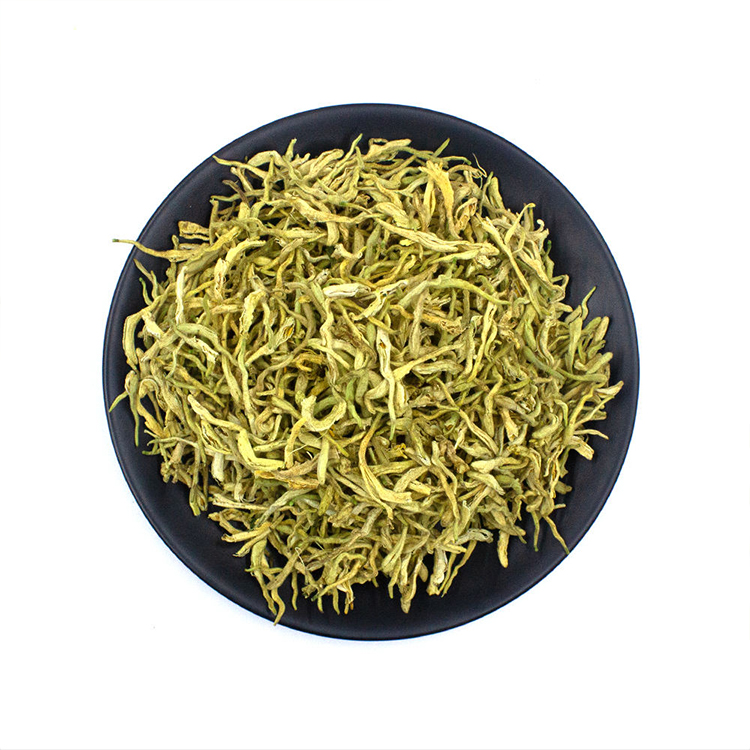
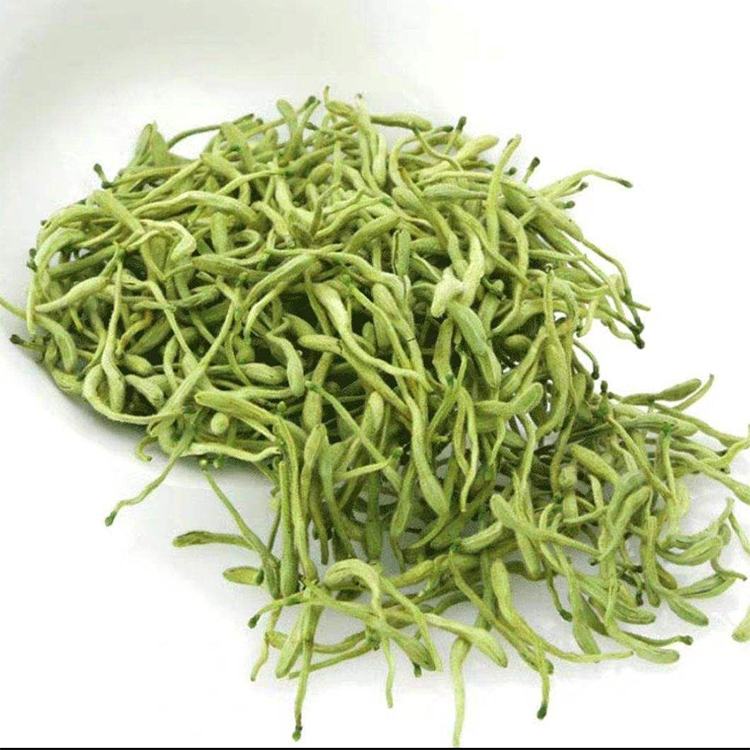
Honeysuckle Flower Sourcing: How to Control Adulteration and Quality
Honeysuckle Flower sourcing is not a simple color-and-price decision. This guide shows professional buyers how to control Lonicera japonica adulteration using botanical identity, DNA testing, chemical fingerprints, supplier traceability, incoming inspection, and defensible quality specifications.
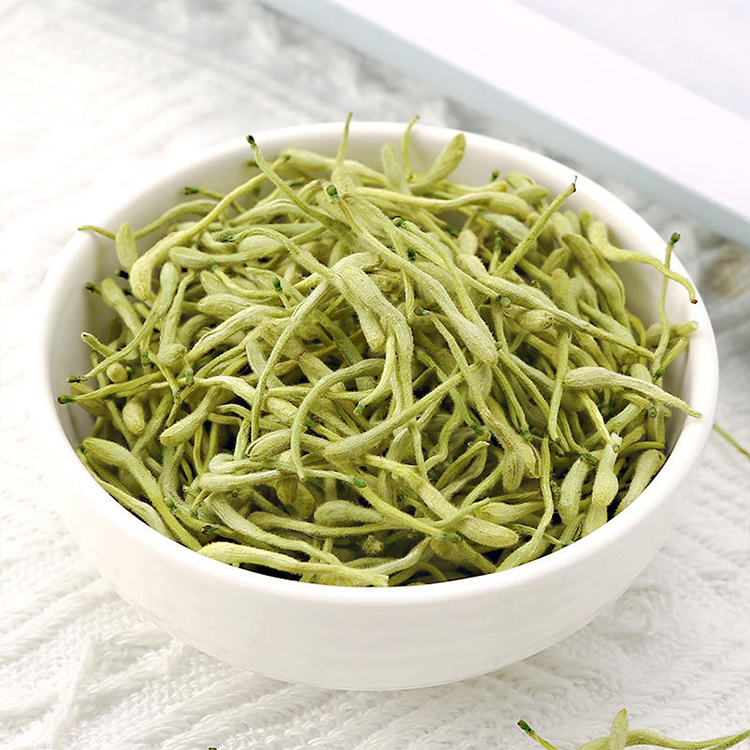
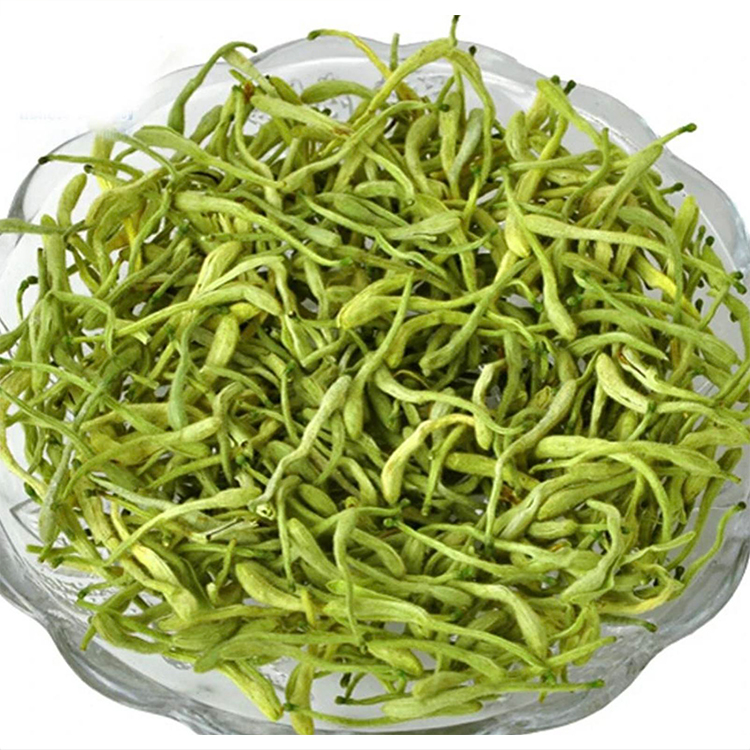
Two lots can arrive with similar pale buds, similar floral aroma, similar chlorogenic-acid numbers, and nearly identical supplier photographs, yet contain different Lonicera species, excess stems or leaves, mixed grades, or substituted material that your purchasing team never intended to buy.
So why would any professional buyer approve Honeysuckle Flower from photographs and a one-page COA?
I wouldn’t.
Honeysuckle Flower—Jin Yin Hua, pharmacopoeially known as Lonicerae Japonicae Flos—is supposed to come from Lonicera japonica Thunb. That botanical identity sounds straightforward until money enters the equation.
Related Lonicera species look similar. Some contain overlapping chemical markers. Ground material becomes harder to distinguish visually. And once flowers move through aggregators, processors, traders, extraction plants, and formulation factories, the original botanical evidence gets weaker at every step.
The uncomfortable procurement truth is simple: a cheap lot with weak identity controls is not a bargain. It is an unidentified raw-material risk.
Honeysuckle Flower Adulteration Is a Documented Supply-Chain Problem
Buyers sometimes talk about honeysuckle adulteration as if it were an obscure laboratory concern.
The published data says otherwise.
A study indexed by the U.S. National Library of Medicine developed a bidirectional PCR method for distinguishing Lonicera japonica from nine adulterants. Researchers tested 84 samples, and the method could detect 5% intentional adulteration in L. japonica. PubMed study on Lonicera japonica authentication
That is not theoretical noise. Five percent is easily enough material to disappear inside a visually acceptable commercial lot.
Another study examined preparations marketed as Lonicerae Japonicae Flos. Using UHPLC coupled with triple-quadrupole mass spectrometry, researchers found 18 of 21 preparation samples adulterated with Lonicerae Flos, with estimated adulterant proportions ranging from 11.3% to 100%. PubMed research on quantitative Lonicera adulteration analysis
Then the numbers get worse.
A 2017 Scientific Reports study assessed commercial extracts and Chinese patent medicines containing Lonicera ingredients. Only about 17% of the extracts and 22% of the tested Chinese patent medicines were reported as authentic; the rest showed substitution or adulteration patterns. The authors also identified mixtures involving lower-value Lonicera species and, in some samples, Eucommia ulmoides leaf material. NIH full-text study on Lonicera adulteration and substitution
Those results came from processed products rather than every bulk flower lot on today’s market, so I would not use them to claim that “most current honeysuckle is fake.” That would be sloppy.
But they prove something more useful for purchasing teams: species substitution has been measured, sometimes at substantial levels, and a supplier’s botanical declaration cannot be treated as proof by itself.
The First Trap: Jin Yin Hua and “Honeysuckle” Are Not Precise Enough
“Honeysuckle” is a common name.
That is the problem.
For professional honeysuckle flower sourcing, your purchase specification should state:
Botanical species:Lonicera japonica Thunb. Drug/raw-material name: Lonicerae Japonicae Flos Chinese/Pinyin name: Jin Yin Hua Plant part: Dried flower bud or flower, according to the agreed specification
Do not stop at “Honeysuckle Flower.”
Related materials may be sold under Lonicerae Flos or Shan Yin Hua and may derive from other Lonicera species. Published authentication research specifically discusses substitution involving species such as Lonicera macranthoides, L. hypoglauca, L. confusa, and related taxa.
The flowers can be visually similar.
That similarity creates commercial opportunity for both accidental mixing and deliberate substitution.
If you need to compare the intended raw material against the site’s current commercial specification, start with the Honeysuckle Flower Jin Yin Hua bulk supply page, which identifies the product as Lonicerae Japonicae Flos from Lonicera japonica. The wider Flower and Whole Herbs sourcing category is also useful when comparing honeysuckle with other whole-flower botanical materials.
Species Name Must Follow the Lot
I want the same botanical identity repeated across:
Purchase order
Supplier specification
COA
Packing list where appropriate
Outer-carton or batch label
Traceability file
Third-party laboratory submission
Internal receiving record
Why?
Because mismatched naming is often the first visible signal of an uncontrolled supply chain.
A quotation says Lonicera japonica. The COA says “Honeysuckle.” The carton says “Jinyinhua.” The laboratory sample submission says “Flos Lonicerae.”
Maybe everything is correct.
Maybe not.
Your QA system should not have to guess.
Chlorogenic Acid Alone Will Not Prove Authentic Honeysuckle
This is where purchasing teams often get overconfident.
They see a respectable chlorogenic-acid result and assume botanical identity has been established.
It has not.
Caffeoylquinic acids, including chlorogenic acid, occur across multiple Lonicera species. Researchers comparing five Lonicera flowers specifically noted that these compounds had commonly been used as quality markers even though they could be detected across the species being compared. PubMed comparison of five Lonicera flower species
And chemical overlap creates a nasty purchasing problem: a substituted material may still produce a plausible-looking headline assay value.
One 2016 study from researchers affiliated with China’s National Institutes for Food and Drug Control examined flower buds, stems, and leaves of Lonicera japonica. Using HPLC-ESI-MS analysis of 18 bioactive compounds, researchers found substantial chemical differences among plant parts and proposed compounds including caffeic acid as useful discrimination markers. PubMed study comparing Lonicera flower buds, stems and leaves
That matters because adulteration is not only “wrong species.”
It can also be the wrong plant part.
Stem.
Leaf.
Broken material.
Over-open flowers.
Powder generated during handling.
Suddenly the issue becomes yield, appearance, chemistry, extraction consistency, and what percentage of every purchased kilogram is actually usable.
Use Markers for Quality, Not as Your Only Identity Test
Chlorogenic acid and luteoloside remain useful quality markers.
But I separate two questions:
Identity: Is this genuinely the botanical material I ordered?
Quality: Does the authentic material meet my chemical and physical specification?
Those are different jobs.
Your existing Honeysuckle Flower bud ratio, color, and moisture grading guide provides a useful second layer once identity is established. It discusses open-flower ratio, visible defects, drying color, moisture, chlorogenic acid, and luteoloside, including a 12.0% water ceiling cited from the Chinese Pharmacopoeia framework.
A pretty flower can fail chemistry.
A strong assay can hide the wrong species.
You need both.
A Five-Layer Honeysuckle Flower Authentication System
I prefer layered controls because no single test has to carry the entire burden.
Layer 1: Lock Botanical Identity Before Asking for Price
Your RFQ should define Lonicera japonica Thunb. before the supplier sends a quote.
Ask for:
Botanical name
Accepted raw-material name
Plant part
Country and production region
Crop or harvest period where relevant
Drying process
Processing form
Lot-number format
Traceability back to processor or cultivation source
If a supplier cannot establish identity before discussing USD/kg, I would not assume laboratory paperwork will magically become stronger after the deposit is paid.
Layer 2: Inspect the Whole Flower Before It Becomes Powder
Whole material gives QA information that powder destroys.
Inspect:
Bud-to-open-flower ratio
Tubular flower shape
Color distribution
Blackened heads
Dark or yellow defective pieces
Stem and leaf content
Foreign matter
Dust and broken material
Insect damage
Abnormal odor
Damp or soft texture
This is one reason I dislike approving commercial flower lots solely from tightly cropped supplier images.
Photography can hide distribution.
A 100-gram handpicked sample can hide a 500-kilogram problem.
Ask how the sample was drawn.
Layer 3: Use DNA Authentication When Species Risk Justifies It
DNA testing is especially useful when morphology becomes unreliable.
The older Bi-PASA study demonstrated detection of 5% deliberate adulteration. More recently, researchers reported a Proofman-LMTIA method based on the 5.8S-ITS2 rDNA region that operated at 67°C, detected genomic DNA down to 10 pg/µL, and reached a 1% v/v adulteration detection limit in experimental mixtures. 2025 Lonicera japonica Proofman-LMTIA authentication study
The newer study also applied the method to eight market slice samples, six medicines, and one solid beverage, reporting successful positive identification across the test set.
Do all importers need molecular authentication on every shipment?
No.
But high-value lots, suspicious suppliers, powder forms, identity disputes, supplier qualification, and periodic verification are exactly where molecular tools make economic sense.
Layer 4: Use a Chemical Fingerprint, Not One Convenient Number
A 2024 study used HPLC fingerprinting, quantitative analysis of 19 components, hierarchical clustering, principal-component analysis, and other pattern-recognition tools to compare Lonicerae Japonicae Flos from different origins. The samples could be differentiated by their broader chemical profiles. 2024 PubMed HPLC fingerprint study on Lonicerae Japonicae Flos
That is where serious honeysuckle flower quality control is going.
One assay number answers one question.
A fingerprint answers more.
For routine bulk procurement, you may not need a 19-component research model for every carton. But a validated multi-marker or fingerprint approach is much harder to fool than “chlorogenic acid passed, release the shipment.”
Layer 5: Control Contaminants and Stability Separately
Authentic Lonicera japonica can still be poor merchandise.
Identity does not tell you whether the lot contains:
Excess moisture
Pesticide residues
Lead (Pb)
Cadmium (Cd)
Arsenic (As)
Mercury (Hg)
Elevated microbial counts
Salmonella spp.
Escherichia coli
Excess sulfur dioxide where relevant
Foreign matter
Mold damage
For pharma and supplement buyers, I would build those parameters into a formal raw-material specification rather than requesting “COA available?” in an email.
Multi-marker specification or validated fingerprint where needed
Reduces false confidence from shared compounds
Species verification
Supplier declaration
Microscopy and/or periodic DNA authentication
Detects closely related substitutes
Contaminants
“Pass COA”
Named pesticide, heavy-metal and microbial panels
Prevents incomplete testing
Traceability
Country only
Lot, processor, origin, harvest/production record
Makes investigations possible
Sampling
Handpicked pre-shipment sample
Defined representative sampling procedure
Prevents sample-to-shipment mismatch
Retention
None
Supplier and buyer retain sealed reference samples
Helps settle later disputes
Do not copy acceptance limits from another company’s specification simply because they look professional.
Regulatory limits depend on destination market, product category, pharmacopoeial route, customer requirements, extraction process, and intended use.
The specification needs to fit the actual transaction.
Representative Sampling Is Where Good QC Often Dies
Here is a mistake I see in far too many sourcing systems: sophisticated laboratory testing is performed on a bad sample.
Then the laboratory result is precise.
And useless.
Suppose a 1,000 kg shipment consists of multiple bags from several processing runs. The supplier takes one beautiful handful from the top of one bag and sends it to your laboratory.
The lab did nothing wrong.
Your sampling system did.
Bulk honeysuckle flower should have a documented sampling procedure that considers lot size, number of containers, sampling points, homogenization where appropriate, and retention samples.
For higher-risk purchases, I would want the testing sample linked to the actual commercial lot by:
Lot number
Sampling date
Sampled container count
Sampler identity
Seal number where used
Laboratory chain of custody
Retained reference sample
This sounds bureaucratic until a shipment fails.
Then it becomes the only evidence anyone trusts.
What ISO 21317 Tells Honeysuckle Buyers in 2026
International standardization is also moving.
ISO lists ISO 21317:2019, Traditional Chinese medicine — Lonicera japonica flower, as the existing published standard. In 2026, its second edition progressed to ISO/FDIS 21317, a Final Draft International Standard in the approval phase, intended to replace the 2019 edition. ISO/FDIS 21317 for Lonicera japonica flower
The ISO scope is worth noticing: it covers minimum requirements and test methods for Lonicera japonica flower sold and used as traditional Chinese medicine.
Translation for buyers?
Identity and test method are becoming more formal, not less.
If your supplier still describes quality as “nice color, strong smell, good price,” the commercial language is lagging behind the technical market.
How I Would Audit a Honeysuckle Flower Supplier
The best honeysuckle flower supplier is not the factory with the longest certification page.
It is the supplier that can connect the physical flower in front of you to a defensible identity and lot history.
Ask These Questions Before the First Order
What exact botanical species are you supplying?
Is the material Lonicerae Japonicae Flos from Lonicera japonica Thunb.?
What other Lonicera species are handled at the facility?
How are those species segregated?
How is incoming botanical identity verified?
Are flower buds, stems, leaves, and processing fines separately controlled?
Can you provide a lot-specific COA?
Which test methods are used?
Is the laboratory internal, external, or both?
Can you provide pesticide, heavy-metal, and microbiological testing?
How is representative sampling performed?
Can you retain a sealed reference sample from my shipment?
Can you provide origin and processing traceability?
How do you control warehouse humidity?
What happens if my destination laboratory disagrees with your COA?
Question 15 is especially revealing.
Good suppliers discuss investigation procedures.
Weak suppliers immediately say, “Impossible.”
Check Cross-Contamination Risk
A processor handling several Lonicera species deserves more scrutiny, not automatic rejection.
Ask:
Are they stored separately?
Are bins identified?
Are cleaning records available?
Does the line process related species consecutively?
How are rework and floor sweepings handled?
How are rejected materials controlled?
Can traceability reconstruct the production sequence?
Accidental substitution often has boring causes.
Bad labeling.
Shared bins.
Poor line clearance.
Untrained workers.
Returned material.
A buyer obsessed only with intentional fraud can miss ordinary process failure.
Bulk Honeysuckle Flower Quality Also Changes With Origin and Storage
Authenticity is the starting line.
Not the finish.
A 2024 HPLC study showed that Lonicerae Japonicae Flos from different production origins could be differentiated through multicomponent chemical analysis and pattern recognition.
Storage matters too.
Research monitoring Lonicera japonica over 16 months found that odor response and chlorogenic-acid content declined with storage time, with a statistically significant relationship reported between odor index and chlorogenic-acid changes. PubMed study on Lonicera japonica storage quality
So I would never treat “same species” as “same quality.”
Origin.
Harvest timing.
Drying temperature.
Moisture.
Storage humidity.
Packaging barrier.
Age.
Open-flower ratio.
Handling damage.
All can change the commercial value of an authentic lot.
This is why your existing honeysuckle grading reference is useful after botanical authentication: the Jin Yin Hua bud ratio, color and moisture guide separates physical grade signals from the deeper identity question addressed here.
The Pre-Shipment Sample Must Represent What You Will Receive
I would put this clause into the buying process:
Approval of a sample does not automatically approve the commercial lot unless the sample is drawn from, or demonstrably representative of, that production lot.
Simple sentence.
Big protection.
For higher-value programs, request a pre-shipment composite sample after production is complete.
Then:
Record the commercial lot number.
Seal the supplier’s retention sample.
Send the buyer sample for required testing.
Release shipment only after agreed results pass.
Keep the reference sample through your complaint window or defined retention period.
Now a later quality dispute has evidence.
Without retained samples, disputes rapidly become screenshots, memories, and accusations.
Not useful.
Do Not Let Price Per Kilogram Control the Wrong Decision
Cheap substitutions exist because buyers create demand for them.
Purchasing asks for a lower price.
Supplier cuts margin.
Someone changes grade.
Someone increases open flowers.
Someone tolerates more stem.
Someone blends a related species.
Nobody updates the specification.
The shipment still says Honeysuckle Flower.
This is why I prefer comparing cost per accepted kilogram, not quoted cost per kilogram.
If Supplier A is 8% cheaper but produces:
5% more foreign matter,
higher stem content,
more laboratory retesting,
greater rejection risk,
unstable extract yield,
and one customer complaint,
the cheaper supplier was never cheaper.
The invoice simply hid the cost.
Build Honeysuckle Quality Into the Supply Agreement
Your PO or quality agreement should define what happens when:
Species authentication fails
Moisture exceeds specification
Marker compounds miss the agreed range
Pesticide testing fails
Microbial results fail
Foreign matter exceeds the limit
Buyer and supplier laboratories disagree
Packaging arrives damaged
Lot identity does not match paperwork
Also define whether rejected goods are:
Replaced
Reworked
Returned
Destroyed
Discounted only with buyer authorization
Silence is expensive.
Write the rules before something fails.
If you are developing tea bags, extracts, supplement blends, or private-label products rather than purchasing only raw flowers, the site’s Chinese herbal OEM and ODM manufacturing process can help connect the raw-material specification to formulation, processing, testing, packaging, and final production controls.
FAQs
How can buyers authenticate bulk Honeysuckle Flower?
The most reliable way to authenticate bulk Honeysuckle Flower is to combine declared botanical identity, macroscopic examination, lot-level traceability, chemical analysis, and—when species substitution presents meaningful commercial risk—DNA-based testing, because no single visual feature or chemical marker consistently proves that every lot is authentic Lonicera japonica.
DNA approaches can be especially useful for powders, suspicious lots, supplier qualification, and periodic verification. Published Lonicera research has demonstrated adulterant detection at approximately 5% using Bi-PASA and down to 1% in experimental mixtures using a newer Proofman-LMTIA method.
Is chlorogenic acid enough to prove Lonicera japonica authenticity?
Chlorogenic acid alone is not sufficient to prove Lonicera japonica authenticity because caffeoylquinic acids occur in several related Lonicera species, meaning substituted material may still produce an apparently acceptable chlorogenic-acid result; buyers should therefore separate chemical quality-marker testing from botanical identity testing and use additional markers, fingerprints, microscopy, or DNA where justified.
Research comparing several Lonicera flowers specifically warns that shared chemical markers make species discrimination more complicated.
What are the main adulteration risks in Honeysuckle Flower sourcing?
The main Honeysuckle Flower adulteration risks are substitution with related Lonicera species, mixing of lower-value flower material, excessive stems or leaves, processing fines, nonrepresentative sampling, and paperwork that does not consistently identify Lonicera japonica Thunb.; these problems can arise through intentional economic substitution or ordinary segregation and labeling failures.
Published research has documented both Lonicera-species substitution and differences between the flower buds, stems, and leaves of L. japonica, supporting the need to control species and plant part separately.
What should a Honeysuckle Flower COA include?
A strong Honeysuckle Flower COA should identify the botanical material and batch, report the agreed physical and chemical quality parameters, state analytical methods where appropriate, and include relevant contaminant results such as pesticides, heavy metals, and microbiological testing rather than relying on vague statements such as “tested,” “qualified,” or “meets export standard.”
The COA should also correspond to your approved specification and the exact commercial lot. If the supplier cannot show which sample generated the COA, the document has much less value.
How do I choose the best Honeysuckle Flower supplier?
The best Honeysuckle Flower supplier is one that can consistently prove Lonicera japonica identity, maintain lot-level traceability, provide representative samples and defensible laboratory data, control related species and plant parts during processing, document storage and contamination controls, and agree in advance to clear investigation and replacement procedures when buyer testing identifies a nonconforming shipment.
Price still matters.
But traceability, sampling discipline, specification control, and repeatability determine whether the quoted price survives contact with your QA department.
Your Next Steps: Source Honeysuckle Flower by Specification, Not Appearance
Honeysuckle Flower sourcing should begin with four words:
Prove what it is.
Then grade it.
Then test it.
Then price it.
For a serious procurement program, define Lonicera japonica Thunb., plant part, physical grade, moisture, marker compounds, contamination panel, analytical methods, representative sampling, traceability requirements, and rejection rules before comparing supplier quotations.
Our low MOQ of 1 kg (2.2 lb) makes it easy to order Chinese herbal slices or wholesale Chinese medicine herbs. Private-label and bilingual labeling are also available.
Delivery Cycle & Support
We have a fast 7-day lead time. We provide free samples, COA reports, and technical support to help you bring high-quality bulk Chinese herbs to market.
Quality & Certifications
Our products are manufactured in a GMP-certified facility and meet ISO22000 standards. All Chinese herbs are third-party tested for heavy metals, pesticides, and microorganisms.