American Ginseng Slices: Building a Practical Grade Specification
A buyer's guide to writing an American ginseng slice grade specification covering identity, root source, cut geometry, contaminant limits, trade documents, and RFQ preparation.
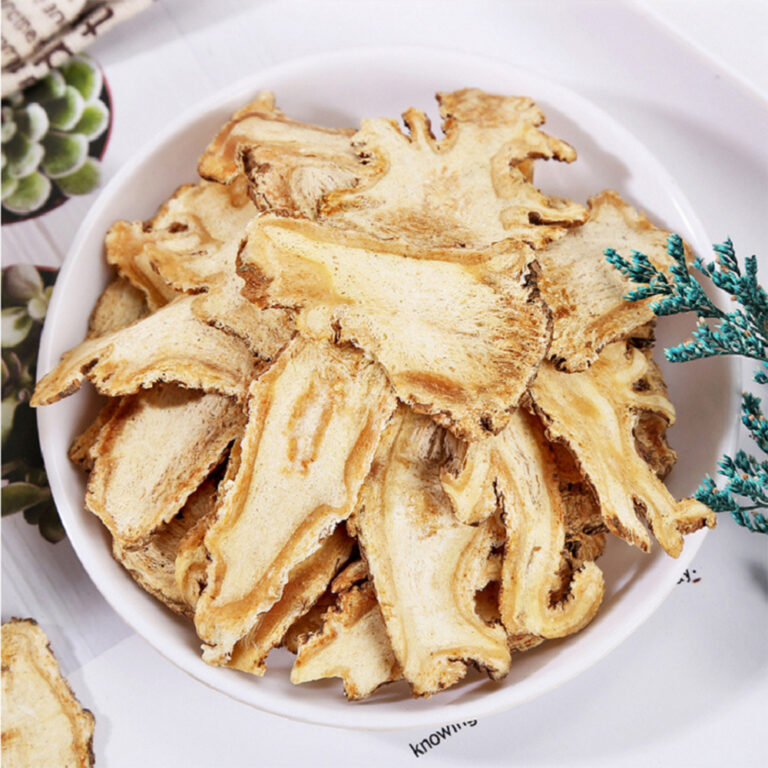
Searching for American ginseng grades mostly returns whole-root standards, retail size charts, and origin marketing. None of these tells a tea brand, supplement manufacturer, or distributor what a carton of sliced root must look like, test like, and document before it passes incoming inspection. A practical grade specification for American ginseng slices (Panax quinquefolius, Xi Yang Shen) is a written set of limits covering identity, root source, cut geometry, defects, moisture, contaminants, and paperwork. It is not a single label such as “Grade A.” This guide explains how to build that specification, which parts of existing grading systems carry over to sliced material, and what to settle before you ask for a quote.
Why Do Whole-Root Grades Not Define a Slice Grade?
The best-known formal system for cultivated ginseng is the USDA standard. According to the Federal Register notice that revised the USDA standards in 2012, the voluntary standards apply to cultivated ginseng such as American ginseng but not to wild ginseng. The notice replaced the older grade names with U.S. No. 1 through U.S. No. 7, based on quality and percentage of defects. It also set whole-root size categories (Premium, Select, Standard) measured by diameter and length. The USDA Agricultural Marketing Service grades page adds that the color and texture of the ginseng are specified together with the grade.
That has three consequences for a slice buyer:
The size categories describe whole roots. The USDA definition of a whole root includes a tapered top or crown. Once the root is cut, the length and diameter measurements no longer describe what you receive.
The standard is voluntary and covers cultivated roots only. Wild material sits outside it.
It says nothing about slice thickness, broken-slice percentage, moisture, or contaminant limits.
A quote for “USDA No. 1 slices” is therefore incomplete. Ask what was graded (the whole root before cutting, or the finished slices), who graded it, and how the slices were selected from the graded lot. Your own specification has to fill the gap.
What Should a Practical American Ginseng Slice Specification Include?
A usable specification has eight parameter groups. The table below shows what to define in each and how a receiving team normally verifies it. It deliberately contains no numeric limits, because the right limits depend on the product, the destination market, and the method used.
Parameter
What to define
Why it matters
Typical verification
Identity
Latin binomial, pinyin or common name, plant part, processing state
Prevents species substitution and wrong-part supply
Documents, botanical identification, fingerprint
Root source
Country or region of growth, wild or cultivated status, harvest year, source-root size category
Drives trade paperwork, price, slice diameter, and positioning
Origin records, lot genealogy
Cut geometry
Target thickness with tolerance, diameter band, maximum broken or fines percentage
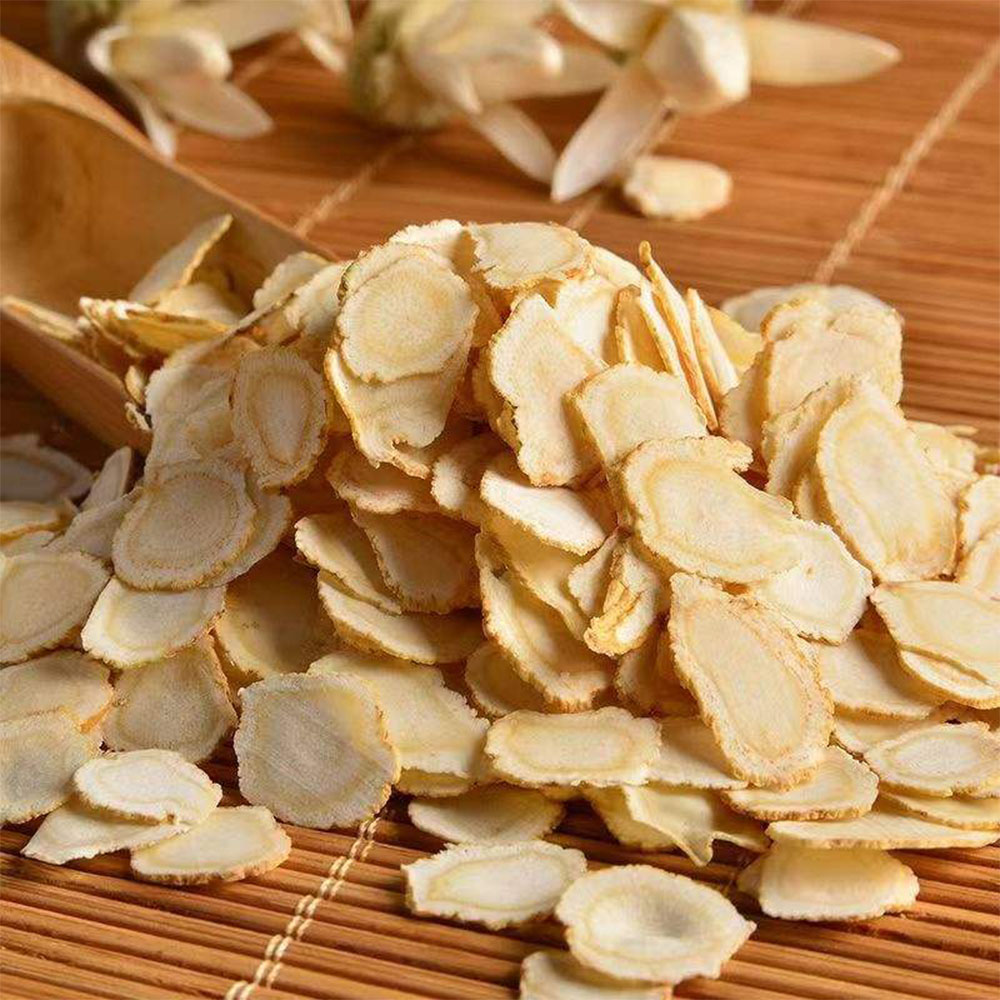
Grade comparisons are meaningless until two offers describe the same material. Write the identity line in full: Panax quinquefolius, American ginseng, Xi Yang Shen, root (not stem, leaf, or rootlet unless stated), and processing state, such as dried versus steamed. The supplier guide on ginseng slices wholesale for supplement and tea brands recommends the same discipline: Latin name, common name, pinyin name, plant part, and processing state, rather than the single word “ginseng.”
The reason is practical. A 2020 review of Panacis Quinquefolii Radix in Frontiers in Pharmacology notes that adulterants and shoddy products have increased in the market alongside high prices and short supply. It also notes that provenance, growing environment, harvest time, processing, and storage all affect quality, so material from different regions can vary. A specification that only says “American ginseng slices” leaves all of those variables open.
Add root-source fields as well: country and region of growth, whether the roots are wild, wild-simulated, or cultivated, and the harvest year. These fields affect price and trade documentation, and they tell you how much lot-to-lot variation to expect.
Slice Thickness, Diameter, and Broken-Slice Limits
Cut geometry is where a slice specification differs most from a root grade, and it is where many disputes start.
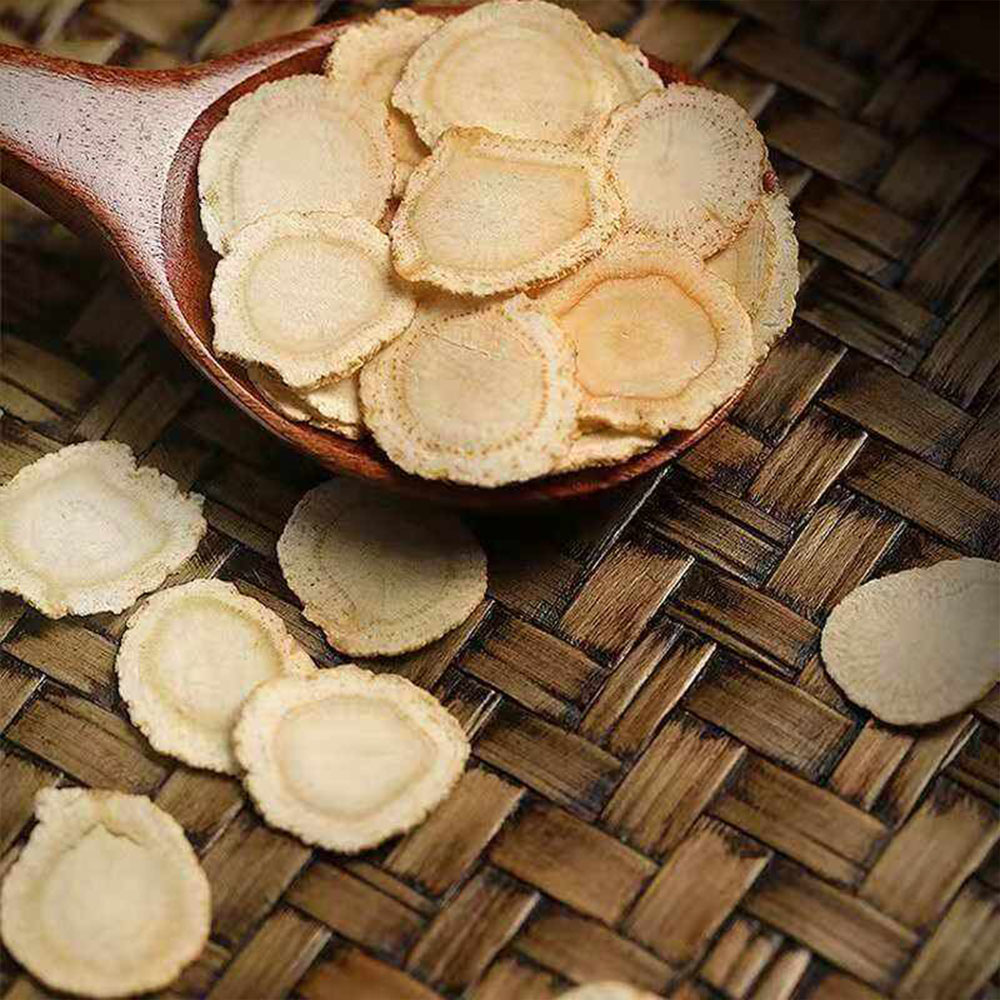
Diameter is limited by the source root. The same review, summarizing the 2020 Chinese Pharmacopoeia, describes the dried root as 3–12 cm long and 0.8–2 cm in diameter. A slice cannot be wider than the root it came from. If your tea sachet or retail jar needs a narrow diameter band, the only dependable way to get it is to sort roots by diameter before slicing. So ask the supplier whether roots are sorted by size before cutting, and write the diameter band or source-root size category into the specification. (Check the current pharmacopoeia edition before quoting these dimensions in a controlled document.)
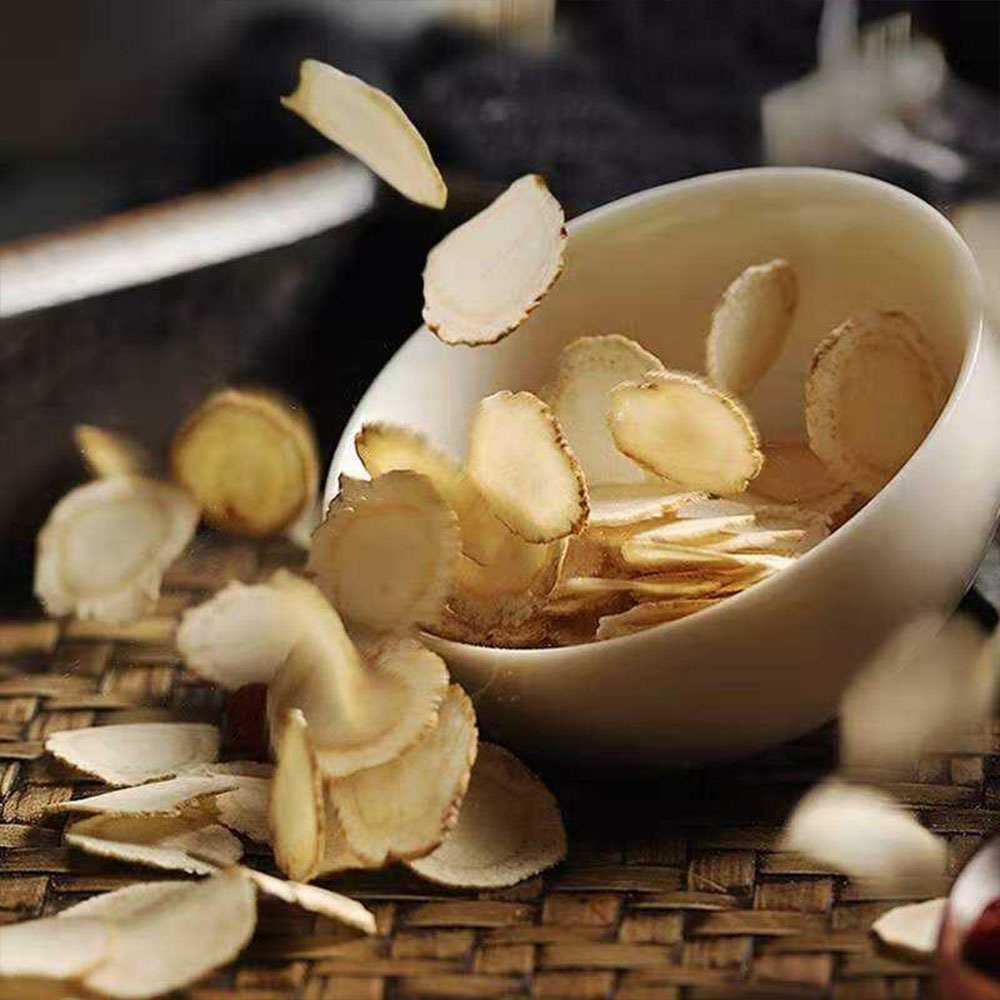
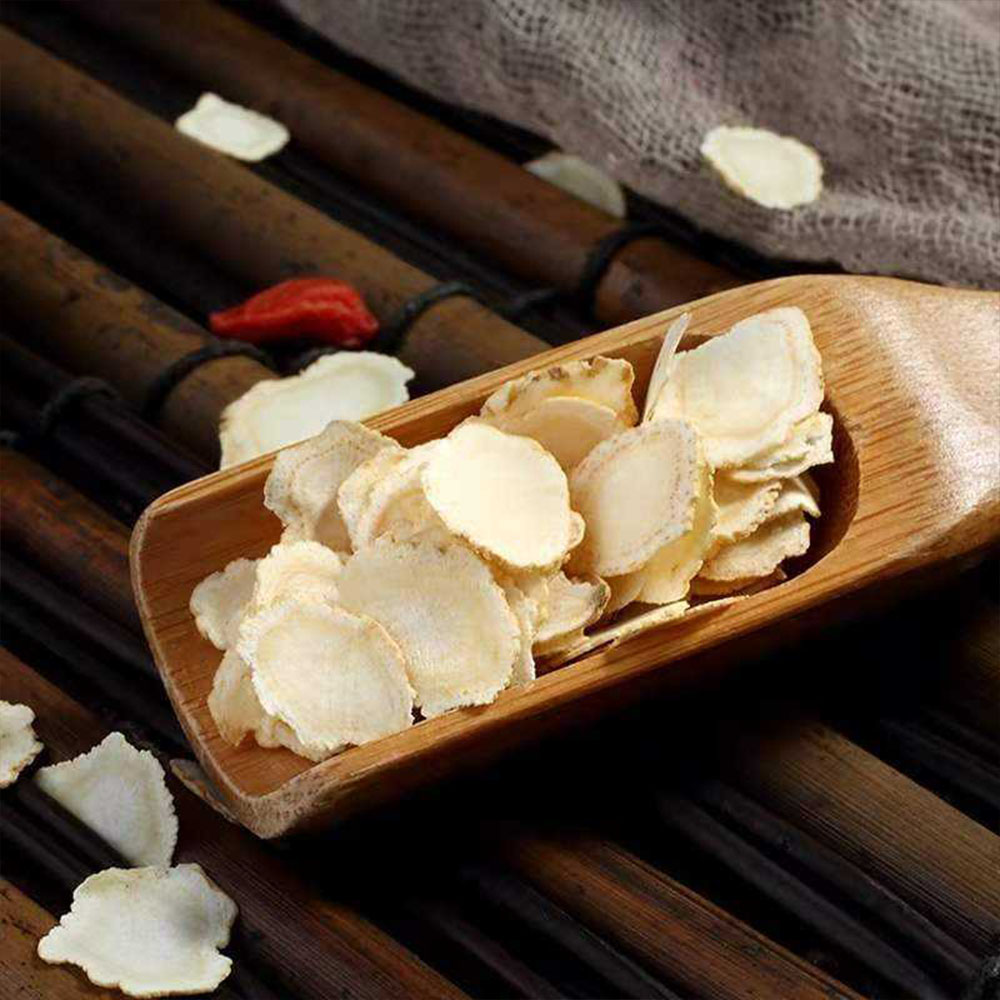
Thickness depends on end use. The cut-size guide on TCM decoction pieces and choosing the right cut size describes thin slices as 1–2 mm and thick slices as 2–4 mm, and lists ginseng (Ren Shen) among the herbs usually cut thin to mid. The ginseng wholesale guide gives 1.5–3.0 mm as an example range for tea evaluation. Treat both as starting points, not standards. Thinner slices wet and infuse faster but break more and generate more fines. Thicker slices hold their shape and look better in a clear pouch, but release more slowly in a short steep.
Broken-slice and fines limits need a method. “Low breakage” cannot be audited. Define the maximum percentage of pieces below a stated size or passing a stated sieve, the sample weight, and who runs the test.
The right priorities vary by product:
End use
What the grade should prioritize
Common specification mistake
Loose tea or sachets with visible slices
Uniform diameter and thickness, color consistency, low fines
Specifying thickness but not diameter or fines
Decoction or tea-bag filling
Controlled thickness for steep time, low dust for sealing and weight accuracy
Paying for cosmetic slice uniformity that milling removes
Extraction
Consistent geometry and moisture, marker or fingerprint data
Fixing a thickness without confirming extraction behavior
Why Are Marker Compounds Useful but Not Enough?
Buyers often reduce quality to one number: total ginsenosides on the COA. That figure has a place, but it is incomplete. The Frontiers review reports that the 2020 Chinese Pharmacopoeia uses only ginsenosides Rg1, Re, and Rb1 as quality indices for the root. The authors describe the evaluation indices as one-sided and argue for multi-component methods.
For a procurement specification, this suggests three rules:
Name the method. A percentage without a stated method cannot be compared between suppliers or reproduced by your laboratory.
Use fingerprinting for identity and consistency. The specification-sheet guide notes that fingerprinting is often safer than marker limits alone because herbs vary by origin and season.
Set marker limits only if your product or claim depends on them, and align the method between your lab and the supplier’s lab before the first order. Otherwise a small method difference becomes an out-of-specification dispute.
Contaminant, Moisture, and Microbial Limits Should Follow the Destination Market
For a U.S. dietary supplement, the component specification is a regulatory requirement, not a courtesy. Under 21 CFR 111.70, a manufacturer must establish an identity specification for each component. It must also set component specifications needed to meet purity, strength, and composition requirements for the finished product. Finally, it must set limits on contamination that may adulterate the finished batch. A ginseng slice lot headed to a supplement plant will be measured against those requirements.
So build the contaminant section around the market where the finished product will be sold. State the heavy-metal panel (lead, cadmium, arsenic, mercury), the pesticide screen, the microbial panel with sample sizes, and sulfur dioxide if sulfur treatment is a realistic risk. Name the reference standard or the customer’s own limits. The overview of quality standards for Chinese herbal slices in international markets summarizes pharmacopoeial and regulatory references by region, which helps you decide which one your COA should cite.
Do not copy a moisture or microbial limit from a competitor’s datasheet. Take it from the monograph or the market standard that applies to your product, record the test method, and ask the supplier to confirm it can test to it on every lot.
Origin, Trade Status, and Traceability Fields
American ginseng is regulated in international trade. Under 50 CFR 23.68, whole and sliced roots and parts of American ginseng, whether wild or artificially propagated, are included in CITES Appendix II. Manufactured products such as powders, pills, extracts, tonics, and teas are excluded. The rule also states that cultivated ginseng which does not meet the requirements of artificially propagated will be considered wild for export purposes. For roots harvested under an approved state or tribal program, exports must carry a state or tribal certificate. That certificate includes details such as state of origin, year of harvest, wild or artificially propagated designation, dried or fresh designation, and root weight.
This does not make every slice purchase a permitting exercise, and it does not cover roots grown in other countries. It does mean your specification should record the following:
Country and, where relevant, state or province of growth.
Wild or cultivated declaration and harvest year.
Which party is responsible for export and import paperwork.
Whether the lot is raw root slices or a manufactured product such as powder.
Confirm the details for your route with the supplier and a customs broker before shipment, because requirements depend on origin and destination.
Traceability turns these fields into something you can verify. The guide on traceability and batch control from farm to finished slices describes a lot code that follows the material through receiving, slicing, drying, grading, and packaging. Material that is reworked gets a new sub-lot. Add a line to your specification that the COA lot code must match the carton and inner bag, and that any rework creates a new sub-lot.
Why Is a Premium Whole-Root Grade Not Always the Right Slice Purchase?
The common assumption is that larger, cleaner, whole-root-looking material is better and worth the higher price. The Ginseng Board of Wisconsin acknowledges that form and price are strongly shaped by Asian consumer preferences. In some markets, whole roots command a premium over pieces and slices. That premium reflects how a whole root is presented, not necessarily how a slice performs in your product.
For slices, the defensible position is to pay for the attributes your product uses:
Visible-tea products benefit from root-size selection because it controls slice diameter and appearance. A tighter source-root grade can be worth paying for here.
Capsule, powder, and extraction products gain little from cosmetic root size. Identity, contaminant data, moisture, and clean sourcing matter more, and a cost-controlled cut may be the better purchase.
A high marker percentage does not substitute for identity and contaminant control. Marker content is one input, and the review above explains why it is an incomplete measure.
This reasoning is a procurement judgment, not a published finding. Test it on your own product: run samples from two source-root categories through your actual infusion, milling, or extraction process before committing to the more expensive grade.
What Should Buyers Specify Before Requesting a Quote?
A complete request lets a supplier quote the right material the first time. Prepare:
End use and format: loose tea, tea bag, decoction, capsule input, or extraction.
Destination market and regulatory route: food, dietary supplement, or traditional herbal product, since this sets contaminant and documentation expectations.
Identity and source fields: species, plant part, processing state, origin, wild or cultivated, and harvest year.
Cut geometry: thickness target and tolerance, diameter band, and maximum broken or fines percentage with the test method.
Quality documents: batch-specific COA, test methods, acceptance criteria, and lot-to-label match.
Quantities: trial order versus scale order, expected annual volume, and delivery schedule.
Packing: inner liner, carton, humidity protection, and any bilingual or private-label labeling.
Sample approval: a retained reference sample and written tolerances, so the bulk lot is judged against the approved sample and not against memory.
Agree on the approved sample’s tolerances before payment, not after the shipment arrives. That is the simplest protection against a bulk lot drifting from the sample.
When your specification is ready, you can send it with a request through the supplier’s bulk American ginseng (Xi Yang Shen) product page. The page lists free samples and COA reports and describes third-party testing for heavy metals, pesticides, and microorganisms, but it does not publish slice-grade parameters. Ask the supplier to confirm each line of your specification in writing, including cut geometry, root source, and documents, before you approve the sample.
Frequently Asked Questions
What are the grades of American ginseng slices?
There is no single recognized grade system for slices. The USDA standards grade whole cultivated roots by defects and size category. For slices, buyers write their own grade from identity, root source, cut geometry, defects, moisture, contaminant limits, and documents.
Do USDA ginseng grades apply to sliced American ginseng?
Not directly. The voluntary USDA standards cover cultivated ginseng and define whole-root size by diameter and length. Slices fall outside those measurements, so a slice quote should state what was graded and which additional limits apply to the cut material.
What slice thickness should I specify for American ginseng?
It depends on end use. Reference guides cite roughly 1–2 mm for thin and 2–4 mm for thick decoction cuts, and 1.5–3.0 mm as a tea evaluation example. Confirm the choice by testing infusion, extraction, or filling performance.
Is ginsenoside content enough to judge slice quality?
No. Ginsenoside results are useful, but they do not confirm species, contaminant control, moisture, or cut quality. Combine a named-method marker or fingerprint result with identity checks, a batch-specific contaminant panel, and moisture data.
Do American ginseng slices need CITES paperwork?
Possibly. Under U.S. rules, whole and sliced American ginseng roots are in CITES Appendix II, while powders, extracts, and teas are excluded. Requirements depend on origin and route, so confirm with your supplier and customs broker.
What documents should come with each lot?
Request a batch-specific COA that lists test methods and acceptance criteria, with a lot code matching the carton. Add origin and any trade certificates, and a statement that any change in origin or processing needs notification before shipment.
Our low MOQ of 1 kg (2.2 lb) makes it easy to order Chinese herbal slices or wholesale Chinese medicine herbs. Private-label and bilingual labeling are also available.
Delivery Cycle & Support
We have a fast 7-day lead time. We provide free samples, COA reports, and technical support to help you bring high-quality bulk Chinese herbs to market.
Quality & Certifications
Our products are manufactured in a GMP-certified facility and meet ISO22000 standards. All Chinese herbs are third-party tested for heavy metals, pesticides, and microorganisms.