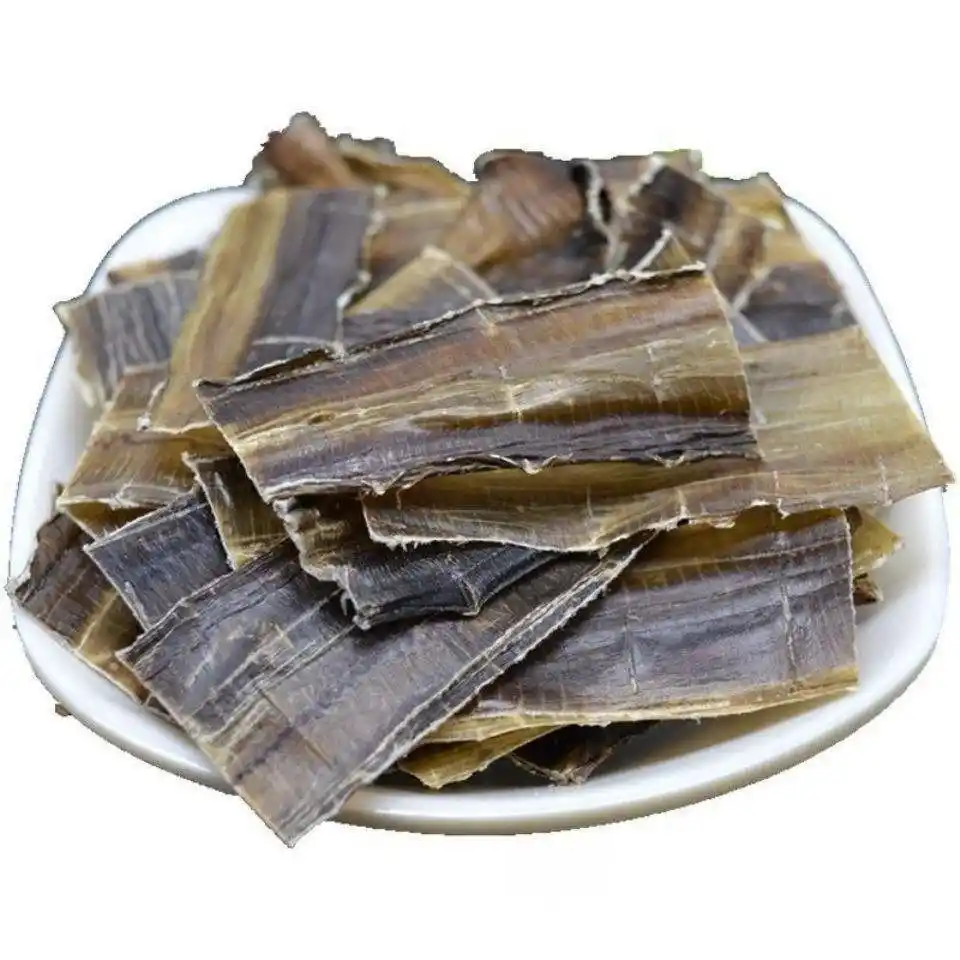
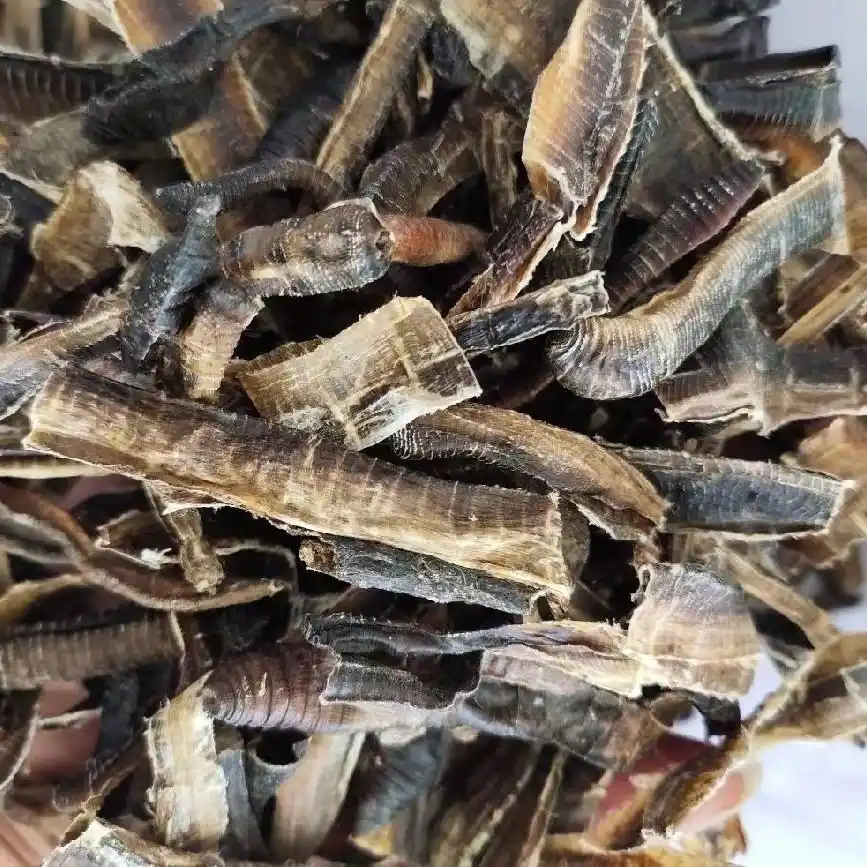
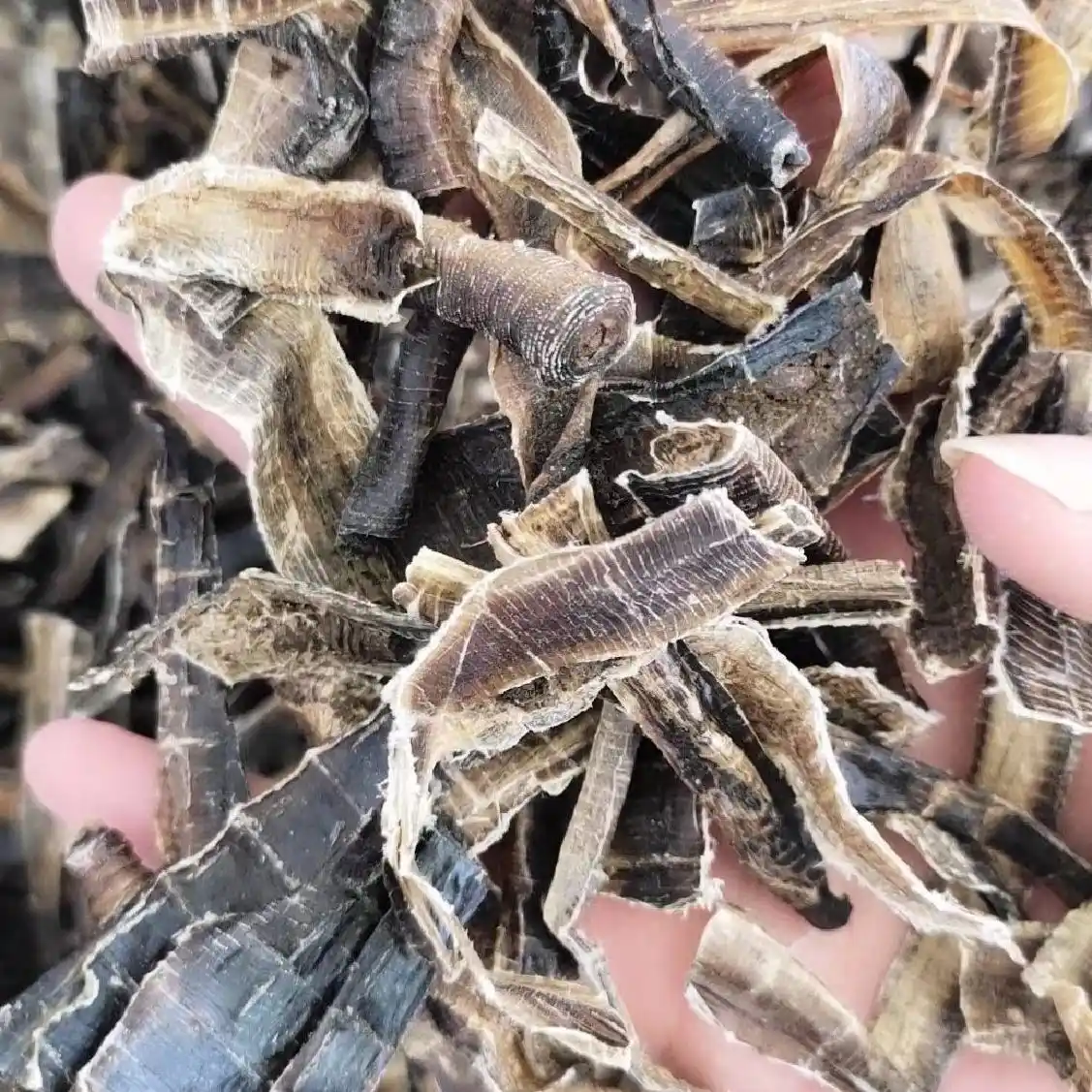
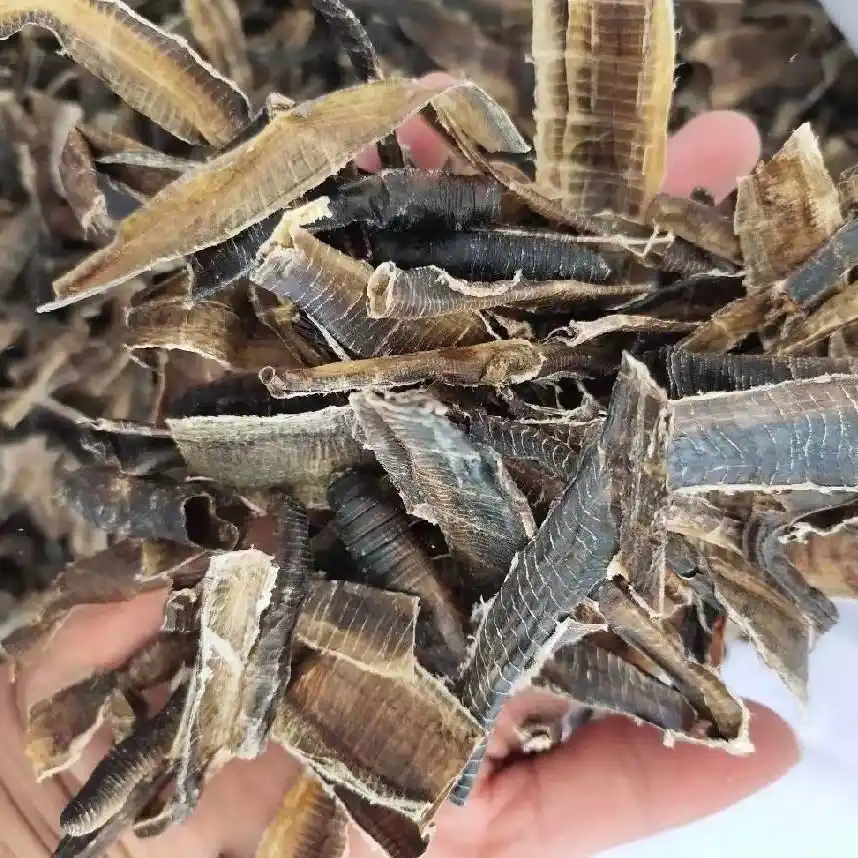
If you’re buying Di Long (dried earthworm slices) for decoction pieces, extracts, or finished blends, here’s the blunt truth: you don’t have a quality spec until you can reject a lot with it. And with Di Long, three specs decide most of the headaches:
Odor acceptance (what’s “normal,” what’s “too much,” and how you test it)
This isn’t “nice to have.” If you don’t lock these in your PO, you’ll get spec creep, then you’ll fight about what’s “acceptable,” and your warehouse ends up holding inventory nobody wants.
Cleaning: foreign matter, moisture, ash, and aflatoxins
Cleaning isn’t just “looks clean.” In Di Long, cleaning is basically how you control sand load, and sand load shows up as ash (especially acid-insoluble ash).
Foreign matter (≤6%)
A commonly cited pharmacopoeia-style requirement for Di Long sets foreign matter ≤ 6%. In real procurement terms: if your incoming QC has to pick out too much dirt, fibers, or random bits, that lot becomes slow to use, and your operators start doing “extra cleaning” that nobody budgeted time for.
Moisture (≤12.0%)
Moisture is where storage problems begin. The same monograph-style spec lists moisture ≤ 12.0%. If moisture runs high, you’ll see more clumping, higher mold risk, and odor that “blooms” when you crack a bag.
Total ash (≤10.0%) and acid-insoluble ash (≤5.0%)
This is the sand scoreboard. The limits often cited are:
Total ash ≤ 10.0%
Acid-insoluble ash ≤ 5.0%
A patent describing a one-step Di Long slice process even calls out the pain point directly: traditional methods can leave sand in the body and push ash over spec, so they use rolling/pressing + washing + screening, then dry at 60–70°C to a moisture range (they mention 8–12%) and show an example lot with total ash 9.1%.
Aflatoxins (AFB1 and total)
For many herbal materials, the PRC Pharmacopoeia (2020) framework commonly uses AFB1 5 μg/kg and total aflatoxins 10 μg/kg as thresholds in specific contexts. Even when Di Long isn’t your highest-risk item, buyers still ask for it because downstream customers (supplement factories, hospitals, importers) don’t want surprises.
Cut uniformity: segment length, defect rate, and “cook consistency”
Cut size sounds boring until you run decoction, extraction, or blending at scale. Then it becomes everything.
Short segment 5–10 mm, long segment 10–15 mm
A prepared-slices quality standard spells out typical segment specs:
Short segment: 5–10 mm
Long segment: 10–15 mm
For Di Long, many buyers choose 10–15 mm as the default because it handles well (less dust) and still extracts fine.
Abnormal slices ≤10%
Same standard also states abnormal slices shouldn’t exceed 10%. This matters because “abnormal” often turns into:
too many tiny chips → dusty lots, messy bag bottoms
too many long strings → slow extraction, uneven decoction
too many crushed pieces → odor release spikes, inconsistent sensory
Why your customer complains when cut is messy
Here are two real-world (non-fictional) patterns you’ve probably seen:
Hospital / clinic decoction rooms: they want fast picking + consistent boiling. If one bag is mostly chips and another is mostly long pieces, their “same formula” doesn’t feel the same in the pot.
E-commerce / retail buyers: they open the pouch, sniff, then boil. If you shipped lots with high dust and inconsistent cut, you’ll get “smells too strong” feedback fast (and yeah, it can turn into returns).
Odor acceptance: hot-water wetting check, trimethylamine (TMA), and what “too stinky” means
Let’s not pretend: Di Long has a natural smell profile. The problem is when it crosses from “normal” into customer-rejection territory.
Hot-water wetting check
A prepared-slices standard literally says you can assess odor directly, and if needed, use hot water to moisten the sample and check. That’s a big hint: odor can change a lot once water hits it, so your acceptance test should mirror how the product gets used.
Trimethylamine (TMA) can jump after warm soaking
A Heliyon-indexed study (via PubMed) reports that when Pheretima is exposed to hot water, fishy odor increases sharply, and TMA exposure increased by ~2–3× after warm soaking. So if you only sniff a dry bag and call it “fine,” you’re missing the moment your end user actually judges it.
Below is a simple spec framework you can copy into your PO/QA agreement. I’m mixing “hard limits” (numbers) with “buyer-defined sensory gates” (because odor acceptance is market-driven).
Spec item (keyword)
Suggested acceptance
How you test (fast)
Why you care
Evidence / reference
Foreign matter
≤ 6%
Pick + weigh
Too much hand-sorting = delays + disputes
Monograph-style limits
Moisture
≤ 12.0%
Moisture test
High moisture = mold risk + odor bloom
Monograph-style limits
Total ash
≤ 10.0%
Ash test
Sand/dirt control proxy
Monograph + process notes
Acid-insoluble ash
≤ 5.0%
Acid-insoluble ash
More direct “sand” signal
Monograph-style limits
Segment length
10–15 mm (or 5–10 mm if you want “short”)
Caliper + sieve grading
Consistent extraction + lower dust
Slice-size standard
Abnormal slices
≤ 10%
Visual count by weight
Controls chips/strings/crush
Slice-size standard
Odor check (dry)
Buyer-defined pass/fail
Bag-open sniff
First impression gate
Sensory method allowed
Odor check (hot-water)
Buyer-defined pass/fail
Hot-water wetting sniff
Matches real use; catches “odor bloom”
Hot-water check + odor research
Drying control (process)
60–70°C; moisture target range
Process record review
Helps stabilize odor + moisture
Processing method example
Aflatoxins (if required)
AFB1 5 μg/kg; total 10 μg/kg
Third-party COA
Import/compliance confidence
CP2020-style threshold references
Small but important: write your odor rule like a grown-up contract line. Example:
“Odor must be acceptable for decoction use. Supplier and buyer keep a retained sample for arbitration.” Not fancy, but it stops endless arguments.
Incoming inspection: COA, AQL sampling, and lot mapping
If you’re buying in volume, do these three things and you’ll avoid 80% of the drama:
COA packet discipline: moisture, ash, micro/heavy metals/pesticides (as needed), plus any market-specific items.
AQL-style sampling: don’t sniff one bag and pray. Pull samples across the lot.
Lot mapping: track which batch went to which customer and which warehouse bin. When a complaint happens, you isolate it fast.
GuoCao: GMP herbal-slice lines, ISO 22000, third-party COA
If you’re sourcing Di Long for regulated or picky channels, the manufacturing setup matters.
GuoCao states it runs a GMP-certified facility, meets ISO 22000, and uses third-party testing for items like heavy metals, pesticides, and microorganisms. It also positions factory-scale output (2,500 tons annually) across categories and highlights global shipment support.
If you’re doing private label or custom packs, skim:
drying at 60–70°C to a moisture range (they mention 8–12%)
Buyer takeaway: if your supplier can’t clearly explain how they control sand and drying, you’ll see it later as ash spikes, funky smell, and unstable storage.
“Insight into the mystery of Pheretima smells worse exposed to water”: what odor science says (and why you should care)
This Heliyon/PubMed-indexed work basically validates what buyers already feel:
Odor can intensify after warm soaking / hot water exposure.
TMA can rise ~2–3× after warm soaking.
So your odor spec should include a hot-water wetting check, not just a dry sniff. Otherwise, you’re testing the wrong moment.
Our low MOQ of 1 kg (2.2 lb) makes it easy to order Chinese herbal slices or wholesale Chinese medicine herbs. Private-label and bilingual labeling are also available.
Delivery Cycle & Support
We have a fast 7-day lead time. We provide free samples, COA reports, and technical support to help you bring high-quality bulk Chinese herbs to market.
Quality & Certifications
Our products are manufactured in a GMP-certified facility and meet ISO22000 standards. All Chinese herbs are third-party tested for heavy metals, pesticides, and microorganisms.