Ginseng Slices Wholesale Guide for Supplement and Tea Brands
Buying ginseng slices wholesale is not about finding the prettiest root photo or the lowest kilogram price. It is about proving species identity, controlling moisture, demanding COA data, matching cut size to the final product, and protecting your brand before a bad batch reaches the consumer.
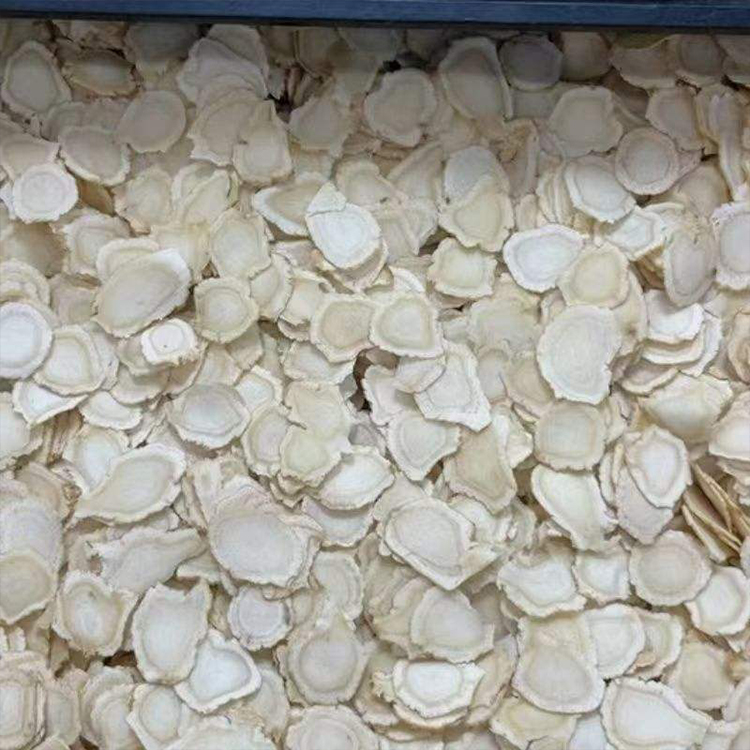
I don’t trust a dried ginseng slices supplier just because the product photo looks clean, the slices look creamy, and the sales page says “premium” three times before mentioning species, origin, moisture, heavy metals, pesticide residues, or whether the batch is actually fit for supplement manufacturing. Why would anyone?
Ginseng slices wholesale buying is a quality-control decision disguised as a purchasing decision. Supplement and tea brands are not just buying root slices. They are buying identity, chemistry, documentation, export readiness, shelf stability, and claim risk.
The market rewards the buyer who asks ugly questions early. Is this Panax ginseng, Panax quinquefolius, or something dressed up as ginseng? Are you buying whole root slices, tail slices, broken pieces, mixed grades, or “tea cut” material designed more for visual fill than serious formulation? Are the active marker compounds, often discussed as ginsenosides such as Rb1, Rg1, Re, Rc, and Rd, being tested by HPLC, or are you accepting a PDF that could have been made in a coffee shop?
Hard truth: most procurement teams obsess over price per kilogram and ignore batch risk until the first complaint, customs delay, or failed incoming inspection.
For American ginseng, the category gets even trickier. If your product concept calls for Xi Yang Shen, start by checking a supplier page built around bulk wholesale American ginseng slices rather than a generic “ginseng root” listing. Species matters. Label language matters. And in the supplement world, vague sourcing is not charming. It is expensive.
Why Supplement and Tea Brands Buy Ginseng Slices Instead of Extracts
Whole slices sell trust.
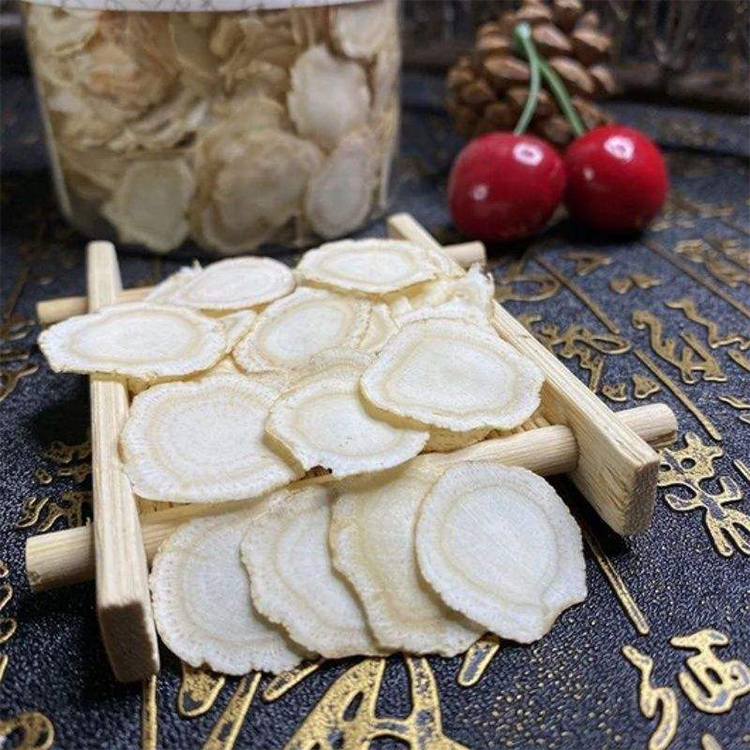
A consumer opening a tea pouch can see the ingredient. A brand founder can photograph it. A formulator can build a sensory story around bitter-sweet root notes, pale cross-sections, root rings, and slow infusion behavior that powders or extracts cannot easily show.
But whole slices are not automatically better. They are just different.
Extracts give tighter standardization, usually around a declared ratio or marker compound range. Slices give visible authenticity, slower release in infusion, and a cleaner “whole herb” positioning. For brands still deciding between slice format and extract format, I would study the production logic behind whole slices vs extracts for product development before locking the formula.
Extract ratio, carrier, ginsenoside profile, residual solvent test, stability data
Do not buy format first. Buy use case first.
If the product is a luxury loose tea, whole slices make sense. If it is a capsule, whole slices are probably just a milling problem waiting to happen. If it is a functional beverage shot, extract may be cleaner. And if your brand wants both tea and supplement SKUs, ask the supplier whether they can support bulk herbal blending and milling services instead of treating raw material, milling, and blending as separate vendor headaches.
Table of Contents
The Compliance Wall: FDA, FSVP, and Why “Natural” Means Nothing at Customs
Regulators don’t care about your brand story.
For U.S.-bound dietary supplements, 21 CFR Part 111 is the operating reality. The regulation requires specifications for identity, purity, strength, composition, and contamination limits, and it requires quality-control operations across manufacturing, packaging, labeling, and holding.
So what does that mean for ginseng slices for supplement brands?
It means your “bulk ginseng slices” are not just dried roots in a carton. They are components entering a regulated production system. You need identity specs. You need contamination limits. You need documentation that survives a quality audit. And if you import, you may also be pulled into Foreign Supplier Verification Program expectations. FDA says the FSVP rule requires importers to perform risk-based verification activities to confirm imported food meets U.S. safety standards; see the agency’s own FSVP final rule page.
This is not academic.
In 2023, FDA issued a warning letter to American Chinese Natural Herbs, Inc. citing significant dietary supplement CGMP violations, including failure to establish required specifications for components used in dietary supplement manufacturing. That is exactly the kind of failure buyers create when they treat herbs as commodities instead of controlled inputs.
And if you think this is only a paperwork issue, remember the 2024 Kobayashi Pharmaceutical scandal in Japan. Reuters reported that authorities ordered the recall of three red yeast rice supplement products after they were linked to two deaths and more than 100 hospitalizations; the company also urged 52 manufacturers using the supplied ingredient to recall related products. Different ingredient, same lesson: one upstream ingredient failure can spread across dozens of downstream brands.
That is why I dislike lazy supplier claims like “100% natural.” Hemlock is natural. Lead is natural. Mold is natural. The question is not whether ginseng is natural. The question is whether this batch is identified, tested, documented, and controlled.
How to Source Ginseng Slices for Tea Brands Without Getting Burned
Tea buyers have a different problem than capsule buyers.
A capsule brand can hide ugly powder. A tea brand cannot hide bad slices in a transparent sachet, glass jar, or premium pouch. Color, aroma, thickness, breakage rate, and infusion behavior all become part of the consumer experience.
So here is my sourcing filter for ginseng slices for tea brands:
Start With Species and Name Discipline
Do not accept “ginseng” as a complete name. Ask for:
Latin binomial: Panax quinquefolius or Panax ginseng
Common name: American ginseng, Asian ginseng, Korean ginseng, Chinese ginseng
Pinyin name when relevant: Xi Yang Shen for American ginseng, Ren Shen for Panax ginseng
Processing state: white, red, steamed, dried, sulfur-free if applicable
One small label error can become a regulatory headache. One species mix-up can wreck a formula concept.
Demand a Real Cut Specification
“Slice” is not a specification. It is a mood.
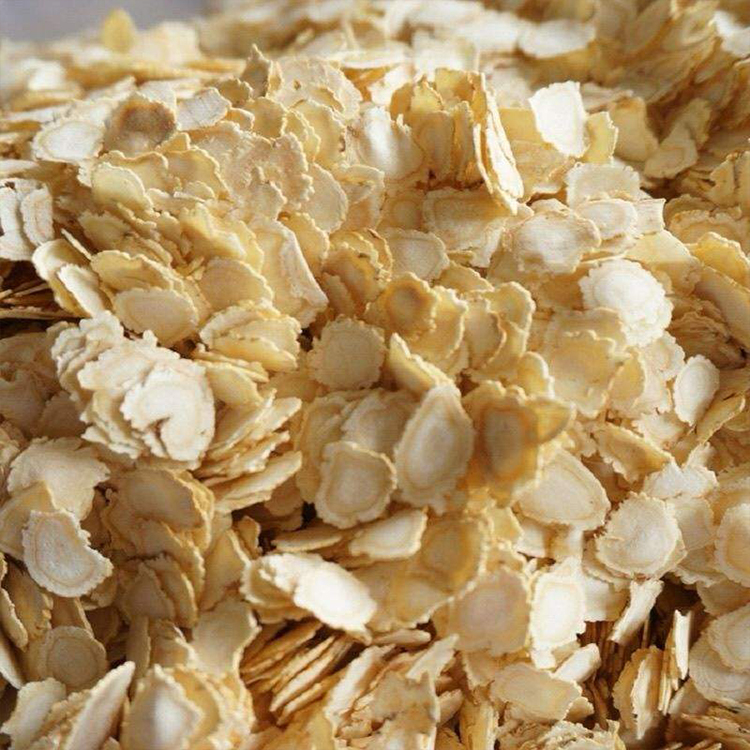
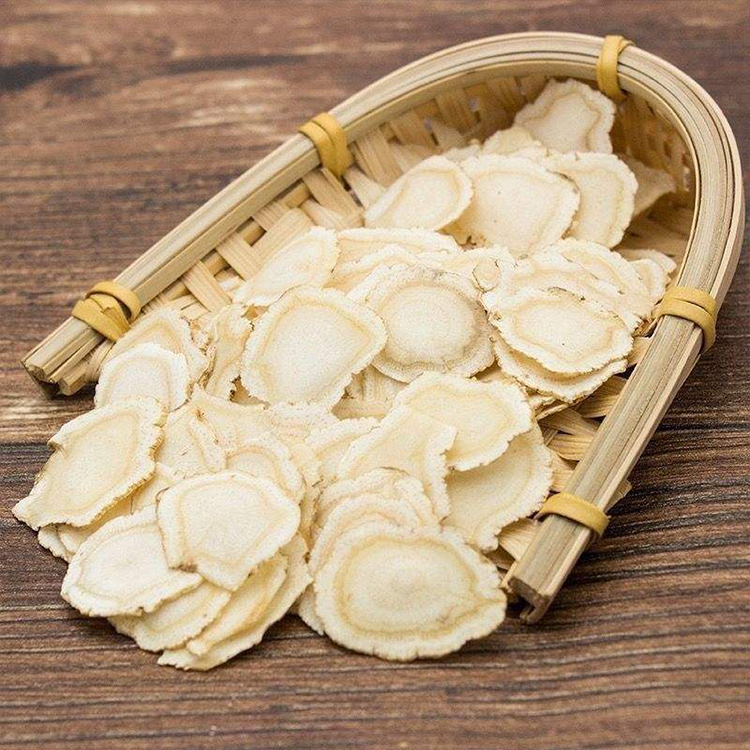
For tea, I would ask for target thickness, diameter range, broken percentage, color standard, moisture limit, and foreign matter limit. A 1.5–3.0 mm slice behaves differently from a thin shaving. Thick slices may look premium but extract slowly in a five-minute steep. Thin slices may infuse faster but break more easily during transport.
And yes, this affects repeat purchase. Consumers notice when the second pouch looks cheaper than the first.
Make COA Data Batch-Specific
A credible COA should match the lot number on your shipment. It should not be a generic annual test. For wholesale ginseng root slices, I would ask for:
Botanical identity confirmation
Moisture or loss on drying
Total plate count, yeast, mold, E. coli, Salmonella
Heavy metals: Pb, Cd, As, Hg
Pesticide residue screen
Sulfur dioxide if relevant
Ginsenoside profile or fingerprint if the brand positioning depends on it
The NIH’s National Center for Complementary and Integrative Health notes that short-term oral use of Asian ginseng in recommended amounts appears safe for most people, while long-term safety questions remain and use is not recommended by some experts for infants, children, pregnant women, or breastfeeding women. That kind of cautious public guidance should shape brand claims and warning language.
Bulk Ginseng Slices Pricing: Why the Cheapest Offer Is Usually the Most Expensive
Price is evidence.
When a quote is far below the market, I assume one of four things: mixed grade, old stock, vague origin, or missing tests. Sometimes it is innocent. Often it is not.
Bulk ginseng slices are influenced by species, root age, slice grade, origin, harvesting pressure, labor cost, processing method, test burden, packaging, and documentation. American ginseng slices wholesale often price differently from Asian ginseng because Panax quinquefolius has its own supply channels, export history, and consumer positioning.
The broader supplement market is not getting more forgiving. Reuters reported in 2025 that the global supplement market was about $192.7 billion in 2024 and forecast to reach $414.5 billion by 2033, while major buyers and investors were becoming more interested in science-backed, higher-end supplement brands. That is a signal: cheap, undocumented inputs are moving in the opposite direction of buyer expectations.
Here is how I would read a quote:
Quote Signal
What It Probably Means
Buyer Response
Very low price, no lot COA
Commodity trade, weak documentation, possible mixed grade
Ask for batch photos, test reports, and exact botanical identity
Good price, long lead time
Supplier may be sourcing after order confirmation
Ask where inventory is held and when testing occurs
Higher price, strong documents
Better compliance cost recovery
Check whether tests are third-party and batch-specific
Beautiful slices, weak testing
Visual-first tea grade, not supplement-ready
Use for tea only after microbial and contaminant review
Strong test package, poor visual grade
Functional input, not premium visible tea
Consider capsules, powders, blends, or extract conversion
The best wholesale ginseng slices supplier is not the cheapest supplier. It is the one whose paperwork, sensory quality, and production reality tell the same story.
Supplier Questions I Would Ask Before Sending Money
A good supplier answers quickly. A serious supplier answers precisely.
Before choosing a dried ginseng slices supplier, I would ask these questions in writing:
What is the Latin name, plant part, and country or region of origin?
Is the material Panax quinquefolius, Panax ginseng, or another species?
What is the slice thickness range?
What is the moisture limit?
What is the broken slice percentage?
Can you provide batch-specific COA and third-party test data?
Which heavy metals are tested: lead, cadmium, arsenic, mercury?
Which pesticide panel is used?
Is sulfur dioxide tested or controlled?
What packaging is used for export cartons and inner liners?
What is the MOQ?
Can you support private label, bilingual labels, or OEM/ODM packaging?
Can the material be milled, blended, packed into tea bags, or supplied as raw slices?
What is the lead time after deposit?
What happens if incoming inspection fails?
For brands building multiple SKUs, supplier flexibility matters. If you need sliced ginseng for tea, milled ginseng for capsules, and a future private-label herbal blend, look at custom Chinese herbal and spice OEM/ODM solutions before splitting the work across too many vendors.
Too many vendors means too many fingerprints on the crime scene.
Red Flags That Make Me Walk Away
I have a short temper for vague herb sourcing.
If a supplier cannot name the species, cannot match the COA to the lot, cannot explain whether the slices are root body or root tail, or keeps saying “don’t worry, many customers buy this,” I walk.
Here are the red flags:
The COA Looks Too Perfect
Every number is comfortably inside the limit. No lab address. No method reference. No date that matches the production batch. No lot number. That is not quality assurance. That is theater.
The Supplier Avoids Moisture Data
Dried herbs live or die by water activity and moisture control. Too much moisture invites mold. Too little can increase breakage and dust. Either way, the buyer pays.
The Slice Grade Changes Between Sample and Bulk Order
This is common. The sample is beautiful. The shipment is average. Set the accepted grade range before payment, not after complaint photos.
The Supplier Pushes Medical Claims
If a supplier tells you the product “treats diabetes,” “cures fatigue,” or “prevents disease,” be careful. That language can infect your own marketing team. For supplement and tea brands, sourcing discipline and claim discipline belong in the same meeting.
The Price Requires You to Stop Thinking
The most dangerous quote is the one that makes the finance team happy before the quality team opens the file.
My Practical Spec Sheet for Wholesale Ginseng Root Slices
If I were writing a first-pass spec for ginseng slices wholesale purchasing, I would not overcomplicate it. I would make it strict enough to filter weak suppliers and practical enough for real trade.
Specification Area
Suggested Buyer Requirement
Product Name
Dried Ginseng Root Slices
Species
Panax quinquefolius or Panax ginseng, declared clearly
Plant Part
Root, root body, or rootlet declared
Cut Size
Buyer-defined thickness, such as 1.5–3.0 mm for tea evaluation
Appearance
Pale cream to light yellow-brown, typical root ring pattern, low dust
Odor
Characteristic, earthy, slightly sweet-bitter, no musty odor
Moisture
Supplier to declare limit and test method
Microbial
Total plate count, yeast and mold, E. coli, Salmonella
Heavy Metals
Pb, Cd, As, Hg tested against buyer market limits
Pesticides
Multi-residue screen suitable for destination market
Identity
Macroscopic, microscopic, DNA, HPLC, or other agreed method
COA, invoice, packing list, origin statement, test reports
MOQ
Confirm trial order and scale order separately
Do not copy this blindly. Adjust it by destination market, product category, and claim strategy.
If you are still building your supplier shortlist, use the broader wholesale Chinese herbs and spices catalog to compare adjacent roots, rhizomes, tea ingredients, and formulation options. Ginseng rarely sells alone forever. Brands usually expand into astragalus, licorice, ginger, jujube, goji, or monk fruit once the first SKU works.
FAQs
What is ginseng slices wholesale?
Ginseng slices wholesale means buying dried, cut ginseng root in bulk quantities for commercial use, usually by tea brands, supplement manufacturers, herbal distributors, private-label companies, and functional beverage developers that need consistent species identity, slice grade, testing documents, export packaging, and repeatable supply.
In practical terms, it is not a casual ingredient purchase. It is a controlled raw material decision. A serious buyer should define species, cut size, moisture, microbial limits, heavy metals, pesticide residues, packaging, and COA requirements before asking for the final kilogram price.
How do I choose the best wholesale ginseng slices supplier?
The best wholesale ginseng slices supplier is the one that can prove species identity, provide batch-specific testing, explain slice grade, support your intended product format, and maintain consistent documentation across repeat orders without hiding behind generic claims like “premium quality” or “natural herb.”
I would rank suppliers by documentation first, then sample quality, then production flexibility, then price. If you are ready to compare supplier response quality, send a structured request through a wholesale ginseng quote form and see whether the reply answers your technical questions or only pushes price.
Are ginseng slices better for tea brands than ginseng extract?
Ginseng slices are often better for tea brands when the product depends on visual authenticity, slow infusion, traditional positioning, and a premium loose-herb experience, while ginseng extract is usually better for capsules, tablets, gummies, shots, or formulas needing tighter standardization.
The decision should come from the product format. Whole slices can look beautiful in glass jars and pyramid sachets, but they may extract unevenly in short steep times. Extracts can support more controlled dosing, but they lack the visible whole-root story that many tea buyers value.
What documents should come with bulk ginseng slices?
Bulk ginseng slices should come with a batch-specific COA, botanical identity information, microbial test results, heavy metal results, pesticide residue data, moisture or loss-on-drying values, packing details, origin information, and any export documents required by the destination market.
For supplement brands, I would also ask for manufacturing flow, storage conditions, allergen statement, non-irradiation statement if needed, sulfur dioxide control, and test method references. Do not wait until your contract manufacturer asks. Get the file before the purchase order is approved.
Can ginseng slices be used in both supplements and tea?
Ginseng slices can be used in both supplements and tea, but the required grade, testing, processing, and documentation may differ because tea brands prioritize appearance and infusion quality, while supplement brands often need stricter production controls, identity specifications, and compatibility with milling, blending, or extraction.
A tea-grade slice may look excellent but still fail a supplement manufacturer’s incoming review. A supplement-grade material may test well but look too broken for premium loose tea. The smartest buyers define the final SKU before approving the raw material.
Final Thoughts: Buy the Batch, Not the Sales Pitch
Ginseng slices wholesale is where romantic herbal branding meets cold procurement math.
I like ginseng as an ingredient. I like it even more when the buyer respects it enough to demand real documents, correct Latin names, clean slice specs, contaminant testing, and honest supplier communication. The brands that survive are not the ones that buy the cheapest carton. They are the ones that can reorder the same quality six months later and still pass incoming inspection.
So do the unglamorous work now.
Define the species. Lock the cut size. Demand the lot COA. Ask for heavy metals, pesticides, microbial data, and moisture. Match the material to tea, capsule, powder, or extract use before negotiating price. Then request samples, compare them against your spec, and only scale when the evidence supports the order.
Ready to source bulk ginseng slices for a real product launch? Start with a technical inquiry, send your target format and destination market, and ask for a documented quote rather than a cheap number.
Our low MOQ of 1 kg (2.2 lb) makes it easy to order Chinese herbal slices or wholesale Chinese medicine herbs. Private-label and bilingual labeling are also available.
Delivery Cycle & Support
We have a fast 7-day lead time. We provide free samples, COA reports, and technical support to help you bring high-quality bulk Chinese herbs to market.
Quality & Certifications
Our products are manufactured in a GMP-certified facility and meet ISO22000 standards. All Chinese herbs are third-party tested for heavy metals, pesticides, and microorganisms.