If you’ve ever run a Chinese herbal tea bag line, you already know the ugly truth: one tiny sachet can create a giant headache. The bags look fine. The cartons look fine. Then complaints roll in—too weak, too dusty, leaking powder, “doesn’t taste the same,” or “why is this box lighter?”
Most of that chaos comes from three control points you can actually lock down: Filter Paper, Fill Weight, and Extraction Rate. Nail these, and you’ll save your batch, your schedule, and your customer relationships.
I’ll keep this practical, like ops people talk. And yes, this is exactly the kind of work we do at GuoCao (a Wholesale Chinese medicinal herbs and spices supplier with GMP herbal slices lines, ISO 22000 food safety controls, export-ready COA testing, and OEM/ODM support).
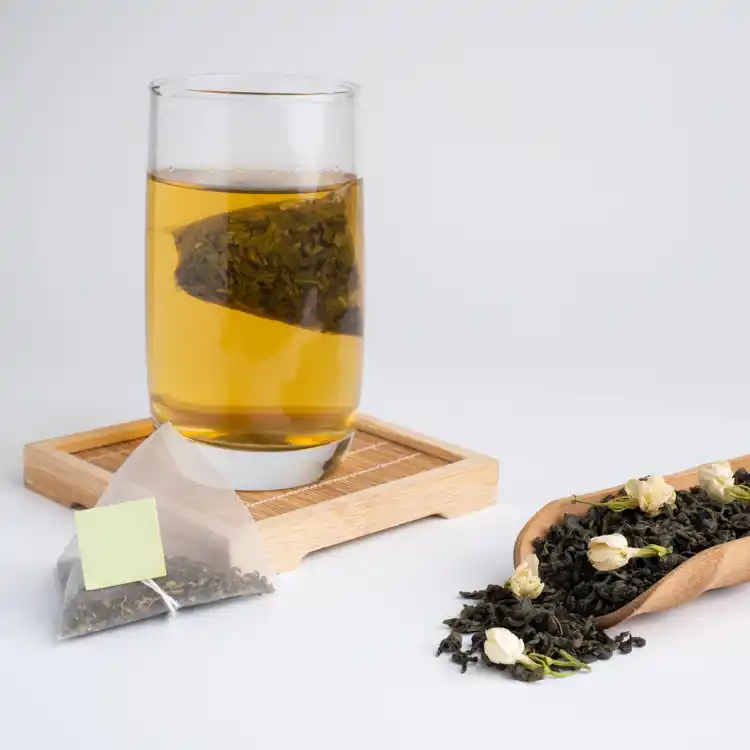
Chinese Herbal Tea Bags Production Line
A typical line flow looks simple on paper: raw herb → slice/granulate → blend → dose → seal → carton. In real life, it’s a chain of small risks.
Different material groups behave totally different on the line:
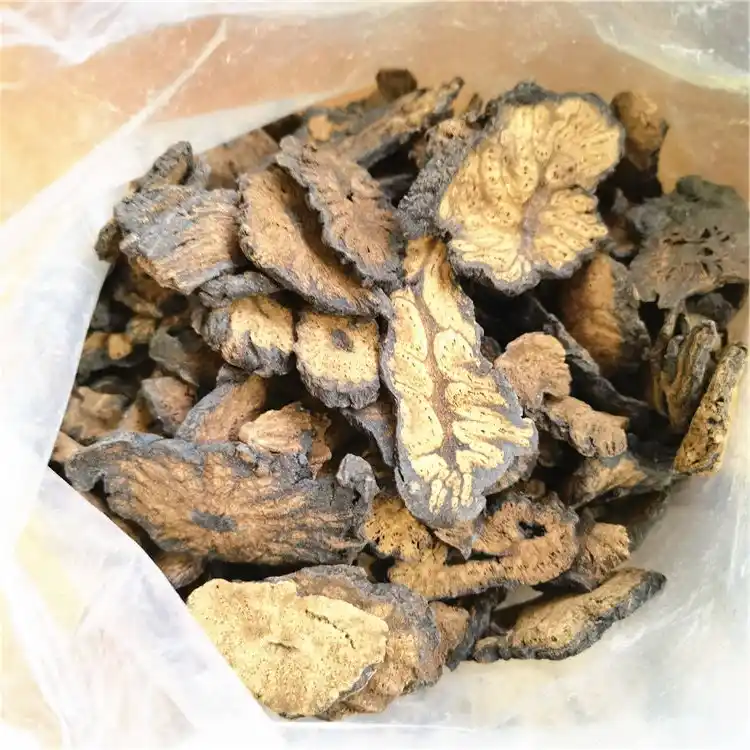
Roots & rhizome: usually dense, stable, but can produce fines after milling.
Flowers & whole herbs: fluffy, low bulk density, easy to bridge in hoppers.
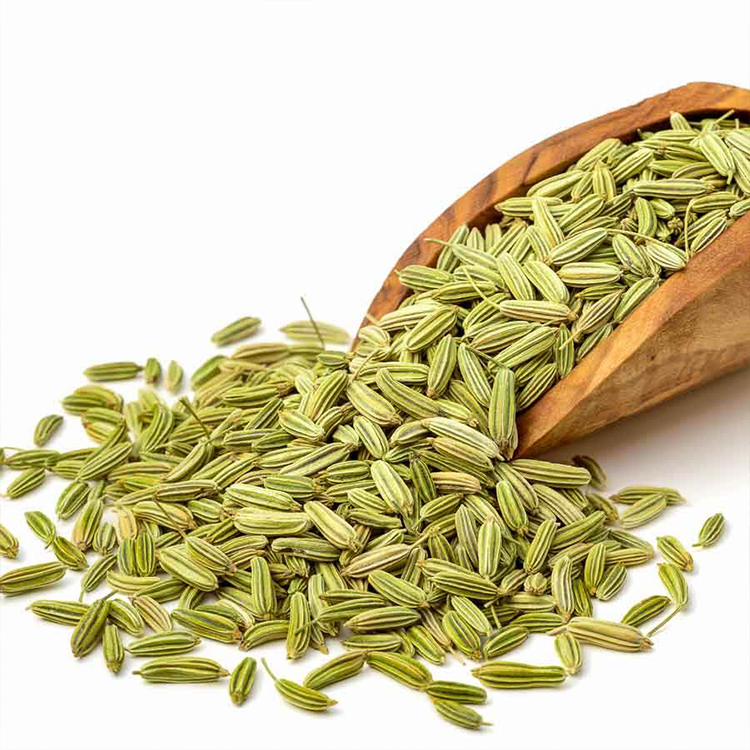
Fruits & seeds: sometimes oily, can smear or clump.
Barks: fibrous, can poke through weak paper or create seal issues.
Animal & mineral materials: special compliance + particle control (and you’ll want extra checks).
If you’re building SKUs from a broad catalog like a full Chinese herbs and spices catalog, you can’t run every blend with the same paper, the same dosing settings, and the same “brew test” and expect stable output. That’s how rework happens.
Now let’s talk the three control points.
Filter Paper
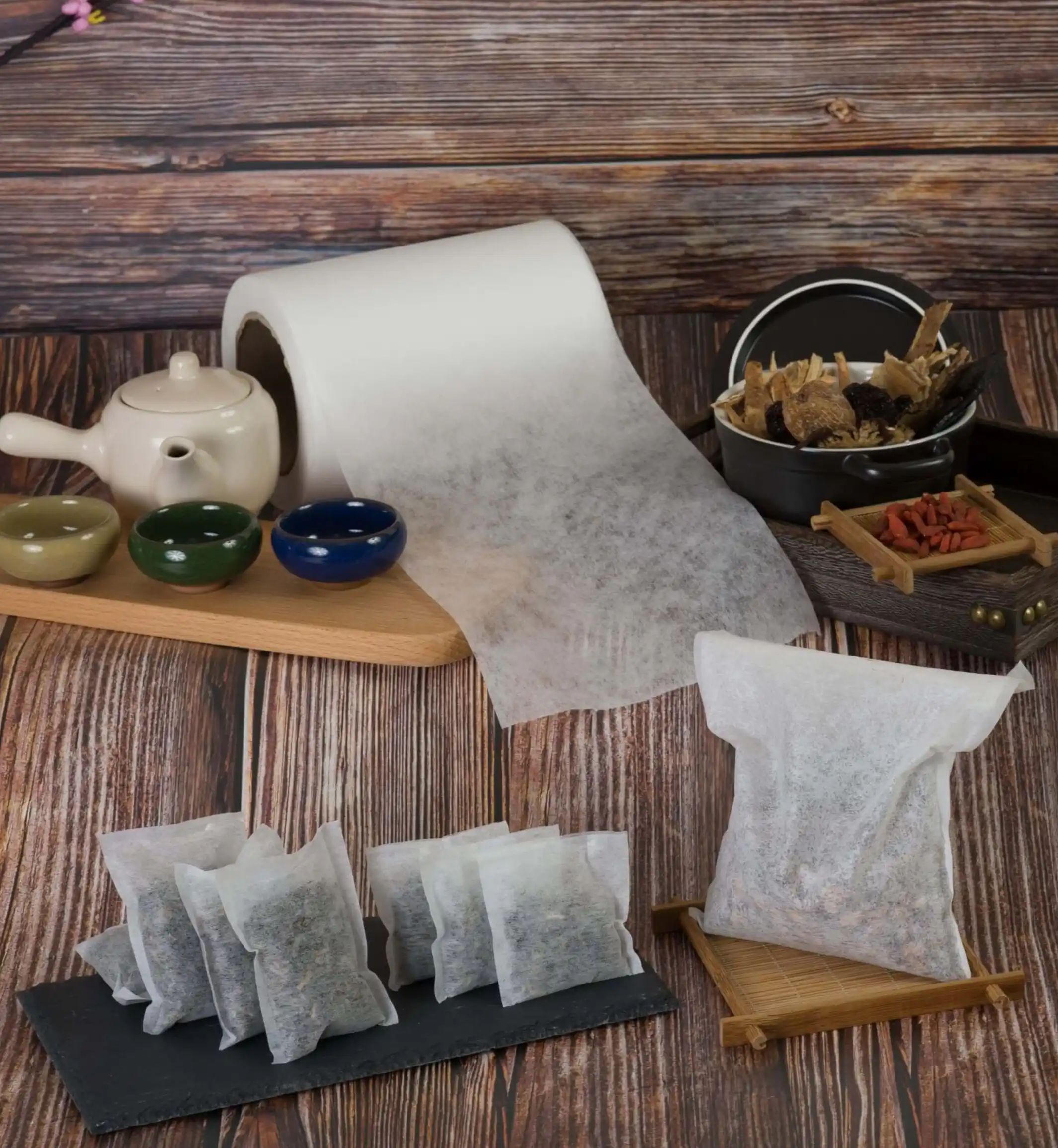
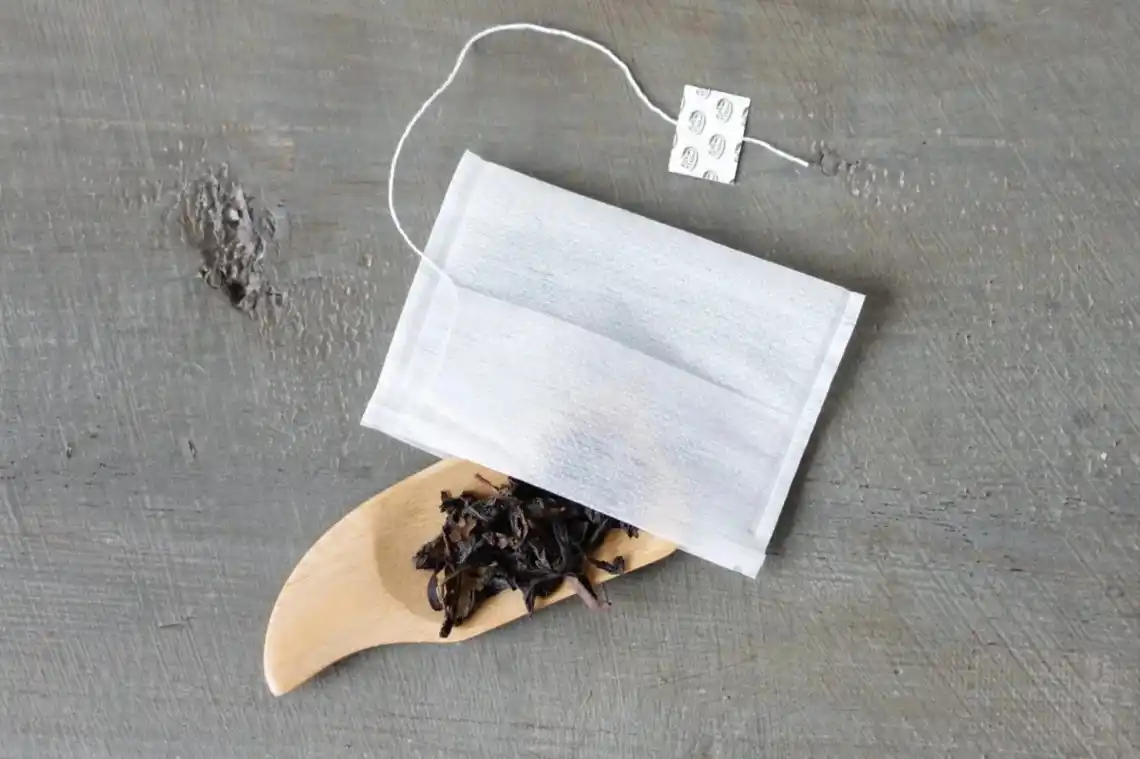
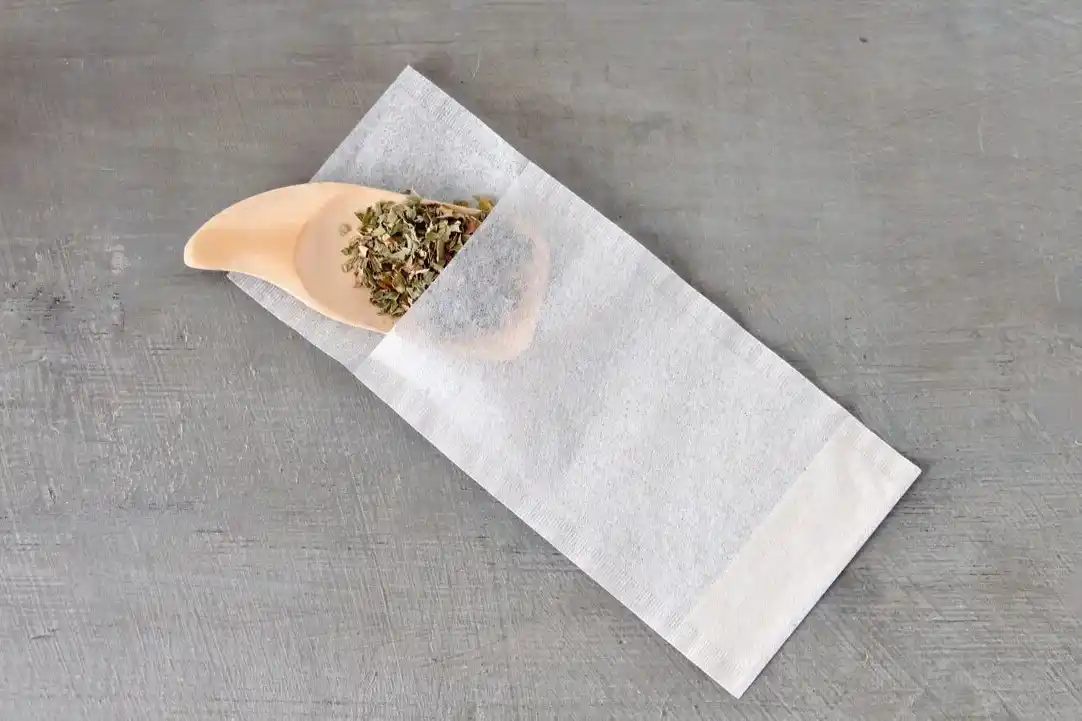
Filter paper isn’t “just packaging.” It’s part of the extraction system. It controls flow, dusting, seal stability, and how the tea bed expands in hot water.
Filter Paper Basis Weight
In tea bag paper, basis weight (g/m²) matters because it often tracks thickness and structure. In many industrial setups, tea bag paper sits roughly in the 12–20 g/m² range as a common window. Go too light, and you’ll see pinholes, weak wet strength, and seam failures. Go too heavy, and you slow water flow, then your brew feels “thin” because extraction drags.
On the floor, the problem shows up like this:
Your seal temperature is steady.
Your bags look OK dry.
Then a hot-water dunk test reveals micro-leaks, or powder “smokes” out during packing.
That’s not a sealing operator problem. That’s a paper + fines problem.
Filter Paper Permeance
People love chasing “more permeance” like it’s always better. It isn’t.
High permeance can help water penetrate fast, sure. But if your blend creates a lot of fines (common with roots/rhizomes after milling), too-open paper becomes a dust cannon. Then you get:
powder on sealing jaws
seal contamination
leaking edges
ugly pack-out
So you balance: enough permeability for flow, but tight enough pores to keep fines inside.
Filter Paper Wet Strength
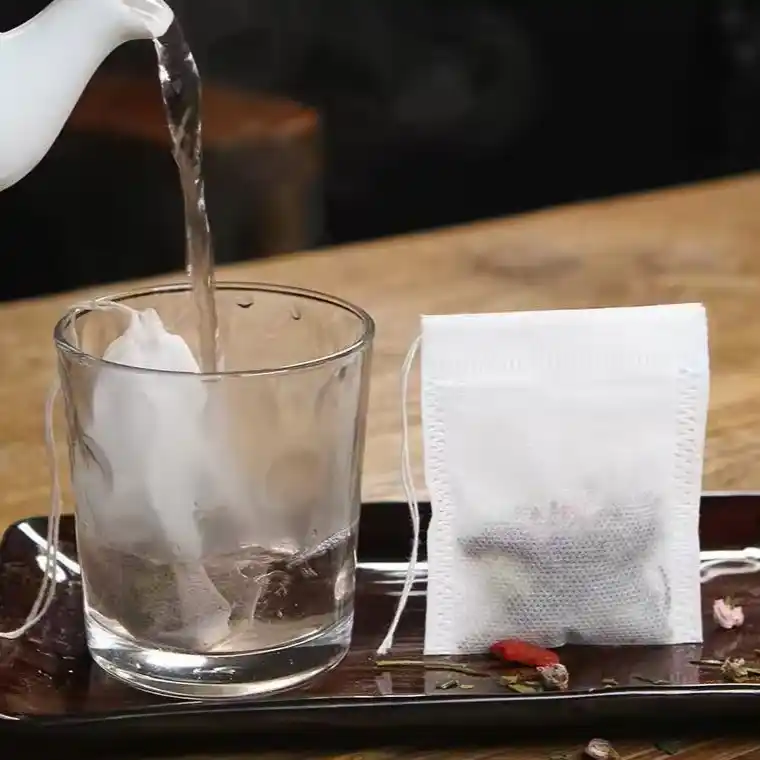
Herbal tea isn’t always gentle. Some botanicals swell hard. Some blends create a thick “tea bed” that pushes on seams. Wet strength saves you here.
If you don’t control wet strength, you’ll see the classic failure:
bags survive conveyors
bags survive cartoning
but in cup, seams soften and pop
And the customer doesn’t blame paper. They blame your product.
Practical tip: add a simple wet-dunk + agitation test as incoming QC. Don’t make it fancy. Make it repeatable.
Fill Weight
Fill weight sounds basic, but it’s the #1 reason tea bag brands get “weak/strong” complaints. It also drives your compliance story.
Fill Weight Tolerance
A widely used production-style rule is ±5% as a working tolerance window for unit fill. Many teams also use a simple sampling logic like:
pull 10 bags per check
allow only a small number of out-of-tolerance units
reject the lot if any unit blows out massively
You don’t need to turn this into a textbook. You just need a rule that the line can execute and QA can defend.
Fill Weight Drift
Fill weight rarely fails in one dramatic moment. It drifts. Slowly. Then suddenly.
Here are the usual culprits ops teams see:
bridging in the hopper (flowers are famous for this)
static that makes powder hang up
humidity shift that changes flow
auger wear that changes dose per turn
fines migration during vibration (blend “segregates”)
A real manufacturing-style scenario: You start your shift on spec. Mid-run, the checkweigher alarms. The operator tweaks the auger speed. It stabilizes for 10 minutes, then it drifts again. That’s not “bad luck.” That’s a flow property change. If you don’t fix the root cause, you’ll chase settings all day.
Checkweigher and SPC
A checkweigher is not a decoration. Use it like a control tool:
trend the weights
set alarm bands
treat repeated alarms as a CAPA trigger, not “operator noise”
This is where industry slang actually helps:
IPC (in-process control) for weight checks
SPC (stat process control) for drift detection
line clearance and changeover discipline so you don’t cross-contaminate SKUs
If you’re doing OEM/ODM, this is also where customers judge you hardest. They want “same bag, same cup, every time.” It’s boring. It’s money.
Extraction Rate
Most teams don’t control extraction rate. They argue about it.
One person says: “It’s the paper.” Another says: “It’s the formula.” QA says: “The lab numbers moved.” Sales says: “The customer says it’s weak.”
You fix that by defining extraction rate in a way you can test and repeat.
Extraction Rate Test Conditions
Pick a simple standard brew condition. For example:
water temperature: 65°C and 100°C as two points
time: 5 minutes and 10 minutes as two points
fixed liquid-to-solid ratio
same cup, same stir method
You’re not trying to mimic every consumer. You’re creating a consistent yardstick.
When you run that yardstick, you’ll usually see: higher temp + longer time increases extraction for many markers (polyphenols, aroma, color). That’s expected. The win is consistency: same product should land in the same band.
Particle Size and Tea Bed Density
This is the part most teams ignore.
Even with the same fill weight, your extraction changes if:
particle size shifts (sieve curve moves)
fines go up
blend compresses harder in the sachet
the “tea bed” becomes too thick
More compression can slow water flow inside the bag. Then the outer layer extracts fast, but the core stays under-extracted. The cup tastes flat.
So don’t treat milling and sieving as “upstream stuff.” It’s part of extraction control.
Quick Signals You Can Use
You don’t always need expensive marker tests for every IPC pull. You can use fast signals:
color intensity at a fixed time
simple TDS trend (if your team uses it)
aroma check (yes, sensory is real)
residue look (if the bag swells but still looks “dry” inside, extraction is lagging)
Then you reserve deeper marker testing (like HPLC) for lot release or investigations.
Control Points Table
Here’s a simple control table you can drop into a work instruction or a customer-facing tech note.
Control Point
What to Control
Practical Target / Reference
Common Failure Pattern
What Fix Usually Works
Filter Paper
basis weight, pore balance, wet strength, seal compatibility
tea bag paper often sits ~12–20 g/m²; validate with wet-dunk test
dusting, seal contamination, leaking seams, “paper taste” complaints
tighten paper spec, reduce fines, improve seal jaw cleanliness
Fill Weight
unit weight stability + drift control
working tolerance often ±5%; sample plan like 10-bag checks
test points like 65°C/100°C and 5/10 min under fixed ratio
“same SKU tastes different,” lab marker drift
lock sieve curve, manage compression, set brew SOP
OEM/ODM Manufacturing Controls
If you’re doing OEM/ODM, customers don’t just buy herbs. They buy repeatability and audit comfort.
That means you need a clean story:
incoming specs (paper + herb)
IPC checkpoints (weight + seal + appearance)
release testing (COA)
warehouse controls
If you want a direct, factory-friendly overview, GuoCao lays out a lot of that mindset in a complete OEM/private label guide and a step-by-step OEM/ODM process guide. It’s the same logic we use when a hospital buyer, a supplement plant, and a distributor all want the “same product” but with different labeling and compliance packs.
GuoCao
Here’s the simple commercial truth: if you control filter paper, fill weight, and extraction rate, you cut customer friction. You also shorten the gap from “idea” to “export-ready SKU.”
OEM/ODM for herbal tea bags and functional formats
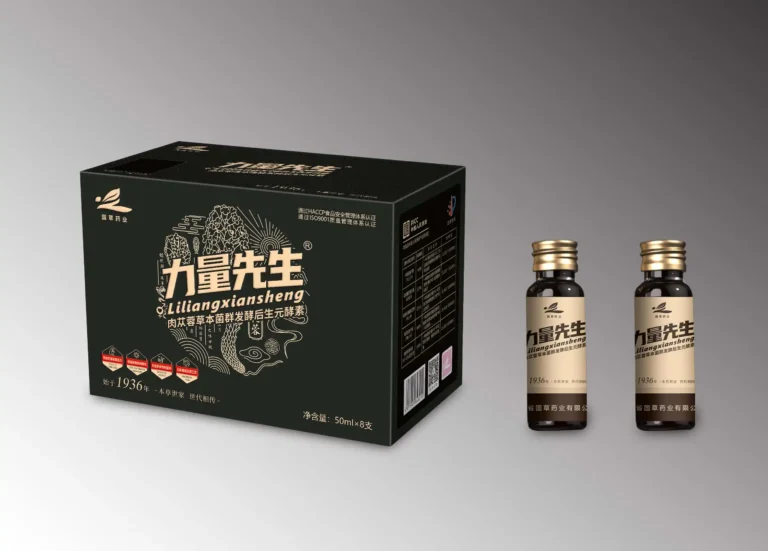
If you’re deciding between tea bags and other functional formats, you can also check the product-side thinking in Herbal Tea Bags vs Herbal Enzyme Drinks. And if you want a full process view from raw slices to bagging, the walkthrough in From Herbal Slices to Tea Bags matches how real production teams think: steps, checkpoints, risks.
When you’re ready to talk spec, target markets, and OEM flow, just use the Contact GuoCao page. Keep it simple: tell us your target function scene, dosage style, export region, and whether you want tea bags, slices, or both.
Our low MOQ of 1 kg (2.2 lb) makes it easy to order Chinese herbal slices or wholesale Chinese medicine herbs. Private-label and bilingual labeling are also available.
Delivery Cycle & Support
We have a fast 7-day lead time. We provide free samples, COA reports, and technical support to help you bring high-quality bulk Chinese herbs to market.
Quality & Certifications
Our products are manufactured in a GMP-certified facility and meet ISO22000 standards. All Chinese herbs are third-party tested for heavy metals, pesticides, and microorganisms.