If you buy “enzymes” in bulk, you’ve probably seen the same mess: one supplier talks about “natural fermentation,” another shows a pretty pineapple photo, and nobody answers the only question that matters—what will still be active when it lands in your warehouse and sits on a shelf?
So let’s keep it real. Buyers don’t lose money because they picked “fruit” or “herbal.” They lose money because they didn’t lock the process, stability, and claim boundaries.
Below is a buyer-style breakdown (simple words, sharp checks), plus how GuoCao fits if you need a manufacturer that can hold specs, paperwork, and export delivery at scale. (You can start from the main site here: Wholesale Chinese Medicinal Herbs and Spices Supplier – GuoCao.)
Process: extraction, purification, drying
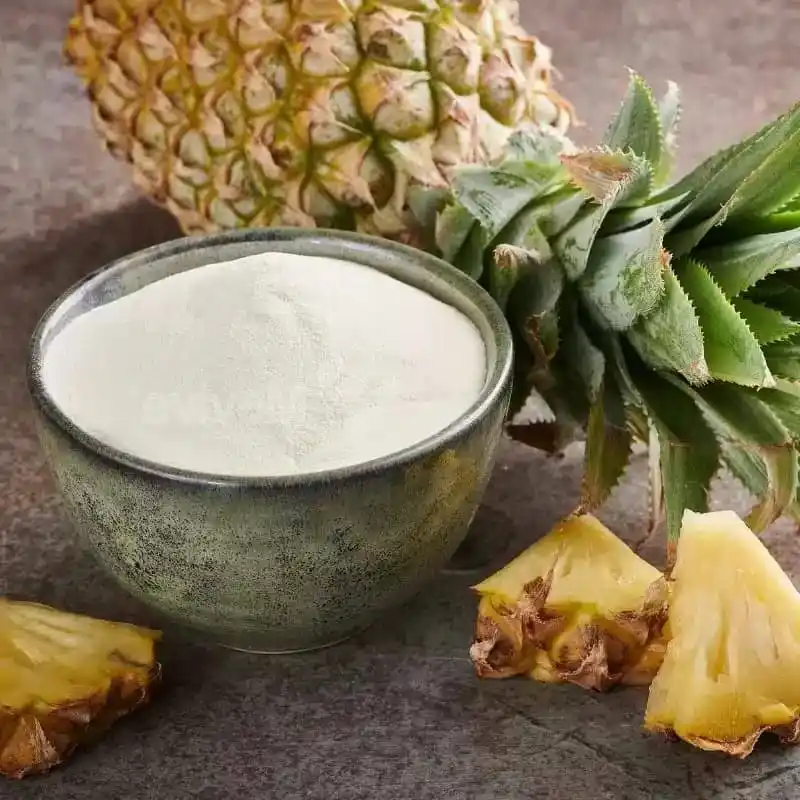
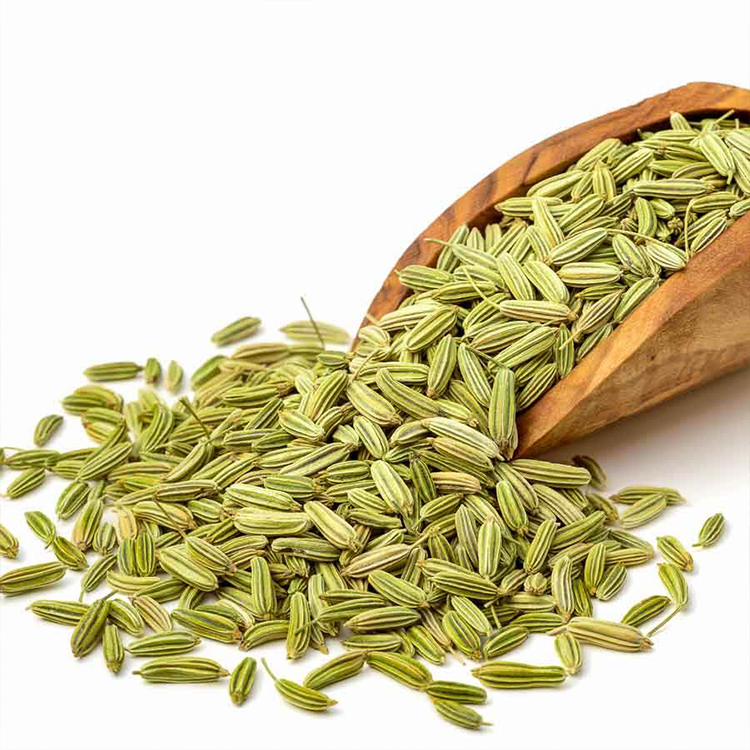
“Fruit enzyme” usually means a single well-known protease (like bromelain from pineapple, papain from papaya). “Herbal enzyme” can mean two different things, and buyers mix them up:
Plant enzymes from herbs (extracted/standardized like fruit enzymes)
Fermented enzyme drinks using herbs (microbes + herbs → acids/metabolites, sometimes enzymes, but the story is mostly fermentation behavior)
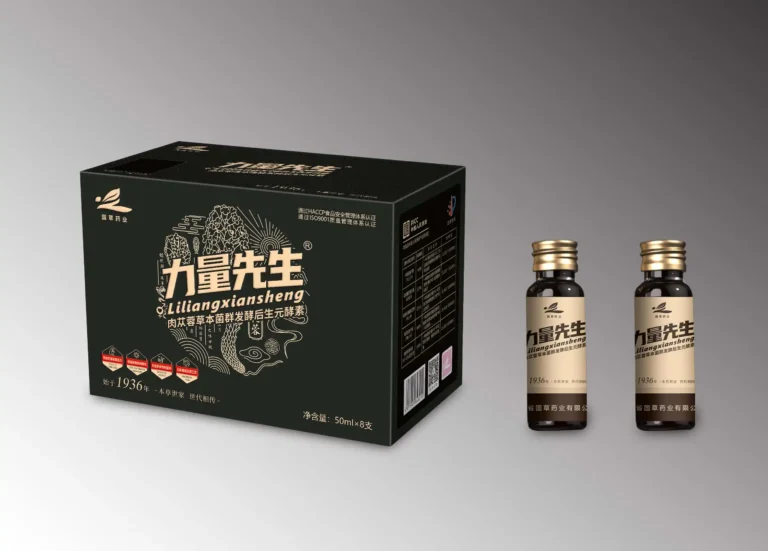
That second lane is big on the market right now. GuoCao’s own enzyme-drink content calls out the real pain: raw material drift can stall fermentation and wreck flavor. If you’re building that kind of product, read this first: Selecting Raw Herbs for Fermented Enzyme Drinks.
Spray drying vs freeze drying (yield and activity)
Drying isn’t a “factory detail.” Drying is where potency often dies.
A classic bromelain processing study reported spray drying yield ~50–70% (at ~40–50°C outlet) versus freeze drying yield ~96%. That’s not a small gap. If you buy powder and don’t ask how they dried it, you’re basically guessing.
Standardization: enzyme units and method-of-analysis
Buyers get tricked by “mg” and “ratio” language. Enzymes don’t behave like vitamins. You want:
Activity units (not just weight)
Method-of-analysis (what assay? what conditions?)
Lot-to-lot range (how tight is the spec?)
And if the supplier can’t say what the unit means, the number is… decoration.
Quick process comparison (what to demand in writing):
Buyer check
Fruit enzymes (typical)
Herbal enzymes (typical)
Why it matters
Source & identity
Pineapple/papaya, clearer ID
“Herbal” can mean plant extract or fermented drink base
Stops “same name, different thing” problems
Purification
Often precipitation + filtration
Can be plant extraction or fermentation downstream
Impacts color/odor, micro risk, stability
Drying method
Spray or freeze common
Freeze for premium, spray for cost/scale
Yield + potency can swing hard
Activity spec
GDU/CDU/PU etc
Often blended enzymes or postbiotic-style formats
You need assay + marker strategy
Paper trail
COA sometimes basic
Needs stronger CTQ + stability docs
You’ll get audited, so be ready
(If you’re sourcing herbs as raw materials for enzyme beverages, GuoCao organizes categories in a buyer-friendly way—example: Fruit and Seed Chinese Medicines—which is often the “low drama” substrate lane for ferments. )
Stability: pH, temperature, storage conditions
Enzymes are proteins. Proteins don’t like heat, moisture, or weird pH. This sounds obvious, but buyers still ship containers through hot ports and then act surprised when the COA doesn’t match.
Acid exposure (pH) and papain activity loss
Papain is a good example of why “works in theory” isn’t enough. Technical notes report papain solutions lose activity fast under acidic pH below ~2.8, with ~1–2% activity loss per day for active enzyme solution.
So if your finished format sits in a low-pH drink, you need to ask: Is the enzyme supposed to still be active at that pH, or are we selling a “fermented functional” story instead of active enzyme units? Both are valid. Mixing them is where brands get burned.
Storage temperature and bromelain activity decrement (CDU/mg)
A 2024 paper on bromelain powder storage tested -20°C, 4°C, and 27°C and tracked activity weekly.
Some very usable numbers from the text:
At Day 0, bromelain activity for one maturity index hit ~1955.80 CDU/mg (they reported different maturity stages).
For maturity index 2 at week 1, activity stayed highest at -20°C (1487.57±14.96 CDU/mg) vs 4°C (1369.06±1.47) vs 27°C (1154.70±5.33), with percent decrements 0.78%, 8.68%, 22.98% respectively.
The authors also state bromelain powder stored at 27°C lost almost 90% activity after one month, while freezing performed best.
That’s why serious buyers ask about warehouse conditions and not just “MOQ.”
Microbial enzymes can be broader-stability (but don’t assume)
Some fermented/microbial enzymes show stability across wider pH/temperature ranges. Example: a study characterizing enzymes from Aspergillus awamori reported stability across pH 3–9 and 25–70°C. Still—“stable in a lab range” isn’t the same as “stable in your finished blend with acids, flavors, minerals, and moisture.” Ask for finished-product stability, not just ingredient stability.
Stability data table (use it in your RFQ):
Condition
What research shows
Buyer takeaway
Spray vs freeze drying (bromelain)
Spray yield ~50–70% vs freeze ~96%
Drying method is a potency lever, not a footnote
Storage temp (bromelain powder)
27°C can lose ~90% activity in a month; -20°C best
If you can’t control heat, don’t promise high activity at end-of-shelf
Low pH (papain solution)
Below pH ~2.8, big activity loss; ~1–2%/day in solution
Acid drinks + “active papain” claims can be risky
Moisture + heat (enzymes generally)
Moisture + heat can rapidly reduce enzyme integrity; keep cool/dry
Packaging + RH control matters more than people think
Most enzyme buyers don’t get in trouble because of enzymes. They get in trouble because marketing wrote checks QA can’t cash.
Structure/function claims and 21 CFR 101.93 disclaimer
In the U.S. supplement lane, structure/function claims aren’t pre-approved, but you must:
have support that the claim is truthful/not misleading
notify FDA within 30 days after first marketing with that claim
use the DSHEA disclaimer requirements in 21 CFR 101.93
FDA also reiterated it’s considering requests to amend parts of the DSHEA disclaimer placement rule, which is a reminder that regulators do look at how you present claims.
FTC: “competent and reliable scientific evidence”
FTC’s Health Products Compliance Guidance is blunt: health-related claims must be truthful, not misleading, and backed by science. Translation for enzyme brands: don’t lean on vague “detox” talk if your evidence is thin. Keep claims in the lane your documents can support.
Testing and COA: label claim, side activities, finished-product assays
Here’s a super common buyer headache: your label says one unit, lab result says another. Sometimes it’s not fraud. Sometimes it’s blend chemistry.
High-protease blends and lactase interference
Testing labs have documented that in high-protease blends, lactase activity can test lower because proteases digest proteins and enzymes are proteins. So if you buy a “multi-enzyme” and only check the raw spec sheets, you might miss the actual finished blend behavior.
Also, industry guidance calls out “side activities” (enzymes can have catalytic actions beyond the ones they’re standardized for). That’s not always bad. It just means you need a tighter spec and a clearer assay plan.
What you should demand in a COA pack (minimum):
identity + activity units per lot
micro limits
heavy metals + pesticide residue (if botanicals)
method-of-analysis and lab name
storage conditions and shelf-life basis
GuoCao leans hard into this “paperwork + CTQ control” vibe in its enzyme-drink and buyer-guide writing, and it’s honestly the right focus for procurement.
Buyer checklist: specification sheet, stability plan, warehouse control
If you only remember one thing: stop buying “enzyme stories.” Buy a spec package.
CTQs and spec drift (the quiet killer)
When a supplier says “same herb,” but the cut size, moisture, and micro baseline drift, everything downstream shifts—fermentation curve, flavor, assay recovery, even filtration time. GuoCao literally calls this out as “spec drift” in their fermentation writing, and yeah, it’s exactly what happens in production.
Here’s the punch list buyers use (not pretty, but it works):
Process: extraction steps, purification method, drying method, carrier system
Claims: what you can say, what you should not say, and what evidence exists
Testing: assay method, marker enzymes for blends, finished-product verification
Logistics: storage conditions at origin + during transit + at your DC
GuoCao capabilities: GMP herbal slices, ISO 22000, controlled warehousing, OEM/ODM
If you’re sourcing at scale (supplement factories, functional beverage brands, cosmetics raw material buyers, distributors, hospitals), you usually want one supplier who can handle manufacturing discipline + export documents + repeatable lots.
GuoCao positions itself as a one-stop wholesale supplier with GMP facility, ISO 22000, and third-party testing for heavy metals, pesticides, microorganisms. Their OEM/private-label content also highlights ambient/cool/MAP warehouses, third-party COA capability, and annual capacity around 2,500 tons, plus OEM/ODM programs including fermented enzyme beverage production.
Useful pages to drop into your sourcing flow (internal links):
Our low MOQ of 1 kg (2.2 lb) makes it easy to order Chinese herbal slices or wholesale Chinese medicine herbs. Private-label and bilingual labeling are also available.
Delivery Cycle & Support
We have a fast 7-day lead time. We provide free samples, COA reports, and technical support to help you bring high-quality bulk Chinese herbs to market.
Quality & Certifications
Our products are manufactured in a GMP-certified facility and meet ISO22000 standards. All Chinese herbs are third-party tested for heavy metals, pesticides, and microorganisms.