Case Study: From Sample Request to Bulk Herbal Tea Order
Many bulk herbal tea orders are won before the rate arrangement starts. This study demonstrates how a significant B2B customer steps from a small organic tea sample demand to a repeatable wholesale order without obtaining entraped by quite examples, vague COAs, or weak supplier control.
The Example Was Not a Present. It Was an Examination.
Examples lie occasionally.
I have actually seen purchasers obtain attracted by a 100 g pouch that scented ideal, looked tidy under office illumination, and brewed wonderfully in a glass mug, just to discover later on that the bulk herbal tea shipment had a different cut dimension, irregular dampness, weak fragrance, and paperwork that resembled it had been duplicated from one more batch.
So what was the real item: the sample, or the delivery?
That is the tough reality behind every severe bulk herbal tea order. An example demand is not a courteous start. It is a cardiovascular test. It informs the customer whether a wholesale organic tea supplier comprehends organic identification, batch control, export paperwork, sensory uniformity, personal label packaging, and reorder self-control.
For this case study, the buyer was not chasing after a cute health pouch for social media. The customer wanted a repeatable herb tea program: flower-based herbs, possible root-and-rhizome support active ingredients, export-ready packing, and a clean course from trial example to mass acquisition. That is exactly where a factory-direct supplier like GuoCao wholesale Chinese medicinal natural herbs and spices provider needs to verify whether its sourcing pledge is actual.
The Purchaser Behind the Herbal Tea Example Request
The customer began small purposefully.
Their initial inquiry was simple: “Can you send out samples for a personal label natural tea mix?” But under that sentence sat a severe business plan. They desired loose organic basic materials for tea bags, retail bags, and later on distributor cartons. They were comparing scent, color, reduced dimension, microbial danger, heavy steel testing, and packaging adaptability.
The request consisted of 3 product instructions:
A flower natural tea base
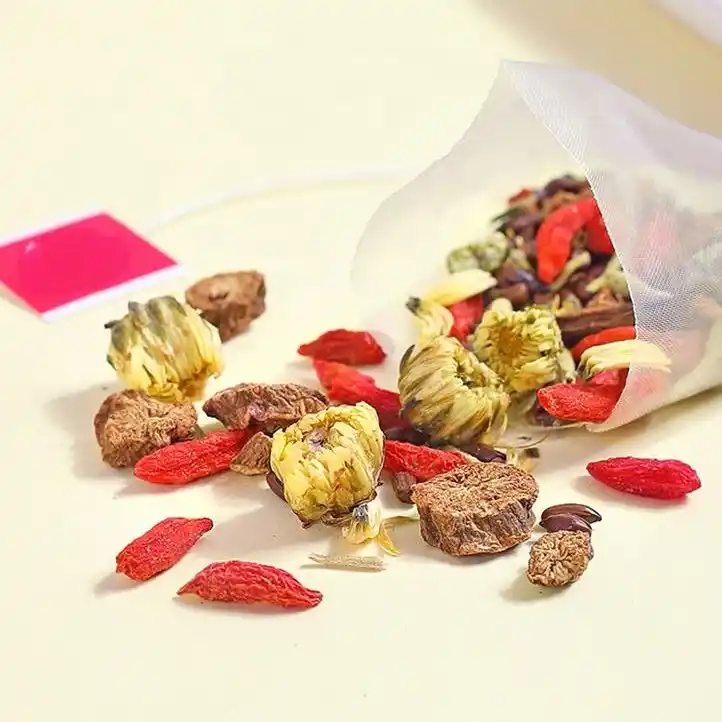
The very first instructions concentrated on flower and entire natural herbs such as chrysanthemum, honeysuckle, and associated botanicals. This made the flower and whole natural herbs wholesale catalog the all-natural starting factor because flower materials are aesthetic, aroma-sensitive, and very easy to mess up with bad storage.
A useful beverage ingredient option
The 2nd instructions took a look at products often used in wellness drink development. Not medical claims. Not cure cases. Just typical agricultural components for preference, scent, and positioning. This is where a customer may contrast origin and root mass natural herbs for future line expansions.
An exclusive tag product packaging course
The 3rd instructions was business: well-known bags, containers, multilingual labels, container marks, SKU manage, and repeat order stability. A supplier that can not take care of product packaging information generally can not take care of a severe exclusive label organic tea program either. GuoCao’s custom-made mixing, milling, and product packaging solution fits this phase due to the fact that the customer is no longer just purchasing herbs. They are constructing an item system.
Table of Contents
What Turned the Sample Into a Bulk Herbal Tea Order?
Rate did not close the deal.
Documentation did.
That may appear uninteresting, yet boring is where money survives. In the mass herbal tea organization, the most affordable quote frequently becomes pricey after denied containers, customizeds delays, label edits, fell short microbial tests, or a mad distributor that can not offer a product with irregular fragrance.
The supplier addressed with specifications, not slogans
The buyer requested the organic name, plant component, native land, reduced size, moisture variety, product packaging style, shelf-life handling, and readily available documents. A weak vendor answers with “highest quality, bosom friend.” An expert B2B natural tea provider answers with a specification sheet.
For a significant herbal tea example request, I would certainly anticipate a minimum of these information points:
Customer Checkpoint
What the Buyer Requested for
Why It Matters Before Mass Purchasing
Botanical identification
Latin name, typical name, plant part
Protects against substitution and complication in between comparable natural herbs
Cut size
Entire, crude cut, tea cut, powder
Controls infusion stamina, dust level, and tea bag performance
Wetness
Target array and storage handling
High moisture raises mold and mildew and microbial risk
Kraft bag, vacuum pouch, container, sachet, personal tag
Determines retail readiness and storage facility performance
Lead time
Taste time, pilot whole lot time, reorder time
Prevents launch hold-ups and distributor disagreements
MOQ
1 kg pilot, 25 kg container, bigger bulk lot
Assists the customer range without overbuying early
The example matched a realistic mass specification
Below is where numerous suppliers stop working. They send out a gorgeous sample from one great deal and quote bulk product from one more. I do not trust that.
A specialist example should be attached to the exact same sourcing reasoning as the bulk delivery: exact same botanical identification, exact same cut-size target, same fragrance account, same drying out approach, exact same expected papers. GuoCao states a low MOQ of 1 kg and sample assistance on its website, which matters since a purchaser can examine a pilot amount prior to relocating into a complete loosened fallen leave organic tea mass order.
The buyer tested more than flavor
Taste matters. Yet not the only one.
The buyer made the sample at 95 ° C for 5 minutes, inspected color after 10 minutes, inspected dust proportion, contrasted dry fragrance after 72 hours, and asked whether the mass carton would make use of inner bags, carton marks, production date tags, and set codes.
That is not excessive. That is exactly how specialists prevent pain.
The Regulatory Truth Behind Bulk Herbal Tea Sourcing
The natural tea market suches as soft language: wellness, tranquility, balance, pureness. Regulatory authorities do not appreciate soft language.
In the USA, FDA discusses that nutritional supplements rest under the general umbrella of foods, not drugs, and that supplement labeling can not make illness claims to detect, treat, reduce, deal with, or protect against illness, according to the FDA’s page on botanical medicines and dietary supplement cases. That line should be published and taped to the wall surface of every personal tag natural tea brand.
The legal risk is not theoretical. In November 2023, FDA cautioned customers that Tepee Herbal Tea had piroxicam, an undeclared NSAID medication component. That is not a little labeling mistake. That is the type of case that makes severe purchasers ask for supplier controls, batch records, and third-party testing prior to they wire cash.
There is another awful corner: import apprehension. FDA Import Alert 99-08 covers detention without physical exam for certain processed foods as a result of unlawful pesticide residues, while FDA Import Alert 99-42 addresses food connected to hefty metal contamination. If your natural tea raw material lugs excess lead Pb, cadmium Cd, arsenic As, mercury Hg, or pesticide residue, your “cheap” delivery can end up being supply that never enters your sales channel.
And plant materials are not dealt with delicately at the boundary. USDA APHIS states that farming products can carry parasites and illness which united state assessors command to check out products and make last entrance decisions, as shown in the USDA APHIS support on coffee, teas, honey, nuts, and seasonings. That page is written for tourists, yes, but the principle is useful for purchasers: dried botanicals are still farming risk products.
The marketplace information states the stress will not ease. The 2024 IISD report on tea rates and sustainability notes that around 70% of global tea bushes are now harvested by devices or mechanical aid, up from 5% in 1980, which environment adjustment threatens tea production in China, Sri Lanka, and Kenya. Translation: if you think future bulk herbal tea sourcing will certainly obtain easier, I disagree.
The Case Timeline: From Sample Bag to Mass Container
The order moved in 4 phases. Absolutely nothing magical. Just disciplined acquiring.
Phase
Buyer Action
Provider Reaction
Industrial Outcome
Day 1– 2
Sent herbal tea sample demand with target botanicals, packing format, and destination nation
Confirmed readily available products, MOQ, and example course
Purchaser stayed clear of obscure estimating
Day 3– 7
Evaluated example pictures, basic specifications, and initial pricing
Prepared example collection and talked about COA/document requires
Customer narrowed formula direction
Day 8– 14
Evaluated fragrance, liquor color, cut dimension, and dirt proportion
Adjusted cut size and product packaging suggestion
Experience relocated from “wonderful” to readily functional
Day 15– 25
Asked for pilot order and exclusive tag packaging strategy
Verified batch code, carton marks, production label, and export assistance
Customer accepted initial bulk herbal tea order
Reorder phase
Contrasted pilot results with distributor comments
Secured approved spec and reorder notes
Distributor came to be a repeat B2B natural tea supplier
This is the component many brands miss since they are impatient. Then they criticize the vendor.
No. The purchasing procedure was weak.
An excellent mass organic tea order should have an authorized example, an accepted specification, an authorized paper list, an approved packaging direction, and a concurred reorder requirement. Without those 5 products, the purchaser is gambling.
The Expert Test: What I Would Certainly Ask Before Paying a Wholesale Natural Tea Supplier
I would certainly not ask, “What is your finest cost?” initially.
That concern welcomes shortcuts. Rather, I would ask these:
Can you connect the example to the future mass lot?
If the response is vague, walk away. Sample-to-bulk consistency is the center of the deal.
Can you provide COA records and export records?
A severe distributor must understand what customers suggest by COA, packaging list, certification of beginning, phytosanitary certification where pertinent, and container marks. GuoCao’s customized processing web page references COA reports, phytosanitary certifications, certifications of beginning, and export-ready delivery assistance, which is exactly the type of language an expert importer wants to see.
Can you sustain personal label organic tea packaging?
Personal label work is not simply logo design printing. It includes bilingual labeling, SKU technique, barcode preparation, irritant care review where relevant, net weight layout, manufacturing date layout, and carton labeling. For a quote or product packaging conversation, the straight following action is usually to contact GuoCao for sample demands with the product kind and order target currently prepared.
Can you scale from 1 kg to 25 kg, 100 kg, or 300 kg?
A vendor that can take care of just examples is not a supplier. It is a showroom.
Can you claim no?
This is my favored test. Bad providers say yes to whatever. Much better vendors push back when the formula, claim, label, or preparation is unrealistic.
Why the First Bulk Order Was Accepted
The customer accepted the mass order for 3 reasons.
First, the sample was readily believable. It did not really feel like a hand-selected elegance example removed from manufacturing truth.
Second, the provider talked about paperwork before cash. That matters since FDA enforcement, import controls, and buyer-side QA are not optional in severe organic profession.
Third, the order could scale. The purchaser might start with a pilot quantity, check supplier responses, after that move into larger containers without revising the whole sourcing plan.
That is what divides the ideal organic tea distributor for mass orders from a broker with nice photos.
A broker offers the minute. A genuine vendor offers the reorder.
The Red Flags I Would Not Forgive
Some red flags are annoying. Others are fatal.
I would certainly not proceed with a wholesale natural tea supplier that rejects to name the botanical resource clearly, can not offer batch-specific paperwork, changes reduced size without approval, pushes disease cases into advertising copy, or treats product packaging guidelines as design.
Right here is the candid version:
Warning
Why It Is Dangerous
What I Would Do
“Same as sample” with no set link
No evidence that mass matches sample
Demand set reference or turn down
No COA offered
Security and import risk
Demand third-party test or time out
Over-medical cases
FDA and system risk
Reword insurance claims before launch
Filthy carton labeling
Storehouse and supplier errors
Call for container mark theme
No reorder control
Every order ends up being a new wager
Lock accepted specification
Price far below market
Possible substitution or weak QC
Audit records before payment
The economical quote is not constantly the bad guy. Yet it commonly understands where the bodies are hidden.
The Actual Lesson: Mass Herbal Tea Is an Operations Business
Bulk herbal tea appears like an item business from the outside. Inside, it is a procedures service.
The winners are not the customers who ask for one of the most samples. The winners are the purchasers who ask much better concerns: What exact material? Which plant component? What cut dimension? What moisture array? Which COA? Which container mark? Which label variation? Which lead time? Which reorder requirement?
And the vendor who can respond to those inquiries without panic is the distributor worth screening.
For customers building an exclusive tag herbal tea, wellness beverage, tea bag, or loosened fallen leave herbal tea bulk program, the sample demand is not the start of negotiation. It is the start of evidence.
FAQs
What is bulk herbal tea?
Bulk organic tea is a wholesale herbal component or finished tea blend supplied in business amounts– such as 1 kg pilot lots, 25 kg containers, or bigger palletized shipments– for brands, representatives, wellness firms, tea bag packers, and beverage makers that require repeatable top quality, documents, and exclusive label choices. It might include blossoms, origins, rhizomes, leaves, barks, fruits, seeds, or custom-made herb blends.
What should I include in a herbal tea sample request?
A herbal tea sample request ought to define the organic name, plant part, cut dimension, target flavor, quantity, packaging style, destination country, document demands, and planned bulk order volume so the wholesale natural tea supplier can match the example to a practical business specification rather than sending a pretty but worthless program sample. Consist of photos of target products if product packaging style issues.
Exactly how do I select a wholesale organic tea provider?
A wholesale herbal tea vendor must be picked by verifying botanical identification, batch-specific documentation, sample-to-bulk uniformity, COA schedule, product packaging control, export experience, MOQ flexibility, lead-time discipline, and the distributor’s capacity to support repeat orders without changing the approved spec. Cost matters, but documentation and reorder stability issue more.
For how long does it require to move from example demand to mass herbal tea order?
A sample-to-bulk herbal tea order usually takes 2 to 5 weeks when the purchaser already knows the formula, product packaging target, destination market, and paper needs, yet it can take longer if customized mixing, private label packaging, third-party screening, or tag conformity testimonial is needed. Hurrying this phase typically creates costly improvements later on.
Why can an organic tea sample taste various from the mass order?
A herbal tea example can taste different from the mass order when the vendor utilizes a various set, harvest duration, cut size, drying technique, wetness degree, storage problem, or blending ratio than the business shipment. Buyers should approve a written spec and demand batch-linked documents prior to scaling from sample to mass amount.
Your Next Steps
Do not send an unclear message requesting “finest rate.”
Send a severe questions. Name the natural herb or blend instructions, target quantity, packaging style, location nation, example need, document list, and expected reorder quantity. Ask the supplier to validate MOQ, lead time, COA availability, carton noting, and whether the bulk order will match the approved sample.
Start with a regulated sample. Then approve a pilot. After that range.
Our low MOQ of 1 kg (2.2 lb) makes it easy to order Chinese herbal slices or wholesale Chinese medicine herbs. Private-label and bilingual labeling are also available.
Delivery Cycle & Support
We have a fast 7-day lead time. We provide free samples, COA reports, and technical support to help you bring high-quality bulk Chinese herbs to market.
Quality & Certifications
Our products are manufactured in a GMP-certified facility and meet ISO22000 standards. All Chinese herbs are third-party tested for heavy metals, pesticides, and microorganisms.