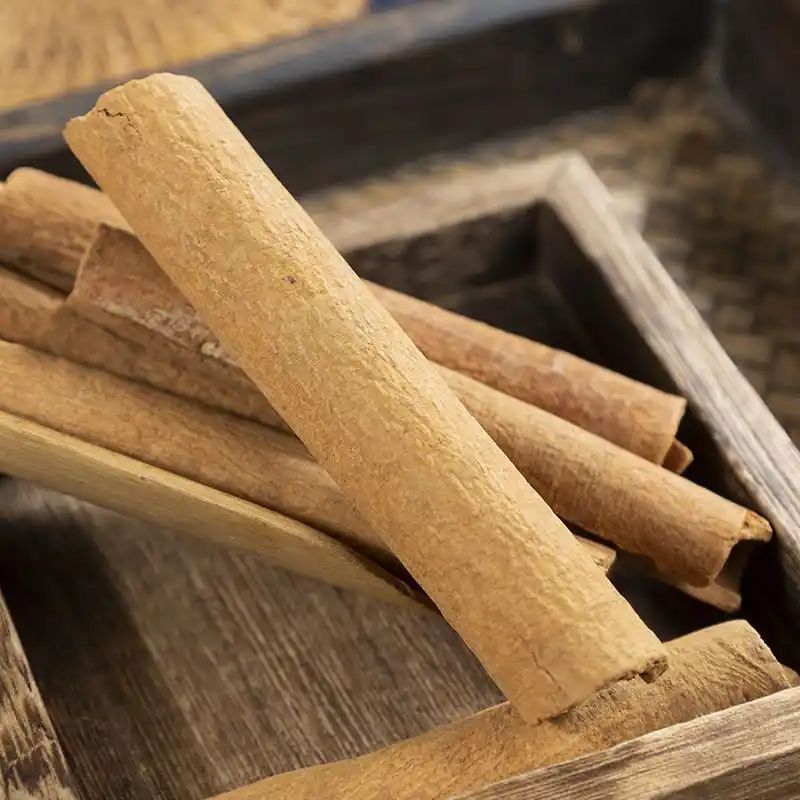
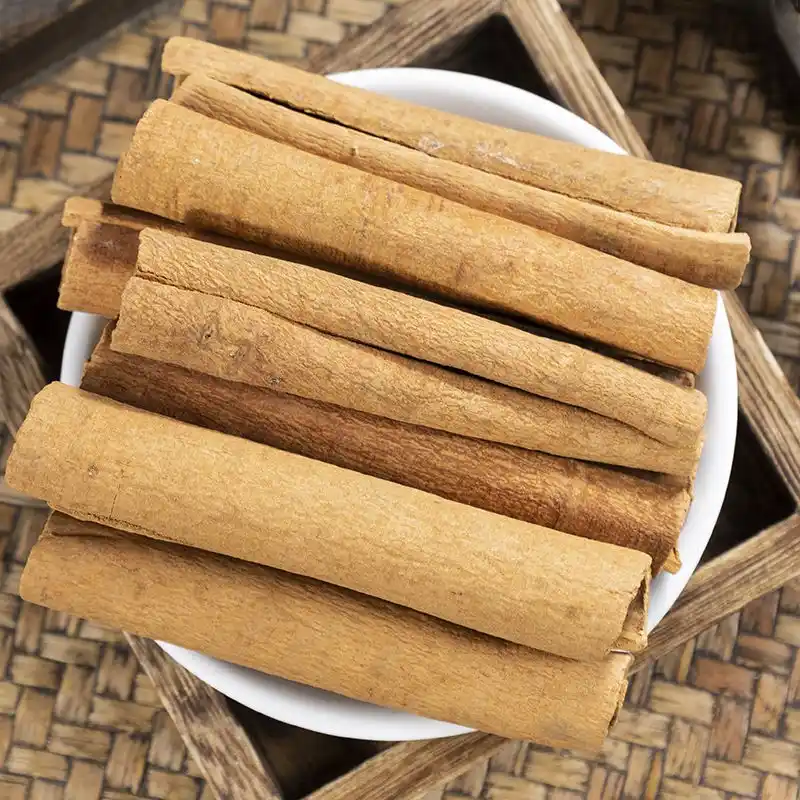
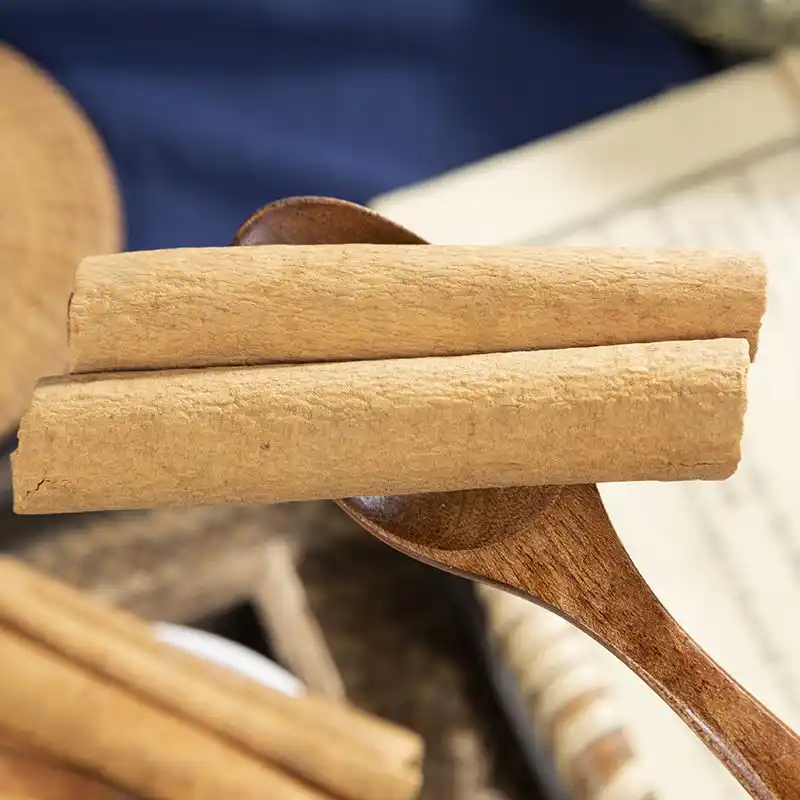
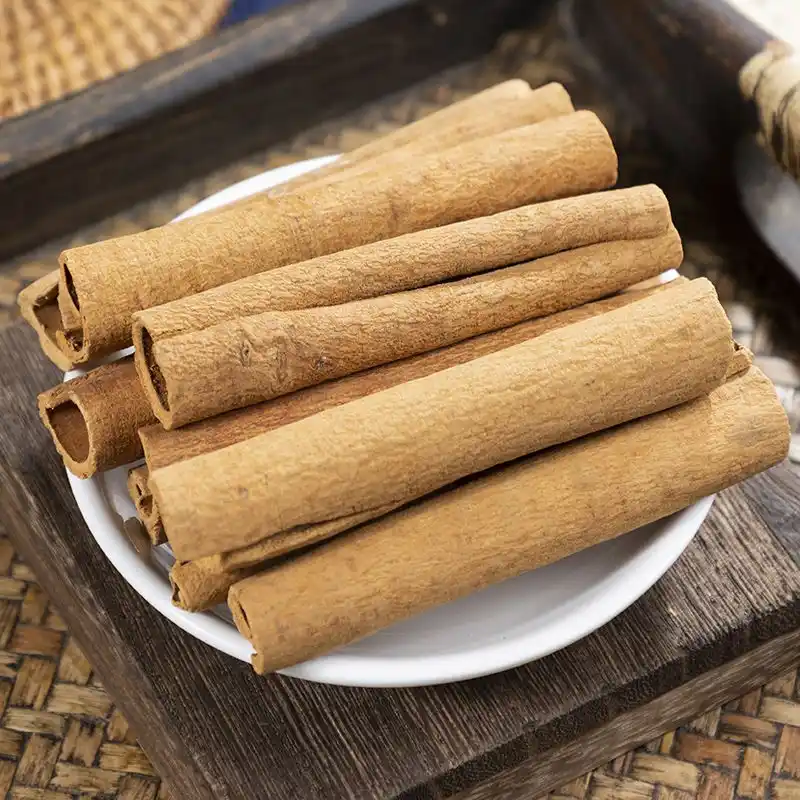
If you sell Cinnamon Bark (Rou Gui), you’ve heard it. “Smells weak.” “Tastes dull.” “Same spec, but the aroma is flat.”
That single complaint can trigger a whole chain: customer holds the lot, QA asks for extra docs, sales gets stuck in 20 emails, and you eat returns. And here’s the annoying part: “flat flavor” is rarely one single problem. It’s usually a grading problem plus a storage/shipping problem plus a sampling problem.
This article lays out a practical way to grade Rou Gui by oil/aroma logic, then shows how to stop “flat flavor” claims before they start—using real buyer keywords and QC language (COA, IQC, lot trace, CAPA). We’ll also show how GuoCao builds this into production and delivery.
Useful pages if you want to cross-check product + QA info while reading:
What “flat flavor” means in Cinnamon Bark (Rou Gui)
“Flat” isn’t a lab term. It’s a buyer term. It usually means one (or more) of these:
Low top-note (you open the bag and nothing jumps out)
Short finish (taste fades fast)
Muddy warmth (still “spicy” but not clean)
Lot-to-lot drift (golden reference sample vs current shipment mismatch)
Here’s the key: buyers think this is only “quality”. But in real supply chain, aroma can drop because of oxygen exposure, moisture ingress, or heat events during transit. Your COA can be clean and you still get the claim.
So you need two systems:
oil/aroma grading that matches what buyers smell and taste
risk control for storage, packing, and sampling so aroma survives the trip
Oil/aroma grading for Cinnamomum cassia (Rou Gui)
Rou Gui is Cinnamomum cassia on GuoCao’s product page, and the site also lists common aliases like “Cassia Bark / Chinese Cinnamon.” That matters because buyers may compare it to “cinnamon” from other species, then complain it’s “different.” Your grading must anchor to cassia reality, not generic cinnamon talk.
A workable grading approach uses two tracks:
Chemical track (spec track): marker compounds and COA logic
For cinnamon bark oil, the market often values higher cinnamaldehyde levels; FAO notes batches with higher-end cinnamaldehyde fetch higher price, and it mentions a U.S. EOA aldehyde spec of 55–78% for bark oil. You’re selling bark slices, not pure oil, but the principle holds: cinnamaldehyde-heavy profiles read as “strong cinnamon.”
Also, cinnamaldehyde doesn’t like oxygen. A peer-reviewed study reports cinnamaldehyde stayed stable under nitrogen but became very unstable under oxygen atmosphere. So if your packaging or warehouse lets oxygen in, don’t act surprised when aroma goes soft. It’s chemistry, not vibes.
Cinnamon leaf oil commonly grades around eugenol, and ISO even publishes a specific standard for cinnamon leaf oil (ISO 3524). Why should you care? Because some buyers mix up “bark aroma” with “leaf aroma.” Leaf oil leans clove-like. Bark leans sweet-cinnamon. When a buyer expects clove notes and gets sweet warmth, they may call it “flat” even though it’s on-profile.
So your spec sheet should say clearly:
Rou Gui bark = cassia bark profile
Not leaf oil profile
Not Ceylon cinnamon profile
A practical grading sheet buyers actually use
You don’t need fancy poetry. You need a spec that purchasing + QC can execute.
Grading keyword (buyer language)
What you control (factory + QA)
What you verify (COA + checks)
What it prevents
“Aroma punch”
Cut size uniform, controlled drying, fast seal
Sensory check + marker trend (GC/GC-MS if used)
“Weak smell” claims
“Clean warmth”
Low moisture, low foreign matter, stable storage
Moisture/Aw + cleanliness checks
“Muddy/dirty taste” claims
“Lot consistency”
Lot segregation, traceability, carton control
IQC sampling plan across cartons
“Reference sample mismatch”
“Shelf stability”
Barrier packaging + MAP / cool storage
Pack integrity + storage logs
“Aroma dropped after arrival”
GuoCao positions GMP production and ISO 22000 controls as a baseline for consistent lots, with third-party COA and documented QA workflow. That’s not marketing fluff. That’s how you keep aroma repeatable.
Storage and transport control to prevent “flat flavor” claims
If you only fix the product and ignore logistics, you’ll keep losing. Aroma is fragile.
Oxygen, heat, and moisture are the three killers
Oxygen: drives oxidation; cinnamaldehyde can become unstable under oxygen.
Heat events: speed up loss and chemical drift
Moisture: can push off-notes and even increase styrene formation risk in cinnamon under bad conditions
A trade report about exporting cinnamon to Europe notes styrene occurs naturally (it even gives a baseline like 0.1 mg/kg) and can rise “significantly” up to 40 mg/kg when cinnamon faces high temperatures and humidity during drying, storage, and transport. That’s why “keep it dry and cool” isn’t a cute slogan. It’s risk control.
There’s also a logistics reference that plainly says moisture exposure can convert cinnamaldehyde into styrene. Not every buyer tests styrene, but off-odors travel fast. If a shipment arrives damp, you already lost the argument.
Shelf life is not safety, it’s potency
USDA’s guidance is simple: for best quality, store whole spices 2–4 years and ground spices 2–3 years. So if your customer grinds Rou Gui and stores it like forever, their “flat flavor” might be self-inflicted. Your job is to teach them without sounding like you blame them (a lil tricky, but doable).
Root cause table for “flat flavor” claims (with numbers)
Claim pattern
Most common root cause
Fast check
Fix (what you write into spec / SOP)
Evidence
“No smell when opening”
Oxygen exposure + volatile loss
Bag seal + headspace smell
Barrier bag, tight seal, reduce open time
Cinnamaldehyde unstable under oxygen
“Used to be strong, now meh”
Time + storage conditions
Open-date + storage spot
Buyer guide: keep dry/cool/dark; rotate stock
USDA: whole 2–4 yrs, ground 2–3 yrs
“Arrived dull / weird note”
Heat + humidity in transit
Pallet condition + moisture signs
Add desiccant, avoid hot container exposure, define humidity control
Styrene can rise up to 40 mg/kg in hot/humid conditions
“Some cartons strong, some weak”
Sampling bias + carton drift
Carton spread test
IQC plan across cartons, not just units
GuoCao notes aroma can drop if a few cartons sat warm
Incoming inspection for barks: IQC sampling plan and carton coverage
Barks are not uniform parts. They’re plant tissue. That’s why carton spread matters.
GuoCao’s own write-up calls out real IQC pain points: moisture gradients, volatile oil drop if cartons sat warm, fines migration, cut size drift, label/lot mismatch. This is the unsexy stuff that prevents 80% of disputes.
Here’s the move: stop sampling “deep from one carton.” Do carton coverage. Then do organoleptic checks before lab. If smell already off, don’t waste lab budget and time. Hold the lot and start the investigation.
And yeah, sometimes buyers hate doing this. They’re busy. But it saves them from the “why this carton smells like nothing” drama later.
Packaging and warehouses: how you keep Rou Gui aromatic from factory to customer
Rou Gui’s product page says it’s harvested, rolled, and dried “to preserve its fragrant oils,” and it’s offered for bulk purchase. Cool. But the real question is: what happens after drying?
This is where factory capability matters more than pretty photos.
GuoCao states it runs GMP herbal-slice lines, uses ambient/cool/modified-atmosphere (MAP) warehouses, and operates under an ISO 22000 food-safety system with third-party COA capability. MAP storage matters for aroma. Less oxygen exposure, less oxidation pressure. Simple.
Also, GuoCao talks like a real bulk supplier: lot traceability, documents that clear customs, COA on time, and QA holds if anything is off. That’s basically the “don’t waste my time” checklist from distributors.
GuoCao: how to sell Rou Gui without getting stuck in claim disputes
Let’s be direct. Buyers don’t pay extra for your intentions. They pay for consistency, documents, and fewer surprises.
GuoCao positions itself as a one-stop wholesale Chinese medicinal herbs & spices supplier and describes GMP + ISO 22000 + third-party COA as standard practice. The OEM/private label guide also states annual capacity “tops 2,500 tons” and supports OEM/ODM plus fermented enzyme beverage production.
So the commercial value is pretty clean:
If you’re a pharma company, supplement manufacturer, functional beverage brand, hospital supply chain, cosmetics raw material buyer, distributor, or spice wholesaler, you want fewer CAPAs and faster release.
You want a supplier who can do spec writing, batch COA, traceability, and storage control without drama.
And if you’re building a product line (tea bags, decoction slices, powders, beverage bases), GuoCao’s OEM/ODM and enzyme beverage capability gives you a straight route from raw bark → finished format. No fake story, just supply chain.
Buyer checklist for Cinnamon Bark (Rou Gui) oil/aroma grading
Use this as your next RFQ template. It’s simple on purpose.
Identity: Cinnamomum cassia (Rou Gui) + cut form + appearance
Aroma spec: define “strong/medium/light” with a retained reference sample
Moisture/Aw target: set a max, and define re-test rules after transit
Our low MOQ of 1 kg (2.2 lb) makes it easy to order Chinese herbal slices or wholesale Chinese medicine herbs. Private-label and bilingual labeling are also available.
Delivery Cycle & Support
We have a fast 7-day lead time. We provide free samples, COA reports, and technical support to help you bring high-quality bulk Chinese herbs to market.
Quality & Certifications
Our products are manufactured in a GMP-certified facility and meet ISO22000 standards. All Chinese herbs are third-party tested for heavy metals, pesticides, and microorganisms.