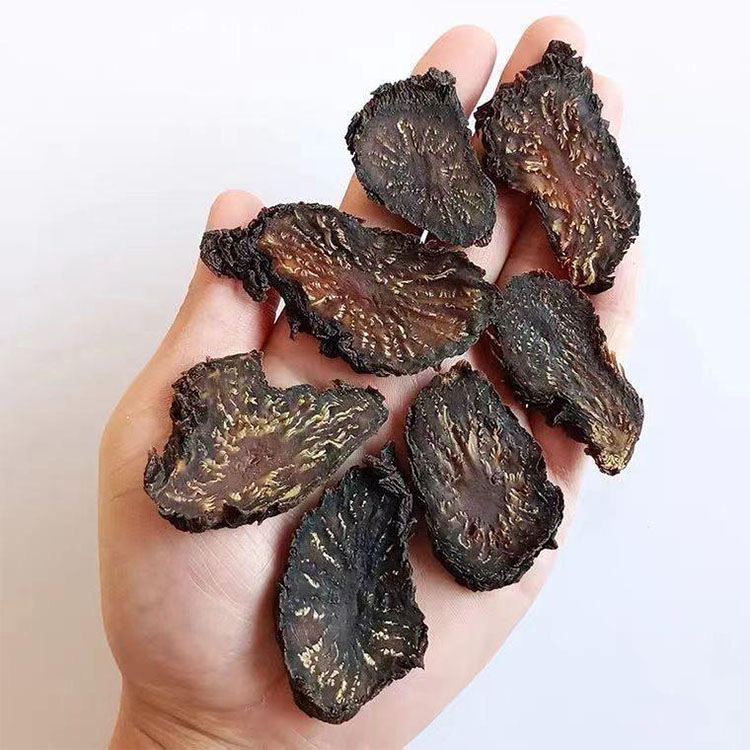
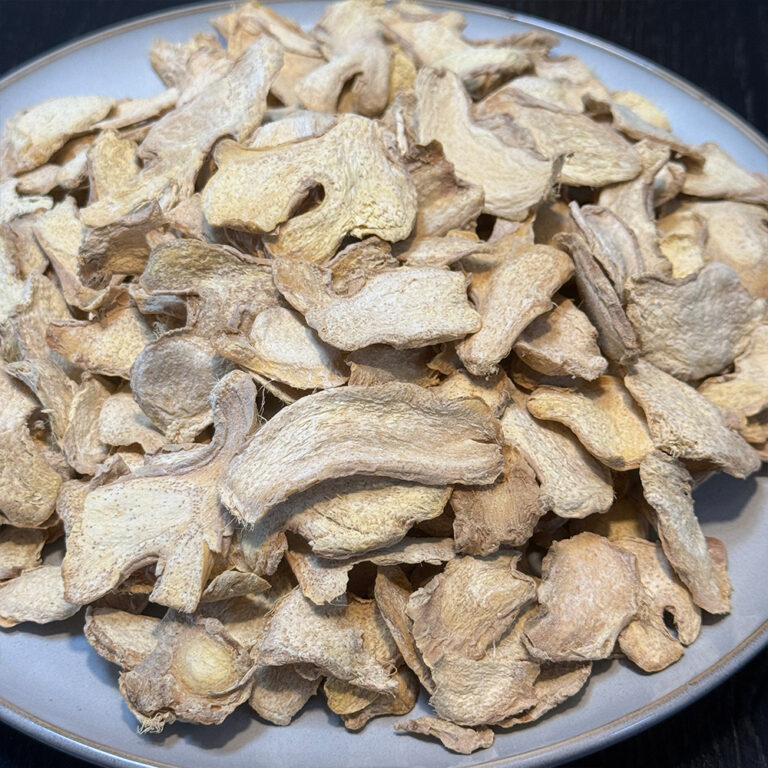
Cistanche (Rou Cong Rong): moisture + sugar control to prevent caking in bulk cartons
Most Rou Cong Rong carton failures are not “herb problems.” They are packaging and specification failures. I explain why moisture % alone is a half-truth, how sugar-rich Cistanche surfaces turn tacky, what aw limits I would use, and which internal links fit this page best.
Caking is predictable. Once Rou Cong Rong picks up free water, its sugar-bearing matrix stops acting like a “dry herb” and starts acting like a soft, adhesive solid, especially when broken tissue, warm cartons, and lazy packaging design all show up on the same shipment. Why do buyers still act shocked?
I’ve sat through enough quality disputes to know the script. The supplier says the lot “met moisture.” The buyer says the cartons arrived fused. Everyone argues about weather. Almost nobody asks the only question that matters first: what was the water activity, and how much exposed sugar-rich surface did you put into that box?
Table of Contents
The hard truth: Cistanche is not a forgiving root
This matters. Cistanche is not chemically empty stock. A 2023 review in Frontiers in Nutrition notes that cistanche polysaccharides are commonly composed of glucose, galactose, rhamnose, arabinose, and fructose, while the same paper says more than 70 phenylethanoid glycosides have been isolated; a 2024 PubMed-indexed review likewise frames Cistanche deserticola as a compositionally rich medicinal plant rather than a bland dried commodity. I read that as a storage warning, not just a pharmacology note: sweet, active, hygroscopic plant matter punishes sloppy carton specs. Frontiers 2023 review on cistanche actives and the 2024 PubMed update on Cistanche deserticola make that much plain.
And here is the piece buyers miss: “sugar control” does not mean pretending you can remove the chemistry of Rou Cong Rong. It means controlling how much of that chemistry gets exposed. Over-milling, excessive fines, harsh cutting, extract carryover, or poorly handled processed material all increase surface area and surface tack. I don’t care how pretty the COA looks. If the plant tissue is broken enough, the carton will tell the truth.
Moisture percentage lies by omission
Moisture fools people. A lot can post a perfectly respectable moisture number and still behave badly because moisture % tells you total water, while water activity tells you the free water that drives microbial growth, oxidation, softening, and physical failure. Isn’t that the argument buyers should have been having from day one?
Virginia Tech’s 2024 guidance puts it cleanly: water activity is the free water available for chemical and microbial reactions; it also notes that powdered milk and spices often fall in the aw range of 0.20 to 0.60, and that FDA recognizes foods below aw 0.85 as water-activity-controlled. That is useful, but here’s my unpopular view: “microbially safer” is not the same thing as “flow-safe” or “carton-safe.” A sugar-bearing botanical can start sticking and bridging long before it becomes a pathogen story. Virginia Tech’s 2024 water activity explainer is the better starting point than another generic moisture certificate, and FDA’s own aw guidance backs the regulatory side.
The market has already paid tuition for ignoring this. In May 2024, Reuters reported that MDH had seen an average 14.5% of U.S. shipments rejected since 2021, with around 20% of shipments in the then-current fiscal year rejected after salmonella failures. In a separate 2024 dataset, a peer-reviewed spice monitoring study found aflatoxin contamination in 24 of 1,053 spice samples, or 2.3%. Different products, yes. Same message, absolutely: “dry” is not a quality system; it is a mood.
And when documentation is weak, regulators stop being polite fast. FDA’s 2024 warning letter to Top Health Manufacturing cited failures to establish raw-material and finished-product specifications, plus missing manufacturing instructions for drying and packaging operations. That is not a side issue. That is the legal version of “you never controlled the lot in the first place.”
What I would actually put in a Cistanche bulk-carton spec
I’ll be blunt here. A single moisture limit is amateur hour. For Rou Cong Rong, I would write a commercial release spec around form, aw, exposed-sugar risk, and carton barrier design.
Cistanche format
Moisture target
aw release target
Carton/barrier setup
My read on caking risk
Standard slices
8.0%–11.0%
≤ 0.55
Sealed food-grade PE inner bag + corrugated carton
Lowest practical risk
Coarse cut / tea-cut
7.0%–10.0%
≤ 0.50
PE inner + tighter headspace control + desiccant where route justifies it
Moderate
Fine powder
4.0%–7.0%
≤ 0.45
Foil laminate or strong barrier bag, ideally nitrogen-flushed for longer lanes
High
Processed / sweeter-feel material
7.0%–10.0%
≤ 0.50
Barrier inner + warm-lane validation + no herb-to-corrugate contact
High if abused
These are my house limits, not a pharmacopoeia monograph. I’m setting them from the physics: lower aw than the microbial ceiling, tighter control for higher surface area, and extra caution where sugar-rich surfaces or process damage make sticking more likely. The logic lines up with Virginia Tech’s aw ranges for spices, FDA’s aw framework, and the site’s own format guidance that powder has the highest surface area while slices are usually the most stable.
Moisture control means endpoint, not average
Three words only. Sample smarter.
If you test one grab sample from the driest corner of a carton stack, you are not doing quality control; you are writing fiction. I would pull top-middle-bottom samples, let arrivals equilibrate for 12 to 24 hours before retesting, and reject any supplier who talks about moisture without talking about aw in the same sentence.
Sugar control means exposed sugar, fines, and process choice
This is where people get sloppy. Cistanche’s chemistry is the chemistry. But whether that chemistry is buried inside stable slices or smeared across fines and fractured tissue is a handling decision. When the business case allows it, I prefer sliced Rou Cong Rong over powder for ocean freight and warm-lane warehousing, because powder multiplies exposed surface, moisture pickup, bridge formation, and carton complaints. That is also why the site’s Common Forms buying guide belongs near this article: it makes the basic but still ignored point that powder is less stable and slices are easier to hold.
Carton control means barrier first, cardboard second
Cardboard is not protection. Cardboard is structure. The protection lives in the inner system. My rule is simple: no direct herb-to-corrugate contact, ever. Use a sealed food-grade inner bag, keep fold points from becoming leak points, and for hot routes or long dwell times, validate the pack under stress instead of praying through summer. That is exactly why I’d cross-reference the site’s Longan stickiness, sugar, and carton lining choices and Magnolia Bark resin-stickiness article: different herbs, same ugly lesson—surface chemistry beats wishful thinking.
The internal links that actually deserve the click
Internal linking is not decoration. It should move the reader from product intent, to storage logic, to process risk, to QA proof. Otherwise, what are we even doing?
For this page, I would naturally route readers first to the Cistanche (Rou Cong Rong) wholesale root page so the article stays tied to the live SKU and the exact entity, Cistanche deserticola. Then I would send format-sensitive buyers into the Common Forms buying guide, because the slice-versus-powder decision is where half the future caking risk gets decided. For warehouse and receiving discipline, the best adjacent page is the Bai Zhu storage guide on humidity bands and water activity. For extract-heavy or milled applications, the right bridge is OEM seasoning powders: flow & caking. And for readers who need audit language, not just blog talk, I’d keep a path open to custom herb products for pharmaceutical suppliers, because that page explicitly frames moisture and aw as stabilization tools and ties them to testing and documentation. That cluster is coherent. Most internal-link clusters aren’t.
FAQs
What causes Cistanche to cake in bulk cartons?
Cistanche caking in bulk cartons is the physical bonding of sweet, hygroscopic plant solids after moisture uptake lowers the material’s stability point, allowing exposed sugars and polysaccharide-rich tissues to soften, smear, and bind to nearby particles or carton-contact surfaces during storage and transport. The short version is uglier: too much free water, too much damaged surface, and too little barrier packaging.
What water activity should bulk Cistanche stay under?
For commercial export, a working Cistanche water-activity target is a lot-specific control limit kept well below the regulatory aw ceiling of 0.85 and, in practice, below the point where sticking accelerates; for most sliced lots, I would hold release at or below aw 0.55 and investigate any upward drift immediately. That is my operational number, not federal law, but it is the kind of number that prevents arguments later.
Are slices better than powder for preventing Cistanche caking?
Slices are the mechanically more stable Cistanche format because they expose less broken tissue, less surface sugar, and less total surface area per kilogram than powder, which means slower moisture pickup, lower bridge formation, easier visual inspection, and fewer unpleasant surprises when a carton is opened after transit. I would ship powder only when the finished product economics clearly justify the extra packaging discipline.
Does low moisture eliminate mold risk and compliance risk?
Low moisture does not eliminate risk because moisture percentage measures total water, while water activity measures how much of that water is available to drive mold growth, chemical change, and physical failure such as sticking, clumping, staining, and barrier collapse under real storage conditions. That is why recent spice contamination data, FDA enforcement, and aw-focused guidance all point in the same direction: write tighter specs and verify them.
Your next move
Stop buying vibes. If you are sourcing bulk Rou Cong Rong, rewrite the purchase spec this week so it includes four non-negotiables: moisture %, aw, exact inner-bag and liner construction, and a reinspection rule on arrival. Then make this page pull its weight by linking it to the Cistanche product page, the format guide, the Bai Zhu storage guide, and the custom-herb QA page. That is not “content strategy.” That is how you stop a sticky carton from becoming an expensive email chain.
Our low MOQ of 1 kg (2.2 lb) makes it easy to order Chinese herbal slices or wholesale Chinese medicine herbs. Private-label and bilingual labeling are also available.
Delivery Cycle & Support
We have a fast 7-day lead time. We provide free samples, COA reports, and technical support to help you bring high-quality bulk Chinese herbs to market.
Quality & Certifications
Our products are manufactured in a GMP-certified facility and meet ISO22000 standards. All Chinese herbs are third-party tested for heavy metals, pesticides, and microorganisms.