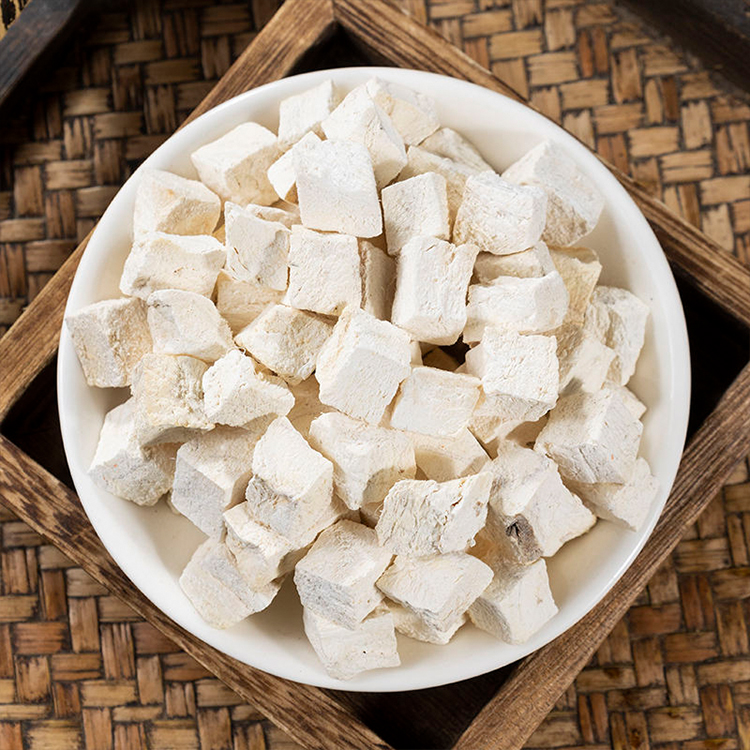
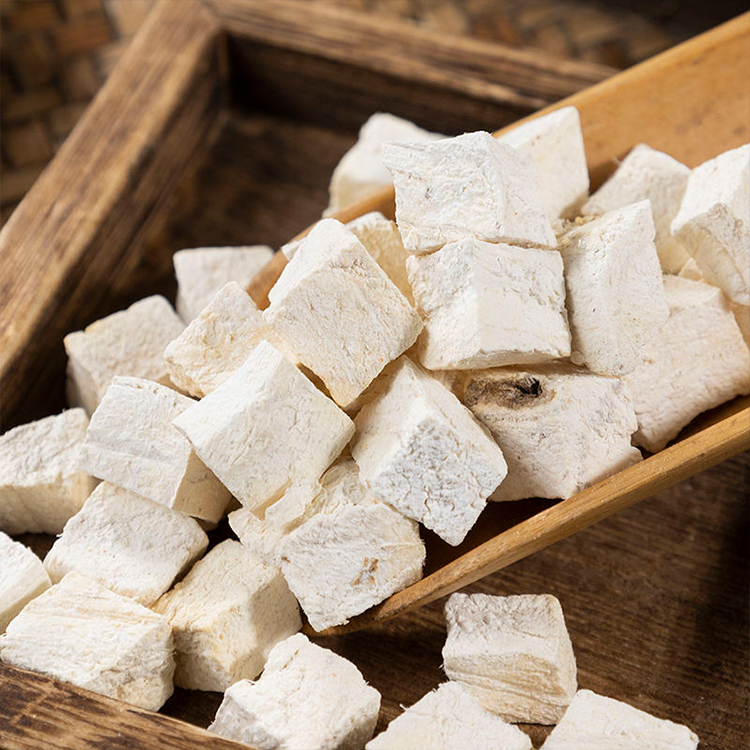
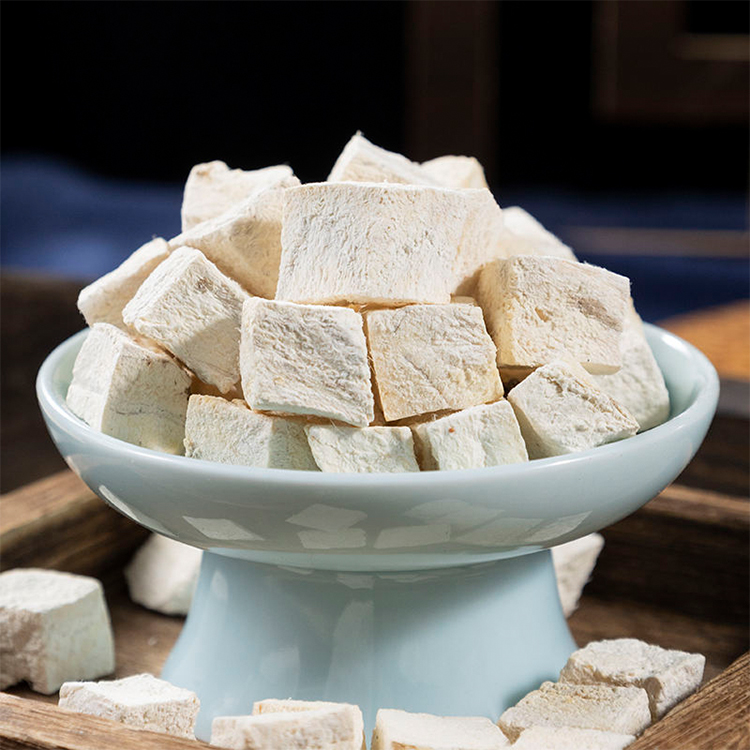
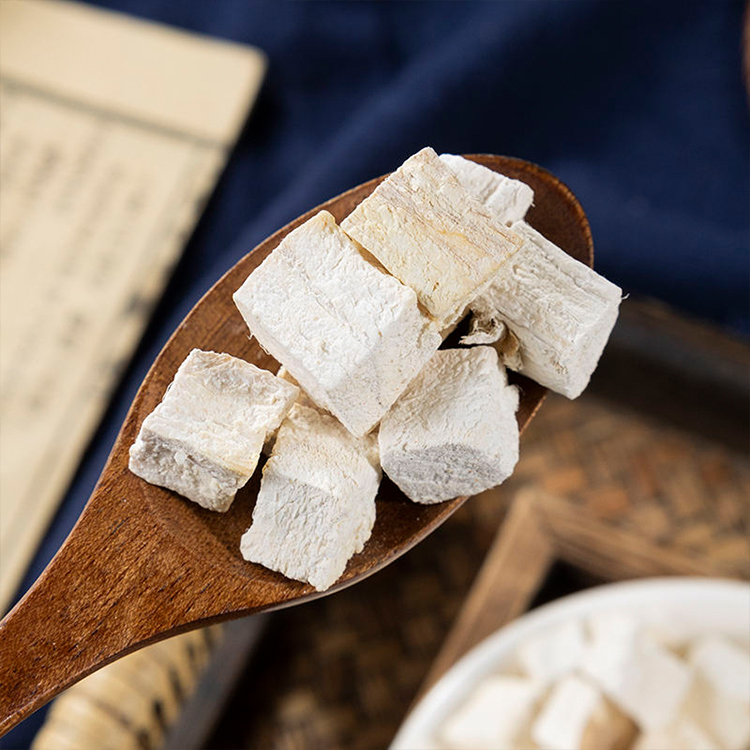
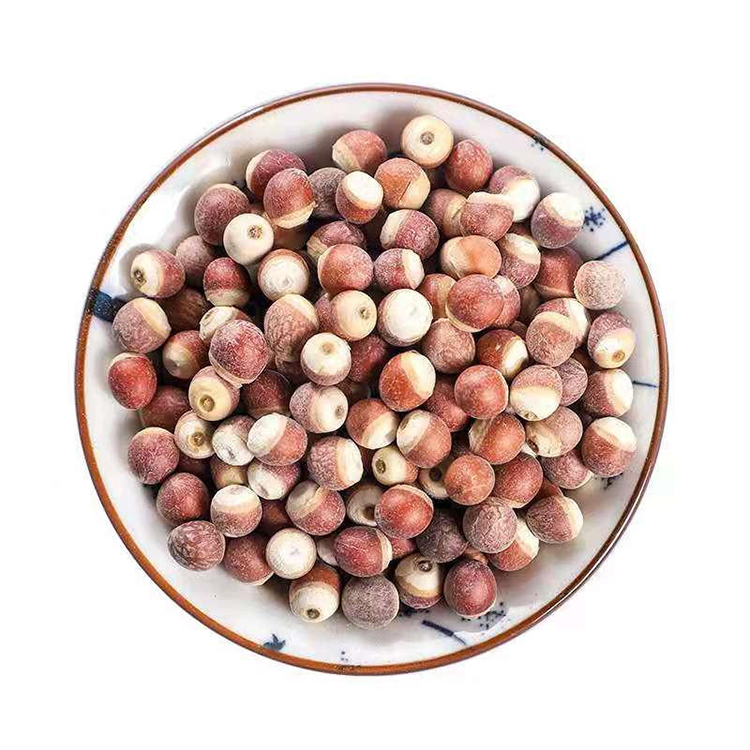
Kudzu Root Blocks: How to Control Starch, Moisture, and Cutting Size
Kudzu root block high quality relies on three linked variables: starch retention, moisture control, and cutting-size circulation. This technical overview clarifies just how expert customers should specify, test, and decline Ge Gen obstructs prior to irregular material gets to removal, decoction, food, or OEM manufacturing.
Specifications fail silently. A vendor can hit an appropriate average moisture result while concealing wetter facilities inside large blocks, and those few damp pieces– not the sleek number on a certificate– can drive mold, sour smell, caking, staining, and denial after six weeks in a container. Why do buyers still authorize great deals from one composite example?
My blunt sight is that way too many kudzu requirements are created by sales groups instead of manufacturing individuals. They state “natural color,” “high starch,” “consistent blocks,” and “effectively dried.” None of those phrases can be examined.
An expert spec needs numbers, techniques, tasting guidelines, and effects.
Adjustment one and the other two step. A bigger block dries a lot more gradually. A wetter root cuts in a different way. Aggressive cleaning may remove surface starch. Excessive warmth can dim the tissue or change starch actions. Fine particles essence swiftly however develop dust, purification tons, and fat burning.
This is one system.
Table of Contents
Kudzu Origin Starch Is a Raw-Material Variable, Not an Advertising Claim
Kudzu origin starch is primarily a polysaccharide constructed from glucose systems, frequently stood for as (C6H10O5)n. The origin additionally includes isoflavones, consisting of puerarin, whose molecular formula is C21H20O9.
Those are different commercial targets.
A food producer might focus on starch yield, thickness, swelling actions, and tidy taste. A botanical extractor may care more concerning puerarin and complete flavonoids. A decoction-piece customer may require noticeable organic identification, stable wetness, low fines, and foreseeable removal. One unclear “premium grade” can not serve all three.
The tough reality? Handling can not create starch that the field did not generate.
What adjustments kudzu starch material before cutting?
Starch control begins with whole lot segregation. I would divide product by:
Herb identity and cultivar
Expanding region
Harvest month
Origin maturation and size
Fresh-root problem
Time between harvest and processing
Soil and water-stress history
Damaged, fibrous, unhealthy, or decayed roots
Blending high-starch and low-starch roots prior to examining produces an average whole lot that pleases no one. The top-quality material supports the weak material, while the customer gets irregular removal and appearance.
ISO released ISO 24976:2026, Traditional Chinese medication– Pueraria lobata origin for high quality and security needs covering entire medicinal product and product items made use of in worldwide trade. That issues due to the fact that botanical identification, contaminant, dampness, contaminants, and processing quality are no more casual topics that ought to be settled with photos and WhatsApp promises.
Laundering is essential, yet over-washing has an expense
Fresh kudzu roots carry dirt, rocks, harmed cells, and microbial contamination. Washing is inescapable. However long soaking is not the like effective cleaning.
Prolonged soaking can soften the surface, launch suspended solids, increase wastewater load, complicate cutting, and leave cost-free water inside cracks. I prefer short, controlled cleaning with recorded water quality, complied with by quick draining and surface-water removal.
No puddles. No delays.
The cpu must record:
Wash-water replacement frequency
Water temperature level
Call time
Root-to-water proportion
Drain time
Origin weight before and after washing
Time from cleaning to reducing
A 10% weight gain after saturating is not “much better return.” It is bought water moving right into the clothes dryer.
Examination starch on a dry basis
Starch results need to be reported on a dry-matter basis, not just as gotten. Otherwise, a wet lot can show up to contain much less starch simply since the denominator includes extra water.
A defensible certificate ought to state:
Test method
Taste prep work
As-received wetness
Complete starch as gotten
Overall starch on a completely dry basis
Variety of subsamples
Mean, minimum, maximum, and basic inconsistency
I would certainly not accept “high starch web content” without an approach number and actual result. I would certainly likewise avoid dealing with iodine shade as a measurable launch examination. Iodine works for testing. It is not a replacement for a confirmed enzymatic, hydrolysis, chromatographic, or various other concurred lab method.
Wetness Portion Is Not the Same as Water Task
This distinction causes costly debates.
Wetness web content tells us how much water exists. Water task tells us exactly how readily available that water is for chain reactions and microbial growth. 2 kudzu lots can reveal the exact same overall dampness percent but act in a different way since starch, fiber, bit structure, temperature level, and soluble compounds bind water in a different way.
Right here, p is the vapor stress of water over the product, and p0 is the vapor stress above pure water at the very same temperature. Water activity can additionally be associated with stability relative humidity:
aw = ERH/ 100
An ERH of 60%, for example, represents an aw of roughly 0.60 under balance conditions.
That is why I think about a moisture-only certificate incomplete for export great deals.
A practical beginning specification
The adhering to values are engineering starting factors, not universal pharmacopoeial limits. Each customer has to validate them versus the desired market, packaging system, microbial requirements, transportation path, and relevant legislation.
Control point
Suggested beginning spec
Examination or confirmation
Why it matters
Organic identification
Pueraria lobata; Ge Gen; confirmed recommendation
Macroscopy plus verified TLC, HPLC, DNA, or agreed identity technique
Protects against replacement and mixed-species lots
Total dampness
Approximately 9%– 12% w/w, purchaser confirmed
Loss on drying or validated moisture technique
Controls weight, texture, storage habits, and drying out expense
Water task
Target at or below 0.60 at 25 ° C for a purposely low-moisture approach
Adjusted aw meter
Shows water accessibility a lot more directly than total wetness
Wetness harmony
No hidden wet tail; define maximum variant throughout tasting factors
Separate top, facility, base, and large-block tests
Identifies uneven drying out that a composite result can conceal
Starch material
Buyer-approved dry-basis minimum established from pilot great deals
Validated quantitative starch assay
Transforms “starchy” right into a quantifiable procurement term
Balanced block size
Nominal 12– 18 mm starting variety
Filter or image-analysis distribution
Equilibriums drying, extraction, managing, and aesthetic identity
In-range cut yield
At least 80% within the gotten dimensional variety
Mass-based screen evaluation
Quits small size from hiding a blended lot
Penalties
Usual starting target of no greater than 5% listed below the concurred penalty display
Sieve test by mass
Minimizes dust, loss, fast over-extraction, and filtration tons
Oversize pieces
Contract maximum, frequently 5% or less
Largest-dimension measurement
Controls damp centers and extraction inconsistency
Packaging obstacle
Confirmed versus path and shelf life
WVTR information, seal examination, lining inspection
Avoids dampness restore after release
Retention example
Sealed example from every production lot
Lot-coded storage record
Allows examination after arrival or issue
Do not duplicate these numbers blindly. Verify them.
However do compose numbers.
Why average dampness can exist
Envision ten examples. 9 test at 9.5% wetness. One large facility piece tests at 18%.
The standard may still look tolerable after grinding and compositing. The shipment is not bearable.
Extra-large kudzu blocks regularly dry from the outdoors inward. A completely dry shell can slow later moisture motion, while the core continues to be soft. The outdoors passes a fast examination. The facility does not.
I would certainly call for tasting from:
The top, middle, and bottom of the clothes dryer tons
The air inlet and air electrical outlet sides
The facility and perimeter of trays
The biggest noticeable blocks
A number of completed bags or containers
The beginning, center, and end of packing
And I would certainly divide picked huge blocks prior to launch. It is crude. It functions.
Control product temperature level, not just clothes dryer temperature level
A clothes dryer set to 60 ° C does not show that every kudzu block experienced the very same thermal background. Air rate, filling deepness, inlet moisture, block size, tools design, and evaporative cooling down all impact the product.
The appropriate document is a drying curve:
Time
Inlet-air temperature
Outlet-air temperature level
Product-core temperature level
Family member humidity
Sample weight loss
Moisture outcome
Water activity result
Starch-rich cells can respond severely to badly controlled wet heat. Instead of presuming one global “secure drying temperature level,” I would establish the onset of unwanted starch and shade adjustment through pilot tests, differential scanning calorimetry where warranted, and finished-product testing.
Drying out more challenging is not constantly drying out much better.
Cutting Size Determines Drying Speed, Removal, and Commercial Return
Reducing size is usually talked about as if it were decoration. It is process engineering.
Smaller items expose more surface. They usually completely dry faster and permit water or solvent to permeate more quickly. Yet they additionally develop much more broken edges, fines, starch dirt, oxidation exposure, packaging thickness adjustments, and screening loss.
Bigger pieces present the origin framework much more clearly. Yet they dry gradually, conceal damp facilities, and can create unequal extraction unless the downstream procedure makes use of long saturating or extended preparation.
So what is the most effective cutting dimension for kudzu origin blocks?
There is no single answer. There is a finest dimension for a defined use.
Cutting-size alternatives by application
Meant usage
Practical beginning dimension
Key benefit
Key threat
Quick aqueous removal
8– 12 mm
Faster wetting and shorter diffusion distance
A lot more fines, dust, and filtering lots
General product or well balanced B2B supply
12– 18 mm
Good concession between identity, drying, and extraction
Calls for disciplined testing
Noticeable retail or premium agricultural discussion
18– 25 mm
Strong visual identity and lower evident dirt
Slower drying out and higher wet-core risk
Milling feedstock
Larger, dryer-stable pieces under a different milling spec
Less unneeded pre-processing
Mill lots and fragment uniformity need to be validated
Custom OEM extraction
Defined by extractor geometry and procedure time
Can be matched to storage tanks, baskets, and frustration
Common provider cuts may underperform
For lots of general-purpose purchasers, I would start pilot job around 12– 18 mm, then adjust after determining drying time, removal solids, filterability, fines, and visual acceptance.
Yet small dimension is not nearly enough.
An agreement claiming “15 mm blocks” can still consist of 7 mm chips, 15 mm blocks, 30 mm chunks, and dust. Specify the distribution: for example, a minimal portion inside the approved range, plus different restrictions for penalties and big items.
Procedure all 3 measurements
Kudzu blocks are irregular. A piece determining 15 mm across may be 35 mm long and 8 mm thick. That form dries out in different ways from a near-cube.
At minimum, specify:
Maximum size
Optimum size
Density range
Percent within variety
Fines limit
Large-scale limit
Picture evaluation can increase the evaluation, however basic calipers and displays remain valuable when the sampling strategy is sound.
Cut while the root is processable, not waterlogged
The cpu requires a controlled cutting window in which the origin is firm sufficient to create tidy faces but not so brittle that it creates too much penalties. That window should be defined through conditioning time, surface area wetness, core appearance, and cutting-equipment settings.
Knife condition matters also. A worn blade crushes rather than cuts. Crushed tissue throws off starch-rich dust, creates rough surface areas, and raises small fragments throughout sharing.
I would certainly tape:
Blade kind
Blade adjustment interval
Cutting speed
Feed price
Root temperature level
Pre-cut dampness
Size distribution every defined production period
Penalties created in the past and after drying
For business choosing in between noticeable plant material and standardized extracts, the guide to whole organic pieces versus extracts offers the broader product-development context. Blocks preserve visible identification and downstream flexibility. Removes trade much of that presence for application and procedure consistency.
A Customer’s Kudzu Origin Block Control Plan
A genuine control plan begins before the purchase order. Not after the container arrives.
Step 1: Specify the intended use
State whether the blocks are intended for:
Preparation
Organic tea
Food processing
Starch recovery
Water extraction
Hydroalcoholic removal
Milling
Fermentation
Retail agricultural display screen
Additional OEM processing
This figures out the cut, dryness, assay concerns, contaminant limitations, packaging, and paperwork.
The larger root and rhizome medicinal variety is useful for portfolio customers, however each root needs its very own handling requirements. Kudzu can not merely acquire the limitations made use of for ginger, ginseng, or licorice.
Action 2: Authorize a pilot whole lot
Make use of a little yet representative pilot whole lot to establish:
Recommendation appearance
Odor
Starch result
Puerarin or marker result where relevant
Wetness
Water task
Block-size distribution
Fines
Extraction yield
Filtering actions
Microbial account
Packaging performance
Keep sealed recommendation examples on both sides.
A picture is not a reference example. Illumination, camera handling, and screen settings make shade conflicts virtually useless.
Action 3: Write the sampling plan
A certificate is only comparable to the sample sent to the lab.
Specify the number of bags tested, places within each bag, minimum sample mass, approach of incorporating samples, examinations carried out on specific increments, tests performed on compounds, and retention duration.
Moisture and block size are worthy of location-specific testing. Contaminant and identification work may use a properly prepared composite, depending on the technique and policy.
Tip 4: Call for method-specific COA information
The COA must determine:
Item and Latin name
Plant component
Lot number
Harvest or manufacturing date
Origin
Test day
Lab
Approach reference
Requirements
Real outcome
Unit
Pass/fail decision
Accredited trademark
“Adjusts” without a mathematical result is weak proof.
For importers, the wholesale guide to importing Chinese natural pieces covers the larger documents and personalizeds problems. I would certainly add one non-negotiable instruction: the COA whole lot number have to match the great deal number on every outer container and internal lining.
Step 5: Run an arrival inspection
Do not count solely on the pre-shipment sample.
At arrival, check:
Container condition
Container water damage
Liner stability
Seal condition
Condensation
Odor
Insect task
Noticeable mold
Color change
Wetness
Water activity
Size distribution
Net weight
Lot-code uniformity
A shipment can leave the factory within specification and show up outdoors spec after moist storage space, punctured linings, temperature biking, or poor container loading.
Action 6: Specify the solution before the failing
The purchase agreement should specify what takes place when a whole lot falls short:
Re-test by an agreed third-party research laboratory
Arranging or recycling
Rate adjustment
Replacement
Return
Devastation
Freight duty
Laboratory-cost obligation
Insurance claim deadline
Without this language, high quality conflicts end up being sales settlements.
The Provider Questions That Expose Weak Handling
I would ask these before reviewing cost:
What herb identification approach is used for Pueraria lobata!. 2.?.!? Is starch reported as gotten or on a dry basis?
What is the real starch outcome for the used great deal?
The number of moisture samples are extracted from each clothes dryer lots?
Is water task gauged at release?
What is the maximum block dimension?
What portion drops inside the acquired dimension range?
What is the fines result by mass?
How are oversized roots conditioned prior to reducing?
What clothes dryer documents are maintained?
Are the biggest blocks split for core assessment?
What barrier lining is utilized?
Has the product packaging been validated for damp ocean transportation?
Can the purchaser obtain pre-shipment and retention samples?
What happens contractually if the arrival whole lot stops working?
A vendor that can not address these inquiries might still create an acceptable set. That is not the same as regulating a repeatable procedure.
For jobs needing a personalized block dimension, assay target, extraction layout, or well-known pack, discuss the requirements via the site’s custom Chinese herbal and seasoning OEM solution prior to manufacturing. Personalization must begin with the technological specification, not the bag artwork.
Frequently asked questions
What dampness should kudzu origin blocks have?
Kudzu origin block wetness ought to be defined as a verified release array that sets complete moisture with water task, since percent wetness alone can disappoint just how much water is offered for microbial growth, movement, caking, odor adjustment, or mold throughout storage and sea transit.
A business beginning range of about 9%– 12% total dampness might be convenient for some dried-block applications, while an aw target at or below 0.60 supports an intentionally low-moisture method. These numbers should be validated versus the product, test method, product packaging, location policies, and shelf-life study.
What is the most effective cutting dimension for kudzu origin blocks?
The very best cutting dimension for kudzu root blocks is the dimension matched to the buyer’s extraction time, aesthetic standard, and devices, with 12– 18 mm usually working as a sensible starting variety for balanced handling, drying uniformity, convenient penalties, and predictable water penetration.
Faster extraction may warrant 8– 12 mm items, while a noticeable retail format might utilize 18– 25 mm blocks. The agreement must define size, width, thickness, in-range percent, penalties, and big limitations instead of calling one nominal measurement.
Exactly how can a processor maintain kudzu root starch?
Kudzu starch is preserved by controlling cultivar and harvest segregation, minimizing extended washing, preventing unnecessary soaking or blanching, reducing prior to the root dries out unevenly, and making use of a verified drying out curve that eliminates water without partially gelatinizing or scorching the starch-rich tissue.
The purchaser ought to test starch on a dry basis and contrast production whole lots versus an authorized pilot. Dryer-air temperature level alone is not enough; product-core temperature level, humidity, tons depth, time, color, and ended up starch habits have to likewise be checked.
What should a kudzu origin block specification include?
A defensible vendor spec is an authorized purchase record that specifies organic identity, test approach, starch reporting basis, dampness and water-activity restrictions, block-size distribution, fines, foreign matter, microbiology, contaminants, packaging, sampling strategy, retention examples, and the solution for an out-of-specification lot.
It should additionally mention the desired usage, beginning, lot-coding policies, called for COA fields, pre-shipment sample procedure, arrival-testing legal rights, re-test research laboratory, case window, and duty for substitute, freight, sorting, or disposal.
Are huge kudzu obstructs far better than little blocks?
Huge kudzu blocks are not automatically better; they offer stronger aesthetic organic identification and might produce fewer penalties, however they additionally dry out extra gradually, conceal damp centers more quickly, and call for longer soaking or extraction than smaller sized, more consistently reduce pieces.
Buyers must choose dimension according to the procedure rather than appearance. An aesthetically outstanding 30 mm block can be a bad choice for a short extraction cycle, while an 8 mm piece might be unsuitable for a costs visible-herb pack.
Turn Kudzu Top Quality Into a Created Requirements
Stop buying adjectives.
Ask for actual starch data, wetness and water activity, a complete cutting-size circulation, fines portion, large-scale limitations, dryer documents, depictive examples, and a method-specific COA. Then check the arrival whole lot against the very same written criterion.
For a mass quote or a custom kudzu root block spec, call the GuoCao group with your intended application, yearly quantity, target cut range, product packaging format, destination nation, and required laboratory tests. The more exact the request, the harder it is for an inconsistent lot to conceal behind the expression “premium high quality.”
Our low MOQ of 1 kg (2.2 lb) makes it easy to order Chinese herbal slices or wholesale Chinese medicine herbs. Private-label and bilingual labeling are also available.
Delivery Cycle & Support
We have a fast 7-day lead time. We provide free samples, COA reports, and technical support to help you bring high-quality bulk Chinese herbs to market.
Quality & Certifications
Our products are manufactured in a GMP-certified facility and meet ISO22000 standards. All Chinese herbs are third-party tested for heavy metals, pesticides, and microorganisms.