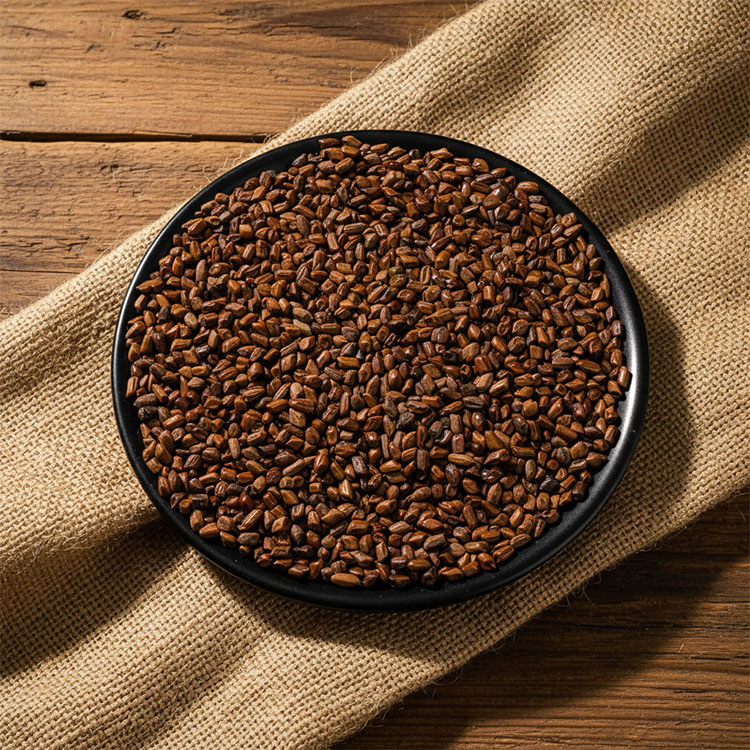
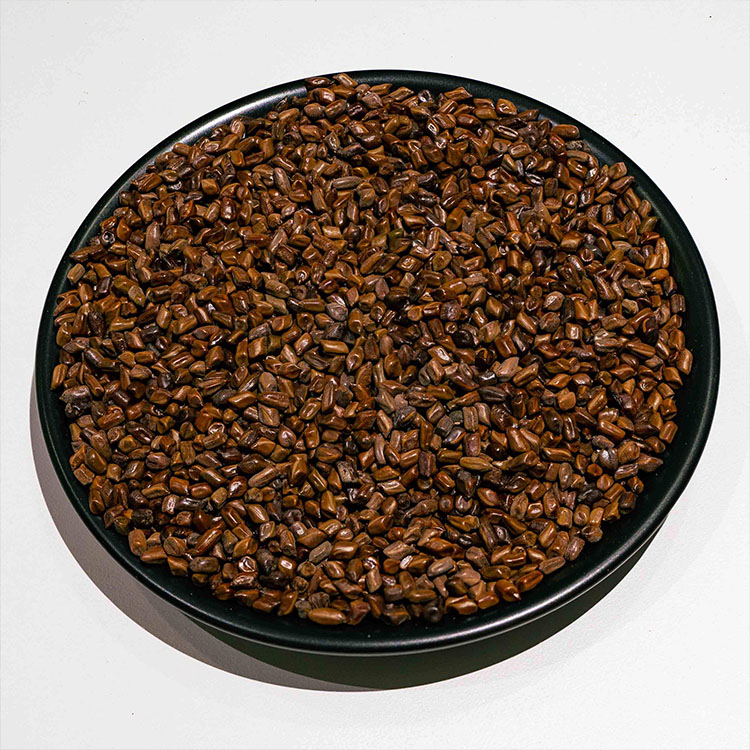
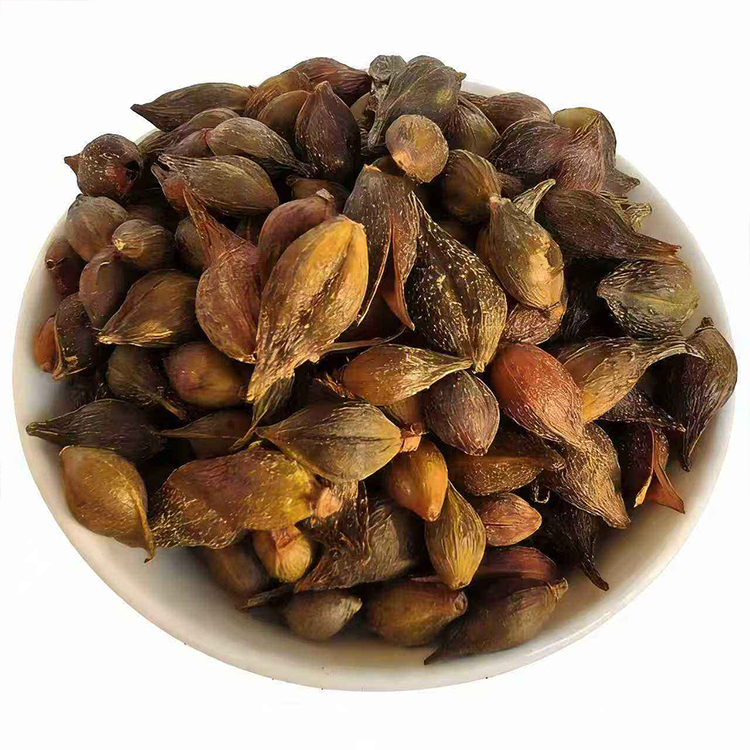
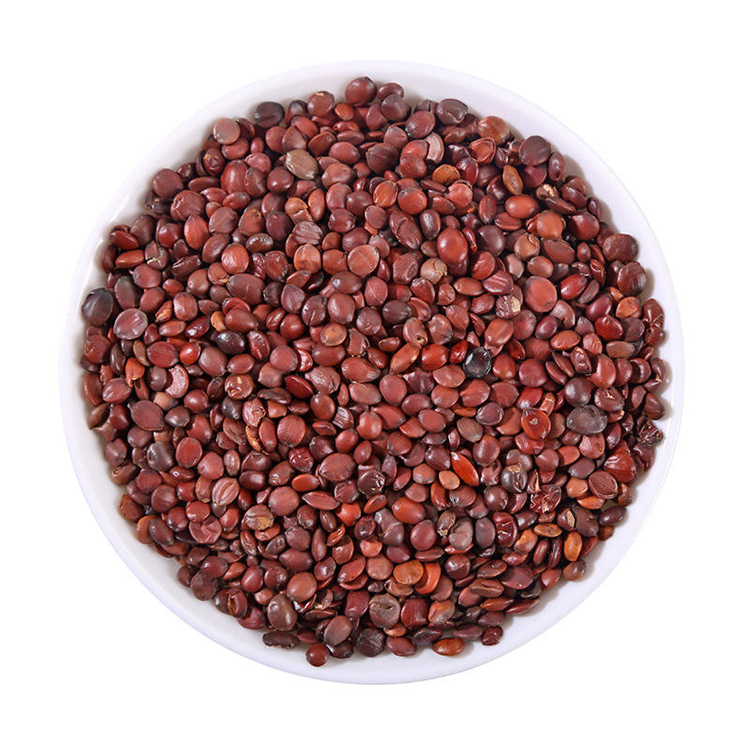
Cassia Seed (Jue Ming Zi): cleaning standards that protect your tea-bag line
Most cassia seed suppliers sell “clean.” I don’t buy that word anymore. For tea-bag production, clean only matters when it survives three tests at once: the line runs without choking, the cup stays consistent, and the paperwork stands up when QA or customs asks ugly questions.
I’ve watched too many botanical projects fail in the same boring way: the sample looks pretty in a pouch, the sales deck says “premium,” the first production run starts, and then the tea-bag line begins coughing up fines, drifting on fill weight, leaking dusty seals, and generating exactly the kind of buyer emails nobody answers quickly because the COA looked fine but the material behaved badly.
Do you really want to find out what “clean” means only after your machine jams?
Cassia Seed — Jue Ming Zi, or Cassiae Semen if you want the pharmacopoeia tone — sits in that irritating middle ground where it is treated like a simple fruit-and-seed herb, yet bought, handled, and audited more like a food ingredient once it enters a tea-bag program. That is why I would not publish a piece like this without pointing readers toward the site’s own Fruit & Seed herb catalog, the practical Cassia Seed tea use-case guide, and the broader Chinese Herbal Tea Bags hub, because this topic is not just about one seed; it is about how one seed behaves inside a commercial sachet system.
Table of Contents
“Clean” is not a quality standard — it is a sales word
Looks deceive buyers.
When a supplier says cassia seed is “clean,” I ask three follow-up questions immediately: clean from what, measured how, and defended with which record set. Stones, metal, fiber, plastic, insect fragments, pesticide residues, Salmonella exposure, lead carryover, dust load, sieve distribution, and lot traceability do not disappear because a warehouse rep says the batch is “well selected.”
And here is the hard truth: most cleaning programs are still optimized for visual acceptance, not line performance.
If you run tea bags at speed, your enemy is not only contamination. It is variability. A little too much powder and you get dusty seals. A little too much oversized material and you get poor fill flow. A little too much hidden moisture and shelf life starts negotiating with you. That is why I’d naturally point technical buyers to the site’s How to Read a Chinese Herbal OEM Quotation and the tea-bag OEM timeline guide, because the fight begins long before the bags are filled.
The failures that actually cost money
I don’t care how “traditional” the ingredient sounds. I care how it behaves under production stress.
Flow-behavior check, fill-weight IPC, humidity control
Net-content disputes and batch inconsistency
Foreign-matter complaints
Stones, dense fragments, metal, plastic
Destoning, magnets, metal detection, inspection SOP
Safety exposure and instant buyer distrust
Re-test loops
Wrong residue panel, vague COA, no lot match
Market-specific residue panel, lot-linked COA pack
Delays, holds, rejected shipments
Audit failure
“We do it” without evidence
Release checklist, traceability, signed QC records
Lost accounts and customs friction
That table is not theory. It is the shortest version of the post-mortem I keep seeing.
The market has already voted, and it voted against sloppy residue control
Numbers matter.
According to the European Commission’s 2023 Annual Report on food safety alerts and agri-food fraud investigations, RASFF notifications rose 8% in 2023 to 4,695 total notices, and the most reported issue was pesticide residues, followed closely by pathogenic microorganisms. That should end the lazy argument that “buyers only care about appearance.” They do not. They care about whatever gets flagged first by regulators, and right now residues and microbes sit at the front of that line.
And if anyone still thinks this is abstract, Reuters reported in May 2024 that MDH had seen an average 14.5% of its U.S. shipments rejected since 2021 because of bacteria, while a second Reuters report in August 2024 said nearly 12% of 4,054 spice samples tested by Indian authorities failed quality and safety parameters. Low-moisture botanicals do not get a free pass just because they look dry and old-fashioned.
Tea is not exempt.
Yogi’s own 2024 voluntary recall notice states that routine audit procedures detected unexpected traces of pesticides in some Echinacea Immune Support tea, that the company notified FDA to initiate a voluntary recall, and that it secured a new echinacea supplier before restarting production in May 2024. So yes, even a mature tea brand can get dragged into residue trouble by supplier exposure and upstream agricultural drift. Why would you assume cassia seed is magically safer?
What that means for cassia seed tea
If your cassia seed spec does not explicitly control Pb, Cd, As, Hg, market-specific pesticide panels, Salmonella status, and particle-size distribution, you are not buying an ingredient. You are buying suspense.
I would also stop pretending that “we test pesticides” means anything on its own. FDA says its residue monitoring program selectively tests imported and domestic commodities for approximately 800 pesticide residues, which is exactly why vague one-line residue claims look amateurish to serious buyers; the bar is not “tested,” it is “tested against the right panel with the right LOQ for the right market.”
The cleaning standard that protects a tea-bag line is brutally unromantic
Boring wins here.
I start with incoming control, because every downstream process gets worse when the supplier sends you mixed geometry, hidden fines, damp pockets, or a COA that cannot be tied cleanly to the lot on the cartons. That is also why a natural internal path for readers is the procurement guide for Chinese herbal products and the site’s OEM vs ODM cooperation models for herbal tea bag factories, because supplier structure changes the quality outcome more than buyers like to admit.
Step 1: Lock the physical spec before the batch arrives
Here is my bias: I would rather reject a pretty batch than rescue a vague one.
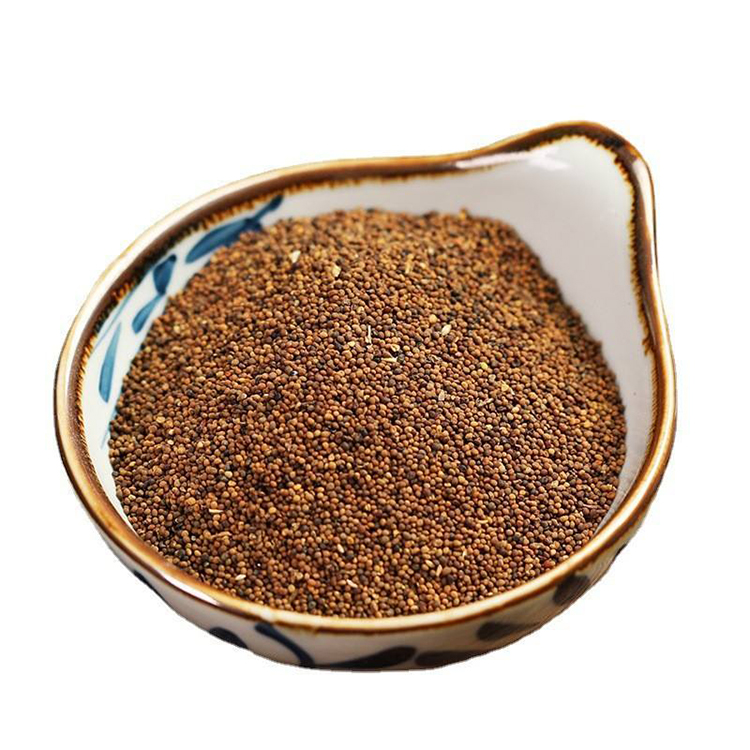
For tea-bag use, I want a declared particle window, a fines cap, a foreign-matter rule by type, a moisture window, and a retained-sample policy. Not “medium cut.” Not “export grade.” Real language. For example, I may write a working tea-cut target such as 0.6–2.0 mm with a defined cap on sub-0.25 mm fines, but that is a buyer-side starting point, not scripture. The point is discipline, not my exact number.
Step 2: Mechanical cleaning has to do more than look impressive on video
The right sequence is rarely glamorous: pre-screening, aspiration, gravity destoning, sieve stack tightening, magnets, then metal detection as a final gate.
What matters is not whether a supplier owns the machine. What matters is whether they can show challenge checks, reject logs, and line-clearance discipline. I’ve seen factories brag about metal detectors like they were luxury items. That tells me nothing. Show me the sensitivity checks and the hourly records, then we can talk.
Step 3: Decide whether you need a kill step, then defend it
This part makes people uncomfortable because the commercial answer and the sensory answer are not always friends.
If your market or risk profile demands microbial reduction, say so plainly and validate the method. Steam is common because buyers understand it and auditors can follow it, but steam can also flatten aroma or shift appearance when operators overdo it. Irradiation works, too, though some brands still panic at the word. My view is simple: I would rather explain a validated kill step than explain a Salmonella event.
And paperwork is not optional here. FDA’s FSVP guidance is explicit that importers must promptly reevaluate a foreign supplier when new information shows the supplier failed to control a hazard, received an FDA warning letter, or landed on an import alert. That is why a “trust us” supplier is not merely annoying; it is operationally expensive.
Documentation is part of the cleaning standard, whether purchasing likes it or not
Paper stops holds.
I keep seeing the same mistake: teams separate physical cleaning from documentation, as if one lives in operations and the other lives in compliance. No. On cross-border tea-bag projects, documentation is part of the cleaning standard because it proves that the batch released today is the same batch described by the test report, the same batch loaded into the line, and the same batch later questioned by a buyer.
That file should include the product identity set, lot code mapping, COA with actual result values, method references, residue panel scope, heavy-metal results, micro results, packaging date, retain-sample note, and exception history if anything got reworked. If the supplier sends “PASS” without numbers, or gives ND without LOQ, I treat the batch as under-documented. And yes, I know that sounds strict. Good.
What buyers should write into the PO and spec sheet
The safe version is specific.
Write the intended use. Write “tea-bag line use” into the material specification. Write the cut-size expectation, the fines cap, the foreign-matter categories, the residue panel region, the heavy metals list, the microbial release rules, the lot traceability requirement, and the corrective-action rule if a lot falls outside spec. The more tea-bag-specific the language becomes, the fewer fake arguments you will have later about what “acceptable” was supposed to mean.
FAQs
What are cassia seed cleaning standards?
Cassia seed cleaning standards are the written physical, chemical, microbiological, and documentary requirements that prove Jue Ming Zi is fit for tea-bag production, including controls for dust, stones, metals, pesticide residues, heavy metals, particle-size distribution, microbial status, and lot-level traceability.
In plain English, it is the difference between “looks fine” and “can survive audit, filling, sealing, brewing, and buyer scrutiny without drama.”
How clean should Jue Ming Zi be for tea bags?
Jue Ming Zi for tea bags should be clean enough to run consistently through dosing and sealing equipment while also meeting the target market’s residue, heavy-metal, and microbiological expectations, which means visual cleanliness alone is never enough and documentation must match the exact released lot.
If the batch still throws off dust, clumps, stones, or unclear paperwork, it is not tea-bag clean. It is just cosmetically improved.
What documents should a cassia seed supplier provide?
A cassia seed supplier should provide a lot-specific release pack that includes a traceable COA, test methods, actual residue and heavy-metal results, microbiological results, lot-code matching, and supporting records that show the batch was cleaned, handled, and released under a defined quality system.
I would also ask for retained-sample logic and a clear deviation history, because problems rarely arrive alone.
How do you source clean cassia seed for tea bags?
Sourcing clean cassia seed for tea bags means buying against a tea-bag-specific specification, auditing the supplier’s cleaning and documentation system, confirming that the residue panel matches the sales market, and refusing vague commercial language such as “export quality” when no measurable release criteria are attached.
So, start with the spec sheet, not the sales call. Then audit the proof behind it.
Why does particle size matter so much in cassia seed tea?
Particle size in cassia seed tea matters because it directly affects bag filling, flow stability, seal cleanliness, dust load, extraction speed, brew appearance, and cup bitterness, so even a chemically compliant batch can still fail commercially if the cut-size distribution is sloppy.
That is why I treat sieve data as production data, not cosmetic data.
Your next move
Buy the batch like an operator, not a tourist.
If you are building or fixing a cassia-seed tea-bag line, stop asking suppliers whether the material is “clean” and start asking for a tea-bag release standard that covers particle control, foreign matter, micro risk, residue risk, heavy metals, and lot-matched proof. Then make your internal path obvious for the buyer: point them from the Fruit & Seed catalog to the Cassia Seed tea guide, into the Chinese Herbal Tea Bags page, then through the OEM timeline and OEM quotation guide.
That sequence does two jobs at once: it improves internal link flow, and it tells serious buyers that you understand the ugly middle ground between herb sourcing, factory execution, and regulatory proof. Which, frankly, is where deals are won.
Our low MOQ of 1 kg (2.2 lb) makes it easy to order Chinese herbal slices or wholesale Chinese medicine herbs. Private-label and bilingual labeling are also available.
Delivery Cycle & Support
We have a fast 7-day lead time. We provide free samples, COA reports, and technical support to help you bring high-quality bulk Chinese herbs to market.
Quality & Certifications
Our products are manufactured in a GMP-certified facility and meet ISO22000 standards. All Chinese herbs are third-party tested for heavy metals, pesticides, and microorganisms.