Poria Mushroom Sourcing Guide for Herbal Product Manufacturers
Poria mushroom sourcing looks simple until a supplier sends beige powder, a weak COA, and a price that makes no sense. This guide shows manufacturers how to buy Poria cocos with tighter specifications, smarter testing, and fewer regulatory surprises.
But the quiet, beige, slightly sweet-smelling material sitting in a supplier’s warehouse can become a regulatory headache if your team treats it like a commodity powder instead of a documented botanical input with identity, contaminant, processing, and batch-traceability requirements. Who wants to discover after production that their “Poria mushroom” was only verified by color, smell, and a supplier’s confidence?
I’ll say the unpopular part first: many herbal product manufacturers over-trust the COA.
A COA is paper. Useful paper, yes. But still paper. The real question is whether the Poria mushroom lot behind that COA can survive your own inbound testing, your contract manufacturer’s QA review, and a regulator asking: “How did you verify identity, purity, strength, and composition?”
For Poria mushroom, also known as Fu Ling, Poria cocos, Wolfiporia cocos, and tuckahoe, the buying decision sits at the intersection of old materia medica, modern supplement compliance, and hard commercial math. If you are sourcing for capsules, tea bags, granules, extract blends, functional beverages, or OEM herbal formulas, your sourcing file needs more than a nice Latin name.
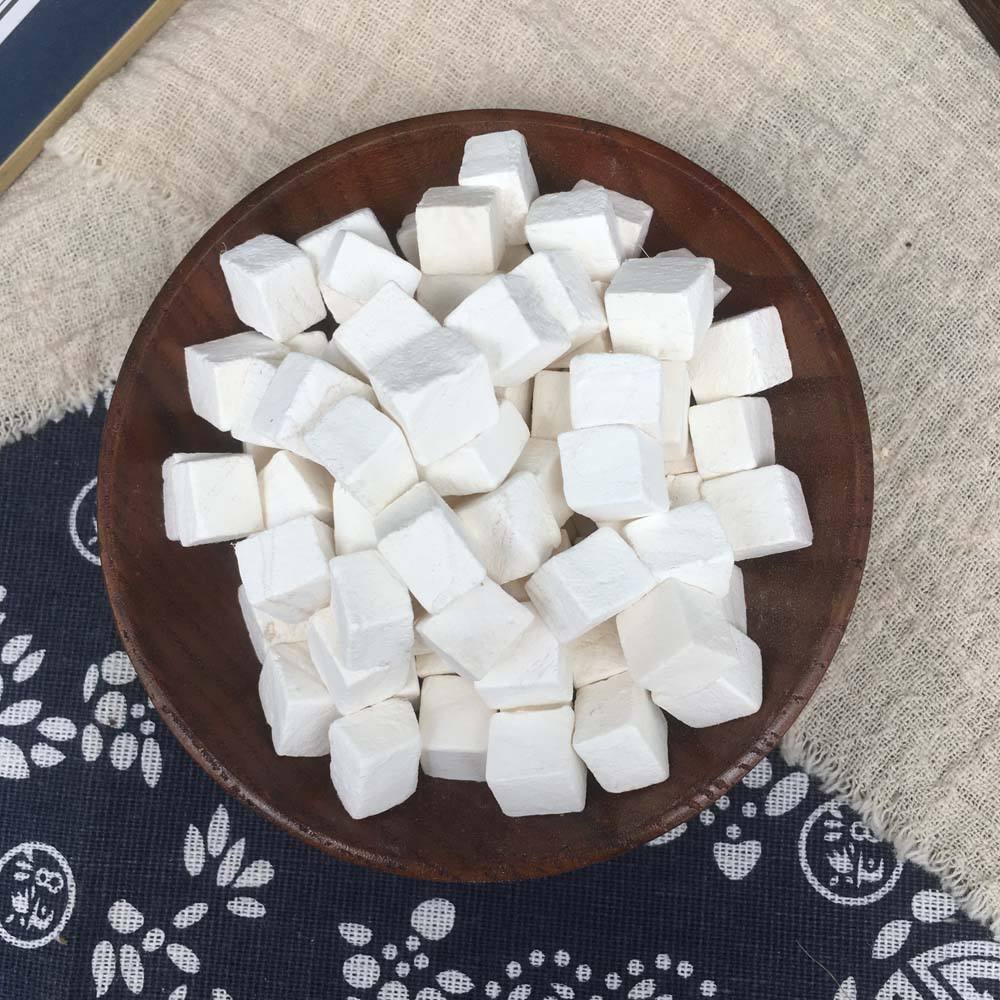
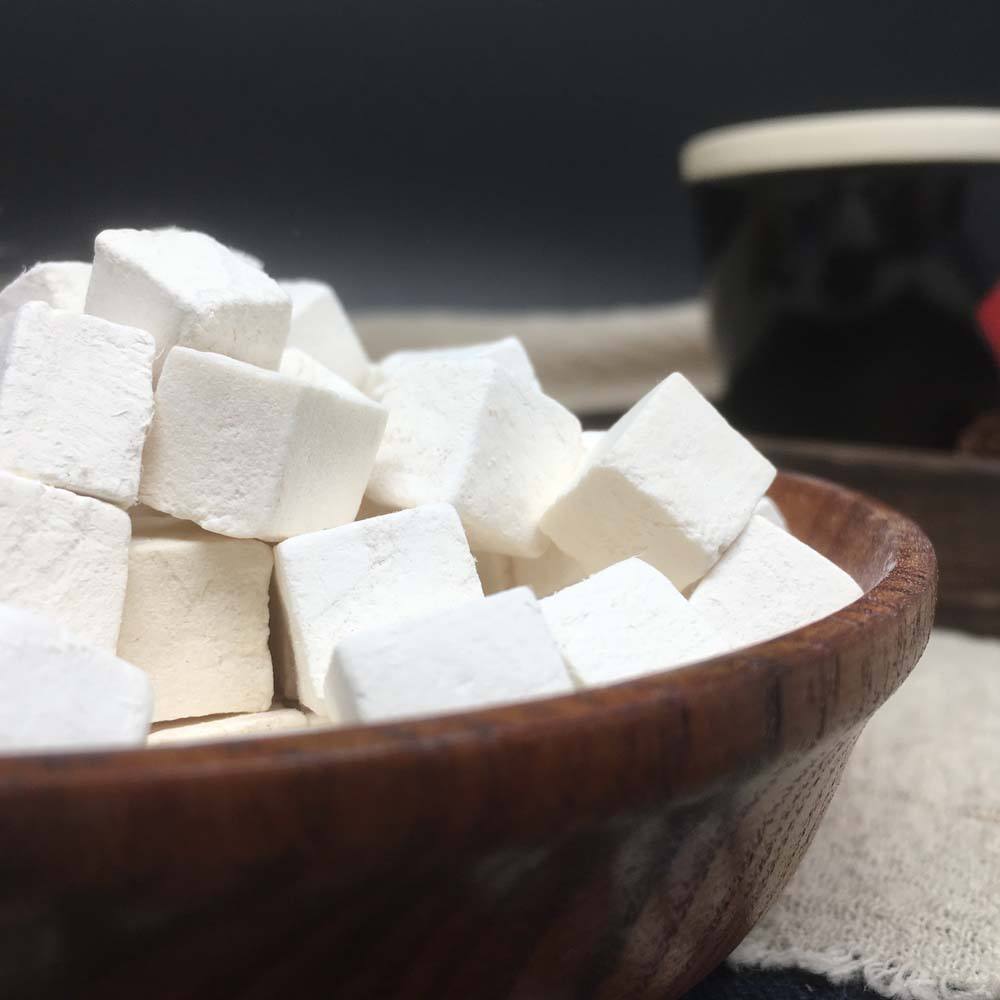
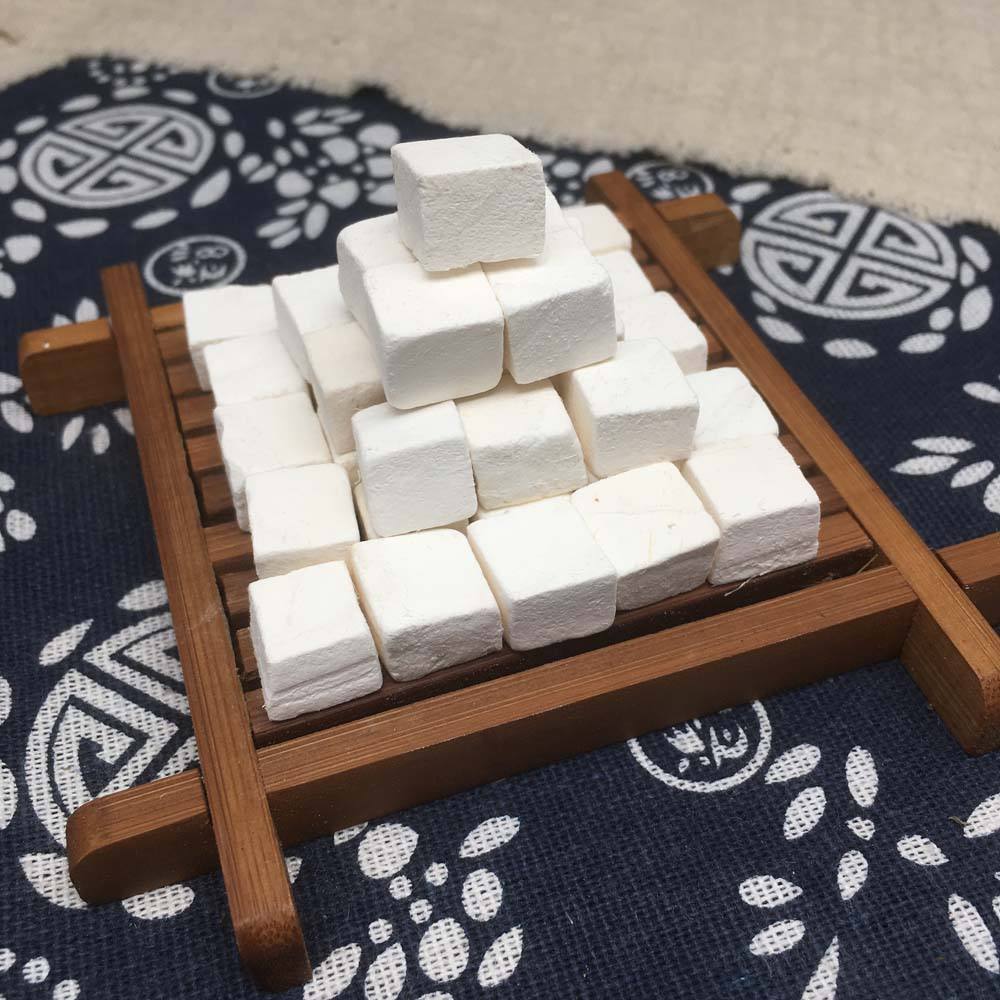
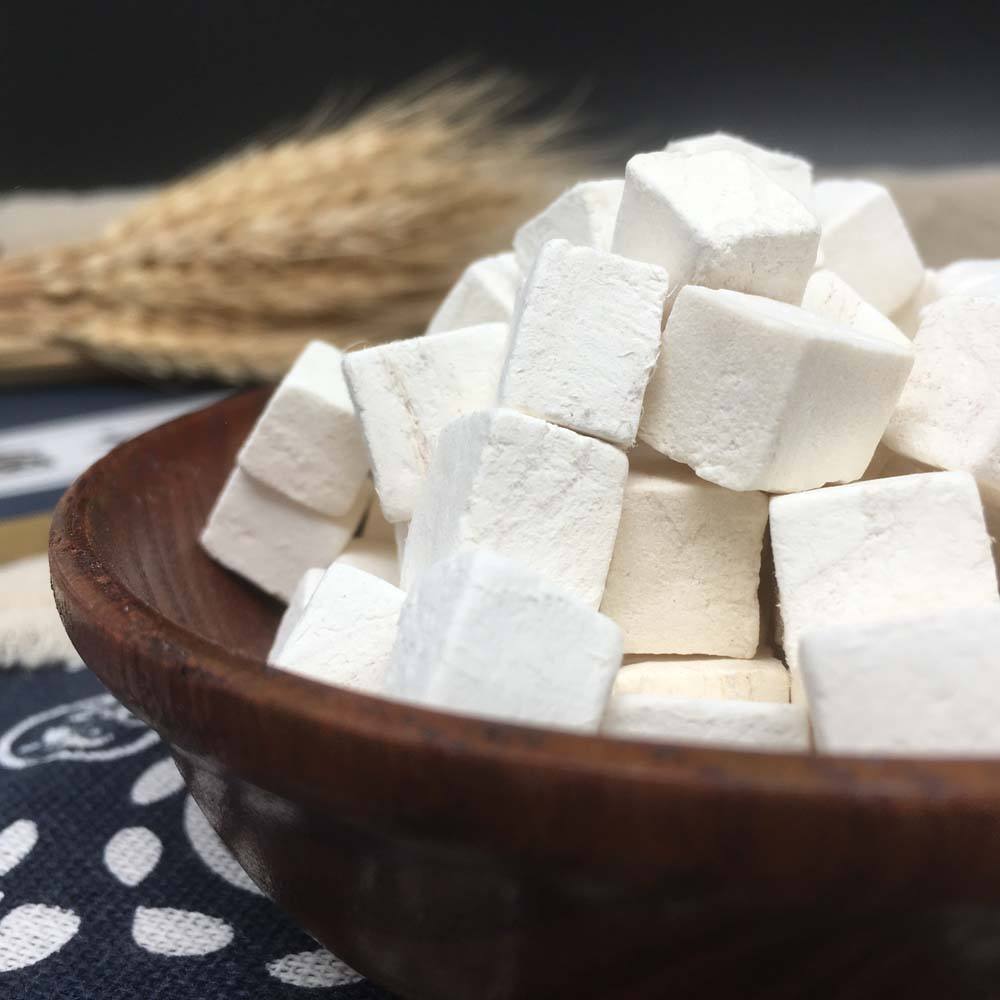
A good starting point is the actual product identity. The supplier page for Poria Mushroom Fu Ling Chinese herbal medicine wholesaler identifies the material as Poria cocos, Pinyin “Fu Ling,” common names “Poria Mushroom” and “Tuckahoe,” and describes the commercial form as dried sclerotium with a white-to-beige, spongy texture. That matters because the material is not a cap-and-stem culinary mushroom. It is the dried sclerotium.
And that distinction changes everything.
Table of Contents
What Manufacturers Are Really Buying When They Buy Fu Ling
Poria mushroom is the dried sclerotium of Poria cocos, a fungus associated with pine roots and widely used in Chinese herbal manufacturing as Fu Ling, typically supplied as slices, cubes, powder, or extract for teas, capsules, granules, beverage blends, and traditional formula development.
That sounds clean. It rarely is.
In the research literature, Poria’s most discussed chemical groups are polysaccharides and triterpenoids. A 2024 review in RSC Advances describes Poria cocos polysaccharides as fungal polysaccharides derived from the traditional Chinese medicine Poria cocos, while also noting that water-soluble polysaccharides are often treated as major active components in applied research. Read that carefully: “active component” does not automatically mean “commercial marker that every supplier controls well.” The gap between research chemistry and factory purchasing is where buyers lose money.
For sourcing, I separate Poria into four commercial lanes:
Material Type
Typical Buyer Use
What I Would Demand Before Approval
Main Risk
Whole dried sclerotium / slices
Decoction pieces, tea blends, traditional formulas
The supplier site already organizes Fu Ling under Root and Rhizome Chinese medicines, which is sensible for buyers browsing traditional Chinese medicinal raw materials even though Poria is fungal. For broader catalog evaluation, the wholesale Chinese herbal and spices raw materials supplier page helps manufacturers compare adjacent botanicals, dosage-form ideas, and category fit.
But category browsing is not approval.
Approval starts when you write the spec.
The Specification Sheet Is Where Amateur Buyers Get Exposed
Here’s the hard truth.
A Poria cocos supplier who cannot discuss identity testing, toxic elements, pesticide residues, microbial limits, moisture, ash, sulfur dioxide, and batch traceability is not a manufacturing partner. They are a price quote with a logo.
The FDA’s dietary supplement CGMP rule, 21 CFR Part 111, requires manufacturers, packagers, labelers, and holders of dietary supplements to establish and follow current good manufacturing practice. The FDA Small Entity Compliance Guide for 21 CFR Part 111 states plainly that companies must establish and follow CGMP to ensure dietary supplement quality and proper packaging and labeling. That is not marketing advice. That is the compliance floor.
So, if you are buying bulk Poria mushroom powder for supplements, your internal approval spec should not say only:
“Poria cocos powder, beige, characteristic odor.”
That is lazy.
A serious inbound spec should include:
Botanical identity: Poria cocos / Fu Ling / dried sclerotium
Plant or fungal part: sclerotium
Country and province of origin where available
Processing: cleaned, sliced or milled, dried, non-irradiated if required
Appearance: white to beige, uniform powder or slices
Moisture: target and maximum limit
Total ash and acid-insoluble ash if used
Heavy metals: Pb, Cd, As, Hg
Pesticide residues: market-specific screen, especially for EU, US, Japan, and Australia
Microbiology: total plate count, yeast and mold, E. coli, Salmonella, Staphylococcus aureus where applicable
Sulfur dioxide: especially relevant in some dried Chinese herb supply chains
Mesh size for powder: usually 60–100 mesh depending on dosage form
Extract ratio and carrier, if extract: 4:1, 10:1, polysaccharide %, maltodextrin %, dextrin %, gum arabic %, or “no carrier”
Retest or shelf-life basis
Batch number, manufacturing date, expiry or retest date
Storage: cool, dry, sealed, protected from moisture and odor transfer
I like boring suppliers.
Because boring suppliers can answer boring questions. Who processed the batch? What was the drying method? Was sulfur fumigation used? Can the same lot be traced from raw sclerotium to finished powder? Can you provide third-party testing, not just internal lab numbers?
If the answer is vague, walk away or downgrade the supplier to sample-only status.
The COA Trap: When “Pass” Means Almost Nothing
A Certificate of Analysis is only as strong as the test method, sampling plan, lab competence, and specification behind it.
That sentence should be taped to the wall of every procurement office.
The FDA has repeatedly flagged dietary supplement firms for specification and identity failures. In a 2024 FDA warning letter to Top Health Manufacturing, the agency cited failures to establish identity specifications for components and purity/strength specifications for botanical ingredients. In another 2024 warning letter to Restorative Botanicals, FDA criticized mushroom-component specifications that relied on physical characteristics such as color, smell, and taste, noting that similar mushroom extracts can look alike as brown powders.
That last point should make Poria buyers uncomfortable.
Because Poria powder is not visually special. Beige powder is beige powder. If a supplier is selling Poria mushroom extract, Maitake extract, Chaga extract, and mixed mushroom blend powders out of the same catalog, your QA team should not accept organoleptic identity alone.
Current certificate, scope, address, audit report if available
A cheap Poria cocos extract powder wholesale offer can look attractive at $18–$28/kg on a spreadsheet. But if the carrier is undeclared, the polysaccharide method is weak, and the microbiology is tested only once per quarter, that “savings” can become rework, rejected inventory, or worse: a batch you cannot defend.
Contamination Is Not a Theory; It Is the Business
Contamination happens.
A Scientific Reports paper on traditional Chinese medicine products combined DNA, toxicological, and heavy-metal analysis and found that 92% of the 26 tested TCM products were non-compliant on one or more grounds, including undeclared DNA, toxicology, or heavy metals. One product had arsenic levels more than ten times a daily limit for medicines. The study is not about Poria specifically, but it is absolutely relevant to the buying mindset for imported herbal materials: trust the category too much and you get punished.
Then there is the manufacturing side. Reuters reported in 2012 that Chinese authorities found 254 pharmaceutical suppliers, or 12.7% of the total in that investigation, were producing tainted capsules, while 5.8% of 11,561 tested drug batches contained excessive chromium. That scandal was about gelatin capsules, not Fu Ling. But any manufacturer buying herbal raw materials for capsules should remember the lesson: the weak link may sit outside the botanical itself.
So, when I hear someone ask, “Who is the best Poria mushroom supplier for supplements?” I don’t start with price.
I start with risk.
Can they provide repeatable bulk Poria mushroom powder? Can they support the same mesh size for six months? Can they explain seasonal differences? Can they handle export documentation? Do they offer third-party testing for heavy metals, pesticides, and microorganisms, as stated on the GuoCao Poria product page and quality section? Can they support low-volume pilot work before scale-up, like the 1 kg MOQ and 7-day lead-time claims described on related site pages such as Whole Slices vs Extracts for Product Development?
That is how adults buy ingredients.
Whole Slices vs Powder vs Extract: The Manufacturer’s Decision
I do not believe every brand needs extract.
There, I said it.
Extracts sell well because they look modern. They fit capsules, dissolve better in some systems, and make marketing teams feel like something has been “standardized.” But a poor extract with vague carrier disclosure is often worse than a well-documented whole Poria slice or clean powder.
The better decision is dosage-form driven.
Choose Poria slices when tradition and visual integrity matter
For tea blends, decoction kits, apothecary retail, and traditional formula packs, slices or cubes often make more sense. Customers can see the material. QA can inspect morphology. The downside is bulkier logistics, more variable infusion yield, and less convenience for capsules.
For manufacturers building a Chinese herbal tea concept, Poria can sit beside other root-and-rhizome materials, digestive blends, and wellness formulas. This is where the site’s Chinese herbal tea bags category can help inspire product architecture, even if the actual Fu Ling input still needs its own spec.
Choose bulk Poria mushroom powder when cost and blending matter
Powder is usually the practical choice for capsules, stick packs, sachets, and powdered blends. It is easier to dose and blend. It is also easier to adulterate, contaminate, or misidentify.
Powder demands stronger controls: identity testing, mesh size, flow properties, bulk density, microbial limits, and validated blending behavior. If your product has a 500 mg capsule fill target, a fluffy powder with poor density can wreck your line efficiency.
Choose Poria extract when claims, concentration, or format require it
Extract is useful when you need a smaller serving size, better dispersion, or a formula built around quantified polysaccharides. But the extract market is where number games appear.
Ask a blunt question: “Is the polysaccharide value measured on the extract itself, or is it influenced by carrier, starch, or non-Poria carbohydrates?”
Then watch the supplier’s answer.
If you are comparing format choices across herbal product development, the article on whole slices versus extracts is a natural internal reference for buyers weighing traditional appearance against modern processing needs.
How to Source Poria Mushroom for Herbal Products Without Getting Burned
Here is the workflow I would use.
Start with samples from at least two suppliers. Not ten. Ten creates noise. Two or three good candidates are enough if they can provide documentation, pricing tiers, and realistic lead times.
Ask each Poria cocos supplier for:
Product specification sheet
Recent COA from the exact production form
Third-party heavy metal report
Pesticide residue screen
Microbiology report
Origin and processing statement
Sulfur dioxide statement or test
GMO statement if needed
Allergen statement
Vegan statement if finished product requires it
Irradiation statement
Storage and shelf-life or retest statement
Flow chart from raw material to finished powder or extract
Export documents and HS code guidance
MOQ, lead time, packaging, palletization, and Incoterms
Then run your own tests.
Yes, even if the supplier is nice. Especially if the supplier is nice.
A professional supplier should not be offended by verification. If anything, they should welcome it because serious buyers become repeat buyers. The site’s custom Chinese herbal spice solutions page positions GuoCao for wholesalers, distributors, and herbal product manufacturers, which makes the supplier conversation more relevant for OEM/ODM projects rather than one-off commodity purchases.
For pesticide discussions, use internal education content like Comparison of Pesticide Residue Testing Methods to guide non-technical buyers before they negotiate testing requirements. Procurement people do not need to become chromatographers. But they do need to know when a pesticide claim is too thin.
The Data Points I Would Put in a Buying File
Buyers love stories. Auditors love files.
A Poria mushroom sourcing file should include both. The story explains why the ingredient fits the formula. The file proves why the lot was approved.
File Section
Minimum Evidence
Stronger Evidence
Identity
Latin name, Pinyin, part used, supplier spec
Macroscopic/microscopic ID, HPTLC/FTIR/HPLC fingerprint where appropriate
For US dietary supplement manufacturers, I would align this file with 21 CFR Part 111. For EU buyers, I would be stricter on pesticide residue documentation. For Australia, I would pay extra attention to TGA expectations if the product is moving into listed medicine territory. For Amazon marketplace sellers, I would assume documents may be requested suddenly and in the least convenient week of the year.
That is not paranoia.
That is operational memory.
Pricing: Why the Cheapest Fu Ling Usually Has a Reason
Poria pricing depends on origin, grade, harvest conditions, drying quality, cut size, powder mesh, extract ratio, carrier use, testing load, packaging, and order volume. A clean bulk Poria mushroom powder with real third-party testing should not be priced the same as loose commodity powder moving through a trading desk.
Watch for these price traps:
Extract ratio that sounds high but has no method support
“Organic” claims without certificate scope
Powder sold as extract
Extract sold without carrier disclosure
Supplier quoting FOB but buyer comparing against DDP
One-time low price from old inventory
Missing pesticide report
Missing toxic element numbers
“Same as sample” with no retained sample policy
For first orders, I prefer smaller validated lots over heroic container commitments. The supplier’s 1 kg MOQ claim can be useful for trial formulation, sensory testing, and pilot runs. But for commercial scale, ask for 25 kg, 100 kg, 500 kg, and 1,000 kg tier pricing, plus lead times under normal and peak-season conditions.
One more thing: ask what happens when a lot fails your test.
A real supplier has an answer. A weak supplier becomes philosophical.
Supplier Questions That Separate Professionals From Brochure Collectors
Use these questions before you buy.
Question
Good Answer
Bad Answer
What exact material is supplied?
Dried sclerotium of Poria cocos, slice/powder/extract form stated
“Poria mushroom, natural powder”
What is the identity method?
Defined method, lab, and acceptance criteria
“Color and smell”
Are heavy metals tested by lot?
Pb, Cd, As, Hg values shown
“Pass” only
What pesticide standard is used?
EU/US/Japan-specific panel available
“No pesticide”
Does extract contain carrier?
Carrier type and percentage disclosed
“No need to worry”
Can you provide third-party testing?
Yes, with recent reports
Only internal COA
What is the MOQ?
Clear MOQ, sample, pilot, bulk tiers
Changes every email
Can you support OEM/ODM?
Formula, packaging, label, testing workflow
Only raw material quote
This is where a Poria supplier becomes either a partner or a problem.
FAQs
What is Poria mushroom?
Poria mushroom is the dried sclerotium of Poria cocos, also called Fu Ling, Wolfiporia cocos, or tuckahoe, and it is used in herbal products as slices, powder, or extract for teas, capsules, granules, beverage blends, and traditional Chinese medicine-inspired formulas.
In sourcing terms, the key point is that Poria mushroom is not usually bought as a culinary mushroom fruiting body. Manufacturers should specify “dried sclerotium,” confirm the Latin name, and require batch-level identity and contaminant testing before approving commercial use.
How do I choose a Poria cocos supplier?
A good Poria cocos supplier should provide clear botanical identity, part used, processing details, batch COA, third-party heavy metal testing, pesticide residue data, microbial results, sulfur dioxide information, MOQ, lead time, and export documentation before asking for a commercial purchase order.
I would also ask for sample retention policy, failed-lot replacement terms, packaging photos, and exact production address. A supplier who can quote quickly but cannot document the material slowly is not ready for supplement manufacturing customers.
Is bulk Poria mushroom powder better than Poria extract?
Bulk Poria mushroom powder is better for cost-controlled capsules, sachets, and whole-herb positioning, while Poria extract is better when a smaller serving size, quantified marker, or beverage-ready format is needed, provided the extract ratio, carrier, and polysaccharide method are fully disclosed.
Do not assume extract is automatically superior. A clean powder with strong identity and contaminant data can be more defensible than a vague 10:1 extract with inflated polysaccharide claims and undeclared maltodextrin.
What tests should herbal product manufacturers require for Fu Ling sourcing?
Manufacturers sourcing Fu Ling should require botanical identity, moisture, ash where relevant, heavy metals, pesticide residues, microbiology, sulfur dioxide, mesh size for powder, extract ratio for extracts, carrier disclosure, and batch traceability documents tied to the exact lot being purchased.
For supplement use, I would also request allergen, GMO, vegan, irradiation, residual solvent where applicable, and stability or retest documentation. The goal is not to collect paper. The goal is to build a defensible quality record.
Can Poria mushroom be used in private label herbal products?
Poria mushroom can be used in private label herbal products such as tea bags, capsules, powders, granules, wellness blends, and OEM/ODM formulas when the buyer controls ingredient identity, safety testing, label language, supplier documentation, and finished-product compliance for the target market.
The private label risk is usually not the ingredient itself. It is weak claim language, poor label review, incomplete batch records, and blind trust in supplier COAs. Treat private label as manufacturing, not decoration.
Your Next Steps
Do not buy Poria mushroom like a commodity.
Send a supplier a real specification request. Ask for Poria cocos identity documents, third-party heavy metals, pesticide residues, microbial results, sulfur dioxide data, powder mesh or extract ratio, carrier disclosure, MOQ, and lead time. Then compare the answers against your product format: slices, bulk Poria mushroom powder, or Poria cocos extract powder wholesale.
Our low MOQ of 1 kg (2.2 lb) makes it easy to order Chinese herbal slices or wholesale Chinese medicine herbs. Private-label and bilingual labeling are also available.
Delivery Cycle & Support
We have a fast 7-day lead time. We provide free samples, COA reports, and technical support to help you bring high-quality bulk Chinese herbs to market.
Quality & Certifications
Our products are manufactured in a GMP-certified facility and meet ISO22000 standards. All Chinese herbs are third-party tested for heavy metals, pesticides, and microorganisms.