You want speed. You want quality. You don’t want a warehouse full of slow movers. This playbook keeps it real: OEM vs white label, how to work MOQ without burning cash, and how to use Barks Chinese Medicines as functional actives inside gummies, capsules, powders, and functional drinks. I’ll also show you how GuoCao slots into the workflow with cGMP, ISO 22000, COA testing, and global supply.
OEM vs White Label vs ODM (herbal supplements keywords)
Let’s set the ground rules first.
White label: pick a proven formula, slap your brand, move fast. MOQ stays low, lead time short. Great for channel testing and first revenue.
OEM (private label): you own the spec. You choose actives, ratios, flavor systems, excipients, and packaging. MOQ rises, lead time extends, but you get differentiation and better unit economics over time.
ODM / CDMO: you outsource the R&D and regulatory heavy lifting plus manufacturing. Handy when you want turnkey development, stability studies, and label compliance support.
Quick decision tree
Need a product in weeks, not months? Start white label.
Have a clear hero benefit and repeatable demand? Graduate to OEM.
Launching a complex multi-herb matrix or a new dosage form (say, enzyme drink)? Consider ODM/CDMO.
Industry shorthand you’ll hear: run-rate, MOQ break, slotting, RFP/RFQ, tolling, fill-and-finish, batch record (MBR), change control, OOS/CAPA, release testing, EDI, lot traceability. If a partner can’t speak this language, that’s a flag.
MOQ Strategy for Herbal Supplements (gummies, capsules, powders)
MOQ isn’t a random “number”—it maps to the minimum efficient run on a line (blend size, mold cavity count, film or bottle changeovers) plus packaging economics. Treat it like an engineering parameter, not just a price lever.
Typical MOQ ranges (by dosage form)
Dosage form
Typical MOQ range (per SKU)
Why it sticks
Notes you can use
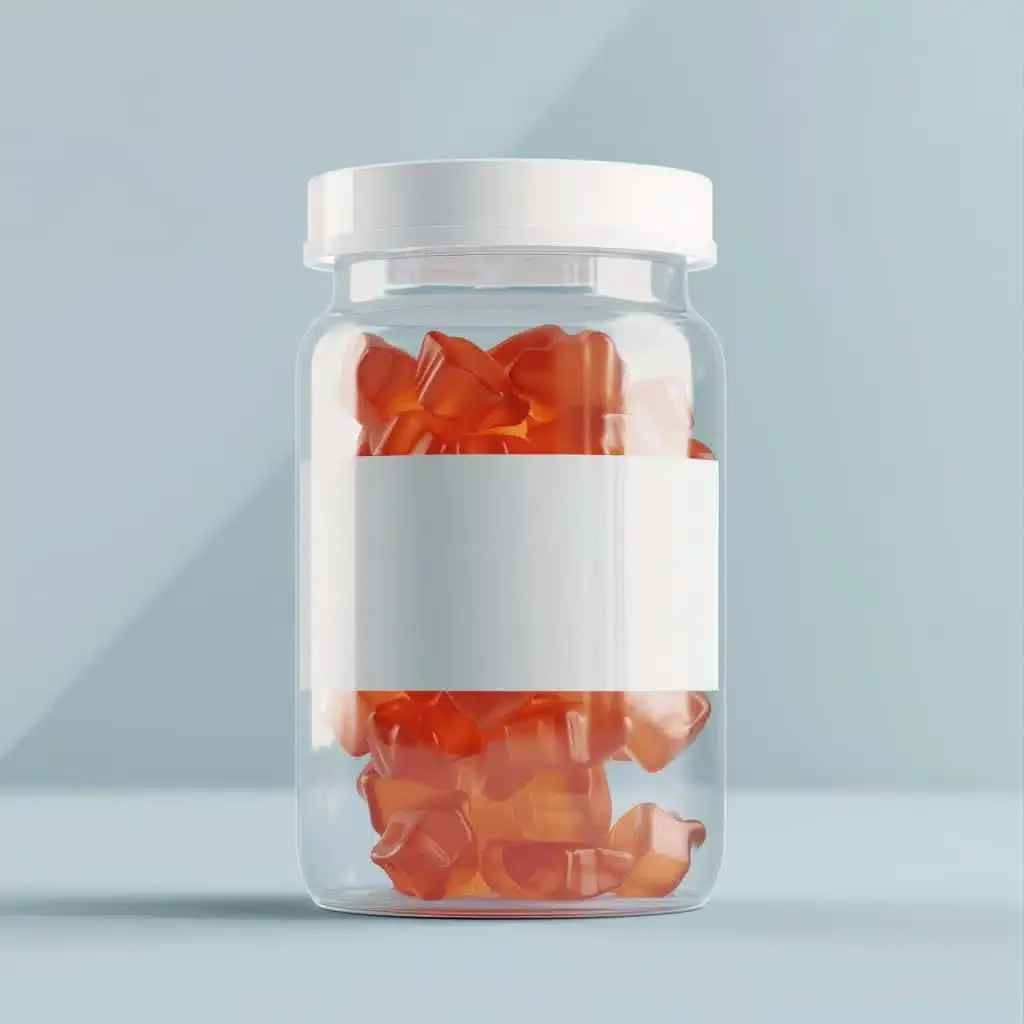
Gummies (white label)
~1,000–2,500 bottles
Mold cavity + depositors need a minimum fill; flavor & pectin/gelatin set-up waste is real
Keep flavors tight; one or two max for the first pass
Gummies (OEM)
~5,000–10,000 units per flavor
Custom flavor & active load need validation; stability checks
“Supports…” style claims need the FDA disclaimer and 30-day notification
Label copy with disclaimer; notification proof
FTC ad truthfulness
Health claims need competent and reliable scientific evidence
Dossier: clinical refs, monographs, in-house data
EU 2002/46/EC & Novel Food
If you sell in EU, check labeling & ingredient status
Ingredient status check + label translation proof
Traceability
From raw bark to finished lot
Lot genealogy, supplier approval, change-control log
If this sounds heavy, that’s the point. Good factories do this daily. Ask for docs; don’t be shy. Better a slow yes than a fast recall. Grammar a bit weird? Maybe, but you get the idea.
Barks Chinese Medicines (functional actives for OEM & white label)
Barks carry real functionality—alkaloids, lignans, polyphenols—that fit gut, metabolic, and immune benefit stories. If your brand angle is rooted in TCM botanicals, this is your playground. Here are eight bark and root-bark materials you can plug into white label or OEM builds:
These links sit inside Barks Chinese Medicines sourcing. Use them as anchor SKUs when you brief flavor houses, encapsulation specs, and label claims.
Lead Time and Supply Chain for Herbal OEM & white label
Lead time is math: brief → sample → raw & pack → manufacture → test → release → ship. You’ll see two very different rhythms:
Stage
White label
OEM / ODM
What to watch
Brief + sample
1–2 weeks
2–6 weeks
Lock hero actives & label copy early
Raw & packaging
1–2 weeks
2–6 weeks
Printing MOQs, bottle molds, flavor lead times
Manufacture
1–2 weeks
2–4 weeks
Line time booking; do not miss the slot
Testing & release
3–7 days
7–14 days
Third-party lab queue; add buffer
Total lead time
~2–4 weeks
~8–12 weeks
Seasonal crunch can push longer
Pro tip: share your rolling forecast (even if rough). It helps the factory pre-block line time and hold common pack components. You’ll save headaches, not just pennies.
Practical play: White label → prove demand → OEM upgrade (no made-up names)
Here’s a pattern that works. Not a fairytale, just a clean sequence you can actually run.
Pick a white label base in your benefit lane (say, calm-focus). Use Magnolia Bark (Hou Po) or Phellodendron Bark (Huang Bai) as the anchor active via existing SKUs: Magnolia Bark (Hou Po) · Phellodendron Bark (Huang Bai) Keep MOQ low. Launch in one flavor, one size. Don’t over-SKU it.
Collect hard signals for 2–4 weeks: repeat rate, review keywords (taste, afterfeel), channel velocity. Not vibes—data.
Lock the OEM spec: same benefit, tighter claim, better sensory. Swap in Cinnamon Bark (Rou Gui) for a metabolic co-benefit or add Eucommia Bark (Du Zhong) for joint comfort. Links: Cinnamon Bark (Rou Gui) · Eucommia Bark (Du Zhong)
Run a pilot batch (mini-run if available). Check blend uniformity, organoleptics, and packaging line efficiency.
Move to OEM runs only when your forecast supports the MOQ. Keep white label as a backstop SKU so you don’t stockout during the switch.
Spin off formats: capsule twin, stick-pack for travel, or a low-sugar gummy. If you play in drinks, consider enzyme beverages as a line extension. Keep the compliance file updated.
Ain’t glamorous, but it’s repeatable. That’s what scales.
COA, stability, and documentation (quality keywords: ISO 22000, GMP, COA, CAPA)
Quality isn’t a brochure—it’s paperwork, instruments, and people who follow SOPs even on bad days.
Raw material: identity testing (e.g., microscopy, TLC/HPTLC), potency or marker compounds, micro & heavy metals.
When OOS happens: expect a CAPA with root-cause, immediate fix, and prevention plan. No CAPA? Walk.
Where GuoCao fits: cGMP Chinese herb slices line, ISO 22000 food safety system, normal/cool/MA storage, third-party COA capability, and ~2,500-ton annual capacity. OEM/ODM customization is supported, and enzyme beverage production is already online for functional drink use cases. Products ship into the U.S., EU, Australia, Japan, Korea, Canada, Malaysia, Philippines, and more than 30 regions. If you need barks at scale with paperwork, this is exactly the lane.
Standard lead times by dosage form; next open line slots
Primary packaging options and their MOQs
Label review SOP and structure/function notification support
GuoCao can supply that stack: herb slicing GMP line, multi-temp storage (normal / cool / modified atmosphere), ISO 22000 system, third-party COA, OEM/ODM capacity, enzyme-drink line for functional beverage briefs, and export experience into 30+ countries. If you’re sourcing barks at volume, this reduces friction right away.
Editorial notes (tone, data, and how to write it)
Keep sentences short. Use contractions.
Mix simple and complex lines to keep rhythm.
Show numbers as ranges for MOQ and lead time; skip unit cost math.
Add actual links to ingredients you sell (done above).
Don’t flood with buzzwords—use industry terms that solve real pain.
Read it aloud. If a sentence trips your tongue, cut it or split it.
Wrap
Start lean with white label. Prove demand. Move to OEM for brand moat. Use Barks Chinese Medicines—like Rou Gui, Du Zhong, Hou Po—as the backbone. Keep cGMP, ISO 22000, COA, and claims compliance tidy. That’s the whole move. It’s not fancy, but it ships. And shipping beats dreaming, any day.
Our low MOQ of 1 kg (2.2 lb) makes it easy to order Chinese herbal slices or wholesale Chinese medicine herbs. Private-label and bilingual labeling are also available.
Delivery Cycle & Support
We have a fast 7-day lead time. We provide free samples, COA reports, and technical support to help you bring high-quality bulk Chinese herbs to market.
Quality & Certifications
Our products are manufactured in a GMP-certified facility and meet ISO22000 standards. All Chinese herbs are third-party tested for heavy metals, pesticides, and microorganisms.