Mulberry Root Bark: How to Set Cut-Size and Cleanliness Standards
Learn how to turn cut size, fines, foreign matter and sampling into measurable mulberry root bark specs that cut disputes with suppliers and speed up incoming inspection.
Disputes over mulberry root bark (Sang Bai Pi, Mori Cortex) rarely start with identity. They start when a lot of “shreds” arrives as a mix of long strips and crumbs. They also start when a carton opens to a layer of brown fines, and nobody wrote down what “normal” looks like. Cut size and cleanliness are both measurable. Neither can be judged by eye from a photo.
This guide shows how to define each one as a specification: what to measure, how to measure it, how to sample, and what to send in an RFQ. Numeric limits shown are placeholders. Agree them with your supplier and your target-market monograph.
Why Cut Size and Cleanliness Cause Most Sang Bai Pi Disputes
Bark is plant tissue with natural variation, and processing adds more. A fibrous bark frays when cut, sheds fines during handling, and settles in transit so the bottom of a carton ends up dustier than the top. The two problems are linked: a finer cut or a worn screen usually produces more fines. Specify both together.
Most disputes come from three gaps:
The spec gives a range (“2–3 mm”) but no measurement method.
The spec says “clean” or “no dust” without a test.
Nobody agreed how many cartons to open or where in the carton to sample.
What Are You Buying? Settle the Form Before the Numbers
Fix the product form first, because every number depends on it.
Raw cut bark vs. honey-processed bark. Honey-processed Sang Bai Pi is sold as a separate item in the market. Specify it as a separate SKU, because stickiness and moisture behaviour differ from raw cut bark.
End use. Decoction pieces, tea-cut material, extraction feedstock and powder-ready granules each care about different dimensions.
Target-market standard. Confirm which pharmacopoeia or customer standard you must comply with. Do not assume the cut form (strips, shreds or pieces) is the same everywhere.
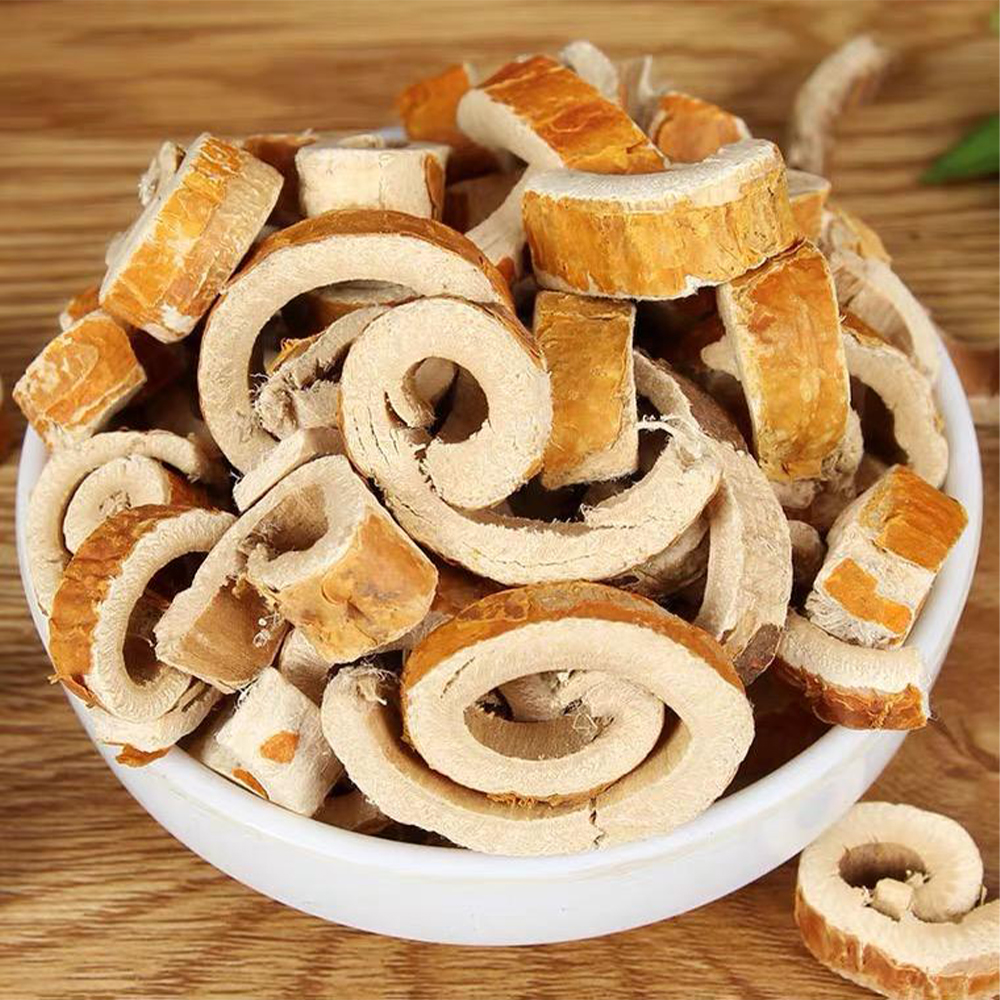
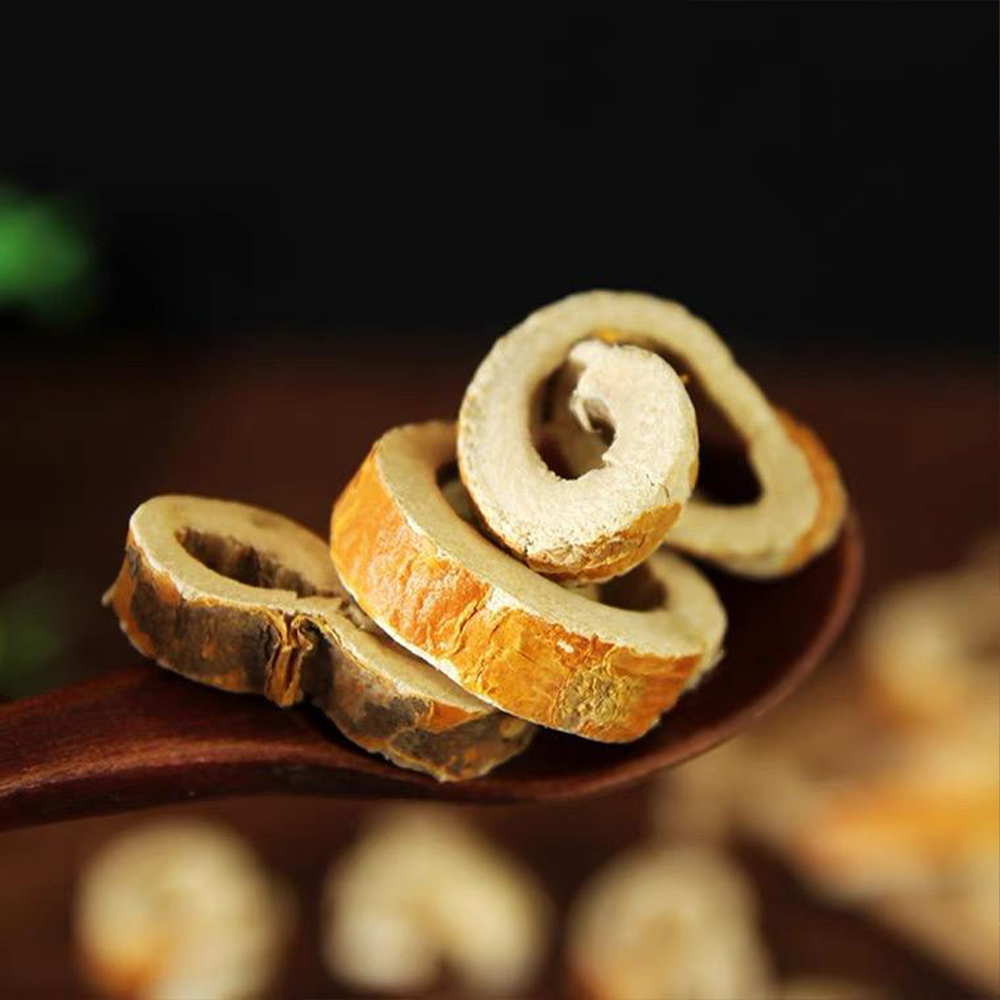
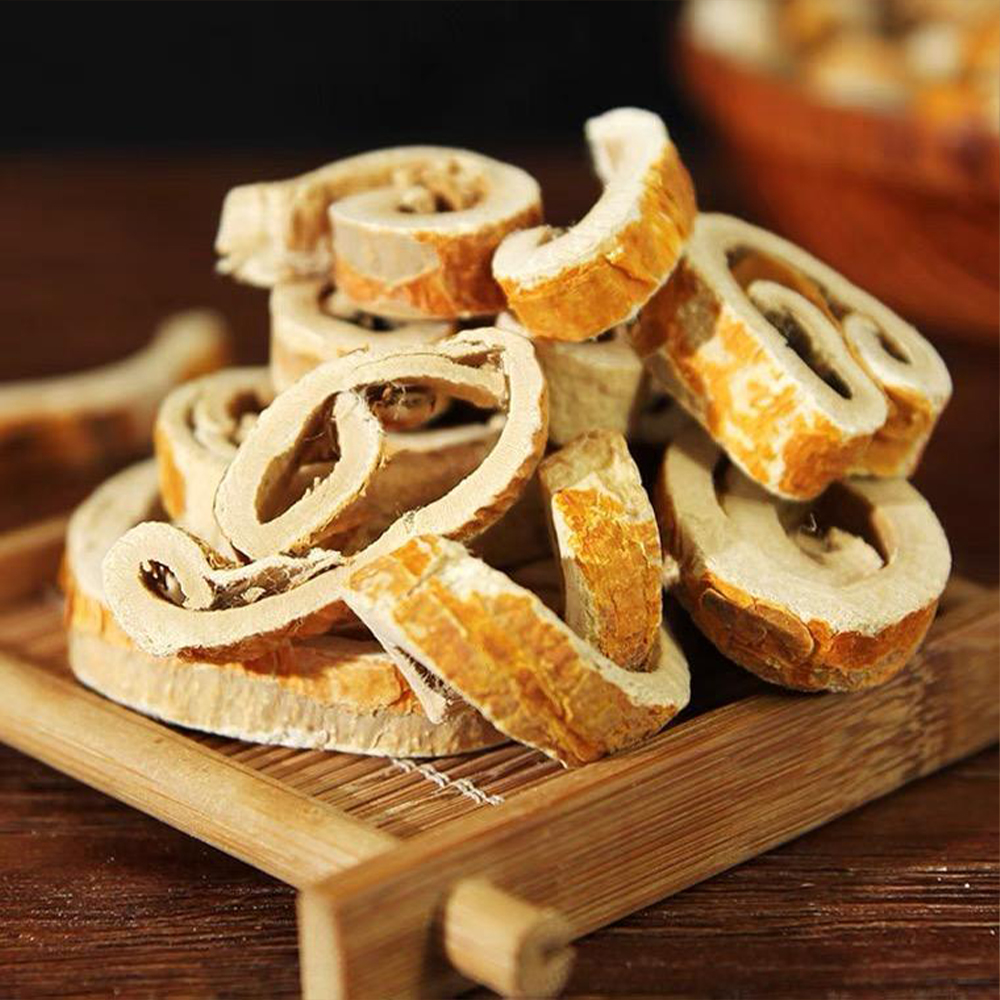
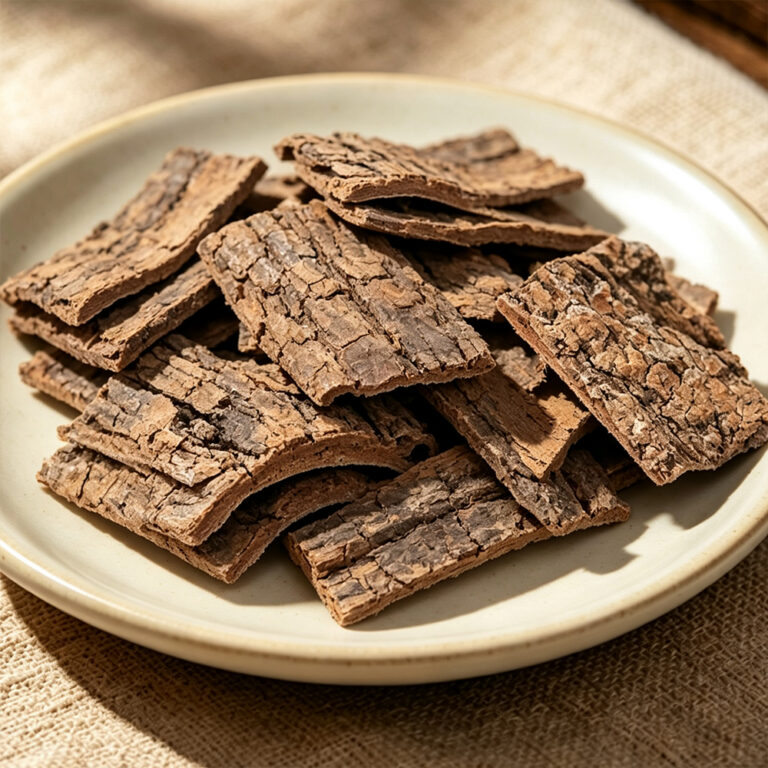
The Sang Bai Pi bulk supply page describes the product as dried bark that is light brown with a tough, fibrous texture. That fibrous character is why cut quality and fines control need to be written into the spec rather than assumed.
How to Set Cut-Size Standards
Define the Dimensions That Matter for Your Process
Choose the dimension that creates a problem downstream:
End use
Dimension most likely to cause problems
Why it matters
Decoction pieces
Length/width band and uniformity
Affects wetting, boil behaviour and appearance of the dispensed piece
Tea bags / tea-cut
Oversize pieces and fines
Long strips can jam filling lines. Fines pass through filter paper and cloud the brew
Extraction feedstock
Average particle size and its spread
Affects extraction consistency and packing density in the extractor
Powder-ready granules
Mesh window and retained % per screen
Affects milling load and the dust generated downstream
For general reference, the site’s guide to choosing the right cut size for decoction pieces lists common bands: thin slice 1–2 mm, thick slice 2–4 mm, segments about 5–10 mm, and dice about 8–12 mm. It notes that thinner cuts raise surface area but also fines. These are general decoction-piece bands and not Sang Bai Pi-specific limits, so treat them as starting points.
One practical point: in bark shreds or strips, part of the thickness is a raw-material property (how thick the bark was when peeled). The cutter mainly controls length and width. If you spec a tight thickness band, expect the supplier to select raw material, not only adjust a blade.
Write the Measurement Method, Not Just the Range
A range with no method invites argument. The site’s article on defining thickness without endless disputes makes this point well: thickness is a measurement result, and it changes with gauge force, foot size and dwell time. It recommends writing down the device, force or pressure, contact size and read time. It also recommends deciding whether you want spot thickness (the thickest point, relevant to jamming) or average thickness (relevant to extraction consistency).
Apply the same logic to each dimension:
Length and width: measure on a flat tray with a ruler or template. State the number of pieces and how they are selected.
Thickness: state the gauge type, force, foot size and read time. Say whether you need spot or average readings.
Size distribution: for tea-cut or granulated forms, use a sieve window and a retained percentage per screen.
Sample basis: the cut-size guide suggests sampling by weight rather than piece count to reduce bias.
Set the Tolerance as a Distribution
“All pieces must be 3–5 mm wide” is unrealistic for a fibrous bark. Write a rule that a supplier can pass and an inspector can audit:
≥ [X]% by weight within the [A–B] mm band.
≤ [Y]% oversize above [C] mm, which is the dimension that jams your line.
Fines handled under the cleanliness spec, not hidden inside the size band.
A defined action for failures: rescreen, blend back, accept with price adjustment, or reject.
That last item matters. The thickness article cites ASTM F2251 as an example of a test method that gives no pass/fail criteria, so buyer and supplier must set them. The cut-size guide suggests accepting on the average while flagging clusters of outliers.
A qualification worth making: tighter is not automatically better. Each extra rescreen to hit a narrow band generates fines and adds cost and rework. Set the tightest tolerance where size causes a real problem (a filling line, extraction or visible appearance), and keep it looser elsewhere. Premium retail packs where appearance sells are the exception.
How to Set Cleanliness Standards
“Clean” is four separate things measured four different ways. Spec them separately.
1. Fines and Dust
Define fines by a sieve test, not by looking at the bag. Pick a screen opening below your smallest acceptable piece and state a maximum percentage by weight passing through it. The WHO guideline on quality control methods for medicinal plant materials lists a sieve series by nominal aperture in micrometres (for example 250, 212 and 180 µm), and lists degree of fragmentation by sieve test among the tests on final samples.
Fines also move. The barks sampling guide notes that vibration pushes dust downward, so one carton becomes “powder-heavy.” State where in the carton the sample is taken, and test again at receipt, not only at dispatch.
2. Foreign Matter
The WHO guideline defines foreign matter as:
parts of the plant other than those named in the specification;
other organisms or their products;
mineral admixtures not adhering to the material, such as soil, stones, sand and dust.
For root bark, typical items to name in your spec are attached wood, residual outer cork layer and soil. Ask the supplier which of these your target monograph allows and at what level. That list is a working inference, not a WHO list.
For method, WHO describes a visual sort under 6× or 10× magnification, and sifting the remainder through a No. 250 sieve. In that method, the dust that passes is regarded as mineral admixture. It also gives sample sizes: 500 g for roots, rhizomes and bark, and 50 g for cut material whose fragments average under 0.5 g. If you want bark fines and mineral dust reported separately, tell the lab, because that method treats them together.
3. Mould, Insects and Odour
The same WHO guideline says medicinal plant materials should be entirely free from visible signs of mould, insects and animal contamination. It also says there should be no abnormal odour, discoloration, slime or sign of deterioration. Treat this as a zero-tolerance visual check on every opened carton, not an averaged percentage.
4. Moisture
Damp pockets cause clumping and mould risk. The barks sampling guide lists moisture gradients (outer layers dry faster than the middle) as a reason to open several cartons. Set the moisture limit from your target monograph or your own storage needs. Do not copy a number from another herb.
What the Supplier Should Prove Upstream
Dust that shows up in your carton was usually created at screening and packing. The site’s article on cleaning standards that reduce dust complaints argues that dust complaints are cleaning-standard issues and should be written into the spec. Its suggested clauses are:
the product form;
a sieve-based fines limit;
no visible dust on outer bags;
a line-clearance record;
a complaint-response process.
That article focuses on powder lines, but the same questions apply to the screening and packing stations for cut bark.
Sample Specification Table
Use this as a structure. Replace bracketed values with limits agreed for your product and market.
Parameter
What to write
Suggested method
What to agree
Form and processing
Raw or honey-processed; strips, shreds or pieces
Golden sample + written description
Which monograph or standard applies
Length / width band
[A–B] mm
Tray and ruler, defined piece count
Min % in band by weight
Thickness
Spot or average, with gauge, force, foot size, read time
Contact gauge
Acceptance rule and outlier action
Oversize
Max [C] mm
Template or screen
Max % allowed
Fines
Max [Y]% passing [screen size]
Sieve test, defined sample weight
Where in the carton to sample
Foreign matter
Wood, residual cork, soil, other items named
Visual sort + sieve, per WHO-style method
Max % per group and total
Mould / insects / odour
Visible signs and abnormal odour
Visual and sensory check of every opened carton
Zero tolerance and the action taken
Moisture
Limit from your monograph
Lab method named in the spec
Action if the limit is exceeded
Packaging cleanliness
No visible dust on outer surfaces
Visual check at receipt
Liner type, carton sealing
Documents
COA per lot, lot number match
Document check
Retain samples, response time for complaints
How Many Cartons Should You Open?
There is no single universal answer. Two published approaches give different counts:
Cartons in lot (N)
WHO guideline sampling
√N + 1 field rule (site’s barks sampling guide)
9
5
4
16
5
5
40
5
8
100
10
11
400
40
21
WHO’s procedure samples each container in a batch of up to five units, five containers in a batch of 6–50, and 10% (rounded up to a multiple of ten) above 50. Three original samples are taken from each container: top, middle and bottom. The √N + 1 rule is described on the site’s barks sampling plan as a field rule, not a formal standard. That page pairs it with AQL sampling (ISO 2859-1 / ANSI/ASQ Z1.4), which decides how many units to inspect. The carton rule decides how widely you spread those units.
A workable approach:
Write one sampling rule into the PO. Do not leave it to whoever is on shift.
Choose cartons at random, not by the warehouse.
Pull units from the top, middle and bottom of each opened carton, because fines migrate downward.
For higher-risk uses such as supplements or tight claims, use the larger carton count from the two methods.
Keep labelled retain samples and compare them against your golden sample.
What Should Buyers Specify Before Requesting a Quote?
Send these items with the RFQ so the quote and the first lot match:
End use and market: decoction, tea-cut, extraction or powder-ready, and the target-market standard.
Form: raw or honey-processed, and strips, shreds or pieces.
Dimensions and method: the bands, the tolerance distribution, and how each is measured.
Cleanliness limits: fines (screen size and %), foreign-matter groups, moisture, and the zero-tolerance items.
Sampling rule: carton count, sampling points, and the AQL level if used.
Packaging: liner, carton size, and whether inner bags are required.
Commercial terms: order quantity, delivery date, and the documents you need (COA per lot).
Approval sample: ask for a pre-shipment sample to confirm against your spec.
If you are ready to request pricing, start from the mulberry root bark (Sang Bai Pi) bulk supply page and attach your spec. The page lists a 1 kg MOQ, a 7-day lead time, and free samples and COA reports. Confirm current terms when you request a quote.
Frequently Asked Questions
What cut size should mulberry root bark be? It depends on end use and the standard you must meet. Define length and width bands for decoction or tea-cut, or a mesh window for powder-ready material. Add a method, a tolerance as a percentage by weight, and an oversize limit.
How do you measure fines in mulberry root bark? Use a sieve test. State the screen opening, the sample weight and the maximum percentage by weight passing through. Specify where in the carton to sample, because fines tend to collect toward the bottom.
What counts as foreign matter in Sang Bai Pi? WHO defines it as other plant parts, other organisms or their products, and loose mineral material such as soil, stones, sand and dust. For root bark, name attached wood, residual outer cork and soil explicitly, and agree limits with your supplier.
How many cartons should I open for incoming inspection? There is no single rule. WHO samples all containers in lots of up to five, five containers in lots of 6–50, and about 10% above 50. The √N + 1 field rule is another option. Write the chosen rule into the PO.
Is “dust-free” a valid specification? No. It cannot be tested. Define a maximum fines percentage by sieve test, a visual standard for outer bag and carton cleanliness, and a response process for complaints.
Should honey-processed Sang Bai Pi share a spec with raw bark? No. Honey-processed bark is sold as a separate product and handles differently, so give it its own SKU, spec and moisture limit.
Our low MOQ of 1 kg (2.2 lb) makes it easy to order Chinese herbal slices or wholesale Chinese medicine herbs. Private-label and bilingual labeling are also available.
Delivery Cycle & Support
We have a fast 7-day lead time. We provide free samples, COA reports, and technical support to help you bring high-quality bulk Chinese herbs to market.
Quality & Certifications
Our products are manufactured in a GMP-certified facility and meet ISO22000 standards. All Chinese herbs are third-party tested for heavy metals, pesticides, and microorganisms.