If you sell Chinese herbal products, you already know the awkward truth: your “story” can’t carry a weak batch.
A buyer doesn’t just buy your vibe. They buy repeatability. They want the same cut, the same aroma, the same decoction speed, the same lab limits. And yeah, they want the paperwork that proves it.
So here’s the argument: you don’t co-create a story-driven formula by writing better copy. You co-create it by turning story beats into locked specs, QC gates, and audit-ready files. That’s what keeps your brand from drifting when you scale.
This is where GuoCao comes in naturally. GuoCao is a GMP Chinese herbal manufacturer with an ISO 22000 food-safety system, third-party COA testing capability, multiple storage conditions (ambient/cool/MAP), and OEM/ODM support for herbal slices, custom blends, tea bags, and herbal enzyme drink production. If you want the big-picture view, start on the GuoCao website.
OEM/ODM Process for Chinese Herbal Slices
A lot of people treat OEM/ODM like “you make it, I sell it.” That mindset creates chaos fast.
Real OEM/ODM is more like: you and the factory build a mini quality system around one SKU. You define what “good” means. You decide how to test it. You agree on what triggers HOLD/RELEASE. Then you ship.
ODM gets you moving. You start with a base direction, then tune cut size, blend ratio, format, and labeling until it fits your channel.
OEM is where you get serious. You freeze the spec, lock the process, and keep change control tight.
If you’re selling to supplement manufacturers or hospitals, you’ll end up in OEM discipline anyway. It’s not “too strict.” It’s how you avoid batch roulette.
GMP Chinese Herbal Manufacturer
Chinese herbs aren’t like generic powders where nobody notices small shifts. Slice thickness, moisture, and storage can change decoction and extraction. Buyers feel it, even if they don’t say it in fancy words.
That’s why “manufacturing” matters more than people expect.
GuoCao positions itself as a GMP manufacturer, not just a trading layer. If you want the company profile, use About GuoCao. If you’re building a formula and need to explore categories, the Chinese herbs and spices catalog helps you map raw materials faster.
Table 1 — Capability keywords that make your story believable
Capability keyword
What it prevents
How it supports your brand story
GMP production line
process drift and messy handling
“Controlled production, not guesswork”
ISO 22000 food-safety system
weak hazard controls
“Food-safety logic built in”
Third-party COA testing
“trust me” arguments
“Independent proof per lot”
Ambient / cool / MAP storage
moisture swing and aroma loss
“Stability during storage”
~2500 tons/year capacity
scaling pain and re-qualification
“Growth-ready supply”
Export experience across 30+ markets
paperwork surprises
“Export-ready operations”
No need to oversell. Just connect capability to buyer pain. That’s enough.
ISO 22000 Food Safety System
In many channels, ISO 22000 isn’t a bonus. It’s a signal that the factory takes food-safety management seriously, with documented controls and repeatable routines.
And story-wise, it gives you a clean line you can say without sounding salesy: your products aren’t “hand-wavy traditional.” They run through modern food-safety structure.
That mix is what buyers want. Tradition plus controls. Not tradition plus luck.
Third-Party COA Testing
Let’s be real. The COA is often the real product.
If you sell wholesale herbs, spices, herbal slices, tea bags, or enzyme drink inputs, someone down the chain will ask for:
heavy metals
pesticide residues
microbial limits
identity evidence (depending on channel)
When you can hand over a third-party COA tied to a lot code, you reduce friction. You also reduce the back-and-forth that kills deals.
OQC (outgoing): confirm final micro, heavy metals, pesticides, and appearance grade
Now add the “black talk” that actually solves problems:
CTQ: critical-to-quality points you lock early
AQL: sampling logic for inspection lots (useful in packaging checks)
HOLD/RELEASE: don’t ship until QC signs off
CAPA: fix root cause, not only this one batch
Change control: no silent swaps on herb grade, cut style, or packaging film
If your factory can’t run this, co-creation becomes a monthly apology tour. And nobody wants that.
Traceability and Lot Code
Traceability is not a “premium feature.” It’s basic survival once you sell into serious channels.
A real traceability setup means:
lot code ties to incoming raw lots
batch record shows key process steps
COA ties to that exact lot
retention sample exists so you can re-check later
This protects you when something goes wrong. Instead of guessing, you isolate.
Also, buyers trust you more when you can answer fast. It’s not magic, it’s just documentation.
Chinese Herbal Slices
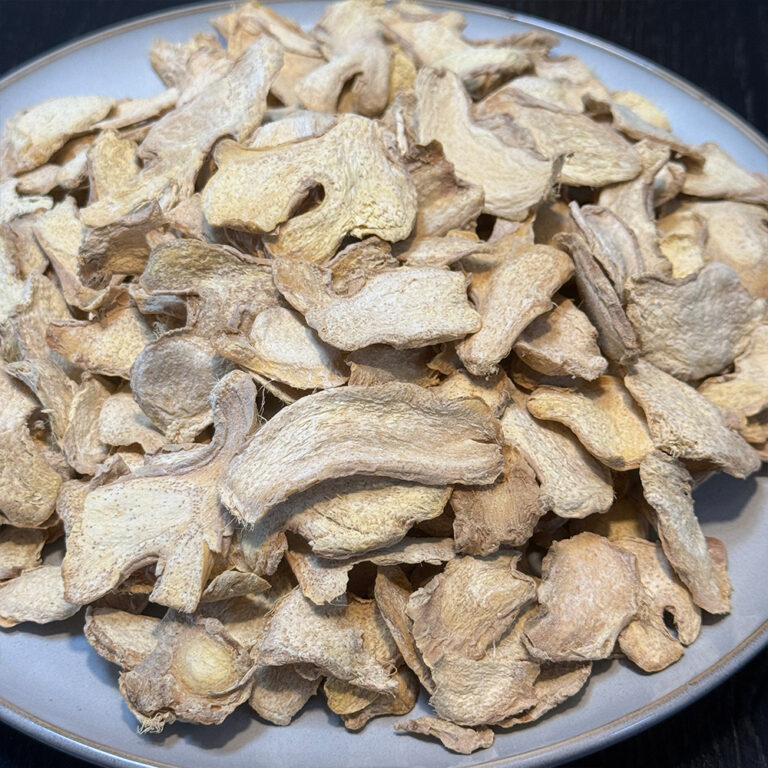
Chinese herbal slices are a classic product format, and they’re also easy to mess up.
Cut size isn’t cosmetic. It changes decoction behavior. If you’ve ever heard “this batch feels weaker,” sometimes it’s not the herb name. It’s slice thickness, moisture, or drying control. The customer experiences it as “effect,” but the root cause is often process.
If you co-create formulas using slices, lock these early:
slice thickness range
moisture band
foreign matter limits
appearance grading rule
packaging spec for moisture protection
Do this and you’ll stop renegotiating quality after every shipment.
Tea Bags for Chinese Herbs
Tea bags bring new issues: dust, infusion speed, and “muddy cup” complaints.
Herbal enzyme drinks are story-friendly because the process itself is a narrative: fermentation, transformation, time. But fermentation is also unforgiving. Tiny raw-material drift can wreck your curve.
So if you want to co-create enzyme drinks, you need tighter discipline than a basic slice SKU:
incoming micro baseline control
moisture stability
consistent storage conditions
clear release checks tied to the process endpoints
Not gonna lie, fermentation programs can get messy if you don’t spec early. It happens. But you can prevent most of it.
Custom Chinese Herbal & Spice Solutions
Customization is where story becomes business.
If you only sell “bulk herbs,” you compete on sameness. If you sell spec-backed formats (cut size, grind level, blend consistency, label discipline), you compete on fit. That’s a better fight.
Customization levers you should talk about in the same sentence as story:
form factor (slices, granules, tea bag cut, blends)
spec definition (moisture, cut, foreign matter)
QC pack format (what you deliver to buyers)
packaging and label control (version control matters)
And yes, this is also where you stop losing time on endless revisions. You set change control and move.
How to Read a Chinese Herbal OEM Quotation
Quick note: a lot of projects fail at the quotation stage because people only read the price line. They ignore the “work content” line.
A good quotation should reflect the real deliverables:
what tests are included
how COA is issued
what the release gate is
what label control looks like
what happens when a batch fails
If you need a practical breakdown, GuoCao’s OEM quotation guide gives you the right questions to ask. Use it to avoid surprises.
Co-Creation Workflow Checklist
This is the simple structure I’d use with any factory partner. It keeps the project moving and keeps you sane.
Table 3 — Co-creation workflow (brief to shipment)
Stage
What you provide
What you request back
Factory terms that prevent drama
Brief
channel, format, target markets, claim boundaries
feasibility + risk flags
CTQ list, compliance notes
Sampling
target cut/moisture/aroma, packaging type
pilot sample + draft QC plan
golden sample, spec draft
Pilot
small run scope + artwork draft
pilot report + COA snapshot
HOLD/RELEASE gate
Mass run
signed spec version + artwork locked
batch record + COA per lot
change control, CAPA
Shipping
doc timing + carton marks
export doc set aligned
label reconciliation, FEFO
You don’t need perfect English in these docs, by the way. You need clear specs. (Bad grammar is ok. Confusing spec is not ok.)
Closing
A story-driven Chinese herbal formula isn’t just a narrative. It’s a system: CTQs, QC gates, traceability, and COAs tied to lot codes. When you build that system with the right factory partner, your story stops being “marketing.” It becomes something buyers can verify and trust.
GuoCao is built around that manufacturing reality, not just trading talk. If you want to co-create formulas that scale across channels and regions, you’ll feel the difference in fewer complaints, smoother audits, and way less rework.
If you want, tell me your main format (slices, tea bags, enzyme drink, or blends) and the target market region. I’ll tailor the same structure into a version that fits your exact sales scene and buyer objections.
Our low MOQ of 1 kg (2.2 lb) makes it easy to order Chinese herbal slices or wholesale Chinese medicine herbs. Private-label and bilingual labeling are also available.
Delivery Cycle & Support
We have a fast 7-day lead time. We provide free samples, COA reports, and technical support to help you bring high-quality bulk Chinese herbs to market.
Quality & Certifications
Our products are manufactured in a GMP-certified facility and meet ISO22000 standards. All Chinese herbs are third-party tested for heavy metals, pesticides, and microorganisms.