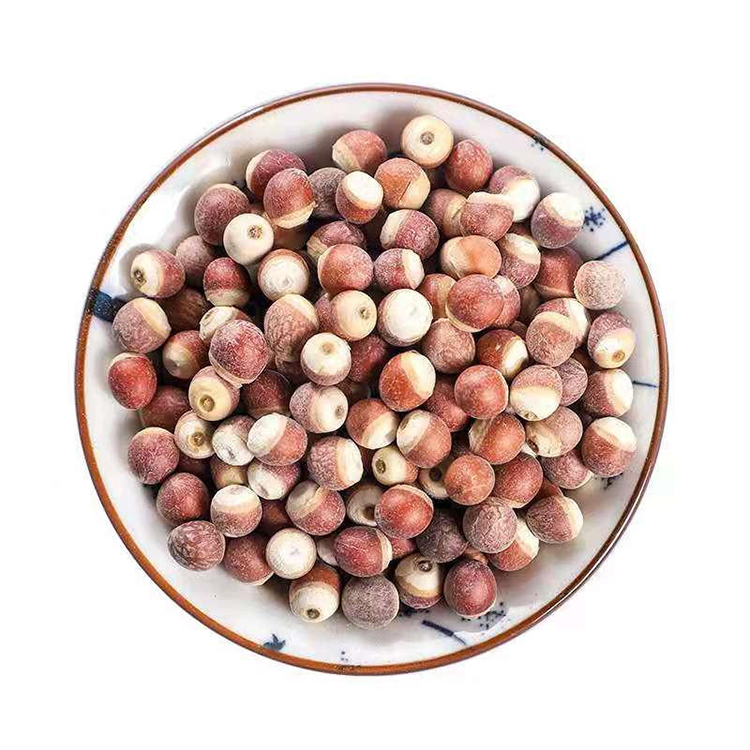
Isatis Root (Ban Lan Gen): documentation pack for faster customs clearance
Isatis Root does not get held because customs officers hate herbs. It gets held because suppliers send mismatched files, vague product descriptions, lazy HS logic, and COAs that look pretty but prove almost nothing. This piece shows the documentation pack I would demand before a single carton of Ban Lan Gen leaves the warehouse.
I do not buy the lazy supplier line that “the broker will handle it,” because Ban Lan Gen is one of those deceptively simple botanicals that turns messy the second it crosses categories, countries, and claims: dried root, sliced medicinal material, food-use botanical, supplement ingredient, maybe organic, maybe not, and every one of those choices changes what customs, quarantine, and border agencies want to see before they say yes. Still think the product name alone clears cargo?
Customs does not buy stories, it buys matched data
Customs hates ambiguity.
My rule is simple: if your commercial invoice, packing list, COA, label copy, and phytosanitary paperwork are not speaking the same language down to the lot number, botanical name, plant part, and net weight, you are not shipping a professional file; you are shipping a bet. Why would a border officer trust a supplier who cannot keep one root aligned across five documents?
For Isatis Root, the first trap is classification theater. Sellers love throwing out a single “Ban Lan Gen HS code” as if that solves anything, but customs classification depends on jurisdiction, product form, processing state, intended use, and sometimes the regulatory lane itself; a sliced root sold as a food-use herbal tea input is not automatically treated the same way as a medicinal raw material or an extract precursor. I would never publish one universal code for Ban Lan Gen without the destination country, product form, and claim set in front of me. That is how bad entries happen.
In the U.S., the moment Isatis Root is entering as a food-use botanical, tea input, or similar ingestible product, FDA’s Prior Notice page stops being optional reading and becomes part of your file logic; FDA says imported food requires prior notification, and the eCFR timing rules cap many ACE filings at 30 calendar days before anticipated arrival. Miss that window, or file against fantasy arrival data, and you manufacture your own delay.
And organic? Different fight.
Since March 19, 2024, each shipment of organic agricultural products imported into the U.S. must be tied to an electronic NOP Import Certificate in ACE, and CBP’s notice also says importers of certified organic shipments must themselves be certified. People still treat that as a side note. It is not a side note. It is the difference between “organic” as a marketing word and “organic” as an admissible claim.
The EU is no softer. The European Commission’s TRACES module guidance states that organic imports need the appropriate electronic certificate of inspection, and the system links that to the CHED workflow, which means your Ban Lan Gen customs documentation cannot be assembled like an afterthought the night before landing. That style of supplier chaos belongs in 2012, not now.
The documentation pack I would demand before shipping Isatis Root
Pretty PDFs fail.
What works is a boring, disciplined, lot-linked Isatis Root import paperwork stack, built before loading, not after the broker starts asking uncomfortable questions. And yes, I mean before loading, because once a shipment moves, every mismatch gets more expensive.
Document
When Ban Lan Gen needs it
What must match exactly
What usually blows up clearance
Commercial Invoice
Every shipment
Botanical name (Isatis indigotica), product form, country of origin, quantity, value
Vague descriptions like “herbal root” or invoice data that does not match labels
Packing List
Every shipment
Carton count, gross/net weight, lot IDs, packaging marks
Weight drift, missing lot references, carton counts that differ from invoice
Wrong CHED type, late COI, importer did not pre-alert correctly
That table is the backbone, not the finish line. The stronger pack adds batch photos, label proofs, spec sheets, microbial and residue methods, kill-step notes if processing was applied, and a one-page traceability index that tells a customs broker where every proof file lives without forcing them to dig through fifteen attachments like an archaeologist. That is why the site’s documenting geo-authenticity and batch proof article is so useful here: it pushes the right instinct, which is tying COA, origin, and physical units back to the same batch folder instead of scattering proof across email threads.
The COA that actually helps at the border
COA-first wins.
I do not care how polished a Certificate of Analysis looks if it cannot survive one blunt question from a broker: “Can you prove this PDF belongs to these cartons?” For Isatis Root customs clearance documents, the COA should carry the botanical name, plant part, lot number, test methods, and results for the residue, metals, and microbiology panel that matches the market; on the technical side, the site’s testing content points buyers toward methods like ICP-MS, GC-MS/MS, and dose-based metals logic, which is a much better signal than generic “passed inspection” language. Who is impressed by adjectives when regulators are asking for methods?
The same goes for origin proof. If you are making any region, authenticity, or premium-sourcing claim around Isatidis Radix export documents, you should have a clean bridge from supplier origin note to receiving record, process traveler, COA, packing identifiers, and shipping papers. Otherwise “authentic source” is sales copy, not evidence.
Where shipments really get held in 2024-style trade
Border friction is real.
I am not saying Ban Lan Gen sits in the exact same enforcement bucket as every product below, and anyone who pretends all lanes are identical is selling noise, but recent 2024 evidence makes one point brutally clear: regulators are leaning harder on documentation, records, and plant-product control systems, not softer. Why would herbal importers assume they are somehow living outside that mood?
Start with the U.S. In FDA’s FY2024 quality report, the agency says it added 75 sites to import alerts for poor drug quality in FY2024, with 39% of those additions associated with China, and more than 60% tied to record requests under FD&C Act §704(a)(4). That is not an herb-specific number, and I am not pretending it is. I am saying the message is obvious: if your records are weak, agencies will not give you the benefit of the doubt.
Then look at a blunt case study from Reuters: in April 2024, Russia’s phytosanitary certificate stoppage affecting Aston-linked grain exports showed how missing or withheld plant-health clearance can freeze vessels, with one major exporter saying roughly 400,000 tons were stuck at port in a related disruption. Different commodity, same lesson: no certificate, no movement. The herb trade is not magically exempt from that physics.
If a supplier promises “faster customs clearance” but cannot produce the batch genealogy, lot-level COA, packaging spec, label proof, invoice draft, and market-specific regulatory add-ons in one controlled folder before dispatch, I assume they are fast only at making promises. That is why the Chinese herbal sourcing procurement guide and the OEM/private-label guide for Chinese herbal slices matter so much as internal links: they reinforce that customs speed is an output of process control, not charm.
How to import Isatis Root without setting money on fire
No drama needed.
I would handle Ban Lan Gen customs documentation in five moves: lock the product description at SKU level, confirm the regulatory lane before sale, build the lot-linked doc pack before booking, test the COA against the destination market rather than the supplier’s favorite template, and force one last data-reconciliation check across invoice, packing list, labels, and shipping papers. That sequence is not glamorous. It works. (Reuters)
What documents do I need to import Isatis Root into the United States?
To import Isatis Root into the United States, the baseline file usually includes a commercial invoice, packing list, bill of lading or AWB, a lot-linked COA, and, when the shipment is entering as a food-use botanical, FDA Prior Notice; organic claims add an electronic NOP Import Certificate in ACE. After that first layer, I would also want label proofs, origin data, and batch references ready for broker review.
Is a phytosanitary certificate always required for Ban Lan Gen?
A phytosanitary certificate is an official plant-health document used when a shipment is moving through lanes that treat the goods as plant or plant-product consignments, which means Ban Lan Gen often needs one, but not every market, form, or finished-product scenario is identical and assumptions are expensive. I would confirm the destination rule before quoting the buyer, not after the vessel booking is paid.
What should a Certificate of Analysis for Isatis Root include?
A usable Isatis Root COA is a lot-specific test record that names the botanical, plant part, method set, and measured results for the relevant safety and quality panel, so the document can be tied to the physical shipment instead of floating around as generic marketing wallpaper. At minimum, I want the lot code, test methods, metals, residues, microbiology, and a clear bridge back to cartons and labels.
Can one Ban Lan Gen HS code work for every market?
A universal Ban Lan Gen HS code is a fantasy because tariff treatment depends on country, product form, processing level, intended use, and the legal framing of the import entry, so one seller’s shortcut code can become another importer’s audit problem very quickly. My advice is dull but safe: classify by destination and SKU, then document why.
How do I speed up customs clearance for herbal exports without cutting corners?
Faster customs clearance for herbal exports means front-loading accuracy: build the document pack before dispatch, align all identifiers across trade and QA files, pre-confirm lane-specific filings like Prior Notice, NOP-IC, or TRACES entries, and give the broker a single controlled batch folder instead of a scavenger hunt. Most delays are not about the herb itself; they start when the paperwork arrives fragmented, vague, or late.
Our low MOQ of 1 kg (2.2 lb) makes it easy to order Chinese herbal slices or wholesale Chinese medicine herbs. Private-label and bilingual labeling are also available.
Delivery Cycle & Support
We have a fast 7-day lead time. We provide free samples, COA reports, and technical support to help you bring high-quality bulk Chinese herbs to market.
Quality & Certifications
Our products are manufactured in a GMP-certified facility and meet ISO22000 standards. All Chinese herbs are third-party tested for heavy metals, pesticides, and microorganisms.