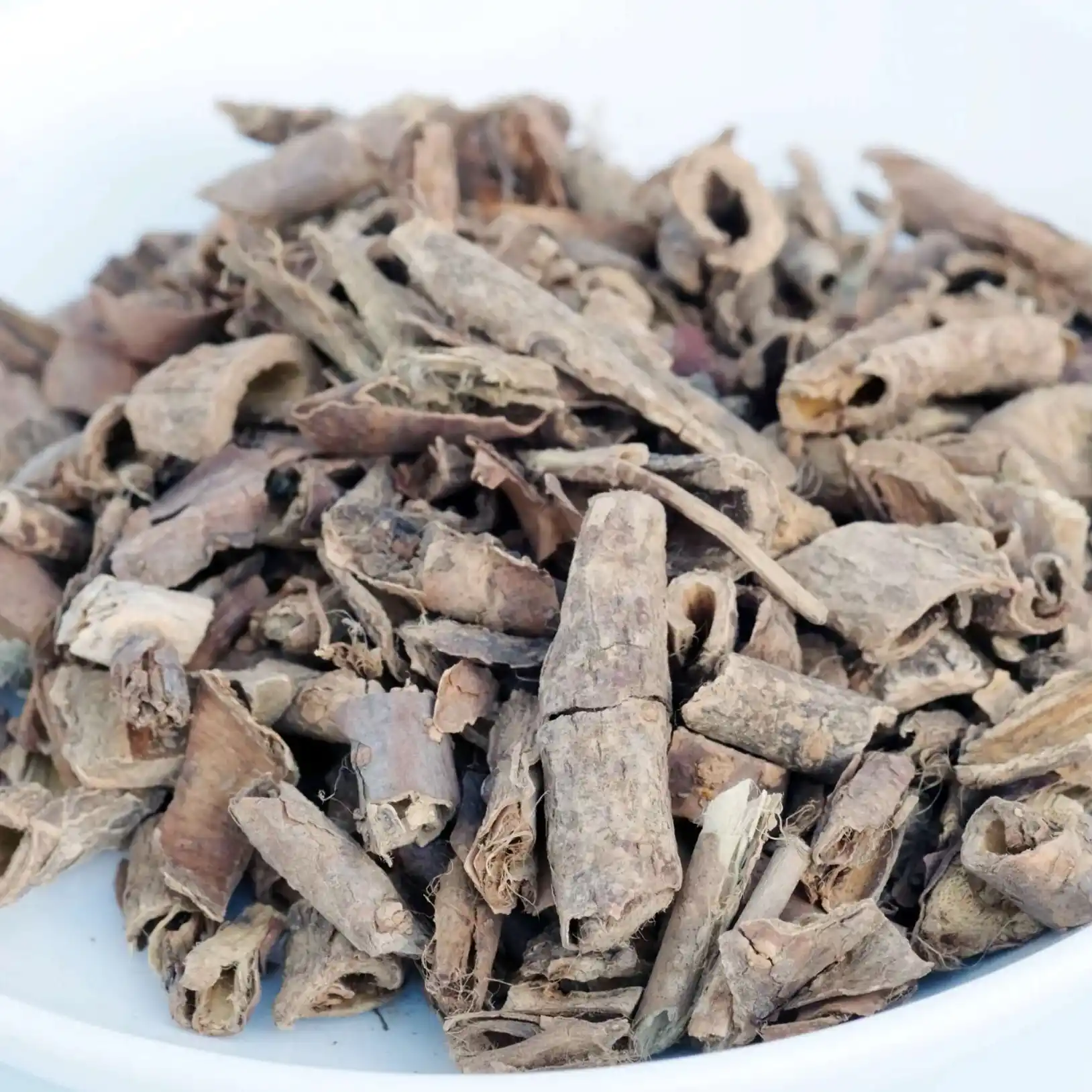
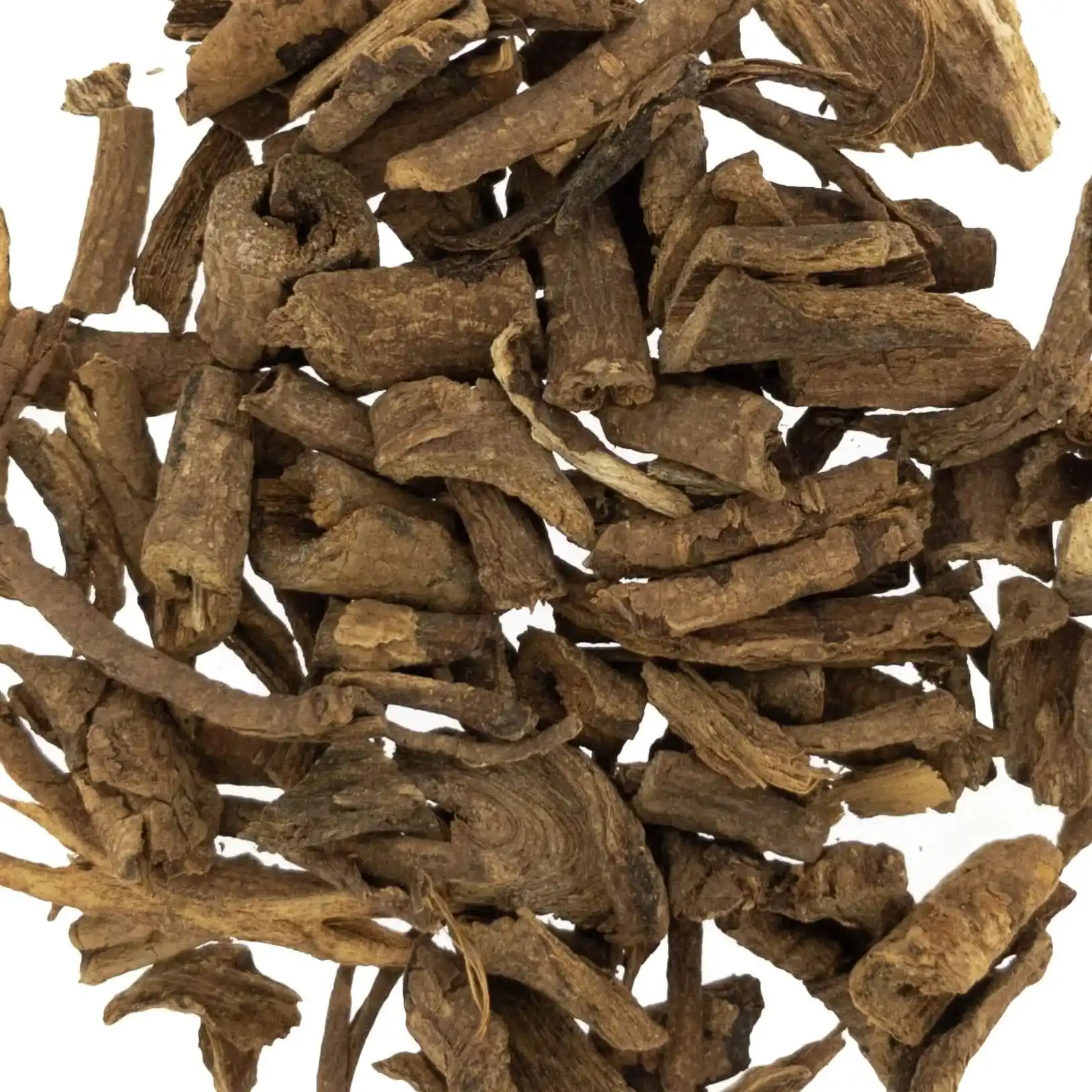
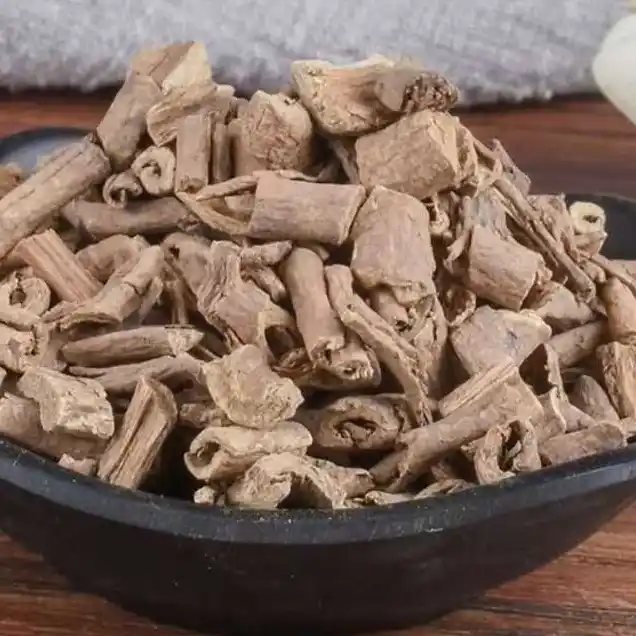
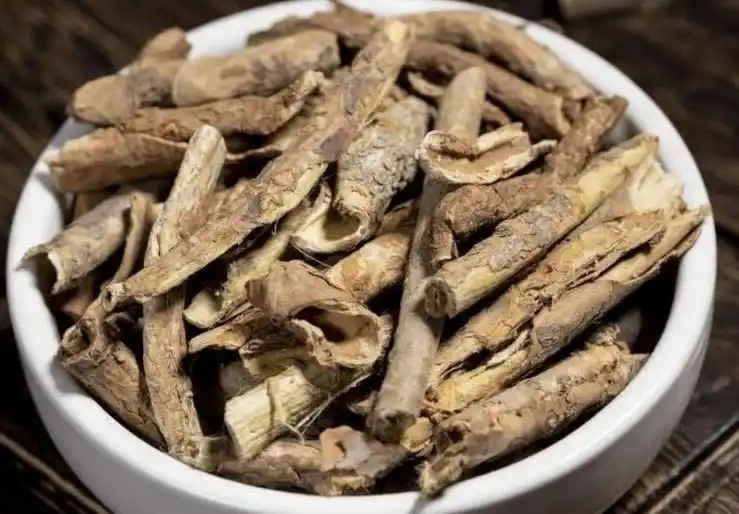
When people in TCM talk about “wind-damp Bi” and old, achey joints, Wu Jia Pi comes up fast. For clinics, supplement brands, and OEM buyers, Acanthopanax bark isn’t just one more herb on the list. It’s a real workhorse for rheumatism-style pain and mobility issues.
Below we’ll look at what Wu Jia Pi does in traditional theory, what modern research is seeing, and how you can use it in real formulas and product lines. We’ll also plug in some spec tables and supply-chain talk so it’s useful for buyers, not only for textbook fans.
Acanthopanax Bark (Wu Jia Pi) in Traditional Chinese Medicine
In TCM, Acanthopanax bark (Cortex Acanthopanacis, Wu Jia Pi) comes from the root bark of Acanthopanax gracilistylus. It’s warm, acrid and slightly bitter. It goes mainly to Liver and Kidney channels in TCM speak.
Key traditional functions related to rheumatism:
Dispel wind and dampness
Relieve Bi-pain in joints
Strengthen tendons and bones
Support Liver–Kidney for chronic weakness
Promote urination to handle edema
For real life, that usually means these patterns:
Long-term knee and ankle pain, worse in cold or rainy weather
Heavy, swollen legs, hard to squat or climb stairs
Low back soreness with weakness and fatigue
Old injuries that keep “getting stuck” when the weather changes
Because it hits both “expel pathogen” and “tonify root,” Wu Jia Pi is popular in long-term rheumatism plans, not only short-term flare-ups.
Wu Jia Pi for Rheumatism and Joint Pain Relief
Rheumatism in TCM covers a wide range: osteoarthritis, chronic joint pain, some autoimmune patterns and post-trauma stiffness. You’ll see Wu Jia Pi in formulas whenever the case shows both obstruction (wind-cold-damp) and weakness (Liver–Kidney deficiency).
Symptom targeting: from theory to clinic floor
Here’s a simple mapping you can use when you design formulas or finished goods.
TCM function of Wu Jia Pi
Typical rheumatism symptom
Example application scenario
Dispel wind-damp
Joint pain that moves, worse with cold
Joint-care tea, classic decoction, external wash
Warm channels
Cold knees, stiff low back in winter
Winter-focus formula, plaster, wine preparation
Strengthen tendons/bones
Weak legs, shaky walking, old age usage
Long-term capsule/tablet for senior consumers
Tonify Liver & Kidney
Soreness, fatigue, poor recovery
Combo in tonic wine, powder blend, enzyme drink
Promote urination
Puffy legs, mild edema around joints
Joint-detox concept tea or beverage
This table is not hospital guideline, but it reflects how many TCM doctors and product formulators actually use Wu Jia Pi on the ground.
If you’re planning a rheumatism relief line under your own brand, Wu Jia Pi can act as:
A “base herb” in a multi-herb joint formula
A functional highlight in a Wu Jia Pi joint-care tea bag
A support player in enzyme drinks or fermentation products focused on circulation and recovery
For raw material sourcing, Wu Jia Pi usually sits in the barks family, so you’ll look at suppliers that handle that line well. A company like GuoCao wholesale Chinese medicinal herbs that already works with many bark items makes integration easier.
Modern Pharmacology of Acanthopanax Bark in Rheumatism Management
Modern research is still catching up, but some trends are pretty consistent across studies on Acanthopanax extracts.
Active compounds and basic actions
Acanthopanax bark contains:
Saponins
Lignans
Flavonoids
Trace essential oils and polysaccharides
In lab and animal models these groups show:
Anti-inflammatory effects (lowering some inflammatory markers)
Analgesic effects (lower pain behavior in animals)
Antioxidant action, protecting cells from oxidative stress
Mild immune-modulating behavior
In plain words: extracts from the bark help calm inflammation, ease pain signals a bit, and protect tissues under stress. That fits pretty well with the TCM picture of “expel wind-damp and strengthen bones.”
How this links to rheumatism use
In arthritis-like models, researchers saw things like:
Less swelling around the joint
Better range of motion
Less tissue damage under the microscope
The details vary from study to study, and we dont quote exact numbers here, but the direction is clear: Wu Jia Pi isn’t only folklore. There is growing modern backing for its role in rheumatism support.
For product teams, this gives you a nice talking point for labels and B2B decks: traditional usage plus basic pharmacology support, still gentle enough to fit in food-grade formats when the regulation allows.
Traditional Wu Jia Pi Formulas and Application Scenarios
Wu Jia Pi decoctions for chronic joint pain
In formula design, Wu Jia Pi rarely stands alone. You’ll see it paired with:
Eucommia bark (for low back and knees)
Achyranthes root (guides to lower limbs)
Angelica and Chuanxiong (move blood, ease pain)
Dipsacus, Taxillus, and similar bone-support herbs
For clinic prescriptions, Wu Jia Pi might sit at 6–12 g in a daily decoction for long-term rheumatism. It works best when the patient has both pain and weakness, not only acute heat pain.
For manufacturers sourcing slices or cut herbs for decoction packs or “one-pack per day” formulas, stable quality Wu Jia Pi from a GMP herbal slice supplier like GuoCao GMP herbal manufacturer helps keep your batch results consistent.
Wu Jia Pi in functional beverages and enzyme drinks
You mentioned enzyme drinks and fermentation products. This is a growing use case:
Wu Jia Pi goes into a mixed herbal fermentation base with fruits and grains.
After fermentation and filtration, you get a ready-to-drink or concentrate product.
Here the pain points for brand owners are always the same:
Hard to control herb quality across seasons
Microbial load and pesticide residue risk
Need for stable flavor and color, every batch
A large-scale partner with temperature-controlled and air-conditioned warehouse, plus in-house and third-party COA, reduces these worries. That’s exactly the kind of setup you described at GuoCao OEM / ODM herbs.
Wu Jia Pi in herbal tea bags and dietary supplements
For global markets, decoction is not always friendly. Many companies instead use:
Tea bags with Wu Jia Pi plus other joint herbs
Extract granules pressed into tablets
Capsules filled with powdered extract or concentrated granules
In these formats, some “industry black words” you’ll hear a lot:
Mesh size of the powder (for extraction efficiency and capsule flow)
Loss on drying / moisture (to avoid clumping and mold)
Micro limits (TPC, yeast, mold under standard limits)
“Sulfur-free” or “non-fumigated” claims, important for EU buyers
A wholesaler with regular export to US, EU, Australia, Japan, and more than 30 regions, like GuoCao global herb supplier, usually already knows these checklists and can prepare the right document pack.
Quality Specifications of Wu Jia Pi for Rheumatism Products
If you’re the one signing purchase orders, you care less about poetry and more about spec sheets. Here’s how Wu Jia Pi specs often look on a COA or product data sheet.
Typical Wu Jia Pi raw material specifications
(Example ranges only, not a fixed standard. Always confirm with your own QA team.)
Spec item
Typical requirement or range
Why it matters for rheumatism products
Origin & species
Acanthopanax gracilistylus, ID ok
Avoids adulterants, stable clinical effect
Appearance
Clean bark slices, uniform color
Visual quality, brand image, consumer trust
Moisture
Often ≤ around low-teens %
Better shelf life, less mold risk
Ash
Within pharmacopeia limit
Indicates low impurity / soil contamination
Extractable matter
Within agreed % range
Rough proxy for active components and potency
Heavy metals
Below internal / pharmacopeia limits
Compliance in US/EU/Japan markets
Pesticide residues
Pass multi-item panel
Key for supplement and beverage registration
Microbial counts
Under food or pharm standard
Safety for ready-to-drink and direct oral products
Sulfur dioxide (if tested)
Non-detect or below strict limit
“No sulfur-fumigation” selling point
When you buy from a producer that runs GMP herbal slice lines and ISO 22000 food safety system, like GuoCao Wu Jia Pi supplier, you can lock these items into your purchase contract and SOP.
Risk points: what buyers usually worry about
Common pain points in Wu Jia Pi sourcing:
Mixed species or “Nan Wu Jia Pi” mixed in the lot
Sulfur-fumigation to make color look “fresh” but hurting actives
Pesticide issues from wild collection in un-controlled areas
Inconsistent cut size, causing extraction problems in factory
The fix is boring but important: traceable lot numbers, stable origin base, and regular third-party COA. A manufacturer with controlled-temperature warehouse and long-term partners in main growing areas can usually keep this stable. That’s exactly the value behind a one-stop wholesaler such as GuoCao Chinese herbal slices.
GuoCao Wu Jia Pi Supply for Rheumatism Relief Products
Now let’s connect the herb with your business. You shared that GuoCao:
Runs GMP lines for Chinese herbal slices
Maintains normal-temperature, cool and air-conditioned warehouse
Follows ISO 22000 food safety system
Has third-party COA testing ability
Reaches about 2500 tons annual capacity
Supports OEM / ODM customization, herb-based enzyme drinks, etc.
Sells into 30+ countries and regions worldwide
For rheumatism-focus products, that infrastructure covers most of the headaches buyers talk about.
GMP and ISO 22000 processing for Wu Jia Pi bark
For Wu Jia Pi, a GMP line means:
Standardized washing, slicing, drying parameters
Better control of moisture and microbial level
Lower risk of foreign matter and cross-contamination
ISO 22000 gives one more layer on food safety flow: hazard analysis, CCP points, and documented traceability. This is especially important if you use Wu Jia Pi in:
Functional beverages
Enzyme and fermentation drinks
Joint-support powders used as “food for special purpose” in some markets
In due-diligence calls with pharma and supplement clients, these words alone — GMP, ISO, COA, lot trace — reduce a lot of back-and-forth. It saves everyone time.
OEM / ODM for Wu Jia Pi formulas and finished goods
Because GuoCao doesn’t only sell raw slices but also does OEM / ODM, you can push Wu Jia Pi deeper into your product line:
Classic style joint-care decoction packs with Wu Jia Pi as key herb
Private-label Wu Jia Pi joint-care tea bags
Herbal fermentation drinks using Wu Jia Pi plus circulation herbs
Powders or granules for capsules, tablets, or stick packs
Brands in pharma, health supplement factories, functional drink companies, and cosmetic raw material buyers can all use Wu Jia Pi in slightly different ways, but they share one wish: stable, compliant supply. Working with a supplier like GuoCao OEM Chinese herbs lets you focus more on product positioning and channel, not on chasing documents from many small traders.
Global wholesale and documentation for rheumatism-oriented products
Because GuoCao already exports to North America, Europe, Australia, East Asia and Southeast Asia, they know the rough doc sets you’ll need:
COA with full test panel
Country-of-origin, plant declaration, HS code info
If needed, photos and spec sheet for label support
For big wholesalers, hospital pharmacies, and regional distributors, this means fewer surprises in customs and smoother registration for new lines.
How to Position Wu Jia Pi Rheumatism Products in Your Portfolio
Let’s wrap with a quick strategic view. Where does Wu Jia Pi fit in your product mix?
Entry-level joint tea or powder
Easy to explain: “Traditional herb for joint comfort.”
Wu Jia Pi plus a few friendly herbs; good for retail and online.
Mid-tier functional beverage or enzyme drink
Focus on mobility, daily recovery and circulation.
Use Wu Jia Pi as one of several hero herbs (but dont call it hero in your copy, keep it simple).
Professional-line formulas for clinic, hospital or practitioner brands
More complex blends for chronic wind-damp patterns.
Stronger focus on TCM pattern language and clinical logic.
In all three, Wu Jia Pi brings you a mix of:
Traditional rheumatism support story
Basic modern anti-inflammatory and joint-protection data
Solid fit with bark-based supply chains you already have
If you match this with a stable supplier like GuoCao wholesale herbs and spices, plus clear specs and COA, you get a joint-care ingredient that is reliable enough for big batches but still has a strong traditional story behind it.
That’s what makes Acanthopanax bark (Wu Jia Pi) a practical choice when you want to build out a rheumatism relief line — from raw herbal slices all the way to finished OEM products.
Our low MOQ of 1 kg (2.2 lb) makes it easy to order Chinese herbal slices or wholesale Chinese medicine herbs. Private-label and bilingual labeling are also available.
Delivery Cycle & Support
We have a fast 7-day lead time. We provide free samples, COA reports, and technical support to help you bring high-quality bulk Chinese herbs to market.
Quality & Certifications
Our products are manufactured in a GMP-certified facility and meet ISO22000 standards. All Chinese herbs are third-party tested for heavy metals, pesticides, and microorganisms.