You sell both herbs and spices. Same roof, different rulebooks. Here’s a plain-spoken look at how GMP for herbal medicines and ISO 22000 for foods work together without tripping over each other—and how GuoCao runs the lanes cleanly.
Quick note: I’ll use simple language, real plant talk (HACCP, CCPs, kill-step, HPTLC), and keep it practical. No fluffy promises, just workable steps. A couple tiny typos here and there—kinda human. 🙂
What “GMP for Herbal Medicines” covers (WHO GMP for Herbal Medicines)
Scope: medicinal-use botanicals. The focus is identity, purity, process control, and full traceability from intake to batch release. Core controls you’ll actually run:
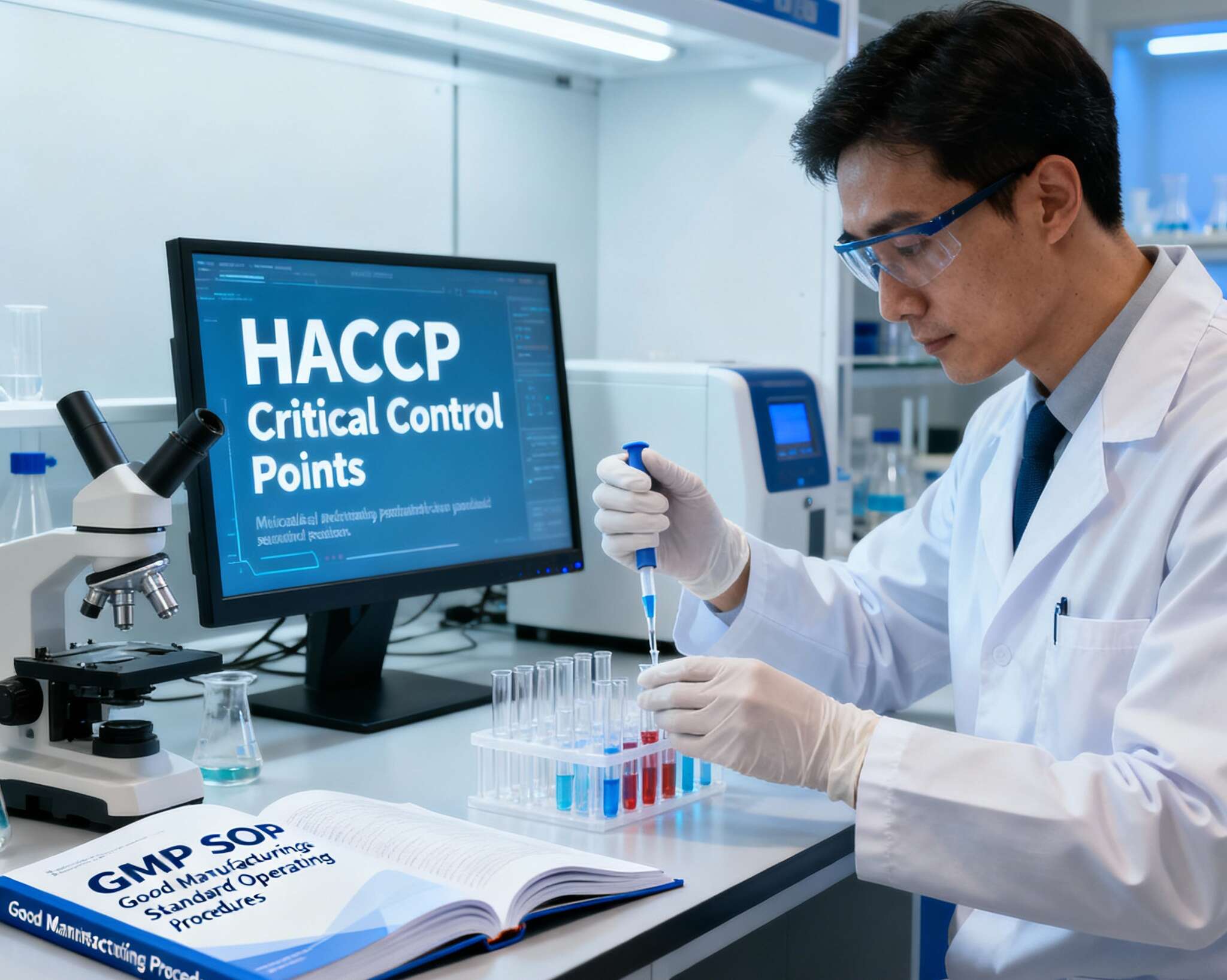
Identity & authenticity: macroscopic ID, microscopy if needed, plus HPTLC / HPLC fingerprints before release.
Processing control: validated cutting (decoction-cut thickness), drying curves, stir-fry parameters for processed herbs.
Cross-contam barriers: zoning, tool segregation, line-clearance, and validated cleaning to avoid mix-ups.
Specs set to pharmacopeial or buyer monographs: heavy metals, pesticide residues, aflatoxins/ochratoxins where relevant, micro counts suitable for medicinal use.
At GuoCao: the herbal slice line follows GMP with third-party COA on every lot, backed by our lab and batch records; see About Us and category pages like Root & Rhizome and Flower & Whole Herbs.
What ISO 22000:2018 requires for spices and botanicals (FSMS + HACCP)
Scope: food safety for anything eaten as food (spices, botanicals used in foods). ISO 22000 is a management system that integrates HACCP with robust Prerequisite Programs (PRPs).
Hazard analysis & CCPs: identify biological risks (e.g., Salmonella in low-water-activity spices), chemical (mycotoxins), and physical (stones, wire).
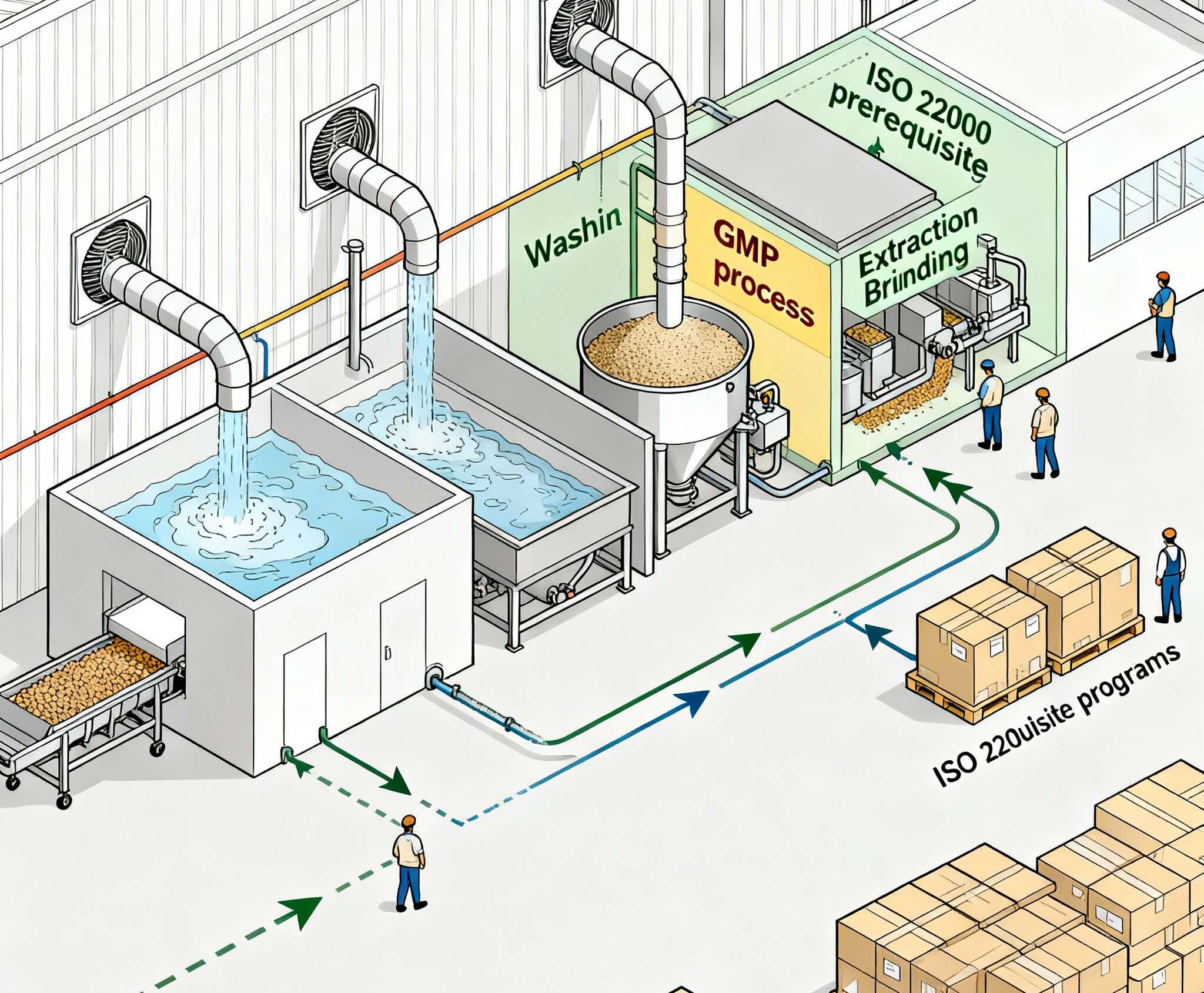
PRPs: sanitation, pest control, allergen plan, water quality, personal hygiene, maintenance, glass & brittle plastics control.
Operational PRPs & CCPs: e.g., validated steam sterilization as a kill-step, metal detection, sieving and magnets, water-activity/aw control.
At GuoCao: the spice line runs under ISO 22000 with farm-to-factory traceability, kill-step where required, and routine micro verification; see Dried Spices.
Codex “Code of Hygienic Practice for Spices and Dried Aromatic Herbs (CXC 42-1995)”—what it means inside the plant
Codex tells you how to keep filth and pathogens out from field to pack: clean drying surfaces, protected transport, controlled humidity, and sanitary design. In-plant, that maps to:
Controlled drying and storage humidity/temperature.
Screening/sieving to remove extraneous matter.
Magnets/metal detection just before packing.
Lot segregation and pest-proof warehousing.
Two lanes, one site: where GMP and ISO 22000 diverge (and connect)
You don’t want a one-size-fits-none system. Use each standard for what it’s great at.
GMP vs ISO 22000 quick map (herbs + spices)
Topic
GMP for Herbal Medicines (medicinal)
ISO 22000 (food/spices)
Primary aim
Identity, purity, consistent processing, documented control
Food safety hazard control via FSMS + HACCP
Specs focus
ID by HPTLC/HPLC, pharmacopeial limits, process validation
Micro limits fit for intended use; CCPs validated (e.g., steam)
Records
Master/Batch Records, deviations, CAPA, change control
Supplier approval: on-farm drying practices, fumigation history, foreign-matter control, and steady COA quality.
Shop tip: don’t crowd treated product near raw. Create a post-kill “clean side” with its own tools and people flow. Sounds fussy, saves rework.
Identity & potency lock on herbal slice lines (GMP)
Herbal buyers care first about “is it really that herb?” Then safety. Then cut form.
Intake authentication: approved origins, macroscopic/microscopic checks, then HPTLC/HPLC to confirm marker compounds.
Process validation: decoction-cut thickness and uniformity, validated drying curves, stir-fry time/temperature profiles for processed items.
Mix-up prevention: line clearance forms, kit-counts, dedicated scoops & totes by material status, barcode lot control.
Release: QA compares full COA to the spec (ID + contaminants + micro), stamps the batch, files retains.
Real-plant examples (no brand names, just scenarios)
Scenario A — black pepper for a seasoning blend (food): intake screening → magnets/sieves → steam treatment (validated lethality) → cooldown under low RH → metal detection → packout → retain samples + micro release. Scenario B — Dang Gui (Angelica sinensis) decoction cut (medicinal): farm doc check → ID testing (macro + HPTLC) → slice to spec (2–3 mm, for example) → controlled drying → sieve for fines → visual sort → COA (ID + heavy metals + micro fit for medicinal) → QA release.
Different lanes, same roof. No drama.
Buyer audit checklist (herbs + spices) — what they actually ask
Buyer ask
Why they ask
What we show at GuoCao
Traceability (farm → pack)
To pass FSVP/import checks and retailer audits
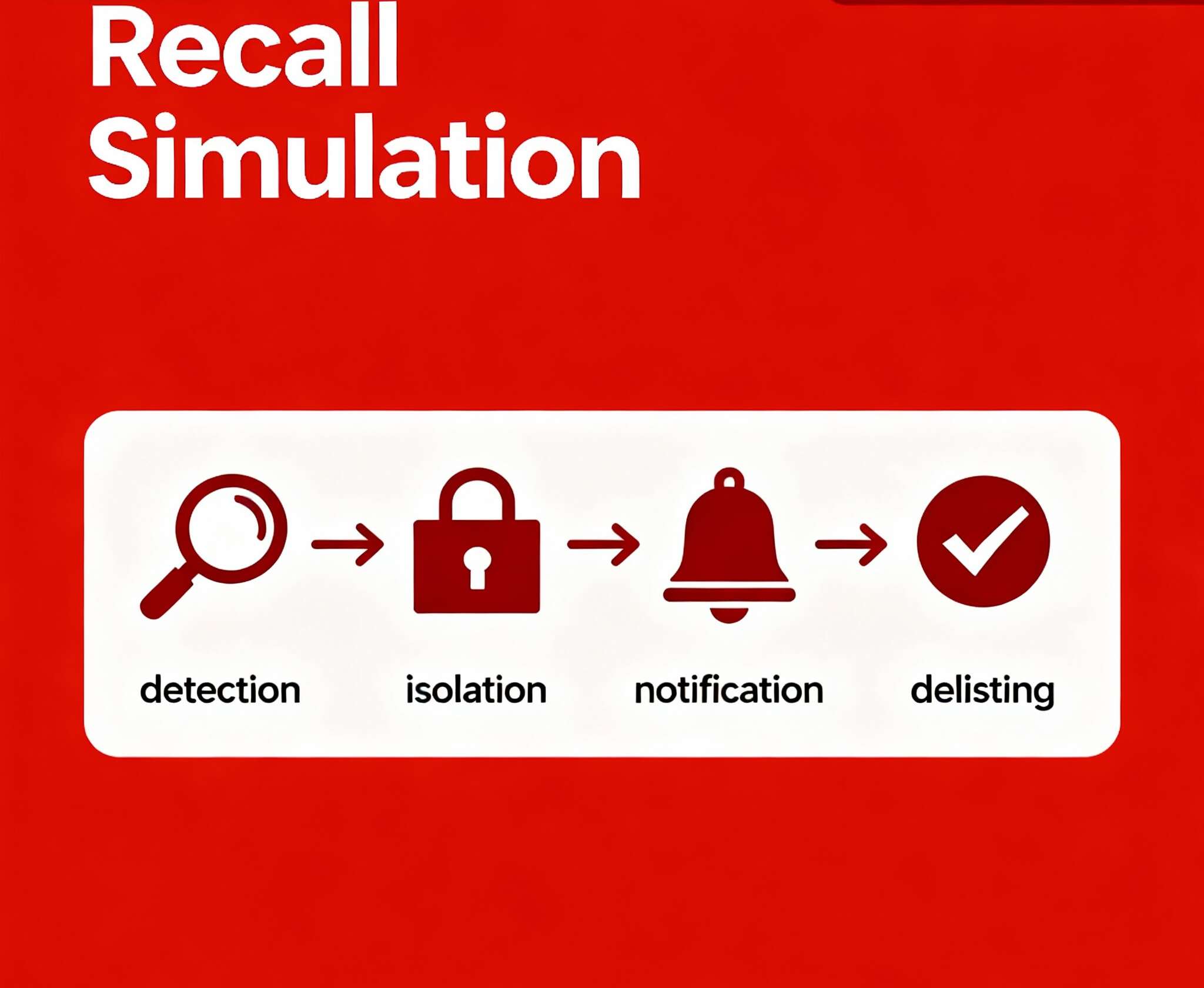
Lot genealogy, intake docs, batch records, mock recall results; see All Herbs & Spices
ID proof for herbs
Avoid adulteration
HPTLC/HPLC chromatograms + macro photos; see Root & Rhizome
Warehouse: ambient, cool, and modified-atmosphere options with pest-proofing and FIFO/FEFO logic.
“Don’t cross the streams.” Keep post-kill spice areas and released herb areas as the cleanest zones with restricted access. Yep, it’s not rocket-sciense—but it takes discipline every shift.
Spec-driven buying: line up your product form with your use case
Tea-cut / Cut & Sifted (C/S): faster extraction, medium shelf life.
Deocction-cut slices: better for traditional decoctions and TCM clinics.
Powders: fast extraction, but watch water activity, packaging, and oxygen.
Spice grinds (20–60 mesh): align with your blend system and sieving steps.
“Docs take forever.” We keep batch templates slim, bilingual, and pre-filled where legal. QA signs fast; no bottleneck.
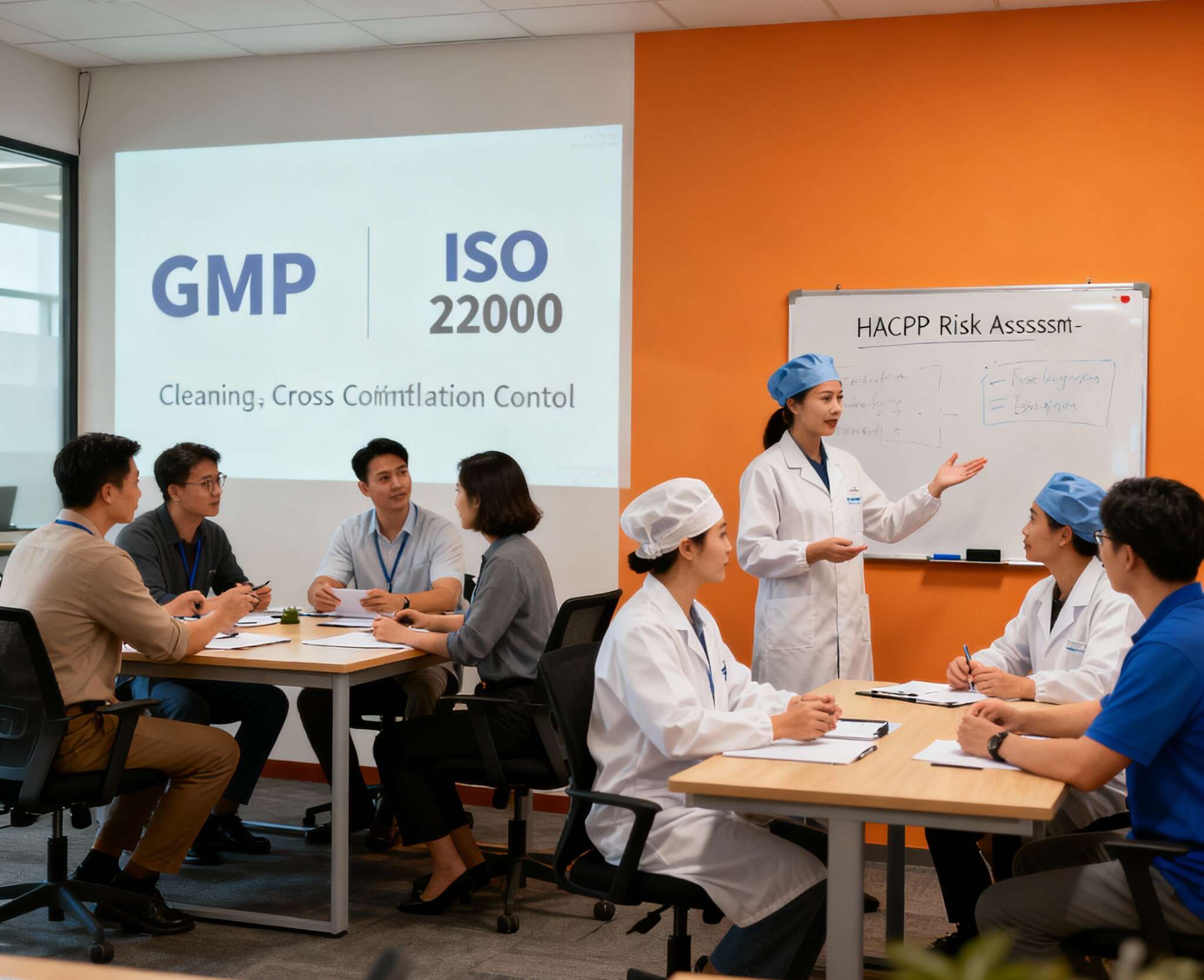
“Audits are scary.” Walk in with a coherent story: hazards known, controls in place, trends stable. We rehearse it; you talk it.
“Cross-contam risk.” Physical separation + tool colors + schedule sequencing. Don’t run cumin powder right before a herb with strict micro.
“Port holds.” Clean lot coding, complete COA sets, and predictable labels (country of origin, production date, traceable batch). That cuts “where’s the doc?” emails to near zero.
“Spec drift.” Trend charts. When micro creeps up, we adjust kill-step parameters before customers feel it.
“Sourcing.” Approved origins and steady farms; if weather hits one area, we have alternates lined up—same variety, comparable profile.
Why the two-standard setup pays off (business value, not buzzwords)
Fewer rejects, fewer reworks: The right lane prevents over-processing herbs or under-processing spices.
Audit-ready any day: One handbook doesn’t fit both; two aligned handbooks pass audits quicker.
Smoother imports: Clean traceability and matched claims (medicinal vs food) reduce customs back-and-forth.
Brand safety headroom: If a retailer pushes a new micro spec, your ISO lane already runs a validated kill-step; your GMP lane already has strong ID proof.
Speed to market: With the 2,500-ton capacity, multiple storage options (ambient/cool/modified atmosphere), and OEM/ODM packaging, you don’t wait months to ramp.
How GuoCao implements it (short version)
Separate lanes by use: medicinal herbs → GMP; spices/food botanicals → ISO 22000.
Shared QA brain: one cross-trained QA team schedules environmental swabs, calibrations, and audits across lanes.
What to do now: lock your spec per SKU (ID tests, micro limits, mesh size, water activity) and place a pilot order. If you need custom packs or private label, loop in GuoCao OEM/ODM. We dont make it complicated.
Appendix A — Decision table: which standard applies?
Our low MOQ of 1 kg (2.2 lb) makes it easy to order Chinese herbal slices or wholesale Chinese medicine herbs. Private-label and bilingual labeling are also available.
Delivery Cycle & Support
We have a fast 7-day lead time. We provide free samples, COA reports, and technical support to help you bring high-quality bulk Chinese herbs to market.
Quality & Certifications
Our products are manufactured in a GMP-certified facility and meet ISO22000 standards. All Chinese herbs are third-party tested for heavy metals, pesticides, and microorganisms.