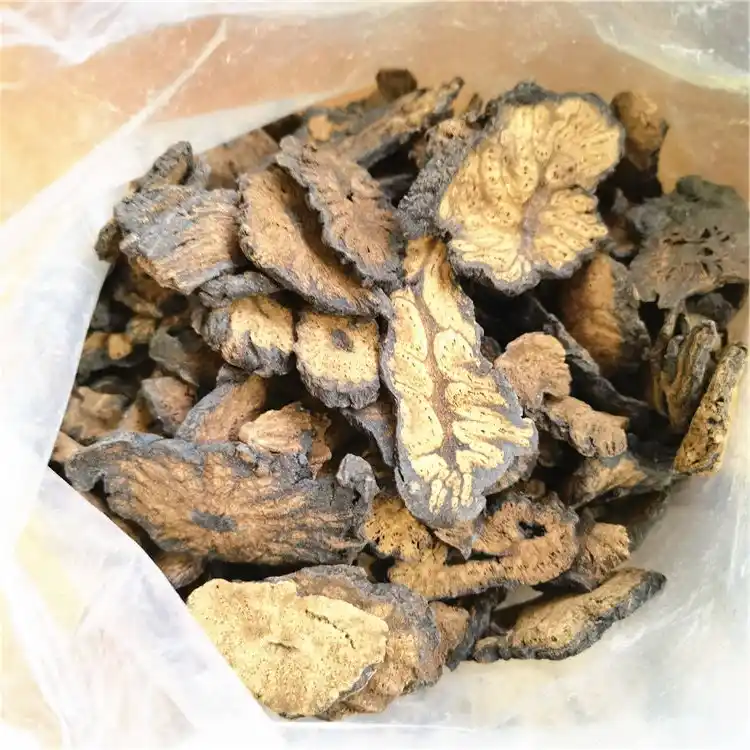
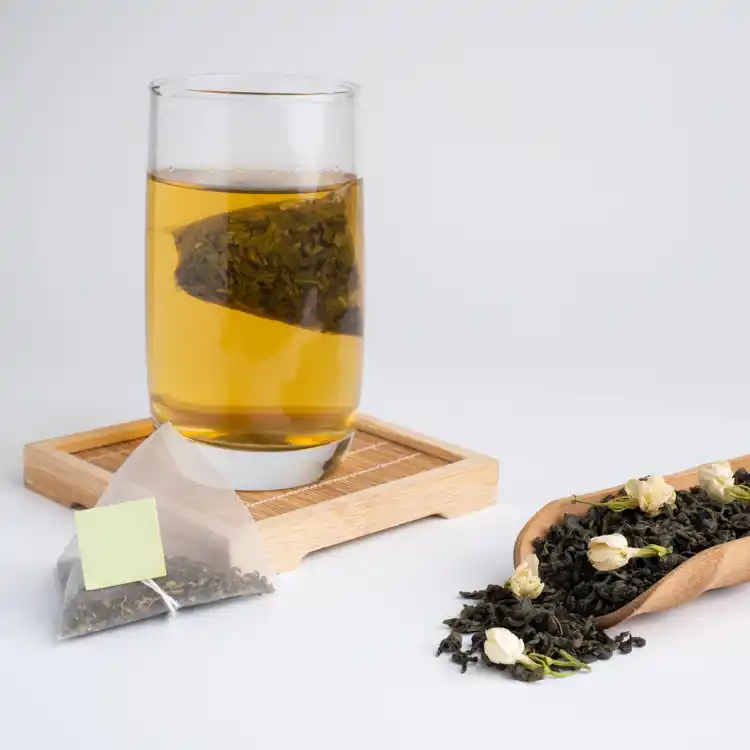
If you’re launching a herbal tea product or thinking about private-label lines, this is the piece you want. I’ll keep it short, practical, and a bit blunt — no fluff. We’ll cover the real differences between OEM and ODM, how each solves brand pain points, what to check at a factory, and why GuoCao is worth a look if you want a partner who can scale.
OEM vs ODM — core difference
Put simply: OEM = you supply the recipe, specs, and packaging; the factory manufactures to your blueprint. ODM = the factory brings a ready formula or design; you buy or tweak it and slap your label on. One gives you control, the other gives you speed.
Which is right? It depends on your goal. Want a unique functional formula for clinics or a supplement brand? OEM makes sense. Want to test a flavor in a few markets quickly? ODM will get you there faster.
Quick use cases
Startup testing flavors on marketplaces: pick ODM — less design work, faster pilot.
Clinic or pharmacy supply chain: choose OEM — tighter QC, exclusive formula control.
Eco-focused launch (compostable pyramids): check ODM first — many factories already stock PLA pyramid bags.
Multi-country rollout with strict labeling: go OEM if you want consistent legal control across markets.
Why herbal-tea brands care — pain points and how each model fixes them
Most brands sweat over a few things: speed, R&D cost, quality & certs, IP, and MOQ. Here’s how OEM and ODM line up:
Speed to market — ODM wins. You pick a line, tweak the label, ship.
Brand differentiation and IP — OEM wins. You own the formula and packaging.
Compliance and safety — neither shortcut. Any export needs GMP, ISO22000/HACCP, and batch COAs.
MOQ and pilot runs — ODM often offers smaller pilot orders for existing SKUs; OEM usually needs typical packing-line MOQs.
Unit economics and long-term margin — unique OEM products let you command premium pricing; ODM can compress margin because similar products float around the market.
OEM vs ODM comparison table
Dimension
OEM (brand supplies specs)
ODM (factory supplies design)
What to watch
Ownership
Brand owns formula & dieline
Factory may own design
Always put IP & exclusivity in contract
Speed
Slower (design, testing)
Faster (ready SKUs)
Use ODM to validate, then OEM to scale
Upfront cost
Brand pays R&D & sampling
Lower for brand initially
Check for hidden design fees
MOQ
Often higher for custom packs
Lower if SKU exists
Negotiate pilot runs/short-run tests
Certs & COA
Must audit factory
Usually factory has export-ready docs
Request batch-level COAs
Differentiation
High
Medium (risk of sameness)
Add unique branding or packaging layer
Factory credentials you must insist on
Don’t skip paperwork. For any export quality herbal tea:
Ask for GMP and ISO22000/HACCP docs.
Demand recent COAs for raw herbs and the finished product.
Get a third-party lab test on the pilot batch if you can.
Confirm storage: does the factory have ambient, cool, and modified-atmosphere warehousing?
GuoCao runs GMP herbal-slice lines, ISO22000 food-safety, and on-site COA testing — that shortens your vetting time and reduces surprises.
Two realities to accept: packing lines like rhythm, and herbs need traceability.
MOQ often depends on packing format (envelope, pyramid, stick sachet). Paper pyramid lines can run smaller batches; specialty sachets need more setup.
Lead time = production + testing + paperwork. Factor certificate timelines, not just machine-hours.
Logistics — herbal raw material can be seasonal. Make sure your supplier locks inventory, or you’ll face sudden lead-time spikes.
If you want to run a small market test, ask for a pilot or a pre-packed sample program.
IP, NDA, and quality control — what to put in the contract
IP leaks happen more than people admit. Protect yourself with:
NDA that names the exact formulas, suppliers, and packaging dielines.
IP assignment clause or exclusive supply window if you invented a blend.
QC acceptance criteria: moisture %, microorganism limits, permissible pesticide residues — list them in the contract.
Retest & rejection process with financial remedies for out-of-spec batches.
If a factory resists these standard items, move on. Don’t be sentimental about nice-sounding partners.
Sustainable materials and product trends
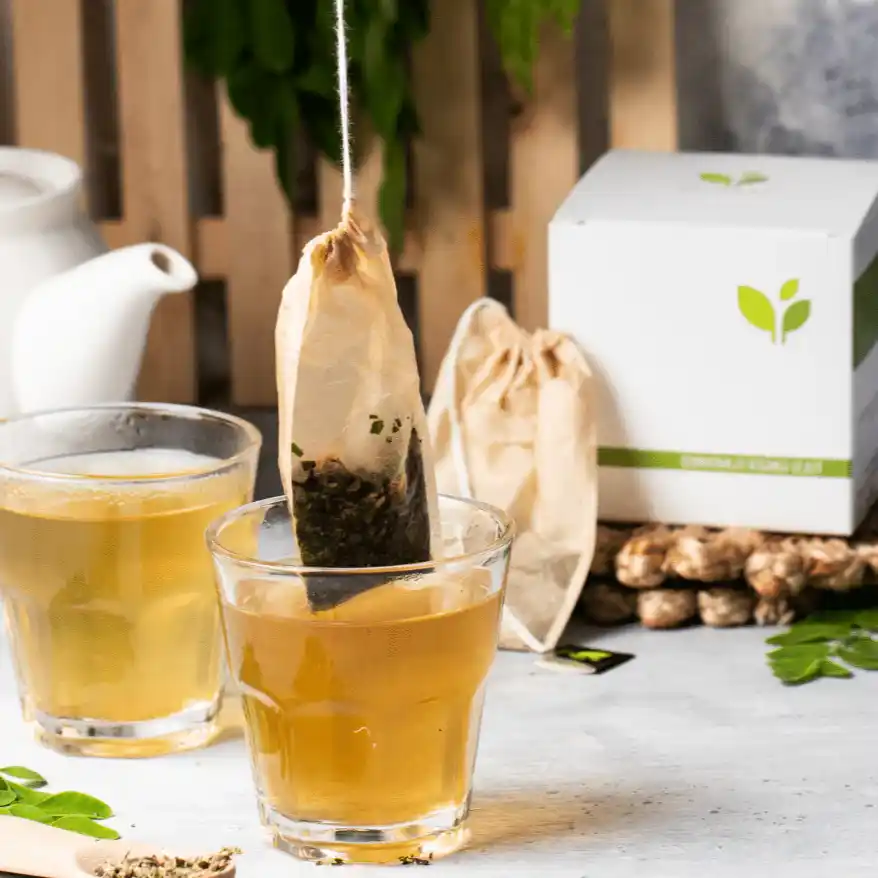
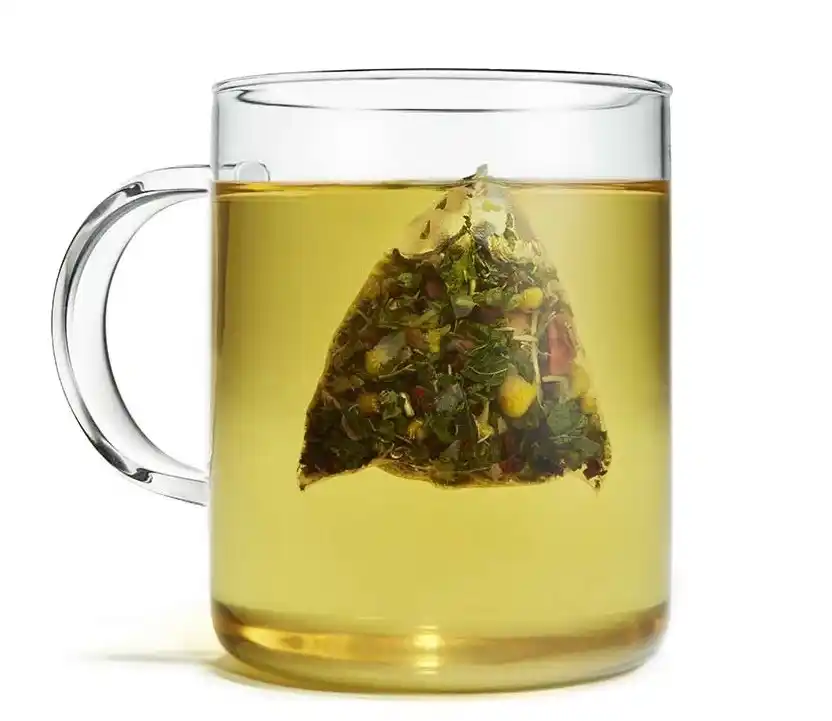
Consumer demand for eco-friendly packaging is not a trend — it’s baseline now. Many factories offer PLA/compostable tea bags, corn-fiber mesh, and recyclable cartons. These can be quick wins for marketing: a compostable pyramid with a clinically-ground herbal blend sells better on the shelf. But demand proof: ask for material certificates and seal integrity/heat tests.
GuoCao and similar suppliers often list biodegradable options and can advise on which materials work with certain herbal oils or extracts.
Scenario A: You’re testing a wellness tea across Amazon US, UK, and AU. You need speed and low design spend — ODM first. Scenario B: You plan to sell to hospitals or clinics and require unique functional claims — OEM is your path. Scenario C: You want a premium eco line — try ODM for existing compostable options, then lock an OEM deal if the SKU performs.
Industry jargon decoded — what suppliers will say
MOQ — minimum order quantity (ask for a pilot run).
COA — certificate of analysis (batch-level proof).
GMP / HACCP / ISO22000 — food safety frameworks you must verify.
Private label / white label — terms often used for ODM offerings.
Traceability — batch code + raw-material origin that protects recalls.
Business value: how this affects your P&L and scaling
Short version: ODM reduces short-term cash burn and time-to-market. OEM builds long-term margin and brand defensibility. If you want repeatable retail deals and higher margins, investing in OEM payoffs over time. If you need a quick win to test channel fit, ODM is the lean way.
Choose a partner who can scale from ODM to OEM. That’s the fastest path from test to brand.
Why consider GuoCao
GuoCao offers GMP production, ISO22000 food-safety, COA testing, and flexible warehousing — which means fewer vendor-hops for you. If you like one partner to manage herbs, processing, and export logistics, GuoCao fits that role. They support OEM and ODM, so you can test fast then evolve into a proprietary product without changing factories. That continuity saves time and reduces error-costs during scale-up.
Our low MOQ of 1 kg (2.2 lb) makes it easy to order Chinese herbal slices or wholesale Chinese medicine herbs. Private-label and bilingual labeling are also available.
Delivery Cycle & Support
We have a fast 7-day lead time. We provide free samples, COA reports, and technical support to help you bring high-quality bulk Chinese herbs to market.
Quality & Certifications
Our products are manufactured in a GMP-certified facility and meet ISO22000 standards. All Chinese herbs are third-party tested for heavy metals, pesticides, and microorganisms.