Frankincense Sourcing: Origin, Granule Size and Impurity Control
Frankincense resin is not one simple commodity. Origin, species, granule size, dust, bark, moisture, and undocumented mixing can quietly destroy quality, compliance, and margins. This guide shows how serious buyers should source, inspect, and specify Boswellia resin.
The Frankincense Resin Trade Has a Clean Label Problem
Price tags lie.
I say that because frankincense resin is one of those materials that looks romantic on a product page but behaves brutally in procurement: one lot smells bright and lemony, the next smells flat and dusty, and the invoice still says “premium Boswellia resin” as if that phrase means anything without origin, species, granule size, moisture, foreign matter, and a real Certificate of Analysis.
So who is being fooled?
Usually the buyer who thinks frankincense sourcing is about finding a “good supplier.” It is not. It is about building a specification that leaves less room for creative interpretation. Frankincense resin, also called olibanum resin, comes from Boswellia trees, and the commercial trade includes species such as Boswellia sacra, Boswellia carterii, Boswellia frereana, Boswellia serrata, and Boswellia papyrifera. The hard truth: many selling documents use common names loosely, while serious buyers need Latin binomial, harvest country, resin form, grade logic, and testing.
The conservation side is not soft PR either. Reuters reported that researchers studying Boswellia populations in Ethiopia predicted frankincense production could be halved within 15 years and tree numbers could decline by 90% within 50 years if fire, grazing, insect attack, and poor management continued unchecked. That is not a sustainability slogan; that is supply risk with a clock attached.
And in Europe, the regulatory mood is tightening. CBI’s market-entry guidance notes that Boswellia subspecies are listed in Annex D of the EU Wildlife Trade Regulations, meaning trade is monitored, and that a future CITES Appendix II listing remains possible, which would require export permits and sustainability assessments.
That matters to buyers of frankincense resin, incense brands, supplement manufacturers, herbal raw material importers, essential oil processors, and cosmetic ingredient traders. If your file cannot prove what you bought, where it came from, and how it was cleaned, you are not buying a premium botanical. You are buying a future argument.
Table of Contents
Origin Is Not Romance; It Is Risk Mapping
Frankincense origin gets abused in marketing. Oman sounds premium. Somalia sounds wild. India sounds standardized. Ethiopia sounds historic. Fine. But origin only matters when it predicts chemistry, aroma, contaminant exposure, supply stability, labor risk, and document reliability.
I would split the sourcing conversation into three layers.
Species Identity
The first layer is species. Boswellia sacra and Boswellia carterii are often discussed in the same commercial lane, especially for aromatic resin and oil. Boswellia frereana is prized in Somali trade and often appears in higher-end chewing or incense markets. Boswellia serrata, widely associated with India, is heavily used in extracts and dietary supplements because boswellic acid standardization is more common there.
That is the polite version.
The less polite version: if a supplier cannot state the species and origin without hesitating, I do not trust the grade name. “A-grade frankincense” means almost nothing by itself. “Boswellia serrata oleo-gum-resin, India origin, cleaned, 2–8 mm granules, foreign matter NMT 1.0%, moisture NMT 10%, retained sample available” means something.
Harvest Geography
The second layer is harvest geography. Country-level origin is useful, but sub-region origin is better. Dhofar in Oman, Somaliland/Puntland areas, Ethiopia/Eritrea drylands, and Indian Boswellia serrata supply chains do not behave the same. Soil, climate, tapping cycles, storage behavior, and trading customs all shape the final resin.
And here is where buyers get lazy. They ask for “origin certificate” but do not ask whether the resin has been consolidated from multiple collection areas. Consolidation is not always bad. Hidden consolidation is bad.
Supply-Chain Pressure
The third layer is pressure. High demand and low traceability create incentives for over-tapping, mixing, wet resin shipment, bark-heavy lots, and grade inflation. CBI notes that European buyers increasingly expect responsible harvesting, transparent documentation, fair labor conditions, and reduced environmental impact in frankincense supply chains.
If you already buy herbal materials at scale, this should sound familiar. The same discipline used in wholesale Chinese medicine herbs applies here: origin is not a story for the brochure; it is a control point for your purchasing file.
Granule Size Is a Quality Signal, Not a Cosmetic Detail
Granule size looks boring until the wrong lot arrives.
Then everyone cares.
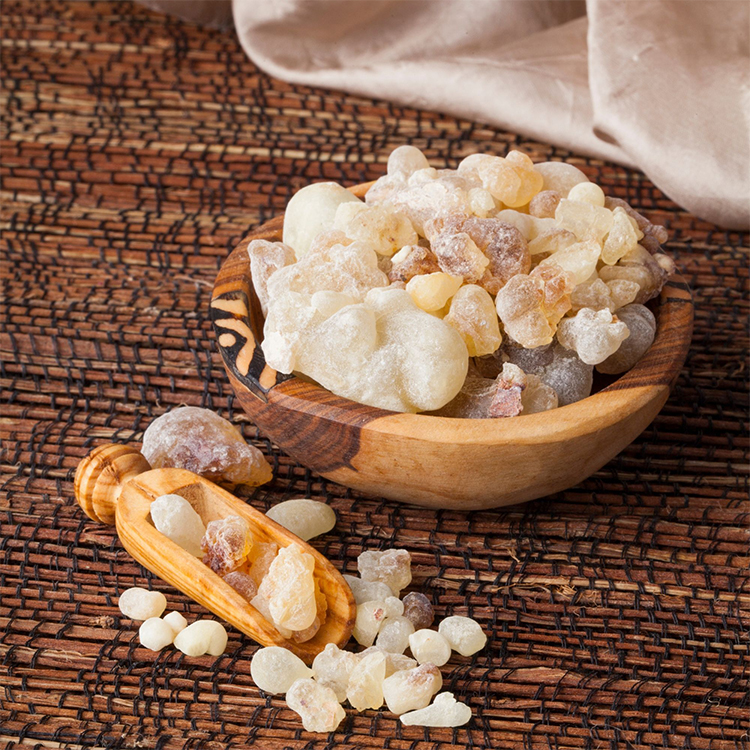
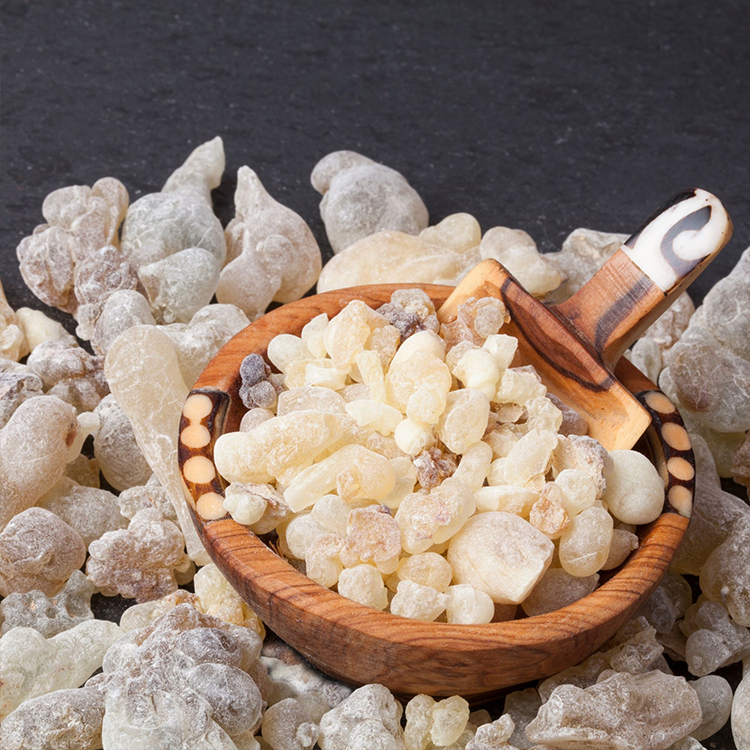
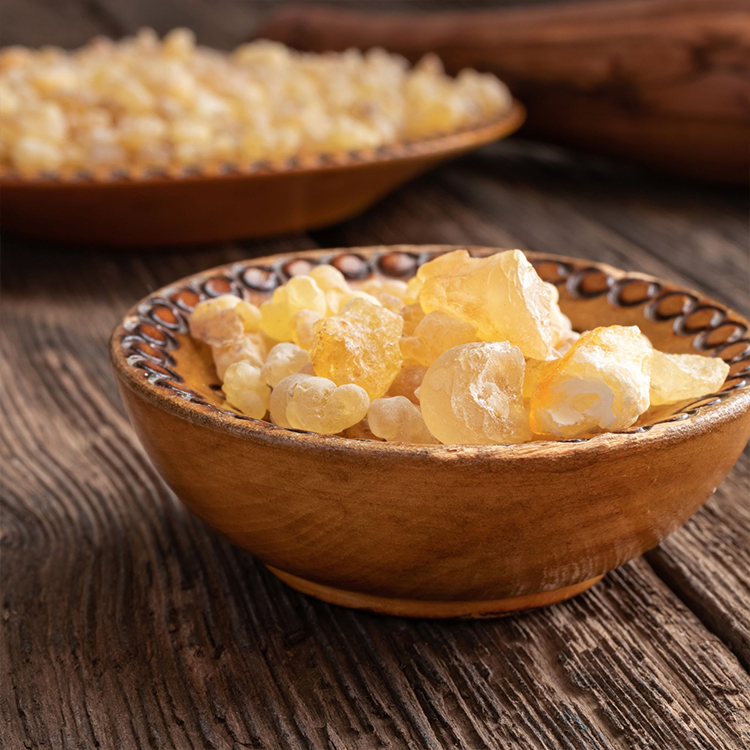
Frankincense granules are usually sorted by visual size, color, clarity, breakage, and foreign matter. Large translucent tears often win the beauty contest. Smaller granules, chips, and sifted pieces can still be useful for grinding, incense blending, distillation, extraction, or formulation. Dust is where the trouble starts.
Why Granule Size Changes the Economics
A large, clean frankincense tear gives you visual appeal, lower dust loss, easier manual inspection, and better storytelling for premium incense or retail resin. But it also costs more, and it may not be necessary for extraction or powdering.
Medium granules are often the practical middle. They are easier to pack, easier to dose, and less expensive than showpiece tears. Small granules and broken resin can be perfectly acceptable if the lot is clean, aromatic, and specified honestly. Dust-heavy lots should be treated as lower-grade material unless your process specifically needs powder.
This is where I disagree with a lot of buyers: “bigger” is not automatically “better.” Bigger is better only when your finished product values intact resin appearance. If you are distilling, extracting, or milling, oversized tears may just be expensive theater.
Practical Granule Size Bands
Frankincense Resin Form
Typical Buyer Use
Main Advantage
Main Risk
My Buying Opinion
Whole tears / large lumps
Premium incense, retail resin, gift-grade packs
Strong visual appeal, easier sorting
High price, possible hand-selected inconsistency
Worth it only when appearance sells
5–15 mm granules
Incense blends, herbal trade, general wholesale
Balanced cost and usability
Can hide bark and mixed grades
Best commercial compromise
2–8 mm granules
Extraction, distillation, powdering, industrial use
Efficient handling and processing
More surface dust, more breakage
Good if impurity limits are tight
Chips and siftings
Low-cost incense, milling, secondary processing
Cheap and easy to grind
High dust, bark, sand, weak aroma
Buy only with strict COA and sample check
Powder / dust
Formulation, incense powder base
Convenient for blending
Highest adulteration and contamination risk
Never buy blind
For a broader herbal-material mindset, the same logic appears in processing methods for herbal slices: cutting, drying, particle size, and handling are not cosmetic choices. They change quality behavior.
Impurity Control: The Ugly Part Nobody Puts on Instagram
Clean resin wins.
But “clean” has to be defined. In frankincense sourcing, impurity control means limiting bark, wood chips, sand, stones, dust, soil, insects, moldy pieces, plastic fragments, mixed botanical resin, and non-declared processing aids. The buyer who only asks for photos is asking to be punished.
Foreign Matter
Foreign matter should be specified by percentage. For premium frankincense resin, I would push for NMT 0.5–1.0% visible foreign matter after cleaning. For industrial resin, NMT 2.0% may be workable if the price reflects it and the process includes downstream filtration or extraction. Anything above that needs a very clear commercial reason.
And no, “traditional hand collection” is not an excuse for dirty lots. It explains the risk. It does not excuse it.
Moisture and Storage
Moisture is the quiet killer. Frankincense resin can absorb poor storage conditions and arrive sticky, clumped, mold-risky, or aroma-damaged. CBI describes LDPE bags as common for frankincense resin because they protect against dampness, dust, and contaminants, and notes that bulk shipments often use multi-layer paper bags lined with polyethylene for 25–50 kg shipments.
For real purchasing specs, I want moisture tested, packaging named, and warehouse conditions controlled. “Dry place” is not enough. Put numbers and packaging materials in the purchase order.
Adulteration and Analytical Risk
Adulteration is not always someone throwing in fake resin like a movie villain. It can be subtler: undeclared blending, wrong Boswellia species, bark-heavy lots, citric acid manipulation in extracts, exhausted resin residues, or powders that contain fillers.
A 2024 PubMed-indexed study on Boswellia extracts reported rapid detection of adulteration with citric acid and suggested undeclared addition could be used to comply with declared total boswellic acid values when titration methods are used.
That should make every buyer uncomfortable.
For raw frankincense resin, the practical defense is layered: macroscopic inspection, odor check, microscopy where relevant, ash testing, moisture, foreign matter, microbial limits, heavy metals, pesticide screening if required, and identity/marker testing when the finished product claims justify the cost.
The FDA import framework also reminds U.S.-bound buyers that herbal medicines, extracts, oils, and powders may be generally admissible without APHIS permit in some contexts, but goods remain subject to inspection, and CITES-listed plants or products may require permits.
If that sounds like paperwork, good. Paperwork is where bad resin often dies.
The Buyer Specification I Would Actually Use
A serious frankincense resin specification should not read like a marketplace listing. It should read like a release standard.
Here is the minimum structure I would expect.
Identity
Use “Frankincense resin / Olibanum resin” plus Latin binomial. Do not stop at the common name. Specify Boswellia sacra, Boswellia carterii, Boswellia frereana, Boswellia serrata, or another declared Boswellia species. If the supplier claims a regional trade name, demand the matching botanical identity.
Origin
State country of harvest, country of processing, and country of export. If consolidation occurs, require disclosure. For high-value material, request harvest-region documentation or supplier-level traceability.
Granule Size
Write the size band. For example: “2–8 mm cleaned granules,” “5–15 mm sorted granules,” or “whole tears, NLT 80% above 10 mm.” If you do not define size, you invite dust.
Impurity Limits
Specify visible foreign matter, bark content, dust percentage, moisture, total ash, acid-insoluble ash, heavy metals, microbial limits, pesticide residues if relevant, and absence of mold or abnormal odor.
Documents
At minimum, request COA, TDS, SDS where relevant, origin declaration, batch number, production date, packing list, invoice, photos of actual lot, and retained sample confirmation. For export-sensitive markets, add phytosanitary status, customs classification review, and CITES/Nagoya status screening where applicable.
What Bad Frankincense Resin Looks Like Before It Becomes Your Problem
Bad resin usually gives warnings.
It smells tired. It has too much bark. It looks mixed from multiple lots. It has a sticky surface from poor drying or humid storage. It throws dust when poured. It arrives with a COA that tests everything except the thing you are worried about. And sometimes it is priced just low enough to make a junior buyer feel clever.
That price is bait.
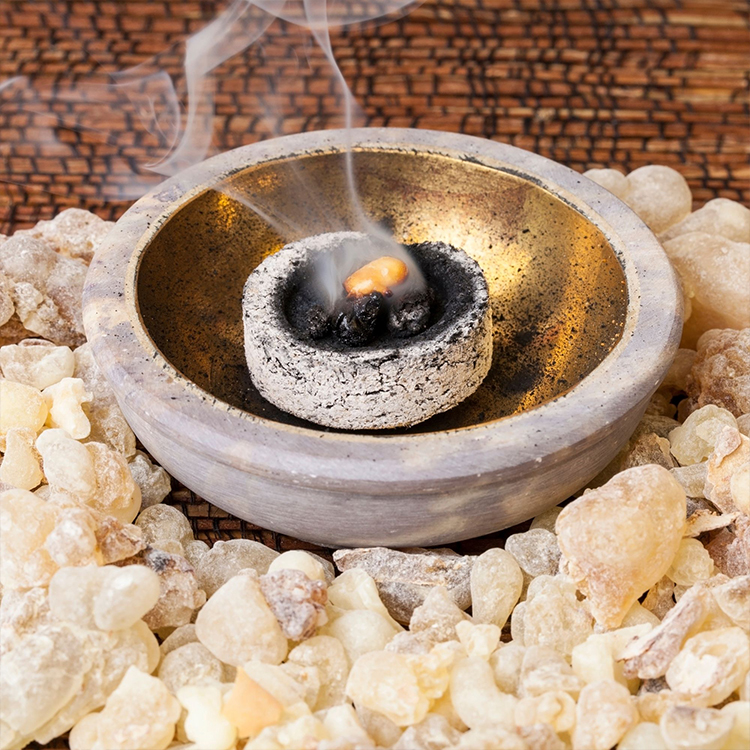
I would reject or downgrade a frankincense resin lot if I saw any of the following: sour or moldy odor, visible insect activity, excessive bark, heavy sand, blackened pieces, high powder percentage, unexplained species mixing, wet clumping, no batch number, or photos that do not match the sample. For incense and aromatic use, odor is not a side issue. Odor is the product.
For supplement, extract, and cosmetic buyers, odor still matters, but the release file matters more. You need identity, contamination limits, and traceability. If you sell into the U.S. or EU, connect this with common customs documentation issues in Chinese herb export before your shipment moves. The best time to fix documents is before the container leaves. The worst time is after a hold notice.
Frankincense Resin Grades: My Blunt Ranking System
Most grade names are marketing unless tied to measurable criteria.
The uncomfortable truth is that “best frankincense resin quality” depends on use case. A beautiful whole tear may be wasteful for extraction. A small granule may be excellent for distillation. A powder may be convenient but risky. Quality is not a vibe. It is fitness for purpose.
For buyers who also source other aromatic botanicals and spices, the logic overlaps with the bulk dried spices sourcing guide: shape, aroma, contamination, moisture, and documents decide the real value, not the sales adjective.
How to Source Frankincense Resin Without Getting Played
Start with the end product.
If the finished product is incense, prioritize aroma, burn behavior, granule appearance, dust, and foreign matter. If the finished product is an extract, prioritize identity, active marker relevance, solvent compatibility, ash, heavy metals, pesticide residues, and microbial load. If the product is cosmetic or fragrance-related, prioritize odor profile, allergen/IFRA-related documentation where needed, and batch consistency.
Then force the supplier to answer in writing.
Ask these questions:
Buyer Question
Good Answer
Bad Answer
What Boswellia species is this?
Full Latin binomial with origin
“Natural frankincense”
What is the harvest country?
Declared country and region if available
“Africa” or “Middle East”
What size is the resin?
Defined mm range and tolerance
“Granules”
What is the foreign matter limit?
Numeric limit, tested or inspected
“Very clean”
Can I see actual lot photos?
Yes, current batch photos
Stock images
What tests are on the COA?
Moisture, ash, heavy metals, micro, identity as needed
Generic COA
Is it mixed species?
Clear yes/no with disclosure
“Same quality”
What packaging is used?
LDPE / lined bags / carton details
“Standard export packing”
Also ask for a pre-shipment sample from the actual lot. Not a “representative” sample from last season. Actual lot. Serious buyers know the difference.
FAQs
What is frankincense resin?
Frankincense resin is an aromatic oleo-gum-resin collected from Boswellia trees, commonly used in incense, perfumery, traditional medicine, dietary supplements, extracts, and cosmetic ingredients. In commercial sourcing, the term should always be tied to species identity, origin, granule size, impurity limits, moisture, and batch documentation.
The common name “frankincense” is too broad for professional buying. Boswellia sacra, Boswellia carterii, Boswellia frereana, Boswellia serrata, and Boswellia papyrifera can sit under the same market umbrella, but they do not carry the same aroma profile, chemistry, supply risk, or regulatory expectations.
How do I source frankincense resin safely?
Safe frankincense resin sourcing means buying by written specification, not by grade name, and confirming Boswellia species, harvest origin, granule size, visible foreign matter, moisture, ash, microbial quality, heavy metals, and shipment documents before payment or release. The supplier should provide actual lot samples and traceable batch records.
I would not buy from a supplier who cannot explain the difference between species, origin, and grade. The better path is slower: qualify the supplier, test the sample, write the spec, approve the packaging, and then scale the order.
What granule size is best for frankincense resin?
The best frankincense granule size depends on the finished product: large tears suit premium incense and retail packs, medium granules suit wholesale and general processing, small granules suit extraction and milling, while powder is convenient but carries higher adulteration and contamination risk. Size should be specified in millimeters.
For most B2B buyers, 5–15 mm or 2–8 mm cleaned granules offer the best balance between cost, handling, and usability. But if your brand sells visible premium resin, whole tears may justify the higher price.
What impurities should buyers control in Boswellia resin?
Boswellia resin buyers should control bark, wood chips, dust, sand, soil, stones, insects, moldy pieces, mixed resins, plastic, and unexplained powder. A professional specification should define visible foreign matter percentage, dust tolerance, moisture, total ash, acid-insoluble ash, microbial limits, heavy metals, and pesticide residue requirements where relevant.
The biggest mistake is accepting “clean” as a supplier promise. Clean has to become a number. If the supplier refuses numeric impurity limits, expect disputes when the shipment lands.
Is Boswellia serrata the same as frankincense?
Boswellia serrata is one commercial source of frankincense-type resin, especially common in Indian supply chains and dietary supplement extracts, but it is not identical to every frankincense traded globally. Other commercial Boswellia species include Boswellia sacra, Boswellia carterii, Boswellia frereana, and Boswellia papyrifera.
For supplements, Boswellia serrata may be preferred because boswellic acid standardization is common. For incense and perfumery, buyers may prefer other species depending on aroma, origin, tradition, and price.
Why does frankincense origin matter?
Frankincense origin matters because harvest region affects species availability, aroma, resin appearance, tapping pressure, sustainability risk, documentation quality, contamination exposure, and price. A buyer who knows only the country name has partial control; a buyer who knows harvest region, collection method, and consolidation practice has stronger control.
Origin is not just a marketing claim. It is part of your risk file. If the resin fails identity, customs, sustainability review, or odor approval, the origin story will not save the shipment.
Final Thoughts: Write the Spec Before You Chase the Price
If you remember one thing, remember this: frankincense resin is not bought well by asking, “What is your best price?”
Ask for species. Ask for origin. Ask for granule size. Ask for impurity limits. Ask for moisture, ash, microbial data, heavy metals, and actual lot photos. Ask whether the resin is mixed. Ask what documents will travel with the shipment. Then put every answer into the purchase specification.
And if a supplier keeps answering with adjectives, walk away.
For buyers building serious resin, incense, extract, cosmetic, or herbal ingredient programs, the next step is simple: prepare a written frankincense resin specification, request an actual-lot sample, and audit the supplier’s documentation before placing a bulk order. Start with the same discipline used for sulfur-free herbal slices and residue control, then apply it to Boswellia resin with no romantic shortcuts.
Our low MOQ of 1 kg (2.2 lb) makes it easy to order Chinese herbal slices or wholesale Chinese medicine herbs. Private-label and bilingual labeling are also available.
Delivery Cycle & Support
We have a fast 7-day lead time. We provide free samples, COA reports, and technical support to help you bring high-quality bulk Chinese herbs to market.
Quality & Certifications
Our products are manufactured in a GMP-certified facility and meet ISO22000 standards. All Chinese herbs are third-party tested for heavy metals, pesticides, and microorganisms.