You’re shopping enzyme drinks. Labels look shiny. Claims feel loud. Let’s make it simple and practical. Below are the ten buyer questions we hear most, answered with straight talk, easy metrics, and factory-level details you can actually use. I’ll also point you to live SKUs on GuoCao and the full Herbal Enzymes lineup.
Herbal Enzyme Drinks (postbiotic fermented drinks): definition and process
What they are. Herbal enzyme drinks are herbal-based fermented beverages. We place plant material with starter cultures and sugar under a controlled process. Microbes grow, enzymes work, sugars shift, and you end up with postbiotics like organic acids, peptides, and phenolic derivatives. Some drinks keep live cultures; others are pasteurized and focus on postbiotic payloads. Either way, the keyword is fermentation, not “a big dose of free enzymes” in the final bottle.
Why it matters to buyers. Postbiotics are stable, taste-forward, and easier to build into daily routine. But if you’re chasing clinical enzyme delivery, that’s a different lane (capsules). For beverage SKUs and private label, explore your options under Herbal Enzymes and check batch specs from GuoCao.
Koso/Kombucha-class fermentation basics: °Brix, TA, ABV control
This is ops talk that saves you returns.
°Brix tells you soluble solids. It’s a quick read on sweetness and fermentation progress.
TA (titratable acidity) and pH track acid development (sensory + micro safety).
ABV drift can happen in warm chains. Manage with cold storage, kill-steps (if used), and stability holds.
At GuoCao, we set spec windows for °Brix, TA, pH, and ABV per SKU. That gives retailers consistent sensory and keeps compliance clean.
Herbal Enzyme Drinks vs. Digestive Enzyme Supplements (use case clarity)
Different tools, different job. Capsules (often enteric-coated) try to deliver active enzymes beyond stomach acid. Drinks deliver postbiotics, mild acids, and a flavor cue that people actually enjoy and remember. If the use case is functional dyspepsia or heavy-meal bloat, evidence today still leans toward multi-enzyme supplements. Drinks fit the daily wellness and postbiotic angle: small serving, good taste, repeatable habit. You wont promise therapy; you will promise crafted fermentation with QA.
Digestive support and bloating: what’s real, what’s hype
Yes, fermentation brings organic acids and postbiotics that many people find stomach-friendly. But the strong trials sit on the supplement side (multi-enzyme, sometimes with herbs). Translation: position drinks as supportive and pleasant; don’t oversell clinical effects. Keep copy honest, short, and about feel: “light, clean, easy after meals.” That tone fits both retail and B2B.
Free sugars (WHO guidance) and real-world serving sizes
Sugar drives repeat purchase or refund—no middle. Keep it tight.
Keep free sugars in diet under 10% of energy, ideally under 5% (about 25 g/day for many adults).
Use g/100 mL on your label; buyers understand it fast.
If a shot feels sweet, encourage dilute & sip.
In copy, say: “We cap sugar. We show it clearly per 100 mL. You stay inside your daily budget.” That’s trust language. You dont need fancy phrasing.
Probiotics vs. Postbiotics in beverages (stability and claims)
Live cultures are great on day one, but they can fade during storage and transit. Postbiotics—the metabolites from fermentation—are more stable. Many global experts frame fermented foods as safe and useful in the diet, while noting that strain-specific health claims in beverages still need stronger human data. So, sell the craft and consistency: controlled fermentation, clean acids, clean flavor, micro spec on the COA.
Your positioning: “postbiotic fermented drink.” That’s honest, modern, and true to GuoCao process.
ABV 0.5% threshold and driving (compliance you must know)
If ABV hits 0.5%, many markets treat it as alcohol. Here’s the safe path:
Control fermentation end point (°Brix, TA, pH targets).
Keep cold chain.
Test ABV at pack and after warm-chain stress.
Put ABV on your spec sheet and confirm in the COA.
Our beverage line includes ABV control and reporting. OEM buyers can lock the spec during development via GuoCao.
Safety: who should be cautious
Be conservative with pregnancy, breastfeeding, children, and immunocompromised consumers. Pasteurized options reduce live-culture risk. For any meds that interact with alcohol, caffeine, or high-polyphenol loads, advise a quick clinician check. Keep your copy friendly and clear, not scary.
Does “more herbs” = better effect?
Not necessarily. More is messy. What wins:
Validated botanicals at fit-for-purpose dose
Sugar under control
ABV stable and below threshold
Micro spec tight (TPC, yeast/mold, coliforms)
Sensory repeatable across lots
A 2–3 herb formula with a clean flavor and sharp QA often beats a 20-herb soup that drifts. We can co-design a master formula and stability plan under GMP and ISO 22000 at GuoCao.
Buying, shipping, storage—GMP, ISO 22000, COA (what to ask from suppliers)
Ask for this, every time:
Facility with GMP and ISO 22000 food-safety system
COA bundle per lot (micro, heavy metals, pesticides; ABV, pH/TA for drinks)
Clear serving size and sugars per 100 mL
ABV control plan and warm-chain stability data
Cold storage or cool, dark warehousing
Traceability from raw herb to finished bottle; batch records, line clearance, SOPs, CAPA if anything goes wrong
This is exactly how GuoCao runs: GMP Chinese-herb lines, normal/cool/controlled-atmosphere warehouses, ISO 22000, and third-party COA. Capacity is strong (yearly tonnage level), and the fermented herbal beverage line is live for OEM/ODM.
Quick FAQ table you can drop into a product page
Buyer Question (keyword)
Bottom Line for Copy
Useful Data / Control Point
What to Request from Supplier
Herbal enzyme drink definition
Fermented herbal drink rich in postbiotics; live cultures may vary.
°Brix, TA, pH windows; pasteurized or live?
Product spec + process note
Digestive enzyme supplement vs drink
Capsules deliver enzymes; drinks deliver postbiotics and taste.
Enteric-coated vs beverage matrix
COA + label clarity
Bloating support
Drinks are supportive; best clinical signals are in supplements.
Symptom scores in multi-enzyme trials
Honest claims, no over-promise
Free sugars
Keep sugars g/100 mL low; encourage dilute & sip.
Diet target: under 10% energy (ideally 5%)
Label with g/100 mL
Probiotics vs postbiotics
Postbiotics = stable; live count may fall over time.
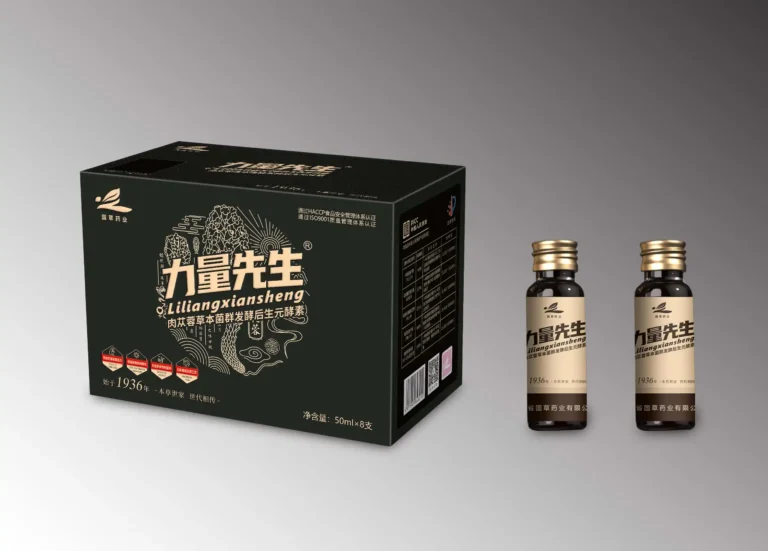
Light daily routine (flavor-first wellness). Aim for a 50 mL shot with bright acidity and low sugar. Educate to sip, not chug. Anchor text to Herbal Enzymes.
Meal companion for “heavy” dishes. Keep ABV controlled and sugar lean. Suggest a pre-meal sip strategy. Merch it next to digestive teas on shelf; cross-sell with herbal slices from GuoCao.
Office fridge program. Provide mixed flavors, clear serving sizes, and “2-per-day max” copy. Send stability notes to buyer ops. Base it on SKUs listed under Herbal Enzymes.
Retail sampling. Shots are perfect for trial. Use ice buckets to control temp. Track °Brix and TA lot-to-lot so the sample tastes the same as shelf goods. Partner with GuoCao for pre-event QC.
Private-label fast track. You bring flavor targets and label brief; we bring GMP, ISO 22000, COA, and export know-how to 30+ regions. MOQ and lead-time discussed on intake. Start that process at GuoCao.
GuoCao OEM/ODM: GMP, ISO 22000, third-party COA, export ready
GuoCao is a global manufacturer of Chinese herbal ingredients and beverages:
GMP production lines for Chinese herbal slices and fermented herbal drinks
Normal/cool/controlled-atmosphere warehouses
ISO 22000 food-safety system
Third-party COA capability per lot
Annual capacity in the thousands of tons; OEM/ODM ready
Products shipped to the U.S., Europe, Australia, Japan, Korea, Canada, Malaysia, Philippines, and more—serving pharma companies, supplement makers, beverage brands, hospitals, distributors, and local retailers
If you need private label or contract manufacturing, we design formula, lock specs, validate micro and ABV, and do scale-up with change control. Simple, not fancy. Start the brief here: GuoCao.
Pricing, compliance, and margin talk
We wont print cost calcs here. But here’s the playbook: hold sugar, ABV, and micro inside tight windows so you avoid rework and chargebacks. That’s how margin survives. Build routing with clear SOPs, temperature logs, and CAPA triggers. Keep labels compliant and short. Your buyers care about repeatability and no-drama logistics more than purple adjectives.
Our low MOQ of 1 kg (2.2 lb) makes it easy to order Chinese herbal slices or wholesale Chinese medicine herbs. Private-label and bilingual labeling are also available.
Delivery Cycle & Support
We have a fast 7-day lead time. We provide free samples, COA reports, and technical support to help you bring high-quality bulk Chinese herbs to market.
Quality & Certifications
Our products are manufactured in a GMP-certified facility and meet ISO22000 standards. All Chinese herbs are third-party tested for heavy metals, pesticides, and microorganisms.