Common Customs Documentation Issues in Chinese Herb Export
Chinese herb export rarely fails because the herbs are “bad.” It fails because paperwork tells the wrong story. This guide breaks down the documentation issues that quietly trigger customs holds, FDA scrutiny, phytosanitary questions, and expensive buyer disputes.
I know that sounds brutal, but in Chinese herb export, the document pack often matters as much as the dried root, seed, bark, flower, rhizome, or slice inside the carton, because customs officers do not inspect your “good intentions”; they inspect invoices, HS codes, botanical names, batch numbers, certificates, treatment records, labels, and whether the story stays consistent from factory gate to port release.
So why do exporters still treat paperwork like an afterthought?
The Ugly Truth: Most Chinese Herb Customs Documentation Fails Before the Container Moves
Here is my unpopular opinion: many Chinese herb export delays are self-inflicted.
Not always. Some ports are slow. Some inspectors are unpredictable. Some buyers send incomplete import instructions and then blame the supplier when the shipment gets held. But a surprising number of customs clearance issues for Chinese herbs start with sloppy document alignment.
The commercial invoice says “herbal slices.” The packing list says “dried botanical product.” The COA says “Angelica sinensis.” The label says “Dang Gui.” The phytosanitary certificate uses a different weight.
That is not a small clerical issue. That is a red flag.
For serious buyers, especially supplement factories, tea brands, herbal extract processors, and TCM distributors, the first line of defense is choosing a supplier that understands export paperwork as a production discipline, not as a last-minute PDF exercise. If you are building a source list, start with a supplier that already presents full category depth through a bulk Chinese herbs and spices catalog and has a documented approach to herbal export documentation and customs clearance.
That matters.
Table of Contents
The Documents That Usually Break Chinese Herb Export Shipments
Chinese herbal medicine export requirements change by destination market, product form, intended use, and botanical risk profile. A dried food-grade spice is not handled the same way as a medicinal decoction slice. A powdered extract is not the same as a whole dried flower. A single-herb shipment is cleaner than a 12-herb formula.
Below is the document set I would expect to see in a serious export file.
Document
What Customs or Buyers Check
Common Failure
Real Risk
Commercial Invoice
Product name, HS code, declared value, Incoterms, buyer/seller data
The phytosanitary certificate deserves special attention. USDA APHIS defines it as a certificate showing that a plant or plant product has been inspected, is considered free from certain pests, and conforms to the importing country’s plant health rules in its Plant and Plant Product Export Certificates guidance. The FAO/IPPC standard is even more direct: phytosanitary certificates exist to show that consignments meet specified phytosanitary import requirements, not to decorate a shipping file with official-looking paper, as explained in the FAO phytosanitary certificate requirements.
Tiny mismatch. Big delay.
Where Exporters Get Burned: Names, Codes, Claims, and Testing
The most dangerous paperwork problem in Chinese herb export is not one missing stamp. It is identity confusion.
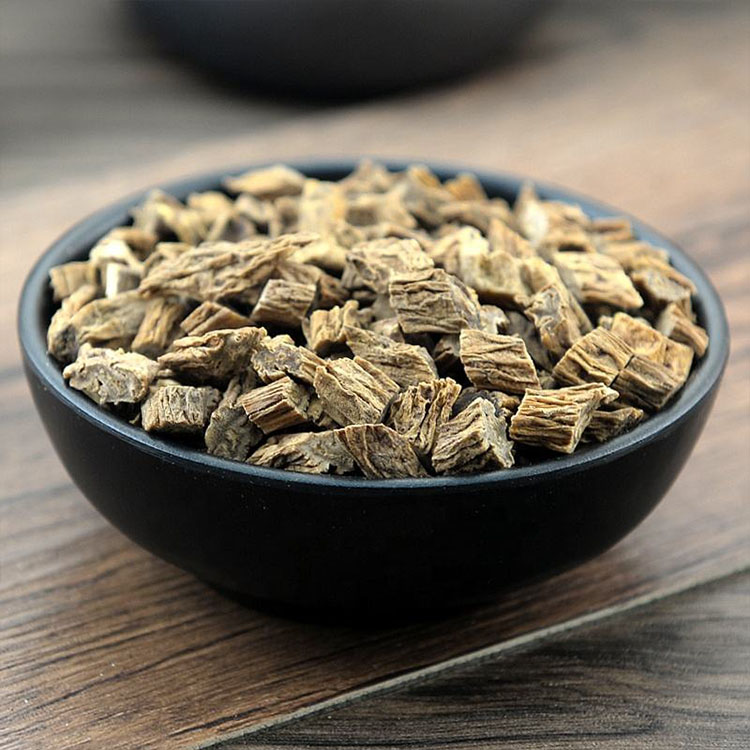
Take a root and rhizome shipment. In the real market, buyers may use common English names, Latin binomials, pinyin names, and internal SKU names at the same time. For example, Dang Gui may appear as Angelica root, Angelica sinensis, Angelicae Sinensis Radix, Dong Quai, or a private-label formula ingredient. If the documents do not control those names, the file starts to wobble.
This is why category organization matters. A buyer sourcing from a structured root and rhizome Chinese medicinal category has a better starting point than a buyer pulling mixed bags from a trader who cannot separate Bai Zhi, Bai Shao, Huang Qi, Cang Zhu, and Fu Ling without sending WeChat photos.
But naming is only one trap.
HS Code Guessing Is Not a Strategy
HS codes decide duty treatment, inspection channel, and sometimes whether the product is treated as food, spice, botanical raw material, dietary supplement ingredient, or medicinal product. Exporters often use one code across multiple herbs because “it cleared last time.”
Bad logic.
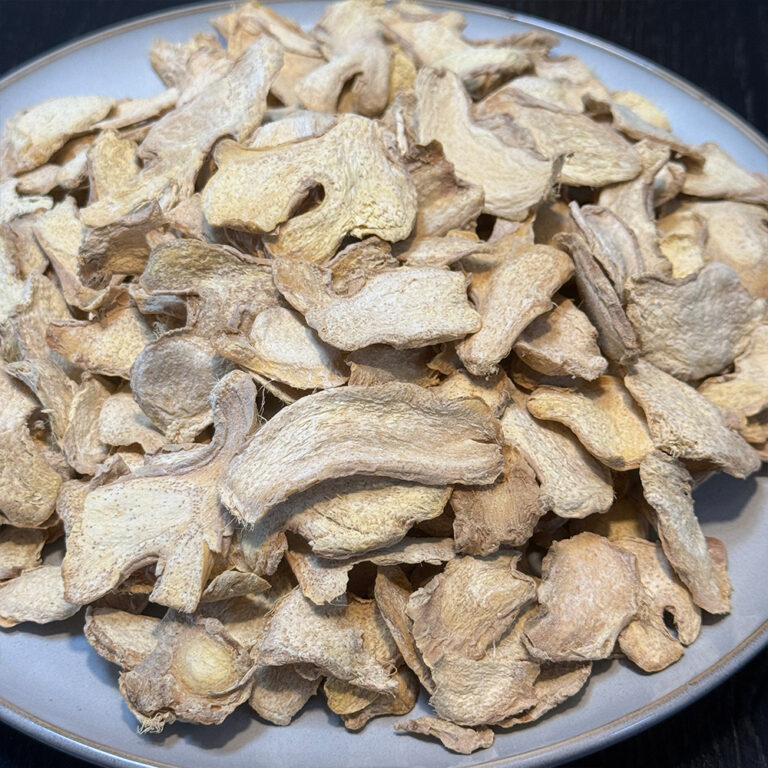
A dried ginger slice, licorice root, ginseng slice, bitter apricot seed, and mixed herbal tea bag may sit in different risk conversations depending on destination rules, label claims, and intended use. When the HS code conflicts with the product description, customs has a reason to stop the shipment.
And once stopped, the buyer starts counting warehouse fees.
COA Without Batch Identity Is Theater
A COA should connect to the lot actually shipped. I want to see batch number, production date, test date, method reference, sample identity, lab name, and clear limits for heavy metals, pesticides, microbes, and active markers where relevant.
If your COA says “Pass” but does not link to the actual batch, it is not evidence. It is decoration.
FDA risk is not theoretical. FDA’s Import Alert 54-10 covers bulk or finished dietary supplements or drugs labeled as containing Aristolochia spp., certain Asarum spp., certain Cocculus spp., and certain Thottea spp., and the agency states that release may require analytical evidence using liquid chromatography-mass spectrometry for aristolochic acid. That chemical is not a rumor; Aristolochic Acid I is listed by NIH PubChem as C17H11NO7 under CID 2236 in the PubChem compound record.
That is the hard edge of herbal compliance: one botanical identity error can drag a shipment into a toxin conversation.
Labels Can Accidentally Turn Herbs Into Drug Problems
The fastest way to invite regulatory heat is to let marketing language leak into export paperwork.
“Supports wellness” is one thing. “Treats kidney disease” is another.
In the United States, FDA import alerts include “Chinese Herbal Medicines” under Import Alert 66-10 in the agency’s Human and Animal Drugs Import Alerts. That does not mean every Chinese herb shipment is a drug shipment. It means the line between botanical raw material, dietary supplement ingredient, finished supplement, and unapproved drug can get ugly when the label, invoice, website claim, or formula sheet says too much.
I would rather see a plain, boring label that clears than a beautiful label that triggers detention.
Evidence From the Border: What Recent Compliance Data Says
The pesticide issue is not going away. In the European market, Regulation (EC) No 396/2005 sets maximum residue levels for pesticides in plant-origin food and feed, and the CBI buyer-requirements guidance reports that in 2024, 47% of all RASFF issues related to excessive pesticide levels or traces of illegal pesticides, with chlorpyrifos, pesticide cocktails, and ethylene oxide among major categories in its European herbs and spices requirements guide.
That number should scare exporters.
Not because every Chinese herb is unsafe. That is lazy thinking. It should scare exporters because dried products concentrate risk. A fresh-material residue problem can become a bigger dried-material residue problem after dehydration, especially when buyers or customs apply conversion factors.
The EU’s RASFF system also shows how specific these alerts can become. In 2025, Belgium notified “pesticides residues in dried ginger from China” under RASFF Notification 2025.1158 in the European Commission RASFF window. In 2024, France notified “multiple pesticide residues in tea from China” under Notification 2024.5862 in the same RASFF database.
That is not abstract policy. That is product, origin, hazard, date, notifying country.
And that is exactly how customs and import controls think.
The Certificate of Origin Problem Nobody Wants to Talk About
The certificate of origin for herbal exports is often treated like a routine chamber document. I disagree with that habit.
Origin is not just a geography label. It can affect tariffs, buyer trust, phytosanitary logic, sanctions screening, anti-fraud checks, and whether the importer can make a clean traceability claim. If the certificate of origin says China, the invoice says a Hong Kong trading company, the label says “wild harvested,” and the COA names a third-party lab in another province, the shipment may still be legitimate—but the file now needs discipline.
The exporter should align:
Exporter name
Manufacturer name
Actual origin area
Botanical identity
Batch number
Production date
Invoice number
Packing list number
Bill of lading number
Consignee name
Messy files look guilty even when they are clean.
This is where many buyers should stop chasing the cheapest supplier and instead read a practical wholesale guide to importing herbal slices from China before placing their first serious order. The cheap quote often becomes expensive when the file has to be corrected three times at port.
How to Avoid Customs Documentation Issues in Chinese Herb Export
Here is the workflow I would enforce.
First, freeze the product identity before production. Use one master product name, one Latin name, one pinyin name, one part used, one specification, and one internal SKU. For example: “Astragalus Root / Huang Qi / Astragalus membranaceus / dried sliced root / 3–5 mm cut.”
Second, build the document pack from that master identity. The invoice, packing list, COA, phytosanitary certificate, certificate of origin, label, and shipping document should all repeat the same identity logic.
Third, test by batch, not by hope. Heavy metals, pesticide residues, microbial limits, sulfur dioxide where relevant, aflatoxins for risk materials, and identity markers should be controlled before the shipment leaves the factory.
Fourth, kill risky claims early. If the product is a raw botanical ingredient, do not let marketing copy turn it into an unapproved drug claim. Keep the paperwork commercial, technical, and boring.
Fifth, use supplier systems that actually support documentation. When a supplier can provide COA, MSDS, allergen declarations, phytosanitary certificates, certificates of origin, and country-specific paperwork as part of custom Chinese herbal and spice OEM/ODM solutions, that is not a nice extra. It is risk control.
Boring wins.
A Practical Pre-Shipment Audit Checklist
Before a Chinese herb export shipment moves, I would run this checklist line by line.
Audit Item
Pass Standard
Red Flag
Product name
Same across invoice, label, COA, packing list
Different English or Latin names
Botanical name
Genus and species confirmed where required
Common name only
Batch number
Appears on COA, label, cartons, packing list
COA has no batch number
Quantity
Net weight and gross weight match across documents
I would rather delay shipment by 48 hours before departure than lose 14 days after arrival.
That is not caution. That is basic money management.
FAQs
What are the most common customs documentation issues in Chinese herb export?
The most common customs documentation issues in Chinese herb export are inconsistent product names, missing batch-specific COAs, incorrect HS codes, incomplete phytosanitary certificates, weak certificates of origin, and labels that create food, supplement, or drug classification confusion at the destination port. These errors make customs officers question identity, safety, origin, and intended use.
In practical terms, one mismatch can poison the whole file. If the invoice says “dried herbs,” the COA says “Radix Astragali,” and the label says “immune treatment formula,” customs may not know whether it is a food ingredient, dietary supplement input, medicine, or restricted botanical.
Why is a phytosanitary certificate important for Chinese herbs?
A phytosanitary certificate is an official plant-health document confirming that a regulated plant product has been inspected and meets the importing country’s pest and disease requirements for that specific shipment. For Chinese herbs, it helps prove that roots, seeds, flowers, barks, rhizomes, or slices do not create unacceptable quarantine risk.
The mistake is assuming every dried herb automatically needs the same certificate. Requirements depend on destination country, product form, processing level, botanical species, and pest-risk classification. The importer and broker should confirm requirements before shipment, not after the cargo reaches port.
Can a COA prevent customs clearance problems for Chinese herbs?
A COA can reduce customs and buyer-side clearance problems when it is batch-specific, method-based, recent, and aligned with the exact product being shipped, including botanical identity, lot number, test date, and safety limits. A generic COA cannot rescue a shipment when customs questions pesticide residues, heavy metals, microbes, or toxic botanical substitution.
For higher-risk materials, buyers may ask for HPLC, GC-MS, ICP-MS, LC-MS/MS, or microbiological testing. The lab method matters. A vague “qualified” result may satisfy nobody when the shipment is already under review.
What causes certificate of origin problems in herbal exports?
Certificate of origin problems happen when the stated origin, exporter name, manufacturer details, invoice number, product description, or shipment quantity does not match the rest of the export document pack. In herbal exports, this creates suspicion because origin affects tariff treatment, traceability, phytosanitary logic, and sometimes buyer claims.
The fix is boring but effective: align the certificate of origin with the commercial invoice, packing list, bill of lading, label, and COA before submission. Never let a trading company name, factory name, and origin claim float around without explanation.
How can buyers avoid customs clearance issues for Chinese herbs?
Buyers can avoid customs clearance issues for Chinese herbs by confirming import classification, required certificates, allowed claims, lab testing limits, botanical names, and broker-approved document drafts before production or shipment begins. The safest process is to treat export documents as part of procurement, not as paperwork created after the goods are packed.
This means asking the supplier for draft invoice language, HS code assumptions, COA format, phytosanitary availability, certificate of origin process, label template, and batch traceability plan before paying the deposit. It is not overkill. It is professional sourcing.
Final Thoughts: Build the File Before You Build the Shipment
Chinese herb export is not just about herbs. It is about proof.
The winning exporters are not the ones with the prettiest catalog or the loudest “factory direct” slogan. They are the ones that can make the product identity, lab data, origin story, phytosanitary status, commercial paperwork, and buyer requirements say the same thing in the same language.
If you are importing, do not wait until customs asks questions. Audit the paperwork before the shipment leaves China. If you are sourcing Chinese herbal slices, spices, tea bags, or OEM herbal products, review the supplier’s documentation process, ask for batch-level evidence, and send your broker the draft document pack before production closes.
Our low MOQ of 1 kg (2.2 lb) makes it easy to order Chinese herbal slices or wholesale Chinese medicine herbs. Private-label and bilingual labeling are also available.
Delivery Cycle & Support
We have a fast 7-day lead time. We provide free samples, COA reports, and technical support to help you bring high-quality bulk Chinese herbs to market.
Quality & Certifications
Our products are manufactured in a GMP-certified facility and meet ISO22000 standards. All Chinese herbs are third-party tested for heavy metals, pesticides, and microorganisms.