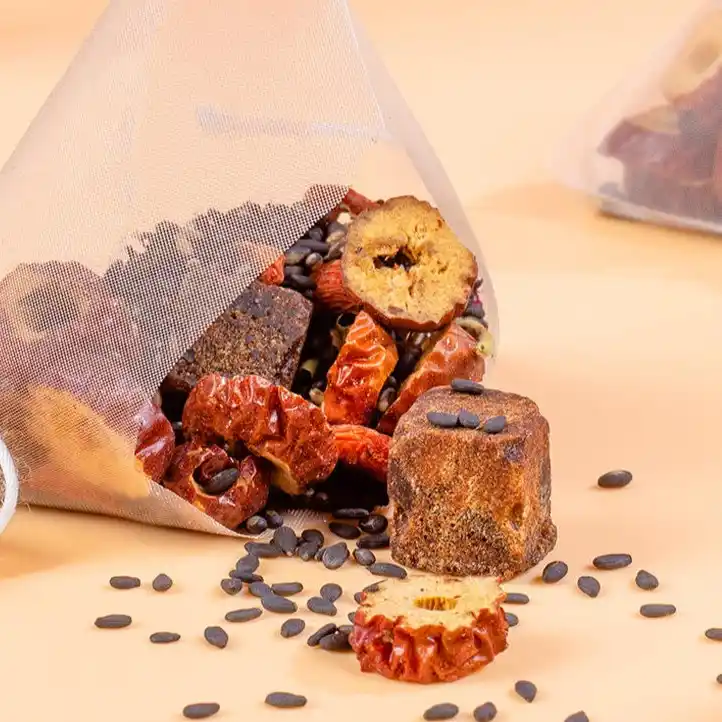
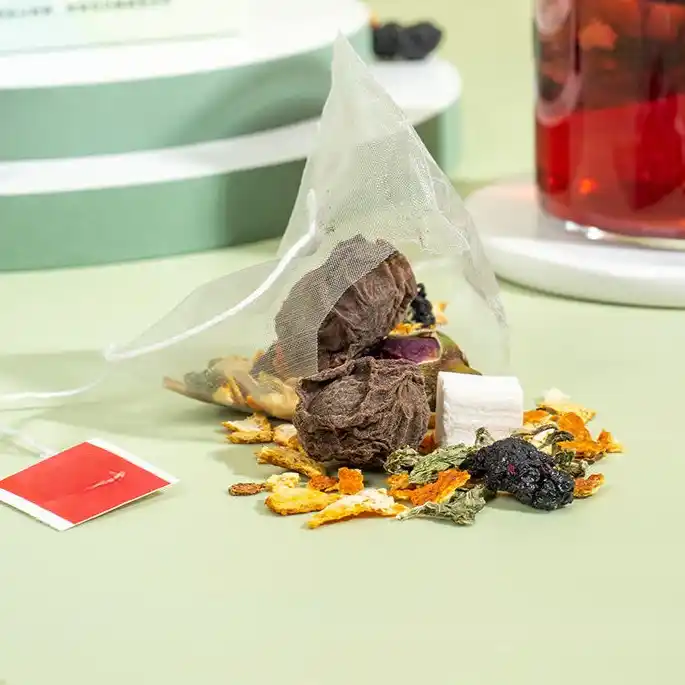
You’re not really buying “tea bags.” You’re buying a repeatable supply chain that won’t drift after launch. If your first order goes wrong, it’s rarely one big disaster. It’s a bunch of small leaks: specs that aren’t locked, a label version that slips, a COA that doesn’t match the lot, a “fast lead time” that turns into silence.
This is a practical timeline you can follow. It uses the same language your sourcing and QA teams already speak: CTQ, spec freeze, AQL, OTIF, CAPA, hold/release. No fluff. Just the steps that get you from idea to first PO without burning weeks.
Along the way, I’ll naturally reference GuoCao, because this is exactly where a capable manufacturer matters. GuoCao runs GMP Chinese herbal slices production lines, supports OEM/ODM, maintains ambient / cool / modified-atmosphere storage, operates an ISO 22000 food safety system, and can support third-party COA testing when you need it. If you’re building overseas distribution, that baseline makes your project way less messy.
If you want to explore more context on the same topics, you can jump through these internal pages (no naked URLs shown):
Wholesale Chinese Medicinal Herbs and Spices Supplier – GuoCao
Before you even talk timeline, you should check if the supplier can support repeat orders with stable quality. Samples don’t prove that. Systems do.
Here’s what “export-ready” usually looks like in real sourcing terms:
GMP production: not just a label, but an actual controlled process.
ISO 22000: a structured food safety management system, not vibes.
Warehouse zoning: ambient, cool, and modified-atmosphere storage options help reduce odor drift and quality swing in different climates.
Batch COA with lot traceability: COA has to tie to a real lot code, every time.
Capacity + planning: you want a supplier who can keep supply steady when you scale.
GuoCao’s positioning fits that framework: industrial output, export coverage to many regions, and the ability to support OEM/ODM programs. That matters because your first order is never the finish line. It’s the beginning.
OEM vs ODM Cooperation Models Between Overseas Brands and Chinese Herbal Tea Bag Factories
This choice decides how fast you move, and how much control you keep.
OEM
OEM means you bring the blueprint. You define the spec pack, the formula rules, and packaging requirements. You’ll spend more time upfront. In return, you can defend your product under audit, and you reduce “same-as-everyone” risk.
ODM
ODM means the factory brings a ready base. You customize inside a framework. It can be faster for first launch. The tradeoff is differentiation. If you don’t manage it carefully, your SKU starts to look like a cousin of somebody else’s SKU.
OEM vs ODM comparison table
Dimension
OEM
ODM
What it means for your first PO
Speed
Slower
Faster
ODM helps you test demand quickly
Control
Higher
Medium
OEM helps you lock repeatability
Differentiation
Stronger
Often limited
OEM reduces “me-too” risk
Workload
More on you
More on factory
ODM fits smaller teams
A very normal path is: ODM for a first validation run, then shift winners into OEM once you know which “scene” sells. It’s not fancy. It’s just efficient.
Chinese Herbal Tea Bags
Overseas buyers usually buy by scene and usage, not by poetic names. If your positioning isn’t clear, your label copy takes forever, and your channel training becomes a headache.
When you build your first lineup, keep it simple. Pick scenes your end customer already understands:
Daytime focus / energy support
Night routine / sleep support
After-meal comfort
Women’s daily wellness
Work schedule support (people who stay up late know what they want)
This scene-first approach also helps compliance. You can talk about routine and comfort without over-promising. It’s safer. It sells better too.
Here’s the part most teams miss: your first PO isn’t delayed by “manufacturing.” It’s delayed by soft steps—spec alignment, artwork, QC schedule, doc pack, and version control.
Timeline checkpoint table (Idea → First PO)
Stage
What you lock
What usually breaks it
What to do (real ops moves)
1) Positioning brief
Scene, audience, channel, claim boundaries
“We want everything in one SKU”
Write a 1-page brief. Keep it strict.
2) OEM vs ODM decision
Ownership of formula/spec/pack
Model changes mid-stream
Decide early, then don’t flip-flop.
3) Spec pack draft
Cut size, moisture, foreign matter limits
Specs written like marketing
Convert to CTQs + acceptance rules.
4) Sampling
Brew behavior and bag integrity
Too many fines, seam contamination
Ask for sieve distribution + dust control plan.
5) QC + COA plan
Lot code, COA scope, sampling plan
COA starts “after everything”
Set hold/release and testing timeline upfront.
6) Packaging + label
Dieline, languages, versioning
Label mismatch, old artwork used
Use rev control, line clearance, reconciliation.
7) Export + shipping
Docs checklist, carton marks, pallet plan
Paperwork errors
Standardize the doc pack like a template.
8) First PO + repeat
Change control, retain samples
Bulk differs from sample
Run change control + CAPA when needed.
If you do nothing else, do this: spec freeze + artwork freeze. Once you freeze them, your timeline stops bleeding.
How to Read a Chinese Herbal OEM Quotation: Explaining Every Line Item
Don’t read a quotation like a shopping list. Read it like a risk file. You’re not just buying material. You’re buying decisions: what gets controlled, what gets tested, and what happens when a check fails.
Below are three line items that quietly decide your outcome.
Cut Size
Cut size drives extraction, clarity, dust, and machine behavior. Too many fines can cause hopper jams and dirty seals. Then you spend your whole project “fixing the line.” Nobody wants that.
Ask your supplier for:
Target cut range (not “small/medium”)
Fines control method (sieve/mesh distribution)
How they manage dust (especially during blending and dosing)
Moisture
Moisture affects stability, smell drift, mold risk, and even weight disputes. “Dry” isn’t a spec. You need a window and a method.
Lock:
Moisture range
Test method and frequency
Storage condition expectations
Foreign Matter
“Clean” is not measurable. You need limits and a method.
Lock:
Foreign matter limits (by type, if needed)
Inspection method (visual, sieve, magnet/metal detection as applicable)
Acceptance rule (AQL-style thinking helps)
CTQ mini-table you can paste into your spec pack
CTQ item
Why you care
What you should write down
Cut size distribution
Controls dust, flow, extraction
Target range + fines cap + sieve method
Moisture window
Controls stability + odor drift
Range + test method + storage rule
Foreign matter
Controls safety + complaints
Limits + inspection method + acceptance rule
If your quote doesn’t support these, you’ll end up negotiating in the worst moment: when goods are already made. That’s bad timing, man.
Key Control Points on Chinese Herbal Tea Bag Production Lines: Filter Paper, Fill Weight, and Extraction Rate
If customers complain, they complain about these three things:
bag leaks or “paper taste”
cup strength swings
brew looks different every batch
So you lock three control points. It’s not sexy. It’s effective.
Control-point table
Control point
What to define
What it prevents
Filter paper
paper type, wet strength, permeability match
leaks, seam failure, dust blow-out
Fill weight
target + tolerance + sampling frequency
strength swings, net content disputes
Extraction rate
simple brew SOP
“same SKU, different taste” fights
Filter Paper
Don’t say “tea bag paper.” That’s too broad. Your blend behavior matters.
If the formula creates more fines, you need better retention. If botanicals swell, you need stronger wet performance. If you ship to hot or humid routes, you need stability. Tiny paper differences can become big customer complaints.
A common working window for basis weight is around 12–20 g/m² in many production setups. Use it as a starting point, then match it to your blend and bag format.
Fill Weight
Fill weight is boring, which is why it causes trouble.
Many teams run a working tolerance like ±5% for unit fill, and they check on a routine schedule. The key is not the number. The key is your rule when it fails: hold, rework, or scrap. If you don’t define it, the factory will improvise. Improvisation is where quality drift starts.
Extraction Rate
Stop debating taste with feelings only. Use a basic brew SOP:
fixed water volume
fixed brew time window
clear stir rule (or no stir rule)
defined water temperature bands (two-point testing helps)
This becomes your yardstick. Without it, every sample review turns into “I feel it’s different.” That’s not a system.
How to Evaluate a Chinese Herb Supplier’s Inventory Capacity and Lead-Time Reliability
Lead time is not one number. It’s a chain.
Even a strong factory can lose time in packaging scheduling, QC queue, and export paperwork. If you want a clean first PO, evaluate reliability early.
Inventory capacity
Inventory capacity doesn’t mean “we have stock today.” It means:
Can they support repeat orders without random substitutions?
Can they store goods in correct zones (ambient/cool/modified-atmosphere)?
Can they allocate space and manpower when multiple POs land?
If a supplier can’t explain storage logic, you’ll feel it later as odor drift, caking, or unstable appearance. Not always, but often.
variability control (how much it swings between POs)
change control (what needs your approval)
A supplier who can map their process usually controls it. A supplier who can’t map it is guessing. Guessing is expensive in time, even if the unit price looks nice.
Quick supplier evaluation checklist
Topic
Question you ask
Proof you request
Lot traceability
Can you tie COA to lot code?
COA sample + lot rule
Storage zoning
What zones do you use for this SKU?
Warehouse policy summary
Packaging discipline
How do you avoid wrong labels?
Line clearance + rev control steps
Lead time control
What are the steps and buffers?
Timeline map by stage
Change control
What triggers re-approval?
Change control SOP excerpt
This is not overkill. This is how you ship like a serious brand.
Closing: build for reorder, not just first shipment
Your first order should not be a one-time win. You want a program that reorders smoothly, stays consistent, and holds up under buyer questions.
If you want that, you don’t need magic. You need discipline:
Choose OEM vs ODM based on your real team capacity.
Write specs like CTQs, not marketing.
Lock paper, fill weight, and extraction yardsticks.
Evaluate inventory capacity and lead-time reliability like you’re buying a system.
If you want to see how GuoCao presents its manufacturing base and export support, start with About GuoCao. If you’re ready to talk a timeline that fits your region, channel, and SKU count, use Contact GuoCao.
We can keep it simple. We can keep it fast. Just don’t skip the boring steps, ok?
Our low MOQ of 1 kg (2.2 lb) makes it easy to order Chinese herbal slices or wholesale Chinese medicine herbs. Private-label and bilingual labeling are also available.
Delivery Cycle & Support
We have a fast 7-day lead time. We provide free samples, COA reports, and technical support to help you bring high-quality bulk Chinese herbs to market.
Quality & Certifications
Our products are manufactured in a GMP-certified facility and meet ISO22000 standards. All Chinese herbs are third-party tested for heavy metals, pesticides, and microorganisms.