Atractylodes (Bai Zhu): the practical way to set acceptance limits for ash, breakage, and odor
Most Bai Zhu disputes aren’t “quality” problems—they’re spec problems. This is the practical way to write acceptance limits for ash, breakage, and odor that survive IQC, audits, and arguments.
Specs decide money. If you’ve ever watched a container turn into a blame festival—buyer says “dirty,” seller says “normal,” everyone waves a COA like it’s a court order—you already know the ugly truth: without clear acceptance limits + methods + sampling, you didn’t buy Bai Zhu, you bought a debate. Want that?
I’m going to be blunt: most “Atractylodes macrocephala quality standards” documents I see in the wild are copy-paste theater. They quote a number, skip the method, skip the sampling rule, skip what happens on failure—then act shocked when the lot gets held.
And regulators are not sentimental about paperwork gaps. In a real December 2023 case, the U.S. Department of Justice went after supplement manufacturers and the court entered a consent decree/injunction that called out failures like not properly establishing specifications and controls—exactly the kind of “we’ll figure it out later” posture buyers keep tolerating until the day they can’t. Here’s the public record: DOJ press release on the December 2023 consent decree/injunction
So let’s do this like adults.
Table of Contents
The anchor point: start from ISO, then make it operational
ISO exists to reduce international trade chaos, not to make your life poetic. For Bai Zhu, ISO 13615:2024 gives you a clean baseline: moisture ≤ 15.0% and total ash ≤ 7.0%. It also bakes in reality: identification is not only lab work—macroscopic checks include what you see, plus what you smell and even taste. And it flags a detail procurement teams forget: sampling should follow an ISO sampling standard (ISO 23723 is referenced).
That’s the skeleton. Now we add muscle: acceptance limits for ash, breakage, and odor that work at incoming inspection.
If you want the supplier-side version of this discipline (what you lock into contracts and COAs), skim this internal resource and steal the structure: contract writing guide with QC panel + COA scope.
1) Ash: the oldest “quality” fight in the book
Ash is boring. But ash is where dirt hides, where sand sneaks in, where sloppy washing gets forgiven—right up until a pharma IQC tech incinerates your sample at ~550°C and your “premium” rhizome leaves a mineral crime scene. Are you testing ash—or are you negotiating ash?
What you should specify (two numbers, not one)
Total ash catches overall inorganic residue (soil, sand, mineral adulteration, even processing residue). ISO sets a clear reference ceiling at 7.0% for Bai Zhu.
Acid-insoluble ash is your “sand detector.” A Japanese Pharmacopoeia monograph for Atractylodes rhizome sets acid-insoluble ash ≤ 1.0% (and also total ash ≤ 7.0%). Even if your exact market uses a different monograph, that 1.0% figure is a strong buyer-side benchmark when you’re trying to prevent “field grit” from being rebranded as “natural.”
The practical method to set YOUR acceptance limit (not a generic one)
Here’s the workflow I push because it kills arguments:
Collect baseline data from 10–30 production lots (same origin + same slicing + same drying style).
Compute a P95 (95th percentile) for each metric.
Set:
Target limit (internal process target): around P75–P90
Acceptance limit (contract/spec max): around P95 + a small safety margin
Write the method (muffle furnace conditions, sample mass, calculation basis).
Write the disposition: what happens at 7.1% ash? Re-test? Reject? Price adjustment?
Example (realistic numbers I see in disciplined specs):
20-lot baseline total ash: mean 5.8%, SD 0.6 → P95 ≈ 6.8
Spec: Total ash ≤ 7.0% (aligned with ISO), internal action limit 6.5 That’s how you stay fair to process variation without letting mud through.
2) Breakage: the silent tax nobody prices in
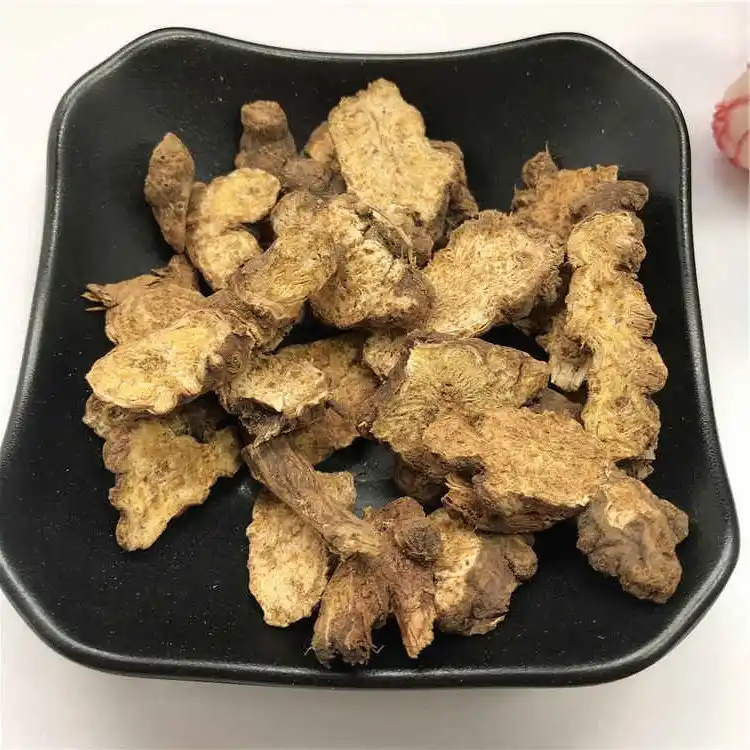
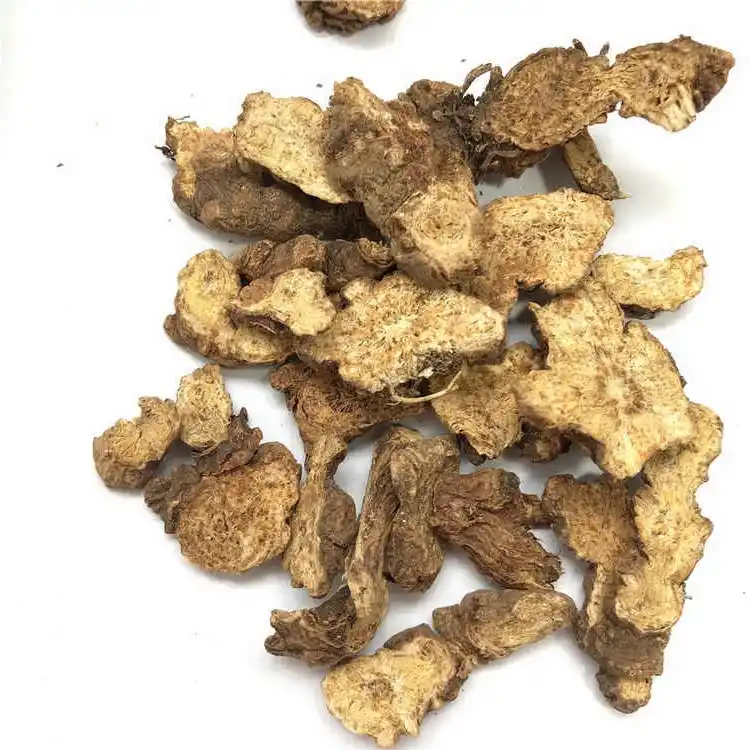
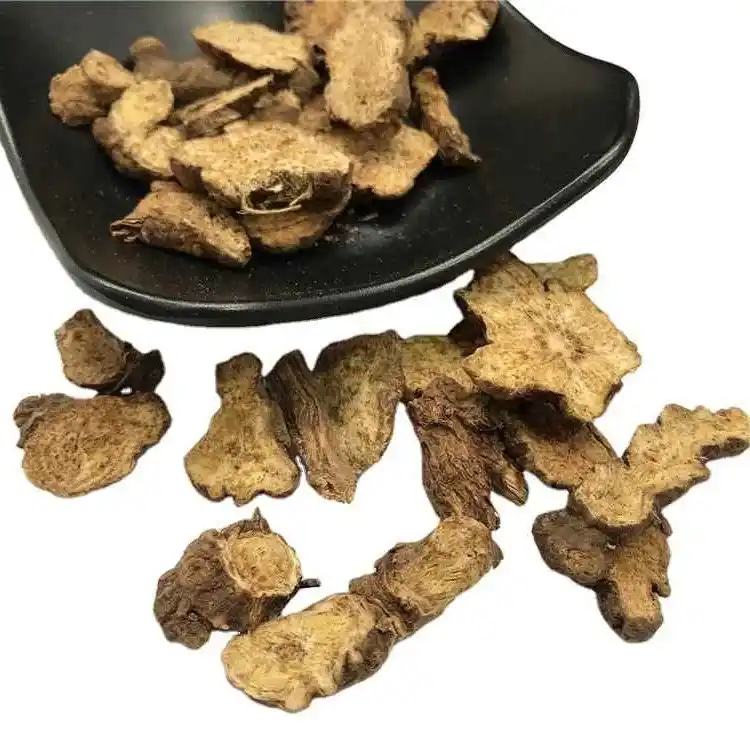
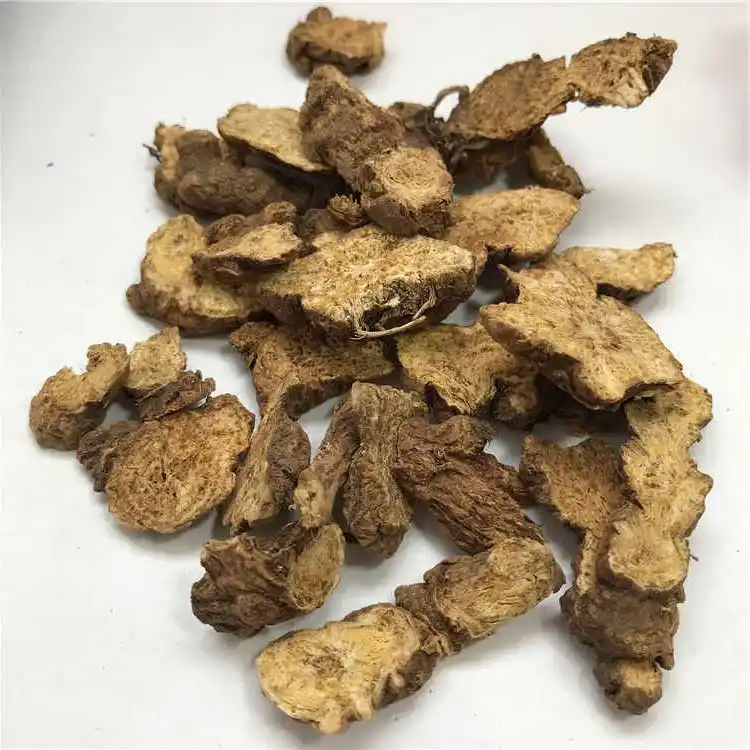
Breakage steals yield. And breakage is not a vibe—it’s mechanics: moisture window, cutter geometry, slice thickness, drying curve, packing density, vibration, pallet wrap, and the brutal truth that brittle slices turn to dust in transit. Why do buyers keep acting surprised?
The easiest way to stop “your lot arrived powdered” drama is to define breakage like a lab tech would:
Take a representative sample (e.g., 500 g or 1,000 g)
Sieve it through a defined mesh (common: 2.0 mm for “fines,” sometimes add 0.5–1.0 mm for “dust”)
My opinion (and yeah, it’s sharp): if your supplier can’t agree to a measured fines cap, they’re telling you they don’t control slicing and packing tightly enough to promise anything.
3) Odor: your fastest fraud and spoilage detector
Odor catches what labs miss fast. Because odor is where poor drying shows up (musty), where storage failure shows up (stale), where sulfur fumigation shows up (sharp sulfur note), and where contamination shows up (solvent/chemical off-notes)—often before your HPLC report even lands. So why are so many “Bai Zhu organoleptic odor assessment” specs just one line: “Characteristic odor”?
ISO gives you permission to be explicit: macroscopic identification includes smelling/tasting as part of evaluation. It also anchors identity to chemistry: the ISO method uses HPLC “characteristic peaks” including atractylenolide II, atractylenolide III, and atractylon. Those markers aren’t abstract: PubChem listings show atractylon’s formula C15H20O, atractylenolide II C15H20O2, and atractylenolide III C15H20O3.
Now make odor scorable:
Use a 0–5 intensity scale for “expected Bai Zhu aromatic note”
Use a 0–5 defect scale for: musty, sour/fermented, sulfurous, solvent-like
Acceptance example:
Expected note ≥ 3/5
Any defect ≤ 1/5
Musty or sulfurous defect ≥ 2/5 = automatic hold + investigation
Also: if you’re not writing SO₂ residual language into your spec, you’re inviting a fight you can’t win on smell alone. Even ISO flags sulfur dioxide residue as a determined parameter.
Why you can’t ignore the wider compliance backdrop
Here’s the hard truth: ash/breakage/odor specs reduce commercial disputes, but they don’t protect you from safety failures in the supply chain.
In the EU, border controls trigger real-time rejections for pesticide issues in herb/spice-like commodities. Example: the European Commission’s RASFF system logged cumin seed notifications in July 2024 citing multiple pesticide residues (and even ethylene oxide) and border rejections—proof that “it passed our visual check” is not a compliance strategy. And at the monitoring level, EFSA’s 2024 EU pesticide residues report (covering 110,829 samples) found 96.3% of samples were below the legal maximum residue level, while 3.7% exceeded MRLs and 2.2% were non-compliant.
In the U.S., enforcement is not theoretical either: a January 2024 FDA Office of Criminal Investigations announcement described a guilty plea tied to misbranded dietary supplements and included a $4.5 million forfeiture—again, public record, not industry gossip. FDA-OCI press release (Jan 2024)
Acceptance limit cheat-sheet (write this into your spec)
Buyer use-case
Total ash (max)
Acid-insoluble ash (max)
Breakage / fines (max)
Odor acceptance rule
Minimum method language
Pharma / hospital decoction pieces
7.0%
1.0%
5–8%
“Characteristic aromatic; no musty/sour/sulfur; defect ≤1/5”
Incineration at ~550°C; acid-insoluble via HCl; sieve size + sample mass; retain sample kept sealed
Include moisture ceiling (15.0% per ISO) + pack-out controls (“shake test”)
Notes behind these numbers: ISO 13615:2024 gives the total ash and moisture baselines for Bai Zhu (7.0% and 15.0%). The 1.0% acid-insoluble ash benchmark is a strict pharmacopoeial-style reference point used to keep sand/soil from being rationalized as “nature.”
FAQs
What is a realistic total ash limit for Bai Zhu (Atractylodes macrocephala) in bulk trade?
A realistic total ash limit for Bai Zhu is the maximum percentage of inorganic residue left after incinerating a defined sample (often around 550°C), used as a blunt proxy for dirt, sand, and mineral adulteration; ISO 13615:2024 uses 7.0% as a baseline ceiling for trade specs. If you’re buying for pharma, pair it with acid-insoluble ash and write both into the COA panel—otherwise “7.0%” becomes a loophole.
How do you run an acid-insoluble ash test for Chinese herbs, and why do buyers care?
Acid-insoluble ash is the fraction of total ash that remains after boiling the ash in dilute hydrochloric acid, so it overweights silicates like soil/sand rather than plant minerals; that’s why pharmacopoeia-style standards often keep it tight, such as ≤ 1.0% in a Japanese Pharmacopoeia monograph for Atractylodes rhizome. Buyers care because it correlates with “field grit” and poor washing—two problems that don’t always show up in organoleptic checks.
How should we define and measure “breakage” for Bai Zhu decoction pieces?
A breakage limit is a mass-percentage ceiling on fines and shattered pieces generated by slicing, drying, packing, and transit, measured by a repeatable method (commonly sieving and weighing defined size fractions) so buyers can predict yield, dosing uniformity, and presentation without arguing about “dust” after the container lands. Make it operational: define sample mass, sieve size (e.g., 2.0 mm), and whether you score “fines” and “dust” separately.
How do you document odor assessment so it survives a dispute?
Organoleptic odor assessment is a documented sensory evaluation where trained assessors score whether Bai Zhu’s expected aromatic rhizome note is present and whether defect odors (musty, sour/fermented, sulfurous, solvent-like) exceed a pre-set threshold, turning “smells bad” into auditable data that can trigger hold/reject decisions. Use a simple panel form, keep a sealed retain, and align odor outcomes with follow-up tests (moisture drift, SO₂ residue, micro, etc.).
Do acceptance limits protect me legally if a shipment fails heavy metals/pesticide residues?
Acceptance limits are written, testable thresholds embedded in your purchase spec and contract that define what “conforming” means for a lot, so they give you leverage in disputes and chargebacks, but they do not shield you from enforcement if safety hazards or mislabeling exist in the finished product. In practice, you need both: tight quality specs (ash/breakage/odor) and a safety panel aligned to destination rules.
Conclusion
If you want this turned into a one-page, buyer-ready spec (with COA panel, sampling rule, retest language, and fail disposition), start from the product context and build outward: Bai Zhu (Atractylodes macrocephala) supplier reference page and the QC contract framework. When you’re ready to lock limits and stop re-litigating “odor” and “fines” on every shipment, go direct: Contact GuoCao.
Our low MOQ of 1 kg (2.2 lb) makes it easy to order Chinese herbal slices or wholesale Chinese medicine herbs. Private-label and bilingual labeling are also available.
Delivery Cycle & Support
We have a fast 7-day lead time. We provide free samples, COA reports, and technical support to help you bring high-quality bulk Chinese herbs to market.
Quality & Certifications
Our products are manufactured in a GMP-certified facility and meet ISO22000 standards. All Chinese herbs are third-party tested for heavy metals, pesticides, and microorganisms.